

We use cookies to ensure our website works properly and to personalise your experience. Cookies policy
Department of Botany, Shri. Dr. R. G. Rathod Arts & Science College Murtizapur, Akola
Katepurna Wildlife Sanctuary, located in the Vidarbha region of Maharashtra, is an ecologically critical area supporting diverse flora. This research assesses the floristic diversity and ecological roles of four dominant species: Terminalia Anogeissiana, Morinda Citrifolia, Senegalia Catecha, and Butea monosperma. Using field surveys, ecological indices, and quantitative analysis, the study reveals species distribution patterns, abundance, and their ecological significance. Key findings indicate high biodiversity with these species playing essential roles in ecological stability and cultural practices. Conservation strategies are proposed to mitigate challenges such as habitat fragmentation and human intervention.
Wildlife sanctuaries play a crucial role in conserving biodiversity, serving as vital repositories of flora and fauna, and functioning as natural ecosystems that regulate ecological balance. These protected areas are critical for mitigating the effects of habitat destruction, environmental degradation, and biodiversity loss caused by anthropogenic pressures. Wildlife sanctuaries not only safeguard endangered species but also contribute significantly to ecosystem services such as carbon sequestration, water regulation, soil fertility, and nutrient cycling. The Katepurna Wildlife Sanctuary, located in the Akola district of Maharashtra, is one such ecologically significant area that harbors a diverse range of plant and animal species. Spanning 73.69 square kilometers, the sanctuary lies in the dry deciduous forest zone of the Vidarbha region, characterized by tropical climate conditions with distinct dry and wet seasons. The region experiences an average annual rainfall of approximately 800 mm, supporting unique vegetation types that are adapted to dry and semi-arid conditions. This sanctuary, situated at an altitude ranging from 300 to 500 meters above sea level, is recognized for its rich floristic diversity and ecological significance, playing a critical role in supporting local livelihoods and regional ecological stability.
Among the various plant species in the sanctuary, certain taxa have emerged as key ecological and socio-economic resources. This study focuses on four dominant and ecologically significant species: Terminalia Anogeissiana, Morinda Citrifolia, Senegalia Catecha, and Butea monosperma . These species are not only integral to the ecosystem but also provide substantial benefits to local communities in the form of traditional medicines, fodder, timber, and cultural practices. Terminalia Anogeissiana, a drought-resistant species, is a prominent member of the dry deciduous forest, known for its role in preventing soil erosion and its use in traditional medicine. Morinda Citrifolia, commonly referred to as Indian mulberry, is a species typically found in riparian zones. It is valued for its fruit, which has medicinal properties and is widely used in traditional healing systems. Senegalia Catecha (formerly Acacia catechu), a nitrogen-fixing leguminous tree, thrives in grasslands and mixed forests. It plays a crucial role in improving soil fertility and is an important source of tannins used in industries. Butea monosperma, also known as the flame of the forest, is a fire-resistant tree that supports pollinators such as bees, birds, and butterflies. Its vibrant orange flowers and economic importance as a dye source make it culturally significant. The interplay of these species with the sanctuary's ecosystem is critical to maintaining its biodiversity and ecological stability. However, the sanctuary faces numerous threats, including illegal logging, overgrazing, habitat fragmentation, and the impacts of climate change. These factors not only threaten the survival of individual species but also disrupt the delicate balance of the ecosystem as a whole.
This study seeks to comprehensively document the floristic diversity of Katepurna Wildlife Sanctuary, with a particular focus on the abundance, distribution, and ecological significance of Terminalia Anogeissiana, Morinda Citrifolia, Senegalia Catecha, and Butea monosperma. By analyzing their roles in ecosystem processes such as nutrient cycling, pollination, and habitat provision, this research aims to provide insights into the sanctuary's ecological functioning. Additionally, the study highlights the conservation challenges faced by the sanctuary and proposes management strategies to enhance its ecological integrity and ensure the sustainable utilization of its resources.
2. MATERIALS AND METHODS
2.1 Study Area
Katepurna Wildlife Sanctuary lies at an altitude of 300–500 m, characterized by dry tropical deciduous forests, an average rainfall of 800 mm, and a subtropical climate.
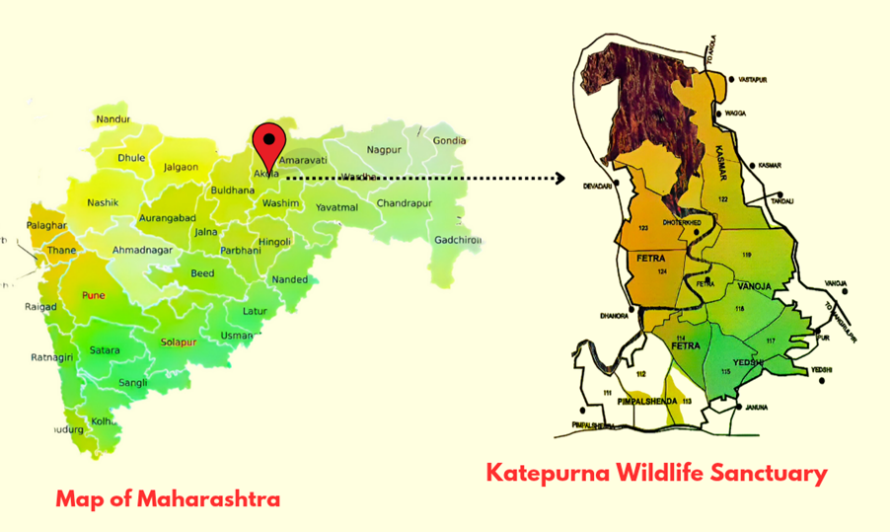
Figure 1. Geographic representation of Maharashtra showing the location of Katepurna Wildlife Sanctuary (inset: detailed map of Katepurna Wildlife Sanctuary).
2.2 Field Data Collection
Quadrat sampling (10 m × 10 m) was conducted across 50 randomly selected plots to record species abundance, frequency, and diversity. Soil and habitat conditions were also recorded for each quadrat.
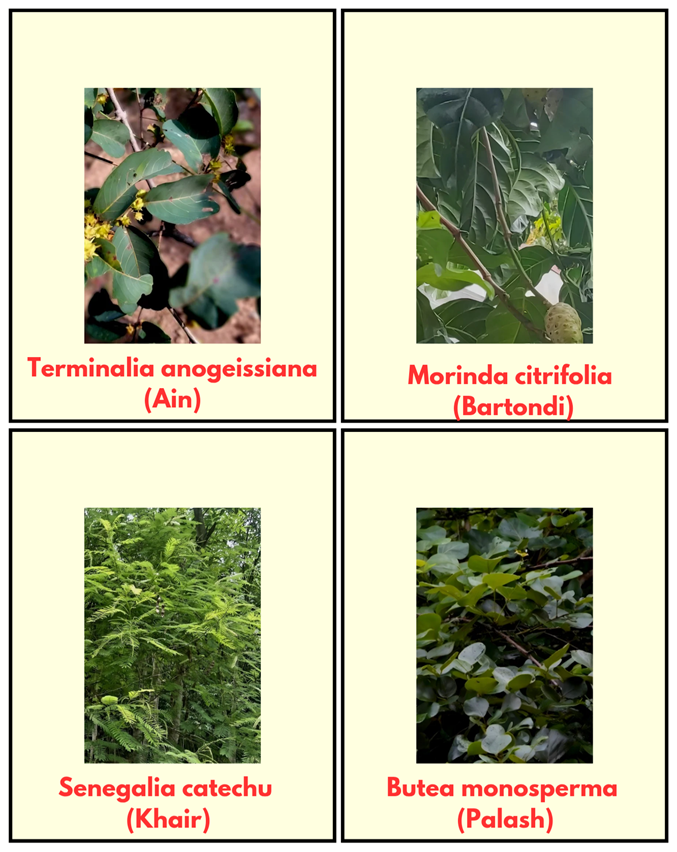
Figure 2. Representative images of native tree species from Maharashtra: (A) Terminalia Anogeissiana (Ain), (B) Morinda Citrifolia (Bartondi), (C) Senegalia Catecha (Khair), and (D) Butea monosperma (Palash).
2.3 Analytical Methods
Diversity indices (Shannon-Wiener and Simpson’s Index) were calculated to analyze species richness and evenness. Key ecological parameters such as height, girth, and crown diameter of selected species were measured for individual plants.
3. RESULTS AND DISCUSSION
3.1 Floristic Composition
A total of 136 plant species were documented, representing 56 families and 98 genera. The highest diversity was observed in the dry deciduous forest, attributed to favorable soil conditions and microclimatic variations.
Table 1: Species Richness and Distribution in Katepurna Wildlife Sanctuary
|
Parameter |
Count |
|
Total Plant Species |
136 |
3.2 Characterization of Key Species
The ecological roles of the selected species were analyzed based on their abundance, ecological benefits, and habitat preferences.
Table 2: Ecological Characteristics of Selected Species
|
Species |
Ecological Role |
Habitat Preference |
|
Terminalia Anogeissiana |
Soil stabilization |
Dry deciduous forests |
|
Morinda Citrifolia |
Nutrient cycling, pollination |
Riverbanks, plains |
|
Senegalia Catecha |
Nitrogen fixation |
Open scrub forests |
|
Butea monosperma |
Pollinator support |
Grasslands |
3.3 Quantitative Assessment
The structural attributes of the selected species were analyzed to understand their ecological significance.
Table 3: Morphological and Structural Data of Key Species
|
Species |
Average Height (m) |
Average Girth (cm) |
Crown Diameter (m) |
|
Terminalia Anogeissiana |
12.3 |
45.2 |
8.4 |
|
Morinda Citrifolia |
9.5 |
30.8 |
6.7 |
|
Senegalia Catecha |
6.8 |
22.5 |
4.3 |
|
Butea monosperma |
5.4 |
15.9 |
3.2 |
3.4 Conservation Challenges
The sanctuary faces challenges such as illegal grazing, deforestation, and climate change, which affect species diversity and abundance. Anthropogenic activities in the buffer zone impact regeneration rates and habitat connectivity.
CONCLUSION AND RECOMMENDATIONS
This study highlights the ecological importance of Terminalia Anogeissiana, Morinda Citrifolia, Senegalia Catecha, and Butea monosperma in the Katepurna Wildlife Sanctuary. These species are critical for maintaining soil health, supporting pollinators, and sustaining local livelihoods. Conservation measures such as afforestation with native species, community-based forest management, and habitat restoration are urgently needed. Future research should focus on the long-term monitoring of floristic changes and the impact of climate variability.
REFERENCES

Chandrakiran Rathod, Rupali Shirsat, Ecological Insights and Floristic Diversity of Katepurna Wildlife Sanctuary (Maharashtra): A Study on Terminalia Anogeissiana, Morinda Citrifolia, Senegalia Catecha, and Butea monosperma, Int. J. of Pharm. Sci., 2025, Vol 3, Issue 8, 2769-2773. https://doi.org/10.5281/zenodo.16948851
 10.5281/zenodo.16948851