

We use cookies to ensure our website works properly and to personalise your experience. Cookies policy
Department of Life Sciences (Botany), Manipur University, Manipur, India
The present study was conducted to develop a plant essential oil-based mosquito larvicide and adulticide as a safer alternative to chemical insecticides for controlling mosquito vectors, particularly Armigeres subalbatus. The study aimed to evaluate the larvicidal and adulticidal activity of essential oil extracted from the fruits of Ocimum basilicum (EOOB) against larvae and adults of A. subalbatus. The essential oil was extracted by hydrodistillation using a Clevenger apparatus. Larvicidal activity was assessed at 24 hours post-treatment (hpt), while adulticidal activity was recorded at 30 minutes post-treatment (mpt). The results showed that EOLC exhibited significant larvicidal and adulticidal efficacy against A. subalbatus. The lethal concentration (EOOB) values for larvicidal activity at 24 hpt and adulticidal activity at 30 mpt were 0.547 µL/mL and 10.878 µL/mL, respectively. These findings indicate that EOLC has strong potential as an eco-friendly natural insecticidal agent and could be effectively used as an indoor air diffuser for household mosquito control.
Armigeres subalbatus is an important mosquito vector belonging to the subfamily Culicinae and is characterized by its large body size, aggressive behavior, and blood-feeding habit on both humans and animals (1). This species plays a significant role in the transmission of several zoonotic and human pathogens, including the nematodes Brugia pahangi and Wuchereria bancrofti, which cause lymphatic filariasis. In addition, A. subalbatus is involved in the transmission of viruses responsible for Japanese encephalitis and has also been suggested as a potential vector of Zika virus (2). The species further contributes to the spread of Getah virus among horses and pigs (3). Owing to its adaptability, A. subalbatus commonly inhabits human dwellings, livestock shelters, and wild grass fields, increasing the risk of human–vector contact (4).
Control of adult mosquito populations largely depends on synthetic insecticides and the use of mosquito coils, both of which pose considerable health risks to humans. Prolonged exposure to mosquito coil smoke has been associated with adverse respiratory effects and an increased risk of lung cancer (5). Mosquito coils are widely used indoors in India and many Asian countries and, to a lesser extent, in the United States and parts of Europe (6). According to the World Health Organization (WHO, 1996), nearly 29 billion mosquito coils are consumed annually worldwide (6). Pyrethrins, accounting for approximately 0.3–0.4%, constitute the primary active ingredients in mosquito coils (7). However, the combustion of mosquito coils releases gaseous pollutants and fine particulate matter (PM), including polycyclic aromatic hydrocarbons, which can penetrate the lower respiratory tract and contribute to asthma and persistent wheezing, particularly in children (8,9). Long-term exposure to octachlorodipropyl ether present in mosquito coils may generate toxic compounds such as hydrogen sulphide and formaldehyde, which can further react to form bis(chloromethyl) ether, a highly potent lung carcinogen (10-12). Continuous overnight use of mosquito coils in enclosed spaces has also been linked to an increased incidence of nasopharyngeal carcinoma (13).
Considering the health and environmental concerns associated with synthetic insecticides and mosquito coils, plant-based essential oils have emerged as promising alternatives. Essential oil of Ocimum basilicum L. (EOOB) is biodegradable, environmentally safe, and minimally toxic to mammals, and has demonstrated strong insecticidal and repellent activity against various mosquito species. Therefore, the present study aims to evaluate the larvicidal and adulticidal efficacy of EOOB against Armigeres subalbatus as a safer and eco-friendly mosquito control strategy.
MATERIALS AND METHODS
Essential Oil Extraction
The plant material was taxonomically identified by the Botanical Survey of India (BSI), Shillong, and authenticated under the voucher number BSI/ERC/Tech/Identification/2018/68. Mature fruits of Ocimum basilicum L. were collected during the year of experimentation from Tarung Cheiraoching Road, Imphal West district, Manipur, India (latitude 24.831223° N; longitude 93.933728° E). A total of 100 g of mature fruits was subjected to hydrodistillation using a Clevenger-type apparatus for 2 h to extract the essential oil. The obtained essential oil of EOOB was collected and stored in a refrigerator at 0 °C until further use.
Mosquito Collection and Rearing
Healthy instar larvae of Armigeres subalbatus were collected from the Manipur University campus, Manipur, India (latitude 24.753526° N; longitude 93.932218° E). The larvae were maintained in 24 well cell culture plates under controlled laboratory conditions at 25 ± 2 °C, with 65–75% relative humidity and a photoperiod of 12 h light and 12 h dark. The larvae were fed with commercially available fish food (Microbits or Tetrabits) and kept covered with mosquito netting to prevent contamination and escape.
Larvicidal Bioassay
Larvicidal activity was evaluated following the World Health Organization (WHO) standard protocol with slight modifications (14). The essential oil was dissolved in 2% ethanol (EtOH), and different concentration doses were prepared. Initially, 20 µL of EOOB was dissolved in 500 µL of 2% EtOH, and test concentrations ranging from 5, 10, 15, 20, and 30 µL were prepared for the larvicidal assay. Ten healthy larvae were introduced into each well of a 24-well culture plate containing the respective concentrations. Mortality was recorded after 24 h of exposure. The bioassay was conducted at 25 ± 2 °C, and each treatment was performed in triplicate in accordance with WHO guidelines (2005).
Adulticidal Assay
Adulticidal activity was assessed following the WHO standard method with minor modifications. Adult mosquitoes were placed in plastic cups, with 20 individuals per cup. The treatment was carried out by applying 100% pure EOOB onto a cotton piece tied with a thread and suspended vertically inside the cup. Mortality was recorded 30 minutes post-treatment. Each experiment was conducted in triplicate under controlled laboratory conditions, and the number of dead adult mosquitoes was recorded at the end of the exposure period.
RESULTS AND DISCUSSION
The present study was designed to evaluate the larvicidal and adulticidal efficacy of essential oil of Ocimum basilicum L. (EOOB) against Armigeres subalbatus, a widely distributed mosquito vector of public health importance. The findings demonstrate that EOOB exhibits significant mosquitocidal activity against both larval and adult stages, fulfilling the objectives stated in the Introduction.
Larvicidal Activity
The larvicidal toxicity of EOOB against fourth instar larvae of A. subalbatus is shown in Figure 1. The 24 h larvicidal assay was conducted at concentration doses of 1, 2, 3, 4, 5, and 6 µL/mL. A clear dose-dependent increase in larval mortality was observed, indicating strong larvicidal activity of EOOB. The highest mortality was recorded at 6 µL/mL concentration of EOOB. No mortality was observed in the negative control treated with 2% ethanol (EtOH), confirming that the solvent had no toxic effect. In contrast, the positive control, Chloropyriphos, resulted in 100% mortality of instar larvae at 20 µL/mL. The LC?? value of EOOB for larvicidal activity at 24 h post-treatment was determined to be 0.547 μL/mL µL/mL, demonstrating its high larvicidal potency against A. subalbatus larvae.
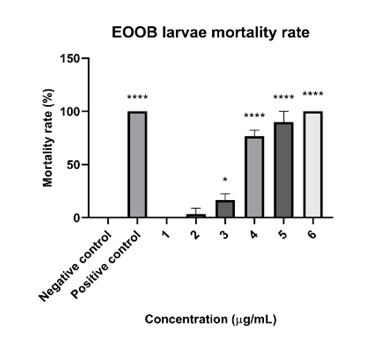
Figure 1: Larvicidal activity of different concentrations of EOOB against A. subalbatus larvae.
Armigeres subalbatus (Diptera: Culicidae) is known to inhabit houses, livestock sheds, and wild grass fields (16), and its larvae develop in stagnant water bodies through complete metamorphosis. Morphologically, the larvae possess a distinctive siphon, and mortality was considered the primary parameter for evaluating larvicidal efficacy. In the present study, treated larvae also exhibited impaired development and hampered metamorphosis compared to the untreated control group, further supporting the toxic effect of EOOB.
Adulticidal Activity
The adulticidal activity of EOOB against adult A. subalbatus mosquitoes is presented in Figure 2. Adulticidal assays were performed using concentration doses of 5, 10, 15, 20, and 30 µL/mL of 100% pure EOOB. Mortality of adult mosquitoes increased with increasing concentration, indicating a dose-dependent response. The highest adult mortality was observed at 30 µL of pure EOOB. The LC?? value for adulticidal activity at 30 minutes post-treatment was calculated to be 10.878 μL/mL, confirming the effectiveness of EOOB against adult mosquitoes.
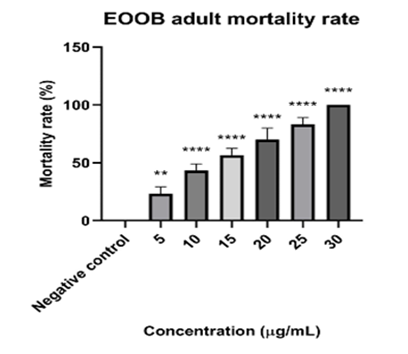
Figure 2: Adulticidal activity of different concentrations of EOOB against adult A. subalbatus.
Armigeres subalbatus is considered a potential vector of Zika virus but not dengue virus (15) and has also been reported as a putative vector of Japanese encephalitis and Zika virus. Adults are frequently found in improperly sealed septic tanks and domestic environments, increasing human exposure. In the present study, adult mosquitoes treated with EOOB showed rapid knockdown and mortality, highlighting the potential of EOOB as an effective adulticidal agent.
Since the World Health Organization has not established standardized criteria for assessing the larvicidal activity of essential oils, several researchers have proposed their own classification systems for natural mosquitocidal products (16–18). Komalamisra et al. classified compounds with LC?? ≤ 50 mg/L as highly active, while Kiran et al. considered compounds with LC?? < 100 mg/L to exhibit significant larvicidal activity. Based on these reported criteria and the LC?? values obtained in this study, EOOB can be regarded as a highly effective natural larvicide and adulticide.
The rapid emergence of resistance in mosquito populations to synthetic chemical insecticides and the resulting ecological imbalance necessitate the development of alternative mosquito control strategies. Essential oil-based formulations such as EOOB offer advantages including biodegradability, environmental safety, and a lower likelihood of resistance development. Therefore, EOOB shows strong potential as an eco-friendly and sustainable mosquitocidal agent for controlling A. subalbatus populations.
CONCLUSION
In this study, our findings suggest that EOOB exhibits potent mosquitocidal activity against both larvae and adults of A. subalbatus. This formulation may help reduce the reliance on chemical insecticides for mosquito control, particularly through the use of indoor air diffusers in household settings. However, further studies are required to evaluate its effectiveness under field conditions.
AUTHOR CONTRIBUTIONS
Birjit Singh Waikhom, performed the experiments, Sangeeta assisted in performing the experiments. Thangal Yumnamcha designed the experiment. Maibam Damayanti Devi supervised the study. All authors have read and agreed to the published version of the manuscript.
FUNDING
This research received no external funding.
ACKNOWLEDGMENTS
The authors sincerely thank Th. D. Songomsing Chiru, Research Scholar at Manipur University for the support. Species identification was carried out by Dr. Johnson Amala Justin (Entomologist, Chennai).
CONFLICTS OF INTEREST
The authors declare no conflict of interest.
REFERENCES




Birjit Singh Waikhom, Sangeeta Yanglem, Thangal Yumnamcha, Maibam Damayanti Devi, Mosquito Larvicidal and Adulticidal Activity of Ocimum basilicum L. Essential Oil against Armigeres subalbatus, Int. J. of Pharm. Sci., 2025, Vol 3, Issue 12, 4071-4076. https://doi.org/10.5281/zenodo.18096823
 10.5281/zenodo.18096823