

We use cookies to ensure our website works properly and to personalise your experience. Cookies policy
Bachelor of Pharmacy, Genba Moze College Of Pharmacy, Wagholi, Pune, Maharashtra, India.
Fungal skin infections are widely spread, especially in warm and humid regions, and prolonged use of synthetic antifungal agents is often restricted by side effects, cost, and resistance. This study mainly focuses on creating and testing a herbal antifungal cream, made from neem, tulsi, and turmeric (these three plants are traditionally used to kill / fight of germs. The extracts were made by soaking the plant material in alcohol (ethanol) and tested for natural compounds like flavonoids, alkaloids, tannins, phenolics & terpenoids. Next, various batches of cream were created using a water-and-oil mixing process. This cream was mixed at specific concentrations of our plant extracts together with daily cosmetic care ingredients like glycerin and subtle alcohol to keep parameters: color, odor, pH, spreadability, viscosity, and homogeneity. Additionally, we assessed their washability, extrudability, and skin irritation potential. The antifungal activity was tested by the agar well diffusion process against Candida albicans and Aspergillus Niger, with a standard marketed antifungal cream. The creams were smooth, homogeneous, and easily spreadable, with a pH of 6 to 6.33, which is well considered for skin application. Erythema and skin irritation were not seen in the skin irritation test and couldn’t found any major changes in physical properties were found while testing stability during observation. Our testing showed that the enhanced composition created clear zones of inhibition against both fungal strains, being far with the standard treatment. The results imply that mixing neem, tulsi, and turmeric could offer a risk-free, budget-friendly herbal option for maintaining superficial fungal infection. However, we still need many more clinical trials to verify how well it works in practice.
Fungal infections of the skin are one of the common health issues that can affect persons of almost any age. They are caused by a variety of different fungi that grow on the skin and superficial tissues. The infection is more prone to occur in a warm and humid environment. Poor hygiene, excessive sweating, confined clothing, and constant exposure to moisture are some of the additional factors that can contribute to infection. [1,2]
Skin infections due to fungus are found in different parts of the body. Some common infections are caused by fungi, such as ringworm, athlete’s foot, jock itch, and candidiasis. The appearance of the infection can vary from person to person, but itching, redness, dryness, scaling, burning, and irritation are common complaints. In some instances, the affected area can become more irritated due to scratching. Although these infections are generally manageable, they can be troublesome as they return if the conditions conducive to fungal growth are not controlled. The treatment of fungal infection mainly depends on the type and severity of the infection. Topical antifungal medicines are routinely employed for infections that are limited to the skin. There are several conventional antifungal medicines that are available and have been successfully used for several years. However, their use is not always free from complications. Some preparations can lead to dryness, irritation, burning, and allergic reactions in some individuals. This limitation has encouraged exploring other sources for substances that can have antifungal activity. [1,2,3]
1.1 Herbal Medicines and Skin Care:
Plants have been used as medicine since ancient times. Traditional systems of medicine have used a variety of plants for treating skin problems, wounds, infections, and inflammation. Plants contain different naturally occurring substances like flavonoids, phenolic compounds, tannins, alkaloids, terpenoids, and essential oils. Some of these substances have been studied for their antimicrobial and other biological activities. [4,5]
The use of medicinal plants in skin preparations is especially of interest because the preparation can be applied directly to the affected area. This creates an opportunity to develop topical products based on plant extracts, reducing reliance on exclusively synthetic ingredients. However, traditional use is not sufficient to establish the effectiveness of a herbal product. Proper selection of plants, extraction, formulation, and evaluation are essential to develop a reliable preparation. [4,5,6]
Among the variety of medicinal plants used traditionally for skin care, neem, tulsi and turmeric are of particular interest. [7,10,12,13]
1.2 Neem:
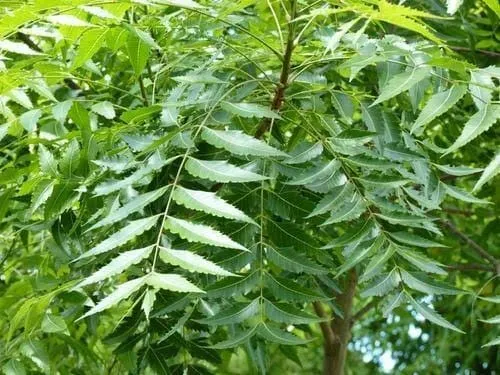
Neem (Azadirachta indica) is a well-known medicinal plant belonging to the family Meliaceae. Different parts of the Neem plant have been used traditionally used for various skin-related problems. Neem leaves are especially known for their use in preparations intended for maintaining skin hygiene. [7,8]
Neem contains a variety of naturally occurring compounds that have been studied for their antimicrobial activity. Because of these properties, Neem has attracted attention as a possible ingredient in preparations for microbial and fungal skin problems. Its long history of traditional use also makes it an important plant for investigation in herbal topical formulations. [7,8,9]
1.2 Tulsi:
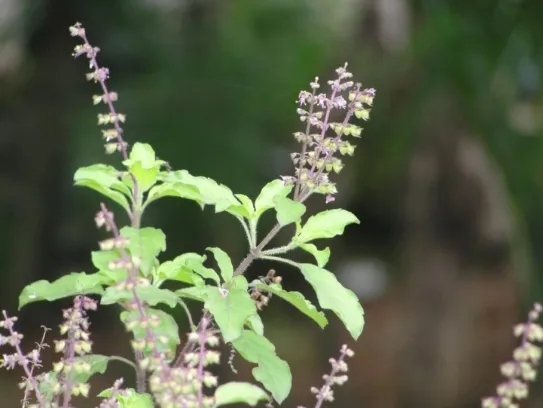
Tulsi (Ocimum sanctum), commonly known as holy basil, belongs to the family Lmiaceae. It is commonly used in traditional medicine and is known for its characteristic aroma. Tulsi leaves contain compounds such as eugenol, flavonoids, and volatile constituents. Certain extracts have demonstrated antifungal activity in laboratory studies.
The inclusion of tulsi in the present formulation provides another source of plant-derived compounds that may contribute to its overall biological activity. Its effectiveness in the finished cream must be confirmed through experimental testing. [10,11]
1.3 Turmeric:
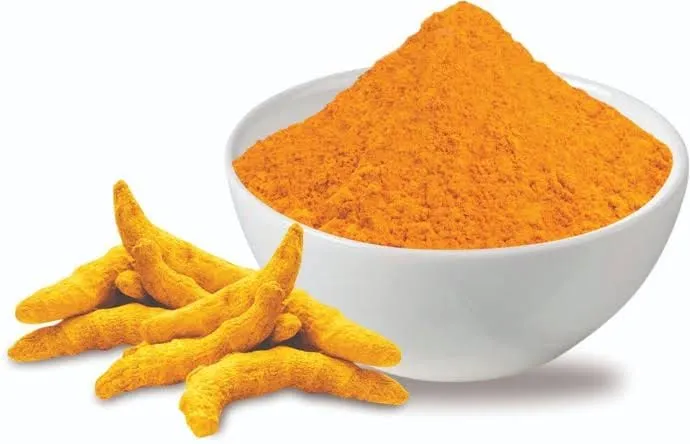
Turmeric (Curcuma longa) belongs to the family Zingiberaceae. Its rhizome is widely used as a spice and has also been used in traditional medicinal preparations. Turmeric contains curcuminoids, particularly curcumin, along with volatile compounds such as turmerones. These constituents have been studied for their antioxidant, anti-inflammatory, and potential antimicrobial properties.
Some research has also investigated turmeric oil for antifungal activity against selected dermatophytes. However, turmeric oil and turmeric extracts may have different chemical compositions and biological effects. [12,13]
1.4 Polyherbal cream Formulation:
A polyherbal cream formulation contains extracts or ingredients obtained from more than one medicinal plant. The purpose of combining different plants is to investigate whether their individual properties can contribute to the overall performance of the preparation. [14,15]
Neem, Tulsi, and Turmeric were selected because they contain different groups of phytochemicals that have been studied for their biological properties. Combining them in a cream provides an opportunity to evaluate their collective performance. [7,10,12,16]
However, the combination should not automatically be considered more effective than individual extracts. The combination of these three plants contributes different groups of natural constituents, so the preparation does not depend on a single plant. We choose neem, tulsi, and turmeric because of their traditional importance and their biological properties. [14,15,17]
The dosage form matters too. A cream is easy to apply, spreads over the affected area without much effort, and provides a suitable base for plant extracts. However, the quality of cream depends on its consistency, pH, homogeneity, spreadability, appearance, and stability. So mixing extracts into a base is not enough; the product has to be properly formulated and evaluated. Considering how common fungal skin infections are, the drawbacks of conventional drugs, and the traditional value of these plants. [14,15,18]
2. Literature review:
1. Chandrasekar and Sivagami (2018) prepared a polyherbal skin-care cream containing neem and tulsi. The extracts were obtained by ethanol extraction and added to a cream base. The cream was checked for pH, viscosity, spreadability, centrifugation, spectrophotometric characteristics, accelerated stability, and microbial stability. It showed good physical stability, with no phase separation after centrifugation and no microbial growth during the study. This supports the use of neem and tulsi in stable topical polyherbal products. [14,15]
2. Natarajam et al. (2003) studied the antifungal activity of neem leaf and seed extracts against dermatophytes such as Trichophyton ruburm, T. mentagrophytes and Microsporum nanum. The extracts inhibited the tested organisms, and neem seed extract showed an MIC of 31μg/mL, pointing to its potential as a natural antifungal agent. [9,19]
3. Balakumar et al.92011) evaluated Ocimum sanctum leaf extracts and fractions against clinically isolated dermatophytes and determined their MIC and MFC. Tulsi extracts showed antifungal activity, which supports their use in topical antifungal products. [11,20]
4. Khan et al. and other studies summarized by Singh et al. (2022) reported the anticandidal potential of Ocimum sanctum. A systematic review found activity against several Candida species, and constituents such as eugenol and linalool were suggested to be responsible. The review also stressed the need for more toxicity, stability, and clinical studies. [10,21]
5. Apisariyakul et al. (1995) investigated turmeric oil from Curcuma longa and found inhibitory activity against several dermatophytes. In an experimental dermatophytosis model, topical turmeric oil improved the lesions. [12]
6. Apel et al. (2013) tested creams containing 6% and 10% turmeric oil against clinical dermatophyte strains and found significant antifungal activity. They suggested that a 6% turmeric-oil cream could be a suitable antidermatophytic preparation but recommended further long-term stability studies. [12,13]
7. Sinha et al. (2023) formulated a multipurpose herbal cream containing aloe vera, neem, turmeric, and tulsi. Appearance, irritancy, washability, pH, phase separation, greasiness, homogeneity, spreadability, and viscosity were evaluated. The cream was reported to be stable and non-irritant, showing that these herbs can be combined in one topical cream. [22]
8. Patil et al. prepared and evaluated a multipurpose herbal cream with neem, turmeric and tulsi extracts in a conventional cream base. Its physical properties, irritancy, washability, pH, phase separation, spreadability, greasiness, and homogeneity were found satisfactory, supporting the development of a polyherbal cream with these three herbs. [14,23]
3. Fungal Skin Infections:
3.1 Definition:
Fungi are multicellular eukaryotic organisms that are heterotrophic in nature. Common pathogenic fungi include Candida albicans, Aspergillus fumigatus, and Trichophyton rubrum. An infection caused by a fungus is called mycosis, and fungal infections are contagious, meaning that they can spread from one person to another. [1,2,3]
3.2 Types of Fungal Infection:
Deep infections affect internal organs such as the lungs, brain, and heart, and can lead to conditions like pneumonia and endocarditis. [2,24]
Superficial infections involve the skin, mucous membranes, the keratin layer of the skin, hair, and nails. The main types are dermatophytosis (tinea or ringworm), candidiasis, pityriasis (tinea versicolor), tinea nigra, and piedra. [1,2,3]
The organisms most relevant to this work are:
3.3. How skin infection develops:
1. Exposure: Contact with an infected person, animal, or contaminated object. [2,3,24]
2. Attachment: Fungal spores stick to the outermost layer of the skin, the stratum corneum. [2,3]
3. Germination and growth: Under favorable conditions, the fungus grows and produces yeast cells. [2,3]
4. Colonization: The infection spreads locally. [2,3]
5. Host immune response: The body reacts with redness, itching, scaling, inflammation, cracking, or peeling. [2,3,24]
6. Spread or reinfection: The infection may spread to other areas or return. [2,3,24]
3.4. Risk factors:
3.5. Current Treatment:
The commonly used topical agents are miconazole, ketoconazole, terbinafine, ciclopirox, and clotrimazole. Depending on the site of infection, they are available as creams, lotions, gels, or powders. [1,2,25]
3.6. Herbal Antifungal Agents:
Herbal antifungal agents contain active phytochemicals such as terpenoids, volatile oils and flavonoids. They are reported to kill fungal cells, disturb the cell membrane, damage the cell wall, and inhibit ergosterol biosynthesis. Topical essential oils are traditionally used for ringworm, athlete’s foot and other localised infections, while herbal pastes are used for stubborn infections of the outer skin layer. [7,10,12,16,26]
The advantages of medicinal plants include synergistic compounds, a lower risk of resistance, fewer side effects, biofilm disruption, and immune support. The main antifungal phytoconstituents of our three plants are summarized in Table 1. [5,6,17]
Table 1: Antifungal Phytoconstituents
| Phytoconstituent | Plant source | Antifungal action |
|---|---|---|
| Azadirachtin | Neem | Stop fungal growth |
| Eugenol | Tulsi | Damages fungal cell membrane, interferes ergosterol synthesis |
| Curcumin | Turmeric | Inhibits fungal cellular processes |
| Flavonoids | Neem, Tulsi, Turmeric | Damage cell membrane |
4. Plant Profiles:
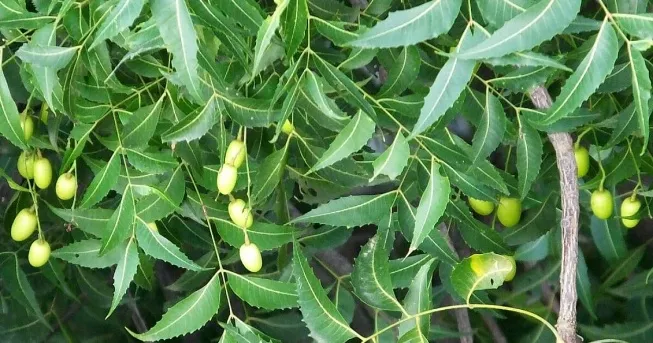
Table 2: Neem (Azadirachta Indica):
| Property | Details |
|---|---|
| Biological source | Leaves and other aerial parts of the neem plant |
| Biological name | Azadirachta indica |
| Common names | Neem, Indian lilac, margosa |
| Kingdom/Division/Class | Plantae/Mgnoliophyta/Magnoliopsida |
| Order/ family | Sapindales/ Meliaceae |
| Genus/ Species | Azadirachta/ A. indica |
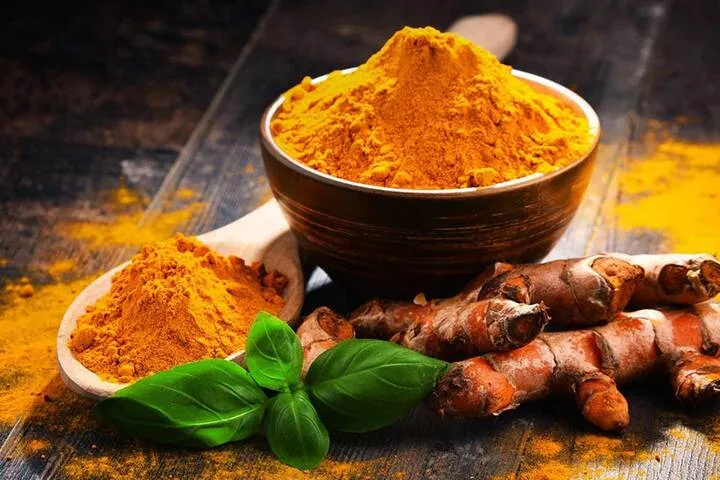
Table 3: Turmeric (Curcuma Longa)
| Property | Details |
|---|---|
| Biological source | Dried rhizomes of Curcuma longa |
| Common names | Turmeric, haldi, haridra |
| Kingdom/ Division/ Class | Plantae/ Angiosperm/ Monocotyledonae |
| Order/ Family | Zingiberales/ Zingiberaceae |
| Genus/ Species | Curcuma/ C. longa |
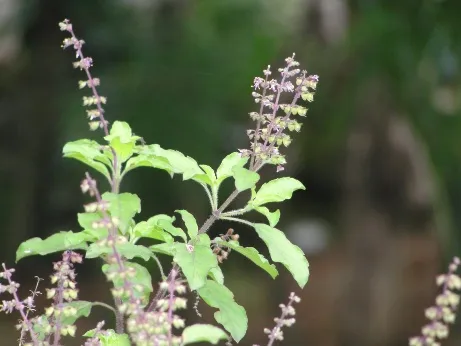
Table 4: Tulsi (Ocimum Tenuiflorum)
| Property | Details |
|---|---|
| Biological source | Fresh and dried leaves of Ocimum tenuiflorum ( syn. O. sanctum) |
| Common names | Holy basil, sacred basil, kali tulsi |
| Kingdom/ Division/ Class | Plantae/ Angiosperm/ Dicotyledonae |
| Order/ Family | Lamiales/ Lamiaceae |
| Genus/ Species | Ocimum/ O. tenuiflorum |
5. Rationale for combining Neem, Tulsi and Turmeric:
These three herbs were combined because each shows antimicrobial, anti-inflammatory, and antioxidant properties. [7,10,12,16]
The combination may work through membrane disruption, growth inhibition, and the complementary action of terpenoids, phenolics, and other compounds. Possible advantages of a polyherbal product are additive or synergistic action, reduced side effects, multi-target activity, better patient compliance, and low cost. These benefits are proposed in the literature and still need to be proven for this formulation. [16,17,26]
6. Polyherbal Cream:
A cream is a semi-solid dosage form used mainly on the skin. Creams are of two types: oil-in-water (O/W), where oil droplets are spread in a continuous water phase, and water-in-oil (W/O), where water droplets are spread in a continuous oil phase. A polyherbal cream is a semi-solid dosage form containing two or more herbal extracts as active ingredients. [14,15,18]
Advantages:
7. Materials and Method of preparation:
MATERIALS:
Neem powder, turmeric powder, tulsi powder, aloe vera gel , bees wax, liquid paraffin, methyl paraben, rose oil, stearic acid, cetyl alcohol, glycerin and distilled water.
7.2 Formulation:
Table 5: Formula of the Polyherbal Cream:
| Sr no. | Ingredient | Role |
|---|---|---|
| 1. | Neem extract | Antifungal agent |
| 2. | Turmeric extract | Antifungal agent |
| 3. | Tulsi extract | Antifungal agent |
| 4. | Aloe vera gel | Soothing agent |
| 5. | Glycerin | Humectant / lubricant |
| 6. | Liquid Paraffin | Emollient , moisturizing agent |
| 7. | Bees wax | Emollient, Stiffening agent |
| 8. | Methyl Paraben | Preservative |
| 9. | Rose oil | Fragrance |
| 10. | Lemon oil | Fragrance |
| 11. | Stearic acid | Emulsifier |
| 12. | Cetyl alcohol | Emulsifier |
| 13. | Distilled water | Vehicle |
7.5 Method of Preparation:
1. Liquid paraffin and beeswax were melted together in a borosilicate glass beaker at 75 degrees Celsius and kept at this temperature (oil phase). [14,15,18]
2. In another beaker, [borax and the preservatives] were dissolved in distilled water at 75 degrees Celsius in a water bath, stirring with a glass rod until fully dissolved (aqueous phase).
3. The hot aqueous phase was added slowly to the hot oil phase with continuous stirring, along with the remaining ingredients of the formula.
4. Immediately after mixing, aloe vera gel and the neem, turmeric and tulsi extract were added and triturated continuously in a mortar and pestle until a smooth cream formed.
5. Rose oil was added as fragrance once the cream had formed.
6. The cream was transferred to a slab and mixed geometrically to get a uniform, smooth texture.
7. A few drops of distilled water were added when needed.
8. Evaluation: [14,15,18,29]
Table 6: Evaluation of the Polyherbal Cream:
| Sr no. | Test | Inference |
|---|---|---|
| 1. | Color | Pale Yellow |
| 2. | Odor | Characteristic |
| 3. | Appearance | Semi solid |
| 4. | Texture | Smooth |
| 5. | pH | 6.8-6.33 |
| 6. | Patch test | No irritation on the skin |
| 7. | Spreadability | Good |
| 8. | Non irritancy | Nonirritant |
| 9. | Viscosity | 11030 cP |
| 10. | Phase separation | None |
| 11. | Washability | Easily washable |
| 12. | Homogeneity | Homogenous |
9. Toxicity studies:
Before using any herbal ingredient in a topical cream, it is important to check that it is safe for the skin. Neem, tulsi, and turmeric are all widely used in traditional medicine, and several studies have looked at their toxicity. [30,31,32]
Neem: Kiiza (2021) tested aqueous neem leaf extract on the skin of Wistar rats. Only slight to moderate redness and swelling appeared, and only at very high doses of 8000 and 10,000 mg/kg. A review by Boeke et al. (2004) reported that non-aqueous neem extracts were more toxic than aqueous ones, and that the main long-term effects were reversible changes in reproduction. Since this review mostly covers oral exposure, it is less relevant to a cream. [30,31]
Tulsi: Gautam and Goel (2014) gave ethanolic tulsi leaf extract to mice and rats following OECD guidelines. No deaths, behavioral changes, or organ damage were seen, even after 28 days of dosing [33]. For skin safety, Jayapal and Subha (2022) tested an ointment with 4% tulsi essential oil on rats as per OECD 404. [32,33]
Turmeric: Turmeric is generally considered safe, but it has one known drawback. Several reports show that curcumin can cause allergic contact dermatitis in some people. So, a patch test is important for any turmeric-containing product. [34]
10. Safety Considerations:
A topical antifungal is often applied to skin that is already inflamed or broken, so safety testing is as important as efficacy. Neem, tulsi, and turmeric have a long history of traditional use, but natural does not automatically mean non-irritating. [30,31,32,34]
Acute dermal toxicity and primary skin irritation studies in animals are the standard next steps. In acute dermal toxicity testing, the cream is applied once to the shaved skin of healthy rats, which are observed for 14 days for behavior, body weight, skin changes, and deaths. [30,31,35]
11. Limitations and Future scope:
Limitations:
1. The antifungal study was in vitro only. [1,2,3,25]
2. No in vitro irritation or efficacy studies were done. [25,30]
3. Only two fungal species were tested, so a wider range is needed. [2,3,24,25]
4. Long-term stability and microbial contamination studies are still pending. [18,29,35]
5. Herbal creams may have a shorter shelf life, and odor or color changes can occur. [18,29]
6. Plant extracts vary from batch to batch. [1,17,18]
Future scope:
1. In vivo animal studies for efficacy and skin sensitivity. [30,31]
2. Scale-up and shelf-life studies as per ICH guidelines. [35]
3. Nano formulations such as niosomal or liposomal gels to improve skin penetration. [16,26,27]
4. Testing against dermatophytes and for conditions such as athlete’s foot or vaginal candidiasis, after proper safety studies. [2,3,24]
CONCLUSION:
The study presents the design and the evaluation of a polyherbal antifungal cream which contains extracts of neem, tulsi, and turmeric. Herbal medicine has a traditional history based on empirical evidence for the treatment of a variety of diseases. Neem, tulsi, and turmeric are well-known herbs that have proven antimicrobial properties. Initial examinations of the cream's consistency revealed that the product possessed desirable characteristics such as a smooth surface finish, a pleasant smell, good spreadability, ease of rinsing off, and the correct pH, with average values being 6 and 6.33. During the stability study, no significant undesirable qualitative changes were noticed, and the cream caused no dermal irritation. [1,6,7,10,12]
The antifungal effectiveness of the cream was also demonstrated by measuring its capacity to inhibit the growth of Candida albicans and Aspergillus niger with the agar well diffusion method. Since neem, tulsi, and turmeric extracts have potential for use in antifungal therapy, these results are encouraging. There could be synergistic therapeutic effects from combining the three herbs and they might therefore be used as an effective antifungal cream in the treatment of fungal infections. [9,11,12]
The present study was a laboratory investigation of the antifungal cream and did not include any clinical trials to show that it is effective in real-world practice. Further trials will be needed in order to prove the effectiveness and safety of the cream in a clinical setting. Although the results of this study are promising, they could justify the need for larger-scale clinical studies to investigate the potential of herbal antifungal creams. [1,2,3,25,35]
REFERENCES




Mansi Tingre, Virendra Tiwari, Vrushali Suryavanshi, Dr. Tushar Shelke, Formulation and Evaluation of Polyherbal Antifungal Cream Containing Neem, Tulsi, and Turmeric Extracts., Int. J. of Pharm. Sci., 2026, Vol 4, Issue 11, 2428-2438. https://doi.org/10.5281/zenodo.24276584
 10.5281/zenodo.24276584