View Article

  • A Study to Assess the Barriers and Strategies to provide Maternal and Neonatal Care in Labour Room among Midwives

  • Department of OBG, College of Nursing, Pondicherry Institute of Medical Sciences, Puducherry, India.

Abstract

Introduction: Midwives are a vital group in the health workforce. The skilled midwifery workforce provides high-quality maternal and neonatal care and reduce maternal and newborn deaths and complications. Aim: To assess the barriers and strategies of midwives to provide maternal and neonatal care in a tertiary care hospital Puducherry, India. Method: Data were collected through focus group discussion followed by individual in-depth interview using interview probes. Data Analysis: The discussions and interviews were tape recorded, transcribed and then analysed through thematic analysis. Results: Nine main themes emerged from the data analysis. These themes in barriers included were personal, physical, emotional, professional and workplace barriers and these themes in strategies included were motivational, empowerment, resilience and workplace strategies. There was no statistically significant association between strategies of midwives except self-initiatives and willingness to adapt which shows borderline significant (p value 0.052) and floating of staff which shows significant association with total years of experience (p <0.001). Conclusion: The midwives face significant barriers in providing maternal and neonatal care, as well as the innovative strategies they employ to navigate these challenges. Therefore, there is need to address the barriers and strategies of midwives can lead to a more sustainable and effective workforce, improve care delivery and most importantly, enhance maternal and neonatal health outcomes.

Keywords

Barriers, Strategies, Maternal and Neonatal care, Midwives

Introduction

× Popup Image

Midwives make a vital contribution to the quality and safety of sexual, reproductive, maternal, newborn and adolescent health services. Despite their critical importance in healthcare outcomes, midwives working conditions are globally challenging. 1

 The main challenges faced by midwives for providing quality maternal and neonatal care includes inadequate infrastructure (lack of bed and physical space), shortage of midwifery staff, logistical challenges, lack of motivation, limited in service training opportunities, work demand, the overload of bureaucratic activities, conflicts with the health team members, and limited autonomy.2

Midwives thriving in the profession due to their ability to use resilience strategies that help them to cope with the difficulties in the profession. Midwives employ adaptation strategies to cope with the barriers and the effects of those barriers in their working lives. An important coping strategy that is commonly adopted by midwives is trying to control themselves in their work environment and able to work effectively. 3  Globally, the midwives face challenges in their day-to -day practice which include feelings of demoralization, shortage of resources, shortage of personnel, societal challenges and personal struggles. To improve this situation, measures should be taken such as supportive leadership, reduction of workload, increasing availability of equipment and increasing knowledge of reproductive health in society. 4The direct and indirect barriers that midwives face in their workplace have negative consequences on their ability to provide quality maternal and neonatal care, however, they still carry on with their duties. The midwives use various strategies such as assertiveness, self-affirmation, social and professional support from work colleagues and supervisors help midwives cope with the barriers in their job environment.3

2.MATERIALS AND METHODS

Study Designs and Participants:    

Qualitative study was used in this study. Convenient sample of 30 were selected from Midwives working in Pondicherry Institute of Medical Sciences, Puducherry for the study. Midwives who are having atleast one year of experience in OBG unit at PIMS are included in the study. Midwives who are on long leave are excluded from the study.  

Source of Data Collection: Midwives working at Pondicherry Institute of Medical Sciences, Puducherry.

Socio-Demographic Variables:

Socio- Demographic Variables includes Age, Marital status, Education, work experience and Monthly income.

DATA COLLECTION PROCESS

•      Ethical clearance from Institutional Ethics Committee and administrative permission from concerned authorities were obtained before data collection. The study was conducted for a period of 4 weeks from 25.11.2024 to 20.12.2024 at Pondicherry Institute of Medical Sciences among midwives.

•      Participants who fulfilled the inclusion criteria were selected for the study using convenient sampling techniques.

•      The nature and purpose of the study was explained to the study participants, and informed consent was obtained from the selected participants. The data was collected by focus group discussion followed by individual in-depth interview using interview probes to assess the barriers and strategies to provide maternal and neonatal care in labour room among midwives working at PIMS.

•      A total of five focus group discussions were conducted in three rounds, with a group of six midwives, each lasting 30-40 minutes, until the data saturation was achieved.

•      The investigator was the moderator for the discussion and the discussion was audio recorded by investigator. Individual in-depth interviews were conducted face-to-face with 6-7 midwives per day, each lasting approximately 30 to 40 minutes and were audio recorded by the investigator.

Inclusion criteria

•      Midwives who are having atleast one year of experience in OBG unit at PIMS. 

Exclusion criteria

•      Midwives who are on long leave.

Statistical Analysis: Data collection was analyzed using descriptive statistics and Thematic analysis. The Descriptive statistics includes Frequency and Percentage were employed in the study to describe demographic variables, to find out association Fisher exact test was used.

3.RESULTS


Table 1: Frequency and percentage of midwives with regard to socio demographic variables                                               n=30


SI. No.

Demographic Variables

Frequency

Percentage

1.

Age (in years)

a) ≤25 years

b) 26-30 years

c) >30 years


12

9

9


40.0

30.0

30.0

2.

Marital status

a) Married

b) Unmarried


19

11


63.3

36.7

3.

Education

a)B.Sc Nursing

b) GNM


29

1


96.7

3.3

4.


Years of experience in PIMS

a) 1-10 years

b) >10 years

Total years of experience

a) ≤5 years

b) >5 years


25

5


17

13


83.4

16.6


56.7

43.3

5.

Monthly income (in rupees)

a) ≤ 25,000

b) >25,000


22

8


73.3

26.7


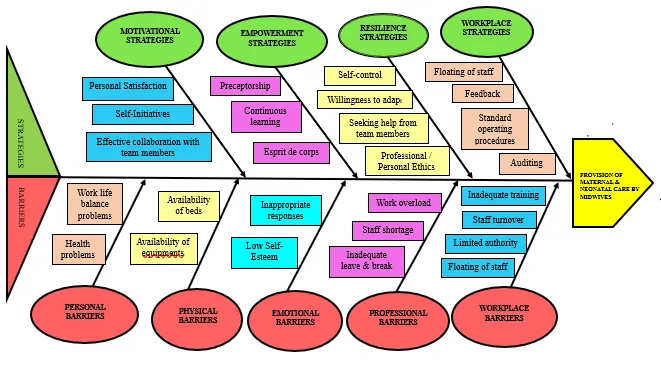
Figure 1: Fishbone diagram expliciting Barriers and Strategies to provide Maternal and Neonatal care


Table 2: Association between strategies used by midwives with their total years of experience    n=30

SI.

No.

Strategies

Total years of experience

Fisher’s

exact test

p value

≤5 years

>5 years


1.

Personal satisfaction

a) Yes

b) No


13

4


13

0


0.113 NS

2.

Effective collaboration with team members

a) Yes

b) No


15

2


13

0


0.492 NS

3.

Self-Initiatives

a) Yes

b) No


12

5


13

0


0.052 BS

4.

Continuous learning

a) Yes

b) No


14

3


13

0


0.238 NS

5.

Preceptorship

a) Yes

b) No


15

2


13

0


0.492 NS

6.

Esprit de corps

a) Yes

b) No


14

3


12

1


0.613 NS

7.

Self-control

a) Yes

b) No


13

4


12

1


0.355 NS

8.

Willingness to adapt

a) Yes

b) No


12

5


13

0


0.052 BS

9.

Seeking help from team members

a) Yes

b) No


14

3


13

0


0.238 NS

10.

Floating of staff

a) Yes

b) No


3

14


12

1


<0.001 S


NS - Not Statistically significant (p>0.05)

BS - Borderline significant (p=0.050)                             

S - Statistically significant at (p<0.05)

The Fisher exact test showed that there was no statistically significant association between strategies of midwives except self-initiatives and willingness to adapt which shows borderline significant (p value 0.052) and floating of staff which shows significant association with total years of experience        (p <0.001).

4. DISCUSSION

In the present study the results are classified under five main themes regarding barriers which includes personal barriers, physical barriers, emotional barriers, professional barriers and workplace barriers and four main themes regarding strategies which includes motivational strategies, empowerment strategies, resilience strategies and workplace strategies.

 Elizabeth K et al., (2023), Malekzade N et al., (2023), Aksoy DS et al., (2021), Kaushik et al., (2021) and Peter AK et al., (2021) emphasized that work- life balance and health problems among midwives is reported as one of the significant barrier which affects the quality of maternal and neonatal care. Improving work-life balance and addressing health problems among midwives are critical not only for their personal well-being but also for sustaining high quality maternal and neonatal care. 5-9

Milku ND et al., (2024), Hailu M et al., (2022), Mordal E et al., (2021) and Bogren M et al., (2020) emphasized that shortage of beds and inadequate equipment significantly hinder midwives ability to provide quality maternal and neonatal care. Improving infrastructure, ensuring regular supply of essential equipment, and planning for adequate bed spacing are necessary to support midwives and strengthen maternal health services.10-13

Diaz EA et al., (2024) stated that inappropriate responses from team members and low self- esteem of midwives are significant challenges that negatively influence midwives ability to provide optimal maternal and neonatal care which was also stated in the findings of Asadi M et al., (2023), Yun L et al.,(2021) and Johnson RA et al., (2020). Strengthening interprofessional collaboration, promoting a culture of mutual respect and empowering midwives through capacity-building and mentorship are crucial.14-17

Wang L et al., (2025), Naseem S et al., (2024), Sagherian K et al, (2023), Maghsoud F et al., (2022) and     Tullamora T et al., (2021) reinstated that work overload, staff shortage, inadequate leave and break impede midwives from delivering quality maternal and neonatal care. These factors contribute to high levels of stress, burnout, and decreased job satisfaction, ultimately compromising the quality of care delivered to mother and newborns. Appropriate staffing level, supportive supervision, regular rest breaks and policies that promote midwives physical and mental well-being are required to achieve sustainable improvements in maternal and neonatal health outcomes.18-22

Mramel M et al., (2024), Alenezi I (2022), Tuominen AO et al., (2022) and Kaddourah B et al., (2018) had also stated in their findings that inadequate training, staff turnover, limited authority and floating of staff are the complex and interconnected barriers that midwives face in delivering high quality maternal and neonatal care. Regular in-service training, career advancement opportunities, leadership development and clear role definitions are targeted actions to provide quality maternal and neonatal care.23-26

Zeng D et al., (2022), Weiseth A et al., (2022), Oluwatosin O et al., (2022), Ayalew F et al., (2019) and Mestdagh E et al., (2019) also had emphasized personal satisfaction, effective collaboration with team members and self-initiatives are critical strategy employed by midwives to enhance the quality of maternal and neonatal care.27-31

Gakwerere M et al., (2024), Lima SM et al., (2024), Ibrahim R et al., (2024) and Wei H et al., (2024) also had emphasized Continuous learning, preceptorship and esprit de corps are the vital strategies repeatedly emphasized by many researchers that empower midwives to  deliver high- quality maternal and neonatal care. 32-35

Shahmari M et al., (2025) emphasized that self-control, willingness to adapt, seeking help from team members and professional ethics are the strategies that enable midwives to manage stressful and resource-limited environments effectively, promote patient safety and uphold quality care standards & the same strategies were reported also by Ryan L et al., (2025), Baek H et al., (2023) and Yang Q et al., (2023).36-39

White SA et al., (2024), Michl G et al., (2024) and Paul M et al., (2024) also identified same themes auditing, standard operating procedures, floating of staff and feedback are the strategies that empower midwives to navigate resource constraints and systemic challenges more effectively.40-42

5. LIMITATIONS

  • The study was limited to 30 midwives.
  • The study was conducted in a selected tertiary care hospital.
  • The study findings could not be generalized to all midwives.

6.RECOMMENDATIONS

  • A similar study can be done for larger group of midwives for better generalization.
  • A comparative study can be done to identify the strength & weakness of the midwives team in providing MCH care between government and private hospitals.
  • A similar study can be conducted with different interview probes to assess barriers and strategies.

7. SUGGESTIONS

  • Training and educational programs should be arranged to educate the midwives regarding strategies to overcome the barriers.
  • Recreational activities can be organized for midwives to reduce workload.

REFERENCES

  1. Carvajal B, Hancock A, Lewney K, Hagan K, Jamieson S, Cooke A. A global overview of midwives’ working conditions: A rapid review of literature on positive practice environment. Women Birth. 2024 Feb 1;37(1):15–50.
  2. Adatara P, Amooba PA, Afaya A, Salia     SM, Avane MA, Kuug A, et al. Challenges experienced by midwives working in rural communities in the Upper East Region of Ghana: a qualitative study. BMC Pregnancy Childbirth. 2021 Apr 9;21(1):287.
  3. Ismaila Y, Bayes S, Geraghty S. Midwives’ strategies for coping with barriers to providing quality maternal and neonatal care: a Glaserian grounded theory study. BMC Health Services. 2021 Nov 3;21:1190.
  4. Bremnes HS, Wiig ÅK, Abeid M, Darj E. Challenges in day-to-day midwifery practice; a qualitative study from a regional referral hospital in Dar es Salaam, Tanzania. Glob Health Action. 2018 Apr 6;11(1):1453333.
  5. Aksoy SD, Dutucu N, Ozdilek R, Bektaş HA. The Effects of Musculoskeletal Disorders on Professional Quality of Life Among Midwives Working in Delivery Rooms. Indian J Occupational Environ Med. 2022;26(2):110–5.
  6. Kaushik A, Ravikiran S, Suprasanna K, Nayak MG, Baliga K, Acharya SD. Depression, Anxiety, Stress and Workplace Stressors among Nurses in Tertiary Health Care Settings. Indian J Occup Environ Med. 2021;25(1):27–32.
  7. A mixed-method study exploring barriers and facilitators to midwives’ mental health in Ontario | BMC Women’s Health | Full Text [Internet]. [cited 2025 Jul 22]. Availablefrom:https://bmcwomenshealth.biomedcentral.com/articles/10.1186/s12905-023-02309-z
  8. Peter KA, Meier-Kaeppeli B, Pehlke-Milde J, Grylka-Baeschlin S. Work-related stress and intention to leave among midwives working in Swiss maternity hospitals - a cross-sectional study. BMC Health Service Res. 2021 Jul 8;21(1):671.
  9. Malekzade N, Janighorban M, Dadkhahtehrani T. Correlation between Quality of Work-Life and Job Burnout in Midwives. Iran J Nurse Midwifery Res. 2023;28(2):    194–199.
  10. Mordal E, Hanssen I, Biratu AK, Vatne S. Providing safe maternity care under challenging conditions in rural Ethiopia: a qualitative study. BMC Health Serv Res. 2021 Apr 9;21(1):323.
  11. Hailu M, Mohammed A, Tadesse D, Abdurashid N, Abera L, Ali S, et al. Facilitators and barriers of midwife-led model of care at public health institutions of dire Dawa city, Eastern Ethiopia, 2022: a qualitative study. BMC Health Serv Res. 2024 Aug 28;24(1):998.
  12. Milku ND, Abose DW, Gelaw KA, Mokonnon TM, Teshome MS. Challenges and coping strategies for providing maternal health care services among health care professionals in rural health facilities in Wolaita Zone, Southern Ethiopia: a qualitative study. BMC Health Service Res. 2024 Aug 7;24(1):903.
  13. Bogren M, Grahn M, Kaboru BB, Berg M. Midwives’ challenges and factors that motivate them to remain in their workplace in the Democratic Republic of Congo—an interview study. Hum Resource Health. 2020 Sep 17;18:65
  14. Andina-Díaz E, Rodríguez-Puente Z, Arias-Gundín O, Pérez-Rivera FJ. Lack of autonomy and professional recognition as major factors for burnout in midwives: A systematic mixed-method review. J Adv Nurse. 2025 Feb;81(2):574–90.
  15. Johnson AR, Jayappa R, James M, Kulnu A, Kovayil R, Joseph B. Do Low Self-Esteem and High Stress Lead to Burnout Among Health-Care Workers? Evidence From a Tertiary Hospital in Bangalore, India. Saf Health Work. 2020 Sep;11(3):347–52.
  16. Self-esteem, job insecurity, and psychological distress among Chinese nurses | BMC Nursing Full Text [Internet]. [cited 2025 Jul 22]. Available from:https://bmcnurs.biomedcentral.com/articles/10.1186/s12912-021-006655
  17. Unsafe doctor–nurse interactions in the process of implementing medical orders: A qualitative study - Asadi - 2023 - Nursing Open - Wiley Online Library[Internet].[cited2025Jul22].Availablefrom:https://onlinelibrary.wiley.com/doi/full/10.1002/nop2.1927
  18. Maghsoud F, Rezaei M, Asgarian FS, Rassouli M. Workload and quality of nursing care: the mediating role of implicit rationing of nursing care, job satisfaction and emotional exhaustion by using structural equations modeling approach. BMC Nurse. 2022 Oct 8;21:273.
  19. Wang L, Huang Q, Zhang Y, Liu J, Chen C. The impact of perceived workload on nurse presenteeism and missed nursing care: the mediating role of emotional intelligence and occupational stress. BMC Nurse. 2025 Jul 7;24(1):863.
  20. Amir SN Sherjeel Naseem, Zunaira. Effect of Staff Shortage on Patient Safety and Quality of Care | DefinePK [Internet]. [cited 2025 Jul 22]. Available from: https://articles.define.pk/article.php?jid=280&id=109910
  21. Landis TT, Wilson M, Bigand T, Cason M. Registered Nurses’ Experiences Taking Breaks on Night Shift: A Qualitative Analysis. Workplace Health Saf. 2021 Jun;69(6):252–6.
  22. Sagherian K, McNeely C, Cho H, Steege LM. Nurses’ Rest Breaks and Fatigue: The Roles of Psychological Detachment and Workload. West J Nurse Res. 2023 Oct;45(10):885–93.
  23. Mramel M, El Alaoui M, El Janati Idrissi R. Barriers to clinical learning skills development among midwifery students and newly qualified midwives in Morocco: A qualitative study. Belitung Nurse J. 2024;10(2):160–8.
  24. Quality of nursing work life and turnover intention among nurses of tertiary care hospitals in Riyadh: a cross-sectional survey | BMC Nursing | Full Text [Internet].[cited2025Jul22].Available from:https://bmcnurs.biomedcentral.com/articles/10.1186/s12912-018-0312-0
  25. Staff Nurses’ Perceptions of Barriers and Facilitators of Effective Nursing Leadership in a Major Saudi Hospital [Internet]. [cited 2025 Jul 22]. Available from:https://opennursingjournal.com/VOLUME/16/ELOCATOR/e187443462207140/
  26. Tuominen OA, Rantalainen T, Löyttyniemi E, Rehnbäck K, Lundgrén-Laine H, Salanterä S. Investigation of the causes and effects of stress in nurses working “floating shifts.” Nurse Manag Harrow Lond Engl 1994. 2022 Jun 16;
  27. Zeng D, Takada N, Hara Y, Sugiyama S, Ito Y, Nihei Y, et al. Impact of Intrinsic and Extrinsic Motivation on Work Engagement: A Cross-Sectional Study of Nurses Working in Long-Term Care Facilities. Int J Environ Res Public Health. 2022 Jan 24;19(3):1284.
  28. Understanding job satisfaction and motivation among nurses in public health facilities of Ethiopia: a cross-sectional study | BMC Nursing | Full Text [Internet]. [cited 2025 Jul 22]. Available from: https://bmcnurs.biomedcentral.com/articles/10.1186/s12912-019-0373-8
  29. Weiseth A, Plough A, Aggarwal R, Galvin G, Rucker A, Henrich N, et al. Improving communication and teamwork during labour: A feasibility, acceptability, and safety study. Birth Berkeley Calif. 2022 Dec;49(4):637–47.
  30. Adeyemo OO, Morelli EE, Kennedy HP. How to Foster Effective Midwife-Obstetrician Collaboration on Labor and Birth Units: Qualitative Analysis of Experiences of Clinicians in the United States. J Midwifery Womens Health. 2022 Sep;67(5):552–60.
  31. Mestdagh E, Timmermans O, Fontein-Kuipers Y, Van Rompaey B. Proactive behaviour in midwifery practice: A qualitative overview based on midwives’ perspectives. Sex Reproductive Health Off J Swed Assoc Midwives. 2019 Jun; 20: 87–92.
  32. Access to continuous professional development for capacity building among nurses and midwives providing emergency obstetric and neonatal care in Rwanda | BMC Health Services Research | Full Text [Internet]. [cited 2025 Jul 22]. Available from: https://bmchealthservres.biomedcentral.com/articles/10.1186/s12913-023-10440-8
  33. Lima MS, Alzyood M. The impact of preceptorship on the newly qualified nurse and preceptors working in a critical care environment: An integrative literature review. Nurse Crit Care. 2024 Sep;29(5):1178–89.
  34. Ibrahim R, Varghese M, Salim SS. A Cross-Sectional Study on Nursing Preceptors’ Perspectives About Preceptorship and Organizational Support. SAGE Open Nurse. 2024 Oct 9;10:23779608241288756.
  35. Wei H, Zhang S, Qu W, Liu M, Yan Z, Luan X. The association between team cohesion and performance: A network analysis of nurses. Nurse Health Sci. 2024 Mar;26(1):e13089.
  36. Shahmari M, Dashti S, Jafari M, Belil FE. Nurses’ lived experiences of self-control in emergency settings: a qualitative study. BMC Emerg Med. 2025 Mar 24;25(1):46.
  37. Ryan L, Stratton-Maher D, Elliott J, Tulleners T, Roderick G, Jayasinghe T, et al. Embracing Growth, Adaptability, Challenges, and Lifelong Learning: A Qualitative Study Examining the Lived Experience of Early Career Nurses. Nurse Rep. 2025 Jun;15(6):214.
  38. Baek H, Han K, Cho H, Ju J. Nursing teamwork is essential in promoting patient-centered care: a cross-sectional study. BMC Nurse. 2023 Nov 17;22:433.
  39. Yang Q, Zheng Z, Pang S, Wu Y, Liu J, Zhang J, et al. Clinical nurse adherence to professional ethics: A grounded theory. Nurse Ethics. 2023 Mar;30(2):197–209.
  40. Standards-based audit to improve quality of maternal and newborn care—A stepped-wedge cluster randomised trial in Malawi | PLOS One [Internet]. [cited 2025 Jul 22]. Availablefrom:https://journals.plos.org/plosone/article?id=10.1371/journal.pone.0310896
  41. Michl G, Bail K, Turner M, Paterson C. Identifying the impact of audit and feedback on the professional role of the nurse and psychological well-being: An integrative systematic review. Nurse Health Sci. 2024 Mar;26(1):e13095.
  42. Mark Paul M. Balbuena RN, Joel B. Serad DM, Joan P. Bacarisas DM, Geronima Emma A. Amores DM, Resty L. Picardo DM. Personal Characteristics, Perception on Nurse Floating Practice and Patient Safety Among Nurses in Cebu City. Int J Res Sci Innov. 2024;11(7):72–102.

Reference

  1. Carvajal B, Hancock A, Lewney K, Hagan K, Jamieson S, Cooke A. A global overview of midwives’ working conditions: A rapid review of literature on positive practice environment. Women Birth. 2024 Feb 1;37(1):15–50.
  2. Adatara P, Amooba PA, Afaya A, Salia     SM, Avane MA, Kuug A, et al. Challenges experienced by midwives working in rural communities in the Upper East Region of Ghana: a qualitative study. BMC Pregnancy Childbirth. 2021 Apr 9;21(1):287.
  3. Ismaila Y, Bayes S, Geraghty S. Midwives’ strategies for coping with barriers to providing quality maternal and neonatal care: a Glaserian grounded theory study. BMC Health Services. 2021 Nov 3;21:1190.
  4. Bremnes HS, Wiig ÅK, Abeid M, Darj E. Challenges in day-to-day midwifery practice; a qualitative study from a regional referral hospital in Dar es Salaam, Tanzania. Glob Health Action. 2018 Apr 6;11(1):1453333.
  5. Aksoy SD, Dutucu N, Ozdilek R, Bekta? HA. The Effects of Musculoskeletal Disorders on Professional Quality of Life Among Midwives Working in Delivery Rooms. Indian J Occupational Environ Med. 2022;26(2):110–5.
  6. Kaushik A, Ravikiran S, Suprasanna K, Nayak MG, Baliga K, Acharya SD. Depression, Anxiety, Stress and Workplace Stressors among Nurses in Tertiary Health Care Settings. Indian J Occup Environ Med. 2021;25(1):27–32.
  7. A mixed-method study exploring barriers and facilitators to midwives’ mental health in Ontario | BMC Women’s Health | Full Text [Internet]. [cited 2025 Jul 22]. Availablefrom:https://bmcwomenshealth.biomedcentral.com/articles/10.1186/s12905-023-02309-z
  8. Peter KA, Meier-Kaeppeli B, Pehlke-Milde J, Grylka-Baeschlin S. Work-related stress and intention to leave among midwives working in Swiss maternity hospitals - a cross-sectional study. BMC Health Service Res. 2021 Jul 8;21(1):671.
  9. Malekzade N, Janighorban M, Dadkhahtehrani T. Correlation between Quality of Work-Life and Job Burnout in Midwives. Iran J Nurse Midwifery Res. 2023;28(2):    194–199.
  10. Mordal E, Hanssen I, Biratu AK, Vatne S. Providing safe maternity care under challenging conditions in rural Ethiopia: a qualitative study. BMC Health Serv Res. 2021 Apr 9;21(1):323.
  11. Hailu M, Mohammed A, Tadesse D, Abdurashid N, Abera L, Ali S, et al. Facilitators and barriers of midwife-led model of care at public health institutions of dire Dawa city, Eastern Ethiopia, 2022: a qualitative study. BMC Health Serv Res. 2024 Aug 28;24(1):998.
  12. Milku ND, Abose DW, Gelaw KA, Mokonnon TM, Teshome MS. Challenges and coping strategies for providing maternal health care services among health care professionals in rural health facilities in Wolaita Zone, Southern Ethiopia: a qualitative study. BMC Health Service Res. 2024 Aug 7;24(1):903.
  13. Bogren M, Grahn M, Kaboru BB, Berg M. Midwives’ challenges and factors that motivate them to remain in their workplace in the Democratic Republic of Congo—an interview study. Hum Resource Health. 2020 Sep 17;18:65
  14. Andina-Díaz E, Rodríguez-Puente Z, Arias-Gundín O, Pérez-Rivera FJ. Lack of autonomy and professional recognition as major factors for burnout in midwives: A systematic mixed-method review. J Adv Nurse. 2025 Feb;81(2):574–90.
  15. Johnson AR, Jayappa R, James M, Kulnu A, Kovayil R, Joseph B. Do Low Self-Esteem and High Stress Lead to Burnout Among Health-Care Workers? Evidence From a Tertiary Hospital in Bangalore, India. Saf Health Work. 2020 Sep;11(3):347–52.
  16. Self-esteem, job insecurity, and psychological distress among Chinese nurses | BMC Nursing Full Text [Internet]. [cited 2025 Jul 22]. Available from:https://bmcnurs.biomedcentral.com/articles/10.1186/s12912-021-006655
  17. Unsafe doctor–nurse interactions in the process of implementing medical orders: A qualitative study - Asadi - 2023 - Nursing Open - Wiley Online Library[Internet].[cited2025Jul22].Availablefrom:https://onlinelibrary.wiley.com/doi/full/10.1002/nop2.1927
  18. Maghsoud F, Rezaei M, Asgarian FS, Rassouli M. Workload and quality of nursing care: the mediating role of implicit rationing of nursing care, job satisfaction and emotional exhaustion by using structural equations modeling approach. BMC Nurse. 2022 Oct 8;21:273.
  19. Wang L, Huang Q, Zhang Y, Liu J, Chen C. The impact of perceived workload on nurse presenteeism and missed nursing care: the mediating role of emotional intelligence and occupational stress. BMC Nurse. 2025 Jul 7;24(1):863.
  20. Amir SN Sherjeel Naseem, Zunaira. Effect of Staff Shortage on Patient Safety and Quality of Care | DefinePK [Internet]. [cited 2025 Jul 22]. Available from: https://articles.define.pk/article.php?jid=280&id=109910
  21. Landis TT, Wilson M, Bigand T, Cason M. Registered Nurses’ Experiences Taking Breaks on Night Shift: A Qualitative Analysis. Workplace Health Saf. 2021 Jun;69(6):252–6.
  22. Sagherian K, McNeely C, Cho H, Steege LM. Nurses’ Rest Breaks and Fatigue: The Roles of Psychological Detachment and Workload. West J Nurse Res. 2023 Oct;45(10):885–93.
  23. Mramel M, El Alaoui M, El Janati Idrissi R. Barriers to clinical learning skills development among midwifery students and newly qualified midwives in Morocco: A qualitative study. Belitung Nurse J. 2024;10(2):160–8.
  24. Quality of nursing work life and turnover intention among nurses of tertiary care hospitals in Riyadh: a cross-sectional survey | BMC Nursing | Full Text [Internet].[cited2025Jul22].Available from:https://bmcnurs.biomedcentral.com/articles/10.1186/s12912-018-0312-0
  25. Staff Nurses’ Perceptions of Barriers and Facilitators of Effective Nursing Leadership in a Major Saudi Hospital [Internet]. [cited 2025 Jul 22]. Available from:https://opennursingjournal.com/VOLUME/16/ELOCATOR/e187443462207140/
  26. Tuominen OA, Rantalainen T, Löyttyniemi E, Rehnbäck K, Lundgrén-Laine H, Salanterä S. Investigation of the causes and effects of stress in nurses working “floating shifts.” Nurse Manag Harrow Lond Engl 1994. 2022 Jun 16;
  27. Zeng D, Takada N, Hara Y, Sugiyama S, Ito Y, Nihei Y, et al. Impact of Intrinsic and Extrinsic Motivation on Work Engagement: A Cross-Sectional Study of Nurses Working in Long-Term Care Facilities. Int J Environ Res Public Health. 2022 Jan 24;19(3):1284.
  28. Understanding job satisfaction and motivation among nurses in public health facilities of Ethiopia: a cross-sectional study | BMC Nursing | Full Text [Internet]. [cited 2025 Jul 22]. Available from: https://bmcnurs.biomedcentral.com/articles/10.1186/s12912-019-0373-8
  29. Weiseth A, Plough A, Aggarwal R, Galvin G, Rucker A, Henrich N, et al. Improving communication and teamwork during labour: A feasibility, acceptability, and safety study. Birth Berkeley Calif. 2022 Dec;49(4):637–47.
  30. Adeyemo OO, Morelli EE, Kennedy HP. How to Foster Effective Midwife-Obstetrician Collaboration on Labor and Birth Units: Qualitative Analysis of Experiences of Clinicians in the United States. J Midwifery Womens Health. 2022 Sep;67(5):552–60.
  31. Mestdagh E, Timmermans O, Fontein-Kuipers Y, Van Rompaey B. Proactive behaviour in midwifery practice: A qualitative overview based on midwives’ perspectives. Sex Reproductive Health Off J Swed Assoc Midwives. 2019 Jun; 20: 87–92.
  32. Access to continuous professional development for capacity building among nurses and midwives providing emergency obstetric and neonatal care in Rwanda | BMC Health Services Research | Full Text [Internet]. [cited 2025 Jul 22]. Available from: https://bmchealthservres.biomedcentral.com/articles/10.1186/s12913-023-10440-8
  33. Lima MS, Alzyood M. The impact of preceptorship on the newly qualified nurse and preceptors working in a critical care environment: An integrative literature review. Nurse Crit Care. 2024 Sep;29(5):1178–89.
  34. Ibrahim R, Varghese M, Salim SS. A Cross-Sectional Study on Nursing Preceptors’ Perspectives About Preceptorship and Organizational Support. SAGE Open Nurse. 2024 Oct 9;10:23779608241288756.
  35. Wei H, Zhang S, Qu W, Liu M, Yan Z, Luan X. The association between team cohesion and performance: A network analysis of nurses. Nurse Health Sci. 2024 Mar;26(1):e13089.
  36. Shahmari M, Dashti S, Jafari M, Belil FE. Nurses’ lived experiences of self-control in emergency settings: a qualitative study. BMC Emerg Med. 2025 Mar 24;25(1):46.
  37. Ryan L, Stratton-Maher D, Elliott J, Tulleners T, Roderick G, Jayasinghe T, et al. Embracing Growth, Adaptability, Challenges, and Lifelong Learning: A Qualitative Study Examining the Lived Experience of Early Career Nurses. Nurse Rep. 2025 Jun;15(6):214.
  38. Baek H, Han K, Cho H, Ju J. Nursing teamwork is essential in promoting patient-centered care: a cross-sectional study. BMC Nurse. 2023 Nov 17;22:433.
  39. Yang Q, Zheng Z, Pang S, Wu Y, Liu J, Zhang J, et al. Clinical nurse adherence to professional ethics: A grounded theory. Nurse Ethics. 2023 Mar;30(2):197–209.
  40. Standards-based audit to improve quality of maternal and newborn care—A stepped-wedge cluster randomised trial in Malawi | PLOS One [Internet]. [cited 2025 Jul 22]. Availablefrom:https://journals.plos.org/plosone/article?id=10.1371/journal.pone.0310896
  41. Michl G, Bail K, Turner M, Paterson C. Identifying the impact of audit and feedback on the professional role of the nurse and psychological well-being: An integrative systematic review. Nurse Health Sci. 2024 Mar;26(1):e13095.
  42. Mark Paul M. Balbuena RN, Joel B. Serad DM, Joan P. Bacarisas DM, Geronima Emma A. Amores DM, Resty L. Picardo DM. Personal Characteristics, Perception on Nurse Floating Practice and Patient Safety Among Nurses in Cebu City. Int J Res Sci Innov. 2024;11(7):72–102.

Photo
Anne Sindia. P
Corresponding author

Lecturer,Dept of OBG, Pondicherry Institute of Medical Sciences

Photo
Dr. Jayasankari. S
Co-author

Professor cum HOD, Dept of OBG, Pondicherry Institute of Medical Sciences

Anne Sindia. P, Dr. Jayasankari. S, A Study to Assess the Barriers and Strategies to provide Maternal and Neonatal Care in Labour Room among Midwives, Int. J. of Pharm. Sci., 2026, Vol 4, Issue 7, 3939-3947, https://doi.org/10.5281/zenodo.21453542

More related articles
Amla (Phyllanthus emblica) as a Promising Phytothe...
Manisha Sharma, Sandeep Kumar Vats, Anshika Singh...
Implementation Strategies And Outcomes Of Pharmaci...
Mayuresh Gagare, Aaditya Patil, Om Kale...
Immunomodulatory and Anti-Inflammatory Potential of a Novel Medicinal Plant in A...
Chintan Bhoi, Dr. Rakesh Tirkey, Kunal Veersurya, Ashish Ekka, Anurag Verma, Jayesh Verma...
Formulation and Evaluation of Herbal Tablets Containing Ficus religiosa Leaf Ext...
Pooja Pote, Harshada Chougule, Shweta Mali, Aarti Injal, Sayali Kotekar...
Related Articles
Bioactive Tannins in Medicinal Plants: Phytochemical Insights, Therapeutic Poten...
Dipikarani Das, Sakshi Kapure, Krishna Kapure, Yogesh Ushir...
Role of Quality Assurance in Pharmaceutical Packaging Operations...
Pratiksha Gaikwad, Dr. Rajendra Patil, Dr. Swati Burungale, Prajakta Gaikwad...
Risk Profiling in Breast Cancer and the Role of Lifestyle Modification: An Analy...
Rutuja Bhande, Ashvini Gavali, Bidisha Lahkar, Prathamesh Telavekar, Sanika More...
A Brief Review on Nanoparticulate Drug Delivery Systems for Bioavailability Enha...
Suyash Ingle, Ashlesha Zade, Prachi Deshmukh, Shrikant Shripati, Shrihari Boddul, Samarth Kankuntla,...