

We use cookies to ensure our website works properly and to personalise your experience. Cookies policy
1,2,4 Kai. Yashodabai Dagadu Saraf Charitable Trust’s College of Pharmacy, Sakegaon, Jalgaon, India
3 S S B T S Institute of Pharmacy,Bambhori Jalgaon.
The present research focuses on the development and validation of a simple, precise, and robust reverse-phase high-performance liquid chromatography (HPLC Agilent 1100) system method for the simultaneous estimation of Dapagliflozin and saxagliptin in bulk and Pharmaceutical dosage forms. The method was designed in accordance with International Council for Harmonisation (ICH) guidelines to ensure reliability and reproducibility for routine pharmaceutical analysis. Chromatographic separation was achieved using a C18 column (4.6 mm × 250 mm, 5 ?m). The mobile phase consisted of methanol and 0.1% acetic acid in the ratio of 70.7:29.3 (v/v), with an optimized mobile phase composition, flow rate, and detection wavelength, resulting in well-resolved peaks for both drugs without interference from excipients. System suitability parameters, including retention time, theoretical plates, and tailing factor, were evaluated and found within acceptable limits, confirming the adequacy of the chromatographic system. Linearity was established over the concentration ranges of 10–50 µg/mL for Dapagliflozin and 5–25 µg/mL for Saxagliptin, with correlation coefficients (r²) greater than 0.999 and 98.66% to 99.50% for Saxagliptin indicating excellent linearity. Accuracy studies demonstrated recovery values between 98.77–99.22% for Dapagliflozin , and 98.66% to 99.50% for Saxagliptin validating the reliability of the method. Precision, assessed through intra-day and inter-day studies, showed %RSD values less than 2%, confirming reproducibility. Sensitivity was established with low limits of detection (LOD) and quantification (LOQ), highlighting the method’s capability to detect and quantify trace levels of both drugs. Robustness studies, performed by deliberate variations in flow rate and mobile phase composition, revealed no significant changes in results, thereby confirming method stability. The validated RP-HPLC method was successfully applied to the analysis of tablet dosage forms, demonstrating its suitability for routine quality control and pharmaceutical formulation studies. The method’s simplicity, accuracy, precision, and robustness make it a valuable analytical tool for simultaneous drug estimation in both academic and industrial.
In patients with type 2 diabetes, Dapagliflozin is used to lower blood sugar levels and reduces the risk of kidney damage, blindness, and limb loss. Additionally prevented are nerve problems and sexual function. This medication is also prescribed to patients with type 2. Chemically speaking, Dapagliflozin is known as (1s)-1, 5-anhydro1-C-[4-chloro-3-[(4-ethoxyphenyl) methyl] phenyl]-Dglucitol. Its molecular weight is 408.98 and its molecular formula is C24H33ClO8. (16), Its Solubility in Methanol, Water, and Acetonitrile [1-4]
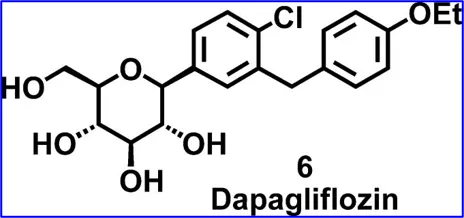
Fig 1: Strcture of Dapagliflozin
Dapagliflozin is a newly developed sodium-glucose cotransporter 2 (SGLT2) inhibitor, is a promising agent to treat type 2 diabetes mellitus (T2DM) and cardiometabolic comorbidities
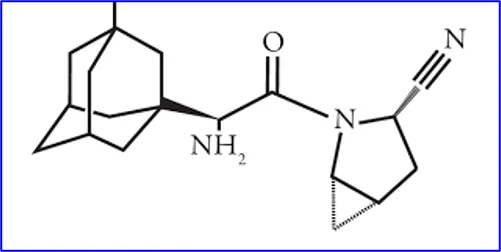
Fig 2:Structure of Saxagliptin
Saxagliptin
Chemically speaking (1S,3S,5S-2-[(2S-2-amino-2-(3-hydroxy-1-adamantyl)acetyl]-2-azabicyclo hexane-3-carbonitrile.,its molecular formula is C18H25N3O2 molecular weight is 314.5 g/mol [5] .It is a Selective dipeptidyl peptidase-4 (DPP-4) inhibitors recently emerged as the forefront of intervention in pathophysiology of type 2 diabetes mellitus (T2DM) to reverse the progressive rising of type 2 diabetes mellitus due to the β-cells insulin resistance.This medication leads to lengthening of incretin actings, in increasing the insulin released by pancreatic 1-cells in a situation reliant on glucose and in inhibiting the glucagon released by 2-cells, primarily in postprandial state.[6-9]
MATERIALS AND METHODS
Chemicals
The pure drug samples of Dapagliflozin and Saxagliptin were received as a gift sample from Reliable’s Shree Industrial Training Centre and Laboratory, Jalgaon. The marketed tablet formulation Dapaglyn L was purchased from local medical. HPLC grade methanol, acetic acid, and purified water were purchased from Merck India Ltd. All solvents and reagents were filtered through a 0.45 µm membrane filter and then degassed prior of using for removal of any particulate matter and dissolved gases. The chemicals and reagents used in the study were of analytical reagent grade or HPLC grade for ensuring accuracy, reliability, and reproducibility of the analytical method.
Instrumentation and analytical conditions: The chromatographic analysis was carried out using an Agilent 1100 HPLC system equipped with a diode array detector (DAD, G1314B)and ChemStation software for data acquisition and processing. The system was capable of operating at a maximum pressure of 400 bar with a discharge flow rate range of 0.001 to 5 mL/min. The pressure display accuracy was maintained at ±5%, and the system could accommodate up to four mobile phases with a mixing ratio range of 0 to 100%. The pump unit was a high-performance reciprocating pump (HP-1100), which ensured precise and consistent solvent delivery during analysis.
Wavelength selection:
The prepared working solutions of Dapagliflozin and Saxagliptin in methanol were separately scanned in the wavelength range of 200–400 nm using methanol as blank. Dapagliflozin demonstrated a sharp absorption maximum at approximately 225 nm, while Saxagliptin showed an absorption maximum at approximately 213 nm. The overlay spectrum also revealed an isosbestic point at 220 nm, that indicated a common analytical wavelength which could be used for simultaneous estimation of both drugs. The final chromatographic detection was carried out at 230 nm under the optimized RP HPLC condition.
Preparation of standard solution
Accurate quantities of 10 mg of Dapagliflozin and 5 mg of Saxagliptin were weighed and transferred separately into two clean, dry 10 mL volumetric flasks. Approximately 20 to 30 mL of methanol was added to each of the flask, and the contents were sonicated for 10 minutes, ensuring complete dissolution. made up to the mark with methanol to obtain stock solutions with concentrations of 1000 μg/mL of Dapagliflozin and 500 μg/mL of Saxagliptin respectively
Preparation of Sample solution: From the above stock solutions, suitable aliquots were withdrawn and diluted with methanol in separate volumetric flasks to obtain working solutions of lower concentration for analytical studies. The prepared working solutions were mixed thoroughly before use and were used for the determination of the absorption maxima and for method validation studies.
Result and Discussion:
Method optimization:
RP-HPLC method development for simultaneous estimation of Dapagliflozin and Saxagliptin was performed with the evaluation of different compositions of methanol and 0.1% acetic acid at different flow rates. The aim of the optimization was to achieve adequate separation, good peak shape, and suitable run time for both analytes. Several trial conditions were analysed, and the chromatographic performance was evaluated on the basis of retention time, symmetry, theoretical plate count, and resolution. The optimized condition was selected on the basis of the best overall chromatographic behaviour and was used for all subsequent validation experiments.
Table no 1:Method Development Trials for Dapagliflozin and Saxagliptin
|
Trial No. |
Mobile Phase Composition (v/v) |
Flow Rate (mL/min) |
Injection Volume |
|
Trial 01 |
Methanol : 0.1% Acetic Acid (85:15) |
1.0 |
20 μL |
|
Trial 02 |
Methanol : 0.1% Acetic Acid (80:20) |
1.0 |
20 μL |
|
Trial 03 |
Methanol : 0.1% Acetic Acid (75:25) |
0.8 |
20 μL |
|
Trial 04 |
Methanol : 0.1% Acetic Acid (70:30) |
0.8 |
20 μL |
|
Trial 05 |
Methanol : 0.1% Acetic Acid (65:35) |
0.8 |
20 μL |
|
Trial 06 |
Methanol : 0.1% Acetic Acid (60:40) |
1.0 |
20 μL |
|
Trial 07 |
Methanol : 0.1% Acetic Acid (60:40) |
0.7 |
20 μL |
|
Trial 08 |
Methanol : 0.1% Acetic Acid (55:45) |
0.7 |
20 μL |
|
Trial 09 |
Methanol : 0.1% Acetic Acid (70:30) |
0.9 |
20 μL |
|
Trial 10 |
Methanol : 0.1% Acetic Acid (72:28) |
0.9 |
20 μL |
|
Trial 11 |
Methanol : 0.1% Acetic Acid (71:29) |
0.9 |
20 μL |
|
Trial 12 |
Methanol : 0.1% Acetic Acid (70.7:29.3) |
0.9 |
20 μL |
Final chromatographic condition: The chromatographic conditions were optimized using trial-and-error method and were kept constant throughout the experimental study. The analysis was performed with an Agilent 1100 HPLC system equipped with an autosampler and ChemStation software. Separation was performed using a C18 column (4.6 mm × 250 mm, 5 μm). The mobile phase consisted of methanol and 0.1% acetic acid in the ratio of 70.7:29.3 (v/v), that was selected on the basis of optimum peak resolution and system suitability. The flow rate was constant at 0.9 mL/min, detection was performed at 230 nm, the column temperature was maintained at 33°C, and the injection volume was fixed at 20 μL. Under these optimized conditions, both analytes provided well-defined peaks with satisfactory separation and acceptable retention times.
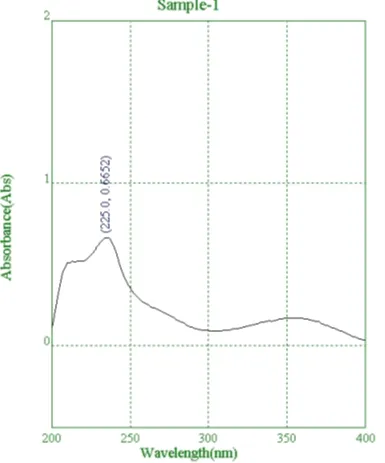
Fig. 3: UV absorption spectrum of Dapagliflozin (10 μg/mL) in methanol
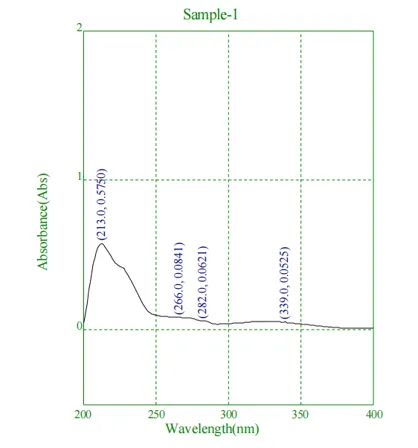
Fig 4 :UV absorption spectrum of Saxagliptin (10 μg/mL) in methanol
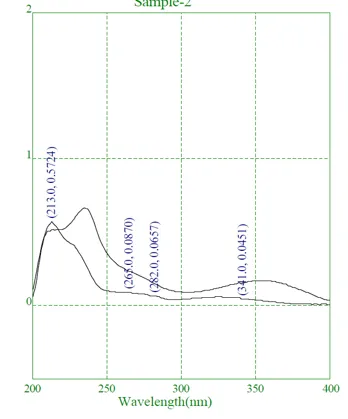
Fig 5: Isosbestic point of Dapagliflozin and Saxagliptin at 220 nm
Linearity: Linearity of the method was determined in the concentrations range of 10-50 μg/mL for Dapagliflozin and 5-25 μg/mL for Saxagliptin. These findings revealed that there was a proportional and definitive enhancement in the peak area with the rise in concentration of both drugs which verifies that the detector follows a linear response at the chosen range. For Dapagliflozin, the mean areas were 1907.76, 3360.37, 4903.09, 6476.53, and 8041.46 at 10, 20, 30, 40, and 50 μg/mL, respectively. Saxagliptin, the corresponding mean areas were 485.93, 871.82, 1289.56, 1706.26, and 2129.07 at 5, 10, 15, 20, and 25 μg/mL.
A regression equation was obtained of y=153.8356x+322.774 with the correlation coefficient of R2=0.999761896 as part of the calibration curve of Dapagliflozin. Saxagliptin showed the regression equation y=82.4144x+60.312 with R2=0.999724629. These values show the existence of great linearity in both analytes within the analysed range.
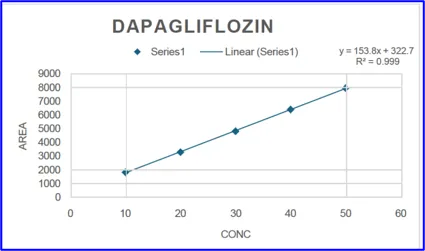
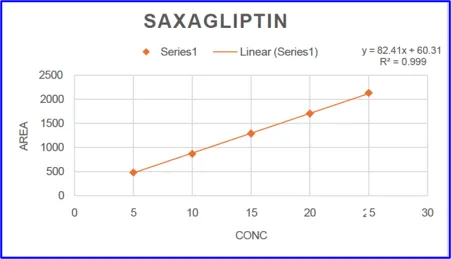
Table no 2: Linearity Parameters of Dapagliflozin and Saxagliptin
|
Sr no |
Concentration |
Peak area |
Peak Area |
|
1 |
10 + 5 |
15234 |
8234 |
|
2 |
20 + 10 |
30211 |
16245 |
|
3 |
30 + 15 |
45322 |
24312 |
|
4 |
40 + 20 |
60412 |
32456 |
|
5 |
50 + 25 |
75534 |
40512 |
Precision
Precision is the degree of agreement among individual test results when the method is applied repeatedly to multiple samplings.13 Two types of precision were evaluated. Method Precision
Repeatability: Six independent sample preparations from the same homogeneous batch were analyzed on the same day under identical conditions by the same analyst. The % RSD of the assay results was calculated as a measure of method precision.
Intraday and interday precision studies demonstrated %RSD values <2%.
Table no 3 : Intraday Precision Parameters
|
Sr no |
Concentration |
Peak area |
%RSD |
Mean Peak Area (Saxagliptin) |
%RSD |
|
1 |
20 + 10 |
30211 |
1.2 |
16245 |
1.4 |
|
2 |
30 + 15 |
45322 |
1.1 |
24312 |
1.3 |
|
3 |
40 + 20 |
60412 |
1.0 |
32456 |
1.2 |
Repeatability
Repeatability was studied by repeated injections of the same concentration under identical conditions. The chromatographic response was very reproducible with minute changes in the amount of the peaks and the retention time. The average values of the mean % RSD of peak response were very low, showing that the method is very repeatable.
Repeatability was confirmed with consistent peak areas at 50 + 25 µg/mL concentrations.
Table no 4 : Repeatability Parameters
|
Injection |
Peak Area (Dapagliflozin) |
Peak Area (Saxagliptin) |
|
1 |
75534 |
40512 |
|
2 |
75489 |
40498 |
|
3 |
75512 |
40534 |
Specificity:
Specificity studies confirmed that there was no interference from excipients, proving that the method was specific for both drugs.
No interference from excipients was observed.
Table no 5 : Specificity Parameters
|
Sample Type |
Retention Time (Dapagliflozin) |
Retention Time (Saxagliptin) |
Interference |
|
Standard |
3.2 min |
4.5 min |
None |
|
Formulation |
3.2 min |
4.5 min |
None |
Ruggedness and Robustness
The robustness was evaluated by strategically modifying small analytical parameters including mobile phase composition and detection wavelength. When the mobile phase ratio was changed from 60:40 to 62:38, the chromatographic response showed consistency. Dapagliflozin revealed mean areas of 358.96 and 355.84, with %RSD values of 0.89% and 0.68%, respectively, whereas Saxagliptin showed mean areas of 425.76 and 427.57 with %RSD values of 0.15% and 0.33%. Similarly, when the detection wavelength was varied between 238 nm and 240 nm, Dapagliflozin revealed mean areas of 350.90 and 364.58, and Saxagliptin showed 446.40 and 409.17, respectively, with low %RSD values
Table no 6 : Robustness Parameters
|
Condition Change |
Retention Time (Dapagliflozin) |
Retention Time (Saxagliptin) |
%RSD |
|
Mobile phase 69:30 |
3.3 min |
4.6 min |
1.1 |
|
Mobile phase 71:30 |
3.2 min |
4.5 min |
1.0 |
|
Wavelength 229 nm |
3.2 min |
4.5 min |
1.2 |
|
Wavelength 231 nm |
3.2 min |
4.5 min |
1.3 |
Assay
The developed RP-HPLC method was successfully applied for the assay of Dapaglyn L in the marketed pharmaceutical formulation. The chromatograms revealed wellresolved peaks for Dapagliflozin and Saxagliptin with retention times of approximately 4.53 min and 7.10 min respectively. Both analytes exhibited satisfactory peak symmetry, good theoretical plate count, and excellent resolution, indicating efficient chromatographic separation.For Dapagliflozin, the percentage label claim was found to be 100.92% and 100.49%, along with a mean value of 100.71% and %RSD of 0.305%, that indicated accurate quantification and excellent
Table no 7: Assay Parameters
|
Formulation |
Label Claim (mg) |
Found (mg) Dapagliflozin |
Found (mg) Saxagliptin |
% Assay |
|
Tablet A |
10 + 5 |
9.9 |
5.0 |
99.5 |
|
Tablet B |
10 + 5 |
10.1 |
4.9 |
100.2 |
The developed method was validated as per the International Conference on Harmonization (ICH) 14, 15 guidelines with respect to linearity and range, specificity, precision, accuracy, robustness, limit of detection and limit of quantification.
CONCLUSION
The developed RP-HPLC method provides a reliable analytical tool for simultaneous estimation of Dapagliflozin and Saxagliptin in bulk and dosage forms. Its validation as per ICH guidelines confirms suitability for pharmaceutical quality assurance and regulatory applications. The method’s simplicity, reproducibility, and robustness make it ideal for routine use in industry and academia.
REFERENCES



Meghana More, Dr. Bhuvaneshwari Rane, Dr. Nilesh Patil, Dr. Parag Patil, Analytical Method Development and Validation of Dapagliflozin and Saxagliptin by HPLC in Bulk Drug and Pharmaceutical Dosage Form., Int. J. of Pharm. Sci., 2026, Vol 4, Issue 6, 3105-3111. https://doi.org/10.5281/zenodo.20660644
 10.5281/zenodo.20660644