

We use cookies to ensure our website works properly and to personalise your experience. Cookies policy
1Department of Pharmacy, Y.N.P College of Pharmacy, Vangaon, Dahanu
2Department of Pharmacy, Y.N.P College of Pharmacy, Vangaon, Dahanu
3Department of Pharmacy, Y.N.P College of Pharmacy, Vangaon, Dahanu
4Department of Pharmaceutics, Y.N.P College of Pharmacy, Vangaon, Dahanu
Clinical trials are crucial for advancing medications that are safe, reliable, and successful. Clinical trials are time-consuming processes that involve patient recruiting, enrollment, ongoing monitoring, medical compliance, and retention. High failure rates in clinical trials result in an ineffective drug development cycle, resulting in increased pharmaceutical industry expenditures. Artificial Intelligence helps decision-makers to evaluate clinical trials in real-life situations, which boosts trial accuracy, reduces the burden on the pharmaceutical industry, and increases trial success rates. By means of AI tooling, automatic data can be created and maintained that includes the complete medical history of the patient. AI can intelligently assess data and generate the requisite analytical reports. This article explains how Artificial Intelligence has revolutionized the field of clinical trials and proves to be a boon in terms of future aspects.
Clinical trials are research studies that involve human participants and are designed to evaluate the effect of new treatments, tests, or procedures on health outcomes. Clinical studies comprise approximately 50% of the spending, with Phase III trials being the most complex and demanding. The high failure rate of clinical trials is one of the most significant barriers in designing new medications. Over one-third of Phase III compounds are never approved by the regulatory agency. Only one out of every ten compounds that enter clinical trials advances to FDA approval due to the changing probability of success for compounds undergoing each stage of trials [1], as represented in Fig.1.1.
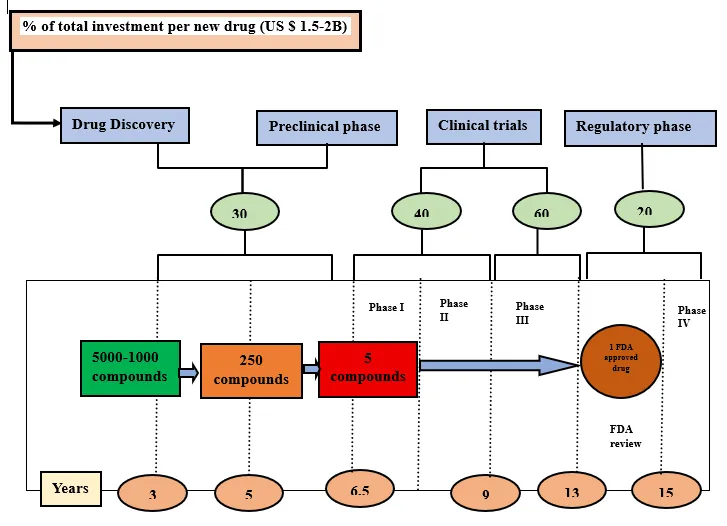
Fig.1.1 Drug Development Cycle.
Clinical trial design comprises patient recruitment and selection, site selection, monitoring, data collection, and analysis. Patient recruitment and selection are the most challenging of these procedures; as a result, 30% of Phase III trials are cancelled prematurely, while 80% of studies make it to the enrollment deadline. Another challenge in clinical trials is the time required from the “last subject last visit” to data submission to regulatory agencies, which requires substantial data collecting and processing procedures. These challenges in clinical trials have emerged because of AI and digitization [2]. Artificial Intelligence has the potential to increase the probability of success in drug development by making significant improvements in multiple areas of R&D, such as novel target identification, drug candidate selection, biometric data analysis from wearable devices, and the prediction of drug effects in patients with diseases. An AI model helps to improve trial design standards, and researchers in this subject are focusing on the application of AI-based software in three primary areas, including information engines, patient stratification, and trial operation represented in Fig.1.2.

The application of Artificial Intelligence in clinical trials has enormous potential and possibilities, and companies worldwide utilise it due to its efficacy, safety benefits, and cost savings. However, it allows for immediate scientific improvements than ever before [3]. As per the discussions mentioned earlier, AI devices are primarily divided into two types. The first group includes machine learning (ML) algorithms used to analyse structured data, such as Electrophysiological (EP) data, imaging, and genomics. In medical applications, ML techniques seek to cluster individuals’ characteristics or predict disease outcomes [4]. The second group comprises natural language processing (NLP) approaches that extract information from unstructured data, such as clinical notes and medical journals, in order to complement and improve organized medical data. NLP processes aim to convert texts into machine-readable structured data that may subsequently be examined using machine learning techniques [5]. For better understanding, the roadmap from clinical data generation through ML data analysis and NLP data enrichment, to clinical decision making, is illustrated in Fig.1.3.
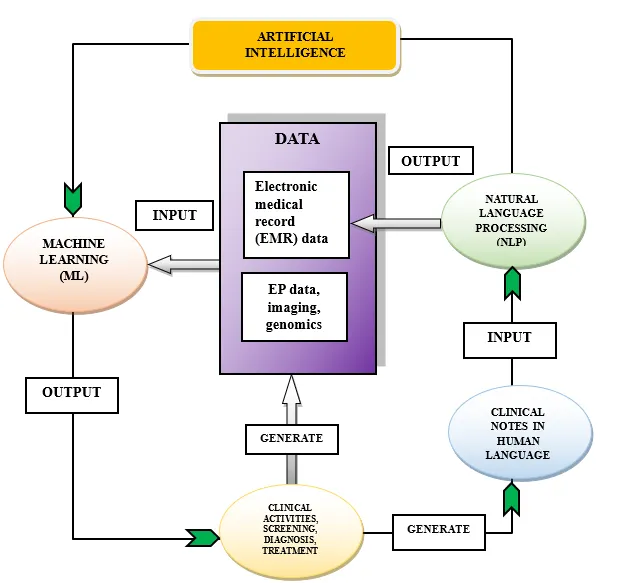
Fig.1.3 Road map of clinical data generation
Furthermore, there are two main types of trials or studies, namely interventional and observational. Interventional studies seek to discover more about a specific intervention or treatment. A computer divides participants into distinct treatment groups. This allows the research team to compare the groups. Observational studies investigate people’s behavior in various contexts. The researchers monitor the participants, but they have no influence over the therapies they receive, and participants aren’t assigned to any treatment groups. There are different types of trials within these groups, where interventional trials consist of prevention trials, screening trials, and treatment trials, whereas observational studies consist of cohort studies, case control studies, and cross-sectional studies [6]. The integration of Artificial Intelligence (AI) into clinical trials holds immense promise, yet current AI-related studies reveal significant limitations in trial design and reporting quality. A critical concern is the prevalence of small, single-center trials, which restrict the universality and robustness of findings. Data represent that 77.57% of AI-related trials enrolled fewer than 1000 participants, and 34.03% had 100 or fewer participants. Such limited sample sizes hinder statistical power and reduce the ability to detect meaningful clinical effects across diverse populations. Moreover, the majority of these studies employed observational designs (56.99%), with 40.08% of those being non-prospective. This reliance on retrospective data introduces potential biases and limits the capacity to establish causal relationships. Among interventional trials, methodological rigor was often lacking, and 47.30% were non-randomized, and only 35.40% incorporated blinding. These figures fall short compared to broader benchmarks in the ClinicalTrials.gov database, suggesting that AI trials may not consistently meet established standards for trial validity and reliability. Another notable issue is the imbalance between AI trial structures and traditional clinical trial stages. Over 90% of AI-related trials could not be classified into traditional phases (Phase I-IV), indicating that existing frameworks may be unsuitable to accommodate the repetitive and adaptive nature of AI technologies. This misalignment calls for the development of new staging models that reflect the unique lifecycle of AI systems, including continuous learning and real-time updates. Transparency in reporting is also alarmingly low. Only 1.74% of AI-related trials reported results on ClinicalTrials.gov, with 94.68% of completed studies failing to disclose outcomes. This lack of public reporting undermines reproducibility, contributes to disclosure bias, and obstructs the broader scientific community’s ability to evaluate and build upon existing work. Interestingly, multicenter interventional trials were more likely to report results, suggesting that the institutional collaboration and infrastructure may play a role in promoting transparency. To advance the field, there is a pressing need for more rigorous trial designs, including multicenter, randomized, and blinded studies. Additionally, standardized reporting frameworks such as CONSORT-AI and SPIRIT-AI should be widely adopted to ensure consistency and clarity. Regulatory bodies must also consider revising clinical trial staging criteria to better reflect the dynamic nature of AI interventions. Without these improvements, the full potential of AI in clinical research may remain unrealized. By March 2022, a total of 1,725 clinical trials involving artificial intelligence had been registered on ClinicalTrials.gov, reflecting a growing global interest in AI’s role within healthcare research. A sharp increase in trial registrations began around 2016, coinciding with the rise of Industry 4.0—a technological revolution marked by the integration of smart systems, big data, and automation across industries. This period also saw governments and research institutions begin to prioritize AI development, recognizing its transformative potential in diagnostics, treatment planning, and clinical decision-making. The convergence of technological advancement and policy support created fertile ground for AI applications in medicine, leading to a surge in exploratory and interventional studies. AI began to be used in areas such as patient recruitment, predictive modeling, and real-time monitoring within clinical trials. However, despite this growth, many of these studies still face challenges in design quality, transparency, and alignment with conventional clinical trial frameworks, highlighting the need for reform [7].
IMPORTANCE: In this editorial, we will examine the significance of clinical trials and their contributions to contemporary medicine.
CONVENTIONAL METHODS: The safety of new drugs is rigorously assessed through clinical trials, which serve as a vital checkpoint in the development process. Following preclinical research, they progress through four distinct phases. Phase I emphasizes safety and dosage in a cluster of healthy volunteers. Phase II highlights efficacy and side effects in patients with the target condition. Phase III involves large-scale testing to confirm effectiveness and monitor adverse reactions, often comparing the new treatment to existing standards. Finally, Phase IV occurs post-approval, assessing long-term safety and real-world performance. Despite their structured design, trials often face challenges such as under-enrolment, participant attrition, and inconsistent data, which can hinder successful outcomes. In phase I, a medication or treatment is first tested on a limited group of patients (20–80) in order to determine its safety and detect any side effects. Within three to six months, almost 70% of those who begin this procedure advance to the next stage. In phases II and III, a larger sample size (100–300 persons) is used to test the medication or therapy in order to assess its safety and efficacy. Approximately 33% of persons head on to the next phase after a year or two. Ten times as many people participate in Phase III as in Phase II (1000–3000) in order to determine efficacy, identify and track side effects, and compare outcomes with those of alternative treatments. Merely 25% to 33% of people advance to the next level, and it might take one to four years. Following approval by the Food and Drug Administration (FDA) and approval for wide public use, a medication enters phase IV. In order to identify the optimum uses for it and guarantee its safety, scientists are still keeping an eye on how it affects the general public. As a result of the rigorous regulatory scrutiny required prior to reaching this stage, the process often extends beyond one year, with success rates typically reported between 70% and 90%. In some studies, the initial phase I involves testing subtherapeutic dosages on a small number of participants (10 to 15) [15].
INNOVATIVE APPLICATION/ OPPORTUNITIES OF AI IN THE FIELD [16,17]: This paper presents an in-depth examination of the role of artificial intelligence in adaptive clinical trials, highlighting its diverse applications across multiple phases of the trial process, including:
Trial design: Artificial intelligence algorithms contribute significantly to the optimization of clinical trial design by accurately determining appropriate sample sizes, selecting relevant and measurable endpoints, and facilitating the development of personalized treatment strategies. These capabilities enhance trial efficiency, improve data quality, and support more targeted, patient-centric approaches to healthcare research.
Patient recruitment: AI-powered tools significantly enhance the speed and efficiency of patient recruitment in clinical trials by analysing electronic health records and other data sources to identify individuals who meet specific eligibility criteria. This data-driven approach streamlines enrolment, reduces manual screening efforts, and improves the overall success rate of recruitment strategies.
Monitoring and data analysis: Artificial intelligence significantly improves data quality and analytical precision in clinical trials by automating data collection processes, detecting inconsistencies and biases, and producing real-time insights from complex datasets. These capabilities support more accurate decision-making, reduce manual errors, and enhance the overall reliability and efficiency of clinical research outcomes.
Predictive modelling: Artificial intelligence algorithms enable the development of predictive models that estimate individual responses to specific treatments. By analysing clinical, demographic, and molecular data, these models support more personalized and targeted therapeutic interventions, thereby improving treatment efficacy, minimizing adverse effects, and advancing the precision and efficiency of clinical decision-making.
Imaging: Artificial intelligence significantly advances the analysis of medical images in clinical trials by enabling automated image segmentation, classification, and quantification. These capabilities improve diagnostic accuracy, reduce variability in interpretation, and accelerate data processing, thereby enhancing the reliability of imaging endpoints and supporting more efficient and consistent trial outcomes.
ADVANTAGES/IMPACT OF AI IN THE FIELD [18]:
DISADVANTAGES/ETHICAL ISSUES OF AI IN THE FIELD [19,20]:
Challenges related to machine learning science: AI algorithms are susceptible to various limitations, including restricted applicability beyond their training domains, inherent biases, and brittleness—manifested in their vulnerability to misleading inputs. Key considerations encompass dataset shift, inadvertent modelling of confounding variables rather than true signals, the propagation of unintended biases in clinical settings, the need for algorithmic interpretability, the development of reliable confidence metrics, and the challenge of generalizing across diverse populations.
Challenges in generalisation to new populations and settings: Most AI systems currently lack robust generalizability, and remain largely unsuitable for clinical application across diverse medical datasets. Models exhibiting brittleness may possess critical blind spots, potentially leading to erroneous or harmful decisions. Achieving generalization is particularly challenging due to technical heterogeneity across clinical sites—including disparities in equipment, coding standards, electronic health record systems, and laboratory methodologies—as well as differences in local clinical workflows and administrative protocols.
Human barriers to AI adoption in healthcare: Despite the development of highly effective algorithms capable of addressing the aforementioned challenges, significant human-related barriers to adoption persist. To ensure that such technologies translate into tangible patient benefits, it is essential to prioritize clinical relevance and patient-centred outcomes, enhance methodologies for algorithmic interpretability, and deepen our understanding of human–computer interaction dynamics.
Complexity of Medical Terminology: A major impediment to accurate medical translation is the intricate and domain-specific nature of medical and pharmaceutical terminology. Such specialized terminology, frequently found within clinical and regulatory documentation, necessitates accurate and context-sensitive interpretation. Standard AI translation tools frequently lack the linguistic depth and cultural sensitivity required for such complex medical content.
Regulatory Compliance and Patient Safety: Regulatory agencies such as the Food and Drug Administration (FDA) enforce stringent standards to ensure the accuracy, consistency, and reliability of clinical trial documentation. These standards are critical not only for safeguarding public health but also for maintaining the integrity of scientific research. While artificial intelligence technologies have demonstrated considerable potential in streamlining documentation processes, exclusive reliance on AI without rigorous human oversight introduces substantial risks. Automated systems may misinterpret complex medical terminology, overlook contextual subtleties, or fail to adhere to regulatory nuances, thereby compromising data quality. Such errors can result in delayed approvals, increased scrutiny from regulatory bodies, and, most importantly, potential threats to patient safety. Therefore, a hybrid approach that integrates AI capabilities with expert human validation is essential to uphold the standards required in clinical research and regulatory compliance.
FUTURE SCOPE: The future of clinical trials will be increasingly shaped by the integration of advanced artificial intelligence with breakthroughs in personalized medicine and computational simulation. This convergence is expected to enhance trial efficiency, optimize patient selection, and enable more precise modelling of therapeutic outcomes, thereby accelerating drug development and regulatory approval [21]. The integration of advanced digital technologies, particularly artificial intelligence (AI), is poised to revolutionize the landscape of clinical trials. Virtual trials, enabled by these innovations, offer a transformative approach to clinical research by significantly reducing operational costs, minimizing delays, and alleviating logistical challenges for participants. It is estimated that up to 50% of future clinical studies may incorporate virtual components, thereby enhancing patient retention and streamlining the overall development process. AI plays a pivotal role in this evolution by automating complex tasks, optimizing trial design, and facilitating real-time data analysis. These capabilities not only conserve human effort, time, and financial resources but also contribute to safer and more efficient trial execution. Major pharmaceutical companies have begun investing substantially in AI-driven platforms, recognizing their potential to accelerate drug development and improve decision-making across the clinical research continuum. Despite these advancements, the adoption of AI in clinical trials remains in its nascent stages, with considerable scope for expansion. The future prospects of AI include its integration with personalized medicine and computational simulation, enabling more precise patient stratification and predictive modelling of therapeutic outcomes. Moreover, AI-supported investigations are demonstrating improved speed, safety, and cost-effectiveness, underscoring the technology’s capacity to enhance both the scientific rigor and operational efficiency of clinical trials. As regulatory frameworks evolve to accommodate these innovations, the clinical research industry is expected to witness a paradigm shift toward more adaptive, data-driven methodologies. Continued investment in AI, coupled with interdisciplinary collaboration and ethical oversight, will be essential to fully realize its transformative potential in clinical trial design, execution, and analysis [22].
CONCLUSION: Artificial intelligence is poised to redefine the future of clinical trials by enhancing efficiency, precision, and scalability across all phases of research. Through automation, predictive analytics, and real-time data processing, AI significantly reduces operational costs and accelerates timelines. Its integration with virtual trial platforms and personalized medicine enables more adaptive, patient-centric approaches to drug development. While leading pharmaceutical companies have begun investing in AI technologies, widespread adoption remains limited, with regulatory, ethical, and technical challenges still to be addressed. However, the trajectory of AI in clinical research is promising. As digital infrastructure evolves and interdisciplinary collaboration strengthens, AI is expected to play an increasingly central role in optimizing trial design, execution, and analysis. Continued innovation and responsible implementation will be critical to unlocking AI’s full potential in delivering safer, more effective therapies to patients worldwide.
REFERENCES:




Yash Surti*, Atharva Ambekar, Harsh More, Samali Raut, Artificial Intelligence in Clinical Trials Development: A Systematic Approach and Overview, Int. J. of Pharm. Sci., 2026, Vol 4, Issue 6, 979-989. https://doi.org/ 10.5281/zenodo.20532288
 10.5281/zenodo.20532288