

We use cookies to ensure our website works properly and to personalise your experience. Cookies policy
1,3,4,5,6Research Scholar, Siddhi’s Institute of Pharmacy, Nandgaon, Murbad, Thane-421201, Maharashtra, India.
2Assist. Professor, Dept. of Pharmaceutical Chemistry, Siddhi’s institute of Pharmacy, Nandgaon, Murbad, Thane-421201 Maharashtra, India.
Withania somnifera, commonly known as ashwagandha, is a widely recognized medicinal herb in Ayurvedic medicine. Due to its various therapeutic benefits, it has emerged as a promising nutraceutical. is renowned for its adaptogenic, anti-inflammatory, antioxidant, and neuroprotective properties. Ashwagandha has also been studied for its potential in managing stress, enhancing metabolic balance, supporting immune health, and improving cognitive function. review examines the primary phytochemical constituents of ashwagandha, especially withanolides, and their biological activities. It is highlights the current state of scientific research on this plant. The review explores the underlying mechanisms of action, available clinical evidence, and safety considerations. Overall, ashwagandha shows significant potential as a natural supplement for supporting health and preventing diseases, and further comprehensive clinical studies are needed. [3] In recent years, there has been a notable increase in reports highlighting the health benefits of winter cherry, also known as Ashwagandha. Current research explores various aspects of its impact on human health, such as its neuroprotective, calming, and adaptogenic properties, as well as its influence on sleep. Additionally, studies have noted its anti-inflammatory, antimicrobial, heart-protective, and blood sugar-regulating effects. There are also findings related to its effects on reproductive health and its interaction with hormonal processes. This expanding body of research underscores the potential of Ashwagandha as a beneficial natural remedy for several health issues. This review aims to present the latest findings and offer a thorough summary of the current understanding of Ashwagandha's possible uses, along with any known safety issues and precautions. [1]
Products made from food that provide health and medical benefits, such as preventing and treating illnesses, are referred to as nutraceuticals. The term was coined in 1989 by Dr.Stephen De Felice by combining the words "nutrition" and "pharmaceutical." These products aim to increase lifespan, prevent chronic diseases, enhance overall health, and reduce the aging process. They are part of the growing field of nutrition that focuses on maintaining health rather than just treating diseases. Other terms such as "dietary supplements," "food supplements," and "functional foods" are often used. Although these terms are similar, they can have slight differences. Nutraceuticals are foods or components of food that offer additional health benefits. Functional foods are common foods that have been slightly modified to improve their health benefits. It contain essential nutrients like vitamins, minerals, and other beneficial elements as dietary supplements.[10]
Indian ginseng is also referred to as Indian winter cherry, Ashwagandha, or the herb Withania somnifera. The part of the plant used in medicine is the root. The name "Ashwagandha" comes from the word "ashwa," which means horse. It is believed that taking the root can give someone strength similar to that of a horse. The second part of the name, "gandha," means fragrance and relates to the unique smell of the fresh root. Since ancient times, it has been used in Ayurvedic medicine to support the nervous system. This is due to its adaptogenic properties and its role as a medicinal substance known as "rasayana." [1]
Types of Nutraceuticals:
Ashwagandha (Withania somnifera):
[16]
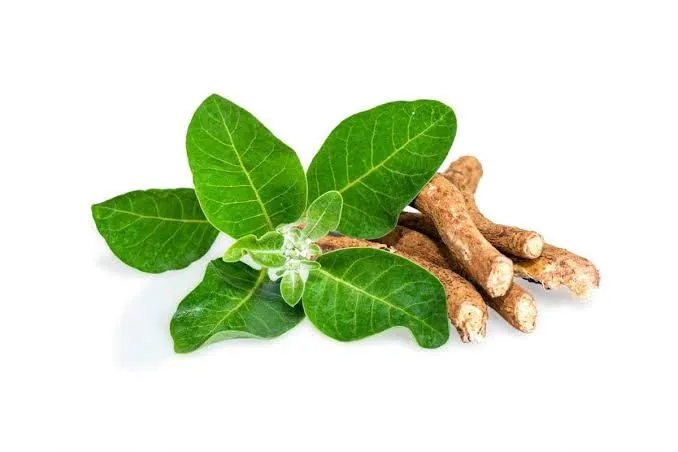
Botanical Description:
| Family | Solanaceae |
|---|---|
| Synonym | Withania somnifera |
| Common Name | Ashwagandha, Withania, Indian Ginseng |
| Biological Source | Ashwagandha is derived from the root of the Withania somnifera |
| Molecular Formula | C28H38O6 |
| Molecular weight | 470.6 g/mol |
| Structure | |
| Habitat | India, the Middle East, and Africa |
| Chromosome number | Tetraploid (2n=48) |
17
Traditional and Ayurvedic Significance:
Ashwagandha (Withania somnifera), often known as Indian ginseng or winter cherry, is one of the most valuable herbs in Ayurvedic medicine. Traditionally classified as a "Rasayana," it promotes vitality, longevity, and overall well-being. The term ashwagandha, which translates to "smell of a horse," alludes to the plant's unique aroma as well as its ability to provide horses energy and stamina. According to Ayurvedic traditions, it is used to lower stress, increase endurance, support mental health, and regenerate the body. It has also been used in treatments for conditions like arthritis, respiratory problems, male infertility, and insomnia.[5]
Ayurveda, an ancient system of medicine from India with a history spanning thousands of years, suggests the use of herbal treatments to support memory and cognitive function.New research indicates that products derived from plants can help improve memory and cognitive abilities. The root extract of Ashwagandha, scientifically known as Withania somnifera (L.) Dunal, is a key remedy in Ayurveda .It is referred to as a “Rasayana” or an “adaptogen” .Ashwagandha is also commonly called Indian ginseng or winter cherry.In addition to its benefits for memory and cognition, it has several other health effects, including reducing stress, acting as an antioxidant, supporting the immune system, promoting overall health and vitality, reducing inflammation, alleviating arthritis symptoms, and potentially preventing tumor growth.[13]
Historical and Ayurvedic significance:
Ashwagandha is a traditional herb that has gained attention for its modern health benefits. It has been used in traditional Indian medicine for nearly 3,000 years. The root of the plant has been used as a natural remedy to help with various issues, such as increasing energy levels, promoting better sleep, reducing mild pain, and enhancing general well-being. Although it originated in India, it is now cultivated in several regions around the world, including the Mediterranean, the Himalayas, Africa, the Canary Islands, South Africa, and Australia. In recent years, scientists have shown growing interest in ashwagandha due to its potential benefits in managing stress, improving brain function, and enhancing physical performance. Some research suggests it may help in reducing symptoms of anxiety and OCD, supporting brain health, and preventing infections and inflammation. There is also evidence that ashwagandha may play a role in managing conditions like cancer, diabetes, and infertility.[6]
The roots of *Withania somnifera* are widely used in Ayurveda, the traditional Indian system of medicine.WS is classified as a rasayana, which are substances used to enhance physical and mental health, protect the body from diseases and harmful environmental conditions, and slow down the aging process.It has been traditionally used to help manage mood in individuals experiencing behavioral issues.This study examined the anxiolytic (anxiety-reducing) and antidepressant effects of bioactive glycowithanolides (WSG), extracted from the roots of WS, in rats.WSG was given orally at doses of 20 and 50 mg/kg once daily for five days.The effects were compared with those of lorazepam, a benzodiazepine used to reduce anxiety, given at a dose of 0.5 mg/kg, and imipramine, a tricyclic antidepressant, given at 10 mg/kg, both administered once 30 minutes before the tests.WSG showed an anxiolytic effect similar to lorazepam in tests such as the elevated plus-maze, social interaction, and feeding latency in an unfamiliar environment.Additionally, both WSG and lorazepam decreased levels of tribulin, a biomarker associated with anxiety, in the rat brain after the administration of pentylenetetrazole, an agent that increases anxiety.WSG also demonstrated antidepressant effects, similar to imipramine, in the forced swim-induced behavioral despair and learned helplessness tests.These findings support the traditional Ayurvedic use of WS as a mood stabilizer for conditions involving anxiety and depression. [2]
Mechanism Of Action: [19]
The withanolides act as important hormone precursors that can be converted into human physiologic hormones as needed. Ashwagandha is considered to be amphoteric, meaning it can help regulate key physiologic processes. The theory suggests that when there is an excess of a particular hormone, the plant-based hormone precursor occupies cell membrane receptor sites, preventing the actual hormone from attaching and exerting its effect. Conversely, if hormone levels are low, the plant-based hormone can exert a mild effect. Ashwagandha is also regarded as an adaptogen, which means it helps the body withstand stressors. Additionally, it has antioxidant properties. Some studies have also shown that ashwagandha can have an immunostimulatory effect.
Top of Form
Bottom of Form
PURPOSE AND SCOPE
Purpose:
To examine the pharmacological, therapeutic, and clinical potential of ashwagandha as a nutraceutical, with an emphasis on its phytochemical, adaptogenic, and neuroprotective qualities. The primary objective of this article is to provide readers with a comprehensive understanding of Withania somnifera, also referred to as ashwagandha, a common herb used in traditional Ayurvedic medicine. The evaluation aims to evaluate its pharmacological properties, therapeutic benefits, mechanisms of action, and potential clinical applications based on scientific data. [7]
Scope:
PHYTOCHEMICAL COMPOSITION : [8]
| Compound Class | Examples | Source in Plant | Therapeutic Role |
|---|---|---|---|
| Withanolides | Withaferin A, Withanolide A/D | Roots, Leaves, Berries | Adaptogenic, anti-inflammatory, anticancer |
| Alkaloids | Anaferine, Isopelletierine | Roots and leaves | Neuroprotective, analgesic |
| Saponins | Glycosides | Whole plant | Immune-modulating, antioxidant |
Botanical Description: [18]
Ashwagandha grows up to two feet, is woody, has upright stems, and is thornless. This small member of the Solanaceae family has meaty white and brown roots covered with small, bristly hairs. Another important medicinal portion of the plant are its roots. Ashwagandha has small, simple leaves that are oval and opposite, and yellow or green axillary flower clusters that develop into yellow and orange berries. These red berries contain yellow, kidney-shaped seeds that are typically collected in the late fall. The seeds will develop once planted in the spring.
Top of Form
Bottom of Form
Description: [12]
Macroscopic:
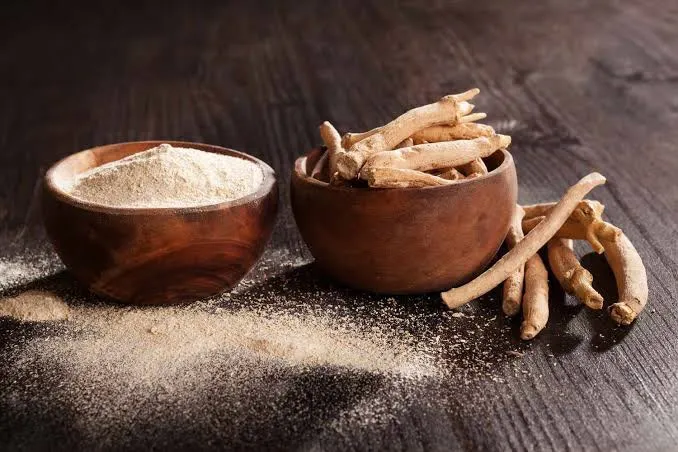
Roots are straight and unbranched, with thickness that changes as they age.
The roots have secondary roots that look like fibers.The outer surface of the roots is buff to grey-yellow in color and has long, parallel wrinkles.The crown consists of 2 to 6 remnants of the stem base.The stem bases vary in thickness, and the nodes are only clearly visible on the sides where the petioles emerge.These nodes are cylindrical in shape, green in color, and have longitudinal wrinkles.The fracture is short and uneven.The root has a characteristic odor and a bitter, acrid taste.
Microscopic:
In a transverse section of the root, the cork layer is either exfoliated or crushed.
When present, the cork cells are isodiametric and not lignified.The cork cambium consists of 2 to 4 diffuse rows of cells. The secondary cortex is made up of about twenty layers of compact parenchyma cells.The phloem contains sieve tubes, companion cells, and phloem parenchyma. The cambium is composed of 4 to 5 rows of tangentially elongated cells. The secondary xylem is hard and forms a closed vascular ring, separated by multiseriate medullary rays.A few are present.

Neuroprotective and Immunomodulatory Effects :
Another significant factor is the ability of ashwagandha to promote neurogenesis, or the growth of new nerve cells. Among other elements of cognitive function, this aids in improving learning, memory, and mental clarity. It encourages brain plasticity, which is essential for recovering from neurological injuries and coping with stress. Additionally, ashwagandha has potent immunomodulatory properties. It helps regulate immune responses by lowering excessive inflammation, which is often associated with immunological dysfunction and chronic illness. Because it balances immune activity and encourages both resistance to infections and the avoidance of autoimmune overactivation, ashwagandha is a helpful herb for maintaining immunological homeostasis.
A study confirmed that the root powder of Withania somnifera has immunomodulatory effects on immune activity in immunodeficient mice. It was found that administering Withania somnifera increased the total number of white blood cells and bone marrow cells, as well as elevated the levels of circulating antibodies and antibody-producing cells. It also encouraged the production of immune cells and improved the ability of macrophages to engulf pathogens. Another study, which was a randomized, double-blind, placebo-controlled trial with an open-label extension, was carried out to evaluate the effect of Ashwagandha extract on the immune system of healthy individuals. The results indicated that Ashwagandha extract significantly enhanced natural killer cell activity and cytokine levels compared to the placebo. [4]
Because of its beneficial properties, Withania somnifera is being researched for its potential to treat various diseases linked to inflammation, such as cardiovascular, lung, and autoimmune conditions, as well as diabetes, cancer, and neurodegenerative disorders.Studies conducted in laboratory settings have shown that this plant can help control mitochondrial function and programmed cell death, while also reducing inflammation by lowering levels of inflammatory indicators like cytokines (such as IL-6 and TNF-a), nitric oxide, and reactive oxygen species. [1]
Ashwagandha As a Neutraceutical :
The traditional Ayurvedic herb ashwagandha is well-known for its adaptogenic qualities, which aid in stress management. As a plant-based product with physiological effects, it has been researched for a number of health advantages, such as lowering anxiety, boosting cognitive function, and improving sleep. [9] [10]
CLINICAL EFFICACY AND SAFETY:
Clinical Efficacy:
Ashwagandha in Anxiety:
The definition of anxiety, according to Ashwagandha, is "an emotion characterized by feelings of tension, worried thoughts, and physical changes." When energy intake surpasses energy expenditure, it results in a persistent positive energy balance, which leads to excess body fat, weight increase, and obesity (Dinh et al., 2015). High-calorie food consumption has also been linked to a number of neuropsychiatric conditions, including binge eating, anxiety, and mood disorders (Castanon et al., 2014).
Ashwagandha in Parkinson’s Disease
In Parkinson’s disease, there is a loss of dopamine-producing neurons in the nigrostriatal system. This causes an imbalance between dopamine’s inhibitory effects and the excitatory effects of acetylcholine and glutamic acid. Several factors contribute to the damage of these neurons, including: Genetic disorders; Internal and external toxic substances; Neurological infections; Oxidative stress; Decreased levels of growth factors; The combined effect of multiple factors mentioned above. The disease occurs slightly more frequently in men than in women. While the exact cause is unknown, it is believed that estrogen may offer some protection against the disease. [1]
Ashwagandha and Alzheimer's:
Alzheimer's disease is a neurological condition primarily characterized by an irreversible reduction in cognitive abilities or gradual memory loss. Ashwagandha and its phytoconstituents have been shown to have an impact on Alzheimer's disease in a number of in vitro and in vivo investigations. According to a recent study measuring the anti-Alzheimer's component found in ashwagandha extract root, withanone exhibits substantial effectiveness, specifically by inhibiting amyloid β-42. Additionally, withanone was found to ameliorate the elevation of pro-inflammatory cytokine levels and increase the activity of glutathione, acetyl choline, and secretase enzymes (β and γ) (Pandey et al., 2018). According to docking simulation experiments, withanolide-A inhibited human acetyl cholinesterase with a high binding affinity (Grover et al., 2012).
Ashwagandha in Depression:
Mood swings and thoughts, misbehavior, disappointments, melancholy, hopelessness, and a lack of physical activity and self-worth are the key symptoms of depression, a diverse condition linked to brain health. When anxiety symptoms are combined with disruptions in hunger, sleep patterns, and other daily tasks, depression can result (Ahmed et al., 2017).
Current research indicates that taking ashwagandha may help reduce symptoms of stress, anxiety, and depression. However, more carefully planned and high-quality studies are required to support these findings and develop reliable guidelines for clinical use. These studies should aim to resolve inconsistencies in the existing evidence and determine the most effective amounts and lengths of time for treatment. [14]
Safety:
Ashwagandha, scientifically known as Withania somnifera (L.) Dunal, has been traditionally used in Ayurvedic medicine to boost memory and support cognitive function. [15]
According to the provided scientific data, ashwagandha's numerous pharmacological effects, including neuroprotective and anti-stress properties, make it a very powerful regenerative tonic. They are beneficial for various neurological illnesses, including Alzheimer's, Parkinson's, and Huntington's. Ashwagandha's neuroprotective properties are mostly attributed to its antioxidant activity. Reduced or normalized reversed lipid peroxidation levels and increased or normalized enhanced superoxide dismutase levels (mostly in the cerebellum, striatum, hippocampus, frontal cortex, etc.) are major contributors to antioxidant activity (Bhattacharya et al., 2000).
Ashwagandha Market Growth Factors: [12]
Launch of innovative products: Manufacturers are concentrating on creating creative product lines to meet the unique needs of customers and bolster their market presence in response to the growing demand for ashwagandha products. The market is expanding thanks to the creation of novel delivery systems including chewables, gummies, and lozenges as well as the blending of ashwagandha with other components like turmeric, magnesium, and rhodiola.
Global Regulations: [11]
INDIA (FSSAI): The Food Safety and Standards Authority of India (FSSAI) defines a nutraceutical as a food item that promotes health and has a physiological advantage. The Food Safety and Security Act was passed by parliament in 2006. Then, the FSSAI was established in 2008. For the pre-publication process of the FSSAI Act, which addressed food-related concerns across multiple departments. In order to avoid confusion among customers, merchants, producers, and investors, the FSSAI is in charge of establishing food standards
Australia (TGA): Some people may experience severe side effects, or "adverse events," from medications and herbal supplements containing the herb Withania somnifera. A common medical herb, Withania somnifera is available without a prescription at pharmacies, supermarkets, and health food stores.
Symptoms:
Limitation: [5]
Gastrointestinal problems – May cause nausea, stomach upset, diarrhea, or abdominal discomfort in some people.
Drowsiness – Can cause sleepiness and may affect alertness.
Drug interactions – May interact with medicines for diabetes, blood pressure, thyroid disorders, and sedatives.
Pregnancy and breastfeeding – Generally not recommended because safety is insufficiently established.
Liver-related concerns – Rare cases of liver injury have been reported.
CONCLUSION:
Medicinal plants that offer various therapeutic and health benefits are commonly used in many developing countries to help manage different health issues. Ashwagandha is well-known for its ability to help the body cope with stress and has been used for a long time in traditional medicine. It is often recommended to improve both physical and mental health, manage stress-related conditions, and support a longer, healthier life. In Ayurvedic texts, it is used to reduce stress, increase energy levels, improve mental well-being, and promote overall body rejuvenation. It has also been included in various formulations to address conditions like arthritis, insomnia, breathing problems, and issues related to male fertility.
REFERENCES

Shreya Tondlikar, Aditi Bangar, Snehal Jadhav, Sneha Jankar, Pratiksha Pandit, Saurabh Patara, Ashwagandha “(Withania Somnifera) as a Nutraceutical: Its Phytochemical Composition, Health Benefits, and Safety ”, Int. J. of Pharm. Sci., 2026, Vol 4, Issue 10, 4857-4865. https://doi.org/10.5281/zenodo.23829567
 10.5281/zenodo.23829567