

We use cookies to ensure our website works properly and to personalise your experience. Cookies policy
3Assistant Professor- Late Adv. Dadasaheb Chavan Memorial Institute of Pharmacy, Malwadi-Masur
1,2Student- Late Adv. Dadasaheb Chavan Memorial Institute of Pharmacy, Malwadi-Masur
Pestalotiopsis Microspora not only can degrade plastics but also, as part of carbon capture and utilization (CCU) policy to?mitigate against climate change. It is then reported in recent researches?that the fungus does not just eat up plastics but also lowers carbon emissions during degradation, turning them into less harmful materials and at the same time sequestering carbon dioxide (CO2). Moreover, the potential of Pestalotiopsis microspora in bioremediation may not be limited to terrestrial environments; as it has already been shown for degradation polyurethane at both aerobic?and anaerobic conditions, applications should be investigated also in non-terrestrial habitats such those existing on the International Space Station where permanent missions require advanced waste management. By including such?biotechnological breakthroughs, we can enable more sustainable waste management approaches that counter both the plastic pollution as well as global warming in parallel.
Background on Plastic Pollution
Currently scientists are looking for biological agents that can degrade plastic pollution and plastic waste must be solved expediently. The fungus Pestalotiopsis microspora is of particular interest because it can metabolize the polymer polyurethane which presents a specific threat to the environment from plastics. The microorganism reportedly uses plastic as its main carbon source to biodegrade plastic waste in situ scientifically. The work on all Pestalotiopsis fungal strains in particular demonstrates the opportunities of bioremediation strategies and the need for collaborative scientific approaches to achieve better biodegradation strategies and enzyme performance. In the wake of the escalating plastic waste emergency, rapidly developing natural interventions is paramount to the sustainability of environmental protection and restoration projects.

Fig. No. 1: Pestalotiopsis Microspora
Importance of Biodegradation
With the urgency to counter plastic pollution growing, the importance of Pestalotiopsis microspora is amplified not only because of its novel biodegradation capabilities but also due to its potential in bioremediation approaches. This fungus shows a remarkable efficacy in breaking down different synthetic plastics and, consequently, provides a biotechnological solution for reducing the environmental pollution caused by plastic waste. In addition, studies have also shown correlations that the combined effects of Pestalotiopsis microspora with other microbial strains can accelerate the degradation rate resulting in shorter lifetimes for plastic to degrade into less toxic products. These results emphasize the need for investigating varied microbial communities and relationships, which may lead to more efficient and green waste management practices as plastic pollution continues to increase.
Mechanisms of Biodegradation by Pestalotiopsis Microspora
Knowledge of the mechanisms governing the biodegradation mediated by Pestalotiopsis microspora is important for improvising its use in bioremediation. Specific enzymes including serine hydrolases have been discovered to be of great importance in polyurethane degradation, thus uncovering the complex biochemistry behind plastic depolymerization. This enzyme activity is not only efficient in breaking down plastic but also allows for genetic engineering to boost the fungus’s performance even more. Additionally, possibility to use of Pestalotiopsis microspora in space environments which will be considered in flights also is important to develop durable biotreatment system that can operated under various conditions. With this fungal strain, we can solve the problem not only here on Earth but also lead developments in space travel to support life beyond our planet.
Enzymatic Processes
In addition to gaining a deeper understanding of the different kinds of enzymes that Pestalotiopsis microspora utilizes; it will also be important to look beyond fungal degradation for the implications of fungal use to address plastic waste. There may be opportunities to utilize these micro-organisms for purposes beyond degradation, and to utilize fungi for bioremediation or repairing contaminated environments as well. For example, using mushroom species in solid waste management systems has shown to enhance plastic polymer degradation, which can lead to a decreased risk of toxicity to the environment and ecological health. In fact, using one or more microbial species together in a mix may also promote more benefits since a mix of bacterial or fungal enzymes may be able to target multiple different plastics and degrade it faster in multiple environmental conditions. Thus, expanding our understanding of the contributions of Pestalotiopsis microspora and associated fungi should be a next step when addressing the plastic dilemma.
Fungal Metabolism
Additionally, the study of the degrading capabilities of Pestalotiopsis microspora can also lead to bio-based materials that can serve as a sustainable alternative to plastics. By exploiting the inherent enzymatic capabilities of fungi, researchers have begun to propose the construction of biodegradable polymeric materials simulating the structures of plastics, while also allowing for natural degradation when disposed of. Not only does this tackle the immediate issue of plastic waste, but it is also aligned with the consumers’ apparent desire for eco-friendly materials across several industries, including packaging and textiles. Furthermore, the application of such fungi when integrated in waste management or composting systems could utilize circular economy practices through which waste products could be perpetually transformed into consumer products, minimizing resource extraction and negative impacts on the environment. The ramifications of using Pestalotiopsis microspora extend beyond degradation and associate it with the shift towards sustainable production and consumption practices.
Research Studies
The possibilities of Pestalotiopsis microspora and other fungi with regard to sustainable materials is also expanding into new waste-to-resource technologies. Utilizing the enzymatic activity of these fungi, there is a focus not just on the breakdown of plastics, but also on converting plastic waste into useful bioproducts such as biofuels or biodegradable chemicals. This process has the potential to move away from fossil fuel dependency in the energy sector and contribute to a more sustainable energy future, while also working towards solving plastic pollution problems. The recent studies suggest that biotechnological processes added to existing waste management frameworks can better utilize resources and move into a circular economy mindset in which waste materials are no longer a burden but are also a resource. These advances also illustrate the need for scientists, policymakers, and industries to work together to co-develop inclusive solutions employing this biological approach.
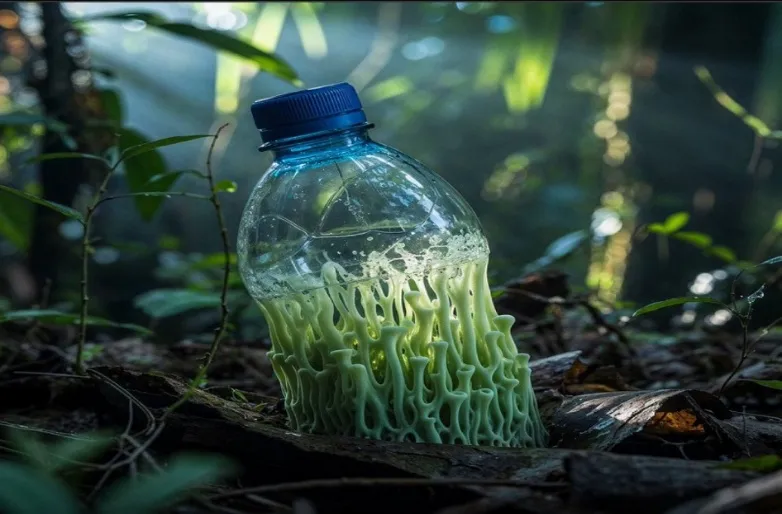
Fig. No. 2: Biodegradation of plastic by Pestalotiopsis Microspora
Key Experiments and Findings
In addition to the exciting possibilities for bioconversion, we need to keep in mind the potential of fungal enzymes in addressing the wider ramifications related to issues of plastic pollution through innovative waste handling possibilities. For instance, the enzymatic action of fungi such as Pestalotiopsis microspora, may impact not only degradation, but also bioremediation strategies to rehabilitate an ecosystem from being harmed by plastic waste. Increasing evidence has informed scientists that multiple fungi, including Aspergillus and Penicillium, possess enzyme's that degrade plastics and prolonged the commitment of waste valorization goals and sustainability. To expand on this idea, collecting and utilizing fungi could assist existing waste generated ecosystems to achieve a more efficient and thorough degradation process of plastic and overall toxicity to the environment. This perspective demonstrates the importance of further collaborative direction and shared emphasis, as an academic community, on shared directives with regards to utilizing and researching fungi to address the plastic crisis.
Comparative Analysis with Other Organisms
As we explore the potential of fungi such as Pestalotiopsis microspora, the greater ecological implications of using fungi in managing waste become apparent. Fungi involved in the process of waste management not only enhance the decomposition of plastics but also can contribute to biodiversity by allowing for habitat restorations that were previously subject to plastic pollution. For example, addition of fungal species in contaminated soils can enhance microbial diversity-an important parameter achieving ecosystem health and resilience. The ability of fungi to degrade other environmental pollutants through their enzymatic capacity suggests that fungi may be capable of bioremediating across a range of environmental situations as part of a multifaceted solution to environmental degradation. This is a holistic approach that underpins the need for fungal bioremediation approaches to be integrated into environmental policy efforts in order to pursue sustainability and ecosystem restoration.
Environmental and Biotechnological Implications
Addressing plastic pollution requires economically attractive solutions that at the same time valorize waste material. Fungal biodegradation represents a waste-to-value approach because fungal-mediated-substrate metabolism can operate in nature or in basidiomycete fermentation processes. Biodegradation of plastics has been exploited in small laboratory conditions, but concerted development of the actual bioprocess or waste treatment approach has not been reported. Food or media contaminants, used substrates which offer C for cosubstrate consumption, and also enhance the growth rate of fungi are notably investigated for fungal synthesis of bioplastics, enzymes, organic acids, alcohol, antibiotics, and different products. There is great promise shown by Pestalotiopsis for such plastid biodegradation, and the reasons are manifold. Initial studies also used natural conditions, while more recent studies examining the presence of such fungi with other consortia or chemical/environmental change have been proposed or discussed. Other potential applications were also proposed for fungi considered part of the Pestalotiopsis genus, as was also true for the other reported-plastid-degrading fungi. Evaluation of the ecological impact of metabolic products formed during plastid biodegradation and after treatment is necessary in the case where such fungi are tested in any natural process.
Scale-up challenges and bioreactor design
The production of enzymes on a scale appropriate for plastic waste bioremediation, and the engineering of a suitable bioreactor, remain unstudied for P. microspora. For other fungi, the ability to secrete an enzyme that can cleave the primary bond chemistry of classes of pesticides, flame retardants, paint additives, and herbicides has been documented, allowing for co-metabolic degradation of the contaminants. Thus, adding an appropriate co-substrate promotes the enzyme as well as the rate of overall mineralization of the recalcitrant substrates for P. microspora. The cycling of P. microspora and other fungi could even be a strategy that nature is using to biodegrade these compounds. However, dealing with the complexity of the structural variability with P. microspora-lignocellulosic plastic blends will be challenging, since enzyme access to the substrate is strongly associated with particle size and crystallinity. An alternative option is to use an enzyme from an unexpected source, such as a cotton or wood-decay fungus to improve the functionality of the blends, particularly if the enzyme treatment alters the structure of the biomass and can accelerate the biodegradation process.
Safety, Regulation and Environmental Impact
Many concerns about microorganisms applied for plastic waste degradation indeed consider containment, application, and tropical process in terms of risks to human health and environmental safety. The considerations for risk factors include the possibilities of: (i) the organism causing disease in humans or other animals; (ii) the risk of high concentrations of spores risking allergies in sensitive individuals; (iii) possibly producing harmful or irritating chemicals; and (iv) a pathogenicity that is transferred to other organisms; and (v) the undesirable effects it may have on indigenous organisms or ecosystems due to uninhibited dispersal. Risk assessment studies can address these concerns to a degree, that is risk assessment studies conducted under strict radioisotope and GMOs regulations. Fungal bioremediation of plastics is an engineered process that is done, at least under BSL1 conditions. Containment levels are defined for BSLs and GSTs based on the human, animal, and environmental risk levels. The actual containment level may depend on the characteristics of the plastics being degraded. Policymaking for scale-up and industry establishment deals with regulations, manufacture, sale, or application of products containing GMOs. Risk assurance involves consulting with sources for products like biofungicides. Growing ever increasing amounts of natural and native fungal microorganisms during the biodegradation process may provide additional valuable ecosystem services. Overall assessments of using fungi for fungal plastic biodegradation under controlled conditions across the Earth suggest future potential into combining various ameliorants could improve all of the overall material degradation and bioremediation of these types of biodegradable plastics in less active region.
Gaps, Challenges, and Future Directions
An inclusive strategic plan for translational research into the degradation of plastics by Pestalotiopsis microspora will be constructed from the critical assessment of work done on the fungus and applied to limitations of the current literature. Deficiencies are enumerated in the biological and technical domains, with a lack of biological information on connective and regulatory factors in the metabolic pathways leading to mineralization of aromatic compounds and an absence of data on subcellular location of P. microspora Ca2+-dependent and -independent epoxide hydrolases. In the technical domain, attempts to create a purified-enzyme system capable of degrading poly (DAT) by P. microspora have failed. An integrated systems approach will require combining complementary disciplines and norms to tackle these challenges. Transcriptomic, proteomic, and metabolomic analysis will create improved understanding of the degradative pathways and mechanisms of P. microspora, as well as form a basis for metabolic engineering for hosts needed to create improved strains; the process-engineering component of this will integrate bioprocessing scale-up strategies that will ensure preservation of the native fungus; and finally, the environmental-science skillset will help to establish risk assessments regarding the release and use of P. microspora in PEF-rich environments. This integrated systems approach is potentially applicable beyond P. microspora toward similar research on other metabolically versatile microorganisms.
Limitations of Current Knowledge
While there is a substantial literature on Pestalotiopsis microspora, there are also several gaps and ambiguities. On the one hand, only a small number of plastics have been specifically targeted for degradation (mainly polyesters, polyurethanes, and polyethylene) at this time; while these plastics are ubiquitous in the environment and can take on a very diverse array of forms, the degradative capacity of P. microspora , and related fungi, has not been investigated using forms of plastics that are broader. On the other hand, in these few plastics, the expected or predicted metabolic intermediates have still not been detected or verified - signalling a conceptual gap in our understanding of the specific actual point of cleavage. Furthermore, the wider significance of these findings - at least from an applied perspective - has not received proper focus, with P. microspora remaining associated with lignin degradation rather than plastic waste degradation.
In this framework, utilizing systems approaches that incorporate fungal genetics, transcriptomics, proteomics, metabolomics, and process engineering is essential for fully explaining pathways of plastic waste degradation, and it is vital to evaluate whether P. microspora and other relevant microorganisms could be developed as biological tools to convert plastic polyesters, polyurethanes, and polyethylene to carbon dioxide or mineralizing products that are innocuous to the environment while contributing to the global carbon cycle, and potentially into other products of value such as pyruvic or keto acids; and, this scope must include not only the biological conversion processes themselves but also likely historical, ecological, and industrial significance for scalable plastic waste management.
CONCLUSION
The current literature review collates existing studies on plastic biodegradation using the ascomycete fungus Pestalotiopsis microspora. Taken together, this evidence highlights the polystyrene degrading capability of P. microspora, alongside its ability to degrade other polyaromatic compounds and even utilize these products for growth, while also degrading polyurethanes, aliphatic polyesters, depolymerizable polyamides, and select co-polymers. Large-scale degradation studies show more practical survival strategies and strategies less affected by culture condition than other fungal degraders. Overall these varied strategies place P. microspora as a potential bioengineering platform capable of natural bioremediation and a range of biotechnological applications meant to enhance waste management and improve mitigation of land use through diversion of plastic from co-disposal with organic waste.
The capability of Pestalotiopsis microspora supports end-of-life strategies for a variety of plastics and offers potential in waste management strategies. For successful application, future research should move spelling the currently reviewed studies and correspondingly continue to tie experimental approaches towards translation with a wide variety of omics research. Transdisciplinary systems using engineering, deconstruction biology, and environmental sciences will navigate these topic areas while developing in parallel recommendations into structual-fungual based and agent-fed bioreactors. Further, genetic and metabolic engineering is a safe dwelling in promising enhancement and limiting risk.
REFERENCES



Smita Mulik, Atharv Shivane, Akshay Thorat, Biodegradation of Plastic by Pestalotiopsis Microspora, Int. J. of Pharm. Sci., 2026, Vol 4, Issue 5, 7782-7791. https://doi.org/10.5281/zenodo.20438747
 10.5281/zenodo.20438747