

We use cookies to ensure our website works properly and to personalise your experience. Cookies policy
B.R.Harne College of Pharmacy, Vangani, Thane, Maharashtra Thane, Maharashtra.
Authors : 1) Sujit Pramod Raut rautsujit0103@gmail.com 9324208891 B.R.Harne College of Pharmacy, Vangani, Thane, Maharashtra Thane, Maharashtra 2)Tanvi Turalkar 3) Prajakta Govekar 4)Dr Mahesh Sherkar Abstract: The largest organ in the body is the skin. It is the first barrier against any kind of injury. The skin plays a role in regulating body temperature, preventing dehydration, and supporting the sensory and immune systems. [28] The skin can be easily damaged, burnt, and infected. The outer layer is known as the epidermis and acts as a protective barrier. The inner layer contains collagen and elastin fibres and is known as the dermis. [1,29] Once the skin has been damaged, it will begin to repair. There are several stages of this repair process, including inflammation and clotting. [28] Step two in the process of wound healing takes place when collagen production starts underneath the surface of the skin. The tissue in the dermis is made up of collagen types I and III. [1,29] In addition, collagen facilitates the growth of cells and tissues at the site of the wound. Furthermore, there are various ways in which collagen could be used in pharmacy, biomedicine, and skin care industries due to the nature of collagen being biocompatible, biodegradable, and multifunctional. [7,8] Current research is based on using it for regeneration and preparing drug carriers that contain drugs. Some of the drug carriers that could be prepared using collagen are hydrogels, films, sponges, and membranes. [8,19,21] Collagen is also used along with nanoparticles and biological agents. [22]
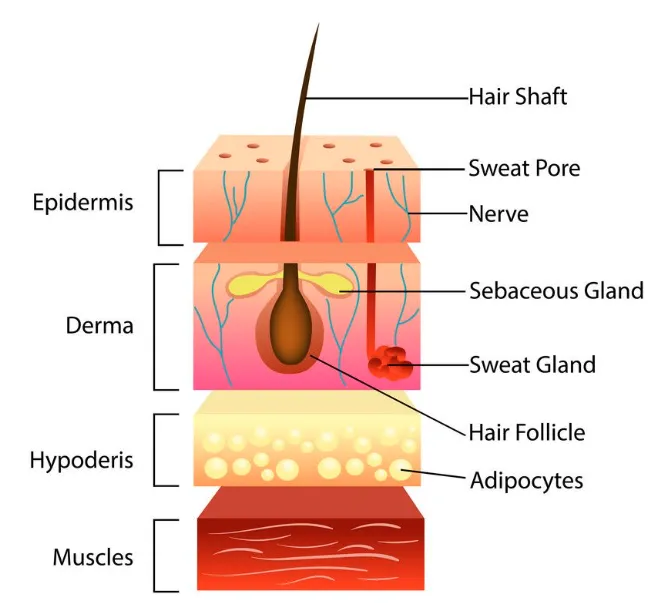
The skin acts as a protective covering that keeps the body warm, helps in retaining water, protects the body from the external environment, and serves as a barrier against any form of physical, chemical, and biological attack. [28] The important building blocks of the collagen molecule include proline, glycine, and hydroxyproline amino acids. [1,9] These amino acids help in making the skin elastic and tough. The formation of collagen becomes slow in an aged person as well as under the influence of sunlight, tobacco smoke, and oxidative stress. [28] Collagen plays an important role in cell adhesion and proliferation. [1,7] FIG. 1 (bemoll. Human skin anatomy [Internet]. VectorStock; 2018 [cited 2026 Nov 7]. Available from: https://www.vectorstock.com/royalty-free-vector/human-skin-anatomy-vector-20658206) Collagen works as both a therapeutic material and as a therapeutic target. As a biomaterial, collagen has practical uses such as in wound dressings, tissue engineering scaffolds, moisturizers, and as a drug delivery system. [7,8,19] The deposition of collagen takes place during the healing and remodeling phase following injury. [28] Excessive deposition of collagen leads to scar formation and causes fibrosis. [11,28] Hence, both the amount of collagen deposited and the ratio of its deposition and degradation must be taken into account. Collagen delivery systems give rise to different outcomes depending upon the mode of delivery; topical delivery of collagen works as a moisturizer of the skin, while oral delivery of collagen peptides gives better results. There are two major roles of collagen dressings in wound healing, including maintenance of moisture in the wound and regeneration of tissue through scaffolding. [19,20] The role of collagen in wound healing involves two main elements that include maintenance of moisture and regeneration of tissue through scaffolding. However, apart from the strengths of collagen, there are certain demerits, including batch-to-batch variations, drug delivery difficulties, mechanical strength issues, enzyme degradation, etc. [7,29]
1. COLLAGEN OVERVIEW :
Collagen is the most common protein in the human body. [1] It is a part of connective tissues such as skin, bones, tendons, ligaments, and cartilage. [1] Collagen provides the strength of the tissue, helps with tissue repair, and ensures the elasticity of the tissues and joints. However, with time, the production of collagen decreases, which results in wrinkles, loose skin, and changes in the movement of the joints. The hydrolyzed collagen peptide supplements are becoming more and more popular in order to keep the skin and joints healthy, though more investigation should be conducted in this sphere. [3] There are several types of collagen distinguished according to their structure and location in the body. Type I is the most common type of collagen, which is found in skin, bones, tendons, and ligaments. [1,29] Type II is associated with cartilage, and Type III is found in skin, blood vessels, and internal organs. [1,29] If we talk about Type IV collagen, it plays an important role in the development of networks in basement membranes. [1] In terms of structure, collagen is made up of a triple-helical structure with three chains of polypeptides. [1,2,9]
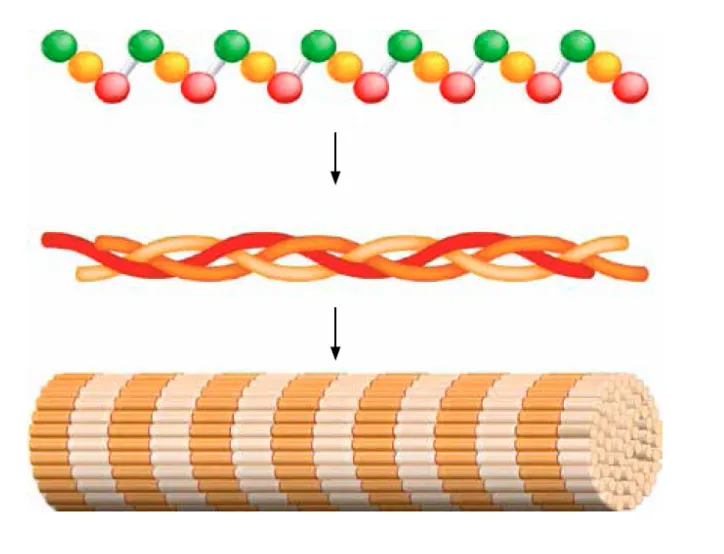
FIG. 2 (Doyle J. Integrating dermal and muscular regeneration: the clinical role of Sofwave and Pure Impact VIP in modern aesthetics. J Aesthet Nurs. 2026;15 (3):158–168. doi:10.12968/joan.2026.0030)
2. Molecular Architecture and Triple-Helix Structure
Collagen is one of the main components of the extracellular matrix, as it gives rise to connective tissue. [1,7] Three chains of polypeptide strands are found in collagen, which form a helical structure. [1,2] There is the amino acid pattern Gly-X-Y in each of those strands [1,9], wherein the third amino acid position is occupied by glycine while the second and the last one belong to proline and hydroxyproline, respectively. This is necessary because of the small size of glycine, as this allows the strands to pack together tightly. Proline and hydroxyproline help strengthen the chain of collagen. [1,9] However, at some stage in the production of collagen, an extra vitamin should be added – vitamin C, which is needed for the hydroxylation of proline and lysine by enzymes. [9,10] The other two processes also help to ensure the stability of the mature collagen fibers. The processes of the triple helix involve the correct alignment of the chains of the product, which is caused by certain therapeutic domains existing on the polypeptides. Once the molecules of tropocollagen are formed, they join to form the fibrils, which in turn form the fibers. [2,9] The fibers work in cooperation with other proteins of the extracellular matrix and provide certain mechanical properties to the tissues. Genetic disorders that do not allow the formation of collagen result in the development of different diseases like osteogenesis imperfecta and some forms of Ehlers-Danlos syndrome. [1]
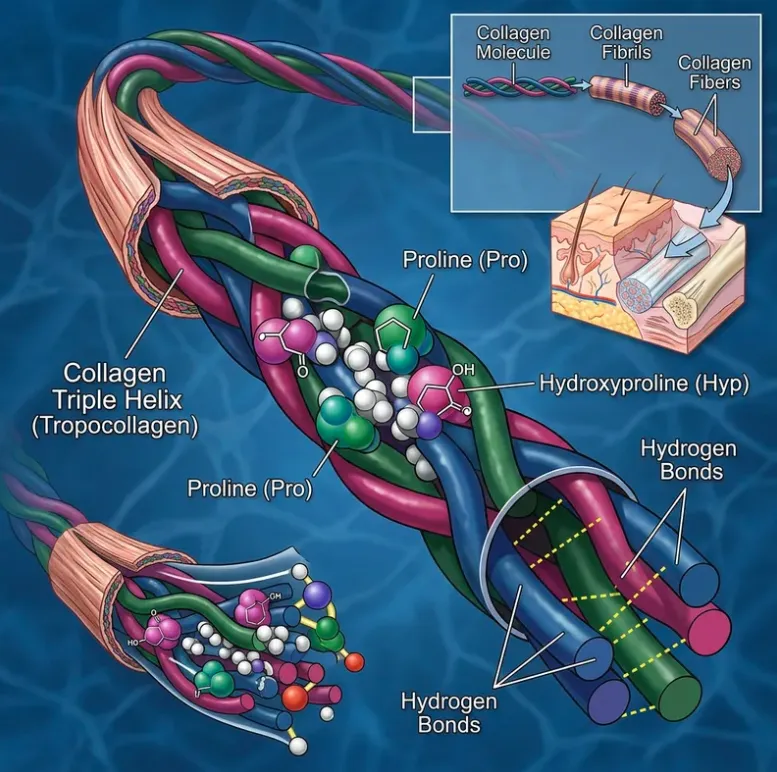
Figure None: 3 (Easy-Peasy.AI. Exploring the Intricate Collagen Protein Structure [AI-generated Image on the Internet]. 2024 Mar 21 [Cited 2026 Nov 7]. Available from: Https://Easy-Peasy.ai/Ai-Image-Generator/Images/Exploring-Intricate-Collagen-Protein-Structure)
3. Types of Collagen Collagen performs many specific functions within different tissues. There are many different collagen proteins. Type I collagen is the most common type found in skin, bone, tendons, and ligaments. [1,29] This provides tensile strength and structural support. Type II collagen can be found in cartilage, which protects it from mechanical stresses. [1] Type III collagen can be found in skin, blood vessels and internal organs. [1,29] This allows tissues to stretch. Type V collagen regulates fibrillogenesis and organisation of fibrils. [1] Type IV collagen forms the mesh structure of basement membranes, allowing cells to adhere. [1] Type VI collagen connects collagen structures to other components of the extracellular matrix. [1] Collagen type VII forms anchoring fibrils. Type IX collagen interacts with collagen type II to stabilise cartilage. Type X collagen is involved in calcification of cartilage and ossification of bone. Type VIII and XI collagen are also important. It can be seen that collagen plays an important role in the body. If collagen synthesis were disrupted or there were some mutations, then this would have an effect
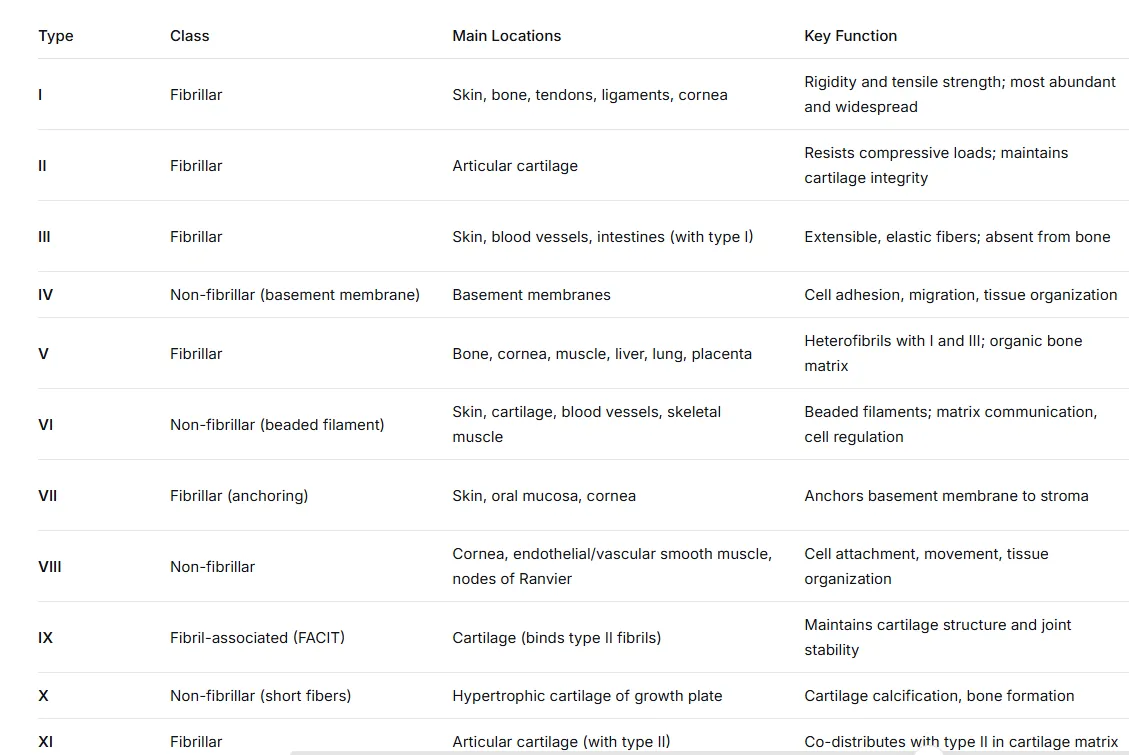
Figure None: 4 (Schematic Representation of Different Collagen Types (Types I–X), Illustrating Their Structural Classifications, Tissue Distribution and Biological Functions.)
4. Collagen-Based Biomaterials
4.1 Sources of Collagen:
The sources of collagen are essential in terms of its applications in biomedicine, tissue engineering, dietary supplements, and drug delivery systems. [3,29] Besides the amino acid composition, the structural features of the collagen and the method of isolation are essential as well. It is obvious that these properties will define the thermal stability, viscosity, and crosslinking density, which are crucial in terms of biomedical applications. Some parts of collagen molecules are the binding sites of integrins; [1,7] these are receptors, which are transmembrane proteins allowing cells to attach to the extracellular matrix. The integrin receptors consist of α and β subunits and are transmembrane heterodimers. There are a number of integrin receptors that have different specificities and structural features. The structural differences in collagen from various sources cause functional differences in cell interaction. The major source of collagen is animal connective tissue, although marine collagen and recombinant collagen have become popular sources. [3,29] It is interesting to note that some amino acid sequences, such as GFOGER [1,7] (Glycine-Phenylalanine-Hydroxyproline-Glycine-Glutamic Acid-Arginine) provide specificity of collagen.
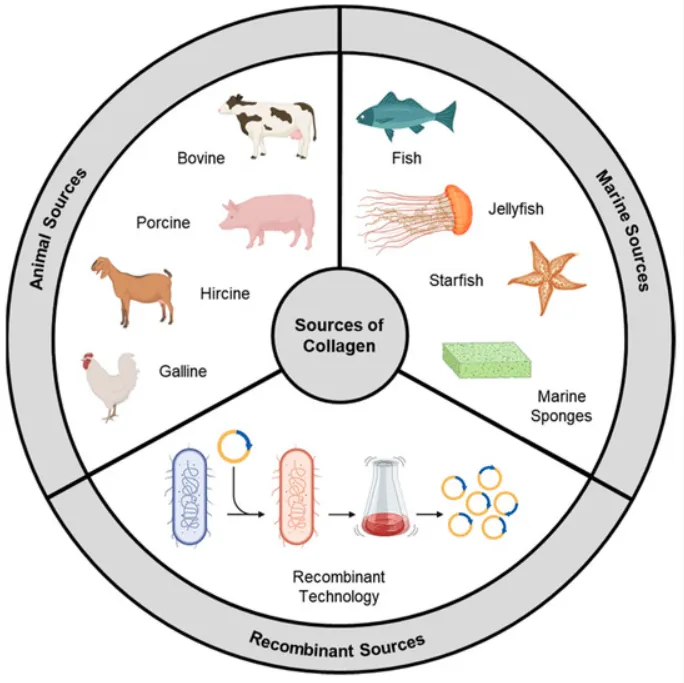
Figure None: 5 (Rana D, Desai N, Salave S, Karunakaran B, Giri J, Benival D, Et Al. Collagen-based Hydrogels for the Eye: A Comprehensive Review. Gels. 2023;9 (8):643. doi:10.3390/Gels9080643)
4.1.1 Bovine Collagen
Bovine collagen is obtained mainly from cow skin, bones, and tendons. It is naturally rich in type I and type III collagen and is used in research, supplements, and biomedical products. Its major advantages are wide availability, low cost, and generally good biocompatibility. Its properties may vary according to the animal's age, tissue source, and extraction process. They also carry a risk of contamination with animal pathogens if sourcing and purification are inadequate. Despite these limitations, bovine collagen remains an important source because it is available and relatively economical. [3,29]
4.1.2 Marine Collagen
Marine collagen is extracted from fish skin, scales, bones, and other marine organisms. [3,6] It is usually rich in type I collagen. Marine collagen shows good biocompatibility, biodegradability, and low immunogenicity in several biomaterial applications. [3,6] Collagen from fish, jellyfish, and squid helps in scaffolds and wound healing. The main catch is that its thermal stability and mechanical strength can vary widely. [6] Some marine collagens break down at lower temperatures than mammalian collagen, depending on the differences in amino acid makeup; especially hydroxyproline content plays a crucial role. So for uses that need extra strength and stability, additional cross-linking may be necessary. [6,27] Marine collagen is a promising alternative, but its application depends on the species and use.
4.1.3 Porcine Collagen
Porcine collagen comes from pig skin and bones, and contains both type I and type III collagen. Because it resembles human collagen, it's used in wound dressings, dermal fillers, supplements, and other biomedical products. Porcine collagen generally integrates well with human tissues, but concerns include allergic reactions, immunogenicity, and microbial transfer. [3,29] Porcine collagen is widely used in biomedical applications.
4.1.4 Human-Derived Collagen
Human collagen can be sourced from substances like skin or placenta. As human collagen is closely related to human tissues, it may have biological advantages as well. [3,12] The quality of collagen sourced will depend on a number of factors, including the age, genetics, history, health, etc. Depending on the age of the collagen, it alters its structure and may lead to changes in the properties of collagen.
4.1.5 Recombinant Human Collagen
Recombinant human collagen is synthesized using genetic engineering approaches where suitable host cells are employed for its synthesis. [4,12] It reduces the level of variation associated with animal sources and makes sure that collagen batches are consistently produced. It solves the problem of the potential presence of animal pathogens and species variability. However, bacteria and yeasts lack all enzymes that are needed for post-translational modifications of collagen in order for it to have the correct conformation. [4,12] Collagen not only needs proper amino acid sequence but also correct chemical processing after its synthesis in order to have the correct conformation. Therefore, recombinant production systems need to be developed in a way that will ensure collagen modifications and stability. Despite this, there is a chance that with more research on the subject, recombinant collagen can be produced in a more easily accessible way [4,12,13] and allow for more use in the field of biomedicine. If the technological difficulties regarding the changes, stability, and cost are tackled, recombinant collagen can be a trustworthy solution and serve as an ethically superior alternative to both animal-based and human tissues, particularly in areas where the issue of safety and batch consistency is crucial.
5. Design and Processing of Collagen-Based Systems
The making of collagen-based biomaterials involves extracting collagen, purifying it, and processing it, and the method determines the integrity, yield, and functionality of the end product. [7,8] Collagen can be dissolved, spun into fibres using an electrospinning technique, or linked with other molecules using cross-linking to meet those requirements.
5.1 Extraction method:
Extraction is conducted using acids, for example, diluted acetic acid and hydrochloric acid. [8,26] The efficiency of this method depends on many factors: type of acid, material, time, and temperature. In spite of the fact that extraction under alkaline conditions when utilizing sodium and calcium hydroxides not only separates all impurities but also leaves only collagen among proteins, this technique may influence the collagen structure negatively. Therefore, the more aggressive the extraction process is, the better the result it will yield at the cost of some degradation of collagen structure. Extraction using oil with a high concentration of salt and low temperature ensures preservation of collagen structure to a greater extent [8,26], with extraction of less collagen than in acid methods. Enzymatic extraction with pepsin and dilute acid is the cleavage of telopeptide parts of collagen molecules without affecting the triple helix; [8,26] however, it increases cost and necessity of control over process efficiency.
5.2 Processing methods:
The initial phase of dissolution in an appropriate solvent precedes the molding phase and considers solutions such as pH and ionic strength influencing charge, swelling, solubility, and stability. Different polymers can be combined to obtain products with preferred processing and mechanical properties. Electrospinning is used to obtain fibers featuring a structure similar to that of extracellular matrix fibers; [16,18] however, electrospinning of pure collagen is complicated hence, some components such as polycaprolactone or PLGA are often applied to form fibers where cells attach to regenerate tissue.
5.3 Biosynthesis and non-physiological synthesis:
In vivo, fibroblasts together with osteoblasts and chondrocytes transcribe and translate collagen genes into alpha chains [9,10] that undergo hydroxylation and glycosylation before assembling into procollagen; cleavage of propeptides allows mature molecules to form fibrils, later strengthened by cross-links. Alternatively, recombinant DNA technology and cultured cells can produce collagen [4,12], and collagen-like triple-helical peptides can be generated synthetically, with chemical modification and functionalisation enabling customisation for biomedical use. Self-Assembly in fibers and other complex structures is caused by temperature, concentration, pH, and ionic strength and should be useful in preparing matrices. However, synthesis of materials that mimic natural collagen is difficult. Cross-linking improves strength and stability and can be done using chemical [17,27] (glutaraldehyde, EDC-NHS, genipin), physical (heating, irradiation with UV and gamma rays, freeze-drying), and enzymatic (transglutaminase, lysyl oxidase) methods depending on the required properties
6. Collagen-Derived Materials and Biomedical Applications
Collagen can be combined with other materials to overcome limitations in its mechanical strength, stability, conductivity, or functional performance. [7,15,24] These composites broaden its potential use in healthcare and biomedical engineering.
6.1 Ceramic composites:
Collagen can be integrated with hydroxyapatite, bioglass, or tricalcium phosphate (TCP). [15,24] Such combinations can add rigidity and mineral properties to materials, thus making composites
6.2 Polymer composites:
Collagen can be incorporated together with polymers such as polylactic acid (PLA), polycaprolactone (PCL), polyethylene glycol (PEG), chitosan, alginate, hyaluronic acid, silk fibroin, and cellulose. [7,15,24] These combinations provide better mechanical properties, flexibility, degradation behaviour, and better opportunities for use as scaffolds for tissues or drug delivery.
6.3 Composites with metal nanoparticles:
Incorporating metals such as silver and gold into composites can offer new features. [15,22,24] Depending on the composition, composite materials will act in specific ways, and therefore they can be analyzed in terms of their antibacterial properties or other medical uses.
6.4 Carbon-containing composites:
These materials could potentially contain substances like graphene, carbon nanotubes, and carbon dots, which positively influence electrical conductivity. [24] Given this characteristic, composites will be suitable for application as flexible sensors or electronic skin.
6.5 Composites based on clay and magnetic materials:
The preceding examples indicate that systems based on clay and magnetic nanoparticles affect the physical, functional, and responsive properties of collagen. [15,24]
7. Biomedical Applications of Collagen-Based Systems
7.1 Drug and Gene Delivery:
The utilization of collagen in drug delivery systems is attributed to its biocompatibility, biodegradability, and capability to form a range of products including films, hydrogels, fibers, and scaffolds that can hold medicines for later release. [7,8,21] When combined with polymers and nanoparticles, collagen helps to enhance drug loading capacity, mechanical properties, and delivery characteristics. [8,22] Such systems have been investigated for local drug delivery and tissue targeting. Moreover, collagen can also be utilized in gene delivery as a carrier in the delivery of DNA to a targeted cell. [25] All delivery systems should be formally studied with respect to their efficacy, stability, and safety.
7.2 Tissue Repair and Regeneration:
Collagen is a significant element of the extracellular matrix, which gives it an advantage in different scaffolds supporting cell attachment, proliferation, and tissue formation. [7,15] Its structure can be modified in accordance with the needs of tissue repair.
7.3 Bone and cartilage repair:
The collagen scaffolds permit the cells to attach to the scaffold and form the tissue. [7,15] The use of these scaffolds along with mineral components (such as hydroxyapatite) helps achieve increased rigidity and is useful for bone regeneration. The research is also done on collagen composites used in cartilage regeneration. Blood vessel repair: The collagen fibers provide support for the cells to attach. The features of these fibers influence the mechanical properties of the whole structure.
7.4 Corneal repair:
Collagen-type materials have been investigated to treat and restore corneas. The studies focused on optical performance, transparency, elasticity, and compatibility with corneal tissue. [15]
7.5 Wound healing:
Collagen plays an important role in treatment and has a significant effect on healing through its physical properties. Collagen dressings, gels, and electrowoven materials are used in wound management. [19,20,21] The pairing of collagen with bioactive glass, polymer materials, nanoparticles, or antibacterial materials raises the effectiveness of a dressing [19,22] while benefiting other aspects of its sustainability. Chronic wounds can occur when other factors are responsible for causing problems such as poor blood flow, the presence of inflammatory processes, and infections. [28] Collagen-based solutions can facilitate blood vessel formation and ensure the delivery of medications. [19,22]
8. Smart Healthcare Devices
Collagen is a versatile elastic material used in wearable sensors, electronic skin, and other healthcare equipment. [24] Its fibrous composition, sustainability, and biological waste origin make it feasible to serve as a base material for these applications. Because it is not an appropriate conductor, native collagen needs to be combined with other materials, like graphene, carbon nanotubes, silver nanowires, or metal films. [24] The process of surface treatment and coating of collagen materials with conductive materials gives the opportunity to convert the movement, pressing, bending, and stretching of collagen into electrical signals. Such composites were used for recording body movement, pressure, and other parameters. [24] Collagen obtained from leather scraps is of great interest due to its usage in flexible electronics. However, it is necessary to improve collagen sensors with regard to their durability, signal transmission, and comfort in dealing with human beings. [24]
9. Challenges:
Collagen is a great material for many applications in biomedicine, but there are several challenges. The composition and quality of natural collagen are not uniform, and the methods employed for processing may have an impact on collagen’s structure. [3,8,29] It is critical that proper animal-derived biomaterials are chosen and purified. Another point is that marine collagen needs to be altered in order to boost its thermal and mechanical characteristics. [6,27] Collagen can be altered via a few methods, like self-assembly, electrospinning, and cross-linking, but it is important to understand each of these methods separately. Even if cross-linking has a lot of benefits, it is crucial to pick the best cross-linker while making sure that collagen meets all the requirements to ensure its biological compatibility. [17,27] Collagen modification with ceramics, polymers, nanoparticles, and conductive compounds presents new opportunities to create biomaterials. [15,24] Collagen produced through recombinant means and by-products produced from living things could be the answer to some of the above problems. [4,12,26] Future research on collagen should be focused on issues regarding reproducibility, safety, and effectiveness. [4,7] These types of research would help increase the applications of collagen in drug delivery, tissue engineering, wound healing, and many more medical areas.
CONCLUSION
Collagen has moved past its traditional identity as a mere structural protein or an element in beauty products. Biocompatibility, biodegradability, organized structure, and cell interaction capabilities have made it essential in wound healing, drug and gene delivery, tissue engineering, and intelligent health care devices. [7,8,19,22,24,25] The origin of collagen is key in ensuring safety, quality, and efficiency. Bovine and porcine collagen have been favored for their ease of isolation and lower costs [3,29], but their problems of immune rejection, contamination, inconsistency, and cultural/religious limitations have led to the search for alternatives. Marine and recombinant human collagen offer great potential, although issues with stability and cost still exist. [3,4,6,12] Choosing a source for collagen involves a careful consideration of how it will be used. The development of extraction and processing methods [8,26,27] (such as using acid, enzymes, or ultrasound, as well as cross-linking and composite preparation) has led to the expansion of technologies for collagen-based materials. It is important to remember that methods should never replace one another since processing conditions define the structure of collagen, degradation rate, and biological properties . The application of extraction and processing methods to collagen (including such techniques as acid, alkaline, salt, enzyme, and ultrasound extraction of collagen and preparation of solutions, electrospinning and self-assembling of samples, and chemical, physical, or enzyme cross-linking) enables modification of the structure, mechanical strength, porosity, and degradation rate of collagen according to certain requirements. Besides that, it is possible to produce composite materials from ceramics, polymers, metallic nanoparticles, carbon materials, clay or magnetic particles [15,24], and so on, thus providing products with antibacterial properties, conducting abilities, and responsiveness to stimuli that can be used for bone, cartilage, arterial, and corneal repair, treatment of wounds, and delivery of genes. However, there are still limitations to translation in the form of batch-to-batch variation, inconsistency, low mechanical strength, enzymatic degradation, and a complex manufacturing process. [3,7,29] Collagen from marine sources must undergo modification in order to gain stability against heat and strength, while the crosslinking methods used should be chosen to achieve optimal biocompatibility. This is because the recombinant method has yet to eliminate all costs associated with post-translational modification. [4,12] Solutions are required for the problems related to manufacturing, quality control, safety, and preclinical and clinical trials. The results of the research must be reproducible, safe, effective, and involve the evaluation of the potential of selective use of the synthesized collagen rather than marine collagen. Perhaps if all these problems are solved, collagen can broaden its functionality.
REFERENCES

Sujit Raut, Tanvi Turalkar, Prajakta Govekar, Dr. Mahesh Sherkar, Collagen-Based Biomaterials for Skin Regeneration, Wound Healing, and Drug Delivery, Int. J. of Pharm. Sci., 2026, Vol 4, Issue 11, 2304-2314. https://doi.org/10.5281/zenodo.24271489
 10.5281/zenodo.24271489