

We use cookies to ensure our website works properly and to personalise your experience. Cookies policy
Department of Pharmaceutics, Siddhi’s Institute of Pharmacy, Nandgaon Murbad Thane 421401 (Affiliated to Dr. Babasaheb Ambedkar Technological University, Lonere Raigad).
Mucoadhesive buccal films are an alternative to taking medicine by mouth. They avoid the breakdown by enzymes and the pass metabolism that happens in the liver. They also help patients who have trouble swallowing. Almost none of these products are sold. This review explains why: it looks at how to choose polymers that stay stuck in a wet moving mouth and at the lack of realistic test methods. It covers how the inside of the cheek works and how mucoadhesion works. It compares polymer groups – cellulose derivatives, polyacrylates, natural polysaccharides, synthetic film formers and thiomers. It also shows how to make and test the films. Because no single polymer is perfect many films use blends. Adhesive polymers such as Carbopol and Na?CMC swell a lot and make the films weaker. Polymers like HPMC, PVA and PEO give the film structure. Are not as sticky. Thiomers make the film stick better and let medicine pass through easily but they add cost and can hurt stability. The main gaps are that test methods are not consistent and that lab tests do not match life. The review calls for adhesion testing models that mimic saliva flow and more studies, in humans. It also points out promise in 3D printing, films that carry nanoparticles and vaccines that use the mouth lining.
Although oral administration is the most common route for drug administration, it presents problems of drug degradation due to enzymes and acidic environment, as well as extensive first pass metabolism in liver, while being inappropriate for dysphagic patients [1,8]. As an alternative to the limitations of oral administration, transmucosal delivery through oral cavity represents a solution. The buccal epithelium provides a relatively permeable and strong (non-keratinized) tissue, with blood supply directly draining to jugular vein, being an interesting site for systemic drug delivery [17,18]. The buccal mucosa is less permeable than sublingual but provides larger surface area with less movements, being more suitable for sustained, retentive dosage forms [18,20]. Many patients prefer mucoadhesive film as a buccal dosage form due to its smaller size, flexibility and lower thickness in comparison with tablets and lozenges [4,13]. Such film can be developed for local or systemic action and is being investigated for small molecules, peptides, vaccines and nanoparticles [4,6,12]. Moreover, it is increasingly of interest for geriatric/ dysphagic patients, to reduce pill burden
and simplify the administration [3]. However, market translation is still scarce. There is no authorised mucoadhesive buccal film available in the UK, and very few in the USA [1,8].
The two main scientific concerns of this lack of market translation are the choice of polymers that provide adequate and sustained adhesion in a wet and dynamic environment (oral cavity) [25,28,33], and the lack of standardised and physiologically relevant methods of evaluation [1,11,15].
This review discusses both issues. It provides a summary of buccal physiology and mucoadhesive mechanisms (Section 2), comparison of the main groups of polymers (Section 3), a brief overview of manufacturing (Section 4), characterisation techniques (Section 5) and discussion of challenges and new approaches (section 6)
METHODOLOGY
A literature search was conducted using databases such as PubMed, Google Scholar, ScienceDirect, and Scopus.
Keywords including “mucoadhesive buccal film,” “mucoadhesive polymers,” “polymer selection,” and “evaluation techniques” were used. Relevant research articles and review papers focusing on polymer selection, formulation, and evaluation of mucoadhesive buccal films were reviewed and analyzed.
Buccal mucosa and mucoadhesion mechanisms
2.1 Anatomical and physiological considerations
I have studied the mucosa and found it is made up of a non‑keratinised stratified squamous epithelium, a basement membrane and a vascular lamina propria or submucosa (Figure 1) [17,18].
The buccal mucosa provides a barrier that's different from the skin. The intercellular lipids inside the mucosa’s epithelium are chemically and structurally different from the lipids, in the skin’s stratum corneum. Because of this the way penetration enhancers work in skin cannot be used away for the buccal mucosa [19].
Saliva, mucus turnover, chewing, speaking and swallowing all keep working on the mucosa. They make it hard to keep medicines in place and make local therapy more difficult [33]. Age also changes the mucosa’s properties and the makeup of saliva which matters especially for older patients [3].
The mucosa’s epithelium usually limits permeation. That is why permeation enhancers are often added to films that aim to deliver drugs [3,5,19].
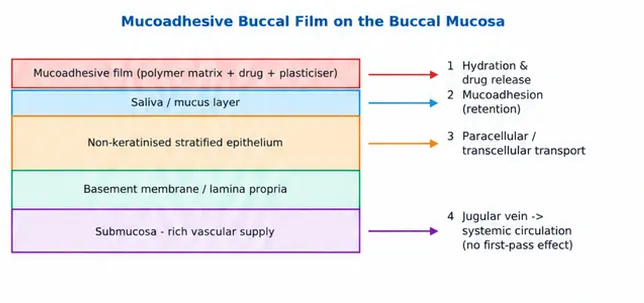
Figure 1: Schematic Cross-Section of a Mucoadhesive Buccal Film in Contact with the Buccal Mucosa, Indicating the Main Events Fromhydration to Systemic Absorption (Original Illustration Based On [1,17,18]).
2.2 Mechanism and theories of mucoadhesion
Mucoadhesion is usually described as a two-stage process. The first stage is contact or wetting. The second stage is consolidation where adhesive interactions are formed [28]. A three-stage description is also used. The first stage is. Swelling of the polymer. The second stage is interpenetration of polymer and mucin chains. The third stage is formation of bonds between entangled chains (Figure 2) [25]. Several theories (wetting, electronic, adsorption, diffusion and fracture) explain aspects of this process. The use of these theories together is helpful, in understanding the behavior of a given system [16,25].
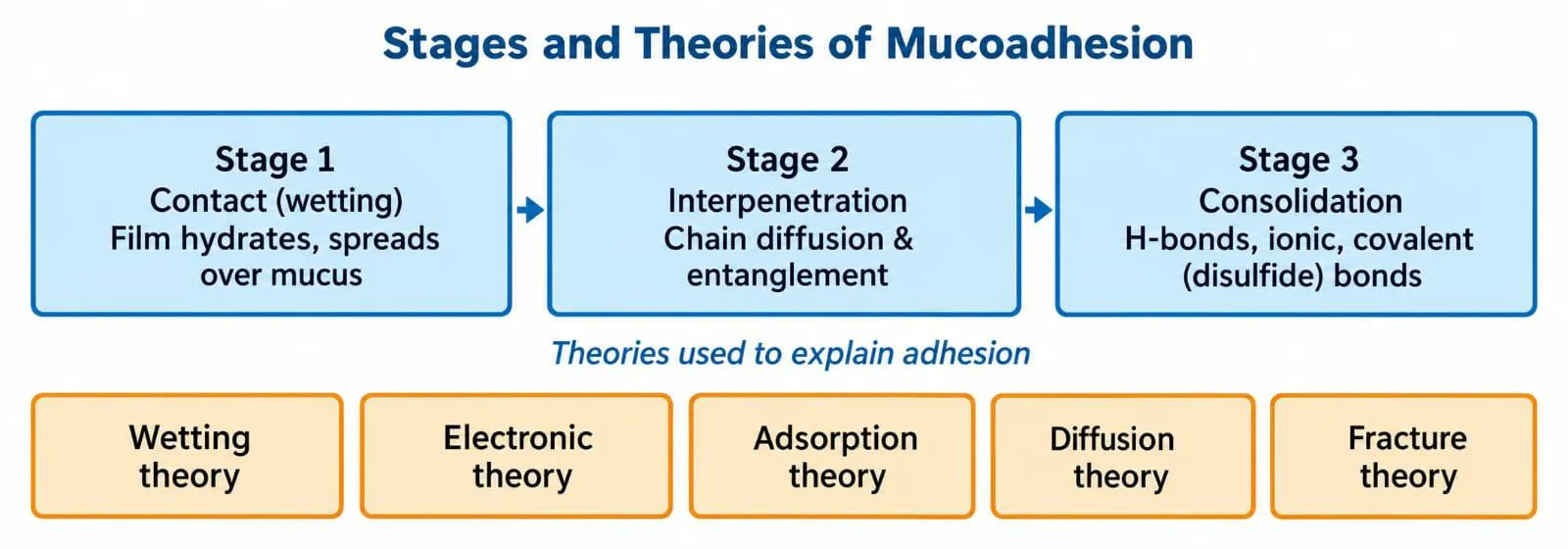
Figure 2: Stages of Mucoadhesion and the Principal Theories Used to Explain Adhesion (Original Illustration Based On [16,25,28]).
Mucoadhesive materials are typically water-loving molecules that have many groups that can make hydrogen bonds. Carbomers and chitosans are examples [28]. Adhesion depends on factors. These include the polymers weight, chain length and how much cross-linking it has. Hydration plays a role too. So do functional groups, charge and concentration. Contact time matters, as does the rate at which mucin turns over and how thick the mucus is [25]. Hydration is tricky. It helps polymer chains move freely which can improve adhesion.. If theres too much water the adhesive bond becomes weaker. Much hydration can lead to loss of retention [24,28].
3. Polymer Selection for Buccal Films
3.1 Selection criteria
More than thirty mucoadhesive polymers have been used in film formulations [1]. An ideal polymer should (i) form an uniform film, (ii) stick strongly but not cause irritation to the mucosa (iii) get wet in a controlled way when in saliva, (iv) work well, with the drug and the plasticiser and (v) not be harmful and work well with the body [1,2,9]. (Figure 3 ,Table 1)
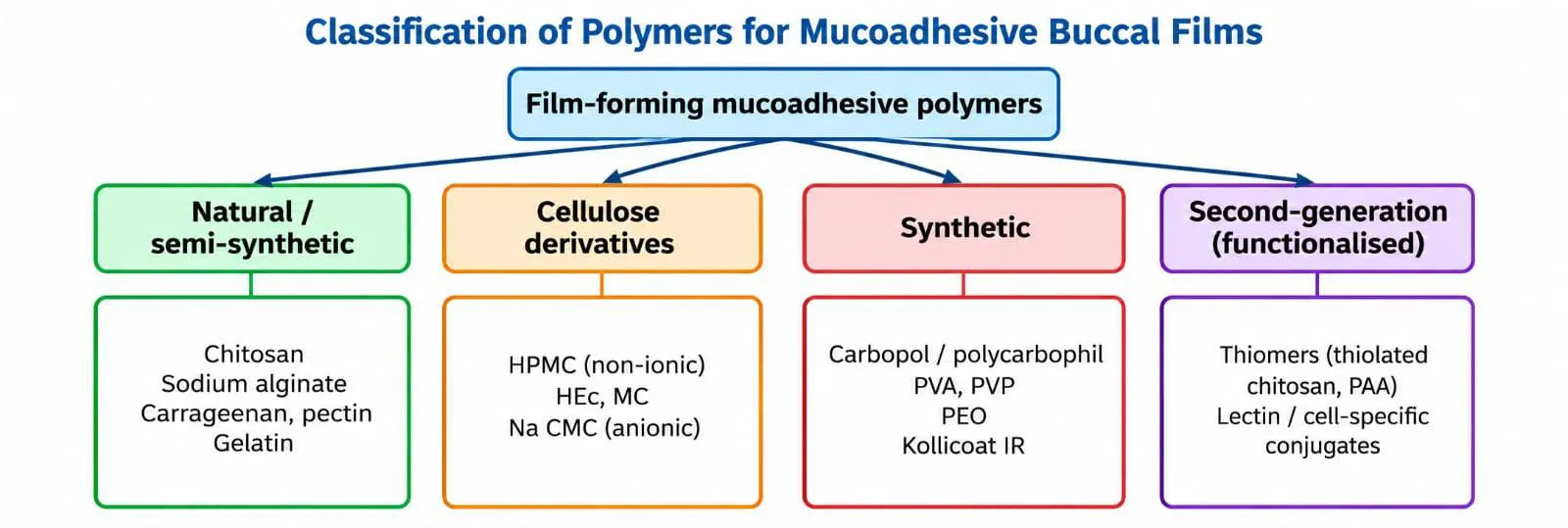
Figure 3: Classification of Polymers Commonly Used for Mucoadhesive Buccal Films, Including Second-Generation Thiolated Polymers
(original illustration based on [1,2,9,25,29]).
3.2 Cellulose derivatives
Cellulose ethers are widely used as film formers because they form films well stick to membranes and are safe for use in the body. Different types and thickness levels of cellulose ethers can be chosen to control how quickly a drug is released. Viscosity or water-repelling grades can also act as protective layers that prevent the film from being washed away by saliva [9]. When comparing sodium carboxymethylcellulose (SCMC) and hydroxypropyl methylcellulose (HPMC) films that contain Carbopol 934P SCMC films showed attachment to mucous surfaces in lab tests.. Hpmc films were stronger more flexible and swelled in a better way when exposed to simulated saliva. They also stuck better in real-life tests with volunteers. Increasing the amount of Carbopol made the films more elastic and more adhesive. It weakened the film and reduced how much water it could absorb [27]. Because of these qualities HPMC is often used as a base polymer, in films usually mixed with an adhesive polymer to improve performance.[9,23,27]
3.3 Polyacrylates
Carbopol and polycarbophil are polyacrylates that have a strong ability to form hydrogen bonds. When HPMC is combined with polycarbophil to make films these blended films show a work of adhesion and a greater maximum detachment force compared to pure HPMC films. This improvement is due to hydrogen bonding between the two polymers, which has been confirmed by FTIR and XRD analysis [23].
However films made from Carbopol can swell much. In one study the surface area of Carbopol films increased significantly when exposed to saliva. This excessive swelling was seen as a drawback, for retention meaning the films did not stay in place well on the inside of the mouth. In contrast sodium alginate films performed better in terms of bioadhesion tensile strength and elasticity [24].
3.4Chitosan, alginate and other natural polymers
Marine polysaccharides such as chitosan, alginate and carrageenan are attractive because of the biocompatibility, biodegradability, high water absorption and abundant functional groups of polysaccharides. Chitosan is cationic. Interacts electrostatically with negatively charged mucin. Alginate and carrageenan rely on groups and hydrogen bonding [2]. Alginate films released a model drug, sumatriptan by diffusion, than disintegration [24]. Natural polymer films often require plasticisers. Blending to achieve adequate flexibility.[2,24]
3.5 Synthetic film formers and plasticisers
Polyvinyl alcohol (PVA) polyvinylpyrrolidone (PVA) oxide) (PEO) and Kollicoat IR are used mainly to give the ability to form a film and to adjust how fast it breaks down and how quickly the drug is released. A rizatriptan film made with HPMC K4M, PVA, PEO, glycerol and stevia had ex mucoadhesion strengths between 0.205 and 0.790 N. The drug release was between 98 and 102% between 40 and 80 minutes, depending on the mix. The plasticiser and polymer concentrations had an effect on release, mechanical and mucoadhesive properties [22]. A film made with Kollicoat IR, PEO and HPMC that included Aloe vera gel powder as a way to make the drug go through the mouth lining transported 73.2% of propranolol HCl and 96.1% of rizatriptan benzoate through rat mouth tissue within 100 minutes. There was no damage, to the tissue [21]. Plasticisers like glycerol, propylene glycol and PEG are important to stop the film from breaking.. When they are too much they make the film weaker [5,22,24].
3.6 Thiolated polymers (thiomers) and second-generation systems
Mucoadhesive polymers are usually grouped into two types: -specific first-generation polymers and second-generation polymers that are made to interact in specific ways [25]. Thiomers are made by attaching groups directly to polymers like polyacrylates or chitosan. These thiol groups can form disulfide bonds with cysteine- mucus glycoproteins. That’s why thiomers stick better to mucus. They also help with drug absorption slow down enzyme breakdown and block efflux pumps that push drugs out of cells [29,31].
Preactivated thiomers are the step, in this design. They are more reactive and less likely to break down from oxidation making them more stable [30]. Thiolation has also been used on nanoparticles. These nanoparticles can be added to films to help them stay in place longer and be taken up better by the body [10,34].
Table 1: Comparative Features of Principal Polymers Used in Mucoadhesive Buccal Films
| Polymer | Nature | Key Properties Reported | Limitation |
|---|---|---|---|
| HPMC | Non-ionic cellulose ether | Good film former; tough, elastic films; tolerable swelling; good in vivo bioadhesion | Moderate intrinsic adhesion; usually blended [9,27] |
| Na-CMC | Anionic cellulose ether | High in vitro bioadhesion; extensive swelling in water | Weaker, less elastic films than HPMC[27] |
| Carbopol / polycarbophil | Anionic polyacrylate | Raises bioadhesive strength and elasticity; blends increase work of adhesion | Can over-swell; lowers film strength [23,24,27] |
| Chitosan | Cationic polysaccharide | Strong electrostatic mucoadhesion; biocompatible, biodegradable | Needs acidic casting medium and plasticiser [2] |
| Sodium alginate | Anionic polysaccharide | Higher bioadhesion, tensile strength and elasticity than Carbopol films; diffusion-controlled release | Hydration behaviour must be controlled [2,24] |
| PVA / PVP / PEO / Kollicoat IR | Synthetic, mostly non-ionic | Film-forming; tune disintegration and release | Low intrinsic adhesion; combined with HPMC or Carbopol [21,22] |
| Thiomers | Thiolated chitosan, polyacrylates | Improved mucoadhesion; permeation enhancement; enzyme/efflux inhibition | Synthesis cost; oxidation (addressed by preactivation)[29-31] |
4. Manufacturing Considerations
Solvent casting is still the method and lets aqueous or organic solutions be poured and dried into even films [4,13]. Hot-melt extrusion does not use solvents. Has been looked at as another way while inkjet and 3D printing electrospraying and electrospinning are newer ways that provide more choices, in dose and personalized treatment but bring new needs for film quality that are not yet clear [1,3,5,6,13]. The way something is made affects the thickness of the film, leftover solvents how the drug spreads out and how it behaves physically. This should be shared together with test results.[4,15]
5. Evaluation Techniques
Evaluating films involves checking their physical properties how well they stick to mucous membranes how the drug is released how it passes through tissues and how they perform in living systems [15]. Since there are no FDA guidelines or USP standards, for oral films labs often use different testing setups. This makes it hard to compare results across studies (Figure 4 Table 2) [11,15].
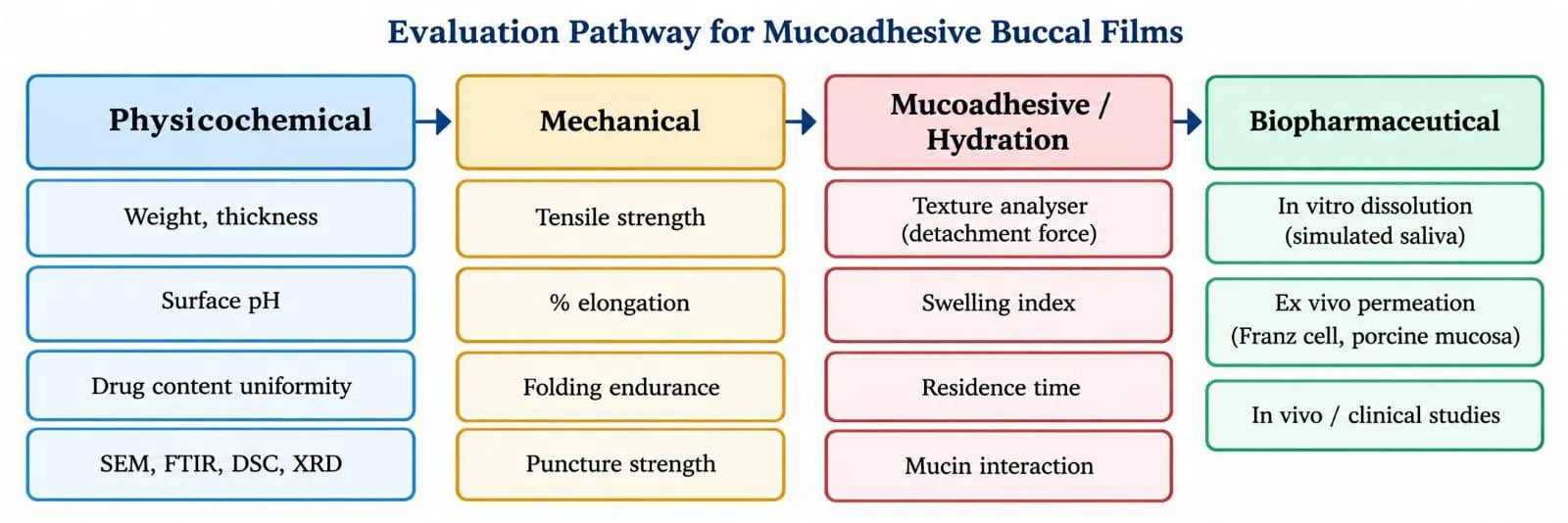
Figure 4: Evaluation Pathway for Mucoadhesive Buccal Films, from Physicochemical Screening to Biopharmaceutical and in Vivo
testing (original illustration based on [1,11,15]).
5.1 Physicochemical and mechanical characterisation
Standard tests include weight uniformity, thickness uniformity, surface pH (to predict irritation) drug content uniformity folding endurance and moisture uptake. The morphology, drug-polymer interactions and crystallinity are studied using SEM, FTIR, DSC and XRD [21–23]. Mechanical properties such, as tensile strength, percentage elongation and puncture strength are measured using an analyser or tensile tester. These tests must confirm that the film can endure handling and oral movements without cracking [11,23,27].
5.2 Mucoadhesion and hydration
The common way to test this in a lab is by using a texture analyser to measure how much force it takes to pull a film away from mucosa that has been taken from an animal or from a mucin disc [11,24,27]. The results vary depending on the type of substrate how much force is used how long the film is in contact the liquid used to keep things wet and how fast the test is done. This is why it is hard to compare results from studies [11,16]. At the time the swelling index in simulated saliva is also measured because too much water can make the film less sticky [24,28]. Testing in people gives the best idea of how long the film will stay in the mouth.. Even then there is only a link between lab and real results when looking at the same type of polymer, not different ones [27]. Better lab tests that copy conditions in the mouth, like the flow of saliva and the mucus are needed to make lab results match what happens in real life [1].
5.3 Drug release and ex vivo permeation
Release is usually tested in simulated saliva or buffer using paddle, flow-through or modified diffusion setups, with disintegration or dissolution times noted for dissolving designs [15,22]. Ex vivo permeation uses Franz diffusion cells with removed mucosa from pig, rat or goat and reports flux and permeability coefficient;for example methimazole moved through pig mucosa with a steady-state flux of 0.068 mg cm ² h ¹ and a permeability coefficient of 0.065 cm h ¹ [26] while histopathology of the tissue after exposure checks, for mucosal damage [21]. Newer analytical tools are being used to evaluate permeation of both molecules and biologics [5].
Table 2: Summary of Evaluation Parameters for Mucoadhesive Buccal Films
| Parameter | Method / instrument | Information obtained | Remark |
|---|---|---|---|
| Thickness, weight, content uniformity | Micrometer, balance, HPLC/UV | Dose reproducibility | Compendial limits [15,21] |
| Surface pH | pH electrode on hydrated film | Irritation potential | Aim near salivary pH [15] |
| Tensile / puncture strength, % elongation | Texture analyser, tensile tester | Strength, flexibility | Handling and wear [11,23,27] |
| Folding endurance | Repeated folding | Flexibility | Quick screening[21] |
| Swelling index | Gravimetric in simulated saliva | Hydration, retention | Over-swelling harmful [24,27] |
| Mucoadhesion | Texture analyser; mucosa or mucin | Detachment force, work of adhesion | Not standardised[11,16,24] |
| Residence time | Human volunteers | In vivo retention | Best relevance[27] |
| Release / dissolution | Simulated saliva, modified set-ups | Release profile | Physiological relevance[1,15,22] |
| Ex vivo permeation | Franz cell, porcine/rat/goat mucosa | Flux, Kp, lag time | Species variation[21,22,26] |
| Solid-state / morphology | SEM, FTIR, DSC, XRD | Compatibility, crystallinity | Supportive[21-23] |
DISCUSSION
Polymer selection. The information available shows that choosing a polymer involves a balance. Sticky negative charged polymers like Carbopol and SCMC make things stick better but they get bigger and make the films weaker whereas HPMC, PVA and PEO give strong structure but don't stick as well [23,24,27]. Mixing is therefore the usual approach and special experiments (like composite and mixture designs) have been used to find the best mixtures [21,23]. Thiomers offer an improvement in sticking and getting through and are moving closer, to real products although their price and the way they work make things more complicated [29–31].
Evaluation gaps.
The biggest problem is that methods used in studies are not the same. There are differences in what kind of mucosal material's used what liquid is used to keep it wet how the materials touch each other and the equipment used. Because of these differences it’s hard to compare results across studies [11,15]. Also not many studies check if how well something sticks in a lab test matches how long it stays in the body [27]. Changes in saliva and mucosal tissue that happen as people age are not often included in models. The effects of things like eating, drinking and talking are also rarely taken into account [3,33]. What needs to be done is: (i) create standard, agreed-upon ways to test texture and how well things stick to mucosa, (ii) develop artificial saliva and flow systems that act more like real human conditions [1] and (iii) do more studies in people to see how long lead formulations stay in place and how they move through the body. [1,15,27]
Emerging strategies. New printing methods allow for dosing and custom-made films [3,13]. Combining nanoparticles with films can help things stick longer. Let more medicine pass through [10]. Delivering vaccines through mucosal surfaces is becoming an area of interest [12]. For drugs results, in patients have been limited because absorption is inconsistent and not enough peptide medicine can be loaded. This means future work should focus on more stable medicine amounts and adding things that help the medicine pass through better [6,7].
CONCLUSION
Mucoadhesive buccal films are an user-friendly option for drug delivery. They work well when people need a non-invasive way to take medicine.. Getting them right is not easy. The key is choosing the polymers and testing them thoroughly.
HPMC-based blends, with polyacrylates, chitosan or alginate are still the common and practical choices. They stick well to the mouth lining. Release the drug steadily. Thiomers are an option and show real potential. They can bind better to mucosal surfaces, which might improve how well the drug works.
To turn lab ideas into products we need better testing. Methods should mimic what happens in the body. We also need well-planned in studies. These help us know if the films will work in people. Without this even a good lab formula won’t become a approved medicine.
REFERENCES

Adhikari Ishwari L., Jadhav Mohit M., Araj Ranee D., Adhikari Samidha S., Padwal Krutika B., A Comprehensive Review on Mucoadhesive Buccal Film:Polymer Selection and Evaluation Techniques, Int. J. of Pharm. Sci., 2026, Vol 4, Issue 11, 2295-2303. https://doi.org/10.5281/zenodo.24271253
 10.5281/zenodo.24271253