View Article

Abstract

Drug delivery by oral route is one of the best methods of drug delivery due to some major advantages over other routes. However, in conventional oral dosage forms, low oral bioavailability is one of the significant problems. Gastroretentive drug delivery systems are designed to overcome drawbacks of conventional oral dosage forms. These systems help to increase gastric residence time and enhance the drugs bioavailability especially those with narrow absorption window. The conventional approaches such as floating, expandable, and mucoadhesive systems have demonstrated promising outcomes but each method has its own limitations. Therefore, this review focuses on combination approaches in GRDDS that combines two or more retention mechanisms to improve gastric retention, controlled drug release, and enhanced therapeutic efficacy. The article begins with an overview of major GRDDS strategies, outlining their principles, advantages, polymers used in distinct systems. It then emphasizes hybrid systems, including floating–expandable, expandable–mucoadhesive, and floating–mucoadhesive combinations, supported by a comparative table summarizing previously reported studies. Special attention is given to floating mucoadhesive tablets by providing the details of formulation components, preparation methods, and underlying mechanistic principles. The mechanistic foundations of floating mucoadhesive systems are discussed, with particular focus on buoyancy, polymer swelling, and bioadhesion processes. Key evaluation parameters such as floating lag time, total floating time, swelling index, mucoadhesive strength, and in vitro drug release studies are also mentioned in this review. The review also presents the current challenges of gastroretentive technologies and future prospects of combined approaches as well. Overall, combination approaches represent potential methods of gastroretention to achieve more predictable and effective effects and results.

Keywords

Gastroretentive Drug Delivery Systems (GRDDS), Combination Gastroretention Approaches, Floating Mucoadhesive Tablets, Controlled Drug Release, Oral Bioavailability

Introduction

× Popup Image

Drug administration through oral route is considered to be one of the most preferred route for drug delivery. Nearly 90% of all medications are taken orally. There are several reasons for preference of this route that includes its benefits of patient compliance, non-invasive and properties of ease of administration. Due to properties of easy storage and transportation, cost-effectiveness and no specialized medical personnel are required to administer, tablets are commonly used dosage forms tablets have remained one of the most commonly used dosage forms over time [1]. However, many oral medications that have a limited window of absorption or pH-dependent solubility or stability may have inadequate bioavailability. When developing a formulation, these characteristics must be taken into account because they may result in insufficient medication absorption when the dosage form is moved to the lower gastrointestinal tract (GIT) [2-3].

Gastroretentive Drug Delivery system is one of the simplest and efficient approaches which can overcome all the limitations associated with conventional tablets. GRDDS serves as an effective controlled release system by prolonging gastric residence time and ensures sustained drug delivery at the desired site of absorption. By retaining drug in stomach for long time, complete solublisation and complete absorption of drug takes place that further results in minimum plasma fluctuation and increased bioavailability. GRDDS is suitable for drugs with short half life, drugs that are unstable and poorly soluble at alkaline pH, and exhibit local action at the upper section of the gut [4]. Another benefit of this system includes less frequent administration of drugs that further increases patient compliance [5].

 A number of gastroretentive drug delivery techniques have been developed over the past few decades, such as mucoadhesive systems that cause bioadhesion to the stomach mucosa, low-density systems that create buoyancy in gastric fluid, and high-density systems that are retained in the bottom of the stomach, systems that are swellable, unfoldable, or extendible that restrict the dosage forms ability to pass past the stomach's pyloric sphincter, ultra porous hydro [6]. Although each of these approaches has its own limitations, combination approaches can effectively overcome the drawbacks of individual systems [7].
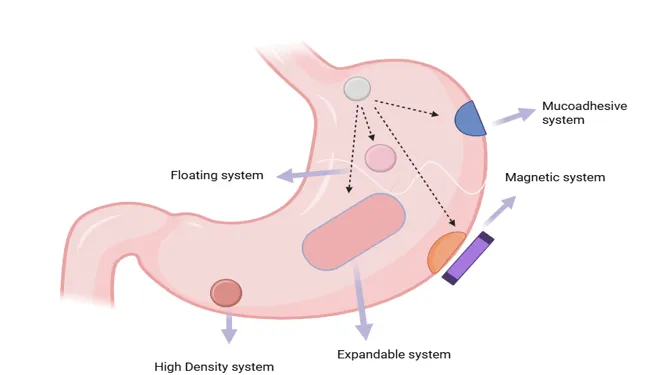
  1. GRDDS Approaches

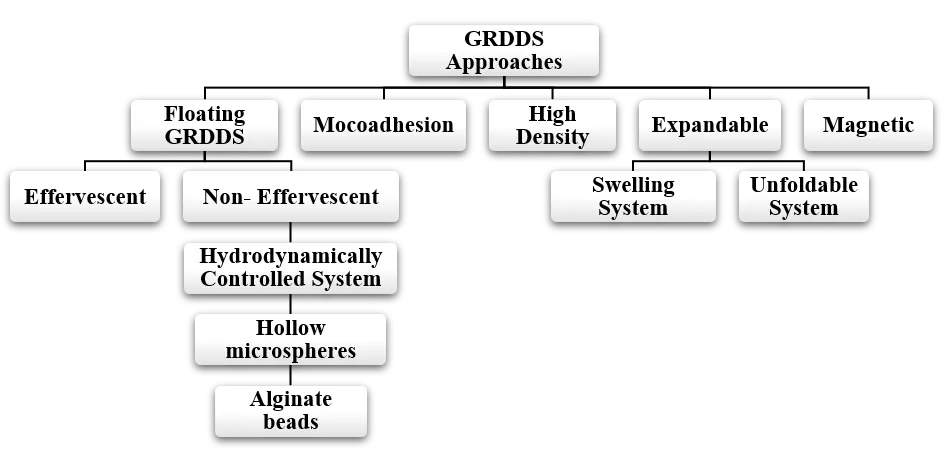
Fig 1. GRDDS Approaches

  1. Floating GRDDS: Floating systems are the extensively researched gastroretentive dosage forms. Density of dosage form plays a major role in development of floating DDS. The basic requirement for a tablet to remain floated is that bulk density of dosage form should be less than 1.004 g/cm3. The main advantage of this system is that it remains buyout in stomach without affecting gut motility and gastric mucosa [8]. These are further classified as effervescent and non-effervescent systems.
  1. Effervescent systems: These are further classified as gas generating system and volatile liquid containing systems. In gas generating system, gas generating agents such as NaHCO3, tartaric acid, and citric acid are used to achieve floatation [9]. When these agents come in contact with gastric fluid, CO2 is released that further reduces density of system [10]. The ratio of citric acid and NaHCO3 should be kept as 0.76: 1 [2]. On the other hand, volatile liquid containing systems contain liquids that volatilize at body temperature. These liquids are present in inflatable chamber which inflates when comes in contact with gastric fluids [11].
  1. Non-Effervescent systems: In non-effervescent systems, the medication is combined with gel-forming polymers like polymethacrylate, polycarbonate, and polystyrene. When dosage form come in contact with gastric fluid, it expands due to which its density decreases resulting in floatation. This is because due to expansion of dosage form, air is trapped within the swelling matrix. A swelling gel-like structure forms, which acts as a reservoir and enables continuous drug release through the gelatinous matrix [12]. These systems are classified into hydrodynamically balanced systems, microbaloons, alginate beads, and microporous compartments.
  2.  Mucoadhesive system: In this system, dosage form gets adhere to mucosal surface of stomach through different mechanisms. Several theories which explain the adhesion of drug are wetting theory, fracture theory, electron theory, diffusion and adsorption theory. The polymers that help in mucoadhesion are alginate, gelatin, guar gum carbopol, lecthin, chitosan, carboxymethyl cellulose [13].
  3. High Density system: In this approach, the formulation is prepared by coating the drug on a dense core or by blending it with inert materials such as iron powder, barium sulfate, zinc oxide, and titanium oxide. These materials increase tablet or formulation density by 1.5-2.4 g/cm3, which are higher than stomach fluid density. The therapeutic importance of these systems is still uncertain because there are not enough documented clinical trials on high-density pellet formulations [14]. Moreover, these are difficult to formulate and this system also reduce patient compliance as patient might feel fullness which cause discomfort.
  4. Magnetic systems: This system contains a small internal magnet along with the drug and excipients. An external magnet is placed over the stomach to control the position of the dosage form. The gastric retention of the system depends on the position and strength of the external magnet. [15]
  5. Expandable system: After oral administration, some dosage forms increase their size or change their shape inside stomach so that their passage through pyloric sphincters is obstructed. These systems are referred to as expandable systems. By doing so, drug remains for longer duration in stomach. These should be small when swallowed for easy intake, and then expand in the stomach to become larger than the pyloric opening [16]. After the drug is released, they must shrink again so they can leave the stomach safely [17]. These systems are also called “plug-type” systems as they have ability to temporarily block the pyloric sphincter. These are further classified as swelling expandable and unfoldable system. HPMC, PEO, and Carbopol® are commonly used in swelling-type expandable systems because these absorb water and enlarge the system by swelling. Similarly, in unfolding systems, the drug and polymer are packed in a folded or compressed form within a gelatin capsule. Once the capsule meets gastric fluids, it dissolves, allowing the system to unfold and return to its expanded structure [1].

Fig 2. Flowchart representation of GRDDS

  1. Combination Approaches

Although all of these individual gastroretentive drug delivery approaches are efficient in retaining drugs in stomach and for controlled release medications but each individual system have its limitation as well. Floating system shows high dependency on gastric contents and fluid in stomach. Due to high mucus turnover rate, mucoadhesive sometimes lacks the ability of stomach retention [18]. The magnetic system needs external device which keeps the drug at a particular location in stomach due to which it compromises with patient compliance. High density systems are difficult to formulate and this system also reduce patient compliance as patient might feel fullness which cause discomfort. Expandable systems can cause pyloric obstruction if does not shrink back to a safe size after drug release. Combination approach can tackle all the disadvantages of individual approaches. This is the reasons of combination therapies are now being studied extensively. Some of the main combination approaches that are now being researched are as follows:
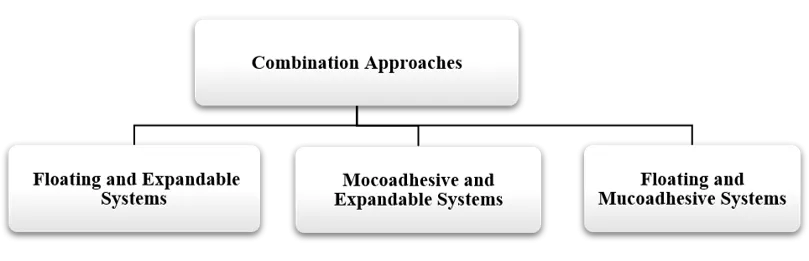
Fig 3.  Combination Approaches

  1. Floating and Expandable Systems

This gastroretention approach involves systems that are capable of floating as well as expanding or swelling. Such formulations should meet four key requirements. First, the size of dosage form should be small enough so that can be swallowed easily. After reaching the stomach, it must float and stay buoyant to prevent early escape from the gastric environment. Then upon exposure to gastric fluid, it must quickly expand to a size which is large enough to block its passage through the pyloric sphincter. Lastly, once prolonged gastric retention is no longer required, the formulation should decrease in size so it can safely exit the stomach. Polymers than can swell enough to block pyloric sphincter, HPMC K4M, K15M and K100M, PEO and chitosan are used in this formulation [19].  The research conducted on this combination gastroretentive system is summarized in Table 1.

Table 1. Research conducted on Floating and Expandable Systems

Drug

Formulation Strategy and Performance Outcomes

References

Losartan

Polymers Used: Hydroxyethyl cellulose + Chitosan.

[20]

Additional Functional Agent: Sodium bicarbonate (gas-generating agent).

Key Findings: Lower-viscosity chitosan improved swelling due to faster medium penetration. Sodium bicarbonate negatively affected chitosan swelling by neutralizing pH; therefore, an optimal polymer:sodium bicarbonate ratio is required.

Release Behavior: Sustained release for 16 hours in vitro; drug release followed Case-II diffusion model (swelling-controlled).

In vivo / Other Notes: Good swelling and buoyancy achieved with 1:1 polymer ratio.

Ranitidine

Polymers Used: Polyethylene oxide (PEO) + HPMC K4M (release-retarding polymer).

[21]

Additional Functional Agent: Camphor (optimal sublimating agent).

Key Findings: Sublimation produced a highly porous gastro-retentive layer promoting buoyancy and swelling. PEO provided persistent swelling for 12 h with high wet strength. HPMC K4M slowed drug release.

Release Behavior: Sustained release for 12 hours in vitro; release strongly dependent on percentage of HPMC K4M (percolation threshold: 11.48–21.69% v/v).

In vivo / Other Notes: In vivo studies in Beagle dogs showed effective gastric retention, especially in the fed state.

  1. Expandable and Mucoadhesive Systems

This system combines properties of expansion and mucoadhesion in such as manner that firstly after oral administration, dosage form expand or swell to a size that prevents passage through the pylorus. The main reason is presence of highly swellable polymers in formulation. Simultaneously, mucoadhesive polymers anchor it to the stomach wall. This dual mechanism enhances gastric residence time, reduces variability in retention, and supports a more sustained and predictable drug release profile. Various studies demonstrate that Expandable and Mucoadhesive Systems have capability of better gastric retention for release of drugs in upper GIT tract and some of them are listed in table 2.

Table 2. Research done on Expandable and Mucoadhesive system

Drug

Formulation Strategy and Performance Outcomes

References

Alendronate

System / dosage form: Compressed tablets made from lyophilised chitosan / ring-opened PVP (roPVP) complexes.

[22]

Additional functional / processing steps: Preparation with NaOH and heat; lyophilisation to produce powders, then compression into tablets.

Key findings: Chitosan/roPVP complexes showed a synergistic increase in mucoadhesion versus chitosan alone. Viscosity and mucoadhesive force increased with higher chitosan content; complexes interacted more strongly with mucin regardless of chitosan MW.

In-vitro release & mechanism: Provided 24-h in-vitro release. Release rate increased with swelling ratio (larger gel volume → less hindered diffusion).

In-vivo / other notes: In rabbits, high-MW chitosan/roPVP tablets were retained in the stomach and produced higher AUC, longer t½, improved bioavailability and lower Cmax versus a quarter Fosamax® tablet — indicative of reduced toxicity risk and improved efficacy.

Furosemide

System / dosage form: Bilayer unfolding capsule (folded films inside a capsule).


Polymers / materials: Controlled-release mucoadhesive film: Carbopol® 971P + HPMC E4M; plus an immediate-release polymeric film.

Additional functional / processing steps / geometries tested: Two folding geometries tested — Case I: controlled film folded zig-zag with IR film rolled over it; Case II: both films folded zig-zag. Key findings: Case II (both films folded zig-zag) allowed better unfolding in acidic media. Carbopol® 971P provided mucoadhesion via H-bonding with gastric mucosa; HPMC E4M aided swelling. Good unfolding, mucoadhesion and controlled release — formulation considered promising for in-vivo use.

In-vitro release & mechanism: Controlled release followed Fickian diffusion (HPMC contributed to swelling-controlled release).

In-vivo / other notes: Demonstrated suitable unfolding and mucoadhesive behaviour suggesting potential for in-vivo gastric retention.

  1. Floating and Mucoadhesive systems

The floating–mucoadhesive gastroretentive approach combines buoyancy with bioadhesion to enhance gastric retention. In these combination systems both kind of polymers are present. Some polymers help the formulation to remain buoyant in stomach while mucoadhesive polymers promote attachment of formulation to the gastric mucosa. This dual mechanism reduces the risk of premature gastric emptying and ensures more consistent and prolonged drug release [26].

Table 3. Research done on Floating and Mucoadhesive system

Drug

Formulation Strategy and Performance Outcomes

References

Cilnidipine

Polymers used: Gellan gum (bioadhesive), HPMC K4M

[24]

Additional functional agent / type: Sodium bicarbonate (effervescent/gas-generating).

Main mechanisms: Effervescent floatation + mucoadhesion.

Key findings: ↑ polymer content → ↓ floating lag time and ↑ total floating time (swelling + CO₂ entrapment). Gellan gum and HPMC produced strong mucoadhesion (mucin interactions and polymer entanglement).

Release behaviour: Sustained release up to ~12 h; non-Fickian (combined diffusion + erosion) mechanism.

Other notes / in-vivo: Human volunteer studies showed increased gastric retention, prolonged half-life and decreased elimination rate versus conventional tablet.

Alfuzosin

Polymers used: Chitosan + HPMC (gastroretentive sponges).

[25]

Additional functional agent / type: — (form is low-density sponge).

Main mechanisms: Immediate floatation + mucoadhesion (electrostatic interactions of chitosan with mucin).

Key findings: Very low density → immediate floatation; chitosan sponges exhibited higher mucoadhesion. Drug release decreased with increasing polymer concentration.

Release behaviour: Sustained; non-Fickian diffusion.

Other notes / in-vivo: In vivo studies in healthy male volunteers confirmed gastroretentive potential.

Ranitidine

Polymers used: Chitosan + PEO; crosslinker: sodium tripolyphosphate (TPP).

[28]

Additional functional agent / type: — (cross-linking agent used to strengthen matrix

Main mechanisms: Mucoadhesion + non-effervescent floatation (high porosity).

Key findings: Cross-linking enhanced mucoadhesion and stability; high porosity produced immediate floatation and buoyancy >24 h; cross-linked mats reduced burst release and prolonged release up to 24 h.

Release behaviour: Prolonged controlled release with reduced initial burst.

Other notes / in-vivo: Promising controlled-release GRDDS with improved retention and stability.

Nizatidine

Polymers used: Cross-linked chitosan/PEO nanofibres.

[29]

Additional functional agent / type: Cross-linking (to strengthen fibres).

Main mechanisms: Mucoadhesion + floatation.

Key findings: Cross-linked nanofibres showed significantly stronger mucoadhesion than uncross-linked; sustained release with reduced burst effect.

Release behaviour: Sustained release (reduced burst).

Other notes/ in-vivo: In vivo (rats) showed significant gastroprotective activity superior to drug solution and uncross-linked fibres.

  1. Floating Mucoadhesive Tablets

Floating-mucoadhesive tablets are oral dosage forms that combine mucoadhesion and buoyancy to improve drug bioavailability by increasing gastric retention of drugs that absorb in the upper gastrointestinal tract. In formulation of these tablets mucoadhesive polymers like chitosan, carbopol and sodium alginate are used to adhere drug to mucus membrane. Also the swellable or gas-generating polymers like HPMC, sodium bicarbonate are responsible for floating of tablets in upper GIT. Based on formulation, floating mucoadhesive tablets exist as single-layer systems or bilayer systems. These tablets are beneficial because these formulations helps to maintain the drug at the absorption site for extended durations, ensure predictable release of drug, reduces dosing frequency, and minimize plasma fluctuations [30]. They also enhance bioavailability of poorly soluble drugs, improve stability of drug that are drugs unstable at alkaline pH, and also helps to increase half life of drugs.

  1. Method of Preparation of Floating Mucoadhesive Tablet
    1. Wet Granulation

In the wet granulation method, the drug and polymers are mixed and converted into granules by using a binder solution. The detailed process can be described as:
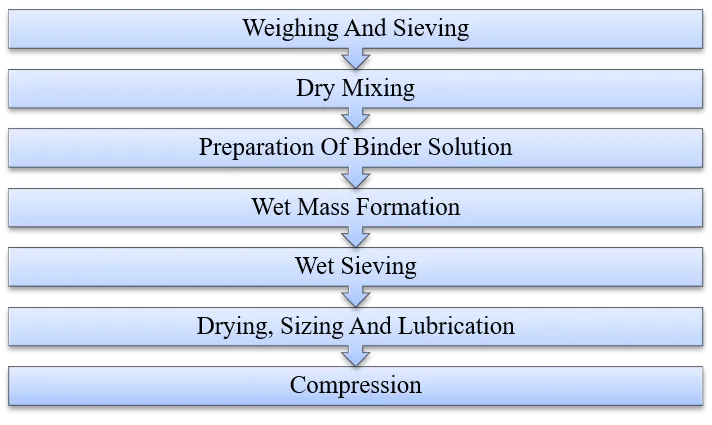
Fig 4.Wet Granulation Method of Tablet Preparation

  1. Preparation of Granules

Firstly after weighing every component precisely, components are mixed and blended properly. Afterwards, by using a suitable solvent a wet mass is prepared. The wet mass is then dried overnight at in a hot air oven for 24 hours at 40°C after which it is passed through a 40 mesh screen. Then, the dried granules are mixed with magnesium stearate. Lactose is used as a filler or channeling agent [13].

  1. Preparation of Tablet

The uniformly lubricated granules compressed into tablet by using a tablet punching. The compression force is adjusted between 6.2 and 6.9 kg/cm2 by using Monsanto or Pfizer hardness tester. The process is simply described in figure 4 clearly [13].

      1. Dry Granulation

Dry granulation is particularly useful when the drug and excipients are moisture or heat sensitive. For preparation of floating mucoadhesive tablet, firstly weigh drug and all excipients precisely and pass all ingredients through a sieve. Then except effervescent agents, all powders are slugged in punching machine or passed through a roller compactor. The prepared slugs are then passed by a sieve to form granules. At final step, lubricants and effervescent agents are mixed with granules and press mixture in tablet punching machine to obtain final formulation. A simple flowchart of process is shown below in fig 5.
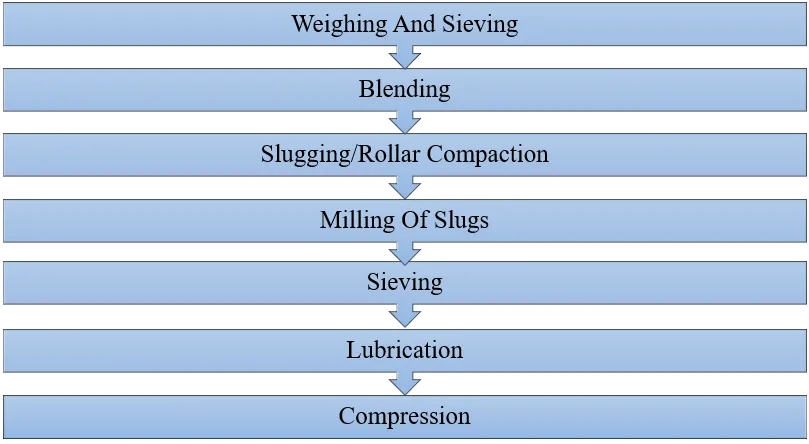
Fig 5. Dry Granulation

  1. Direct Compression

This method is used when drug and excipients are freely flowing, compressible moisture or heat sensitive. The process is simple; firstly after mixing all the excipients and drug, materials are passed through a sieve. Then mixture is blended and compressed into tablet after adding lubricants at last.
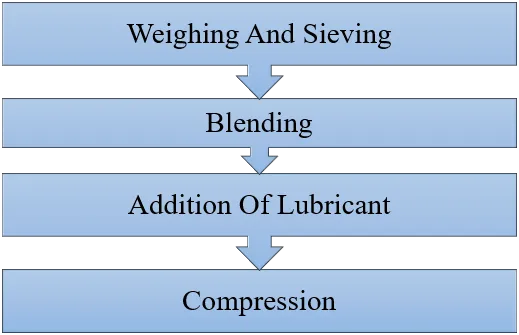
Fig 6. Direct Compression

    1. Mechanistic Foundations of Floating Mucoadhesive Systems
    1. Mechanisms Involved in Floating

The concept of floating and sinking was first described by Archimedes, who proposed that an object placed in a fluid experiences an upward buoyant force equal to the weight of the fluid it displaces. To explain this statement, he considered three cases which are - a body whose density equals the fluid’s density, a body whose density is lesser than that of the fluid, and a body whose density is more than that of the fluid [31]. The bulk density of floating systems is less than gastric content that is less than 1.004 g/cm3 which makes them capable to float in stomach [33].

If, ρ dosage form <ρ gastric fluid, the dosage form will float

And if, ρ dosage form> ρ gastric fluid, the dosage form doesn’t float

The buoyancy can either be achieved by entrapping air or CO₂ within the polymer matrix or by increasing the volume of the system through swelling. The low-density excipients can also be used for this purpose.

  1. Floatation through Hydrodynamic Balance System (HBS)

In this system matrix forming hydrophilic polymers are used for controlled floatation. Polymers like HPMC, PEO hydrate, form a gel layer around tablet or formulation. This gel layer traps CO2 inside swollen matrix that makes the dosage form dense and keeps it buoyant for longer durations. This system is applicable to non-effervescent as well as effervescent floating tablets.

  1. Gas-Generation (Effervescent) Systems

In these systems, sodium bicarbonate and acidic components are used to achieve floatation. In presence of gastric acid, effervescent agents react and produce CO₂ which becomes entrapped within polymer matrix that decreases density of dosage form. The reaction can be represented as follows:

NaHCO3 + H+ →  Na+ + CO2 + H2O

  1. Hydrophilic Polymer Expansion (Floatation by Swelling System)

Some systems float without gas generation. Polymers like HPMC K4M, PEO and xanthan gum absorb water and swell 2–5 times their original size [32]. Swelling increases volume of dosage form and the density drops.

ρ = mv

If volume (v) increases and mass (m) is constant, density (ρ) decreases, hence tablet floats.

    1. Mechanisms Involved in Bioadhesion

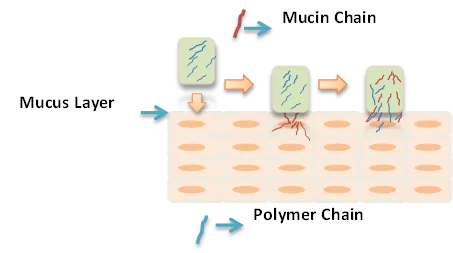
There are two stages of mucoadhesion, named as contact and consolidation stage which are clearly shown in diagram shown below:

  1. Contact Stage: This is the initial stage in which intimate contact between bioadhesive polymer and mucus membrane takes place. In the case of semisolid and liquid dosage forms, intimate contact with the mucosal tissue is primarily achieved through wetting and spreading, which enhance the contact surface area. In contrast, dry or partially hydrated dosage forms or medical devices require wetting, hydration, and swelling processes to facilitate closer and more effective interaction with the mucosal membrane [34]. For strong adhesion, small particle size is considered for effective attachment to the gastrointestinal mucosa.
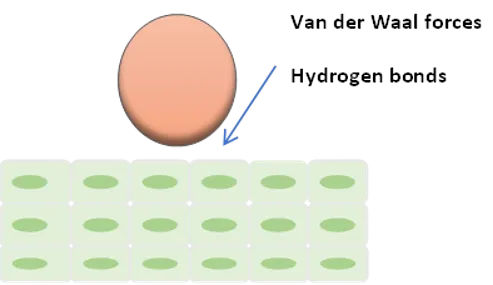
  2. Consolidation Stage: In a second stage of the mucoadhesion, an interpenetration of the swollen polymeric matrix and the mucus gel network takes place [35]. The adhesion is strengthened by secondary chemical bonds, such as hydrogen bonding, electrostatic interactions, and Vander Waal forces. This stage ultimately determines the duration and strength of adhesion formulation to the mucus membrane. 

Fig 7. Mechanisms of Mucoadhesion

    1. Theories Involved in Bioadhesion
  1. Wetting Theory: This theory primarily applies to liquids and dosage forms that show strong affinity for mucus membranes [34]. The adhesive substance and mucosal affinity can be evaluated by angle of contact. The contact angle depicts the degree of wetting during the interaction of mucus membrane and dosage form. The low contact angle (θ) indicates the good spreadability or wetting.

If θ < 90° , it indicates good wetting, favorable for mucoadhesion

θ > 90° ,  represents poor wetting

θ = 0° , represents complete wetting
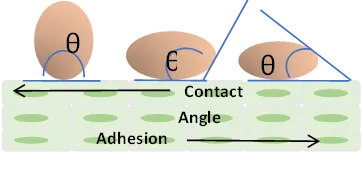
Fig 8. Wetting Theory
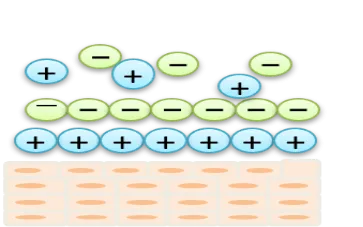
  1. Electronic Theory: This theory involves the electrostatic forces between mucin of mucus membrane and substances to be adhered.  Due to presence of opposite charges on mucus layer and mucoadhesive polymer, electron transfer takes place between the surfaces. Therefore electrons double layer formed at the interface [36]. As a result, bond formation takes place and further attractive forces are induced due to double layer formed during electrostatic interaction [37, 38].

Fig 9. Electronic Theory

  1. Adsorption Theory: According to this theory, the bioadhesive polymer adsorb at the surface of mucosal membrane by forming certain types of bonds. The surfaces attached by initial contact between surfaces followed by week interactive forces between them. The interactions takrs place by primary forces (strong covalent bonds) and weak secondary forces (ionic bonds, Vander Waal’s forces, hydrogen bonds) [39,40].

Fig 10. Adsorption Theory

  1. Diffusion Theory: According to diffusion theory, the polymeric chains and mucus glycoprotein (mucin) interweave to a sufficient extent to form semi-permanent adhesive bonds. This interdiffusion process is primarily influenced by the diffusion coefficient and the contact duration between the adhesive material and the mucus layer. The presence of concentration gradients acts as the driving force that facilitates the diffusion of polymeric chains within the mucus network and, conversely, the mucin chains into the adhesive polymeric matrix until an equilibrium interpenetration depth is reached. Additionally, the rate of penetration is also dependent on the diffusion coefficient, the nature and flexibility of the mucoadhesive polymer chains, contact time, and mobility. As the degree of penetration of the mucoadhesive polymer chains increases, the adhesive force also strengthens. For a successful mucoadhesive bond, the necessary interpenetration depth ranges from 0.2 to 0.5 μm [34]. The time required to achieve maximum adhesion between the polymer and the mucous layer during interpenetration can be determined using FTIR and rheological techniques.

Fig 11. Diffusion Theory

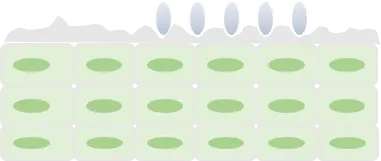
  1. Mechanical Theory: This theory states that adhesion occurs when a mucoadhesive fills the uneven regions of a rough surface. These irregularities help in distribution of energy by increasing the interfacial area for interaction that further facilitates adhesion.

Fig 12. Mechanical Theory

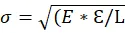
  1. Fracture Theory: This theory explains the force required to detach a mucoadhesive system. Fracture theory is primarily used for the investigations (testing and evaluation) that involve measuring mucoadhesion. It determines the fracture strength (σ) for separating the two surfaces by relating Young’s modulus of elasticity (E), critical crack length (L), and fracture energy (Ԑ) by the given equation [41].

                                  σ=(E*Ԑ/L


This theory does not take into account the diffusion parameters or the interpenetration parameters of polymer chains since it considers the forces that are involved in breaking and separating the surfaces [42].
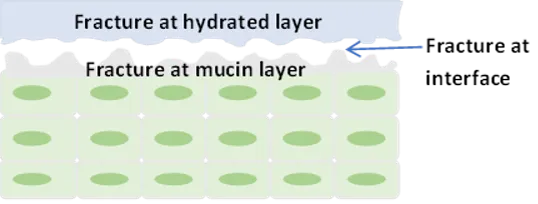
Fig 13. Fracture Theory

    1. Evaluations tests

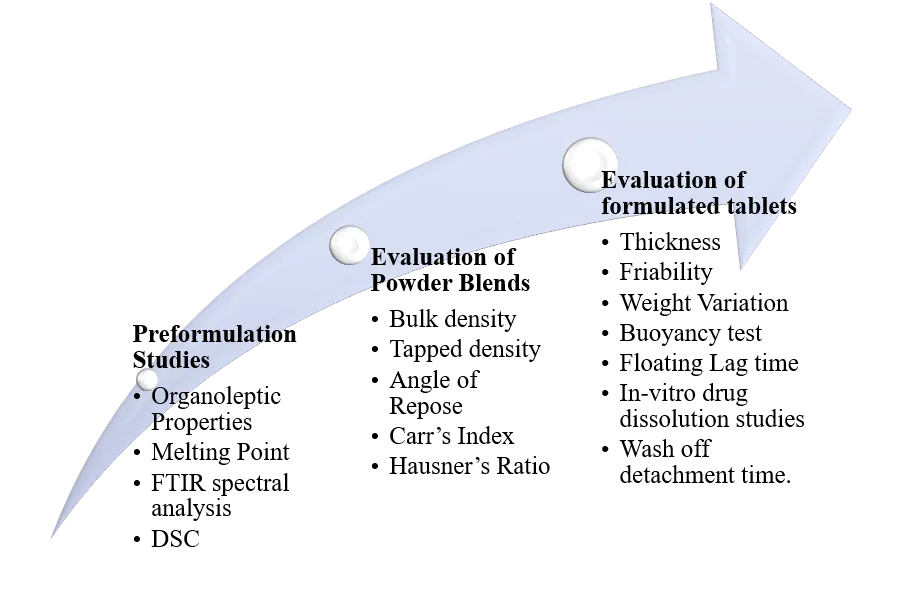
The floating mucoadhesive tablets can be evaluated by performing several evaluation tests. Firstly, preformulation studies are done to determine characteristics of drug and polymers. Then, flow properties of powder blends are determined. After that tablet is formulated and are evaluated to obtain an optimized tablet. Some of the important evaluation tests are enlisted in figure 14.
  1. Preformulation Studies
  1. Organoleptic Properties: Organoleptic tests, such as color, odor, texture and taste, should be carried out in the initial stages.
  2. Melting Point: The melting point of the drug can be determined using a Fisher–Johns apparatus or any suitable automated instrument.
  3. FTIR spectral analysis: FTIR spectroscopy is used to identify functional groups and confirm the chemical structure of a substance. It also helps in evaluating compatibility by comparing spectra of the pure substance and its mixtures, where the absence of peak shifting or disappearance indicates no interaction with excipients.
  4. DSC (Differential Scanning Calorimetry): It measures the heat flow associated with thermal transitions of a substance. It is used to study thermal behavior, confirm crystallinity and melting point, and evaluate compatibility, where the presence of a characteristic melting endotherm indicates stability and the absence of significant peak changes suggests no interaction with excipients.

Fig 14. Evaluation Parameters of Floating Mucoadhesive Tablet

  1. Evaluation of Blends
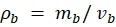
  1. Bulk Density: It can be defined as mass of powder per unit bulk volume. The value of bulk density is highly affected by factors like size, shape, and cohesion of the particles.

ρb = mb/ vb


Where, ρb

= bulk density


mb

 = mass of powder


vb

 = bulk volume of powder


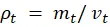
  1. Tapped density: Tapped density is important parameter for predicting compression behavior and content uniformity. It also helps to determine the consolidation behavior of powder.

ρt = mt/ vt


Where, ρt

= tapped density


mt

 = mass of powder


vt

 = tapped volume of powder


  1. Angle of repose: The angle of repose is the maximum slope angle formed by a powder heap. It can be measured by allowing powder to flow through a funnel on a horizontal surface after which pile height and base radius is measured.

θ = tan-1hr


where, θ = Angle of repose

h = height of powder heap

r = radius of powder heap

  1. Compressibility Index:  It is an important method for predicting flow characteristic. It  can be represented by following equation:

Index = Tapped Density-Bulk DensityTapped Density

 ×

 100


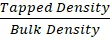
  1. Hausner’s ratio: It can be calculated by following formula:

Hausner’s ratio = Tapped DensityBulk Density
 

  1. Evaluation of Tablets

The compendial and non compendial tests are done to evaluate the final formulation. Some of the tests are explained below:

  1. Thickness: Thickness can be determined by using vernier caliper, micrometer, or a specialized tablet thickness gauge. To ensure proper appearance and dose uniformity, the tablet thickness should within ±
     5% of average value.
  2. Friability: Roche friabilator is used to determine friability. It is an important parameter to determine mechanical strength of tablet. The friabilator is operated at 25 rpm for 4 minutes [43].
  3. Weight Variation: This test is applicable for uncoated and coated tablets. To perform this evaluation test, generally 20 tablets are weighed individually and then average mass of tablets is calculated. The weight variation test is said to pass when the weight of most of the tablets is close to average weight. As stated in the official pharmacopeias, not more than the two tablets must differ from the average weight by more than the limit specified. Nonetheless, the percentage shouldn’t differ more than twice for any tablet. As long as the batch of tablets passes these parameters, it meets weight variation test. [33].
  4. Buoyancy test (Total Floating time and Floating Lag Time): It can be determined by randomly selected tablets from a batch and keep them in beaker that contain 100ml simulated gastric fluid (0.1 N HCl). The duration of tablet during which tablet remain buoyant on surface is referred to as total floating time. On the other hand, floating lag time is time taken by tablet to rise on surface [44].
  5. In- vitro Release Study: The in vitro release study can be performed using Dissolution Testing Apparatus (paddle method) with 900 ml. It can be carried out using  0.1 N hydrochloric acid as the dissolution medium, which is maintained at 37 ± 0.5 °C and paddle is rotated at the speed of 50 rpm. The sample is withdrawn according time intervals mentioned in pharmacopeia and each time fresh sample is replaced to make final volume. The samples are then diluted and absorbance measured at spectrophotometer after which percentage drug release is plotted against time.
  6. Wash off detachment time: This test is specifically done to test mucoadhesive property of formulation.  The property of mucoadhesion of the tablets can be examined through vitro mucoadhesion testing method known as ‘Wash off method’. To perform this test the pieces of stomach mucosa are mounted on the glass slides which are then connected with suitable support. Then, tablets are attached on glass slide and support is generally hanged on the arm of tablet disintegration apparatus. After that slow up and down movement is given regularly by taking 0.1 N HCL in basket at 37
    . Then note down detachment time of tablet [44]. Longer detachment time reflects enhanced mucoadhesive strength, which further indicates that more effective adhesion of the formulation to the mucosal surface.
  1. Future Perspective

The future of gastroretentive drug delivery systems (GRDDS) will be defined by combination approaches that integrate complementary retention mechanisms to deliver predictable gastric residence and controlled drug release. Hybrid platforms merging floating, mucoadhesive, swelling/expandable, and density-modulating functions will be rationally engineered through advanced polymer chemistry. Stimuli-responsive, biodegradable, and multifunctional polymers, together with computational formulation modeling and machine-learning–assisted optimization, will enable tailored, patient-centric release profiles. Manufacturing innovations such as three-dimensional printing and continuous hot-melt extrusion will allow precise geometry, dose personalization, and scalable production. Improved in vitro–in vivo correlations, standardized evaluation protocols, and real-time imaging will accelerate translational success. Regulatory harmonization and comprehensive safety assessment must accompany technological progress to ensure clinical adoption. Addressing inter- and intra-patient gastric variability and integrating pharmacokinetic– pharmacodynamic modeling will enhance therapeutic predictability for narrow-absorption-window drugs. Combination GRDDS are poised to improve bioavailability, reduce dosing frequency, and increase patient adherence, expanding therapeutic options for challenging molecules clinically.

CONCLUSION

Hybrid approaches for gastroretentive drug delivery, employing combination mechanisms, may provide promising approach to overcome the limitations of single-mechanism gastroretentive systems. Such hybrid systems may combine the benefits of buoyancy, mucoadhesion, and/or expansion with adhesion to prolong the gastric residence time helps to minimize intersubject variability, and achieve more effective and controlled release of the active pharmaceutical ingredient, especially for drugs with narrow absorption window. For instance, the concept of floating-mucoadhesive tablets exemplifies the potential benefits of hybrid systems that can combine the benefits of buoyancy and adhesion in a synergistic manner to achieve effective gastroretentive action without compromising patient acceptability. A clear understanding of the underlying mechanisms of buoyancy, swelling, and bioadhesion, including the underlying science, will be crucial in the design of effective gastroretentive drug delivery systems, including hybrid systems that combine the benefits of more than one mechanism of gastroretentive action. Furthermore, robust in vitro testing, including floating lag time, swelling index, mucoadhesive strength, and dissolution, in addition to in vivo testing, will be important in establishing in vitro–in vivo correlations, and the challenges and limitations that remain to be overcome include physiological variability, reproducibility in large-scale manufacture, and the need to meet regulatory requirements for performance and safety. With the development of newer and more advanced polymers, including stimuli-responsive and multifunctional polymers, and the application of computer-aided optimization techniques,  development of hybrid gastroretentive technologies will gain momentum in the near future, and the emphasis on understanding the underlying science, in vitro and in vivo testing, and the need to address the challenges and limitations that remain to be overcome will be crucial in the development of effective and safe gastroretentive drug delivery systems in the near future.

REFERENCES
  1. Vrettos NN, Roberts CJ, Zhu Z. Gastroretentive technologies in tandem with controlled-release strategies: A potent answer to oral drug bioavailability and patient compliance implications. Pharmaceutics. 2021 Sep 30;13(10):1591.
  2. Nayak AK, Malakar J, Sen KK. Gastroretentive drug delivery technologies: Current approaches and future potential. Journal of Pharmaceutical Education and Research. 2010 Dec 1;1(2):1.
  3. Lopes CM, Bettencourt C, Rossi A, Buttini F, Barata P. Overview on gastroretentive drug delivery systems for improving drug bioavailability. International journal of pharmaceutics. 2016 Aug 20;510(1):144-58.
  4. Jaimini R, Jaimini M. NOVEL ADVANCED EMERGING PERSPECTIVES AND CURRENT STATE ON GASTRORETENTIVE DRUG DELIVERY SYSTEMS. International Journal of Pharmaceutical Research and Medicinal Plants. 2025 Jan 27;1(1):01-14.
  5. Mirgal S, Tekade B, Kale M. Enhancing Drug Delivery: Formulation and Evaluation of Novel Effervescent Tablets for Optimal Bioavailability. International Journal of Scientific Research and Technology. 2025 Jan 14.
  6. Nigusse B, Gebre-Mariam T, Belete A (2021) Design, development and optimization of sustained release floating, bioadhesive and swellable matrix tablet of ranitidine hydrochloride. PLoS ONE16(6): e0253391. https://doi.org/ 10.1371/journal.pone.0253391
  7. Zhang Y, Wang Y, Lu Y, Quan H, Wang Y, Song S, Guo H. Advanced oral drug delivery systems for gastrointestinal targeted delivery: the design principles and foundations. Journal of Nanobiotechnology. 2025 May 30;23(1):400.
  8. He W, Li Y, Zhang R, Wu Z, Yin L. Gastro-floating bilayer tablets for the sustained release of metformin and immediate release of pioglitazone: Preparation and in vitro/in vivo evaluation. International journal of pharmaceutics. 2014 Dec 10;476(1-2):223-31.
  9. Waqar MA, Mubarak N, Khan AM, Khan R, Shaheen F, Shabbir A. Advanced polymers and recent advancements on gastroretentive drug delivery system; a comprehensive review. Journal of drug targeting. 2024 Jul 2;32(6):655-71
  10. Tripathi J, Thapa P, Maharjan R, Jeong SH. Current state and future perspectives on gastroretentive drug delivery systems. Pharmaceutics. 2019 Apr 20;11(4):193.
  11. Murthy GL, Tamreen V, Chandrika C, Iryn S, Suchitra M, Balireddy N, Sreeharsha N, Sadik S. Design and In vitro evaluation of floating tablets containing atazanavir sulphate. Research Journal of Pharmacy and Technology. 2021;14(5):2763-70.
  12. Pachpor MS. A Systemic Review on: FORMULATION AND EVALUATION OF GASTRORETENTIVE TABLET. World Journal of Pharmaceutical Sciences. 2025 Jun 14.
  13. Heer H, Kaur VP, Rathor S, Aamir S, Singh C. Microbubbles used for Drug Delivery System. Nanopharmaceutical Advanced Delivery Systems. 2021 Jan 12:125-43.
  14. Jaimini R, Jaimini M. NOVEL ADVANCED EMERGING PERSPECTIVES AND CURRENT STATE ON GASTRORETENTIVE DRUG DELIVERY SYSTEMS. International Journal of Pharmaceutical Research and Medicinal Plants. 2025 Aug 27;1(1):01-14.
  15. Awasthi R, Kulkarni GT. Decades of research in drug targeting to the upper gastrointestinal tract using gastroretention technologies: where do we stand?. Drug delivery. 2016 Feb 12;23(2):378-94..
  16. Das S, Kaur S, Rai VK. Gastro-retentive drug delivery systems: a recent update on clinical pertinence and drug delivery. Drug Delivery and Translational Research. 2021 Oct;11(5):1849-77.
  17. Lopes CM, Bettencourt C, Rossi A, Buttini F, Barata P. Overview on gastroretentive drug delivery systems for improving drug bioavailability. International journal of pharmaceutics. 2016 Aug 20;510(1):144-58.
  18. Turac IR, Porfire A, Iurian S, Crișan AG, Casian T, Iovanov R, Tomuță I. Expanding the manufacturing approaches for gastroretentive drug delivery systems with 3D printing technology. Pharmaceutics. 2024 Jun 11;16(6):790.]
  19. Gaikwad VD, Yadav VD, Gaikwad MD. Novel sustained release and swellable gastroretentive dosage form for ciprofloxacin hydrochloride. International journal of pharmaceutical investigation. 2014 Apr;4(2):88
  20. Chen YC, Ho HO, Lee TY, Sheu MT. Physical characterizations and sustained release profiling of gastroretentive drug delivery systems with improved floating and swelling capabilities. International journal of pharmaceutics. 2013 Jan 30;441(1-2):162-9.
  21. Hwang, K.-M.; Nguyen, T.-T.; Seok, S.H.; Jo, H.-I.; Cho, C.-H.; Hwang, K.-M.; Kim, J.-Y.; Park, C.-W.; Rhee, Y.-S.; Park, E.-S. Swellable and porous bilayer tablet for gastroretentive drug delivery: Preparation and in vitro-in vivo evaluation. Int. J. Pharm. 2019, 572, 118783.
  22. Su CY, Ho HO, Chen YC, Yu YT, Liu DZ, Chao FC, Sheu MT. Complex hydrogels composed of chitosan with ring-opened polyvinyl pyrrolidone as a gastroretentive drug dosage form to enhance the bioavailability of bisphosphonates. Scientific Reports. 2018 May 25;8(1):8092.
  23. Darandale SS, Vavia PR. Design of a gastroretentive mucoadhesive dosage form of furosemide for controlled release. Acta Pharmaceutica Sinica B. 2012 Oct 1;2(5):509-17.
  24. Karemore MN, Bali NR. Gellan gum based gastroretentive tablets for bioavailability enhancement of cilnidipine in human volunteers. International Journal of Biological Macromolecules. 2021 Mar 31;174:424-39.
  25. Abd El-Aziz MF, Ismail S, Tadros MI, Elnabarawi MA. Alfuzosin hydrochloride-loaded low-density gastroretentive sponges: development, in vitro characterization and gastroretentive monitoring in healthy volunteers via MRI. Pharmaceutical Development and Technology. 2020 May 27;25(5):566-78.
  26. Bera H, Kandukuri SG, Nayak AK, Boddupalli S. Alginate–sterculia gum gel-coated oil-entrapped alginate beads for gastroretentive risperidone delivery. Carbohydrate polymers. 2015 Apr 20;120:74-84.
  27. Dey SK, De PK, De A, Ojha S, De R, Mukhopadhyay AK, Samanta A. Floating mucoadhesive alginate beads of amoxicillin trihydrate: A facile approach for H. pylori eradication. International Journal of Biological Macromolecules. 2016 Aug 1;89:622-31.
  28. Darbasizadeh B, Motasadizadeh H, Foroughi-Nia B, Farhadnejad H. Tripolyphosphate-crosslinked chitosan/poly (ethylene oxide) electrospun nanofibrous mats as a floating gastro-retentive delivery system for ranitidine hydrochloride. Journal of pharmaceutical and biomedical analysis. 2018 May 10;153:63-75.
  29. Abd El Hady WE, Soliman OA, El Sabbagh HM, Mohamed EA. Glutaraldehyde-crosslinked chitosan-polyethylene oxide nanofibers as a potential gastroretentive delivery system of nizatidine for augmented gastroprotective activity. Drug Delivery. 2021 Jan 1;28(1):1795-809.
  30. Maqbool T, Yousuf RI, Ahmed FR, Shoaib MH, Irshad A, Saleem MT, Qazi F, Sarfaraz S, Rizvi SA, Mahmood ZA. Cellulose ether and carbopol 971 based gastroretentive controlled release formulation design, optimization and physiologically based pharmacokinetic modeling of ondansetron hydrochloride minitablets. International Journal of Biological Macromolecules. 2024 Sep 1;276:133841.
  31. Hassanzadeh H, Taghavi SM. A review on free miscible buoyant jets. Physics of Fluids. 2024 Jun 1;36(6)..
  32. Kumar V, Somkuwar S, Singhai AK, Kumar V, Somkuwar S, Singhai AK. A recent update on gastro retentive drug delivery systems. GSC Biol. Pharm. Sci. 2024;27:125-44.
  33. Dey S, Chattopadhyay S, Mazumder B. Formulation and Evaluation of Fixed‐Dose Combination of Bilayer Gastroretentive Matrix Tablet Containing Atorvastatin as Fast‐Release and Atenolol as Sustained‐Release. BioMed research international. 2014;2014(1):396106.
  34. Vigani B, Rossi S, Sandri G, Bonferoni MC, Caramella CM. Mucoadhesive polymers in substance-based medical devices: functional ingredients or what else?. Frontiers in Drug Safety and Regulation. 2023 Aug 4;3:1227763
  35. Zahir-Jouzdani F, Wolf JD, Atyabi F, Bernkop-Schnürch A. In situ gelling and mucoadhesive polymers: why do they need each other?. Expert Opinion on Drug Delivery. 2018 Oct 3;15(10):1007-19.
  36. Alawdi S, Solanki AB. Mucoadhesive drug delivery systems: A review of recent developments. Journal of Scientific Research in Medical and Biological Sciences. 2021 Feb 28;2(1):50-64.
  37. Bioadhesive or mucoadhesive drug delivery system: Apotential alternative to conventional therapy. JDDT 9, 858–867. doi:10.22270/] jddt.v9i4-A.3708.
  38. Carvalho FC, Bruschi ML, Evangelista RC, Gremião MP. Mucoadhesive drug delivery systems. Brazilian Journal of pharmaceutical sciences. 2010;46:1-7.
  39. Malik R, Garg T, Goyal AK, Rath G. Polymeric nanofibers: targeted gastro-retentive drug delivery systems. Journal of Drug Targeting. 2015 Feb 7;23(2):109-24.
  40. Mansuri S, Kesharwani P, Jain K, Tekade RK, Jain NK. Mucoadhesion: A promising approach in drug delivery system. Reactive and functional polymers. 2016 Mar 1;100:151-72.
  41. Alexander A, Sharma S, Khan MJ. THEORIES AND FACTORS AFFECTING MUCOADHESIVE DRUG DELIVERY SYSTEMS: A REVIEW. International Journal of Research in Ayurveda & Pharmacy. 2011 Jul 1;2(4).
  42. Mirgal S, Tekade B, Kale M. Enhancing Drug Delivery: Formulation and Evaluation of Novel Effervescent Tablets for Optimal Bioavailability. International Journal of Scientific Research and Technology. 2025 Jan 14.
  43. Ashwini K, Monali T. Formulation and Evaluation of Micro Balloons of Domperidone. Journal of Drug Delivery & Therapeutics. 2019 May 2;9.
  44. Shaikh Siraj N, Ahmed SA, Khan GJ. Fabrication and Evaluation of Floating Mucoadhesive Tablets of Cefpodoxime Proxetil Using Factorial Design. Journal of Drug Delivery & Therapeutics. 2019; 9(5):131-44.

Reference

  1. Vrettos NN, Roberts CJ, Zhu Z. Gastroretentive technologies in tandem with controlled-release strategies: A potent answer to oral drug bioavailability and patient compliance implications. Pharmaceutics. 2021 Sep 30;13(10):1591.
  2. Nayak AK, Malakar J, Sen KK. Gastroretentive drug delivery technologies: Current approaches and future potential. Journal of Pharmaceutical Education and Research. 2010 Dec 1;1(2):1.
  3. Lopes CM, Bettencourt C, Rossi A, Buttini F, Barata P. Overview on gastroretentive drug delivery systems for improving drug bioavailability. International journal of pharmaceutics. 2016 Aug 20;510(1):144-58.
  4. Jaimini R, Jaimini M. NOVEL ADVANCED EMERGING PERSPECTIVES AND CURRENT STATE ON GASTRORETENTIVE DRUG DELIVERY SYSTEMS. International Journal of Pharmaceutical Research and Medicinal Plants. 2025 Jan 27;1(1):01-14.
  5. Mirgal S, Tekade B, Kale M. Enhancing Drug Delivery: Formulation and Evaluation of Novel Effervescent Tablets for Optimal Bioavailability. International Journal of Scientific Research and Technology. 2025 Jan 14.
  6. Nigusse B, Gebre-Mariam T, Belete A (2021) Design, development and optimization of sustained release floating, bioadhesive and swellable matrix tablet of ranitidine hydrochloride. PLoS ONE16(6): e0253391. https://doi.org/ 10.1371/journal.pone.0253391
  7. Zhang Y, Wang Y, Lu Y, Quan H, Wang Y, Song S, Guo H. Advanced oral drug delivery systems for gastrointestinal targeted delivery: the design principles and foundations. Journal of Nanobiotechnology. 2025 May 30;23(1):400.
  8. He W, Li Y, Zhang R, Wu Z, Yin L. Gastro-floating bilayer tablets for the sustained release of metformin and immediate release of pioglitazone: Preparation and in vitro/in vivo evaluation. International journal of pharmaceutics. 2014 Dec 10;476(1-2):223-31.
  9. Waqar MA, Mubarak N, Khan AM, Khan R, Shaheen F, Shabbir A. Advanced polymers and recent advancements on gastroretentive drug delivery system; a comprehensive review. Journal of drug targeting. 2024 Jul 2;32(6):655-71
  10. Tripathi J, Thapa P, Maharjan R, Jeong SH. Current state and future perspectives on gastroretentive drug delivery systems. Pharmaceutics. 2019 Apr 20;11(4):193.
  11. Murthy GL, Tamreen V, Chandrika C, Iryn S, Suchitra M, Balireddy N, Sreeharsha N, Sadik S. Design and In vitro evaluation of floating tablets containing atazanavir sulphate. Research Journal of Pharmacy and Technology. 2021;14(5):2763-70.
  12. Pachpor MS. A Systemic Review on: FORMULATION AND EVALUATION OF GASTRORETENTIVE TABLET. World Journal of Pharmaceutical Sciences. 2025 Jun 14.
  13. Heer H, Kaur VP, Rathor S, Aamir S, Singh C. Microbubbles used for Drug Delivery System. Nanopharmaceutical Advanced Delivery Systems. 2021 Jan 12:125-43.
  14. Jaimini R, Jaimini M. NOVEL ADVANCED EMERGING PERSPECTIVES AND CURRENT STATE ON GASTRORETENTIVE DRUG DELIVERY SYSTEMS. International Journal of Pharmaceutical Research and Medicinal Plants. 2025 Aug 27;1(1):01-14.
  15. Awasthi R, Kulkarni GT. Decades of research in drug targeting to the upper gastrointestinal tract using gastroretention technologies: where do we stand?. Drug delivery. 2016 Feb 12;23(2):378-94..
  16. Das S, Kaur S, Rai VK. Gastro-retentive drug delivery systems: a recent update on clinical pertinence and drug delivery. Drug Delivery and Translational Research. 2021 Oct;11(5):1849-77.
  17. Lopes CM, Bettencourt C, Rossi A, Buttini F, Barata P. Overview on gastroretentive drug delivery systems for improving drug bioavailability. International journal of pharmaceutics. 2016 Aug 20;510(1):144-58.
  18. Turac IR, Porfire A, Iurian S, Cri?an AG, Casian T, Iovanov R, Tomu?? I. Expanding the manufacturing approaches for gastroretentive drug delivery systems with 3D printing technology. Pharmaceutics. 2024 Jun 11;16(6):790.]
  19. Gaikwad VD, Yadav VD, Gaikwad MD. Novel sustained release and swellable gastroretentive dosage form for ciprofloxacin hydrochloride. International journal of pharmaceutical investigation. 2014 Apr;4(2):88
  20. Chen YC, Ho HO, Lee TY, Sheu MT. Physical characterizations and sustained release profiling of gastroretentive drug delivery systems with improved floating and swelling capabilities. International journal of pharmaceutics. 2013 Jan 30;441(1-2):162-9.
  21. Hwang, K.-M.; Nguyen, T.-T.; Seok, S.H.; Jo, H.-I.; Cho, C.-H.; Hwang, K.-M.; Kim, J.-Y.; Park, C.-W.; Rhee, Y.-S.; Park, E.-S. Swellable and porous bilayer tablet for gastroretentive drug delivery: Preparation and in vitro-in vivo evaluation. Int. J. Pharm. 2019, 572, 118783.
  22. Su CY, Ho HO, Chen YC, Yu YT, Liu DZ, Chao FC, Sheu MT. Complex hydrogels composed of chitosan with ring-opened polyvinyl pyrrolidone as a gastroretentive drug dosage form to enhance the bioavailability of bisphosphonates. Scientific Reports. 2018 May 25;8(1):8092.
  23. Darandale SS, Vavia PR. Design of a gastroretentive mucoadhesive dosage form of furosemide for controlled release. Acta Pharmaceutica Sinica B. 2012 Oct 1;2(5):509-17.
  24. Karemore MN, Bali NR. Gellan gum based gastroretentive tablets for bioavailability enhancement of cilnidipine in human volunteers. International Journal of Biological Macromolecules. 2021 Mar 31;174:424-39.
  25. Abd El-Aziz MF, Ismail S, Tadros MI, Elnabarawi MA. Alfuzosin hydrochloride-loaded low-density gastroretentive sponges: development, in vitro characterization and gastroretentive monitoring in healthy volunteers via MRI. Pharmaceutical Development and Technology. 2020 May 27;25(5):566-78.
  26. Bera H, Kandukuri SG, Nayak AK, Boddupalli S. Alginate–sterculia gum gel-coated oil-entrapped alginate beads for gastroretentive risperidone delivery. Carbohydrate polymers. 2015 Apr 20;120:74-84.
  27. Dey SK, De PK, De A, Ojha S, De R, Mukhopadhyay AK, Samanta A. Floating mucoadhesive alginate beads of amoxicillin trihydrate: A facile approach for H. pylori eradication. International Journal of Biological Macromolecules. 2016 Aug 1;89:622-31.
  28. Darbasizadeh B, Motasadizadeh H, Foroughi-Nia B, Farhadnejad H. Tripolyphosphate-crosslinked chitosan/poly (ethylene oxide) electrospun nanofibrous mats as a floating gastro-retentive delivery system for ranitidine hydrochloride. Journal of pharmaceutical and biomedical analysis. 2018 May 10;153:63-75.
  29. Abd El Hady WE, Soliman OA, El Sabbagh HM, Mohamed EA. Glutaraldehyde-crosslinked chitosan-polyethylene oxide nanofibers as a potential gastroretentive delivery system of nizatidine for augmented gastroprotective activity. Drug Delivery. 2021 Jan 1;28(1):1795-809.
  30. Maqbool T, Yousuf RI, Ahmed FR, Shoaib MH, Irshad A, Saleem MT, Qazi F, Sarfaraz S, Rizvi SA, Mahmood ZA. Cellulose ether and carbopol 971 based gastroretentive controlled release formulation design, optimization and physiologically based pharmacokinetic modeling of ondansetron hydrochloride minitablets. International Journal of Biological Macromolecules. 2024 Sep 1;276:133841.
  31. Hassanzadeh H, Taghavi SM. A review on free miscible buoyant jets. Physics of Fluids. 2024 Jun 1;36(6)..
  32. Kumar V, Somkuwar S, Singhai AK, Kumar V, Somkuwar S, Singhai AK. A recent update on gastro retentive drug delivery systems. GSC Biol. Pharm. Sci. 2024;27:125-44.
  33. Dey S, Chattopadhyay S, Mazumder B. Formulation and Evaluation of Fixed?Dose Combination of Bilayer Gastroretentive Matrix Tablet Containing Atorvastatin as Fast?Release and Atenolol as Sustained?Release. BioMed research international. 2014;2014(1):396106.
  34. Vigani B, Rossi S, Sandri G, Bonferoni MC, Caramella CM. Mucoadhesive polymers in substance-based medical devices: functional ingredients or what else?. Frontiers in Drug Safety and Regulation. 2023 Aug 4;3:1227763
  35. Zahir-Jouzdani F, Wolf JD, Atyabi F, Bernkop-Schnürch A. In situ gelling and mucoadhesive polymers: why do they need each other?. Expert Opinion on Drug Delivery. 2018 Oct 3;15(10):1007-19.
  36. Alawdi S, Solanki AB. Mucoadhesive drug delivery systems: A review of recent developments. Journal of Scientific Research in Medical and Biological Sciences. 2021 Feb 28;2(1):50-64.
  37. Bioadhesive or mucoadhesive drug delivery system: Apotential alternative to conventional therapy. JDDT 9, 858–867. doi:10.22270/] jddt.v9i4-A.3708.
  38. Carvalho FC, Bruschi ML, Evangelista RC, Gremião MP. Mucoadhesive drug delivery systems. Brazilian Journal of pharmaceutical sciences. 2010;46:1-7.
  39. Malik R, Garg T, Goyal AK, Rath G. Polymeric nanofibers: targeted gastro-retentive drug delivery systems. Journal of Drug Targeting. 2015 Feb 7;23(2):109-24.
  40. Mansuri S, Kesharwani P, Jain K, Tekade RK, Jain NK. Mucoadhesion: A promising approach in drug delivery system. Reactive and functional polymers. 2016 Mar 1;100:151-72.
  41. Alexander A, Sharma S, Khan MJ. THEORIES AND FACTORS AFFECTING MUCOADHESIVE DRUG DELIVERY SYSTEMS: A REVIEW. International Journal of Research in Ayurveda & Pharmacy. 2011 Jul 1;2(4).
  42. Mirgal S, Tekade B, Kale M. Enhancing Drug Delivery: Formulation and Evaluation of Novel Effervescent Tablets for Optimal Bioavailability. International Journal of Scientific Research and Technology. 2025 Jan 14.
  43. Ashwini K, Monali T. Formulation and Evaluation of Micro Balloons of Domperidone. Journal of Drug Delivery & Therapeutics. 2019 May 2;9.
  44. Shaikh Siraj N, Ahmed SA, Khan GJ. Fabrication and Evaluation of Floating Mucoadhesive Tablets of Cefpodoxime Proxetil Using Factorial Design. Journal of Drug Delivery & Therapeutics. 2019; 9(5):131-44.

Photo
Harshita Sharma
Corresponding author

Pharmaceutical Research Division, Department of Pharmaceutics, Amar Shaheed Baba Ajit Singh Jujhar Singh Memorial College of Pharmacy, BELA (Ropar), Punjab, India, 140111

Photo
Shailesh Sharma
Co-author

Pharmaceutical Research Division, Department of Pharmaceutics, Amar Shaheed Baba Ajit Singh Jujhar Singh Memorial College of Pharmacy, BELA (Ropar), Punjab, India, 140111

Photo
Barsha Deb
Co-author

Pharmaceutical Research Division, Department of Pharmaceutics, Amar Shaheed Baba Ajit Singh Jujhar Singh Memorial College of Pharmacy, BELA (Ropar), Punjab, India, 140111

Photo
Sukhvir Kaur
Co-author

Pharmaceutical Research Division, Department of Pharmaceutics, Amar Shaheed Baba Ajit Singh Jujhar Singh Memorial College of Pharmacy, BELA (Ropar), Punjab, India, 140111

Photo
Sukhpreet Kaur
Co-author

Pharmaceutical Research Division, Department of Pharmaceutics, Amar Shaheed Baba Ajit Singh Jujhar Singh Memorial College of Pharmacy, BELA (Ropar), Punjab, India, 140111

Harshita Sharma, Shailesh Sharma, Barsha Deb, Sukhvir Kaur, Sukhpreet Kaur, Combination Strategies for Gastroretention: A Review, Int. J. of Pharm. Sci., 2026, Vol 4, Issue 6, 6178-6195. https://doi.org/10.5281/zenodo.20835650

More related articles
Clitoria ternatea L.: A review of its ethnobotany,...
Dr. Vivek Panchabhai, Vaishnavi Pinjare, Kalyani Atkare, Shraddha...
Review of Night-Flowering Jasmine: A Review of its...
Neha Badukale, Dr. Harigopal Sawarkar, Dr. Abhijit Raut, Samruddh...
Related Articles
Formulation and Evaluation of Nitroglycerin Transdermal Patches for Enhanced Tra...
Km .Smriti Dubey , Kumari Meena , R.K Kamble , Anshu Sharma...
Stimulus-Responsive Smart Nanocarriers (Light, Ph, Redox): Mechanisms and Cancer...
Kishor Deshmukh, Prajwal Aher, Dr. Atul Bendale, Dr. Anil Jadhav...
Adverse Drug Effects, Risk Assessment & Treatment Outcomes of Beta Agonist in As...
Aditya Badhe, Yogesh Agrawal, Sakshi Kakde, Anamika Kavitkar...
Clitoria ternatea L.: A review of its ethnobotany, phytochemistry and antidiabet...
Dr. Vivek Panchabhai, Vaishnavi Pinjare, Kalyani Atkare, Shraddha Belkunde, Namrata Shivankar, Aarti...
More related articles
Clitoria ternatea L.: A review of its ethnobotany, phytochemistry and antidiabet...
Dr. Vivek Panchabhai, Vaishnavi Pinjare, Kalyani Atkare, Shraddha Belkunde, Namrata Shivankar, Aarti...
Review of Night-Flowering Jasmine: A Review of its Pharmacogenetic and Pharmacol...
Neha Badukale, Dr. Harigopal Sawarkar, Dr. Abhijit Raut, Samruddhi Chirmade, Sanskruti Gode, Vaishna...
Clitoria ternatea L.: A review of its ethnobotany, phytochemistry and antidiabet...
Dr. Vivek Panchabhai, Vaishnavi Pinjare, Kalyani Atkare, Shraddha Belkunde, Namrata Shivankar, Aarti...
Review of Night-Flowering Jasmine: A Review of its Pharmacogenetic and Pharmacol...
Neha Badukale, Dr. Harigopal Sawarkar, Dr. Abhijit Raut, Samruddhi Chirmade, Sanskruti Gode, Vaishna...