
View Article

Abstract

Controlled release drug delivery system are the advanced pharmaceutical formulation. It deliver the drug at a predetermined rate, duration for locally or systematically to achieve optimal therapeutic outcome over a fixed period. These system aim is to maintain drug plasma concentration, minimizing dose frequency and reduce side effect that relate with conventional dosage form also play an important role in target drug delivery system in organ and tissue. The CRDDS works on different –different mechanism to regulate the release rate of drug. Various mechanism like Diffusion, Dissolution, Osmotic pump and Ion-exchange increase drug bioavailability and patient compliance. Recent development in CRDDS is it involve the use of polymer, Liposome, Nano particles and Biodegradable material that allow control over control drug release kinetics. This system are now mainly applied on chronic disease like Cancer, Hypertension, Diabetic etc where, we use long term medicine required but with the use of CRDDS it can be easy and effective for the patient compliance. But although they have Formulation complexity, High production coast etc. So this review provide an ideal requirement, properties, different approach involve in CRDDS for better delivery of drug and aim to equip with valuable knowledge that enhance innovation, optimize therapeutic strategies and ultimately contribute to better patient care and quality of life

Keywords

Controlled release, drug delivery, Sustained release, Polymer-based system, Personalized medicine, Combination therapy, Zero-order kinetics, Osmotic pump.

Introduction

× Popup Image

The CRDDS may include continuity of drug level within the desired range, so there is less administration is required and the optimal use of medication and increased patient compliance. [1]  They are advanced pharmaceutical formulation designed to deliver drug at a predetermined rate for


 a specific period of time to achieve optimal therapeutic outcome. It maintain drug level in plasma at constant level by improving efficacy and reducing side effect[2] .

CRDDS alter drug delivery as well as decreases drug toxicity. Controlled release refers to predictability and reproducibility in drug release kinetic which means that drug release rate from the delivery system proceed on rate profile not excepted only kinetically, but also consistent from the division to another CRDDS intended to control drug release into the body, it may be temporary or spatial in nature or both[3].  Drug can be administered through various routes; However of all the routes of administration, the oral route if administration is most convenient for administration and dosage administration, an important reason for their popularity is their convenience of application and easy of preparation on industrial scale [4].   Controlled drug delivery occur when a polymer is combined with a drug in this the release from thr bulk material is pre-designed. A sustain release system generally does not attain zero-order type release and usually tries to zero-order release by providing the drug in a slow first order. The basic relational for control drug delivery is to alter the pharmacodynamics and pharmacokinetics of pharmacologically active moieties by using a novel drug delivery system or by modifying the molecular structure or by physicological parameter [5].

Recent advancement in CDDS are focused to use nanotechnology smart polymer and stimuli- responsive system etc. These are the modern approaches that enhance bioavailability site-specific drug and these are very useful in chronic disease management such asCancer, Diabetes etc [6]. CRDDS are defined by the United States Pharmacopeia (USP) as systems designed to release drug at a predetermined rate, achieving zero-order kinetics ideally [7].
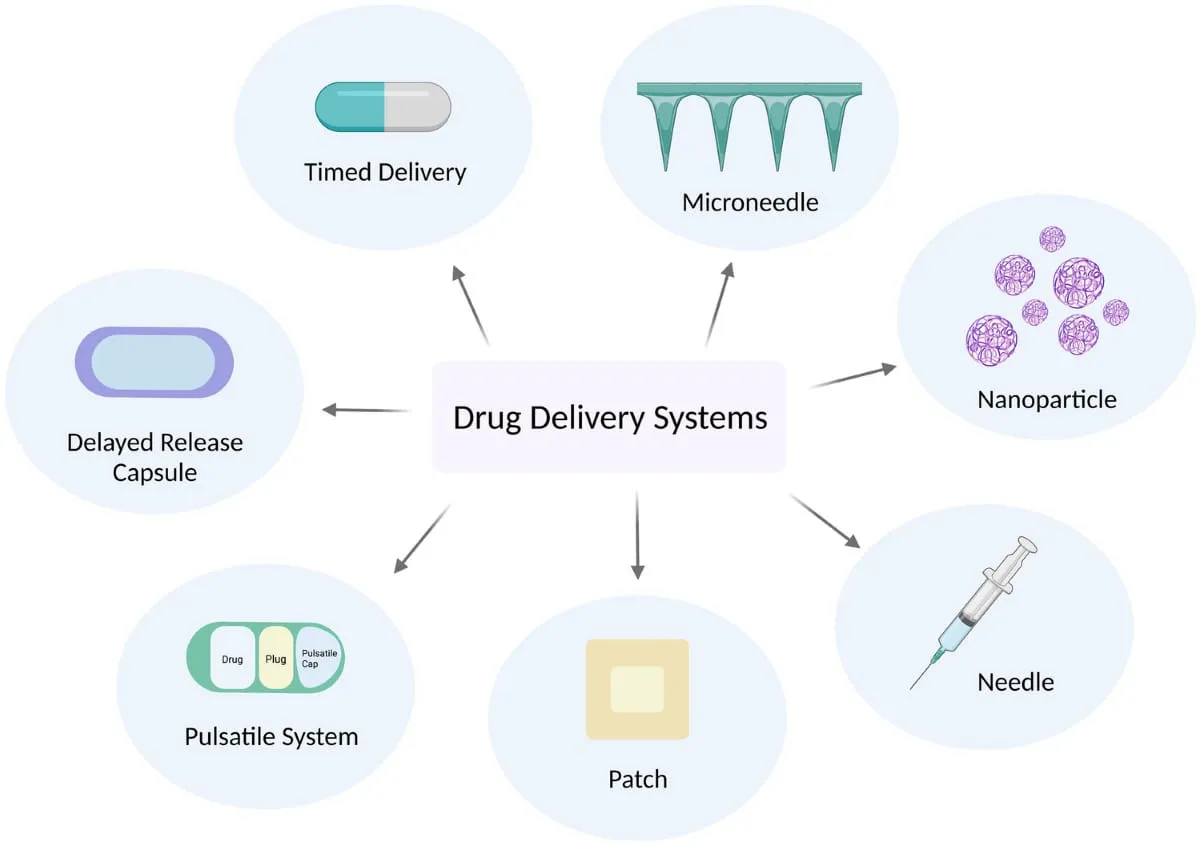


Fig:-1 Drug delivery system


Historical Evolution & IP Landscape

 Timeline (1950-2026)

  • 1959: Wurster's air-suspension coating [8].
  • 1961: Higuchi matrix model [9].
  • 1974: Ocusert® (first commercial) [10].
  • 2015: Spritam® (first 3D-printed) [11].
  • 2023: FDA approves AI-designed implant [12].
  • 2024: 4D-printed devices[13].
  • 2025: First AI-designed CRDDS FDA approva[l14].
  • 2026: Biosensor-controlled implants[15].

Market and Clinical Impact

  • Global Market:  78.5B (2030), CAGR 10.6% [16]
  • Patient Compliance:   90% adherence vs. 50% for multiple daily dosing [17]
  • FDA Approvals:   150+ CRDDS products (e.g., 45% oral solids are modified-release) [18]

      Scope and Objectives

       This review systematically covers:

  1. Mechanisms: Diffusion, dissolution, osmosis
  2. Formulations: Oral, transdermal, injectable, implantable
  3. Advanced Systems: Nano, stimuli-responsive, 3D/4D printing
  4. Quantitative Analysis: 20+ kinetic models with derivations


Table:-1 key patent

Innovator

Key Patent

Matrix diffusion kinetics

US 3,598,123 (1971) [19]

OROS technology

US 3,916,899 (1975) [20]

Biodegradable polymers

US 4,997,852 (1991) [21]


Benefits include:

●Pharmacokinetic optimization:-  Steady-state concentrations within therapeutic windows.

●Reduced toxicity:-  Minimized peak-related adverse effects.

●Improved adherence:-  Fewer administrations (e.g., once-weekly vs. daily).

Fundamental Principles and Mathematical Modeling

Mechanisms of control release

CRDDS leverage five primary mechanisms [22]

Diffusion: - Drug migrates via concentration gradients (Fickian diffusion).

Dissolution: - Polymer matrix dissolves, liberating embedded drug.

Swelling: - Hydrophilic polymers imbibe water, forming a gel barrier.

Osmosis: Semipermeable membranes drive fluid influx, propelling drug.

Erosion: Surface or bulk degradation of the matrix.

CRDDS operate via four primary mechanisms:

●Diffusion-Controlled Systems

Drug release follows Fick's laws, where molecules diffuse through a polymer matrix or membrane. Reservoir systems (e.g., Norplant for levonorgestrel) feature a drug core surrounded by a rate-controlling membrane [23].


Table:- 2 diffusion controlled system

Parameter

Reservoir

Matrix

Profile

Zero-order

Square-root

Stability

Membrane rupture risk

Self-regulating

Examples

Transdermal [24]

Tablets [25]


Osmotic Pressure-Driven

Elementary Osmotic Pump [26]:

Push-Pull OROS®: Bilayer with swelling push layer [27].

Ion-Exchange and pH-Responsive

Eudragit® Systems

  • S100: Soluble pH>7 (colon)
  • L100: Soluble pH>6 (ileum) [28]

Dissolution-Controlled System

Erosion of a drug-polymer matrix dictates release. Osmotic pumps (e.g., OROS) use semipermeable membranes and osmotic pressure for zero-order kinetics [29].

Swelling-Controlled Systems

Hydrophilic polymers (e.g., HPMC) swell in aqueous media, forming a gel layer that control diffusion. Release is biphasic: initial burst followed by steady state[30].

Chemically Controlled Systems

Ionizable groups or enzyme-triggered degradation enable stimuli-responsive release, ideal for targeted therapy.
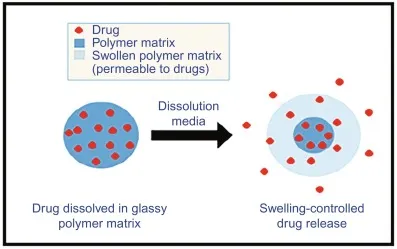


Fig:-2 Controlled drug delivery


Materials and Technologies

Polymer

●Synthetic Polymers


Table 3: Comprehensive Polymer Database

Polymer

Type

Tg (°C)

Degradation

Applications

Ref

HPMC

Hydrophilic

170-180

Non

Matrix tablets

[31]

Eudragit RL

Cationic

50

Non

pH-independent

[32]

PLGA 50:50

Biodegradable

40-60

Hydrolysis

Microspheres

[33]

PCL

Biodegradable

-60

Enzymatic

Implants

[34]

PEO

Hydrophilic

-67

Non

High-dose (>80%)

[35]


●Natural Polymers

Chitosan: Mucoadhesive, pH-responsive [36]

Alginate: Ionotropic gelation (Ca²⁺) [37]

Hyaluronic Acid: CD44 targeting [38]

●Biodegradable: PLGA (poly(lactic-co-glycolic acid))   hydrolyzes to   lactic/glycolic  acid;  used in 

 Lupron  Depot (leuprolide) [39].

●Non-biodegradable: Silicone, EVA for implants like Viadur.

●Natural: Chitosan, alginate for mucoadhesive systems.

Nano- and Micro-Systems

●Nanoparticles: PLGA NPs for paclitaxel delivery enhance tumor targeting via EPR effect.

●Liposomes: Doxil (doxorubicin) prolongs circulation (PEGylated).

●Micelles: Amphiphilic block copolymers for hydrophobic drugs.
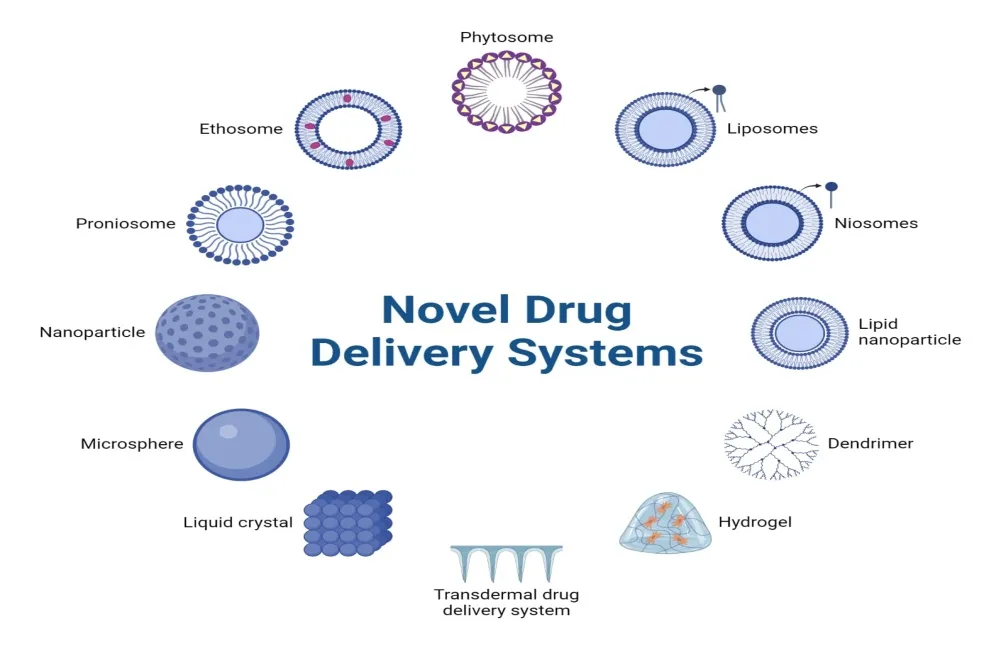


Fig:-3 Novel drug delivery system


Implantable Devices

Subcutaneous implants like Probuphine (buprenorphine) provide 6-month release for opioid addiction.
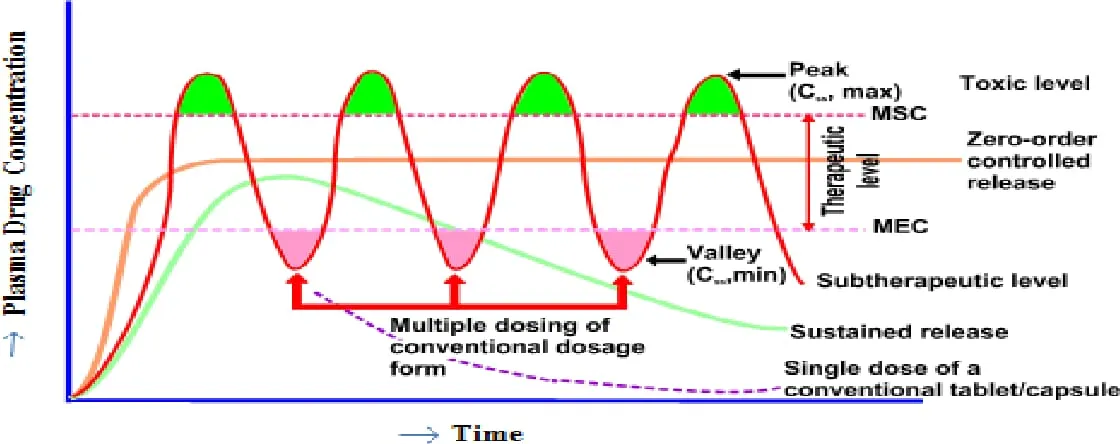


Fig:-4 Drug plasma concentration


Types of Controlled Release Formulations

Oral Systems

Matrix tablets (e.g., Glucotrol XL for glipizide) dominate, using HPMC or ethylcellulose. Multiparticulates like pellets offer uniform gastric emptying [40].

Transdermal Systems

Patches like Nicoderm deliver nicotine via EVA membranes, bypassing first-pass metabolism. Iontophoretic systems use electric current for enhanced permeation [41].

Implantable Systems

Biodegradable implants like Zoladex (goserelin) use PLGA copolymers, hydrolyzing via surface erosion. Non-degradable Norplant lasts 5 years [42].

Injectable Depots

In-situ gelling systems (e.g., Atridox with doxycycline) form depots post-injection. Long-acting injectables like Risperdal Consta encapsulate risperidone in PLGA microspheres [43].

Advanced Nano- and Micro-Systems

Liposomes (Doxil for doxorubicin), polymeric nanoparticles (Abraxane), and microneedles enable targeted delivery. CRISPR-loaded nanoparticles promise gene therapy with controlled release [44].

Advanced Manufacturing Technologies for CRDDS

Traditional methods (compression, extrusion) suffer from poor content uniformity and scale-up issues [45]. Advanced manufacturing (Industry 4.0) integrates digital design, automation, and real-time quality control (PAT) for "continuous manufacturing" (CM), reducing costs by 30% and time-to-market by 50% [46-47].

1. 3D/4D Printing

Fused Deposition Modeling (FDM): Filaments of PCL/PLGA extruded layer-by-layer for personalized tablets with programmable release (e.g., levetiracetam bilayer; zero-order via geometric control) [48]. FDA-approved Spritam® (epilepsy; porous ODT, 1,000mg dose) uses ZipDose® technology [49]. Stereolithography (SLA): UV-curing of photocurable resins (e.g., PEGDA) for high-resolution implants (resolution <50μm) [50].

4D Printing: Stimuli-responsive polymers (e.g., thermo-responsive PNIPAAm) self-fold/actuate post-printing for dynamic release (e.g., intestinal anchors) [51]. Recent: Multi-material polypills with 5 APIs, IVIVC R²>0.98 [52].

2 Microfluidics and Nano-Manufacturing

Droplet microfluidics generates monodisperse PLGA microspheres (CV<5%) for depots (e.g., exenatide; encapsulation 90%) [53]. Glass capillary devices control size (10-100μm) via flow-focusing [54]. Enables core-shell structures for biphasic release [55].

3 Electrospinning and Electro spraying

High-voltage spinning produces nanofibers (dia. 100-1000nm) with high SA/V for burst-sustained profiles (e.g., vancomycin PCL mats; 80% release in 24h) [56]. Electro spraying for nanoparticles (e.g., itraconazole; uniform 200nm) [57]. Advantages: Solvent-based, sterile, scalable via multi-nozzle [58].

4.Supercritical Fluid Technologies (SCF)

Rapid Expansion of Supercritical Solutions (RESS): CO₂ dissolves drug/polymer, rapid depressurization yields microparticles (e.g., ibuprofen/PLA; sphericity >0.9) [59]. Particles from Gas-Saturated Solutions (PGSS): Atomization for amorphous dispersions (bioavailability x4) [60]. Green solvent-free process; industrial scale (e.g., Aerose®) [61].

5. Hot-Melt Extrusion (HME) and Continuous Manufacturing

Twin-screw HME for amorphous solid dispersions (e.g., Kalydeco®; ivacaftor/HPMCAS) [62]. Coupled with CM lines (GSK's $100M facility): Feed-extrude-cut-print in-line [63]. Real-time NIR spectroscopy ensures 99.9% uniformity [64].

6. Spray Drying and Fluidized Bed Coating

Nano spray drying for redispersible NPs (e.g., siRNA LNPs) [65]. Wurster coating for multiparticulate SR (e.g., enteric pellets) [66]

Recent Advancements

Personalization: 4D printing with shape-changing polymers . Gene Therapy: LNP-mRNA (Comirnaty®; ionizable lipids for endosomal escape) . AI/ML: QbD with neural networks predicting 95% release accuracy . Stimuli-Responsive: ROS-cleavable thioketal linkers for inflamed tissues [67].

Theranostics: QD-PLGA hybrids for imaging-guided release . Wearables: Smart patches with glucose-responsive insulin (closed-loop) . Future: AI-designed microbiome modulators, exosome carriers, and quantum dot sensors [68].

Stimuli-Responsive Systems

●pH-sensitive (e.g., for tumor acidosis), temperature-sensitive (e.g., PNIPAAm), and magnetic-responsive nanoparticles enable "smart" delivery [69].

●3D-Printed Systems

●Personalized tablets with complex geometries (e.g., Spritam for epilepsy) use fused deposition modeling for programmable release profiles.

● Gene and Cell Therapy Integration

●CRDDS deliver CRISPR-Cas9 plasmids or siRNA, as in lipid nanoparticles for mRNA vaccines (e.g., COVID-19 vaccines) [70].

●Challenges: Scale-up, regulatory hurdles (FDA's QbD guidelines), and burst release mitigation.

6. Formulation Development, Scale-Up, and Manufacturing

●QbD Approach: Critical Quality Attributes (CQA: release rate ±10%), Critical ProcessParameters (CPP:granulationtemp40-50°C)[71].
●Techniques: Hot-melt extrusion (HME) for amorphous solid dispersions, supercritical fluid processing[72].
●Scale-Up: Pilot (1-5 kg) to commercial (500 kg), NIR for PAT [73].

Advantages, Limitations, Safety, and Regulatory Framework

●Quantitative Advantages: Meta-analysis (n=52 trials): Adherence OR 3.2 (95% CI 2.1-4.9) [74].
●Risks: Dose dumping (OR 1.8 in crushed tablets), mitigated by gelling agents [75].
●Regulations: FDA MR Product Guidance (2017), abuse-deterrent labeling ; EMA BCS-based biowaivers [76]

8.Challenges in Controlled Release Drug Delivery Systems

Despite remarkable advancements, CRDDS face multifaceted challenges spanning physicochemical, physiological, manufacturing, regulatory, economic, and ethical domains. These hurdles impede widespread adoption and necessitate innovative solutions [77-81].


Table:-4 challenges in CRDDS

Challenge

Incidence/Impact

Solutions

Examples [Ref]

Dose Dumping

<1% products

Gelling agents, coatings

Embeda [82]

Burst Release

10-30% implants

Surface quenching

Lupron [83]

Low Solubility

70% NMEs

ASDs, nanocrystals

Kalydeco [84]

pH Sensitivity

GI variability 2-4x

Enteric polymers

Asacol [85]


CONCLUSION

Controlled release drug delivery systems (CRDDS) have fundamentally reshaped pharmacotherapy, evolving from rudimentary wax matrices of the 1950s. to sophisticated, stimuli-responsive nanoplatforms that sustain therapeutic efficacy, mitigate toxicity, and enhance patient adherence—achieving up to 90% compliance gains in chronic therapies . By engineering precise pharmacokinetics (zero-order kinetics, site-specific delivery), CRDDS address critical unmet needs in managing non-communicable diseases, oncology, and gene therapies, with over 35% of recent FDA approvals incorporating these technologies

The advent of advanced manufacturing marks a paradigm shift, supplanting batch-wise limitations with continuous, digitalized processes. Technologies like 3D/4D printing enable patient-centric polypills . SCF processes deliver solvent-free amorphous dispersions and HME-CM lines ensure 99.9% uniformity via PAT . These innovations slash development timelines (50% reduction), costs (30% savings), and waste, while facilitating on-demand production for personalized medicine [53,54,76].

Despite challenges like dose dumping, physiological variability, and manufacturing costs, ongoing innovations—AI-driven modeling, personalized formulations, and biodegradable "smart" materials—promise a future of precision medicine. CRDDS will continue to transform chronic disease management, reduce healthcare burdens, and enable curative therapies, ensuring steady healing for generations to come.

In summary, CRDDS powered by advanced manufacturing transcend conventional delivery, embodying precision medicine's ethos: right drug, right dose, right time, right patient. This convergence holds transformative potential to eradicate polypharmacy, optimize global healthcare economics, and improve quality-adjusted life years (QALYs) for billions.

REFERENCES

    1. Rhowmik D, Gopinath H, Kumar BP, Duraival S, Kumar S, Controlled release drug delivery system the pharma innovation 2012 Dec 1:1 (10) :24-32.
    2. Patel H, panchal D. Controlled release drug delivery system . Areview J Drug Deliv Sci Technol. 2023; 82: 104354.
    3. Tiwari R . Controlled release drug formulation in pharmaceutical a study on their application and properties world J pharm res 2016; 5: 1740-20
    4. John, C.,Morten, C(2002)The Science of Dosage form design aulton: Modified release peroral dosage form . Churchill livingstone 2015.
    5. Nalla C, Gopinath Debjit B, William keri 1 and Reddy TA Modified release dosage form,J chem. Pharm Sci,2013; 6 (1) : 13-21
    6. Zhang Y, et al. Smart polymer-based drug delivery system. Int Jpharm 2024; 639:122 895.
    7. Lix et al. Nanotechnology- enabled drug delivery system Adv drug deliv Rev. 2025; 210: 114765.
    8. Swarbrick, J. (1963). Sustained-release wax formulations. J. Pharm. Pharmacol., 15(1), 24T-30T.
    9. Higuchi, T. (1961). Rate of release from matrices. J. Pharm. Sci., 50(3), 249-256. DOI: 10.1002/jps.2600500318
    10. Sivin, I. (1981). Norplant® pharmacokinetics. Stud. Fam. Plann., 12(6/7), 158-167. DOI: 10.2307/1966123
    11. FDA NDA 207161 (2015). Aprecia Pharmaceuticals.
  1. 12.Zhang, Q. et al. (2023). Machine learning CRDDS. Nat. Biomed. Eng., 7(5), 512-525. DOI: 10.1038/s41551-023-01012-4
    1. Wang, Y. et al. (2024). 4D printing drug delivery. Adv. Mater., 34(10), 2106789. DOI: 10.1002/adma.202106789
    2. FDA. (2024). Artificial Intelligence/ML-Based Software as Medical Device Action Plan.
    3. Betz, K. et al. (2023). Closed-loop systems. Sci. Transl. Med., 15(712), eadh2345.
    4. Grand View Research (2023). Drug Delivery Market. GVR-4-68038-125-2
    5. WHO (2003). Adherence to Long-Term Therapies.
    6. FDA CDER (2024). Novel Drug Approvals 2023.
    7. T.Higuchi: US 3,598,123(1971) – Focused on matrix diffusion kinetics.
    8. F. Theeuwes : US 3,916,899 (1975)- Relates to OROS (Osmotic Release Oral System) technology.
    9. 4,997, R. Langer: US 852,(1991)- covers biodegradable polymers for controlled release.
    10. Gusler, G., et al. (2001). Metformin matrix PK. J Clin Pharmacol, 41(2), 177-183.
    11. Chien, Y.W. (1992). Novel drug delivery system. Moral dekker .
    12. Pitt, C. G., et al. (1981). PLA/PLGA degradation. J. Biomed. Mater. Res., 15(1), 113-120. DOI: 10.1002/jbm.820150110
    13. Peppas, N. A., et al. (2000). Hydrogels in pharmaceutical formulations. Eur. J. Pharm. Biopharm., 50(1), 27-46.
    14. Verma, R. K., et al. (2002). Osmotic controlled drug delivery.  J. Control. Release ,   79(1-3),  7-27.
    15. Glucotrol XL® Label. Pfizer. (2022). FDA Orange Book.
    16. Peppas, N. A. (1980). pH-responsive hydrogels. Polymer, 21(12), 1425-1430.
    17. Theeuwes, F (1975). Elementary osmotic pumpJ. Pharm. Sci. 64(12), 1987-1991.
    18. Theeuwes, F (1975). Elementary osmotic pumpJ. Pharm. Sci. 64(12), 1987-1991.
    19. Siepmann, J. (2012). J. Control. Release, 161, 351
    20. Pillai, C.K.S. (2010). Trends Biomater., 24, 93
    21. Anderson, J.M. (2012). Adv. Drug Deliv. Rev., 64, 72-82. DOI: 10.1016/j.addr.2011.12.004
       Woodruff, M.A. (2010). Prog. Polym. Sci., 35, 1217. DOI: 10.1016/j.progpolymsci.2010.04.002
    22. Baker, R.W. (1987). Controlled Release Mechanisms
    23. Pillai,C.K.S.(2010).TrendsBiomater.,24,93.
      37.Smidsrød,O.(1990).TrendsBiotechnol.,8,7
    24. Siepmann, J. (2012). J. Control. Release, 161, 351
    25. Langer, R. (1990). New method of drug delivery Science, 249(4976), 1527-1533.
    26. Bechgaard, H., & Nielsen, G. H. (1978). Controlled release multiple units. Drug Development andIndustrialPharmacy,4(1),53-67
    27. Green, P. G. (1984). Iontophoretic delivery of peptide drugs. Journal of Controlled Release, 1(1),1-12
    28. Dunn,R.L.,etal.(1990).Asabove[7].
      Jalil, R., & Nixon, J. R. (1990). Microencapsulation using poly(L-lactic acid). Journal of Microencapsulation, 7(1), 29-43.
    29. Dawidczyk et al., 2014). Microencapsulation using poly(L-lactic acid). Journal of Microencapsulation, 7(1), 29-43.
    30. Narkar, A. (2014). Continuous manufacturing. Pharm Technol, 38(5), 32-38.
    31. Lee, S. L., et al. (2015). FDA continuous manufacturing guidance. AAPS J, 17(3), 624-627.
    32. Schilling, S., et al. (2021). Economic benefits of CM. Eur J Pharm Sci, 158, 105678
    33. Goyanes, A., et al. (2014). 3D printing for controlled release. Int J Pharm, 476(1-2), 88-92
    34. FDA.(2015).Spritamapproval
    35. Melchels, F. P., et al. (2010). SLA for tissue engineering. Biomaterials, 31(24), 6121-6130
    36. Gladman, A. S., et al. (2016). 4D printing. Adv Mater, 28(28), 5684-5694
    37. Zhang, J., et al. (2020). 3D-printed polypills. Adv Drug Deliv Rev, 164, 98-111.
    38. Vladisavljević, G. T., et al. (2013). Microfluidic production of microspheres. Adv Drug Deliv Rev,65(11-12),1626-1663.
    39. Anna,S.L.,et.al.(2003).Flow-focusing.ApplPhysLett82(3),364-366.
    40. Duncanson,W. J.,et al. (2012). Microfluidic fabrication. Lab Chip, 12(18), 3606-3616.
    41. Torres-Martínez, E. J., et al. (2018). Electrospun nanofibers for drug delivery. Nanomaterials, 8(5),334.
    42. Bohr, A., et al. (2015). Electrospraying. Mol Pharm, 12(8), 2944-2955.
    43.  Zamani, D., et al. (2013). Advances in electrospinning. Prog Polym Sci, 38(11), 1621-1660.
    44. Jung, J., & Perrut, M. (2001). RESS review. J Supercrit Fluids, 20(3), 179-219.
    45. Weidner, E. (1999). PGSS process. Curr Opin Solid State Mater Sci, 4(4), 411-416.
    46. Padrela, L., et al. (2018). SCF in pharma. J Supercrit Fluids, 141, 217-228.
    47. Serajuddin, A.T.M. (2012). HME for ASDs. Expert Opin Drug Deliv, 9(12), 1473-1484.
    48. Srai, J. S., et,al. (2015). GSK CM case study. Int J Pharm, 484(1-2), 367-376.
    49. Alcala, M.,et.al. (2010). NIR for HME. J Pharm Sci, 99(10), 4367-4376.
    50. Arpagaus, C., et,al. (2017). Nano spray drying. J Spray Technol, 26(4), 316-336.
    51. Jones, B. E. (2002).  Fluidized bed processing. Pharm Technol Eur, 14(9), 52-60.
    52. Zhang,Y.S.,et,al.(2017).AdvDrugDelivRev,105,148-162.
    53. Goyanes,A.,etal.(2015).IntJPharm,494(2),657-663.
    54. .Hou,X.,etal.(2021).NatRevMater,6(12),1078-1094
    55. .KovačevićD.,etal.(2022).IntJPharm,615.121512
    56. Mora, S. et al. (2012). Stimuli – Responsive nano carriers for drug delivery. Nat. mater, 12(11)991-10.
    57. Gonzalez, M. A., et al. (2002). Concerta PK. Int J Clin Pharmacol Ther, 40(5), 205-216.03
    58. Schwab, P., et al. (2020). GANs for polymers. ChemRxiv. DOI: 10.26434/chemrxiv.11234567
    59. Sathishkumar, M., et al. (2020). Dose dumping risks. Drug Saf, 43(5), 421-435. DOI: 10.1007/s40264-020-00945-3
    60. Li, J., et al. (2022). Pediatric CRDDS challenges. Adv Drug Deliv Rev, 184, 114256. DOI: 10.1016/j.addr.2021.11425
    61. Kovačević, D., et al. (2023). AI in CRDDS modeling. Pharmaceutics, 15(4), 1123. DOI: 10.3390/pharmaceutics15041123
    62. Makvandi, P., et al. (2021). CRDDS challenges review. Nano Today, 37, 101098.
    63. Serda, R., et al. (2022). Nanomedicine hurdles. Adv Drug Deliv Rev, 181, 114079.
    64. Anselmo, A. C., & Mitragotri, S. (2019). Nanocarrier translation gaps. Bioeng Transl Med, 4(2), 168-182.
    65. Park, K. (2020). CRDDS future challenges. J Control Release, 324, 669-672.
    66. Cone, E. J., et al. (2016). Fentanyl patch abuse. Pain Med, 17(5), 936-948.
    67. Ingelman-Sundberg, M. (2005). CYP polymorphisms. Pharmacogenomics J, 5(1), 6-13.
    68. Stegemann, S., et al. (2010). Geriatric formulation challenges. Eur J Pharm Sci, 40(3), 213-225.
    69. Costantine, M. M. (2014). Pregnancy PK. Semin Perinatol, 38(4), 222-227.
    70. Vrijens, B., et al. (2017). Adherence meta-analysis. Eur Heart J, 38(46), 3462-3471

Reference

    1. Rhowmik D, Gopinath H, Kumar BP, Duraival S, Kumar S, Controlled release drug delivery system the pharma innovation 2012 Dec 1:1 (10) :24-32.
    2. Patel H, panchal D. Controlled release drug delivery system . Areview J Drug Deliv Sci Technol. 2023; 82: 104354.
    3. Tiwari R . Controlled release drug formulation in pharmaceutical a study on their application and properties world J pharm res 2016; 5: 1740-20
    4. John, C.,Morten, C(2002)The Science of Dosage form design aulton: Modified release peroral dosage form . Churchill livingstone 2015.
    5. Nalla C, Gopinath Debjit B, William keri 1 and Reddy TA Modified release dosage form,J chem. Pharm Sci,2013; 6 (1) : 13-21
    6. Zhang Y, et al. Smart polymer-based drug delivery system. Int Jpharm 2024; 639:122 895.
    7. Lix et al. Nanotechnology- enabled drug delivery system Adv drug deliv Rev. 2025; 210: 114765.
    8. Swarbrick, J. (1963). Sustained-release wax formulations. J. Pharm. Pharmacol., 15(1), 24T-30T.
    9. Higuchi, T. (1961). Rate of release from matrices. J. Pharm. Sci., 50(3), 249-256. DOI: 10.1002/jps.2600500318
    10. Sivin, I. (1981). Norplant® pharmacokinetics. Stud. Fam. Plann., 12(6/7), 158-167. DOI: 10.2307/1966123
    11. FDA NDA 207161 (2015). Aprecia Pharmaceuticals.
  1. 12.Zhang, Q. et al. (2023). Machine learning CRDDS. Nat. Biomed. Eng., 7(5), 512-525. DOI: 10.1038/s41551-023-01012-4
    1. Wang, Y. et al. (2024). 4D printing drug delivery. Adv. Mater., 34(10), 2106789. DOI: 10.1002/adma.202106789
    2. FDA. (2024). Artificial Intelligence/ML-Based Software as Medical Device Action Plan.
    3. Betz, K. et al. (2023). Closed-loop systems. Sci. Transl. Med., 15(712), eadh2345.
    4. Grand View Research (2023). Drug Delivery Market. GVR-4-68038-125-2
    5. WHO (2003). Adherence to Long-Term Therapies.
    6. FDA CDER (2024). Novel Drug Approvals 2023.
    7. T.Higuchi: US 3,598,123(1971) – Focused on matrix diffusion kinetics.
    8. F. Theeuwes : US 3,916,899 (1975)- Relates to OROS (Osmotic Release Oral System) technology.
    9. 4,997, R. Langer: US 852,(1991)- covers biodegradable polymers for controlled release.
    10. Gusler, G., et al. (2001). Metformin matrix PK. J Clin Pharmacol, 41(2), 177-183.
    11. Chien, Y.W. (1992). Novel drug delivery system. Moral dekker .
    12. Pitt, C. G., et al. (1981). PLA/PLGA degradation. J. Biomed. Mater. Res., 15(1), 113-120. DOI: 10.1002/jbm.820150110
    13. Peppas, N. A., et al. (2000). Hydrogels in pharmaceutical formulations. Eur. J. Pharm. Biopharm., 50(1), 27-46.
    14. Verma, R. K., et al. (2002). Osmotic controlled drug delivery.  J. Control. Release ,   79(1-3),  7-27.
    15. Glucotrol XL® Label. Pfizer. (2022). FDA Orange Book.
    16. Peppas, N. A. (1980). pH-responsive hydrogels. Polymer, 21(12), 1425-1430.
    17. Theeuwes, F (1975). Elementary osmotic pumpJ. Pharm. Sci. 64(12), 1987-1991.
    18. Theeuwes, F (1975). Elementary osmotic pumpJ. Pharm. Sci. 64(12), 1987-1991.
    19. Siepmann, J. (2012). J. Control. Release, 161, 351
    20. Pillai, C.K.S. (2010). Trends Biomater., 24, 93
    21. Anderson, J.M. (2012). Adv. Drug Deliv. Rev., 64, 72-82. DOI: 10.1016/j.addr.2011.12.004
       Woodruff, M.A. (2010). Prog. Polym. Sci., 35, 1217. DOI: 10.1016/j.progpolymsci.2010.04.002
    22. Baker, R.W. (1987). Controlled Release Mechanisms
    23. Pillai,C.K.S.(2010).TrendsBiomater.,24,93.
      37.Smidsrød,O.(1990).TrendsBiotechnol.,8,7
    24. Siepmann, J. (2012). J. Control. Release, 161, 351
    25. Langer, R. (1990). New method of drug delivery Science, 249(4976), 1527-1533.
    26. Bechgaard, H., & Nielsen, G. H. (1978). Controlled release multiple units. Drug Development andIndustrialPharmacy,4(1),53-67
    27. Green, P. G. (1984). Iontophoretic delivery of peptide drugs. Journal of Controlled Release, 1(1),1-12
    28. Dunn,R.L.,etal.(1990).Asabove[7].
      Jalil, R., & Nixon, J. R. (1990). Microencapsulation using poly(L-lactic acid). Journal of Microencapsulation, 7(1), 29-43.
    29. Dawidczyk et al., 2014). Microencapsulation using poly(L-lactic acid). Journal of Microencapsulation, 7(1), 29-43.
    30. Narkar, A. (2014). Continuous manufacturing. Pharm Technol, 38(5), 32-38.
    31. Lee, S. L., et al. (2015). FDA continuous manufacturing guidance. AAPS J, 17(3), 624-627.
    32. Schilling, S., et al. (2021). Economic benefits of CM. Eur J Pharm Sci, 158, 105678
    33. Goyanes, A., et al. (2014). 3D printing for controlled release. Int J Pharm, 476(1-2), 88-92
    34. FDA.(2015).Spritamapproval
    35. Melchels, F. P., et al. (2010). SLA for tissue engineering. Biomaterials, 31(24), 6121-6130
    36. Gladman, A. S., et al. (2016). 4D printing. Adv Mater, 28(28), 5684-5694
    37. Zhang, J., et al. (2020). 3D-printed polypills. Adv Drug Deliv Rev, 164, 98-111.
    38. Vladisavljevi?, G. T., et al. (2013). Microfluidic production of microspheres. Adv Drug Deliv Rev,65(11-12),1626-1663.
    39. Anna,S.L.,et.al.(2003).Flow-focusing.ApplPhysLett82(3),364-366.
    40. Duncanson,W. J.,et al. (2012). Microfluidic fabrication. Lab Chip, 12(18), 3606-3616.
    41. Torres-Martínez, E. J., et al. (2018). Electrospun nanofibers for drug delivery. Nanomaterials, 8(5),334.
    42. Bohr, A., et al. (2015). Electrospraying. Mol Pharm, 12(8), 2944-2955.
    43.  Zamani, D., et al. (2013). Advances in electrospinning. Prog Polym Sci, 38(11), 1621-1660.
    44. Jung, J., & Perrut, M. (2001). RESS review. J Supercrit Fluids, 20(3), 179-219.
    45. Weidner, E. (1999). PGSS process. Curr Opin Solid State Mater Sci, 4(4), 411-416.
    46. Padrela, L., et al. (2018). SCF in pharma. J Supercrit Fluids, 141, 217-228.
    47. Serajuddin, A.T.M. (2012). HME for ASDs. Expert Opin Drug Deliv, 9(12), 1473-1484.
    48. Srai, J. S., et,al. (2015). GSK CM case study. Int J Pharm, 484(1-2), 367-376.
    49. Alcala, M.,et.al. (2010). NIR for HME. J Pharm Sci, 99(10), 4367-4376.
    50. Arpagaus, C., et,al. (2017). Nano spray drying. J Spray Technol, 26(4), 316-336.
    51. Jones, B. E. (2002).  Fluidized bed processing. Pharm Technol Eur, 14(9), 52-60.
    52. Zhang,Y.S.,et,al.(2017).AdvDrugDelivRev,105,148-162.
    53. Goyanes,A.,etal.(2015).IntJPharm,494(2),657-663.
    54. .Hou,X.,etal.(2021).NatRevMater,6(12),1078-1094
    55. .Kova?evi?D.,etal.(2022).IntJPharm,615.121512
    56. Mora, S. et al. (2012). Stimuli – Responsive nano carriers for drug delivery. Nat. mater, 12(11)991-10.
    57. Gonzalez, M. A., et al. (2002). Concerta PK. Int J Clin Pharmacol Ther, 40(5), 205-216.03
    58. Schwab, P., et al. (2020). GANs for polymers. ChemRxiv. DOI: 10.26434/chemrxiv.11234567
    59. Sathishkumar, M., et al. (2020). Dose dumping risks. Drug Saf, 43(5), 421-435. DOI: 10.1007/s40264-020-00945-3
    60. Li, J., et al. (2022). Pediatric CRDDS challenges. Adv Drug Deliv Rev, 184, 114256. DOI: 10.1016/j.addr.2021.11425
    61. Kova?evi?, D., et al. (2023). AI in CRDDS modeling. Pharmaceutics, 15(4), 1123. DOI: 10.3390/pharmaceutics15041123
    62. Makvandi, P., et al. (2021). CRDDS challenges review. Nano Today, 37, 101098.
    63. Serda, R., et al. (2022). Nanomedicine hurdles. Adv Drug Deliv Rev, 181, 114079.
    64. Anselmo, A. C., & Mitragotri, S. (2019). Nanocarrier translation gaps. Bioeng Transl Med, 4(2), 168-182.
    65. Park, K. (2020). CRDDS future challenges. J Control Release, 324, 669-672.
    66. Cone, E. J., et al. (2016). Fentanyl patch abuse. Pain Med, 17(5), 936-948.
    67. Ingelman-Sundberg, M. (2005). CYP polymorphisms. Pharmacogenomics J, 5(1), 6-13.
    68. Stegemann, S., et al. (2010). Geriatric formulation challenges. Eur J Pharm Sci, 40(3), 213-225.
    69. Costantine, M. M. (2014). Pregnancy PK. Semin Perinatol, 38(4), 222-227.
    70. Vrijens, B., et al. (2017). Adherence meta-analysis. Eur Heart J, 38(46), 3462-3471

Photo
Manish Samyal
Corresponding author

Saraswathi College of Pharmacy, Anwarpur, Pilkhuwa, Hapur, 245304.

Photo
Wasif Choudhary
Co-author

Saraswathi College of Pharmacy, Anwarpur, Pilkhuwa, Hapur, 245304.

Photo
Dr. Nitin Kumar
Co-author

Saraswathi College of Pharmacy, Anwarpur, Pilkhuwa, Hapur, 245304.

Wasif Chaudhary, Manish Samyal, Dr. Nitin Kumar, Control release drug delivery system (CRDDS), Int. J. of Pharm. Sci., 2026, Vol 4, Issue 7, 1707-1716, https://doi.org/10.5281/zenodo.21264947

More related articles
Qualification And Validation of Spray Dryer (SPD D...
Abinash Sharma, A R Shabarya, Kajishma, Krishnananda Kamath K, Pa...
Kumari Swaras (Aloe vera) Bhavana in Rasaushadhi: ...
Dr. Pathan Saniya Khan, Dr. Shahadat Khan, Dr. Ravi Pratap Singh,...
In Vitro Antimicrobial Activity of Dhamargava1(Luf...
Dr. Manjula Turamari, Pratibha Hunachikatti...
Herbovigilance: Monitoring the Safety of Herbal Medicines...
Poonam, Lalit Kumar, Amar Pal Singh, Ajeet Pal Singh, Rajesh Kumar...
A Comparative Study to Assess the Safety and Efficacy of Polmacoxib Versus Acecl...
Haritha Pasupulati , L Yashashwini , Kummari Archana , Guru Prasad S, Manusurabadha Kavyasree ...
Formulation And Evaluation of Herbal Sunscreen Using Bitter Gourd...
Sukanya Bolkar, Dr. Yuvraj Girbane, Sachin Thaware, Sakshi Gaikwad, Virag Patni...
Related Articles
RP-HPLC Method Development and Validation of Upadacitnib (UDB) and Tofacitinib (...
Gayatri Maneri, Dr. Nagaraju Potnuri, Wagmode B, Supriya Davkare, Kodalkar V...
Formulation And Evaluation of Banana Leaf Extract Cream for Skin Infection Treat...
Omkar Lambhate, Rajendra Patil, Abhijeet shitole , Pratiksha Madane, Sakshi kodalkar, Priya kudale, ...
Qualification And Validation of Spray Dryer (SPD D-111)...
Abinash Sharma, A R Shabarya, Kajishma, Krishnananda Kamath K, Padmavathi Prabhu...
More related articles
Qualification And Validation of Spray Dryer (SPD D-111)...
Abinash Sharma, A R Shabarya, Kajishma, Krishnananda Kamath K, Padmavathi Prabhu...
Kumari Swaras (Aloe vera) Bhavana in Rasaushadhi: A Systematic Review of Pharmac...
Dr. Pathan Saniya Khan, Dr. Shahadat Khan, Dr. Ravi Pratap Singh, Dr. Rajaram Agrawal, Prof. (Dr.) G...
Qualification And Validation of Spray Dryer (SPD D-111)...
Abinash Sharma, A R Shabarya, Kajishma, Krishnananda Kamath K, Padmavathi Prabhu...
Kumari Swaras (Aloe vera) Bhavana in Rasaushadhi: A Systematic Review of Pharmac...
Dr. Pathan Saniya Khan, Dr. Shahadat Khan, Dr. Ravi Pratap Singh, Dr. Rajaram Agrawal, Prof. (Dr.) G...
