

We use cookies to ensure our website works properly and to personalise your experience. Cookies policy
1Department of Pharmacy, Oriental University, Indore, Madhya Pradesh 453555.
2Professor, Faculty of Pharmacy, Oriental University, Indore, Madhya Pradesh 453555
Hypertension is a big cardiovascular problem and it requires effective and patient pleasant drug delivery system. The present work was aiming to formulate and optimize Hydrochlorothiazide Oral Disintegrating Tablets using natural superdisintegrants such Locust Bean Gum and Fenugreek Seed Mucilage in combination with Crospovidone. The effect of formulation factors on tablet hardness, disintegration time and drug release was studied via Box–Behnken Design. Tablets were formulated by direct compression and evaluated for pre and after compression characteristics. The improved formulation showed good hardness (2.76 kg/cm2), low friability (0.52%) fast time for disintegration (16 seconds) and high drug release (97.41% in 15 minutes). Stability experiments showed no appreciable effect on formulation characteristics. The results indicate that natural superdisintegrants could be an effective approach to improve tablet performance and a promising and patient compliant dose form in the control of hypertension.
Hypertension is among the most common chronic cardiovascular disorders in the world and it is still a major risk factor for stroke, myocardial infarction, heart failure, chronic kidney disease and premature mortality [1–4]. Although several antihypertensive therapies are available, a large proportion of patients still have uncontrolled blood pressure, leading to increased morbidity and mortality [5]. Therefore, effective pharmacological management is critical to reduce disease burden and improve patient outcomes. The oral route of administration is still the most preferred route of administration due to convenience, safety and patient compliance [6,7]. However, traditional tablets can be a challenge for pediatric, geriatric and dysphagic patients, leading to poor medication adherence [8].
Hydrochlorothiazide (HCTZ) is a popular thiazide diuretic commonly used for treatment of hypertension and edema [18,19]. The drug produces the antihypertensive effect by inhibiting the sodium–chloride cotransporter in the distal convoluted tubule of the nephron which increases sodium and water excretion and decreases blood pressure [6]. HCTZ is a first-line therapy for treatment of hypertension [18] due to its efficacy, low cost and long history of clinical use.
Oral disintegrating tablets (ODTs) are new dosage forms developed in order to overcome the problem in swallowing associated with conventional tablets [13–15]. ODTs disintegrate rapidly in the oral cavity without the need of water, offering enhanced convenience, enhanced patient compliance, faster onset of action and potentially improved bioavailability [13]. These advantages make ODTs particularly suitable for pediatric, geriatric, bedridden and dysphagic patients [14,15]. The regulatory authorities recommend that ODTs should disintegrate rapidly and emphasize the importance of optimization of the formulation to achieve desirable characteristics of the tablet [11,12].
Natural superdisintegrants have been extensively studied in pharmaceutical formulation due to their biodegradability, biocompatibility, less toxicity, cheaper and environmental sustainability [23–26]. Locust bean gum and fenugreek seed mucilage are natural polymers which can absorb water and swell rapidly and thus aid tablet disintegration [25]. Their use in ODT formulations presents an appealing alternative to synthetic disintegrants without sacrificing formulation performance and patient acceptability [23].
Systematic formulation development is a key aspect of Quality by Design (QbD) principles that identify critical material attributes and process parameters influencing product quality [16]. Response Surface Methodology (RSM) and Box–Behnken Design (BBD) are popular optimization tools for the evaluation of individual and interactive effect of formulation variables [17]. These statistical approaches reduce the number of experimental runs and increase the generation of information, thus facilitating the optimization of pharmaceutical formulations [16,17].
Therefore, the present work was planned to develop and optimize Hydrochlorothiazide oral disintegrating tablets with natural superdisintegrants, namely locust bean gum and fenugreek seed mucilage along with crospovidone, using Box-Behnken experimental design for rapid disintegration and enhanced drug release.
2. Materials and Methods
2.1 Materials
Hydrochlorothiazide was selected as a model antihypertensive [18]. Super-disintegrants used were locust bean gum, fenugreek seed mucilage and crospovidone other excipients used for the tablet formulation include microcrystalline cellulose, mannitol, magnesium stearate, talc and other pharmaceutical-grade ingredients [25,26].
2.2 Extraction of Fenugreek Seed Mucilage
2.2 Fenugreek Seed Mucilage Extraction
The mucilage of fenugreek seeds was isolated by the conventional aqueous extraction method. 200 g of fenugreek seeds was soaked in 1.5 L of distilled water at room temperature for 12 h. The seeds were hydrated and then heated to a slury. The slurry was kept overnight in a refrigerator for sedimentation of insoluble matter. The supernatant was collected and concentrated at 60 °C. The mucilage was precipitated by adding acetone, separated, washed repeatedly with acetone, dried at room temperature, passed through an 80-mesh sieve and stored in desiccators until further use [23].
2.3 Extraction of Locust Bean Gum
Locust bean gum was extracted from carob seeds by dehusking, grinding and purification. The gum was dissolved in hot water and filtered to remove the non-soluble impurities, precipitated with alcohol, dried, milled and stored in air-tight containers for later formulation studies [23,25].
2.4 Experimental Setup
The Box–Behnken Design [16,17] of three factors at three levels was carried out using Design-Expert® software. Independent variables selected were locust bean gum (X1), fenugreek seed mucilage (X2) and crospovidone (X3). Fifteen experimental runs with three center points were generated to evaluate the effects of formulation variables on tablet properties. Selected responses were tablet hardness, disintegration time and dissolution behavior.
2.5 Preparation of Fast Dissolving Tablets
Direct compression was used to prepare Hydrochlorothiazide oral disintegrating tablets [7,8]. Drug and excipients were uniformly mixed in accurately weighed quantities. The powder mixture was lubricated and compressed with tablet compression machine to get the uniform weight and size of the tablets.
2.6 Tablets evaluation
Pre-compression Parameters
The flow properties and compressibility of powder blends were assessed using bulk density, tapped density, Carr’s index, Hausner ratio and angle of repose [7,8].
Post-compression Parameters
The compressed tablets were evaluated for weight variation, thickness, hardness, friability, drug content uniformity, wetting time, water absorption ratio, disintegration time and in vitro dissolution as per pharmacopeial guidelines [9,11,12].
In Vitro Release Study.
Drug release studies were conducted using USP dissolution apparatus under specified condition. Samples were withdrawn at predetermined time intervals and analyzed spectrophotometrically for cumulative drug release [12].
Statistical Analysis
The Design-Expert® software was used to analyze the responses obtained. Significant formulation factors were identified and optimized tablet characteristics were attained by using the analysis of variance (ANOVA), polynomial modeling and response surface methodology [16,17].
3. RESULTS AND ANALYSIS
3.1 Discussion and Results
The aim of the present investigation was to formulate and optimize Hydrochlorothiazide Oral Disintegrating Tablets (ODTs) using natural superdisintegrants. The aim of the present study was to improve patient compliance by developing a dosage form which can disintegrate quickly and deliver improved drug release, with acceptable mechanical properties. Similar approaches have been reported in the development of ODTs for antihypertensive and other therapeutic agents where rapid disintegration and patient acceptability were improved by incorporation of suitable super disintegrants and optimization techniques. [31,32]
3.2 Pre-compression Evaluation
Flow properties of all powder blends like angle of repose, bulk density, tapped density, Hausner’s ratio and Carr’s compressibility index were determined before compression of tablets. These parameters are important for uniform die filling and consistent tablet production. [33]
The tested formulations showed good flow properties and were therefore found suitable for direct compression. The values obtained indicated good compressibility and flowability of the powder blends. The flow properties should be adequate to reduce the variation in weight and to provide content uniformity of the final dosage form. Similar observations were also reported by researchers who developed ODTs by direct compression techniques. Acceptable flow properties contributed to uniform tablet characteristics.[34]
Table 3.1: Pre-compression evaluation indicated satisfactory flow properties suitable for direct compression.
|
Parameter |
Observed Range |
Interpretation |
|
Angle of Repose (°) |
24–30 |
Good Flow |
|
Bulk Density (g/cm³) |
0.42–0.48 |
Acceptable |
|
Tapped Density (g/cm³) |
0.48–0.56 |
Acceptable |
|
Hausner's Ratio |
1.12–1.18 |
Good Flowability |
|
Carr's Index (%) |
10–15 |
Good Compressibility |
3.3 Optimization by Box-Behnken Design
The concentrations of Locust Bean Gum (X1), Fenugreek Seed Mucilage (X2) and Crospovidone (X3) were optimized using Box-Behnken Design. Fifteen experimental runs were evaluated for hardness, disintegration time and in vitro drug release. Response Surface Methodology and Box-Behnken Design are widely employed in development of pharmaceutical formulations as these allow systematic evaluation of formulation variables and their interactions while minimizing the number of experimental trials. [35]
The optimization studies showed that the change in concentrations of natural superdisintegrants significantly affected the performance of the tablets. Improved disintegration of tablets and dissolution profiles with higher concentration of Fenugreek Seed Mucilage and Crospovidone. The interaction of the formulation factors was of great significance in determining the overall quality of the tablets. Similar results were reported in optimization studies of ODT formulations where the superdisintegrant concentration significantly influenced the disintegration time and drug release. [36]
The disintegration time of the prepared formulations was found to be in the range of 12.2-31.2 seconds approximately. Hardness values ranged from 2.41 to 2.89 kg/cm2. The values of drug release were observed to be in the range of 93.78-98.78% indicating good dissolution behaviour for all the formulations. These results suggest the effectiveness of the selected formulation variables for fast disintegration of the tablet without affecting the mechanical strength. [37]
Table 3.2: Range of responses obtained from Box-Behnken optimization study.
|
Response |
Minimum |
Maximum |
|
Hardness (kg/cm²) |
2.41 |
2.89 |
|
Disintegration Time (sec) |
12.2 |
31.2 |
|
Drug Release (%) |
93.78 |
98.78 |
3.4 Evaluation after Compression
All the prepared tablets were evaluated for physical appearance, thickness, hardness, friability, weight variation, wetting time, water absorption ratio, disintegration time and dissolution behaviour according to pharmacopeial requirements. [38]
The optimized formulation showed better properties than the other formulations. The tablet weight was found to be 102 mg showing uniformity in tablet production. The thickness was recorded as 1.86 mm, which indicates consistent compression parameters. The hardness was found as 2.76kg/cm2 enough to withstand the handling and transportation without impairing the rapid disintegration.
The friability was determined to be 0.52%, which is well within the pharmacopeial limit of 1% and shows good mechanical integrity. The low friability value shows the resistance of the tablets to abrasion and mechanical stress during packaging and storage. Similar results have been reported for optimized ODT formulations prepared by direct compression in which besides rapid disintegration, acceptable hardness and low friability were obtained. [39]
Table 3.3 Post-compression Evaluation of Optimized Formulation (ODT 16)
|
Parameter |
Result |
|
Weight Variation |
102 mg |
|
Thickness |
1.86 mm |
|
Hardness |
2.76 kg/cm² |
|
Friability |
0.52% |
|
Disintegration Time |
16 sec |
|
Drug Release (15 min) |
97.41% |
3.5 In vitro Disintegration Study
Disintegration is an important parameter in case of oral disintegrating tablets as it disintegrates quickly in oral cavity which directly affects patient convenience and drug release. [40] The optimized formulation showed disintegration time of 16 sec which is well within the acceptable limits for ODT formulations.
The rapid disintegration can be attributed to the synergistic effect of Fenugreek Seed Mucilage, Locust Bean Gum and Crospovidone. These excipients allow fast uptake of water and swelling, which leads to immediate breakdown of the tablet. The rapid disintegration is especially advantageous for geriatric and paediatric patients who have difficulty in swallowing normal tablets. In previous studies, it has been reported that natural mucilages and gums possess excellent swelling properties which play an important role in disintegration of tablets. [41,42]
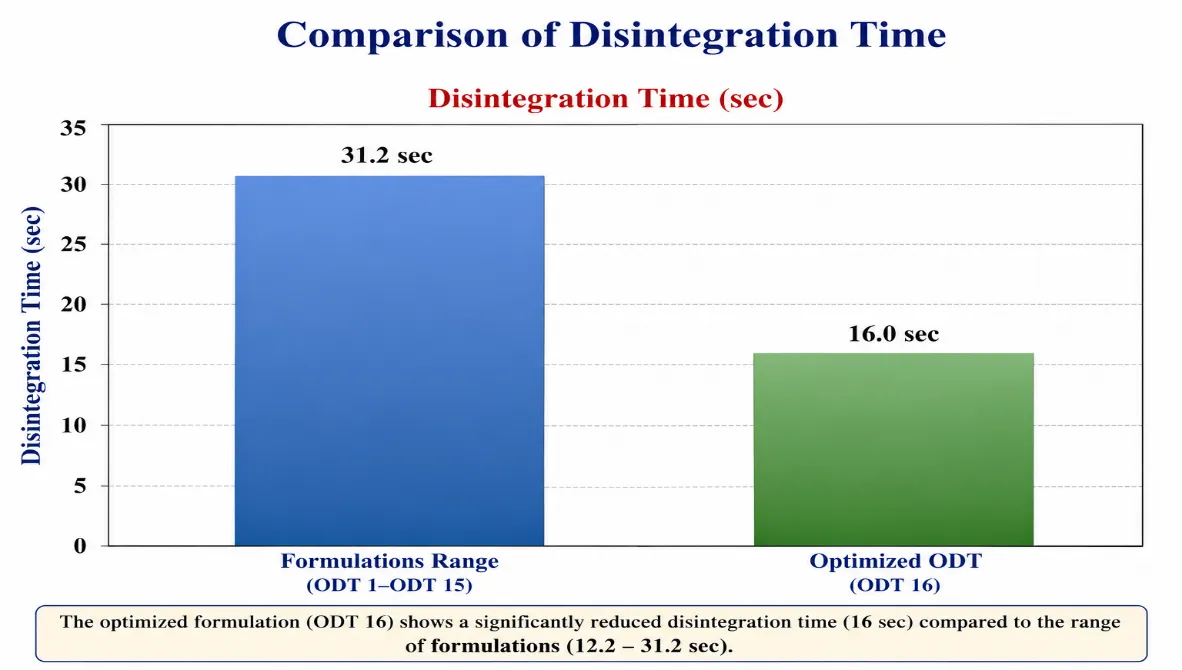
Figure 3.2 Reduction in disintegration time achieved after optimization
3.6 In-vitro Dissolution Test
The findings of this study illustrate a quick release of drug from tablets made with an improved formula. The total percentage of drug released over time at 1 minute is 21.67%, 3 minutes = 34.98%, 5 minutes = 53.47%, 10 minutes = 74.39% and 15 minutes = 97.41%. The dissolution study also supports the used super disintegrants for quick disintegration of the tablets and quick dissolution of the drugs contained in those tablets. The completion of drug release within 15 min suggests that Hydrochlorothiazide will be rapidly available for absorption. Rapid dissolution is important in ODT's since it will aid in rapid therapeutic effects and improved patient response. [43] The increased degree of dissolving of Hydrochlorothiazide can also be attributed to the use of PVP K30 which would improve the hydrophilic and dissolvable nature of Hydrochlorothiazide. Rapidly dissolving would also result in a faster onset for the therapeutic effect. Similar results have been shown for other ODT formulations containing Hughes and other hydrophilic polymers and super disintegrants that aid in improving the wettability and dissolution rate of drugs.[44]
Table 3.4 Dissolution Profile of Optimized Formulation
|
Time (min) |
Drug Release (%) |
|
1 |
21.67 |
|
3 |
34.98 |
|
5 |
53.47 |
|
10 |
74.39 |
|
15 |
97.41 |
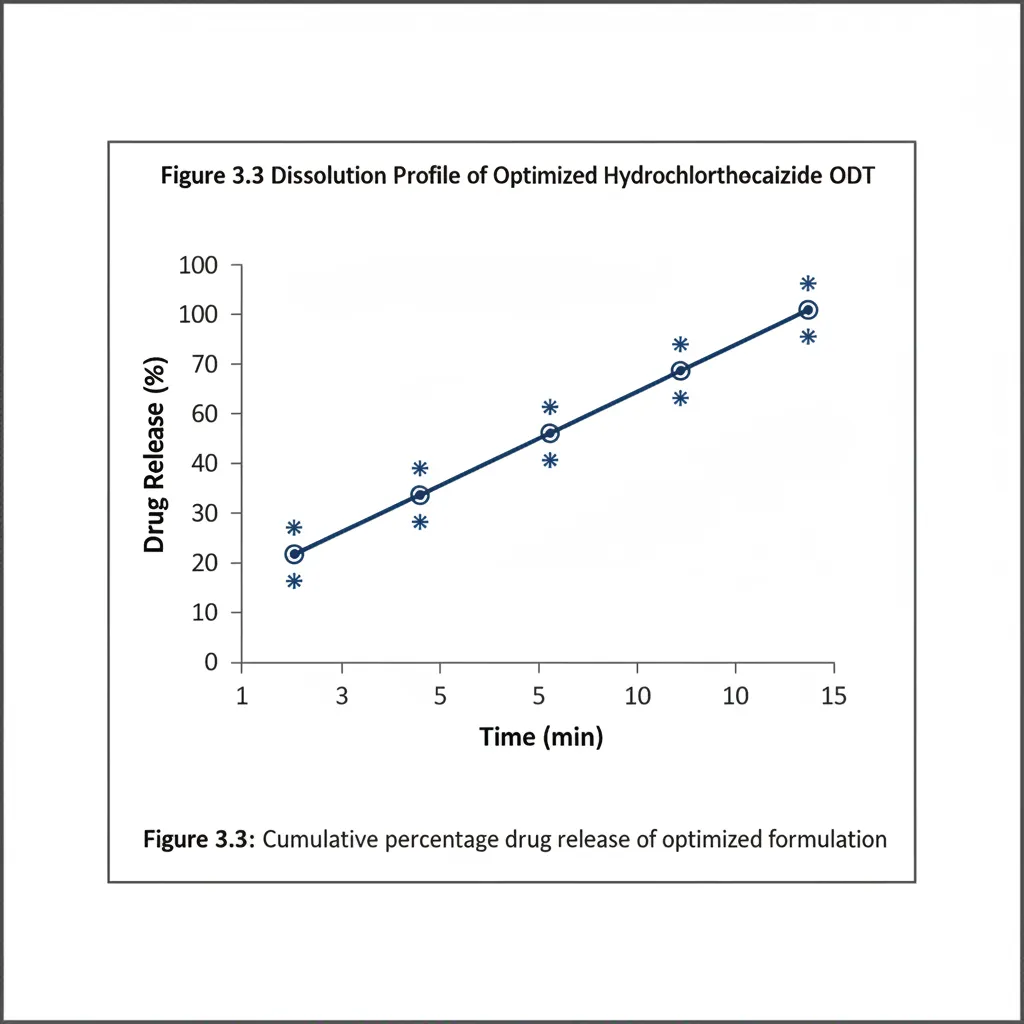
Figure 3.3: Cumulative percentage drug release of optimized formulation.
3.7 Natural Superdisintegrants: Role
Natural polymers are gaining tremendous attention because of their biocompatible, biodegradable, safe, and economic properties. [45] Fenugreek Seed Mucilage and Locust Bean Gum were chosen as natural superdisintegrants for their excellent swelling and water absorption abilities.
The results showed that both natural excipients reduced the disintegration time significantly without affecting the tablet hardness and friability within acceptable limits. The success of their incorporation shows the potential of natural materials as substitutes for synthetic excipients in pharmaceutical formulations. The natural gums and mucilages are reported by several researchers as successful superdisintegrants in ODT formulations because of their favorable physicochemical properties and patient safety profile.[46,47]
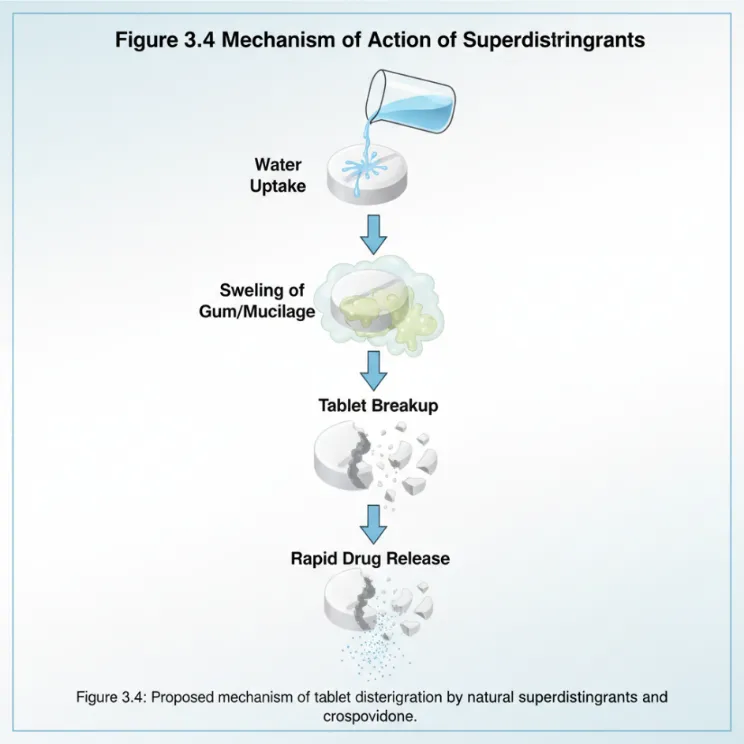
Figure 3.4 Mechanism of Action of Superdisintegrants
3.8 Stability Studies
Accelerated stability studies under the prescribed storage conditions showed no significant changes in the appearance, hardness, disintegration time, friability and drug content of the tablet. The results indicated that the optimized formulation was stable and the quality characteristics were maintained during the study period.
The stability results showed that the selected excipients were compatible with Hydrochlorothiazide and did not have any adverse effect on the formulation during storage. Similar stability results were reported for ODTs containing natural polymers and formulated by direct compression methods.[48]
Table 3.5 Stability study results indicating no significant changes in formulation characteristics.
|
Parameter |
Initial |
After Stability Study |
|
Appearance |
No Change |
No Change |
|
Hardness (kg/cm²) |
2.76 |
2.74 |
|
Friability (%) |
0.52 |
0.55 |
|
Disintegration Time (sec) |
16 |
17 |
|
Drug Release (%) |
97.41 |
96.85 |
3.9 Discussion
This research clearly shows that Hydrochlorothiazide Oral Disintegrating Tablets were formulated very well using all-natural super disintegrants. Another important finding is that the use of Box-Behnken Design allowed for the formulation variables to be optimized systematically, which resulted in the rapid disintegration of the tablets and also the tablets having very good mechanical properties and improved drug release.
Furthermore, the optimized formulation found the correct balance between the strength of the ODTs, and also that they could be disintegrated rapidly, which is a significant challenge when developing ODTs. Additionally, direct compression was shown to be an easy, cost-effective way to manufacture ODTs when considering reasonable scalability for large-scale production. Lastly, these results agree with previous research highlighting the benefits of both direct compression and the use of statistical optimization techniques when developing ODT formulations. [49,50]
In summary, the ODT formulation developed during this research had excellent overall pharmaceutical performance and therefore has the opportunity to improve patient compliance with and the effectiveness of drug therapy for managing hypertension.
4. CONCLUSION
The present study was successfully prepared and optimize Hydrochlorothiazide Oral Disintegrating Tablets using Crospovidone, Fenugreek Seed Mucilage and Locust Bean Gum as super disintegrants. The utilization of Box-Behnken design enabled a systematic assessment of all the formulation variables and the development of an optimized formulation possessing desired pharmaceutical properties.
The optimized formulation was found to have satisfactory hardness (2.76 kg/cm 2), low friability (0.52%), uniform thickness (1.86mm) and an extremely rapid disintegration time (16 sec). The in vitro dissolution study showed that the formulation released about 97.41% of the drug in 15 minutes, indicating a very high rate of drug dissolution and rapid disintegration of the tablet.
Natural super disintegrants were found to be advantageous because of their good safety profile, biocompatibility, easy availability and inexpensive. Their manufacture by direct compression provides an easy and effective way for their large-scale production.
In conclusion, the developed Hydrochlorothiazide Oral Disintegrating Tablets provides a good alternative to conventional oral dosage forms for children, elderly and patients with swallowing difficulties. The optimized formulation has potential to improve patient compliance due to the rapidity of drug release and the formulation has sufficient mechanical strength for effective management of hypertension.
Future research involving clinical studies of bioavailability and in-vivo evaluation will provide further evidence for the utility of the developed formulation. In conclusion, the study shows that ODT offers a convenient and effective method of medication for the patients with hypertension.
REFERENCES

Megha Dubey*, Neelima Naneriya, Development And Optimization Of Hydrochlorothiazide Oral Disintegrating Tablets Using Natural Superdisintegrants And Box–Behnken Design, Int. J. of Pharm. Sci., 2026, Vol 4, Issue 7, 2542-2553. https://doi.org/ 10.5281/zenodo.21339166
 10.5281/zenodo.21339166