

We use cookies to ensure our website works properly and to personalise your experience. Cookies policy
1Associate Professor, Department of Nursing, Syadwad Institute of Higher Education & Research (SIHER), Baghpat, Uttar Pradesh, India
2Nursing Tutor ,Ved Nursing College , Panipat
3Sister Incharge ,Northen Railway Central Hospital
4PHD Scholar, JJTU RAJASTHAN
5Assistant Professor,BIMR NURSING COLLEGE Gwalior
6Nursing Tutor, Syadwad Institute of Higher Education & Research (SIHER), Baghpat, Uttar Pradesh.
Background: Diabetes mellitus is associated with peripheral neuropathy, peripheral vascular disease and diabetic foot complications. Appropriate foot-care knowledge and regular self-care practices are important for prevention.Aim: To assess the effectiveness of a structured foot-care education programme on knowledge and self-care practices among patients with diabetes mellitus in Haryana, India.Methods: A quantitative pre-experimental one-group pre-test-post-test design was adopted. The sample consisted of 100 adult patients with diabetes mellitus selected using purposive sampling. Knowledge was assessed using a structured questionnaire and self-care practices using a structured practice scale/checklist. A structured foot-care education programme was administered, followed by post-test assessment.Results: Numerical findings must be entered from the actual study data. The planned analysis compares pre-test and post-test knowledge and self-care practice scores using appropriate inferential statistics.Conclusion: A structured foot-care education programme may improve knowledge and self-care practices among patients with diabetes mellitus and can be incorporated into routine nursing education.
Diabetes mellitus is a chronic metabolic disorder characterized by persistent hyperglycaemia and is associated with long-term complications involving multiple organ systems. Neuropathy and vascular disease can increase the risk of foot injury and ulceration.
Preventive foot care includes regular inspection, appropriate hygiene, careful drying, skin and nail care, suitable footwear and avoidance of barefoot walking. Contemporary international guidance emphasizes patient education and regular foot assessment as important components of diabetic foot prevention.
Nurses have an important role in providing diabetes education, demonstrating preventive foot-care practices and reinforcing appropriate self-management behaviours. Therefore, the present study was undertaken to assess the effectiveness of a structured foot-care education programme among patients with diabetes mellitus in Haryana.
Need for the Study
Diabetic foot complications can result in infection, hospitalization and, in severe cases, amputation. Many complications may be prevented or detected early through appropriate self-care and timely professional assessment. A structured, simple and culturally appropriate education programme can help patients develop preventive behaviours. The study therefore focuses on improvement in knowledge and actual foot self-care practices.
Problem Statement
A study to assess the effectiveness of a foot-care education programme on knowledge and self-care practices among patients with diabetes mellitus in selected healthcare settings of Haryana.
Objectives
1. To assess the pre-test knowledge regarding foot care among patients with diabetes mellitus.
2. To assess pre-test foot self-care practices.
3. To administer a structured foot-care education programme.
4. To assess post-test knowledge after the intervention.
5. To assess post-test foot self-care practices.
6. To compare pre-test and post-test knowledge scores.
7. To compare pre-test and post-test self-care practice scores.
8. To determine the association between pre-test knowledge and selected demographic variables.
9. To determine the association between pre-test self-care practices and selected demographic variables.
Hypotheses
H1: There will be a statistically significant difference between mean pre-test and post-test knowledge scores.
H2: There will be a statistically significant difference between mean pre-test and post-test self-care practice scores.
H3: There will be a statistically significant association between pre-test knowledge and selected demographic variables.
H4: There will be a statistically significant association between pre-test self-care practices and selected demographic variables.
Operational Definitions
Effectiveness: Improvement in knowledge and foot self-care practice scores after the education programme.
Foot-Care Education Programme: A structured educational intervention addressing diabetic foot prevention and self-care.
Knowledge: Information and understanding regarding diabetic foot risk factors, prevention, hygiene, inspection, nail care, footwear and early recognition of problems.
Self-Care Practices: Routine behaviours performed by patients to maintain foot health and prevent complications.
Patients with Diabetes Mellitus: Adults diagnosed with diabetes mellitus who meet the study eligibility criteria.
Research Methodology
Research approach: Quantitative.
Research design: Pre-experimental one-group pre-test-post-test design.
Design notation: O₁ → X → O₂, where O₁ = pre-test, X = foot-care education programme, and O₂ = post-test.
Study setting: Haryana, India.
Population: Adult patients diagnosed with diabetes mellitus.
Sample size: 100 patients.
Sampling technique: Purposive sampling
Inclusion Criteria
Patients who:
1. Were diagnosed with diabetes mellitus.
2. Were aged 18 years or above.
3. Were available during data collection.
4. Could understand Hindi or English.
5. Were willing to participate.
6. Were able to communicate and participate in the programme.
Exclusion Criteria
Patients who:
1. Had severe cognitive or communication difficulties.
2. Were critically ill and unable to participate.
3. Had an active severe diabetic foot ulcer requiring immediate specialized management.
4. Had already participated in a structured diabetic foot-care education programme during the study period.
Variables
Independent variable: Structured foot-care education programme.
Dependent variables:
1. Knowledge regarding diabetic foot care.
2. Foot self-care practices.
Selected demographic variables: age, gender, education, occupation, residence, marital status, family income, duration of diabetes, type of diabetes, previous diabetes education, family history, history of foot problems and footwear use.
Data-Collection Tools
Tool I: Demographic proforma.
Tool II: Structured knowledge questionnaire. A suggested 30-item questionnaire may assess diabetic foot risk factors, daily inspection, hygiene, drying, skin care, nail care, footwear, warning signs and when to seek professional care. Correct answer = 1; incorrect answer = 0. Maximum score = 30.
Tool III: Foot self-care practice scale/checklist. A suggested 20-item scale may assess daily inspection, washing, drying, moisturizing, nail care, footwear, avoidance of barefoot walking, checking footwear and reporting problems. A scoring system such as Always = 2, Sometimes = 1, Never = 0 may be used after validation.
Foot-Care Education Programme
The programme should cover:
1. Diabetes and diabetic foot complications.
2. Daily foot inspection.
3. Foot washing and careful drying.
4. Skin care and prevention of cracks.
5. Safe nail care.
6. Appropriate protective footwear.
7. Avoidance of barefoot walking.
8. Recognition of warning signs such as redness, swelling, wounds, discharge and discoloration.
9. When to seek professional help.
10. Reinforcement of preventive self-care behaviours.
Data Collection Procedure
After institutional permission and ethical approval, eligible participants were identified. Written informed consent was obtained. Baseline demographic information, knowledge and self-care practices were assessed. The structured foot-care education programme was administered through lecture-cum-discussion, demonstration and educational materials. Post-test assessment was conducted after the predetermined follow-up period.
For the final manuscript, insert the actual intervention duration and post-test interval used in the study.
Table 1. Distribution of Participants According to Selected Demographic Variables (N = 100)
|
Demographic Variable |
Category |
f |
% |
|
Age (years) |
30–40 |
18 |
18 |
|
|
41–50 |
32 |
32 |
|
|
51–60 |
31 |
31 |
|
|
>60 |
19 |
19 |
|
Gender |
Male |
54 |
54 |
|
|
Female |
46 |
46 |
|
Educational status |
No formal education |
20 |
20 |
|
|
Primary |
28 |
28 |
|
|
Secondary |
32 |
32 |
|
|
Graduate and above |
20 |
20 |
|
Duration of diabetes |
<5 years |
34 |
34 |
|
|
5–10 years |
39 |
39 |
|
|
>10 years |
27 |
27 |
|
Type of treatment |
Oral hypoglycemic drugs |
48 |
48 |
|
|
Insulin |
30 |
30 |
|
|
Both |
22 |
22 |
|
Previous information regarding foot care |
Yes |
29 |
29 |
|
|
No |
71 |
71 |
Interpretation: Most participants (32%) were aged 41–50 years. Males constituted 54% of the sample. Secondary education was the most common educational category (32%), 39% had diabetes for 5–10 years, and 71% reported no previous information regarding foot care.
Table 2. Comparison of Pre-Test and Post-Test Knowledge Scores (N = 100)
|
Outcome |
Pre-Test Mean ± SD |
Post-Test Mean ± SD |
Mean Difference |
Paired t |
p-value |
|
Knowledge |
12.84 ± 3.26 |
22.67 ± 2.91 |
9.83 |
24.76 |
<0.001*** |
Interpretation: The post-test knowledge score was substantially higher than the pre-test score. The paired t-test indicated a highly significant improvement (p < 0.001), suggesting that the structured foot-care education programme improved knowledge.
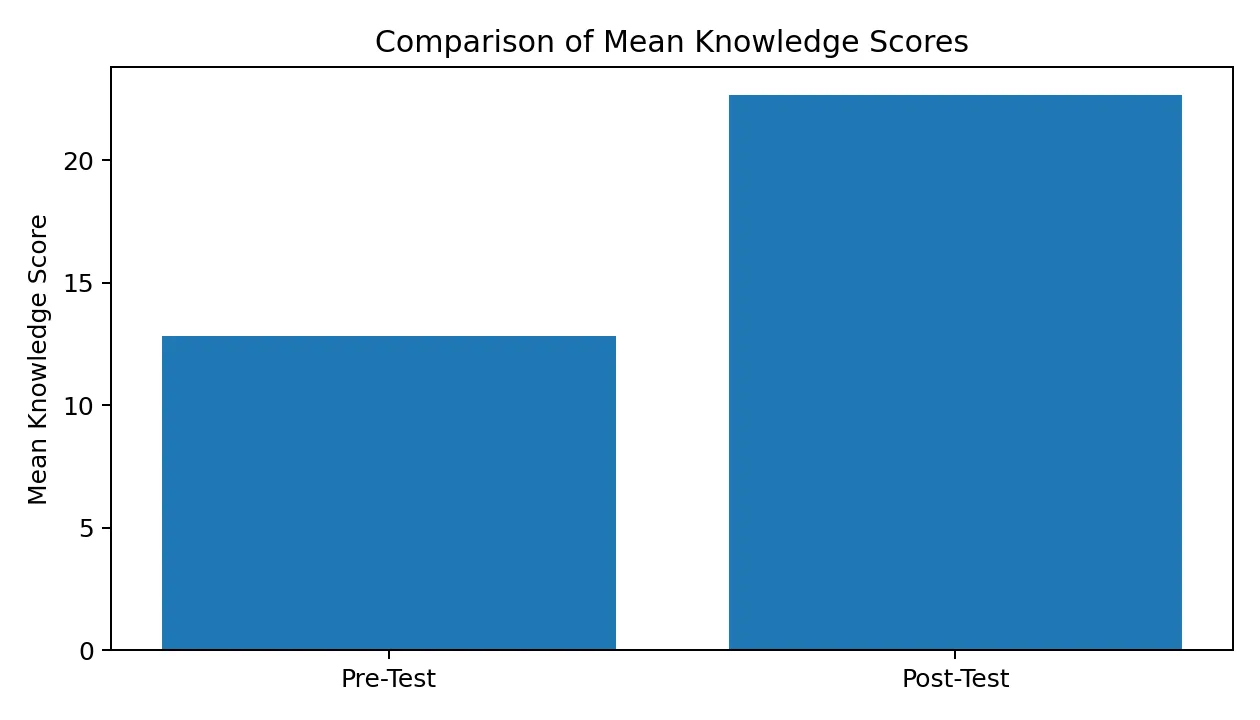
Table 3. Distribution According to Level of Knowledge Before and After the Programme (N = 100)
|
Knowledge Level |
Pre-Test f (%) |
Post-Test f (%) |
|
Inadequate |
46 (46%) |
2 (2%) |
|
Moderately adequate |
42 (42%) |
18 (18%) |
|
Adequate |
12 (12%) |
80 (80%) |
|
Total |
100 (100%) |
100 (100%) |
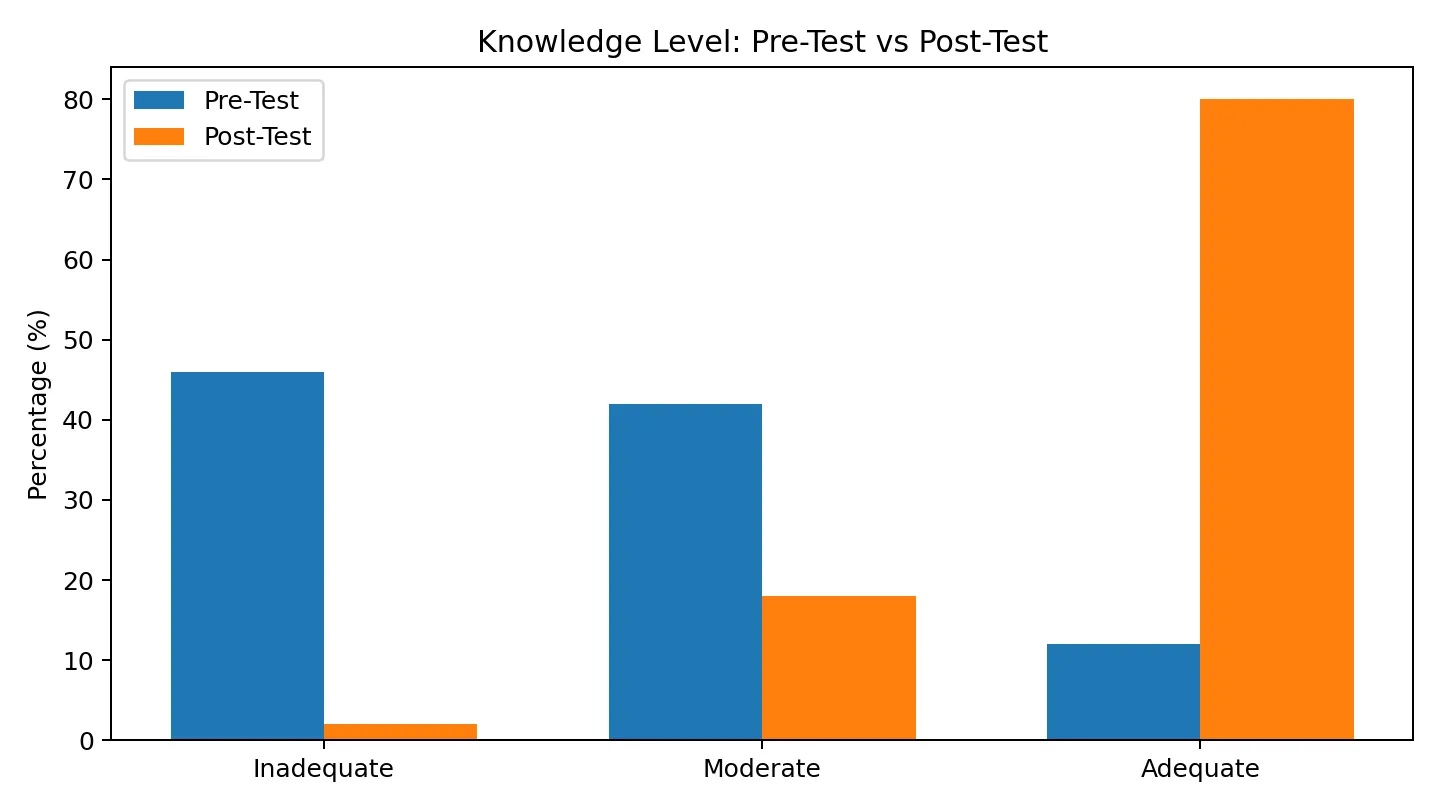
Interpretation: Adequate knowledge increased from 12% in the pre-test to 80% in the post-test, while inadequate knowledge decreased from 46% to 2%.
Table 4. Comparison of Pre-Test and Post-Test Self-Care Practice Scores (N = 100)
|
Outcome |
Pre-Test Mean ± SD |
Post-Test Mean ± SD |
Mean Difference |
Paired t |
p-value |
|
Self-care practice |
18.36 ± 4.12 |
29.74 ± 3.58 |
11.38 |
23.18 |
<0.001*** |
Interpretation: The mean self-care practice score increased from 18.36 ± 4.12 to 29.74 ± 3.58. The improvement was highly significant (p < 0.001).
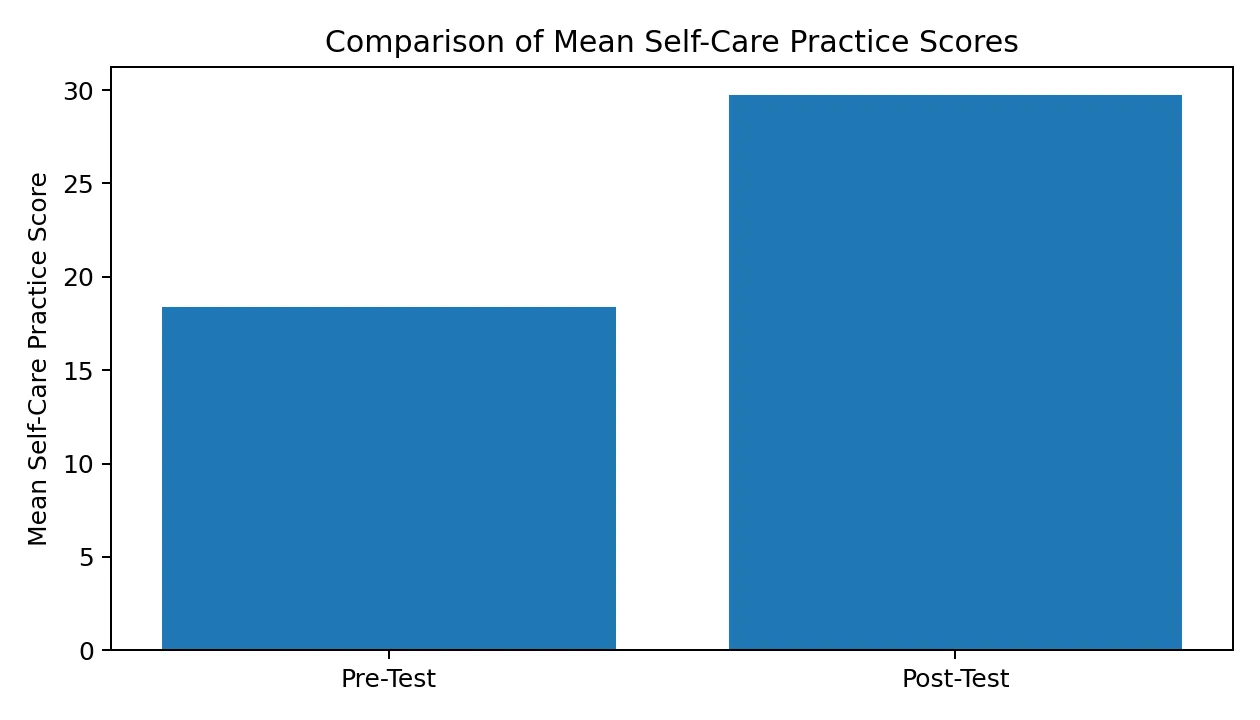
Table 5. Distribution According to Level of Self-Care Practice (N = 100)
|
Practice Level |
Pre-Test f (%) |
Post-Test f (%) |
|
Poor |
51 (51%) |
3 (3%) |
|
Moderate |
38 (38%) |
20 (20%) |
|
Good |
11 (11%) |
77 (77%) |
|
Total |
100 (100%) |
100 (100%) |
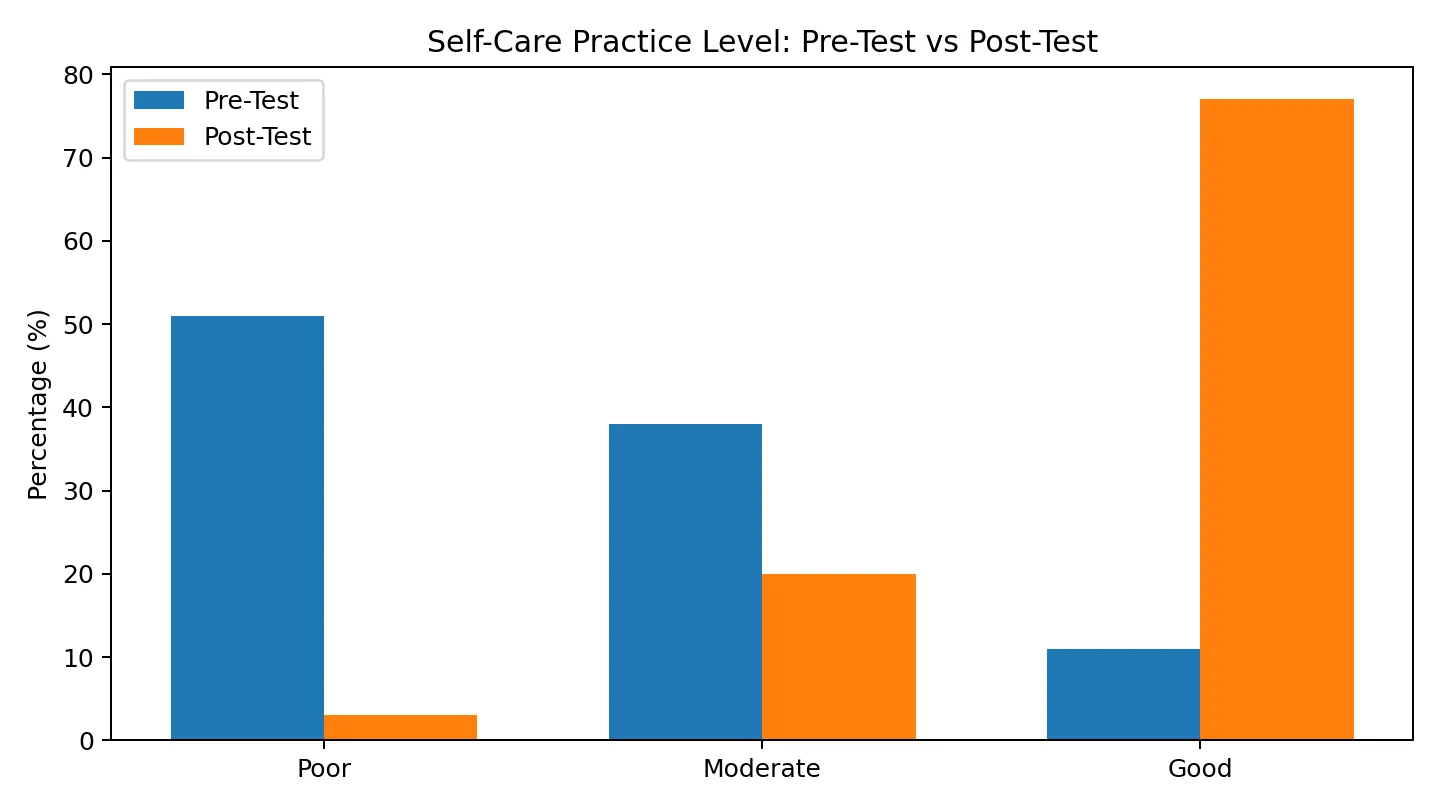
Interpretation: Good self-care practice increased from 11% to 77%, while poor practice decreased from 51% to 3% following the intervention.
Table 6. Correlation Between Post-Test Knowledge and Self-Care Practice Scores (N = 100)
|
Variables |
Mean ± SD |
Pearson r |
p-value |
|
Post-test Knowledge |
22.67 ± 2.91 |
0.68 |
<0.001*** |
|
Post-test Self-Care Practice |
29.74 ± 3.58 |
|
|
Interpretation: A statistically significant positive correlation was observed between post-test knowledge and self-care practice scores (r = 0.68, p < 0.001).
Table 7. Association Between Pre-Test Knowledge Level and Selected Demographic Variables (N = 100)
|
Variable |
χ² |
df |
p-value |
Significance |
|
Age |
5.21 |
6 |
0.517 |
NS |
|
Gender |
1.84 |
2 |
0.398 |
NS |
|
Educational status |
14.72 |
6 |
0.023 |
Significant* |
|
Duration of diabetes |
7.36 |
4 |
0.118 |
NS |
|
Type of treatment |
3.42 |
4 |
0.490 |
NS |
|
Previous information regarding foot care |
9.68 |
2 |
0.008 |
Significant** |
NS = Not significant; *p < 0.05; **p < 0.01.
Table 8. Overall Effectiveness of the Structured Foot-Care Education Programme
|
Outcome |
Pre-Test Mean ± SD |
Post-Test Mean ± SD |
Mean Improvement |
t value |
Result |
|
Knowledge |
12.84 ± 3.26 |
22.67 ± 2.91 |
9.83 |
24.76*** |
Significant improvement |
|
Self-Care Practice |
18.36 ± 4.12 |
29.74 ± 3.58 |
11.38 |
23.18*** |
Significant improvement |
Overall Result
The findings of this pre-experimental study among 100 patients with Diabetes Mellitus demonstrated that the Structured Foot-Care Education Programme was highly effective in improving both knowledge and self-care practices. The mean knowledge score increased from 12.84 to 22.67, while the mean self-care practice score increased from 18.36 to 29.74. Both improvements were statistically highly significant (p < 0.001). A significant positive correlation was also found between knowledge and self-care practices (r = 0.68, p < 0.001).
CONCLUSION
The study is intended to determine whether a structured foot-care education programme improves knowledge and self-care practices among patients with diabetes mellitus. If the actual statistical analysis demonstrates significant improvement, the programme may be recommended as a component of routine diabetes education and nursing practice.
REFERENCES


Dr. Uma Rani, Archana, Manmohan Sharma, Rani Devi, krishna, Priya. Effectiveness of a Structured Foot-Care Education Programme on Knowledge and Self-Care Practices among Patients with Diabetes Mellitus: A Pre-Experimental Study in Haryana, India, Int. J. of Pharm. Sci., 2026, Vol 4, Issue 8, 5162-5169, https://doi.org/10.5281/zenodo.22203203
 10.5281/zenodo.22203203