

We use cookies to ensure our website works properly and to personalise your experience. Cookies policy
IPS College of Pharmacy, Gwalior, Madhya Pradesh
Depression is a prevalent psychiatric disorder with significant global health impact, and current pharmacological treatments are limited by delayed onset and adverse effects. The present study evaluated the antidepressant potential of hydroalcoholic root extract of Curculigo orchioides (HECO). The extract was prepared using Soxhlet extraction and subjected to phytochemical screening, which confirmed the presence of alkaloids, flavonoids, saponins, glycosides, and phenolic compounds. Quantitative analysis revealed high phenolic (122.45 mg GAE/g) and flavonoid (104.08 mg QE/g) content. Antioxidant activity assessed by DPPH radical scavenging assay demonstrated dose dependent inhibition with an IC?? of 34.30 µg/mL for HECO, indicating strong free radical scavenging potential. Antidepressant activity was evaluated in male albino mice using the tail suspension test at doses of 200 and 400 mg/kg. HECO significantly reduced immobility time in a dose dependent manner (p<0.05), comparable to fluoxetine. Pretreatment with para chlorophenylalanine (PCPA), a serotonin synthesis inhibitor, reversed the antidepressant effect, suggesting involvement of the monoaminergic system. These findings highlight the therapeutic potential of C. orchioides root extract as a natural antidepressant candidate, warranting further mechanistic and clinical investigations.
Depression is a major psychiatric disorder characterized by persistent sadness, loss of interest, and impaired daily functioning, affecting more than 300 million people worldwide [1]. Current antidepressant therapies, including selective serotonin reuptake inhibitors (SSRIs), though effective, are often associated with delayed onset of action and adverse effects [2]. This has prompted exploration of plant?based alternatives with fewer side effects and better tolerability.
Curculigo orchioides Gaertn. (family Hypoxidaceae), commonly known as “Kali Musli,” is a medicinal herb widely used in traditional Indian medicine for its rejuvenating and adaptogenic properties [3]. Previous studies have reported its antioxidant, immunomodulatory, and neuroprotective activities [4,5]. Phytochemical investigations reveal the presence of flavonoids, saponins, glycosides, and phenolic compounds, which are known to modulate neurotransmitter systems and oxidative stress pathways [6].
Given the strong association between oxidative stress and depression [7], and the role of monoaminergic neurotransmission in antidepressant mechanisms [8], the present study was designed to evaluate the antidepressant activity of hydroalcoholic root extract of C. orchioides using validated behavioral models in mice. The study also aimed to correlate phytochemical composition and antioxidant potential with observed pharmacological effects.
MATERIAL AND METHODS
Collection and authentication of plant material
The roots of Curculigo orichioides were purchased from the local grocery vendor of Gwalior, Madhya Pradesh in the month of February and authenticated by Dr. Shashibala Mishra (botanist) at RB Science, Bhopal.
Preparation of plant material for extraction
The collected plant roots, after authentication were washed with distilled water and dried under shade. The completely dried leaves were converted to fine powdered form with the aid of a blender at low speed. The powdered roots were stored in air tight container and marked appropriately till taken for further processes and investigation.
Extraction of plant material
The root powder prepared using the above procedure were used for extraction process. Hot continuous extraction was performed for extracting out the phytochemicals from the leaf powder. Briefly, 87 g of the root powder was evenly packed in the extractor of the soxhlet apparatus and extracted successively with petroleum ether (500 mL), and methanol-water (80:20) (500 mL) successively. The extraction process was carried out for about 7-8 h for each solvent, till a clear solution was visible in the siphon tube of the extractor. The extracts (solvents) were filtered while hot to remove any un-dissolved material (debris or impurities). The extracts were concentrated by evaporation using rotary vacuum evaporator to obtain viscous liquid. The concentrated extracts were then transferred to 100 mL beaker and the remaining solvents were evaporated on thermostatically heated water bath [9]. The oleo-resinous extracts were collected and placed in desiccators to remove the excessive moisture. The dried extracts were stored in desiccators until used for further investigational procedures.
Preliminary phytochemical screening of extracts
The hydroalcoholic extract was subjected to qualitative phytochemical testing procedures for identifying the presence or absence of usual plant secondary metabolites. The test was performed for alkaloids, triterpenes/steroids, glycosides, tannins, flavonoids, saponins, and phenolic acids. The color, intensity of color or the precipitate formation was used as observational responses to the reactions occurring in these tests [10,11].
Total Phenolic Content Determination
A small quantity of extracts (0.1g) was mixed with 8 mL of methanol and kept overnight. The suspension was filtered through a qualitative cellulose filter paper and the filtrate was diluted to 10 mL with methanol. The solution was stored at 4°C in amber color bottles and served as the stock solution (50 mg/mL) for subsequent analyses. In order to determine the total phenolic content, 200 μL of the extracted sample was mixed with 1.4 mL purified water and 100 μL of Folin-Ciocalteu reagent. After at least 30 s (but not exceeding 8 min), 300 μL of 20%Na2CO3 aqueous solution was added and the mixture was allowed to stand for 2 h [12,13]. The absorbance was measured at 765 nm using a UV-Vis spectrophotometer. Standard solutions of gallic acid (10-100 ppm) were similarly treated to plot the calibration curve. The control solution contained 200 μL of methanol and suitable reagents, and it was prepared and incubated under the same conditions as the rest of the samples. Results were expressed as milligrams of gallic acid equivalent (GAE) per 100 g of the dry sample.
Total flavonoid content determination
Determination of total flavonoids content was based on aluminium chloride method. 50 mg quercetin was dissolved in 50 ml methanol, and various aliquots of 25- 150μg/ml were prepared in methanol. 0.1 g of dried extract was extracted with 10 ml methanol, filtered, and make up the volume up to 100 ml. One ml (1mg/ml) of this extract was for the estimation of flavonoid. Add 1 mL of 5%w/v solution of sodium nitrite to it. After 6 m in, 1 ml of 10%% AlCl3 methanolic solution was added and allowed to stand for 60 min at room temperature. Now add, 10 mL of 1M NaOH solution and dilute to 10 mL with ethanol and measure the absorbance at 420 nm [14].
Antioxidant action by DPPH radical inhibition assay
The free radical scavenging activity of the extract was measured in terms of hydrogen donating or radical scavenging ability using the stable free radical DPPH. Determination of DPPH radicals scavenging activity was performedby the method used by Kato. Separately, 1mM solution of DPPH and extract solution (50-250 µg/mL) were prepared in ethanol. 1.5ml of the extract solution was added to 1.5 ml of DPPH solution. The absorbance was measured at 517 nm against the corresponding blank solution which was prepared using 3 mL ethanol. The control sample used was 3 mL of DPPH. The assay was performed in triplicates. Percentage inhibition of free radical DPPH was calculated based on control reading by following equation [15].
Antidepressant Action
Grouping of Animal
The in vivo antidepressant action of the hydroalcoholic extract of Curculigo orchioides (HECO) was carried out in male albino mice weighing between 25–30 g by forced swim test (FST) method. The animal were grouped and housed in poly acrylic cages (38 x 23 x10 cm) in the animal house of the institute. Not more than four animals per cage were housed and maintained under standard laboratory conditions with natural dark and light cycle (14 h light/10 h dark) at 27±2°C and relative humidity (RH) 44-56% with free access to standard diet (Golden Feeds, India) and tap water ad libitum for one week for acclimatization before and during the experiments. Animal were divided into 5 groups of 6 animals each for conducting the study. Group I was administered with normal saline and served as control, group II & III were administered 200 mg/kg (i.p) and 400 mg/kg of the HECO respectively, whereas group IV served as positive control and was administered with fluoxetine, 10 mg/kg (i.p). The group V animal were PCPA (100 mg/kg, i.p., an inhibitor of serotonin synthesis) for four days before test.
Tail Suspension Test
The extract (HEPO) and ?uoxetine were dissolved in DMSO and injected intraperitoneally in a standard volume of 0.05 mL per 20 g body weight, to each mouse 30 minutes prior to the test. To the group V, PCPA 100 mg/kg was administered 30 min prior to the test followed by administration of extract 200 mg/kg. To determine the effect of the test compound mice were individually suspended by tail using clamp (2 cm from the tip of the tail) in a box (25 × 25 × 30 cm) with the head 5 cm from the bottom. Minimal background noise was maintained and the testing was carried out in dark room. All animals were suspended for total 6 minutes, and the duration of immobility was observed and noted during the final 4 minutes of the test. Mice were considered immobile only when they hung passively and completely motionless [16-18].
RESULTS AND DISCUSSION
Extraction and phytochemical screening of plant material
The root of Curculigo orchioides was defatted using petroleum ether and the phytoconstituents were extracted using methanol-water (80:20v/v) as the extraction solvent. The hydro-alcoholic extract was obtained in 12.85% w/w yield. The observations of the preliminary phytochemical screening tests are presented in Table 1.
Table 1. Phytochemical present in Curculigo orchioides root extract
|
Test |
Petroleum Ether |
Hydro-alcoholic |
|
Mayers Test |
- |
+ |
|
Wagners Test |
- |
+ |
|
Hagers Test |
- |
- |
|
Dragendroff Test |
- |
+ |
|
Froth Test |
- |
+ |
|
Bontragers Test |
- |
+ |
|
Keddes Test |
+ |
+ |
|
Keller-Kiliani Test |
- |
- |
|
Gelatin Test |
- |
+ |
|
Ferric Chloride Test |
- |
+ |
|
Vanillin Hydrochloride Test |
+ |
+ |
|
Alkaline reagent test |
- |
+ |
|
Shinoda test |
- |
+ |
|
Zinc hydrochloride reduction test |
+ |
+ |
|
Ninhydrin Test |
- |
- |
|
Liberman Burchard Test |
+ |
+ |
|
Salkowski Test |
+ |
+ |
|
Molisch Test |
- |
+ |
Total Phenolic and Flavonoid content
The total phenolic content in the extract was determined using Folin-Ciocalteau reagent method and is reported as gallic acid equivalent (GAE). The total flavonoid content was determined using Aluminium chloride method and is reported as quercetin equivalent (QE). The amount of phenolic present in the hydro-alcoholic extract was found to be 122.45 GAE mg/g of extract whereas the amount of flavonoids present in the hydro-alcoholic extract was found to be 104.08 QE mg/g of extract.
Antioxidant activity
The total antioxidant potential of a sample was determined using the DPPH radical scavenging assay. The results obtained (Table 2) make it evident that that the extracts had the ability to donate hydrogen thereby stabilizing DPPH. The scavenging was found to dose dependent.
Table 2. % DPPH Inhibition by extract
|
Conc (µg/mL) |
DPPHi % |
||
|
Petroleum ether |
Hydro-alcoholic |
Ascorbic acid |
|
|
50 |
6.58 ± 0.565 |
35.83 ± 0.622 |
84.32 ± 0.242 |
|
100 |
9.21 ± 0.556 |
41.49 ± 0.492 |
- |
|
150 |
12.77 ± 0.543 |
47.38 ± 0.486 |
- |
|
200 |
17.09 ± 0.515 |
53.8 ± 0.337 |
- |
|
250 |
20.8 ± 0.405 |
58.92 ± 0.152 |
- |
The IC50 of DPPH inhibition was calculated from the data and was found to be 131.07 µg/mL and 34.302 µg/mL for petroleum ether extract and hydro-alcoholic extract respectively.
Antidepressant action
The antidepressant action of the extract (HECO) was tested using tail suspension test at two dose levels (200 and 400 mg/kg) and the results obtained are depicted in Table 3. The immobility time was recorded and statistically analyzed using one way ANOVA followed by Dunnett’s multiple comparison test.
Table 3. Effect of treatment of immobility in tail suspension
|
Group |
Treatment |
Immobility Time |
|
I |
Saline |
27.00 ± 2.366 |
|
II |
Fluoxetine (10 mg/kg) |
9.50 ± 1.517*** |
|
III |
HECO (200 mg/kg) |
16.33 ± 2.338*** |
|
IV |
HECO (400 mg/kg) |
14.17 ± 0.983*** |
|
V |
PCPA + HECO (200 mg/kg) |
25.33 ± 1.033ns |
Average ± SD, n=6, *** p<0.05, nsnot significant
The results of the study revealed that the extract, was able to exhibit dose dependent improvement in antidepressant action in mice. Tail suspension test is used as a stress induced depression model of assessing the effectiveness of antidepressant drugs. The effect of extract treatment was found to be significant at both the tested doses (p<0.05). When pretreatment was done with PCPA, the effect of the extract was found to be reversed, suggesting the involvement of mono-aminergic system in the anti-depressant action of the extract (Figure 1).
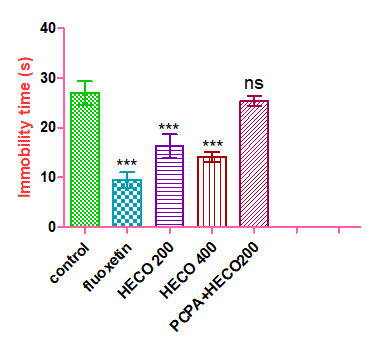
Figure 1. Effect of treatment of immobility
CONCLUSION
The hydroalcoholic root extract of Curculigo orchioides demonstrated significant antidepressant activity in mice, supported by its high phenolic and flavonoid content and strong antioxidant potential. The reversal of activity by PCPA pretreatment indicates that the monoaminergic system plays a key role in its mechanism of action. These findings suggest that C. orchioides may serve as a promising natural alternative for managing depression, warranting further clinical evaluation and mechanistic studies.
REFERENCES

Archi Jain, Amit Jain, Sandeep Jain, Evaluation Of Anti-Depressant Activity of Root Extract of Curculigo Orchioides, Int. J. of Pharm. Sci., 2026, Vol 4, Issue 9, 3244-3250, https://doi.org/10.5281/zenodo.22955576
 10.5281/zenodo.22955576