

We use cookies to ensure our website works properly and to personalise your experience. Cookies policy
S.C.S college of pharmacy, Harapanahalli, Karnataka, India.
Background: Non-Steroidal Anti-Inflammatory Drugs (NSAIDs) are widely prescribed for the management of pain, inflammation, and fever. However, irrational prescribing practices such as polypharmacy, excessive injectable use, and low generic prescribing may increase adverse drug reactions and healthcare costs. This study aimed to evaluate NSAID prescribing patterns using the WHO Core Prescribing Indicators in a tertiary care teaching hospital. Methodology: A prospective observational study was conducted for six months at Chigateri Government Hospital, Davangere. A total of 203 inpatient prescriptions containing NSAIDs from Orthopaedics, Obstetrics and Gynaecology, and General Medicine departments were analysed using WHO prescribing indicators. Results: A total of 203 inpatient encounters containing NSAID prescriptions were analysed. Females constituted 63.54% of the study population, and the18-29 year old age group was the most frequently represented . Orthopaedics accounted for the highest number of prescriptions (41.87%). Diclofenac was the most prescribed NSAID (40.58%), followed by Paracetamol (31.3%) and Aceclofenac (24.6%). Parenteral administration accounted for 62.32% of prescriptions. The average number of drugs per encounter was 8.12, and the average NSAIDs per encounter was 1.7. Generic prescribing was 49.27%, NLEM adherence was 95.07%, and gastroprotective agents were co-prescribed in 99.51% of encounters. Conclusion: The study demonstrated high adherence to the NLEM and appropriate co-prescription of gastroprotective agents. However, polypharmacy, high injectable use, and suboptimal generic prescribing indicate the need for interventions to promote rational NSAID prescribing practices.
Non-Steroidal Anti-Inflammatory Drugs (NSAIDs) are among the most widely prescribed medications worldwide for the management of pain, inflammation, and fever.1 Over the past two decades, NSAIDs have become first-line agents for the management of acute and chronic pain.2 Globally, approximately 8-11% of the general population receives at least one NSAID prescription annually, with higher utilization among women and increasing use with advancing age.3
NSAIDs are broadly classified into non-selective cyclooxygenase (COX) inhibitors, preferential COX-2 inhibitors and selective COX-2 inhibitors, each differing in their pharmacological profile and adverse effect spectrum.
NSAIDs make up one of the largest groups of pharmaceutical agents used worldwide. In the past, NSAIDs were used by 20% or more of the population. NSAIDs are also one of the most common causes of adverse drug reactions reported to drug regulatory agencies as well as in many clinical and epidemiological studies.4
The most commonly used NSAIDs are diclofenac and ibuprofen, which account for almost 40% of global NSAID sales, excluding OTC use. Ibuprofen and naproxen are the most commonly prescribed NSAIDs in the USA, while diclofenac prescription is more common in the UK, and the regional variation may not just relate to drug properties but may also include which NSAID was first to market in a particular region.5
According to the World Health Organisation (WHO), rational use of medicines is defined as “patients receive medications appropriate to their clinical needs, in doses that meet their own individual requirements, for an adequate period, and at the lowest cost to them and their community”.6 More than 50% of medicine expenditure is estimated to be wasted because of irrational prescribing, dispensing and medicine use; also, concurrent use of multiple medications by a patient results in drug-induced disease, such as adverse drug reactions (ADR), which is reported to be as high as 28%.7 Illiteracy, limited financial resources and lack of awareness among patients make the rational use of medicines even more important in developing countries like India.8
To promote rational prescribing and evaluate medicine use in healthcare settings, the World Health Organization (WHO) developed a set of core prescribing indicators.9 The WHO has developed various indicators to evaluate the condition of the services offered to the population concerning medication, among which the core prescribing indicators are aimed at measuring the degree of polypharmacy, tendency to prescribe drugs by generic name, overall level of use of antibiotics and injections, and the degree to which drugs are prescribed from the essential drug list.10 Drug usage pattern is an essential indicator of careful selection of a drug in accordance with the therapeutic diagnosis, and drug utilisation research aids in surveying and understanding the diverse processes involved in healthcare.11
The WHO core prescribing indicators used for NSAID utilization consist of ten indicators that assess rational prescribing practices.
Despite several published studies on NSAID prescribing patterns, periodic evaluation using WHO Core Prescribing Indicators remains essential to monitor prescribing practices and promote rational drug use in individual healthcare institutions.
Therefore the present study was undertaken to evaluate the prescribing patterns of NSAIDs among inpatients admitted to the Orthopaedics, Obstetrics and Gynaecology and General Medicine departments of a tertiary care teaching hospital using the WHO Core Prescribing Indicators.
MATERIALS AND METHODS
Study Site:
The study was conducted in the inpatient departments of Chigateri Government Hospital, a tertiary care teaching hospital, Davangere, Karnataka, India.
Study Design:
Prospective observational study.
Study Period:
The study was conducted over a period of six months
Sample Size:
A total of 203 eligible inpatients admitted to the Departments of Orthopaedics, Obstetrics and Gynaecology, and General Medicine were included in this study.
Study Criteria:
The study was carried out by considering the following inclusion and exclusion criteria.
Inclusion Criteria:
Patients aged 18 years or older.
Patients who are prescribed at least one NSAID.
Patients of either gender.
Exclusion Criteria:
Patient having incomplete or insufficient clinical data.
OPD patients
Pediatric patients
Study Procedure
Data were collected prospectively from the case records of eligible inpatients admitted to the Departments of Orthopaedics, Obstetrics and Gynaecology, and General Medicine. The collected data included patient demographics (age and gender), department of admission, prescribed NSAIDs, route of administration, type of NSAID therapy, generic or brand-name prescribing, fixed-dose combinations, co-prescription of gastroprotective agents, and WHO core prescribing indicators. The collected data were then evaluated using the WHO Core Prescribing Indicators.
Statistical Analysis
The collected data were entered inti Microsoft Excel and analyzed using descriptive statistics. Categorical variables were expressed as frequencies and percentages, while continuous variables were presented as means. The WHO Core Prescribing Indicators were calculated according to the World Health Organization guidelines.
RESULTS
A total of 203 patients were enrolled in this study in accordance with the inclusion criteria from the General Medicine, Obstetrics and Gynaecology, and Orthopaedics departments of the Chigateri Government Hospital, Davangere.
Among the total number of patients (203) surveyed for this study. Male patients were found to be 74 (36.46%) in number, and female patients were 129 in number (63.54%).
Table 3.1 Gender distribution in the study population
|
GENDER |
FREQUENCY |
PERCENTAGE |
|
Female |
129 |
63.54% |
|
Male |
74 |
36.46% |
|
Total |
203 |
100% |
The majority of patients belonged to 18-29 year age group, while the smallest proportion was observed among patientrs aged 70 years and above.
Table 3.2 Age wise distribution in the study population
|
Age in years |
Distribution in study population |
|
18-29 |
65 |
|
30-39 |
37 |
|
40-49 |
32 |
|
50-64 |
35 |
|
>64 |
34 |
|
Total |
203 |
3.3 Department-wise distribution of prescriptions
Considering all the inclusion and exclusion criteria, the majority of the patients were from Orthopaedics 85(41.87%), followed by Obstetrics and Gynaecology 51(33%) and then General Medicine 51(25.12%), making Orthopaedics a key contributor to the overall analysis. (Table no 5.3)
Table 3.3 Department-wise Distribution of Prescriptions
|
Department |
No of patients (n=203) |
Percentage (%) |
|
Orthopedics |
85 |
41.87% |
|
General Medicine |
51 |
25.12% |
|
Obstetrics and Gynaecology |
67 |
33% |
|
TOTAL |
203 |
100% |
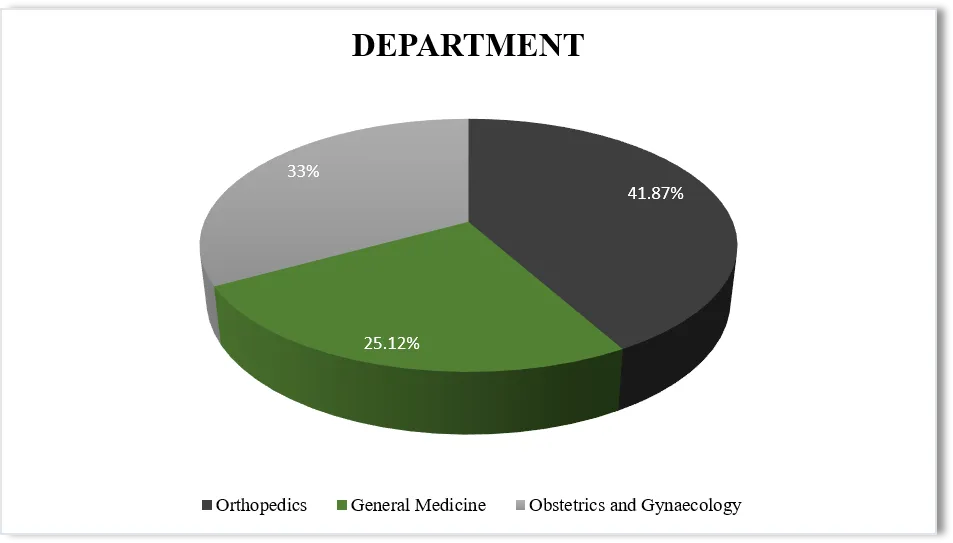
Figure 3.1: Department-wise Distribution of Prescriptions
3.4 Individual NSAIDs prescribed
In this study, several individual NSAIDs were prescribed to patients across various clinical conditions. The most commonly prescribed NSAID was Diclofenac 140(40.58%), accounting for 203 total prescriptions, followed by Acetaminophen 108(31.30%), Aceclofenac 85(24.64%), Mefenamic acid 11(3.19%), Ibuprofen 1(0.29%) (Table no 5.4)
Table 3.4 Individual NSAIDs prescribed
|
NSAIDs given |
No of NSAIDs prescribed |
(Percentage) % |
|
Diclofenac |
140 |
40.58% |
|
Acetaminophen |
108 |
31.30% |
|
Aceclofenac |
85 |
24.64% |
|
Mefenamic acid |
11 |
3.19% |
|
Ibuprofen |
1 |
0.29% |
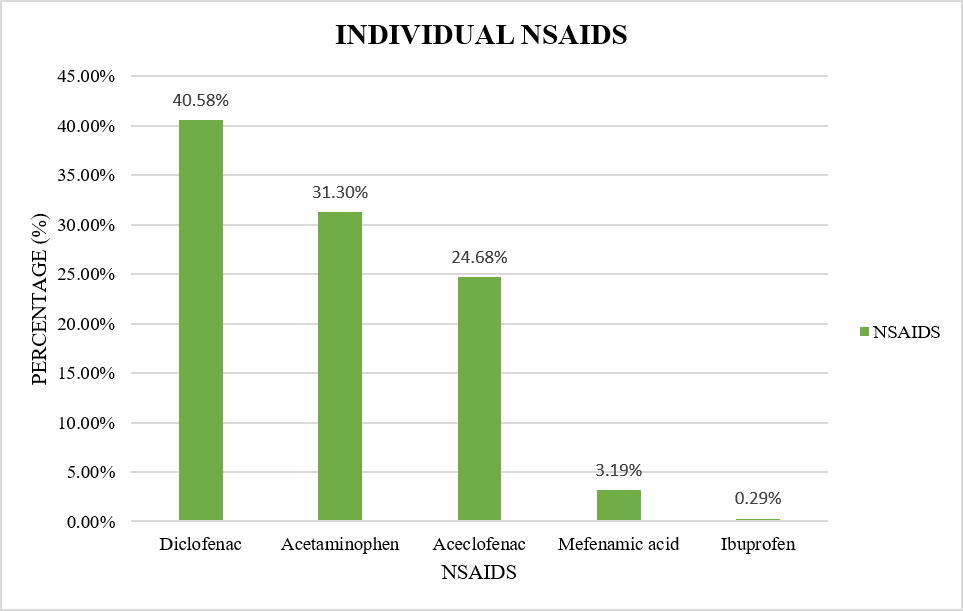
Figure 3.2: Individual NSAIDs prescribed
Among the total NSAID prescriptions analyzed, the parenteral route was the most frequently used, accounting for 62.32% of cases. This was followed by the oral route (37.68%). (Table 5.5)
Table 3.5 NSAIDs Therapy Route Comparison
|
Route of administration |
No of Prescriptions |
Percentage (%) |
|
Oral route |
130 |
37.68% |
|
Parenteral route |
215 |
62.32% |
|
Topical route |
0 |
0% |
|
Total |
345 |
100% |
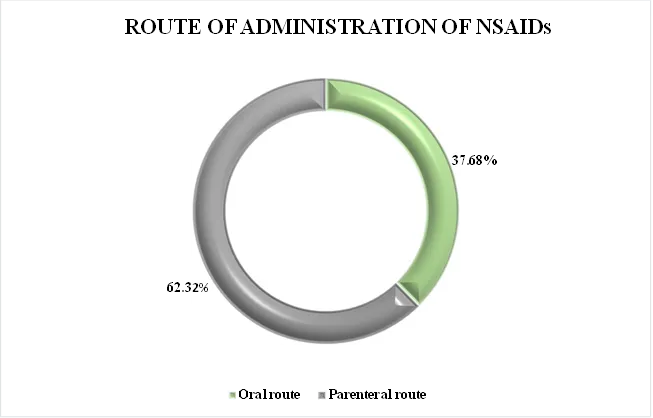
Figure 3.3 NSAIDs Therapy Route Comparison
3.6 Different types of NSAID therapies prescribed
In this study, Monotherapy was the most commonly prescribed NSAID regimen, accounting for 106(52.22%) of the total prescriptions (n=203). Double therapy involving the use of 2 NSAIDs was observed in 51(25.12%) of cases. Triple therapy was observed in 46(22.66%) of cases. (Table 5.6)
Table 3.6 Types of NSAID Therapies Prescribed
|
Types of Therapy |
No of Prescriptions |
% (n=203) |
|
Monotherapy |
106 |
52.22% |
|
Double therapy |
51 |
25.12% |
|
Triple therapy |
46 |
22.66% |
|
Quadruple therapy |
0 |
0% |
|
Total |
203 |
100% |

Figure 3.4 Types of NSAID Therapies Prescribed
3.7 Generic vs Brand name of NSAIDs prescribed
The analysis of prescription patterns showed a significant preference for brand name NSAIDs, with 175(50.72%) of drugs written using brand names. In contrast, only 170 (49.27%) of NSAIDs were written using generic names.
Table 3.7 Generic name versus Brand name NSAID prescriptions
|
|
No of NSAIDs prescribed |
Percentage (%) |
|
Brand Name |
175 |
50.72% |
|
Generic Name |
170 |
49.27% |
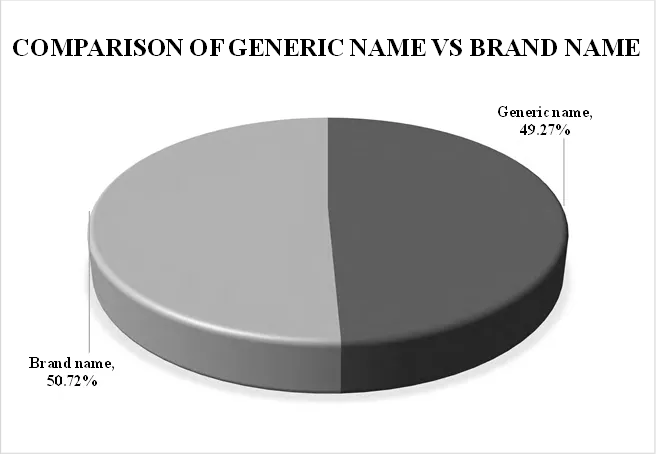
Figure 3.5 Comparison of Generic name vs Brand name of NSAIDs prescribed
3.8 Different Fixed-Dose combinations of NSAIDs
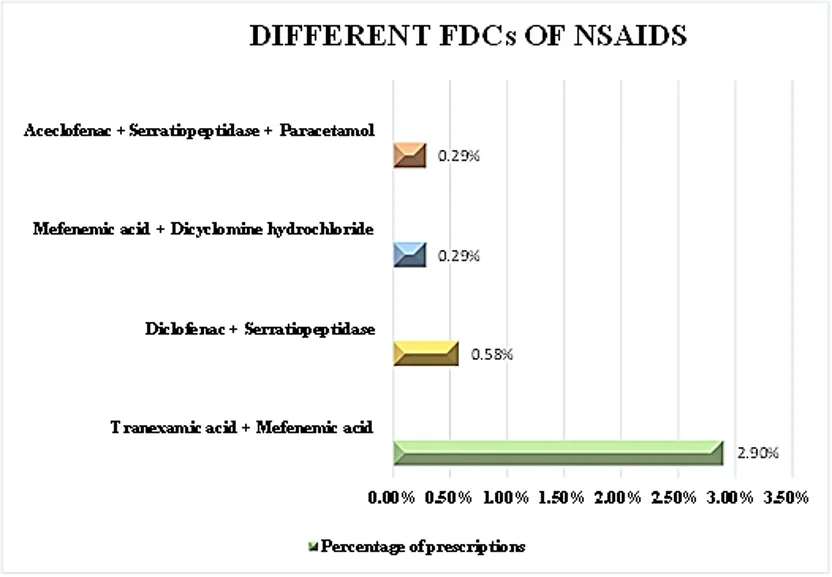
Among the total 345 NSAID drugs analysed, a subset of 14 NSAIDs (4.06%) involved fixed dose combinations (FDCs), with the most commonly prescribed combination being Tranexamic acid + Mefenemic acid, accounting for 2.90% of the total.
Table 3.8 Different FDCs of NSAIDs
|
FDC Combinations |
No of Prescriptions |
Percentage (n=345) |
|
Tranexamic acid + Mefenemic acid |
10 |
2.90% |
|
Diclofenac + Serratiopeptidase |
2 |
0.58% |
|
Mefenemic acid + Dicyclomine hydrochloride |
1 |
0.29% |
|
Aceclofenac +Serratiopeptidase + Paracetamol |
1 |
0.29% |
|
Total |
14 |
4.06% |
3.9 Class of Gastro-protective agents coprescribed
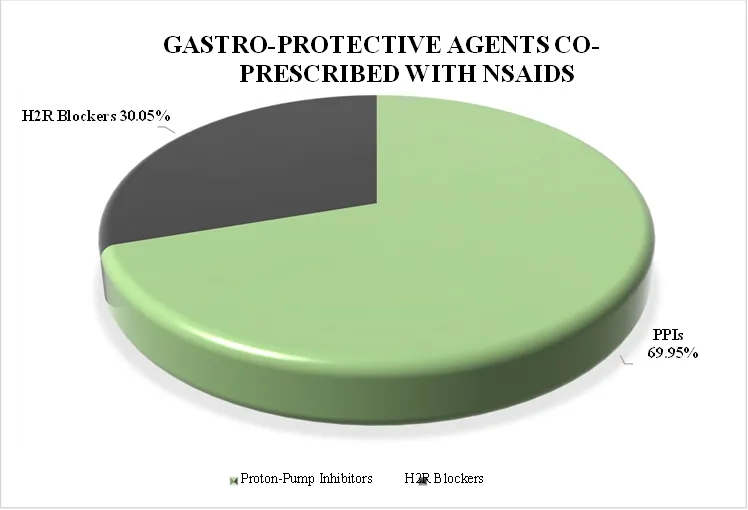
In the present study, the majority of the patients were co-prescribed with gastro-protective agents along with NSAIDs, out of which 69.95% were prescribed with proton pump inhibitors and 30.05% with H2 receptor blockers.
Table 3.9 Class of Gastro-protective agents co-prescribed with NSAIDs
|
Class of Gastro-protective agents |
Number of GPA drugs prescribed |
Percentage (%) |
|
Proton-Pump Inhibitors |
142 |
69.95% |
|
H2 Receptors Blockers |
61 |
30.05% |
|
Total |
203 |
100% |
3.10 WHO Core Prescribing Indicators
The average number of NSAIDs per encounter was 1.7, while the average number of drugs per encounter was 8.12. NSAIDs were prescribed in 100% of encounters. The proportion of encounters in which an NSAID injection was prescribed was 79.80%. Non-Selective NSAIDs were prescribed in 73.89% of encounters, while no prescriptions for COX-2 Selective NSAIDs were observed. Only 49.27% of NSAIDs were prescribed by their generic name. A majority (95.07%) of NSAID prescriptions were from the National List of Essential Medicines (NLEM). Fixed-dose combinations of NSAIDs accounted for 6.9% of prescriptions, while gastroprotective agents were co-prescribed with NSAIDs in 99.51% of encounters.
Table 5.10 WHO core prescribing indicators
|
WHO Indicators (n=203) |
Results |
|
Average of NSAIDs per encounter |
1.7 |
|
Average number of drugs per encounter (n=203 ) |
8.12 |
|
Percentage of encounters with NSAIDs prescribed |
100% |
|
Percentage of encounters with an injection of NSAID prescribed |
79.80% |
|
Percentage of encounters with Non-Selective NSAID prescribed |
73.89% |
|
Percentage of encounters with COX-2 Selective NSAID prescribed |
0% |
|
Percentage of NSAIDs by Generic names |
49.27% |
|
Percentage of encounter with NSAIDs prescribed from NLEM |
95.07% |
|
Percentage of encounter with Fixed-dose combination of NSAIDs prescribed |
4.06% |
|
Percentage of encounters with NSAIDs and Gastro-protective agents co-prescribed |
100% |
DISCUSSION
NSAIDs are widely prescribed for the management of pain, inflammation and fever. However their use requires careful consideration because inappropriate prescribing may contribute to polypharmacy and unnecessary exposure to injectable formulations. In the present study, NSAID prescribing patterns were evaluated using the WHO Core Prescribing Indicators to identify areas requiring improvement in rational prescribing practices.
A total of 203 patient encounters were analyzed. Females (63.54%) accounted for a higher proportion of encounters than males (36.45%), which is consistent with findings from Jayakumari et al..4 The 18-29 year age group represented the large proportion of the study population, consistent with the findings of Carina Monteiro et al.13 Department-wise, Orthopaedics accounted for the highest NSAID-containing encounters (41.87%), followed by Obstetrics and Gynaecology (33%) and General Medicine (25.12%). The predominance in Orthopaedics may be attributable to the frequent use of NSAIDs for musculoskeletal pain, trauma, and postoperative conditions, with the observations of Anandhan et al.12
In our study, diclofenac was the most frequently prescribed NSAID (40.58%), followed by paracetamol (31.30%). A similar prescribing pattern was reported by Byndoor et al.,14 in which diclofenac accounted for more than one-third of the total NSAID prescriptions.
The parenteral route accounted for 62.32% of all NSAID prescriptions, compared with 37.68% administered orally. The finding was consistent with the observations of Inamdar et al.,2 and may reflect the acute and inpatient nature of the study population, where parenteral therapy may be preferred when rapid analgesic effect is required or oral administration is not feasible. Injectable NSAIDs were prescribed in 79.80% of encounters, which was higher than the WHO’s reference range of 13–24%. This relatively high use may be partly attributable to the substantial proportion of post-operative and orthopaedic patients in the study population.
The majority of prescriptions contained a single NSAID (106;52.22%), which was similar to the findings reported by Farheen H et al.15
A slight predominance of brand-name prescribing was observed, with 175(50.72%) of NSAID prescriptions written by brand name, compared with 170(49.27%) prescribed by generic name. This finding was comparable to that reported by Khoshroz Samad et al.,16
In the present study, fixed-dose combinations (FDCs) of NSAIDs accounted for 14(4.06%) of total NSAID prescriptions, which was lower than the proportions reported in several other studies. The most frequently prescribed FDC was tranexamic acid + mefenamic acid (2.9%), followed by diclofenac + serratiopeptidase (0.58%), mefenamic acid + dicyclomine hydrochloride (0.29%), and aceclofenac + serratiopeptidase + paracetamol (0.29%), while Kandasamy et al.,9 reported aceclofenac + paracetamol to be more prevalent. In summary, while the overall proportion of NSAID FDC prescriptions in this study is much lower than in other published reports, the specific combinations used reflect speciality-driven needs, local availability, and prescriber preferences.
Gastroprotective agents were co-prescribed with nearly all encounters (100%), with proton pump inhibitors (69.95%) and H₂ receptor blockers (30.05%). This finding was similar to that reported by S. Kumar et al.17 This high rate of gastroprotective co-prescription may reflect the routine use of gastroprotection alongside NSAID therapy in the study setting, particularly given the potential for NSAID-associated gastrointestinal adverse effects.
The average number of drugs per encounter was 8.12, which was higher than the WHO standard (1.6–1.8) and also greater than 4.6 reported by Inamdar et al.,2 (2022), indicating substantial polypharmacy among the study population. The average number of NSAIDs per encounter was 1.7, compared with 1.36 reported by Inamdar et al.,2 indicating a higher average number of NSAIDs prescribed per encounter in the present study. The percentage of encounters with NSAIDs was 100% in both studies, confirming widespread use of this class. Injectable NSAIDs were prescribed more frequently in our study (79.8%) compared to 70% in Inamdar et al.,2 suggesting stronger reliance on parenteral therapy.
In terms of choice of NSAIDs, our study showed diclofenac (40.58%) as the most common drug, followed by acetaminophen (31.3%) and aceclofenac (24.6%). In contrast, Inamdar et al.2 reported paracetamol (95%) as the dominant drug. Non-selective NSAIDs were predominant in our prescriptions (73.89%), while selective COX-2 use was absent, compared to 2% in their study.
Generic prescribing was better in our study (49.27%) than in theirs (9%), though still below the WHO recommendation of 100%. Adherence to the National List of Essential Medicines was also stronger in our hospital (95.07% vs. 85.7%). Fixed-dose combinations were used sparingly in our study (4.06%), whereas Inamdar et al.,2 observed 19%. Co-prescription of gastroprotective agents was nearly universal in both studies (100% vs. 97%).
Overall, compared with the findings of Inamdar et al.,2 the present study demonstrated a higher average number of drugs and NSAIDs per encounter and greater use of injectable NSAIDs, while generic prescribing and adherence to the NLEM were comparatively higher.
CONCLUSION
This study identified important patterns and areas for improvement in NSAID prescribing in a tertiary care teaching hospital using WHO Core Prescribing Indicators.
High adherence to the National List of Essential Medicines (95.07%) and frequent co-prescription of gastroprotective agents were notable findings. However, substantial polypharmacy, high use of injectable NSAIDs and prescribing by generic name in only 49.27% of NSAID prescriptions indicate opportunities to strengthen rational prescribing practices.
Fixed-dose combinations accounted for 4.06% of NSAID prescriptions, while no selective COX-2 inhibitors were prescribed during the study period. Continuous prescription auditing, clinical education, and adherence to evidence-based prescribing guidelines may help improve NSAID prescribing practices. Further multicentre studies including outpatient populations and clinical outcomes are warranted to provide a broader assessment of NSAID utilization.
ACKNOWLEDGEMENT
The authors express their gratitude to Dr. Nagendra Rao, the principal of SCS College of Pharmacy in Harapanahalli, for the encouragement and significant support received throughout the research.
AUTHOR’S CONTRIBUTION
All the authors have contributed equally in this research.
CONFLICT OF INTEREST
All authors declare that there are no conflicts of interest.
ETHICS DECLARATION
The Institutional Ethics Committee at SCS College of Pharmacy approved the protocol. All residents in the hospital provided with informed consent.
CONSENT FOR PUBLICATION
All authors have provided consent for publication of their work.
COMPETING INTEREST
The authors have confirmed that they have no competing interest.
AUTHOR’S FUNDING
The authors hereby declare that they did not obtain any financial support from any source for the writing, or publication of this article.
REFERENCES

Dr. Santhosh Uttangi, J. S. Venkatesh, Ruban Jose, Sameer Khan N, Yuvaraja H, Evaluation of NSAID Prescription Patterns in a Tertiary Care Teaching Hospital using WHO Prescribing Indicators, Int. J. of Pharm. Sci., 2026, Vol 4, Issue 8, 4973-4984. https://doi.org/10.5281/zenodo.22163374
 10.5281/zenodo.22163374