

We use cookies to ensure our website works properly and to personalise your experience. Cookies policy
1Assistant Professor, Pachamuthu College of Pharmacy, Dharmapuri.
2,3,4,5,6 Pachamuthu College Of Pharmacy, Dharmapuri
Saponins are naturally occurring bioactive compounds found in plants, and they are known for having various health-related benefits. This study aimed to extract, identify, and compare the saponin content in two plants, Bougainvillea and Sansevieria trifasciata, which were collected from the Dharmapuri district in Tamil Nadu, India. The plant samples were first checked to confirm their identity, cleaned, dried in the shade, and then ground into a fine powder for further testing. To extract the plant compounds, the Soxhlet method was employed with an appropriate solvent. This process helped in obtaining concentrated plant extracts. A preliminary check for the presence of saponins was done using standard chemical tests. To separate and identify the saponins, Thin Layer Chromatography (TLC) was used. The TLC plates showed clear spots, and the retention factor (Rf) values were recorded to help in the identification of the saponin compounds. Visual inspection of the TLC plates confirmed that both plants contained saponins. When comparing the TLC results from the two plants, differences were noticed in the intensity and clarity of the spots. The findings suggest that both Bougainvillea and Sansevieria trifasciata contain saponins. However, Sansevieria trifasciata showed more intense and distinct spots, which indicates a higher concentration of saponins in this plant compared to Bougainvillea. Based on these results, the study proposes that Sansevieria trifasciata may be a more suitable natural source of saponins.
Analytical chemistry is a scientific discipline used to study the chemical composition, structure, and behaviour of matter. It involves the application of a range of techniques and methodologies to obtain and assess qualitative, quantitative, and structural information on the nature of matter.
Analytical techniques are chemical or physicochemical processes that provide the basis for analytical measurements and are described as techniques.
The process of separating medicinally active constituents of plant and animal tissues with the help of selective solvents and standard procedures is termed extraction. The process of isolation of soluble material from an insoluble residue, which may be liquid or solid, by treatment with a solvent based on the physical nature of the crude drug to be extracted, i.e., liquid or solid, the extraction process may be liquid—liquid or solid—liquid extraction. Solid-liquid extraction is the process of taking out specific parts from a mix of solids by allowing the solid substance to touch a liquid solvent. The solvent dissolves these specific parts. In this extraction, the components of a liquid mixture are separated by contacting them with a suitable insoluble solvent that preferentially dissolves one or more components. The separation of the components from the liquid mixture depends on how the components distribute themselves between two liquids that don’t mix. In this method, coarsely ground raw drugs are filled inside a porous bag called a thimble. This is then put inside the chamber of the Soxhlet apparatus The Menstruum is heated in the flask. The vapour evolved is then passed through the condenser, where it is condensed. This condensed menstruum is then allowed to drip on the thimble, which contains the raw drug. Just by the contact of the extractant, the extraction is caused The liquid content in the chamber will syphon into the flask when the level of the syphon tube reaches the top Continually, this process is carried out until a drop of solvent from the syphon tube evaporates without leaving any residue With this method, a much smaller amount of solvent is needed to extract large quantities of the drug, which gives it an advantage over the previously described method.
Phytochemicals (Greek: phyton = plant) are chemical compounds naturally present in plants attributing to positive or negative health effects. Medicinal plants used in different diseases and ailments are the richest biorepositories of various phytochemicals. The medicinal properties of the plants are determined by the phytochemical constituents. Some of the important phytochemicals include alkaloids, flavonoids, phenolics, tannins, saponins, steroids, glycosides, terpenes, etc., which are distributed in various parts of the plants.
Chromatography is the separation of mixtures by distribution between two or more immiscible phases. In chemical laboratories, where it is used for analysis, isolation, and purification, chromatography is the most commonly used separation technique. It is also frequently used in the chemical process industry as a part of small and large-scale production. Chromatography is a technique used to affect the separation of two or more dissolved solids contained within a solution in very small quantities.
Plant profile:
Sansevieria Trifasciata:
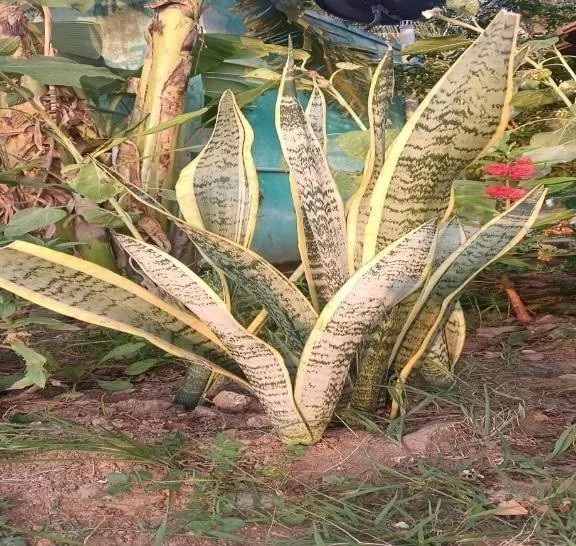
Taxonomy:
Kingdom : Plantae
Division : Angiosperms
Class : Monocotyledons
Order : Asparagales
Family : Asparagaceae
Subfamily : Nolinoideae
Genus : Sansevieria
Synonyms:
Malayalam : Vazhathiri, Naagadrona
English : Snake Plant, Mother-in-Law’s Tongue
Sanskrit : Nagadroṇa, Sarpapatra
Geographical source:
Sansevieria Trifasciata : Native to West Africa.
Sansevieria Roxburghiana : Found in India and Sri Lanka.
Chemical Constituents:
Flavonoids, tannins, saponins, alkaloids, glycosides, steroids, and phenolic compounds.
Pharmacological Activities:
Antibacterial, Antioxidant, Anti-Inflammatory, Analgesic, Anti-Inflammatory,
Cyto-Toxic, Antiulcer, Air-Purifier, Insecticide, Treatment of Callosities of Fingers, Toes, Anti-Diabetic.
Bougainvillea:
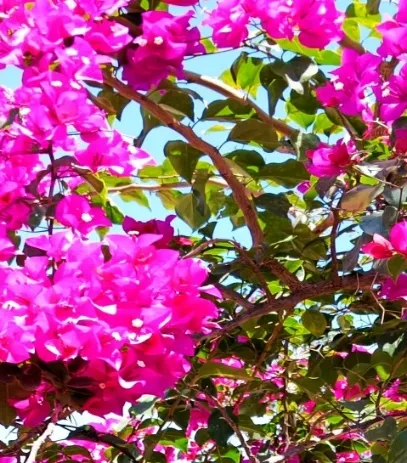
Taxonomy:
Kingdom : Plantae
Subkingdom : Tracheobionta
Superdivision : Spermatophyta
Division : Magnoliophyta
Class : Magnoliopsida
Subclass : Caryophyllidae
Order : Caryophyllales
Family : Nyctaginaceae
Genus : Bougainiville
Synonyms:
Buganvilla (Spain), Bugambilia (Mexico, Guatemala, Cuba, and the Philippines), Pokok bunga kertas (Malaysia), Napoleon´ (Honduras), Veranera (Colombia, Nicaragua, El Salvador, Costa Rica, and Panama).
Chemical constituents:
Pinitol, Squalene, triterpenoid , D-pinitol, Carrageenan, g-glutamyl cysteinyl glycine, Anthraquinones, triterpenoids, and saponins .
Pharmacological Activities:
Analgesic, Anti-Inflammatory, Antipyretic, Antidiabetic, Antihyperlipidemic,
Anti-diarrhoeal.
Materials & Methods:
Collection and authentication of plant material:
Plant material: The aerial parts (leaves and stems) of Bougainvillea and Sansevieria trifasciata were collected from the Dharmapuri district. The collected plant materials were authenticated by a qualified botanist, and an authentication certificate was obtained. The plants were collected in fresh and healthy condition. After collection, the plant materials were thoroughly washed with distilled water to remove dust and other impurities.
Preparation of powder: The collected plant materials were shade-dried at room temperature for several days until complete drying was achieved. The dried plant materials were then coarsely powdered using a mechanical grinder and sieved through a sieve with a number. 85
Extraction:
Solvent selection: Methanol was used as the extraction solvent based on the expected phytochemical constituents present in Bougainvillea and Sansevieria trifasciata plants.
Extraction method: Perform the extraction using the techniques of Soxhlet extraction.
Concentration: Evaporate the solvent to obtain a concentrated extract.
Phytochemical screening:
Chemical test for Sansevieria trifasciata and Bougainvillea plant extract:
Test for Saponins (Froth test): Take 2 mL of each aqueous extract in a test tube, then add 5 mL of distilled water. The mixture was shaken vigorously and observed for the formation of persistent foam, which confirms the presence of saponins.
Test for Flavonoids (Alkaline reagent test): A small amount of each aqueous extract is added to a test tube, then 2 ml of 2% NaOH solution is added. A yellow colouration indicates the presence of flavonoids.
Test for Tannins (Lead acetate test): Take 1 ml of each extract in a test tube, then add 10% lead acetate solution. A white or yellow precipitate indicates the presence of tannins.
Test for Glycosides (keller- killiani test): A small amount of each extract is added to a test tube, then add glacial acetic acid, ferric chloride and concentrated sulphuric acid. A brown ring at the interface indicates the presence of glycosides.
Test for Triterpenoids (Salkowski test): Take 1 ml of each extract in a test tube, then add chloroform and mix well. Then concentrated sulphuric acid was added to a mixture. A red or reddish brown colouration indicates the presence of triterpenoids.
TLC Plate Preparation:
Plate Selection: Choose a suitable silica gel TLC plate (e.g., 60 GF254).
Sample Application: Apply a known volume of the plant extract to the plate using a Micropipette.
Mobile Phase Selection:
For the Sansevieria trifasciata plant: Chloroform : Methanol : Water 65 : 35 : 10
For the Bougainvillea plant: Chloroform : water 10 : 1
TLC Fingerprint Analysis: Chromatographic Development: Develop the TLC plate in the chosen mobile phase until the solvent front reaches a predetermined distance.
Visualization: The separated components of Bougainvillea and Sansevieria trifasciata were visualized using 10% sulphuric acid reagent on the TLC plate.
Rf value calculation: The retention factor (Rf) of the major spots was evaluated to determine the optimal mobile phase for separation.
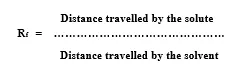
Report and Result: Assess the ability of the method to differentiate between the Sansevieria trifasciata and Bougainvillea plant.
Result and Discussion:
|
S.no |
Experiment |
Observation |
Inference |
|
1 |
Take 2 mL of each aqueous extract in a test tube, then add 5 mL of distilled water. The mixture was shaken vigorously. |
Formation of persistent foam. |
Presence of Saponins. |
|
2 |
A small amount of each aqueous extract is added to a test tube, then 2 ml of 2% NaOH solution is added. |
A yellow colour is formed. |
Presence of Flavonoids. |
|
3 |
Take 1 ml of each extract in a test tube, then add 10% lead acetate solution. |
A white or yellow precipitate is formed. |
Presence of Tannins. |
|
4 |
A small amount of each extract is added to a test tube, then add glacial acetic acid, ferric chloride and concentrated sulphuric acid. |
A brown ring at the interface is formed. |
Presence of Glycosides. |
|
5 |
Take 1 ml of each extract in a test tube, then add chloroform and mix well. Then concentrated sulphuric acid was added to a mixture. |
A red or reddish brown colouration is formed. |
Presence of Triterpenoids. |
Chemometric analysis:
Chemometric analysis successfully determined the various chemical compounds in the Sansevieria trifasciata and Bougainvillea plant.
TLC Analysis:
For the Sansevieria trifasciata sample:
|
S.NO |
SAMPLE |
Rf VALUE |
|
1 |
Sample 1 |
4.2/6.2 = 0.67 |
|
2 |
Sample 2 |
3.5/5.9 = 0.59 |
|
3 |
Sample 3 |
2.2/6.7 = 0.32 |
The TLC analysis determines the various Rf values, in which Sample 2 shows a value of 0.59, which is close to the standard value of 0.60.
For the Bougainvillea sample:
|
S.no |
Sample |
Rf value |
|
1 |
Sample 1 |
3.5/6 = 0.58 |
|
2 |
Sample 2 |
3.2/7 = 0.45 |
|
3 |
Sample 3 |
3/5.5 = 0.54 |
The TLC analysis determines the various Rf values, in which Sample 1 shows a value of 0.58, which is close to the standard value of 0.60.
CONCLUSION :
The present study focused on the extraction and identification of saponins from Bougainvillea and Sansevieria trifasciata plants collected from the Dharmapuri district. The extraction was carried out using the Soxhlet extraction method, followed by phytochemical screening and Thin Layer Chromatography (TLC) analysis for confirmation. The phytochemical tests indicated the presence of saponins in both plant extracts. The TLC analysis further confirmed the presence of saponins by showing distinct and well-resolved spots with characteristic Rf values. On comparison of the chromatographic results, Sansevieria trifasciata exhibited higher intensity spots than Bougainvillea, indicating a comparatively higher saponin content. Therefore, Sansevieria trifasciata may be considered a more promising natural source of saponins and could be utilized for further pharmacological studies and potential pharmaceutical applications.
REFERENCES






R.Kavya*, K.Sakthivel, G. Suseendharan,G.Thirumalaivasan,T.Roshini,G.Revathy, Extraction And Identification Of Saponins From Bougainvillea And Sansevieria Trifasciata By Phytochemical Screening And Chromatographic Techniques, Int. J. of Pharm. Sci., 2026, Vol 4, Issue 7, 4495-4502. https://doi.org/ 10.5281/zenodo.21491629
 10.5281/zenodo.21491629