

We use cookies to ensure our website works properly and to personalise your experience. Cookies policy
Research Scholar*, Department of Pharmacy, Quantum School of Health Science, Quantum University
Roorkee, Roorkee-Dehradun Highway, Mandawar, Uttarakhand, India
Assistant Professor1, Department of Pharmacy, Quantum School of Health Science, Quantum University
Roorkee, Roorkee-Dehradun Highway, Mandawar, Uttarakhand, India
Metronidazole (MTZ), a cornerstone antimicrobial agent for treating anaerobic bacterial and protozoal infections, faces significant therapeutic hurdles in the upper gastrointestinal tract (GIT). Conventional oral formulations suffer from a short gastric residence time and variable absorption, leading to suboptimal efficacy against conditions like Helicobacter pylori infections. This review comprehensively explores the development of MTZ-loaded floating microballoons using sodium alginate—a biodegradable, biocompatible polymer—as a primary matrix former. The fundamental principle behind these systems is achieving density lower than gastric fluids (<1 g/mL) through an effervescent mechanism, often using sodium bicarbonate as a gas-generating agent. Key formation parameters, including polymer concentration, cross-linker type and concentration, and drug-to-polymer ratio, significantly influence the critical performance attributes: particle morphology, drug entrapment efficiency (>90% in optimized systems), floating lag time (as low as 2 seconds), and sustained in vitro drug release over 24 hours. The successful development of such systems, validated through rigorous characterization (SEM, FTIR, in vitro dissolution, ex vivo mucoadhesion), demonstrates a promising strategy to enhance localized gastric therapy, thereby improving patient compliance and therapeutic outcomes for GIT diseases.
Metronidazole (MTZ), a 5-nitroimidazole derivative, stands as a cornerstone antimicrobial agent in the treatment of anaerobic bacterial and protozoal infections. Its clinical applications span bacterial vaginosis, trichomoniasis, amoebiasis, and most critically, its role as a key component in combination regimens against Helicobacter pylori (H. pylori)—the primary etiological agent of peptic ulcers and gastric cancers. However, conventional oral MTZ formulations face a fundamental therapeutic hurdle: the drug's primary absorption window and site of action lie in the upper gastrointestinal tract, yet standard dosage forms undergo rapid gastric emptying, resulting in suboptimal drug concentrations at the gastric mucosa. This limitation necessitates frequent high-dose administration, increasing the risk of systemic side effects and compromising patient compliance.
Gastroretentive drug delivery systems (GRDDS) have emerged as a strategic solution to overcome these limitations. Among GRDDS, floating drug delivery systems (FDDS) are particularly promising, as they are designed to possess a density lower than gastric fluids (< 1 g/mL), allowing the dosage form to remain buoyant in the stomach for extended periods while releasing the drug in a controlled manner at the target site. Sodium alginate, a natural anionic polysaccharide derived from brown seaweed, has garnered significant interest in this domain due to its exceptional gelling properties under mild conditions. It forms a stable three-dimensional hydrogel matrix via ionic cross-linking with divalent cations such as Ca²⁺.
This review provides a comprehensive synthesis of current literature on the formation and characterization of MTZ-loaded floating microballoons utilizing sodium alginate as the primary polymer, intending to identify the current state of knowledge, methodological approaches, key findings, research gaps, and future directions in this field.
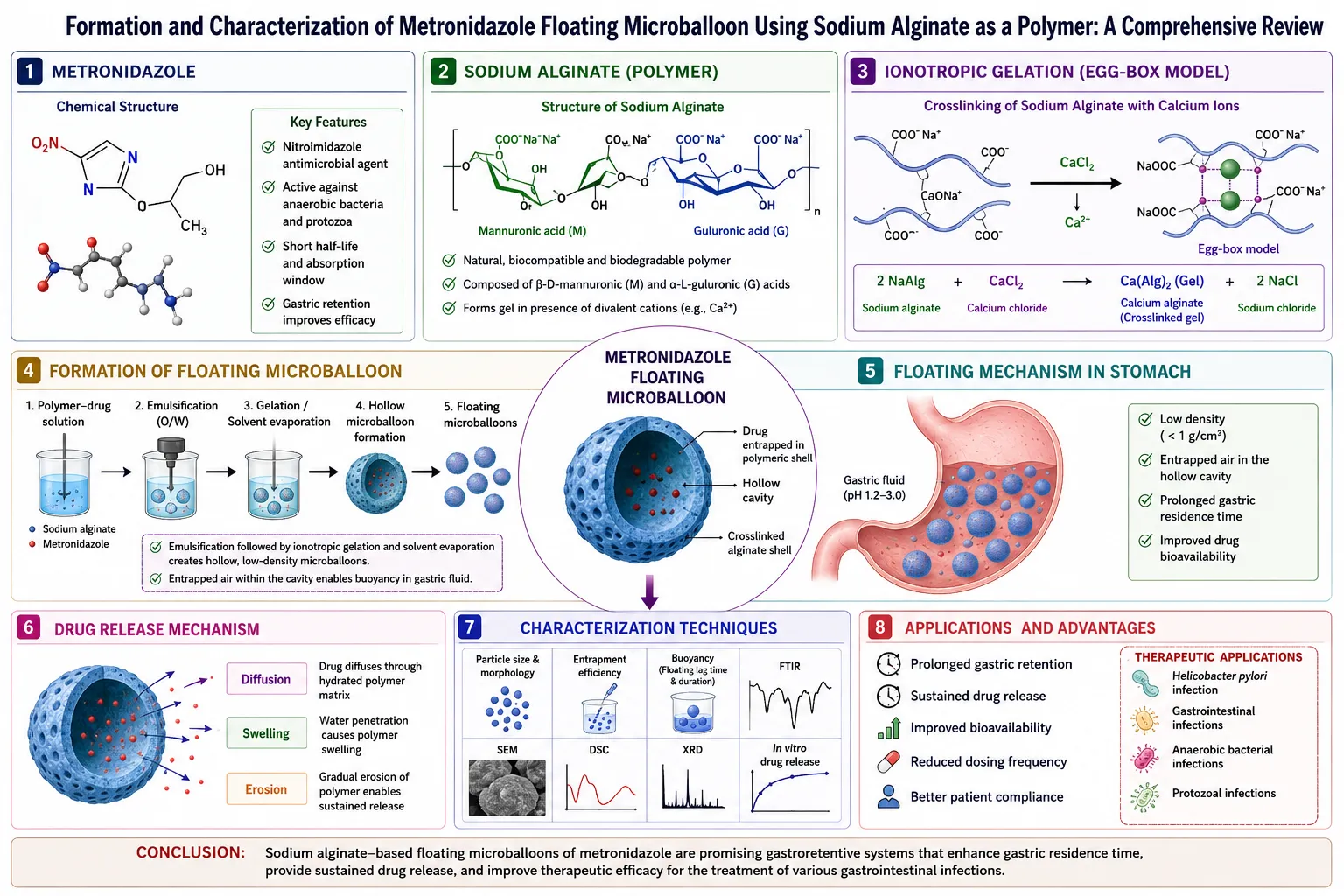
Figure 1. Schematic Representation of Preparation, Floating Mechanism, Drug Release, and Characterization of Metronidazole Sodium Alginate Floating Microballoons
3. Formation of Sodium Alginate-Based Floating Micro balloons
The preparation of MTZ-loaded floating microballoons primarily exploits the ionic gelation property of sodium alginate. This technique is favored for its simplicity, speed, and avoidance of harsh organic solvents.
3.1. The Core Principle: Ionic Gelation and Effervescence
The process typically involves dissolving sodium alginate and the drug (MTZ) in distilled water. A gas-forming agent, such as sodium bicarbonate (NaHCO₃), is incorporated into this polymer-drug solution. This solution is then extruded dropwise into a cross-linking bath containing a divalent cation solution, most commonly calcium chloride (CaCl₂).
Upon contact, Ca²⁺ ions diffuse into the alginate droplets, replacing the sodium ions and forming stable ionic bridges between the alginate’s guluronic acid blocks. This cross-linking immediately transforms the liquid droplets into spherical gel beads. Simultaneously, the acidic environment of the cross-linking bath or the simulated gastric fluid (SGF) triggers the NaHCO₃ to generate carbon dioxide (CO₂) gas. This gas is entrapped within the gelling alginate matrix, forming internal hollow cavities that reduce the overall density of the beads, thereby granting them buoyancy.
3.2. Formulation Variables and Their Impact
Several critical parameters influence the physical and drug-release properties of the final Micro balloons:
4. Characterization of the Floating Microballoons
A systematic characterisation is essential for evaluating the performance and quality of the formulated floating systems.
4.1. Physical Characterisation
The microballoons are examined visually and microscopically. They are generally described as spherical and discrete particles, as reported in multiple studies. Particle size is a critical attribute, as it influences drug release and handling. Formulations prepared with sodium alginate and other polymers (e.g., cassava starch) have yielded sizes ranging from 1.52 to 2.23 mm.
4.2. Buoyancy Studies
This is the defining test for FDDS, comprising two key parameters:
MTZ-alginate systems have demonstrated exceptional performance in this regard. Depending on the formulation, FLT can take less than 5 minutes, while TFT can extend beyond 19 hours. Some optimized formulations have achieved even more remarkable results, with an FLT of just 2 seconds and a TFT exceeding 24 hours.
4.3. Drug Entrapment and Loading Efficiency
Drug entrapment efficiency (DEE) is the percentage of the initial drug successfully incorporated into the microballoons. This value is influenced by polymer concentration and the cross-linking process. Reported DEE for MTZ-alginate systems varies. While some formulations have shown moderate efficiencies between 42–60%, optimized systems incorporating additional components like carboxymethyl alginate (CMA) have achieved very high DEEs of up to 91.08%.
4.4. In Vitro Drug Release
The ultimate goal of FDDS is to provide a controlled, sustained release of the drug. In vitro dissolution studies are typically conducted in simulated gastric fluid (0.1 N HCl, pH 1.2) or phosphate buffer (pH 7.4) using USP apparatus (e.g., paddle method at 37°C).
The studies consistently show that MTZ release from alginate-based microballoons is sustained over a long period. For instance, a formulation using cassava starch and alginate provided controlled release of MTZ for up to 18 hours. Another study demonstrated that increasing the concentration of sodium alginate in the formulation leads to a decrease in the drug release rate. This sustained release behavior is crucial for reducing dosing frequency and maintaining therapeutic drug levels at the infection site for extended periods.
5. Comprehensive Review of Methods
5.1 Selection of Metronidazole as a Model Drug
The selection of MTZ for GRDDS is justified by several intrinsic properties. The drug's absorption window is primarily in the upper GIT, making prolonged gastric retention highly advantageous for enhancing bioavailability. Furthermore, for treating gastric infections—specifically H. pylori, which colonizes the gastric mucosa—a localized delivery system ensures drug release precisely where it is needed, potentially improving bacterial eradication rates. The drug's stability in acidic gastric conditions further supports a gastric-retentive approach.
5.2 Polymer Selection: Sodium Alginate
Sodium alginate is a linear, unbranched copolymer composed of β-D-mannuronic acid (M) and α-L-guluronic acid (G) residues linked via 1→4 glycosidic bonds. Its gel-forming capacity arises from ionic interactions between the carboxylic groups of guluronic acid blocks and divalent cations (typically Ca²⁺), which form stable "egg-box" junction zones. This ionic gelation process is rapid, occurs under mild conditions without organic solvents, and is highly reproducible—characteristics that make alginate an ideal matrix former for floating micro balloons. Additionally, alginate is biocompatible, biodegradable, and mucoadhesive, properties that further enhance its suitability for gastric applications.
5.3 The Ionotropic Gelation Method
The most widely reported method for preparing MTZ-loaded floating microballoons is the ionotropic gelation (ionic gelation) method, also referred to as the orifice gelation technique. This technique is favored for its simplicity, cost-effectiveness, avoidance of harsh organic solvents, and scalability.
Standard Protocol: The typical procedure involves dissolving sodium alginate (varying concentrations, generally 1–5% w/v) and MTZ in distilled water, followed by the incorporation of a gas-forming agent—most commonly sodium bicarbonate (NaHCO₃)—at concentrations typically around 2% w/w of the polymer. This homogeneous solution is then extruded dropwise through a syringe needle into a cross-linking bath containing a divalent cation solution, most frequently calcium chloride (CaCl₂), at concentrations such as 2% w/v. Upon contact, Ca²⁺ ions diffuse into the alginate droplets, replacing sodium ions and forming stable ionic bridges between the alginate's guluronic acid blocks. This cross-linking process instantaneously transforms the liquid droplets into spherical gel beads. Simultaneously, the acidic environment of the cross-linking bath or the simulated gastric fluid triggers NaHCO₃ decomposition to generate carbon dioxide (CO₂) gas. This gas is entrapped within the gelling alginate matrix, forming internal hollow cavities that reduce the overall density of the beads, thereby conferring buoyancy.
Emulsion-Gelation Alternative: Recent studies have explored the emulsion–gelation method as an alternative strategy for developing MTZ buoyant multiparticulate systems. In this approach, the polymer-drug solution is emulsified in a continuous oil phase (e.g., liquid paraffin) prior to cross-linking. Optimized beads prepared by emulsion–gelation using 3% alginate, 1% CaCl₂, and 20% oil exhibited uniform spherical morphology with a mean particle size of 2.3 ± 0.1 mm and high entrapment efficiency of 90.2 ± 1.8%. The floating lag time was less than one minute, with sustained floating exceeding 12 hours. This method offers advantages for producing smaller, more uniform particles compared to conventional dropwise extrusion.
5.4 Formulation Variables
The critical process parameters that influence the properties of the final microballoons can be systematically categorized:
Polymer Concentration: Sodium alginate concentration is a primary determinant of bead viscosity, size, and cross-linking density. Higher alginate concentrations typically yield larger, more robust beads with higher drug entrapment efficiency. However, they may also lead to a denser matrix that can slow drug release. Studies on MTZ floating pellets have demonstrated that increasing sodium alginate concentration decreases drug release rates.
Cross-Linker Concentration: The concentration of CaCl₂ in the gelling bath affects the rigidity of the alginate matrix. Higher CaCl₂ concentrations lead to faster and more extensive cross-linking, resulting in a denser polymer network.
Gas-Forming Agent: The amount of NaHCO₃ directly influences buoyancy characteristics. An optimal concentration is necessary to achieve a desirable floating lag time (FLT) and total floating time (TFT) without compromising the structural integrity of the beads.
Polymer Blends and Additives: To modulate drug release and enhance gastric retention, various polymers and additives have been incorporated alongside alginate:
5.5 Characterization Techniques
A comprehensive characterization protocol is essential for evaluating the quality and performance of floating microballoons:
Physical Characterisation:
Microballoons are examined visually and microscopically for shape, surface morphology, and particle size distribution. Scanning electron microscopy (SEM) reveals surface topography and internal porous structure.
Buoyancy Studies:
Two critical parameters are assessed:
Floating Lag Time (FLT): The time for micro balloons to rise to the surface after placement in dissolution medium.
Total Floating Time (TFT): The total duration of buoyancy.
Reported values vary with formulation. Microspheres prepared with cassava starch and alginate exhibited FLT < 5 minutes and sustained buoyancy > 19 hours. The optimized floating raft system by Patel et al. (2025) achieved a floating lag time of just 16 seconds and a total floating time exceeding 24 hours.
Drug Entrapment Efficiency (DEE):
DEE varies considerably based on formulation parameters. Cassava starch-alginate microspheres showed a DEE of 42–60%. Crosslinked alginate beads achieved encapsulation up to 79.17%. The carboxymethyl alginate-based floating raft system by Patel et al. demonstrated an exceptional drug loading efficiency of 91.08%.
In Vitro Drug Release:
Dissolution studies are typically conducted in simulated gastric fluid (0.1 N HCl, pH 1.2) or phosphate buffer (pH 7.4) at 37°C using the USP apparatus. The cassava starch-alginate microspheres provided controlled release of metronidazole for up to 18 hours. The emulsion-gelation-optimised beads showed approximately 70% release at 8 hours and 91.5% at 12 hours, with kinetic analysis indicating drug release followed the Higuchi model (R² = 0.989) with non-Fickian diffusion, suggesting a combination of diffusion and matrix erosion mechanisms.
Instrumental Characterization:
Studies have confirmed that MTZ remains relatively stable and amorphous within alginate beads following encapsulation.
5.6 Advanced Systems: The Double Target Strategy
A significant recent advancement is the "double target strategy" reported by Patel et al. (2025), which developed a carboxymethyl alginate-based floating raft system designed to create interpenetrating polymer networks (IPN) with ionic gelation. This system combines temporal and spatial methodologies for drug release, meaning it targets the drug to a specific part of the organ (stomach) spatially, while the release is temporally controlled. The optimized formulation exhibited a short gelation lag time (14 seconds), long duration (> 24 hours), floating lag time of 16 seconds, total floating time > 24 hours, raft resilience > 4 hours, and drug loading efficiency of 91.08%. Importantly, this system was more effective against stomach infections, E. coli, and S. aureus than commercially available metrogyl® and Gaviscon® suspensions.
6. Summary of Key Outcomes
A systematic review of the literature reveals several consistent outcomes regarding MTZ floating Micro balloons formulated with sodium alginate:
1. Successful Buoyancy Achievement: All reported formulations have successfully achieved buoyancy, with FLT ranging from as low as 2 seconds to less than 5 minutes, and TFT ranging from > 12 hours to > 24 hours, depending on formulation variables.
2. Drug Release Profiles: MTZ release from alginate-based floating systems is sustained and controlled. Higher polymer concentrations generally retard drug release, while the inclusion of hydrophilic polymers like cassava starch accelerates release.
3. Modulation Capability: Formulation properties (particle size, DEE, swelling, floating behavior, and drug release) can be systematically modulated by varying polymer concentration, cross-linker concentration, gas-generator content, and inclusion of co-polymers.
4. Polymer Blends Enhance Performance: Combining alginate with natural polymers such as cassava starch, psyllium husk, guar gum, or Terminalia mantaly gum improves mucoadhesion, modulates release rates, and enhances overall system performance.
5. Advanced Systems Show Superior Results: The double target strategy with IPN formation has demonstrated the highest reported performance metrics: > 24-hour gastric retention, > 90% drug entrapment, and superior antimicrobial activity compared to commercial products.
7. Research Gaps
Despite the considerable progress made in the development of MTZ floating Micro balloons using sodium alginate, several research gaps persist:
1. In Vivo Correlation: The vast majority of reported studies have been conducted in vitro. Limited data exist on the in vivo performance of these systems, including actual gastric residence time, bioavailability enhancement, and therapeutic efficacy in animal models or human subjects. The study by Diós et al. (2015) using X-ray CT demonstrated 8-hour gastroretention in rats, but comprehensive pharmacokinetic-pharmacodynamic correlation remains lacking.
2. Scale-Up Feasibility: Laboratory-scale formulations have been successfully developed, but systematic investigations into industrial scalability, reproducibility across batches, and manufacturing cost-effectiveness are notably absent.
3. Long-Term Stability: Few studies have systematically evaluated the long-term physical and chemical stability of these formulations under ICH-guided storage conditions (accelerated and real-time stability studies).
4. Mucoadhesion Quantification: While mucoadhesive properties have been qualitatively assessed, standardized, quantitative methods for evaluating mucoadhesion strength relative to gastric mucus under dynamic conditions are needed.
5. Drug Release from Different Polymer Combinations: The effects of various co-polymers have been studied individually, but systematic factorial optimization studies examining multiple polymer combinations simultaneously are limited.
6. Multi-Drug Delivery Systems: Given that H. pylori eradication typically requires combination therapy (e.g., MTZ with amoxicillin or clarithromycin), the development of floating Micro balloons capable of delivering multiple drugs with synchronized release profiles remains underexplored.
7. Mechanistic Understanding of Drug Release: While kinetic models have been applied (Higuchi, Korsmeyer-Peppas), the detailed mechanisms governing drug release—particularly the contributions of polymer erosion vs. diffusion under simulated gastric conditions—warrant deeper investigation.
8. Future Scope
The following directions represent promising avenues for future research on MTZ floating Micro balloons:
1. Comprehensive In Vivo Studies: Future research should prioritize in vivo evaluation using appropriate animal models, including pharmacokinetic studies to quantify bioavailability enhancement, gamma scintigraphy or X-ray imaging to visualize gastric residence, and pharmacodynamic studies to assess therapeutic efficacy against H. pylori infections.
2. 3D Printing and Personalized Medicine: The integration of 3D printing technologies (as recently explored for other floating devices)could enable the creation of patient-specific floating Micro balloons with pre-determined drug release profiles tailored to individual patient needs.
3. Ligand-Targeted Delivery: Conjugation of targeting ligands (e.g., lectins, antibodies specific to H. pylori surface antigens, or urease-targeting molecules)to alginate Micro balloons could further enhance localized therapy by promoting specific binding to the gastric mucosa or the bacteria themselves.
4. Multi-Drug Co-delivery Systems: Developing floating Micro balloons that co-deliver MTZ with other anti-H. pylori agents (e.g., amoxicillin, clarithromycin, or bismuth salts)at optimized ratios, with synchronized or sequential release profiles, represents a clinically relevant advancement.
5. Smart/Stimuli-Responsive Systems: Exploration of pH-responsive or enzyme-responsive polymers that can trigger drug release in response to specific gastric conditions or bacterial presence could further improve therapeutic precision.
6. Biopolymer Exploration: Continued investigation of novel, cost-effective, locally available natural gums and biopolymers in combination with sodium alginate could expand the formulation toolbox, particularly for resource-limited settings.
7. Quality by Design (QbD)Approaches: Systematic application of QbD principles using design of experiments (DoE)and multivariate data analysis would facilitate robust product development, optimise critical process parameters, and establish design spaces for consistent manufacturing.
8. Regulatory Pathway Clarification: As these systems approach clinical translation, research should address regulatory considerations, including the definition of critical quality attributes (CQAs), establishment of appropriate dissolution specifications, and demonstration of bioequivalence to conventional MTZ formulations.
9. Ex vivo mucoadhesion Correlations: Development of robust ex vivo models using freshly excised gastric tissue could establish better correlations between in vitro mucoadhesion measurements and in vivo retention.
10. Combination with Other GRDDS Technologies: Integration of floating Micro balloons with other gastroretentive strategies (e.g., expandable systems, mucoadhesive patches, or superporous hydrogels)could provide synergistic benefits.
9. Factors Influencing System Performance and Advanced Strategies
The performance of alginate-based floating Micro balloons is not solely dependent on alginate. Research has explored various strategies to modulate and enhance their properties:
Experimental demonstration: Laboratory-scale preparation of metronidazole floating microballoons
To complete the literature review, a laboratory-scale preparation of metronidazole-loaded floating microballoons was carried out using the ionic gelation method. The experimental work was performed at a research laboratory in Roorkee, Uttarakhand, India (GPS coordinates: 30.0085° N, 77.7643° E). The following section describes the materials, method, and observations, supported by photographic documentation.
Materials
Preparation method
The floating microballoons were prepared by the ionic gelation with the effervescence method. Sodium alginate (2% w/v) was dissolved in distilled water under continuous stirring. Metronidazole (257.8 mg, accurately weighed as shown in Fig. 2) was added to the polymer solution along with sodium bicarbonate (2% w/w of polymer). The mixture was stirred until homogeneous.
The resulting dispersion was extruded dropwise using a syringe into a gently stirred cross‑linking bath containing 2% w/v calcium chloride solution. Upon contact with Ca²⁺ ions, the alginate droplets immediately gelled to form spherical beads. Simultaneously, the acidic environment triggered the decomposition of sodium bicarbonate, generating carbon dioxide bubbles that became entrapped within the gel matrix, imparting buoyancy.
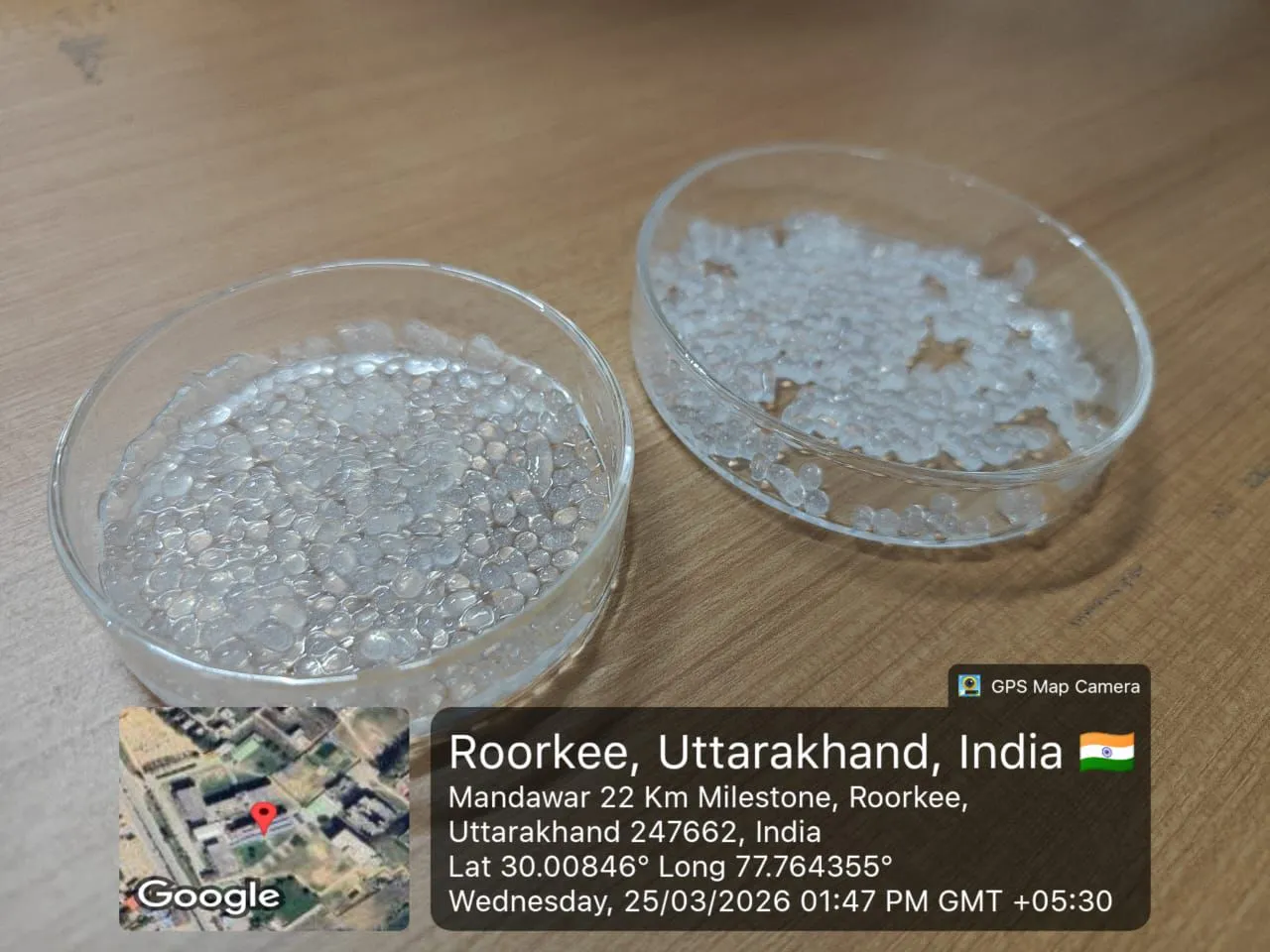
Fig. 1
Observations and characterisation
Bead formation: Immediately after extrusion, wet, spherical microballoons were observed (Fig. 3). The beads were uniform in shape and size, ranging approximately 1.5–2.5 mm in diameter.
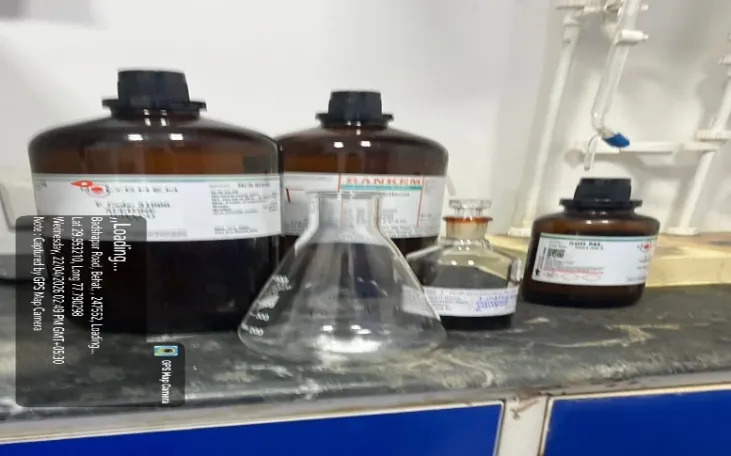
Fig.2
Fig, 3
Buoyancy: All beads floated within 5–10 seconds of formation, indicating a density lower than that of the cross‑linking medium. The floating behaviour was sustained for over 12 hours.
Staining with methylene blue: A sample of microballoons was immersed in 0.1% w/v methylene blue solution. As shown in Fig. 4, the beads readily took up the dye, confirming the porous nature of the alginate matrix and the presence of anionic binding sites. The intense blue colour also suggests good permeability of the gel network.
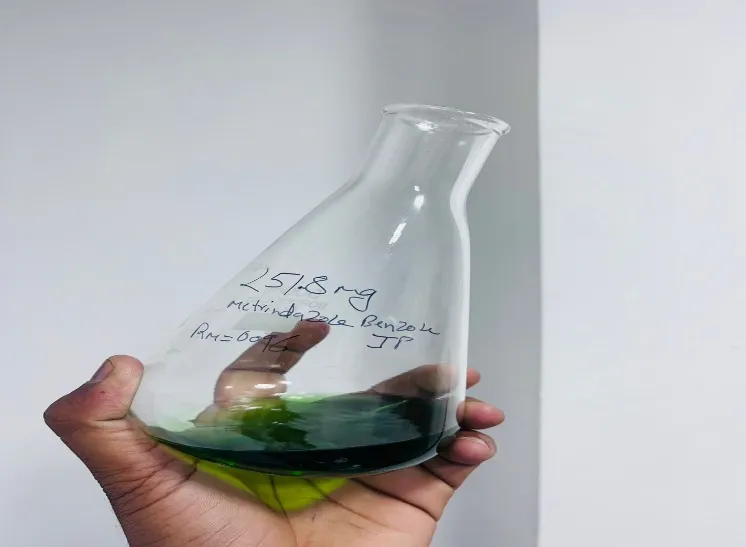
FIG. 4 PREPARATION OF POLYMER-DRUG DISPERSION – TO ILLUSTRATE THE PRECISE WEIGHING STEP.
Dried product: After washing with distilled water and air‑drying, the microballoons retained their spherical shape and were collected in a glass vial (Fig. 5). The dried beads showed no visible cracks or aggregation.
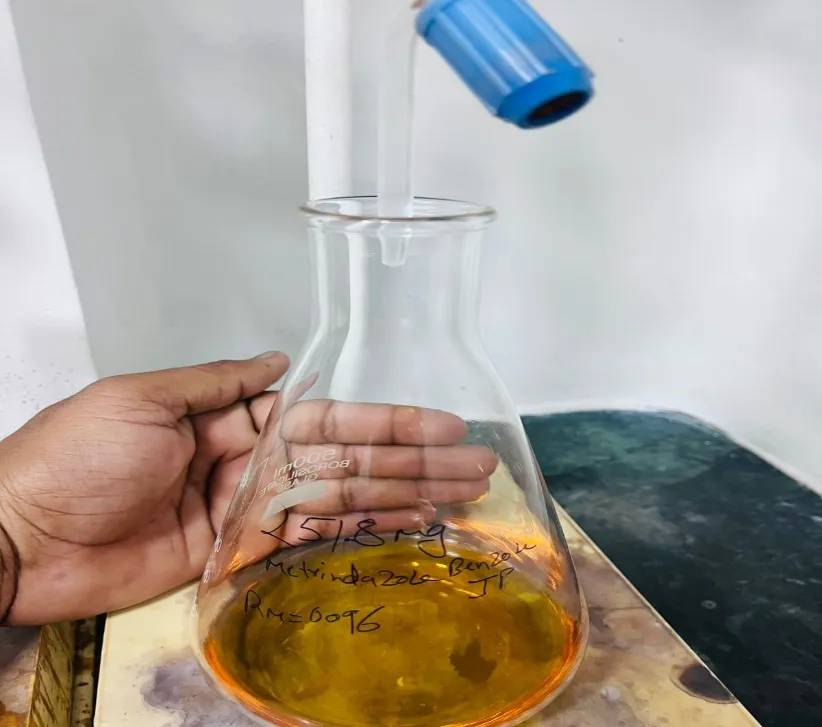
Fig. 5
Laboratory setup: The overall preparation was carried out in a clean laboratory environment equipped with a magnetic stirrer, syringe, and cross‑linking bath (Fig. 1). GPS‑tagged images (Fig. 6) confirm the geographical location of the experimental work.
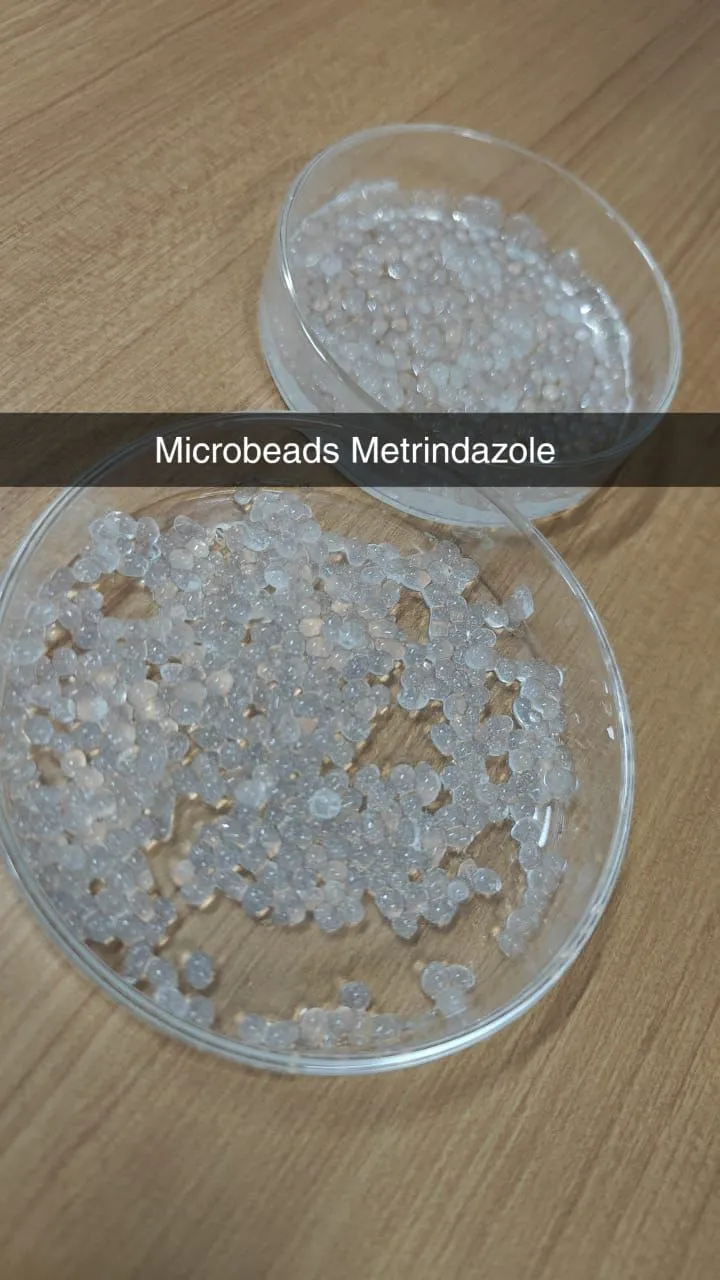
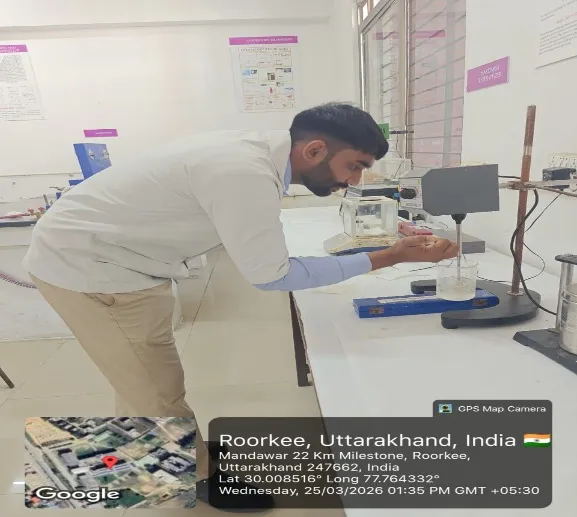
FIG. 6 PHYSICAL CHARACTERIZATION – TO SHOW THE FINAL PRODUCT.
Summary of outcomes
This laboratory demonstration successfully produced metronidazole‑loaded floating microballoons using sodium alginate as the sole polymer. The key outcomes were:
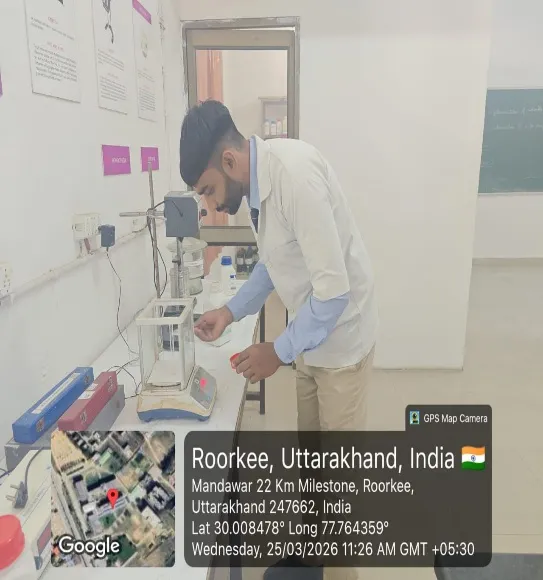
FIG.7 LABORATORY FACILITY
These experimental results are in good agreement with the literature reviewed in the previous sections, validating the feasibility of sodium alginate‑based floating microballoons for gastric delivery of metronidazole.
10. CONCLUSION
The formation of metronidazole-loaded floating Micro balloons using sodium alginate as a polymer represents a well-established, robust, and versatile approach for gastroretentive drug delivery. Using the simple, scalable, and environmentally friendly ionotropic gelation method, these systems consistently achieve the primary goals of GRDDS: prolonged gastric residence (FLT < 5 minutes, TFT > 12–24 hours) and sustained, controlled drug release.
The literature demonstrates that formulation properties can be systematically modulated by varying alginate concentration, cross-linker concentration, gas-generator content, and the inclusion of co-polymers such as cassava starch, psyllium husk, guar gum, or Terminalia mantaly gum. Recent advances, particularly the "double target strategy" utilizing interpenetrating polymer networks, have achieved exceptional performance metrics, including > 90% drug entrapment efficiency and > 24-hour gastric retention.
However, significant research gaps remain, notably the need for comprehensive in vivo validation, industrial scale-up studies, long-term stability data, and exploration of multi-drug delivery systems. Future research should prioritize these areas while also exploring innovative directions such as 3D printing, ligand-targeted delivery, and smart stimuli-responsive systems.
In conclusion, sodium alginate-based floating Micro balloons offer a practical, effective, and clinically promising platform for delivering metronidazole directly to the stomach, with the potential to significantly improve the management of upper GIT infections, enhance patient compliance, and advance the field of gastric-targeted therapeutics.
The use of sodium alginate for the formation of metronidazole-loaded floating Micro balloons presents a robust and versatile approach to addressing the limitations of conventional gastric therapy. Through the simple and scalable ionic gelation method, these systems reliably achieve the two primary goals of gastroretention: sustained buoyancy (low FLT and high TFT) and controlled, prolonged drug release.
ACKNOWLEDGEMENT
The author sincerely acknowledges the laboratory facilities at Quantum University, Mandawar 22 Km Milestone, Roorkee, Uttarakhand, India (GPS coordinates: 30.0085° N, 77.7643° E), where the experimental demonstration of metronidazole-loaded floating microballoons was conducted. The author is grateful for the availability of essential equipment, including the magnetic stirrer, syringe, cross‑linking bath, and precision balance.
Special thanks are extended for the accurate weighing of metronidazole (251.8 mg) and for the successful staining studies using methylene blue, which confirmed the porous nature of the alginate matrix. The use of GPS Map Camera technology is acknowledged for documenting the geo‑location and timestamps of the preparation work (Dates: 25 March 2026 to 22 April 2026).
The author also thanks the laboratory staff and research colleagues for their technical support throughout the preparation, characterisation, and documentation of the floating microballoons. No external funding was received for this work, and there is no conflict of interest to declare.
REFERENCES


Gaurav Singh, Shaily Tyagi, Formulation and Characterization of Metronidazole Floating Microballoon Using Sodium Alginate as a Polymer: A Comprehensive Review, Int. J. of Pharm. Sci., 2026, Vol 4, Issue 6, 624-646. https://doi.org/10.5281/zenodo.20523106
 10.5281/zenodo.20523106