

We use cookies to ensure our website works properly and to personalise your experience. Cookies policy
Savitribai Phule pune university.
Hair loss is a common concern for both men and women. The major problems associated with it include dandruff, hair fall and dull or faded hair. The main objective of this serum formulation was to treat hair problems such as hair fall, dandruff and other related conditions. In this formulation, rosemary essential oil and ficus bengalensis [banyan] aerial roots were selected for preparing the hair loss. These roots contain beneficial compounds such as phytosterois, proteins, flavonoids, phenolic compound, and glycosides, which are helpful for maintaining healthy hair. After preparing the hair serum, evaluation tests were carried out, and parameters such as viscosity, Ph, and colour were successfully determined
Hair plays an important role in personal appearance and confidence, and maintaining healthy hair is an important aspect of overall well-being. However, in modern lifestyles many individuals experience common hair problems such as hair fall, dandruff, dryness, premature greying, and reduced hair growth. These conditions are often associated with factors such as environmental pollution, stress, nutritional deficiencies, hormonal imbalance, and excessive use of synthetic cosmetic products. One of the key biological factors responsible for hair damage and hair loss is oxidative stress, which occurs due to the excessive production of free radicals that damage hair follicles and scalp tissues. Antioxidants help neutralize these free radicals and therefore play an important role in maintaining healthy hair growth and scalp condition.
In recent years, there has been increasing interest in herbal and natural cosmetic products due to growing awareness about the harmful effects of synthetic chemicals. Herbal formulations are generally considered safer, more biocompatible, and environmentally friendly compared to conventional cosmetic products. Among different herbal cosmetic preparations, hair serums have gained popularity because they provide nourishment, protection, and improved manageability of hair. Hair serums are lightweight liquid formulations that contain activeingredients capable of penetrating the hair shaft and scalp to provide conditioning, strengthening, and protective effect. The use of medicinal plants in hair care has a long history in traditional systems of medicine such as Ayurveda. One such valuable plant is Ficus benghalensis, commonly known as the banyan tree, which belongs to the family Moraceae. The banyan tree is widely distributed throughout India and is well known for its therapeutic properties. Various parts of the plant including bark, leaves, latex, and aerial roots are traditionally used for the treatment of different ailments. The aerial roots of Ficus benghalensis are particularly rich in phytoconstituents such as flavonoids, phenolic compounds, tannins, and other bioactive compounds that possess significant antioxidant, anti-inflammatory, and antimicrobial properties. These bioactive compounds may help in protecting hair follicles from oxidative damage, improving scalp health, and promoting hair growth.
Because of these beneficial properties, aerial root extract of Ficus benghalensis has the potential to be used as an active ingredient in herbal hair care formulations. Incorporating such plant-based antioxidants into hair serum formulations can help reduce oxidative stress on the scalp, strengthen hair roots, and improve overall hair health.
Literature Survey
1. Kokate, C. K., Purohit, A, P., and Gokhle, S. B. 9 [Pharmacogosy] describe the medicinal importance of various plant used in traditional medicine and reported that Ficus benghalensis contain several phytochemical such as flavonoids, tannins, and phenolic compounds which exhibit antioxidant and therapeutic properties.
2. Trease, G.E., and Evans, W. C. [pharmacognosy] explained the pharmacological significance of plant-derived compound and highlighted that members of the Ficus species possess antimicrobial, antioxidant, and anti-inflammatory activites which are beneficial in herbal formulation.
3. Khandelwal, K.R. [practical pharmacognosy] described methods for extraction, identification, and evaluation of plant constituents and emphasized the importance of phytochemical screening in herbal drug development.
4. Sharma, P. P. [Cosmetic : Formulation, Manufacturing and Quality control ] discussed the formulation principle of cosmetic product including hair serums, emphasizing the role of natural ingredients and herbal extract in improving hair health and reducing damage
5. Pandey, A., and Tripathi, S. (2014) explained the concept of standardization, extraction, and phytochemical screening of herbal drugs and emphasized the importance of identifying active compounds responsible for biological activity.
6. Joseph, B., and Raj, S. J. (2011) reviewed the pharmacological properties of Ficus benghalensis and reported that the plant contains bioactive compounds such as flavonoids, sterols, and glycosides which possess antioxidant and medicinal activities.
7. Mousa, O., et al. (1994) investigated the antioxidant potential of Ficus species and demonstrated that extracts from these plants exhibit significant free radical scavenging activity due to the presence of phenolic compounds.
8. Singh, R., et al. (2012) reported that plant-based antioxidants help in reducing oxidative stress in hair follicles and play an important role in preventing hair fall and promoting hair growth.
9. Patel, A., et al. (2015) studied herbal hair formulations and suggested that herbal ingredients can improve scalp health, reduce dandruff, and strengthen hair roots due to their antimicrobial and antioxidant properties.
10. Deshmukh, S., et al. (2017) evaluated herbal hair care formulations and concluded that plant-based serums provide nourishment to hair, improve hair texture, and reduce hair damage.
11. Kaur, R., and Sharma, A. (2019) highlighted the increasing demand for herbal cosmetic products and stated that natural formulations containing antioxidant-rich plant extracts are safer alternatives to synthetic hair care products.
Aim and Objective
Aim
To formulation and evaluation of an Antioxidant -Rich Herbal Hair Serum From Banyan
(Ficus benghalensis) Arial Roots Extract.
Objective
1. To collect and authenticate the aerial roots of Ficus benghalensis for use in formulation. To prepare the extract the of aerial roots using a suitable extraction method [e.g, maceration, Soxhlet extraction]
2. To evaluate the phytochemical constituent of extract , focusing on antioxidant compound such as flavonoids, tannins and phenolics.
3. To formulate a herbal hair serum incorporating Ficus benghalensis Aerial roots extract with suitable excipients.
4. To optimize the formulation for desirable properties such as consistency, spreadability and stability.
5. To evaluate physicochemical parameter of the formulated serum ( pH , Viscosity , homogeneity , appearance ).
6. To asses antioxidant activity of the extract and final formulation using standard method ( e.g, DPPH assay)
7. To evaluate stability of the hair serum under different storage conditions ( temperature, light ,humidity)
8. To asses antioxidant activity of the extract and final formulation using standard method ( e.g, DPPH assay)
9. To evaluate stability of the hair serum under different storage conditions ( temperature, light , humidity)
Ficus benghalensis: Overview
Ficus benghalensis L., commonly referred to as the banyan tree, is a perennial, evergreen species belonging to the family Moraceae. It is widely distributed throughout tropical and subtropical regions of South Asia, particularly in India, where it is recognized for its ecological dominance, longevity, and extensive canopy architecture. The species is characterized by its unique growth habit involving the formation of aerial prop roots, which develop into secondary trunks, enabling the tree to spread laterally and occupy large land areas.
Botanically, F. benghalensis exhibits simple, alternate, leathery leaves with entire margins and a milky latex exudate, a typical feature of the genus Ficus. The reproductive structure is a syconium (fig), which encloses numerous unisexual flowers and is pollinated through a specialized mutualistic association with fig wasps. This intricate pollination mechanism plays a crucial role in maintaining biodiversity within its native ecosystems.
Phytochemical investigations of F. benghalensis have revealed the presence of diverse bioactive constituents, including flavonoids, tannins, phenolic compounds, saponins, alkaloids, and glycosides. These compounds are distributed across various plant parts such as bark, leaves, fruits, and aerial roots, contributing to the plant’s wide range of biological activities.
Traditionally, F. benghalensis has been extensively utilized in systems such as Ayurveda for the management of multiple ailments. Extracts from different parts of the plant have demonstrated pharmacological properties including antidiabetic, antioxidant, antimicrobial, anti-inflammatory, and wound healing activities. The latex has been used in the treatment of ulcers and skin disorders, while bark and root extracts are commonly employed in managing metabolic disorders.
In addition to its medicinal importance, F. benghalensis holds significant ecological value as a keystone species, providing habitat and nourishment for a variety of fauna. Its extensive canopy contributes to microclimate regulation, soil conservation, and carbon sequestration. Furthermore, the plant has cultural and religious importance in the Indian subcontinent, often symbolizing longevity and immortality.
Despite its traditional applications and promising pharmacological profile, further systematic studies, including clinical trials and standardization of extracts, are required to validate its therapeutic efficacy and ensure safe usage in modern medicinal formulations.
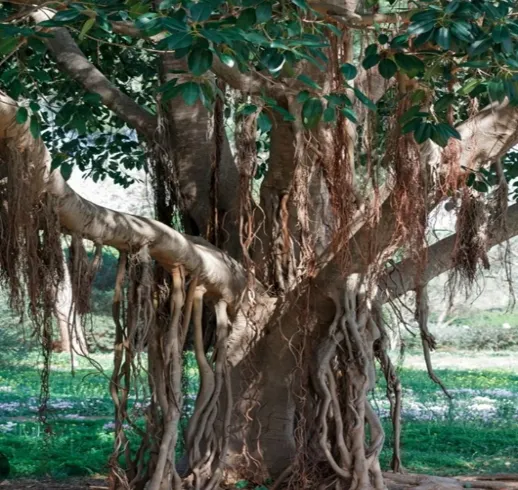
Figure No.1: Banyan tree
Classification :
Kingdom:Plantae Division:Angiosperms Class: Dicotyledone
Order:Rsales Family:Moraceae
Genus: Ficus
Species: Ficus benghalensis
Pathogenicity and Infection :
Pathogenicity in Ficus benghalensis refers to the ability of disease -causing microorganisms such as fungi, bacteria and viruses to infect the plant and produce harmful effect . It depends on factor like the virulence of the pathogen, it’s capacity to I invade plant tissue, multiply
,and secreted enzyme or toxins that disrupt normal cellular functions. These pathogens can overcome the plant’s natural defence mechanisms, including its thik bark, latex secretion, and protective phytochemicals such as tannins and flavonoids, Once established they interfere with physiological processes like photosynthesis, nutrient transport,and water absoy,leading to symptoms such as leaf spots ,wilting , tissue necrosis, and reduced growth.
The degree of pathogenicity is influenced by environmental condiy,host suspectibility ,and the interaction between the pathogen and the plant’s immune response, ultimately determining the severity of disease in Ficus benghalensis.
Infection in Ficus benghalensis refers to the process by which harmful microorganisms such as fungi, bacteria or viruses enter, established and spread within the plant tissue. The infection usually beings when pathogen gain entry through natural openings like stomata or lenticels,or through wounds caused by mechanical damage or insect activity soil borne pathogen may also infect through the roots. After entry ,the microorganisms colonize the internal tissue and multiply,often producing enzyme that break down cell wall and facilitate further invasion. As the infection progresses,it may spread through the vascular system (Xylem and Phloem) leading to systemic involvement of the plant. This result is visible symptoms such as a leaf spots, yellowing, wilting , root rot ,and overall decline in growth . Environmental factors like high humidity,poor soil drainage, and nutrient deficiency can enhance the rate and secretion infection in Ficus benghalensis.
Drug Profile:
1. Name : Banyan Roots
2. Name: Fics benghalensis
3. Family : Moraceae
4. Kingdom : Plantae
5. Subkingdom : Tracheobionta
6. Infrakingdom : Streptophyta
7. Superdivision: Spermatophyta
8. Division: Magnoliophyta
9. Subdivision: Angiosperms
10. Class: Dicotyledonae
11. Order: Rosales
12. Genus : Ficus
13. Species: Ficus benghalensis
14. Common Name : Banyan Tree, Vat / Vriksha (Sanskrit)
15. Part Used : Roots
16. Chemical Constituents: Flavonoids, Tannins , Saponin , Phenolic Compound, Sterols.
17. Uses: Hair growth, Antioxidant , Reduce hair fall , Astringent , Antimicrobial , Anti-inflammatory , Hair Care , scalp health
MATERIAL AND METHODS
For the preperation of hair serum following material are required:
Active Ingredient:
o Aerial roots extract of Ficus benghalensis
Excipients:
o Aloe vera gel – conditioner o Glycerine – humectant o Vitamin E – Antioxidant o Carbopol 934 – gelling agent o Triethanolamine – pH adjustment o Distilled water – vehicle o Methyl paraben – preservative o Rose oil – Fragrance agent
Methods used for preperation of Hair Serum :
1. Collection and Drying
Fresh Aerial (Ficus benghalensis) roots were collected from a botanical garden and the thoroughly washed with tap and distilled water. The roots were shade dried at room temperature ( 25-30°C) for 4 – 5 hours.
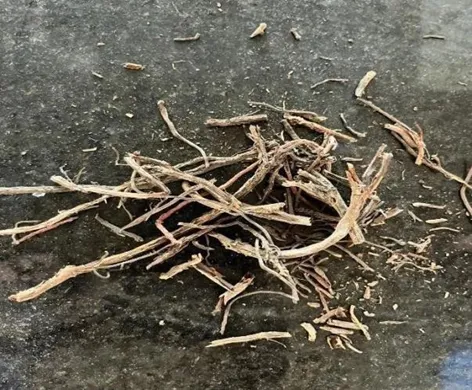
Figure No.2: Dried arial roots
2. Grinding
Dried roots were grind into a fine powder using a mechanical grinder and stored in an airtight container for further use.
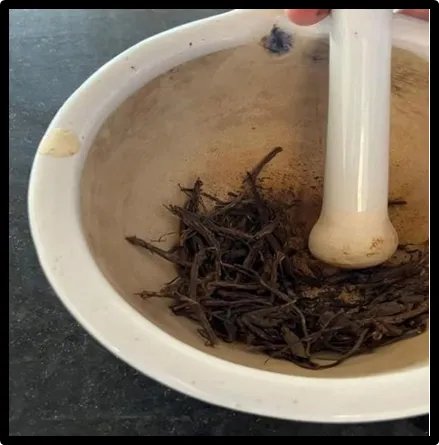
Figure no.3: Grinding of dried arial root
3. Extraction
Powdered aerial roots are soaked in propylene glycol: Glycerine: water. Kept for 72 hours with occasional shaking. Filtered and solvents evaporated. Extract stored in airtight container.
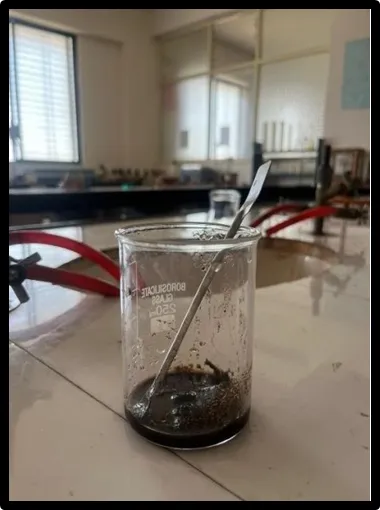
Figure No.4: Preparation of extraction
Formulation procedure :
1. Preperation of serum base
Weight 0.5 –1 % Carbopol 934 and sprinkle into distilled water. (1 gm into 100 ml of water) Allow to hydrate for 2-3 hours. place the beaker on a magnetic stirrer and stit at moderate speed until a clear base form.
A magnetic stirrer is a laboratory instruments used to mix solution efficiently and uniformly. It is particularly helpful in the preparation of gels, suspension and dissolving in liquid during formulation processes.
Working principle:
The instruments operates by generating a rotating magnetic field. This field causes a magnetic stir bar (commonly known as a flea) placed inside the liquid container such as a beaker or flask – to rotate quickly, thereby mixing the solution.
Key Features:
o Uniform Mixing: provide consistent blending of components such as carbopol, glycerine,and herbal extracts.
o Adjustable Speed: The stirring speed can be controlled based on the thickness (Viscosity) of the solution.
o Reduced Contamination: Since there is no direct physical contact during stirring the chances of contamination are minimised.
Used as In the formulation of herbal hair serum:
o gelating agent: It convert liquid formulation into semi – solid or gel – like serum, which is easy to apply on hair.
o Used as Thickening agent: Helps achieve a non – runny consistency, preventing the serum from dripping.
o Used as Suspending agent: Ensure uniform delivery of active to hair and scalp.
o Used as stabilizer: Carbopol stabilizes the formulation by keeping oil and water phase uniformly mixed.
1. Addition of Humectant
Add 3- 5% glycerine and 5-10% Aloe vera gel as a conditioner to hydrated carbopol solution while continuous stirring.
2. Incorporation of extract
Added banyan aerial roots extract slowly with continuous stirring until transparent serum form.
3. Neutralization
Add triethanolamine dropwise to adjust pH (5.5-6.5).
4. Addition of preservative
Add Appropriate amount of preservative (eg. Methyl paraben – 0.06) for preservation of microbial contamination. Further Add Vitamin E capsule for Antioxidant prevention.
5. Final Adjustment
Adjust Viscosity and consistency by adding distilled water. Ensure serum homogeneous.
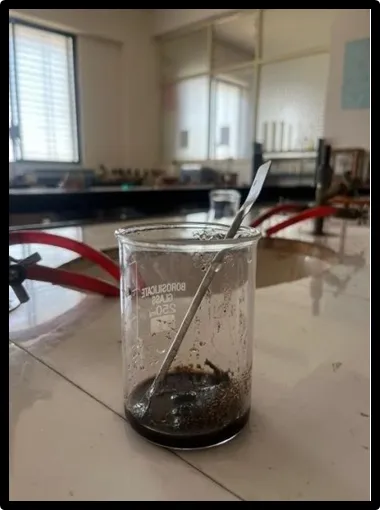
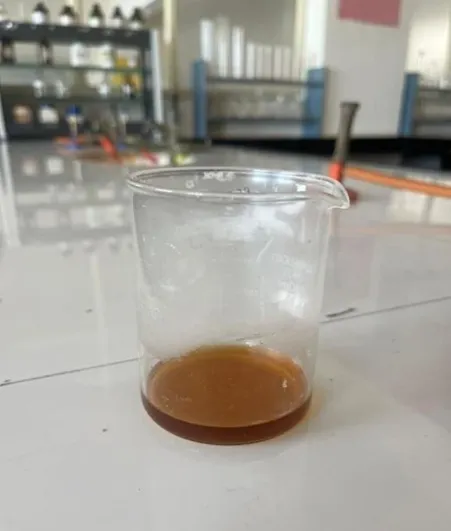
Figure No.5: Filtration of product Figure No.6: Final product
Evaluation
1. Physical parameters: Check colour, apperance and consistency
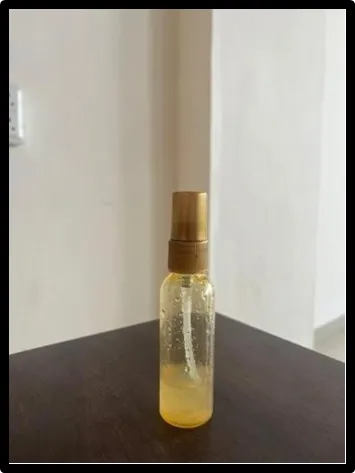
Figure No.7: Appearance
2. pH
Adjust the pH. The pH of prepared gel is 5.75 (Friendly range: 5.5- 6.5).

Figure No.8: pH meter
3. Spreadability:
Spreadability is one of the most important evaluation parameter for herbal serum formulation. It indicates how easily the serum spread over the scalp or hair surface when applied. The spreadability of semisolid formulation was assessed using the parallel plate method, which is commonly applied for this purpose. One gram of hair serum was placed between two horizontal plates measuring 20×20cm, with the upper plate weighing 125g. After one minute, the diameter of the spread was recorded.
Spreadability was calculated using the following formula:
S = M × L/T
Where S is the spreadability. M is the weight of the slide. L is the distance travelled by the glass slide, and T is time needed to completely separate the slide 10.
4.Viscosity:

Figure No.9: Viscometer
The viscosity of herbal hair serum is an importan parameters that determines itsflow behaviour, spreadability and ease f application. It is usually measured using instruments like a viscometer most commonly known as the Brookfield Viscometer.
o Take a sufficient quantity of the prepared herbal hair serum in a clean, dry beaker.
o Ensure that the sample is free from air bubbles.
o Maintain temperature of sample at 25+1°C, as Viscosity is temperature dependent.
o Select an appropriate spindle (eg. Spindle no 63) and attached to the viscometer.
o Set the rotational speed (commonly 10,20 or 50rpm depending on formulation).
o Switch on the viscometer and allow it to rotate until the reading stabilizer.
o Note the viscosity reading (in centipoise, cP).
o Repeat the measurement 3 times and Calculate the average value
5 Homogeneity Test:
The hair serum was placed onto a clean, dry glass slide and then covered with another slide. It was examined visually to assass it’s appearance, particularly for the presence ofcoarse particle and overall uniformity. The formulation was inspected to ensure homogeneity and to detect any lumps, flocculation or aggregation.
6. Stability Test:
Conditions: 4°C and 30°C for 1-3 months at 65% relativr humidity. Parameters Mentioned: pH, Viscosity, colour, Apperance, Spreadability, phase inversion.
RESULT AND DISCUSSION
The present study successfully formulated and evaluated an antioxidant rich herbal hair serum incorporating aerial root extract of Ficus benghalensis along with other natural and functional excipients. The choice of banyan aerial roots as the active ingredient was justified due to their rich content of flavonoids, phenolic compounds, tannins, and phytosterols, which are known for their antioxidant and antimicrobial properties. These compounds play a significant role in reducing oxidative stress, which is one of the major causes of hair fall and scalp damage. The addition of rosemary essential oil further enhances the formulation by promoting blood circulation in the scalp, which may support hair growth and reduce hair thinning. Similarly, aloe vera gel and glycerine act as moisturizing and conditioning agents, improving hair texture and hydration. The use of Carbopol 934 as a gelling agent provided suitable viscosity and consistency, making the serum easy to apply and aesthetically acceptable. The pH adjustment using triethanolamine ensured compatibility with scalp conditions, minimizing the risk of irritation. Evaluation parameters such as pH, viscosity, spreadability, and homogeneity confirmed that the formulation meets the standard requirements of a good topical cosmetic preparation. The stability studies indicated that the serum maintains its integrity under varying environmental conditions, which is essential for product shelf life. Overall, the formulation demonstrated good physicochemical properties, stability, and potential therapeutic benefits for managing hair problems such as hair fall, dandruff, and dull hair.
Result:
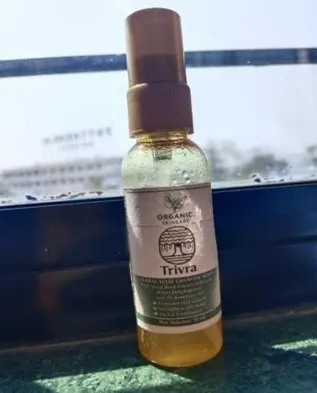
Figure No.10: Herbal Hair Growth Serum
The herbal hair serum formulated using Ficus benghalensis aerial root extract showed satisfactory physicochemical and functional properties.
1. Physical Appearance
The prepared serum was light brown to translucent in color with a pleasant odor due to rose oil. It exhibited a smooth, non-greasy, and homogeneous consistency without any visible lumps or phase separation.
2. pH
The Ph of the formulation was found to be 5.75, which lies within the ideal range (5.5–6.5) for scalp and hair applications. This indicates that the serum is skinfriendly and non-irritant.
3 . Viscosity
The viscosity of the serum was found to be appropriate for topical application. It showed moderate viscosity, ensuring easy application without dripping, while still maintaining adequate thickness for proper adherence to the scalp and hair.
4 . Spreadability
The formulation demonstrated good spreadability, indicating that it can be easily applied over the scalp with minimal effort. This ensures uniform distribution of active ingredients.
5 . Homogeneity
The serum was found to be uniform and free form coarse particales, confirming proper of all ingredients and stability of the formulation.
6 Stability Study
The formulation remained stable under different storage conditions (4°C and 30°C) during the study period. No significant changes were observed in:
o pH
o Viscosity
o Color
o Appearance
o Phase separation
This indicates that the formulation possesses good physical stability.
SUMMARY:
The study focuses on the formulation and evaluation of an antioxidant-rich herbal hair serum using aerial root extract of Ficus benghalensis along with rosemary oil to manage common hair problems such as hair fall, dandruff, dryness, and dullness. Hair damage is largely associated with oxidative stress caused by free radicals, which can be reduced by antioxidants present in plant-based ingredients. The aerial roots of Ficus benghalensis are rich in phytoconstituents like flavonoids, tannins, phenolic compounds, and glycosides that provide antioxidant, anti-inflammatory, and antimicrobial benefits, thereby promoting scalp health and hair growth. The serum was prepared using ingredients such as aloe vera, glycerin, vitamin E, Carbopol 934, triethanolamine, and preservatives through standard extraction and formulation procedures. The final product was evaluated for various physicochemical parameters including pH, viscosity, spreadability, homogeneity, and stability, and showed satisfactory results with a skin-friendly pH (~5.75), good consistency, and stability under different conditions. Overall, the study concludes that the herbal hair serum is a safe, effective, and eco- friendly alternative to synthetic hair care products, with potential benefits in improving hair health and reducing hair-related issues.
CONCLUSION
The present study successfully demonstrated the formulation and evaluation of an antioxidant-rich herbal hair serum using aerial root extract of Ficus benghalensis. The selected plant extract, enriched with bioactive compounds such as flavonoids, tannins, and phenolic constituents, exhibited promising antioxidant potential, which plays a crucial role in protecting hair follicles from oxidative stress and associated damage.
The formulated serum showed satisfactory physicochemical properties, including appropriate pH (5.75), good viscosity, excellent spreadability, and uniform homogeneity, making it suitable for topical application. Stability studies further confirmed that the formulation remains stable under varying environmental conditions, indicating good shelf life and reliability.
Incorporation of natural ingredients such as aloe vera, glycerine, vitamin E, and rosemary oil enhanced the overall effectiveness of the serum by providing moisturizing, conditioning, and scalp-nourishing benefits. The formulation not only addresses common hair problems like hair fall, dandruff, and dryness but also promotes overall scalp health in a safe and eco-friendly manner.
Therefore, it can be concluded that this herbal hair serum serves as an effective and safer alternative to synthetic hair care products. However, further studies, including clinical evaluations and large-scale standardization, are recommended to validate its efficacy and support its potential for commercial application.
REFERENCES

Arpita Salegaonkar, Tanzila Sayyad, Samrin Shaikh, Formulation and Evaluation of an Antioxidant – Rich Herbal Hair Serum from Banyan (Ficus Benghalensis) Aerial Root Extract, Int. J. of Pharm. Sci., 2026, Vol 4, Issue 7, 2780-2790, https://doi.org/10.5281/zenodo.21352464
 10.5281/zenodo.21352464