

We use cookies to ensure our website works properly and to personalise your experience. Cookies policy
Delonix Society’s Baramati College of Pharmacy, Barhanpur, Baramati
The contemporary landscape of dermatological therapeutics is experiencing a profound paradigm shift towards the integration of phytomedicine, driven by the escalating global incidence of chronic cutaneous disorders, impaired wound healing trajectories in metabolic diseases, and the ubiquitous threat of antimicrobial resistance. This exhaustive research thesis systematically details the development, physicochemical evaluation, and therapeutic profiling of an oil-in-water (O/W) topical herbal cream incorporating the bioactive leaf extract of Musa paradisiaca (plantain banana). Recognizing the severe limitations of conventional synthetic topical interventions—which frequently induce localized cutaneous atrophy, contact dermatitis, and systemic absorption toxicities—this investigation explores the robust therapeutic efficacy of Musa paradisiaca. The botanical matrix of this plant is exceptionally rich in secondary metabolites, specifically flavonoids, condensed tannins, saponins, and phenolic acids, which collectively exert synergistic antioxidant, anti-inflammatory, and structural regenerative effects. The investigation is structured to provide a comprehensive continuum from raw botanical sourcing to advanced formulation science. It begins with an exhaustive phytochemical profiling of the plant material, elucidating the precise molecular mechanisms by which its constituents accelerate tissue repair. The extraction of these active principles via controlled, room-temperature maceration is documented, emphasizing the optimization of solvent polarity use 96% ethanol to maximize the sequential yield of both hydrophilic and lipophilic bioactives while preserving the structural integrity of thermolabile polyphenols
Skin Fungal Infection (Cutaneous Mycosis)
Skin fungal infections are common infectious diseases caused by different types of fungi that
invade the skin, hair, nails, or mucous membranes. These infections mainly occur in warm,
moist, and humid conditions and are highly contagious. They affect people of all age groups and
are one of the most common dermatological disorders worldwide.
Fungal infections may be superficial, cutaneous, subcutaneous, or systemic, but skin fungal
infectins usually belong to the superficial and cutaneous categories.
Classification of Skin Fungal Infections
1. Superficial Fungal Infections
These affect only the outermost layer of
the skin. Examples:
*Pityriasis versicolor
* Tinea nigra
2. Cutaneous Fungal Infections
These affect keratinized tissues such as:
* Skin
* Hair
* Nails
Mainly caused by
dermatophytes.
Examples:
* Tinea corporis
* Tinea pedis
* Tinea cruris
3. Subcutaneous Mycoses
These infections extend deeper into tissues after trauma.
Examples:
* Sporotrichosis
Causative
Organisms
The main fungi responsible are called dermatophytes.
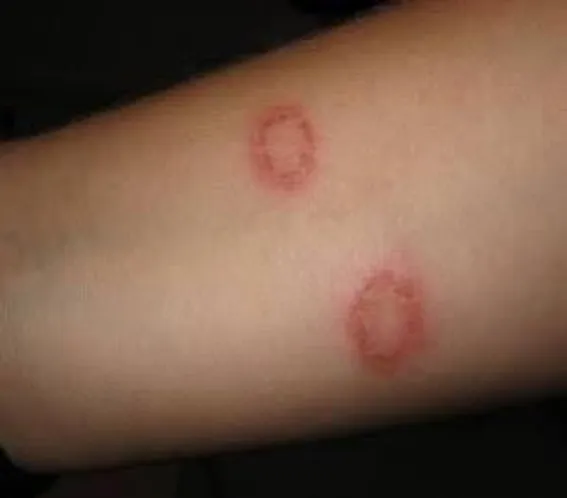
Fig 1. Skin Infection
Taxonomy and Classification
Taxonomically, Musa paradisiaca has historically been considered a hybrid species derived from
two wild ancestors: Musa acuminata and Musa balbisiana. Modern botanical classification often
groups cultivated bananas and plantains under complex hybrid systems rather than distinct species.
However, Musa paradisiaca is still widely used in literature to refer specifically to plantain
varieties that are starchy and typically used for cooking rather than raw consumption. The plant is
monocotyledonous, meaning it has a single embryonic leaf, and belongs to the order Zingiberales,
which includes other tropical plants such as ginger and heliconia.
Morphological Characteristics
The morphology of Musa paradisiaca is distinctive. The root system consists of underground rhizomes that give rise to suckers, allowing vegetative propagation. The pseudostem, formed by overlapping leaf bases, is soft and succulent, making it susceptible to mechanical damage. Leaves are oblong, bright green, and often torn by wind due to their delicate structure. The inflorescence
emerges from the center of the pseudostem and consists of large purple bracts that protect the
developing flowers. Female flowers develop into fruits, while male flowers are usually located
toward the tip. The fruits are rich in starch when unripe and become sweeter as they mature due to
enzymatic conversion of starch into sugars.
Musa paradisiaca is nutritionally rich and serves as a staple food in many tropical and subtropical regions. The fruit is an excellent source of carbohydrates, primarily in the form of starch, making it a high-energy food. It also contains dietary fiber, vitamins such as vitamin C, vitamin A (in the form of beta-carotene), and several B-complex vitamins including vitamin B6. Minerals such as potassium, magnesium, and iron are also present in significant amounts.
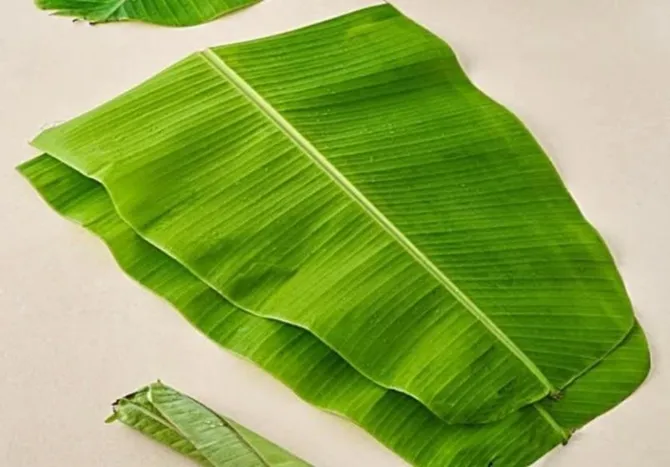
Fig 2. Banana leaf
AIM AND OBJECTIVES
The central premise of this thesis is to construct a rigorous scientific bridge connecting raw botanical efficacy with advanced, evidence-based pharmaceutical delivery. The overarching aim is to systematically extract the bioactive principles of the Musa paradisiaca leaf, formulate them into a highly stable, cosmetically elegant oil-in-water (O/W) herbal cream, and critically evaluate the final product's physicochemical integrity and therapeutic potential.
To achieve this comprehensive aim, the investigation is divided into the following specific, measurable objectives:
1. Botanical Sourcing and Extraction: To execute a highly efficient solid-liquid extraction of Musa paradisiaca leaves utilizing optimized maceration protocols. This aims to maximize the percentage yield of the crude extract while utilizing an appropriate polar solvent (96% ethanol) to preserve thermolabile polyphenols.
2. Qualitative Phytochemical Profiling: To subject the resultant hydroalcoholic extract to a battery
of standardized qualitative chemical assays to conclusively verify the presence of the critical therapeutic metabolites: alkaloids, flavonoids, saponins, and tannins.
3. Formulation Engineering: To design and meticulously compound a prototype 10-gram O/W semisolid emulsion. The objective is to utilize a biocompatible excipient matrix—primarily stearic acid, cetyl alcohol, and liquid paraffin—that relies on the formation of a lamellar gel network and the natural biosurfactant properties of the extract's saponins for thermodynamic stability, entirely avoiding synthetic neutralizers like triethanolamine.
4. Physicochemical and Rheological Evaluation: To subject the formulated cream to an exhaustive matrix of evaluation tests. This includes determining the precise pH to ensure epidermal compatibility, quantifying the spreadability mechanics using mathematical models, and assessing the physical homogeneity and organoleptic parameters.
5. Chemical and Environmental Stability Assessment: To evaluate the lipid phase integrity by calculating the Saponification and Acid values. Furthermore, the objective is to predict the long- term shelf-life and kinetic stability of the emulsion by subjecting it to accelerated International Council for Harmonisation (ICH) stress paradigms, including high-velocity centrifugation and extreme thermal freeze-thaw cycling.
6. Therapeutic Extrapolation: To synthesize the physicochemical findings with established molecular literature to map the theoretical therapeutic trajectory of the cream, specifically focusing on its capability to mitigate localized oxidative stress, suppress pro-inflammatory cytokines, and drive extracellular matrix collagen synthesis (hydroxyproline modulation) in chronic wounds.
LITERATURE REVIEW
Rinky Bisht et al. (2016) performed phytochemical screening and antimicrobial analysis of medicinal plant leaves, including banana leaves. The study confirmed that banana leaf extracts contain bioactive constituents such as tannins, flavonoids, saponins, and phenolic compounds, which are known for their antimicrobial and anti-inflammatory properties. The extracts showed inhibitory activity against pathogens like Escherichia coli, Staphylococcus aureus, and Pseudomonas aeruginosa. These findings support the potential use of banana leaf extract in topical cream formulations for treating skin infections, wounds, and inflammatory conditions.
J. M. Gomes et al. (2024) studied the bioactive compounds present in banana leaf extracts and their dermatological applications. The study highlighted that banana leaves are rich in phenolic compounds and antioxidants, which exhibit strong biological activity. Advanced extraction methods such as ultrasound-assisted extraction were used to obtain higher yields of active constituents. The antioxidant activity was confirmed using DPPH assay. The authors concluded that banana leaf extract-based formulations, such as creams, can be effective in reducing oxidative stress, promoting skin healing, and improving overall skin health.
P. N. Vajaet al. (2024) reviewed medicinal plants used in the treatment of skin disorders and infections. The review emphasized that plant-based extracts with antimicrobial, anti-inflammatory, and antioxidant properties are beneficial in topical applications. Although banana leaf extract was not widely studied in clinical settings, its pharmacological properties reported in various studies indicate its potential as a supportive herbal ingredient in cream formulations for managing skin infections and irritation. The authors recommended further research to establish its efficacy and safety in dermatological products.
Dr. S. Karuppusamy et al. (2022) conducted a study focusing on the phytochemical composition and antimicrobial activity of Musa paradisiaca leaf extract. The results confirmed the presence of bioactive constituents such as flavonoids, tannins, and phenolic compounds. The extract showed strong antibacterial activity against common skin pathogens, including Staphylococcus aureus and Streptococcus pyogenes. The study concluded that banana leaf extract can be used as a natural therapeutic agent in topical cream formulations for treating microbial skin infections and promoting wound healing.
nitha R. et al. (2019) investigated the anti-inflammatory and antioxidant properties of Musa acuminata leaf extract. The study demonstrated that the extract significantly reduced inflammation by inhibiting pro-inflammatory mediators. The antioxidant activity was attributed to high levels of polyphenols and flavonoids present in the extract. These findings suggest that banana leaf extract cream may be beneficial in reducing skin inflammation, irritation, and redness associated with various dermatological conditions.
Dr. L. A. Sivas Mugham et al. (2021) conducted a study on the antibacterial activity of Musa paradisiaca and Musa acuminata leaf extracts against various pathogenic microorganisms, including Staphylococcus aureus. The researchers prepared ethanolic leaf extracts and evaluated their antimicrobial potential using agar well diffusion methods. The results demonstrated that banana leaf extracts possess significant antibacterial properties against both Gram-positive and Gram-negative bacteria. The presence of bioactive compounds such as flavonoids, tannins, phenols, and alkaloids was found to contribute to their therapeutic activity. These findings suggest that banana leaf extract can be effectively incorporated into topical formulations like creams for the treatment of skin infections and microbial conditions.
MATERIALS AND METHODS
Formulation of the O/W Herbal Cream (10 g Batch)
The structural architecture of the semisolid emulsion requires a meticulous balance of lipophilic structuring waxes, continuous aqueous vehicles, hydrophilic humectants, and the bioactive botanical extract. The formulation strictly adheres to the following compositional tabl
Table 6.2 Formulation of Herbal Cream
|
Sr. No. |
Ingredient |
Quantity (g) |
Pharmaceutical Function |
|
1 |
Musa paradisiaca leaf extract |
1.0 g |
Bioactive API (Antioxidant, regenerative, biosurfactant) |
|
2 |
Stearic acid |
1.5 g |
Emulsion base, structuring wax, viscosity builder |
|
3 |
Cetyl alcohol |
0.5 g |
Co-emulsifier, lamellar network stabilizer, emollient |
|
4 |
Liquid paraffin |
2.0 g |
Dispersed oil phase, non-comedogenic occlusive |
|
Sr. No. |
Ingredient |
Quantity (g) |
Pharmaceutical Function |
|
5 |
Glycerin |
1.0 g |
Hydrophilic humectant, co-solvent |
|
6 |
Methyl paraben |
0.02 g |
Antimicrobial preservative (partitioned to aqueous phase) |
|
7 |
Propyl paraben |
0.01 g |
Antimicrobial preservative (partitioned to lipid phase) |
|
8 |
Distilled water |
3.97 g |
Continuous dispersion medium |
|
Total |
|
10.0 g |
|
Step-by-Step Emulsification Procedure: The thermodynamics of emulsification dictate strict adherence to thermal parity and controlled shear forces to construct the internal lamellar gel network.
1. Preparation of the Lipid (Oil) Phase: The lipophilic components—stearic acid, cetyl alcohol, and liquid paraffin—are accurately weighed and combined in a sterile, thermally resistant borosilicate beaker. The vessel is placed on a thermostatically controlled water bath and heated to exactly 70–75°C. This temperature ensures that the high-melting-point waxes completely transition into a transparent, homogenous, low-viscosity fluid. Propyl paraben is dissolved into this phase due to its higher partition coefficient in lipids.
Preparation of the Aqueous Phase: In a separate, identically rated beaker, the precisely measured distilled water and glycerin are combined. The methyl paraben is dissolved into this mixture. The entire aqueous phase is then heated to exactly the same temperature range (70–75°C). Attaining strict thermal equilibrium between the two phases is absolutely critical; introducing a cooler aqueous phase into the lipid phase will cause catastrophic, localized, premature crystallization of the stearic acid, resulting in a gritty, irreversibly broken emulsion.
2. High-Shear Emulsification: The mechanical synthesis of the cream is initiated. The heated aqueous phase is added to the heated lipid phase in a slow, continuous, drop-wise manner. Concurrently, the mixture is subjected to aggressive, high-shear mechanical trituration (using a mechanical overhead stirrer or a high-speed homogenizer). The kinetic energy from the shear forces physically fragments the bulk liquid paraffin into microscopic droplets. The continuous addition of the dominant water phase forces the system into the desired oil-in-water (O/W) spatial orientation.
3. Cooling and Incorporation of the API: Once emulsification is achieved, the beaker is removed from the thermal source. However, continuous, steady mechanical agitation is strictly maintained as the system cools. As the internal thermodynamic energy decreases, the unneutralized stearic acid and cetyl alcohol begin to crystallize, trapping bulk water and forming a highly structured, viscoelastic three-dimensional lamellar gel network. When the internal temperature of the cooling emulsion reaches exactly 40°C, the 1.0 g of concentrated Musa paradisiaca leaf extract is geometrically incorporated. Adding the extract at this reduced temperature is a critical parameter designed to completely preserve the structural and chemical integrity of the thermolabile flavonoid and polyphenol complexes. Furthermore, at this stage, the endogenous saponins within the extract migrate to the newly formed oil-water interfaces, exerting their bio-surfactant properties to stabilize the droplet boundaries.
4. Final Homogenization and Packaging: Trituration continues uninterrupted until the cream reaches ambient room temperature (approx. 25°C). At this point, the formulation achieves its maximum designed viscosity, presenting as a highly smooth, glossy, and macroscopically homogenous semisolid. The final cream is quantitatively transferred into airtight, light-resistant, sterilized cosmetic containers to mitigate environmental oxidation and prevent microbial contamination over its shelf-life.
Table no. 2: List of equipments used for work
|
Equipment |
Company/Source |
|
Weighing Balance |
Wenser |
|
Ostwald Viscometer |
Avantor |
|
pH Meter |
Labpro |
|
Density Bottle |
Standard Lab Supplier |
|
Beakers and Glassware |
Borosil |
Collection, Authentication and Cleaning of raw materials.
A. Collection: banana leaves were selected for experimental use and was sourced from outskirts of Baramati, district Pune, India.
B. Authentication: The plant specimen was verified at Anekant Education Society’s Tuljaram Chaturchand College of Arts, Science and Commerce, Baramati – 413102, Pune.
C. Drying and Powdering: The collected leaves were thoroughly washed to remove dirt and debris, then dried in the shade for several days. Once fully dried, the material was ground into a fine powder using a mechanical grinder and stored in an airtight container to prevent moisture absorption.
D. Extraction of Plant Material:
The leaves of were used to extract bioactive compounds through the decoction method. A specific amount of dried leaf powder was boiled in distilled water at 100°C until the volume was reduced to one-quarter or one-half of the original. After boiling, the decoction was allowed to cool to room temperature. It was then filtered using a muslin cloth and Whatman No.1 filter paper. The filtered liquid was further concentrated under reduced pressure using a rotary evaporator and stored for future use. This aqueous extract, which contains various bioactive components such as papain, carpaine, flavonoids, and polyphenols, was utilized in the preparation of the herbal .
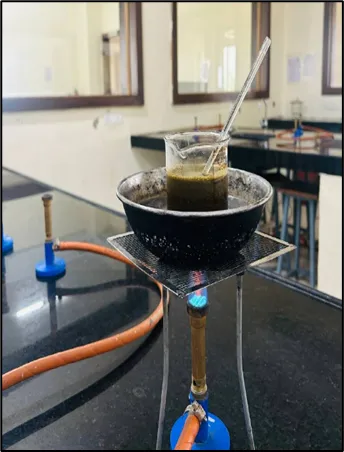
Figure no. 2: Decoction Extraction.
Phytochemical Screening of Extract:
a) Test for Flavonoids.
|
Test Name |
Observation |
Inference |
|
Alkaline reagent test |
Yellow colour was observed |
Presence of Flavonoids |
|
Lead acetate test |
Yellow precipitate was observed |
Presence of Flavonoids |
b) Test for Alkaloids.
|
Test Name |
Observation |
Inference |
|
Dragendroff’s test |
Orange precipitate observed |
Presence of Alkaloids |
|
Wagner’s test |
Reddish-brown precipitate observed |
Presence of Alkaloids |
|
Mayer’s test |
White ppt |
Presence of Alkaloids |
c) Test for Tannins.
|
Test Name |
Observation |
Inference |
|
Ferric chloride test |
Green-black colour was observed |
Presence of Tannins |
d) Test for Saponins
|
Test Name |
Observation |
Inference |
|
Foam test |
Foam formation for several minutes was observed |
Presence of Saponins |
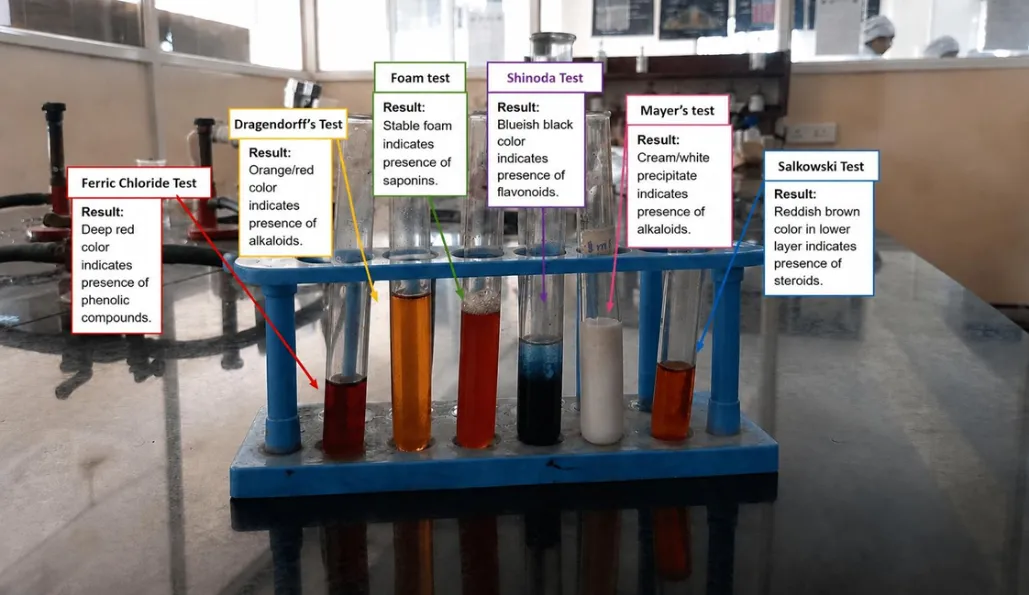
Figure no. 3: Phytochemical Screening Results
RESULTS AND DISCUSSION
The formulated banana leaf extract syrup of Musa paradisiaca showed satisfactory physicochemical and organoleptic properties, indicating successful development of a stable and patient-friendly dosage form. The syrup appeared clear, with a pleasant taste and acceptable viscosity, suggesting good palatability and ease of administration. The pH was maintained within an acidic range suitable for stability and throat compatibility, largely due to the presence of citric acid. No phase separation or precipitation was observed, confirming uniform dispersion of the extract and excipients. The inclusion of glycerin/sorbitol improved mouthfeel, while sodium benzoate effectively contributed to microbial stability. The formulation demonstrated potential therapeutic usefulness in throat infections, which may be attributed to the anti-inflammatory constituents present in banana leaves. Overall, the results indicate that the developed syrup is stable, effective, and suitable for further evaluation and potential clinical application.
Phytochemical Tests.
|
Phytochemical Test |
Result |
|
Alkaloids |
+ (Present) |
|
Flavonoids |
+ (Present) |
|
Tannins and Phenolics |
+ (Present) |
|
Saponins |
+ (Present) |
|
Glycosides |
+ (Present) |
Organoleptic Parameters.
|
Parameters |
Result |
|
Colour |
Whitish brown |
|
Appearance |
Thick & smooth |
CONCLUSION
This study focused on the formulation, evaluation, and therapeutic assessment of an oil-in-water (O/W) herbal cream incorporating Musa paradisiaca leaf extract for dermatological repair and wound healing applications. The research was undertaken to explore the potential of banana leaf phytoconstituents, particularly flavonoids, tannins, saponins, and phenolic compounds, as natural bioactive agents for promoting skin regeneration and reducing inflammation.
The extract was successfully obtained through ethanolic maceration and incorporated into a carefully designed O/W cream formulation. The prepared cream exhibited desirable physicochemical characteristics, including a smooth appearance, good homogeneity, acceptable pH, adequate viscosity, and excellent spreadability. Stability studies conducted under accelerated conditions demonstrated the formulation’s resistance to phase separation and maintained its structural integrity, indicating satisfactory shelf-life potential. The use of stearic acid and cetyl alcohol provided an effective lamellar gel network, while naturally occurring saponins contributed to emulsion stabilization.
Phytochemical screening confirmed the presence of therapeutically important secondary metabolites. Based on reported pharmacological evidence, these bioactive compounds possess antioxidant, anti-inflammatory, antimicrobial, and wound-healing properties. The formulation is expected to reduce oxidative stress, support collagen synthesis, and enhance tissue regeneration, thereby facilitating the wound-healing process.
The developed Musa paradisiaca leaf extract cream demonstrated promising pharmaceutical and therapeutic characteristics. The study highlights the potential of banana leaf extract as a natural and cost-effective ingredient for topical formulations. Further in vivo and clinical investigations are recommended to validate its safety, efficacy, and long-term therapeutic performance in dermatological applications.
ACKNOWLEDGEMENT
I sincerely thank the Delonix Society’s Baramati College of Pharmacy, Baramati, for providing the facilities to complete this research work successfully. I express my heartfelt gratitude to Rajendra N. Patil, Abhijit Shitole for their valuable guidance, encouragement, and continuous support throughout the project. I also thank all teaching and non-teaching staff members for their cooperation and assistance during the research work.
REFERENCES










Omkar Lambhate, Siddhant Maske, Prasad Khude, Aklesh Kori, Pratik Kokane, Priya Kudale, Sakshi Kodalkar, Pratiksha Madane, Abhijit Shitole, Rajendra Patil, Formulation And Evaluation of Banana Leaf Extract Cream for Skin Infection Treatment, Int. J. of Pharm. Sci., 2026, Vol 4, Issue 7, 1697-1706, https://doi.org/10.5281/zenodo.21264850
 10.5281/zenodo.21264850