

We use cookies to ensure our website works properly and to personalise your experience. Cookies policy
Department of Pharmaceutical Chemistry, Ashokrao Mane Institute of Pharmaceutical Sciences and Research, Save, Dr. Babasaheb Ambedkar Technological University, Lonere, Raigad, Kolhapur-416213, Maharashtra, India.
This study examines the properties and extraction techniques of Zingiber officinale, also referred to as ginger, a member of the Zingiberaceae family. It also uses Gas Chromatography-Mass Spectrometry (GC-MS) to determine the bioactive chemical composition of ginger (Zingiber officinale Roscoe) after Soxhlet extraction with methanol. The plant, which is mostly grown in Southeast Asia, is known for its unique taste, smell, and therapeutic qualities because of its bioactive components, including shogaol and gingerol. The investigation effectively detects and measures a number of phytochemicals found in the ginger rhizome, identifying 45 different compounds in all, including widely recognized ones like hexadecane, terpineol, and gingerol. The study explains the Soxhlet extraction process for separating these substances, emphasizing how successful and efficient it is in comparison to other extraction methods. A wide variety of phytochemicals are revealed when the chemical components of ginger extracts are analyzed using gas chromatography-mass spectrometry (GC-MS). The findings show that ginger has strong anti-inflammatory, anti-oxidant, and immunomodulatory qualities, making it a useful herbal remedy with few adverse effects. The promise of ginger as a source of health-promoting bioactive chemicals is highlighted overall by this study, which also highlights the need for improved extraction methods to increase phytoconstituent production and analysis.
The herbaceous tropical perennial Zingiber officinale, a member of the Zingiberaceae family, yields ginger from its subterranean stems or rhizomes. A member of the Zingiberaceae family, Zingiber officinale Roscoe is a thin perennial herb that grows up to two feet tall. It has greenish yellow flowers that look like orchids. The meaty and spicy rhizome can be white, yellowish, brown, or branching. The narrow or linear-lanceolate leaves can reach a length of 20 cm and a width of 1.5 to 2 cm. The volatile oils, which are the medicinally active compounds that give ginger its distinct flavor and odor, can make up as much as 1 to 4 percent of the dried rhizome. Blooms are formed in dense clusters and are yellow-green with purple ends. Many different types of plants can be found throughout Southeast Asia. (2,3) Ginger contains turmeric and cardamom. The strong aroma of ginger is a result of strong ketones like gingerol, the extract most frequently used in studies. The part of the ginger plant that is consumed is the rhizome, sometimes referred to as "ginger root," But that's not a root. The plant's horizontal stem that sprouts roots is called the rhizome.(4,5)
Bioactive Compounds of Ginger :
Several components in ginger, Althoughshogaols, the main byproducts of gingerol dehydration, are more prevalent in dried ginger, gingerols, the main elements of fresh ginger, are greatly diminished. (7) Methanolic crude extracts of fresh ginger rhizomes have been discovered to contain at least 31 compounds related to gingerol.(8)1-Propanol, 2-ethoxy- ,Propane, 1,1,3-triethoxy-, endo-Borneol, L-.alpha.-Terpineol, Tetradecane, (1R,4R,4aS,8aR)-4,7-Dimethyl-1-(prop-1-en-2-yl)-1,2,3,4,4a,5,6,8a-octahydronaphthalene, 1-Methyl-4-(6-methylhept-5-en-2-yl)cyclohexa-1,3-diene, Benzene, 1-(1,5-dimethyl-4-hexenyl)-4-methyl-, (1S,5S)-2-Methyl-5-((R)-6-methylhept-5-en-2-yl)bicyclo[3.1.0]hex-2-ene, 1H-Cyclopropa[a]naphthalene, decahydro-1,1,3a-trimethyl-7-methylene-, [1aS-(1a.alpha.,3a.alpha.,7a.beta.,7b.alpha.)]-, Naphthalene, 1,2,3,4,4a,5,6,8a-octahydro-7-methyl-4-methylene-1-(1-methylethyl)-, (1.alpha.,4a.beta.,8a.alpha.)-, .alpha.-Farnesene, .beta.-Bisabolene, Cyclohexene, 3-(1,5-dimethyl-4-hexenyl)-6-methylene-, [S-(R*,S*)]-, (E)-1-Methyl-4-(6-methylhept-5-en-2-ylidene)cyclohex-1-ene, Nerolidyl acetate, Hexadecane, Guaiol, Butan-2-one, 4-(3-hydroxy-2-methoxyphenylanalytical methods have discovered at least 115 components in both fresh and dried)-, 3-Cyclohexen-1-ol, 1-(1,5-dimethyl-4-hexenyl)-4-methyl-, 6,10-Dodecadien-1-yn-3-ol, 3,7,11-trimethyl-, Phenol, 5-(1,5-dimethyl-4-hexenyl)-2-methyl-, (R)-, 2(1H)-Naphthalenone, 4a,5,6,7,8,8a-hexahydro-7.alpha.-isopropyl-4a.beta.,8a.beta.-dimethyl-, 1H-3a,7-Methanoazulen-5-ol, octahydro-3,8,8-trimethyl-6-methylene-, n-Hexadecanoic acid, Glutaric acid, myrtenyl 3-methylbut-2-en-1-yl ester, 9,12-Octadecadienoic acid (Z,Z)-, 9-Octadecenoic acid, (E)-, Octadecanoic acid, Caryophyllene oxide, (E)-1-(4-Hydroxy-3-methoxyphenyl)dec-3-en-5-one, Caryophyllene oxide,3-Decanone, 1-(4-hydroxy-3-methoxyphenyl)-, Caryophyllene oxide, 1-(4-Hydroxy-3-methoxyphenyl)dec-4-en-3-one, 1-(4-Hydroxy-3-methoxyphenyl)decane-3,5-dione, Nerolidyl acetate, 5-Hydroxy-1-(4-hydroxy-3-methoxyphenyl)dodecan-3-one, 5-Hydroxy-1-(4-hydroxy-3-methoxyphenyl)decan-3-one, 1-(4-Hydroxy-3-methoxyphenyl)dodec-4-en-3-one, (3R,5S)-1-(4-Hydroxy-3-methoxyphenyl)decane-3,5-diyl diacetate, (E)-1-(4-hydroxy-3-methoxyphenyl)dec-1-ene-3,5-dione, 5-Hydroxy-1-(4-hydroxy-3-methoxyphenyl)dodecan-3-one, 2-Methylhexacosane, 1-(4-Hydroxy-3-methoxyphenyl)tetradec-4-en-3-one, 1-(4-Hydroxy-3-methoxyphenyl)tetradecane-3,5-dione, Tetrapentacontane
Pharmacology :
The therapeutic properties of ginger and its constituents include immunomodulatory, anti-inflammatory, anti-tumorigenic, anti-apoptotic, anti-hyperglycemic, anti-lipidemic, and anti-emetic effects. A powerful antioxidant, ginger may lessen or stop the generation of free radicals. Because it has few and mild side effects, it is considered a safe herbal medicine.(9)
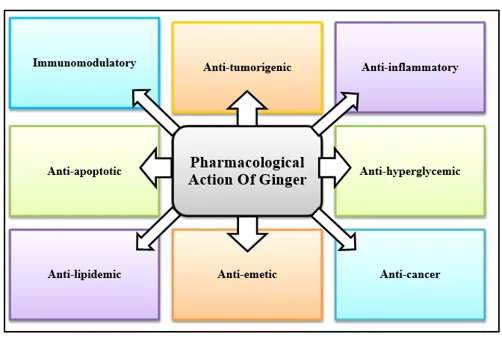
Fig.1 : Pharmacological Action of Ginger
SOXHLET EXTRACTION :
Numerous cutting-edge techniques, including rapid solvent extraction, Soxhlet extraction, supercritical fluid extraction, ultrasound-assisted extraction, and microwave-assisted extraction, have been developed to extract nutraceuticals from plants. These techniques seek to enhance extraction yield, decrease solvent usage, shorten extraction timeframes, and improve extract quality.(10)Soxhlet extraction is a type of atmospheric liquid extraction in which specific compounds are extracted using solvents at low pressures (outside pressure) at boiling temperatures.(11) In 1879, Franz von Soxhlet created a particular kind of laboratory apparatus called the Soxhlet extractor. Its original purpose was to remove a lipid from a solid. Soxhlet extraction is usually used when the contaminant is insoluble and the desired molecule is poorly soluble in a solvent. It efficiently recycles a little amount of solvent to dissolve a larger amount of material, allowing for unsupervised and uncontrolled operation.(12, 13)
Assembly:
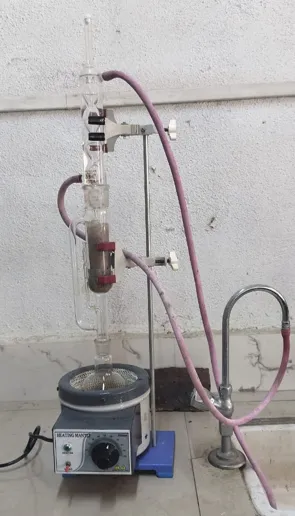
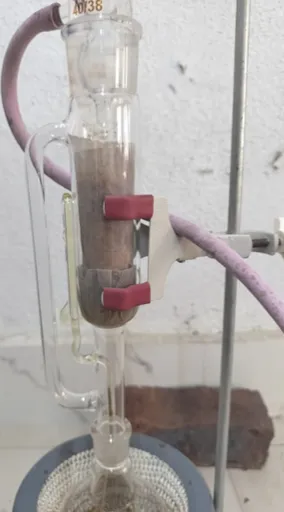
(A) (B)
Fig.2: (A) Assembly of soxhlet apparatus For extraction. (B)Ginger powder kept inside thimble filter suspended inside Ethanol solution.
GAS CHROMATOGRAPHY – MASS SPECTRUM ANALYSIS :
For the analysis of unknown plant components, gas chromatography-mass spectrometry (GC-MS) is a crucial instrument.(14) Gas Chromatography–Mass Spectrometry (GC-MS) is a hyphenated analytical technique that combines the separation and detection powers of gas-liquid chromatography and mass spectrometry to identify different compounds in a test sample. GC is used to distinguish the volatile and thermally stable alternatives in a sample, whereas GC-MS breaks apart the analyte to be identified based on its mass. A mass spectrometer is added to it to produce GC-MS/MS. Performance is better in single and triple quadrupole modes.
Working of GC-MS:
The size of the column and the phase characteristics (e.g., 5% phenyl polysiloxane) determine which capillary column is utilized in the gas chromatograph. Because different molecules in a mixture have different chemical characteristics and varying affinities for the stationary phase of the column, the molecules will separate as the sample travels along the length of the column. Since the molecules are kept by the column and then elute from the column at different times, the mass spectrometer downstream can independently collect, ionize, accelerate, and detect the ionized molecules. The mass spectrometer uses each molecule's mass-to-charge ratio to identify the ionized fragments that are produced. A description of its tools and capabilities is given below:
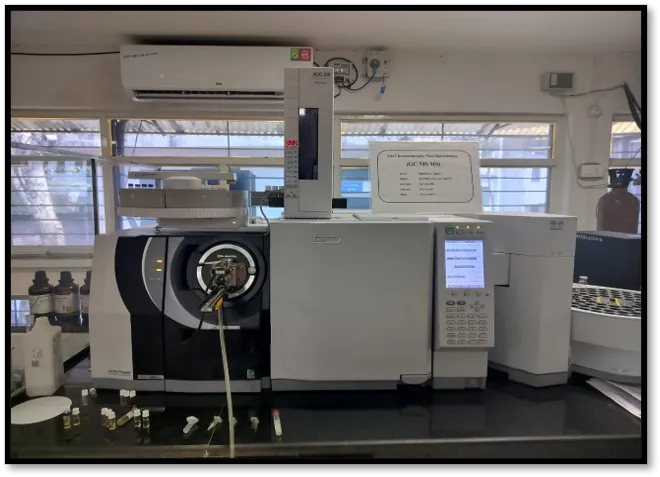
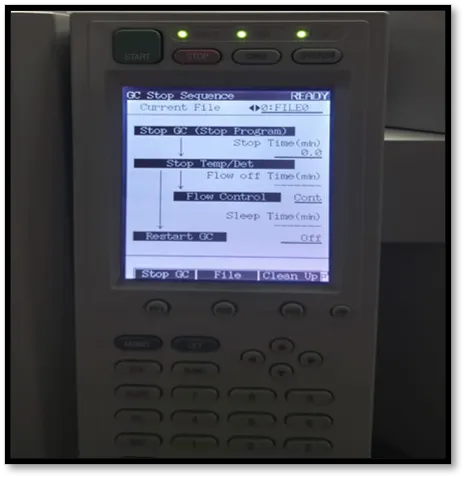
Fig .3 :Gas Chromatography Mass Spectroscopy of Shimadzu , Japan.
EXPERIMENTAL DESIGN:
1. Collection and preparation of plant material:
The ginger rhizomes were ground with a sanitized pestle and mortar after being allowed to dry at room temperature for ten to fifteen days. A sieve was then used to reduce the size of the powdered plant. After being placed in an airtight container to prevent the effects of humidity, the fine powder was kept at room temperature.
2. Preparation of Sample:
In the Soxhlet Extractor, the ginger sample is put in a porous thimble, which is often constructed of filter paper. Under the extractor, a flask containing hot methanol is used. Methanol rises through a tube to the condenser after evaporating. The sample in the thimble is hit by the condenser's condensation of the methanol vapor. Methanol dissolves the required components in the sample, filling the extractor with the solvent-solute mixture. Once the solvent level reaches the siphon tube, a new extraction cycle is started by sucking the solvent-solute mixture back into the flask. The desired compounds are extracted from the sample by repeating this cycle of boiling, condensation, and siphoning.
RESULTS AND DISCUSSION
GAS CHROMATOGRAPHY- MASS SPECTRUM ANALYSIS
|
Sr. No. |
Phytochemical Compounds |
RT (Min.) |
Formula |
Molecular Weight |
Chemical Structure |
|
1 |
1-Propanol, 2-ethoxy- |
4.611 |
C5H12O2 |
104 |
|
|
2 |
Propane, 1,1,3-triethoxy- |
11.751 |
C9H20O3 |
176 |
|
|
3 |
endo-Borneol |
14.446 |
C10H18O |
154 |
|
|
4 |
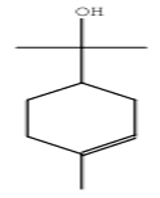
L-.alpha.-Terpineol |
15.147 |
C10H18O |
154 |
|
|
5 |
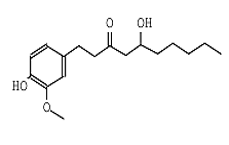
Gingerol |
18.799 |
C17H26O4 |
294 |
|
|
6 |
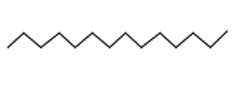
Tetradecane |
20.696 |
C14H30 |
198 |
|
|
7 |
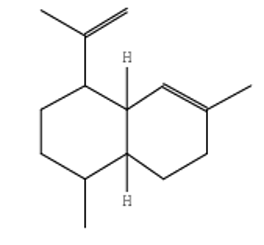
(1R,4R,4aS,8aR)-4,7-Dimethyl-1-(prop-1-en-2-yl)-1,2,3,4,4a,5,6,8a-octahydronaphthalene |
22.440 |
C15H24 |
204 |
|
|
8 |
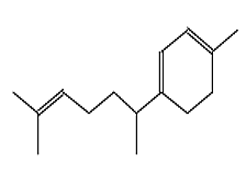
1-Methyl-4-(6-methylhept-5-en-2-yl)cyclohexa-1,3-diene |
22.844 |
C15H24 |
204 |
|
|
9 |
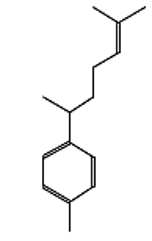
Benzene, 1-(1,5-dimethyl-4-hexenyl)-4-methyl- |
22.928 |
C15H22 |
202 |
|
|
10 |
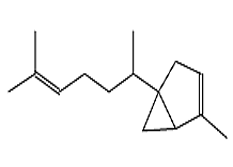
(1S,5S)-2-Methyl-5-((R)-6-methylhept-5-en-2-yl)bicyclo[3.1.0]hex-2-ene |
23.235 |
C15H24 |
204 |
|
|
11 |
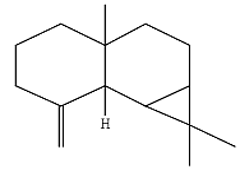
1H-Cyclopropa[a]naphthalene, decahydro-1,1,3a-trimethyl-7-methylene-, [1aS-(1a.alpha.,3a.alpha.,7a.beta.,7b.alpha.)]- |
23.325 |
C15H24 |
204 |
|
|
12 |
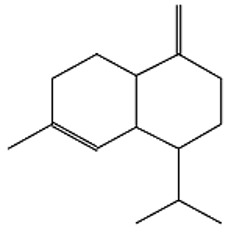
Naphthalene, 1,2,3,4,4a,5,6,8a-octahydro-7-methyl-4-methylene-1-(1-methylethyl)-, (1.alpha.,4a.beta.,8a.alpha.)- |
23.407 |
C15H24 |
204 |
|
|
13 |
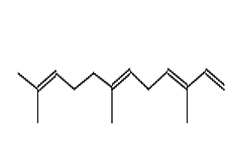
.alpha.-Farnesene |
23.409 |
C15H24 |
204 |
|
|
14 |
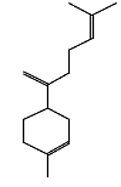
beta.-Bisabolene |
23.560 |
C15H24 |
204 |
|
|
15 |
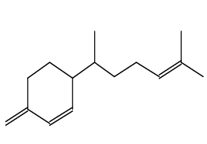
Cyclohexene, 3-(1,5-dimethyl-4-hexenyl)-6-methylene-, [S-(R*,S*)]- |
23.944 |
C15H24 |
204 |
|
|
16 |
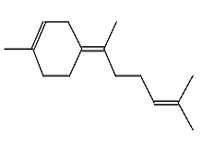
(E)-1-Methyl-4-(6-methylhept-5-en-2-ylidene) cyclohex-1-ene |
24.140 |
C15H24 |
204 |
|
|
17 |
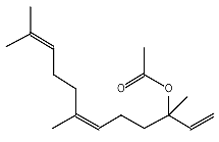
Nerolidyl acetate |
24.834 |
C17H28O2 |
264 |
|
|
18 |
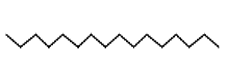
Hexadecane |
25.556 |
C16H34 |
226 |
|
|
19 |
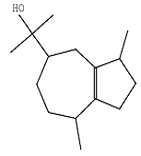
Guaiol |
26.434 |
C15H26O |
222 |
|
|
20 |
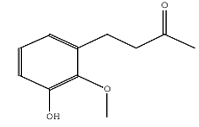
Butan-2-one, 4-(3-hydroxy-2-methoxyphenyl)- |
26.894 |
C11H14O3 |
194 |
|
|
21 |
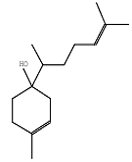
3-Cyclohexen-1-ol, 1-(1,5-dimethyl-4-hexenyl)-4-methyl- |
27.356 |
C15H26O |
222 |
|
|
22 |
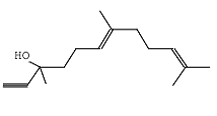
6,10-Dodecadien-1-yn-3-ol, 3,7,11-trimethyl- |
27.938 |
C15H24O |
220 |
|
|
23 |
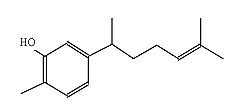
Phenol, 5-(1,5-dimethyl-4-hexenyl) -2-methyl-, (R)- |
29.210 |
C15H22O |
218 |
|
|
24 |
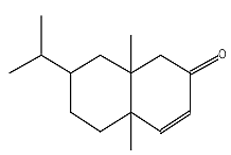
2(1H)-Naphthalenone, 4a,5,6,7,8,8a-hexahydro-7.alpha.-isopropyl-4a.beta.,8a.beta.-dimethyl- |
30.727 |
C15H24O |
220 |
|
|
25 |
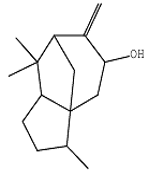
1H-3a,7-Methanoazulen-5-ol, octahydro-3,8,8-trimethyl-6-methylene- |
32.287 |
C15H24O |
220 |
|
|
26 |
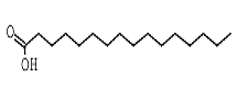
n-Hexadecanoic acid |
34.293 |
C16H32O2 |
256 |
|
|
27 |
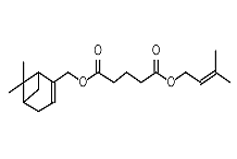
Glutaric acid, myrtenyl 3-methylbut-2-en-1-yl ester |
34.731 |
C20H30O4 |
334 |
|
|
28 |
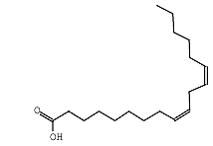
9,12-Octadecadienoic acid (Z,Z)- |
37.961 |
C18H32O2 |
280 |
|
|
29 |
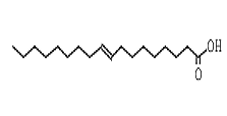
9-Octadecenoic acid, (E)- |
38.064 |
C18H34O2 |
282 |
|
|
30 |
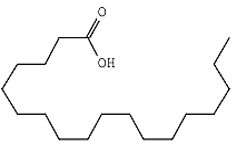
Octadecanoic acid |
38.501 |
C18H36O2 |
284 |
|
|
31 |
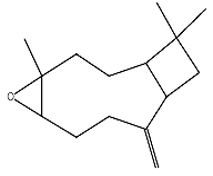
Caryophyllene oxide |
39.512 |
C15H24O |
220 |
|
|
32 |
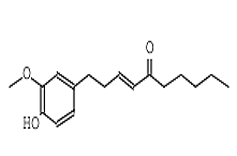
(E)-1-(4-Hydroxy-3-methoxyphenyl)dec-3-en-5-one |
39.784 |
C17H24O3 |
276 |
|
|
33 |
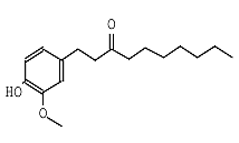
3-Decanone, 1-(4-hydroxy-3-methoxyphenyl) |
39.948 |
C17H26O3 |
278 |
|
|
34 |
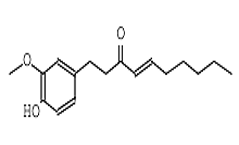
1-(4-Hydroxy-3-methoxyphenyl) dec-4-en-3-one |
41.059 |
C17H24O3 |
276 |
|
|
35 |
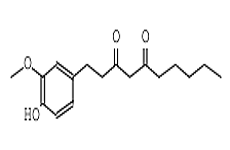
1-(4-Hydroxy-3-methoxyphenyl)decane-3,5-dione |
41.745 |
C17H24O4 |
292 |
|
|
36 |
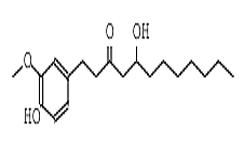
5-Hydroxy-1-(4-hydroxy-3-methoxyphenyl)dodecan-3-one |
42.449 |
C19H30O4 |
322 |
|
|
37 |
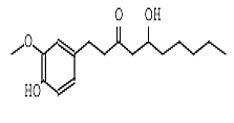
5-Hydroxy-1-(4-hydroxy-3-methoxyphenyl)decan-3-one |
42.738 |
C17H26O4 |
294 |
|
|
38 |
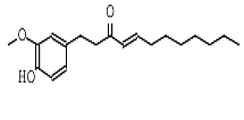
1-(4-Hydroxy-3-methoxyphenyl) dodec-4-en-3-one |
44.594 |
C19H28O3 |
304 |
|
|
39 |
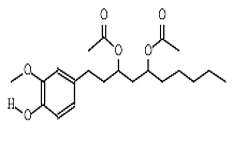
(3R,5S)-1-(4-Hydroxy-3-methoxyphenyl) decane-3,5-diyl diacetate |
44.947 |
C21H32O6 |
380 |
|
|
40 |
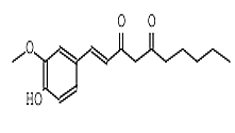
(E)-1-(4-hydroxy-3-methoxyphenyl) dec-1-ene-3,5-dione |
46.373 |
C17H22O4 |
290 |
|
|
41 |
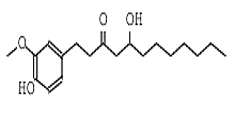
5-Hydroxy-1-(4-hydroxy-3-methoxyphenyl) dodecan-3-one |
46.489 |
C19H30O4 |
322 |
|
|
42 |
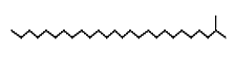
2-Methylhexacosane |
47.980 |
C27H56 |
380 |
|
|
43 |
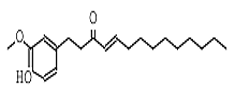
1-(4-Hydroxy-3-methoxyphenyl) tetradec-4-en-3-one |
48.519 |
C21H32O3 |
332 |
|
|
44 |
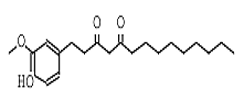
1-(4-Hydroxy-3-methoxyphenyl) tetradecane-3,5-dione |
49.325 |
C21H32O4 |
348 |
|
|
45 |
Tetrapentacontane |
49.935 |
C54H110 |
758 |
|
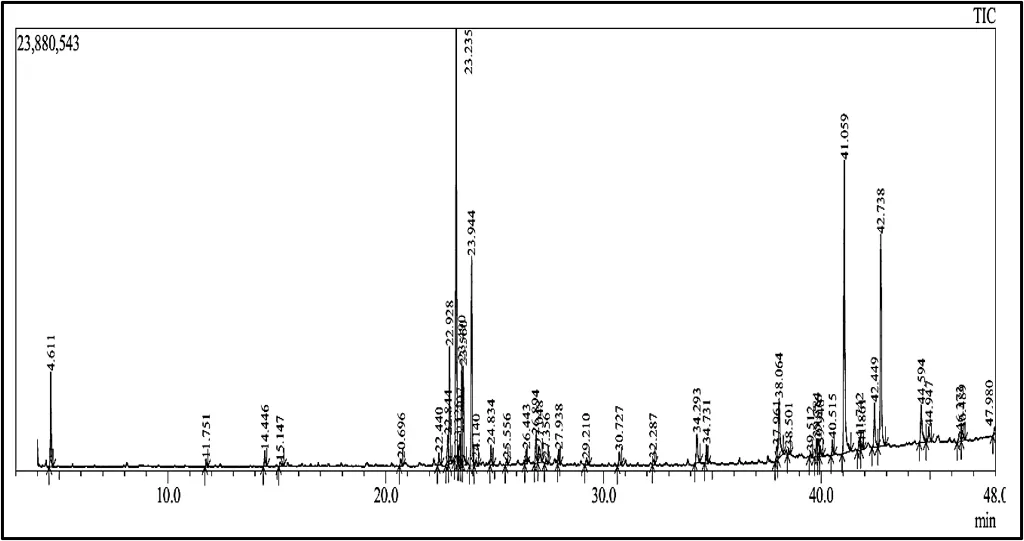
Fig.4: chromatogram of zingiber officinale by GC-MS
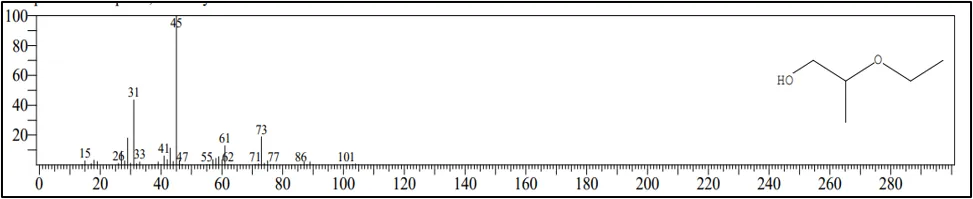
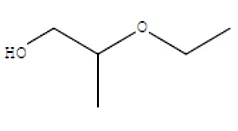
Fig. 1: Structure of 1-Propanol, 2-ethoxy- present in Zingiber officinale with retention time=4.611 using GC-MS analysis
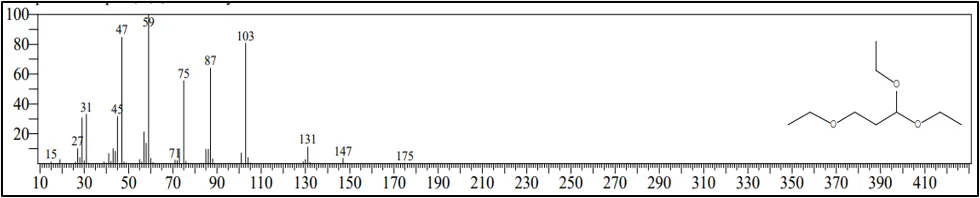
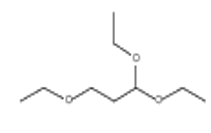
Fig. 2: Structure of Propane, 1,1,3-triethoxy- present in Zingiber officinale with retention time=11.751using GC-MS analysis

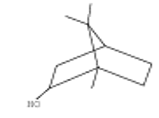
Fig. 3: Structure of endo-Borneol present in Zingiber officinale with retention time=14.446 using GC-MS analysis
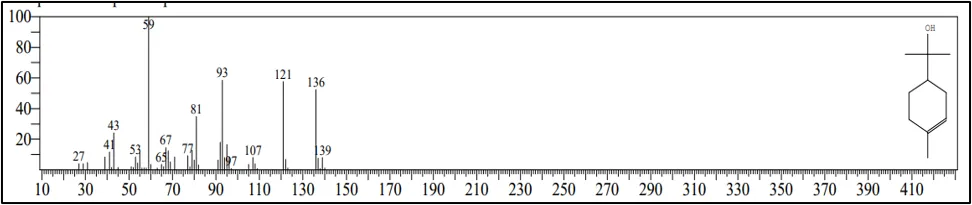
Fig. 4: Structure of L-.alpha.-Terpineol present in Zingiber officinale with retention time=15.147using GC-MS analysis
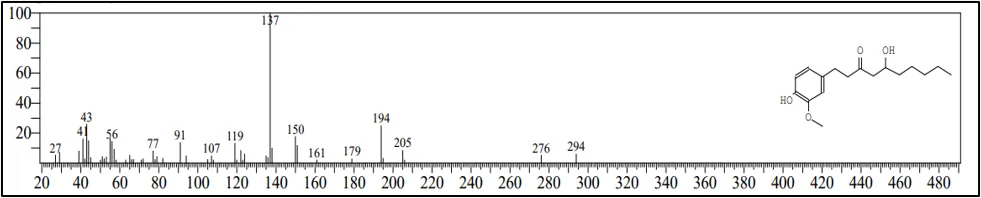
Fig. 5: Structure of Gingerol present in Zingiber officinale with retention time=18.799 using GC-MS analysis
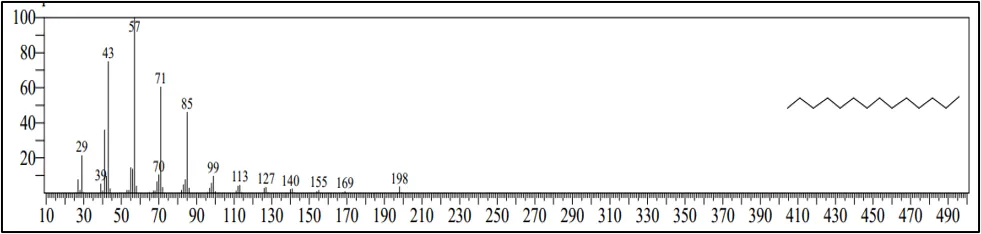
Fig .6: Structure of Tetradecane present in Zingiber officinale with retention time=20.696 using GC-MS analysis
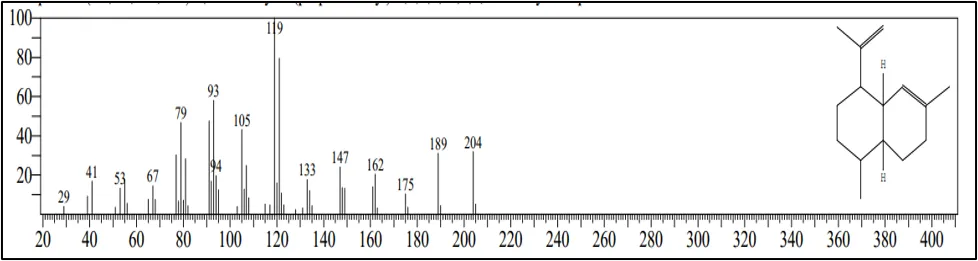
Fig .7: Structure of (1R,4R,4aS,8aR)-4,7-Dimethyl-1-(prop-1-en-2-yl)-1,2,3,4,4a,5,6,8a-octahydronaphthalene present in Zingiber officinale with retention time=22.440 using GC-MS analysis
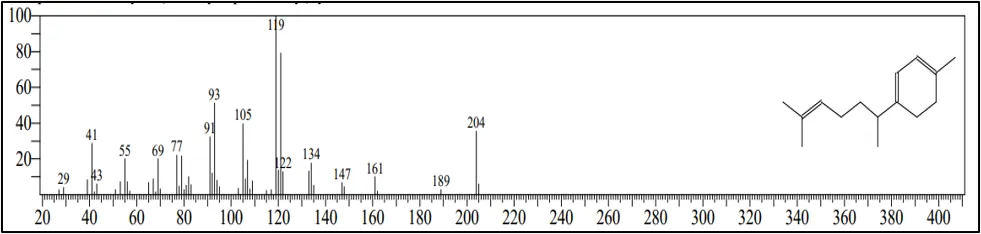
Fig .8: Structure of 1-Methyl-4-(6-methylhept-5-en-2-yl)cyclohexa-1,3-diene present in Zingiber officinale with retention time=22.844 using GC-MS analysis
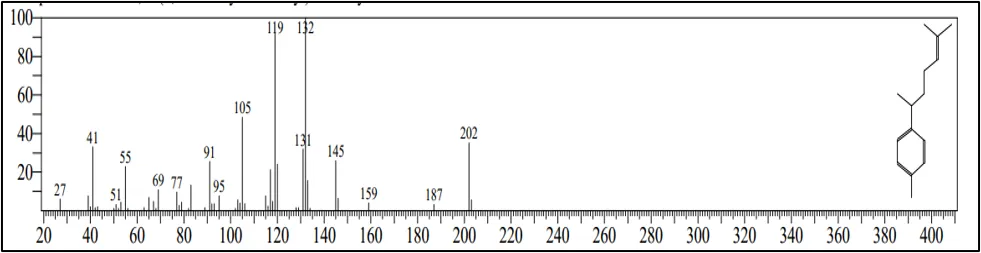
Fig .9: Structure of Benzene, 1-(1,5-dimethyl-4-hexenyl)-4-methylpresent in Zingiber officinale with retention time=22.928 using GC-MS analysis
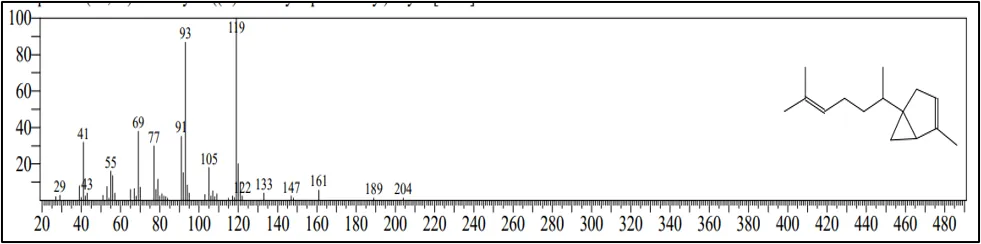
Fig .10: Structure of (1S,5S)-2-Methyl-5-((R)-6-methylhept-5-en-2-yl)bicyclo[3.1.0]hex-2-ene present in Zingiber officinale with retention time=23.235 using GC-MS analysis
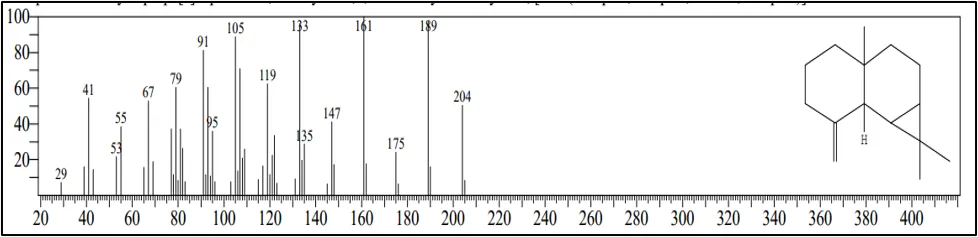
Fig .11: Structure of 1H-Cyclopropa[a]naphthalene, decahydro-1,1,3a-trimethyl-7-methylene-, [1aS-(1a.alpha.,3a.alpha.,7a.beta.,7b.alpha.)]-present in Zingiber officinale with retention time=23.325 using GC-MS analysis
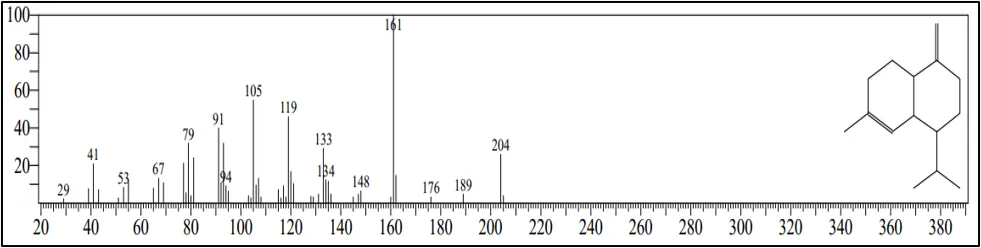
Fig .12: Structure of Naphthalene, 1,2,3,4,4a,5,6,8a-octahydro-7-methyl-4-methylene-1-(1-methylethyl)-, (1.alpha.,4a.beta.,8a.alpha.)- present in Zingiber officinale with retention time=23.407 using GC-MS analysis
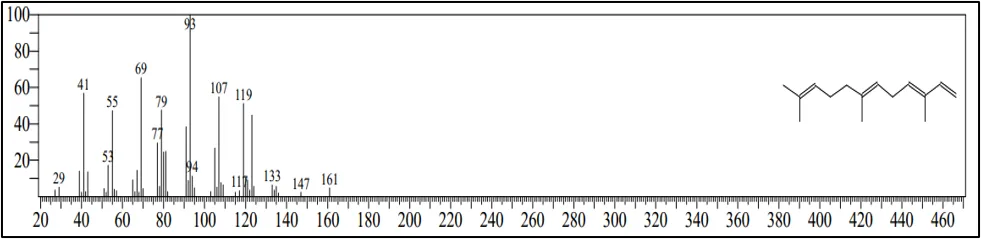
Fig .13: Structure of alpha.-Farnesene present in Zingiber officinale with retention time=23.490 using GC-MS analysis
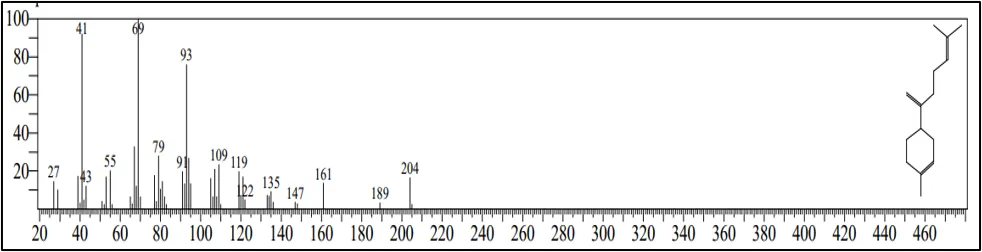
Fig .14: Structure of beta.-Bisabolene present in Zingiber officinale with retention time=23.560 using GC-MS analysis
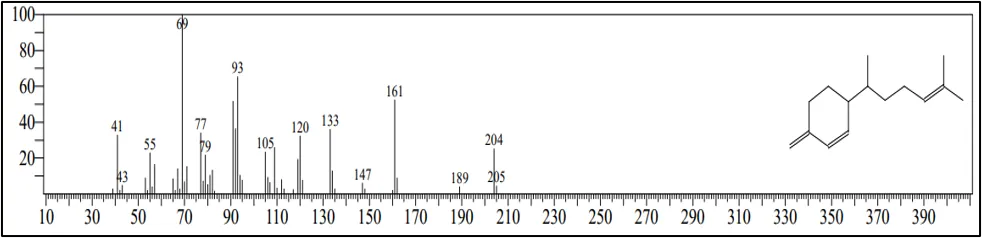
Fig .15: Structure of Cyclohexene, 3-(1,5-dimethyl-4-hexenyl)-6-methylene-, [S-(R*,S*)]- present in Zingiber officinale with retention time=23.944 using GC-MS analysis
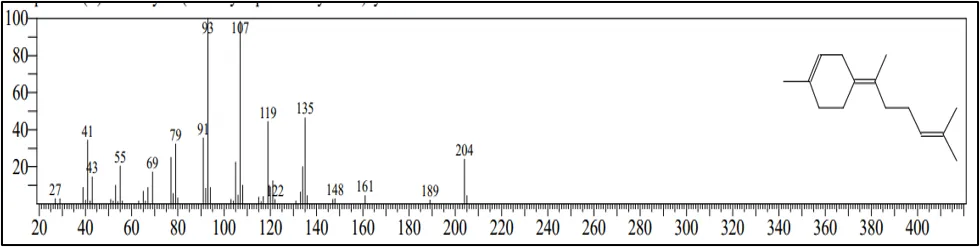
Fig .16: Structure of (E)-1-Methyl-4-(6-methylhept-5-en-2-ylidene)cyclohex-1-ene present in Zingiber officinale with retention time=24.140 using GC-MS analysis
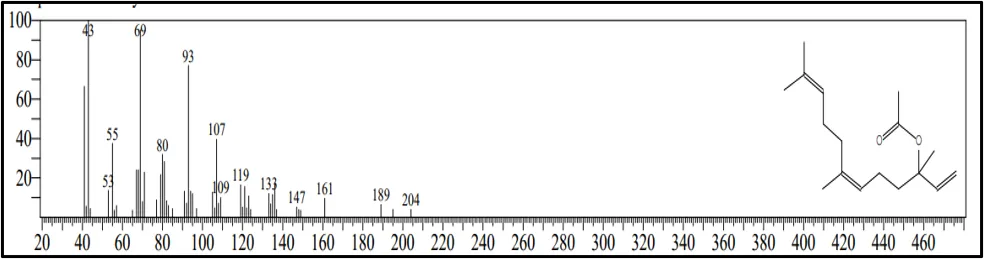
Fig .17: Structure of Nerolidyl acetate present in Zingiber officinale with retention time=24.834 using GC-MS analysis
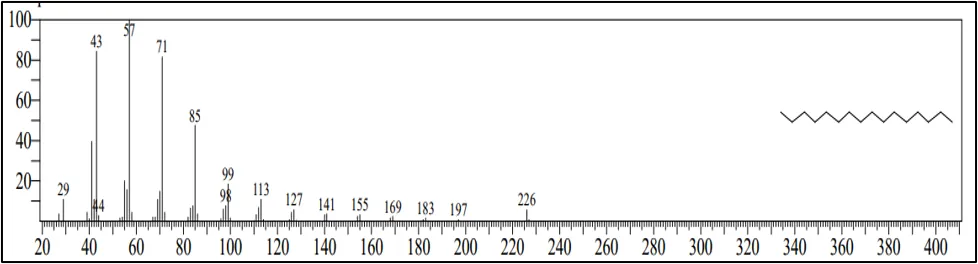
Fig .18: Structure of hexadecane present in Zingiber officinale with retention time=25.556 using GC-MS analysis
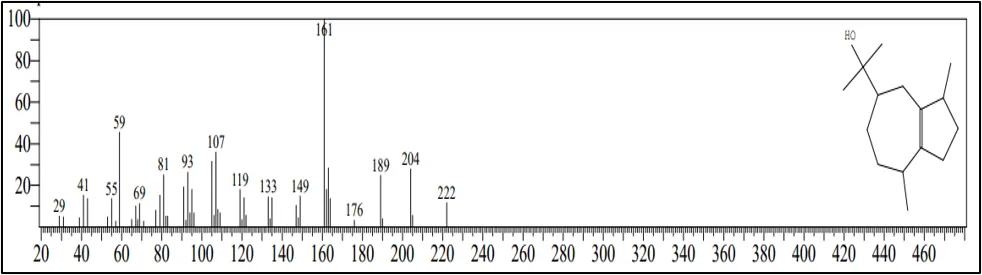
Fig .19: Structure of Guaiol presgent in Zingiber officinale with retention time=26.443 using GC-MS analysis
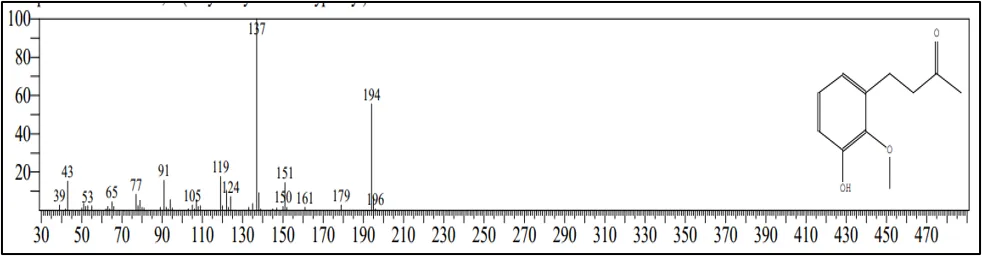
Fig .20: Structure of Butan-2-one, 4-(3-hydroxy-2-methoxyphenyl)- presgent in Zingiber officinale with retention time=26.894 using GC-MS analysis
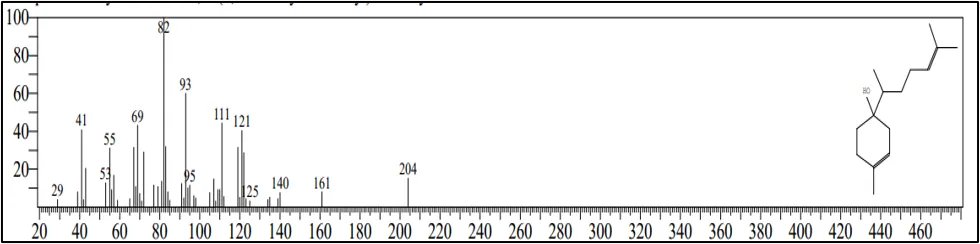
Fig .21: Structure of 3-Cyclohexen-1-ol, 1-(1,5-dimethyl-4-hexenyl)-4-methyl- presgent in Zingiber officinale with retention time=27.356 using GC-MS analysis
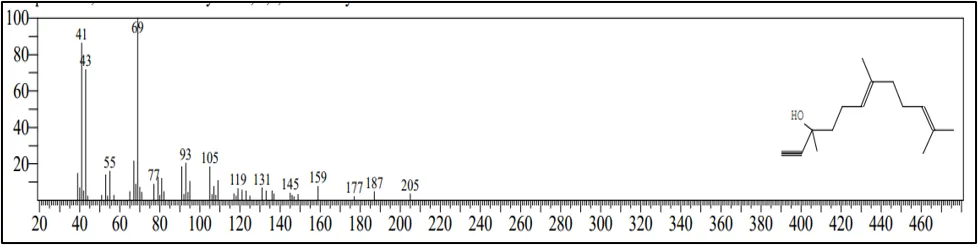
Fig .22: Structure of 6,10-Dodecadien-1-yn-3-ol, 3,7,11-trimethyl- present in Zingiber officinale with retention time=27.938 using GC-MS analysis
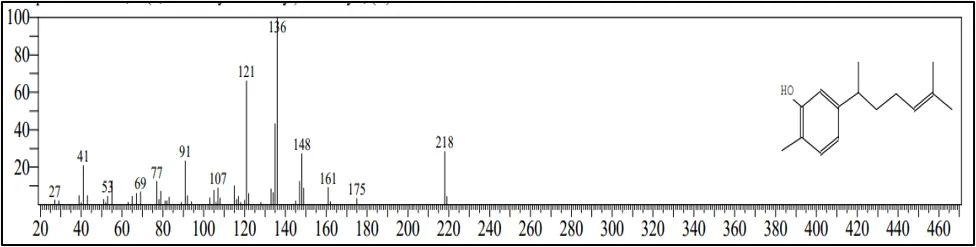
Fig .23: Structure of Phenol, 5-(1,5-dimethyl-4-hexenyl)-2-methyl-, (R)- present in Zingiber officinale with retention time=29.210 using GC-MS analysis
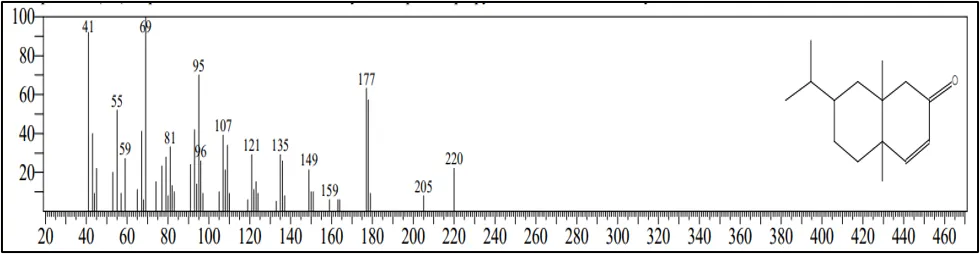
Fig .24: Structure of 2(1H)-Naphthalenone, 4a,5,6,7,8,8a-hexahydro-7.alpha.-isopropyl-4a.beta.,8a.beta.-dimethyl-present in Zingiber officinale with retention time=30.727 using GC-MS analysis
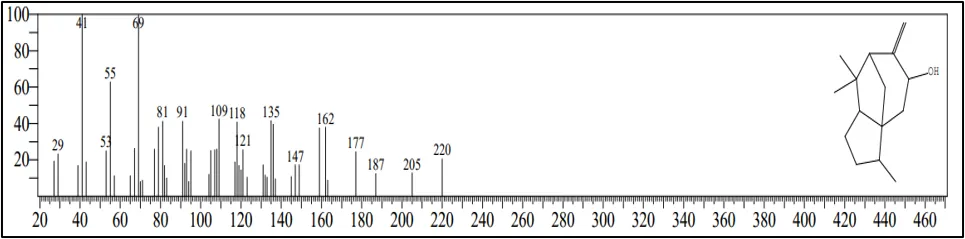
Fig .25: Structure of 1H-3a,7-Methanoazulen-5-ol, octahydro-3,8,8-trimethyl-6-methylene- present in Zingiber officinale with retention time=32.287 using GC-MS analysis
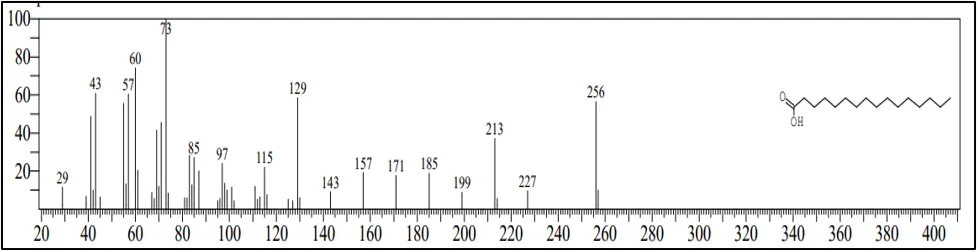
Fig .26: Structure of n-Hexadecanoic acid present in Zingiber officinale with retention time=34.293 using GC-MS analysis
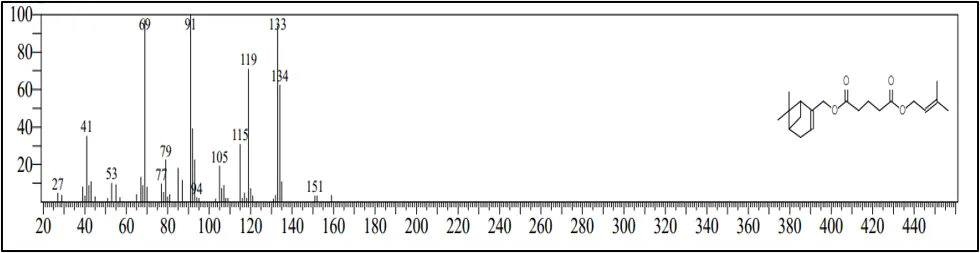
Fig .27: Structure of Glutaric acid, myrtenyl 3-methylbut-2-en-1-yl ester present in Zingiber officinale with retention time=34.731 using GC-MS analysis
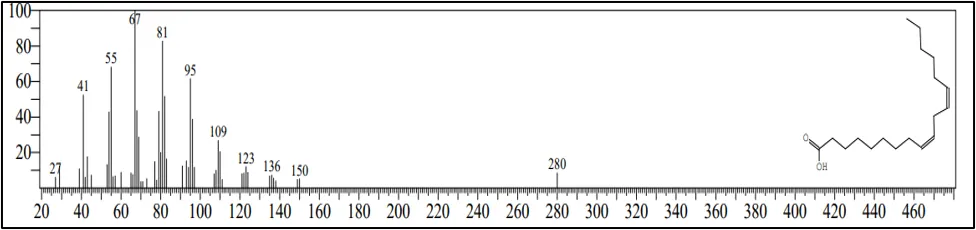
Fig .28: Structure of 9,12-Octadecadienoic acid (Z,Z)- present in Zingiber officinale with retention time=37.961 using GC-MS analysis
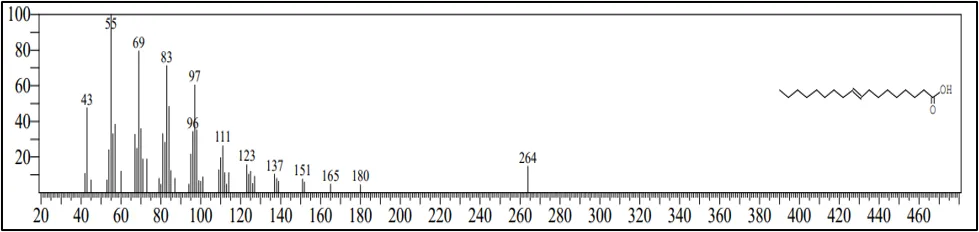
Fig .29: Structure of 9-Octadecenoic acid, (E)- present in Zingiber officinale with retention time=38.064 using GC-MS analysis
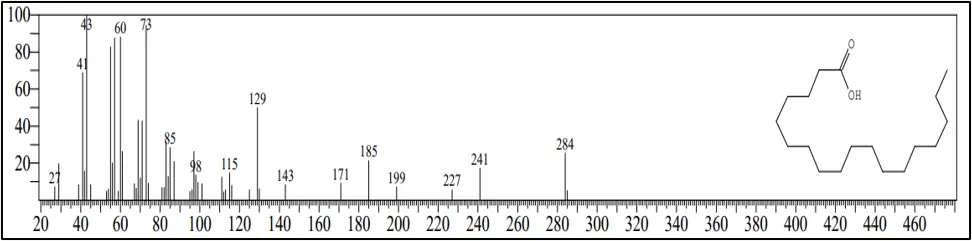
Fig .30: Structure of Octadecenoic acid present in Zingiber officinale with retention time=38.501 using GC-MS analysis
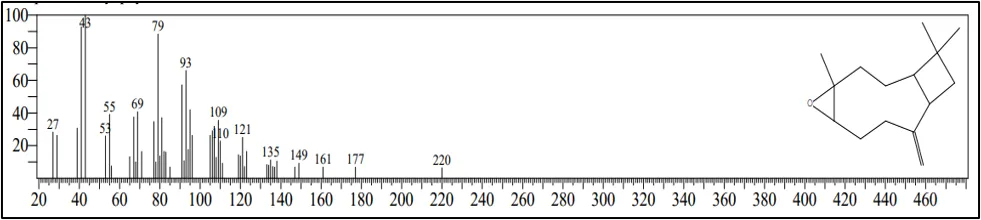
Fig .31: Structure of Caryophyllene oxide present in Zingiber officinale with retention time=39.512 using GC-MS analysis
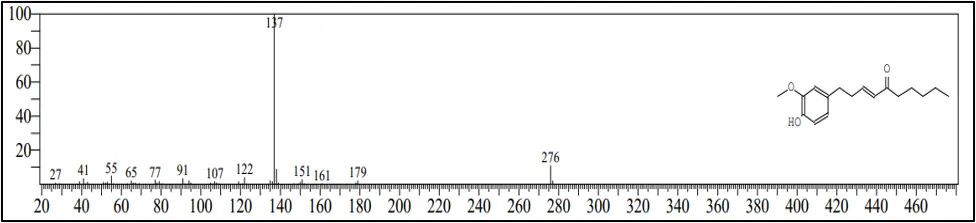
Fig .32: Structure of (E)-1-(4-Hydroxy-3-methoxyphenyl)dec-3-en-5-one present in Zingiber officinale with retention time=39.784 using GC-MS analysis
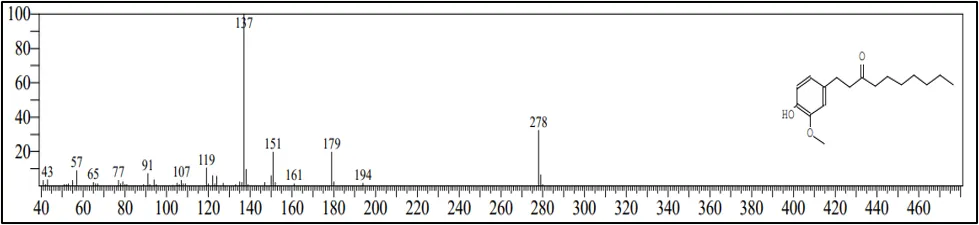
Fig .33: Structure of 3-Decanone, 1-(4-hydroxy-3-methoxyphenyl)- present in Zingiber officinale with retention time=39.948 using GC-MS analysis
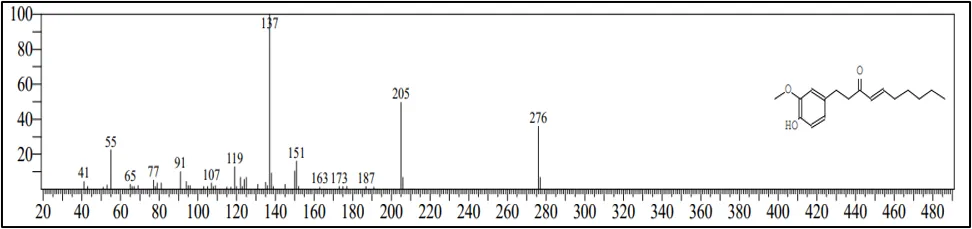
Fig .34: Structure of 1-(4-Hydroxy-3-methoxyphenyl)dec-4-en-3-one present in Zingiber officinale with retention time=41.059 using GC-MS analysis
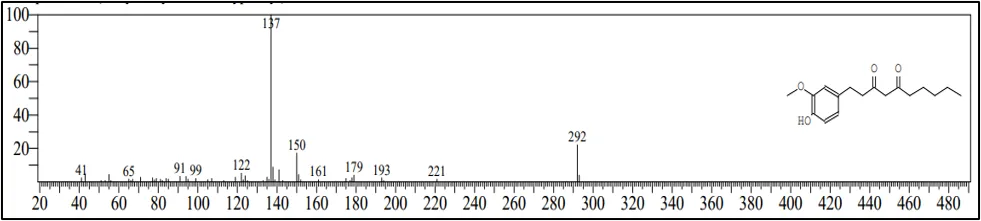
Fig .35: Structure of 1-(4-Hydroxy-3-methoxyphenyl)decane-3,5-dione present in Zingiber officinale with retention time=41.742 using GC-MS analysis
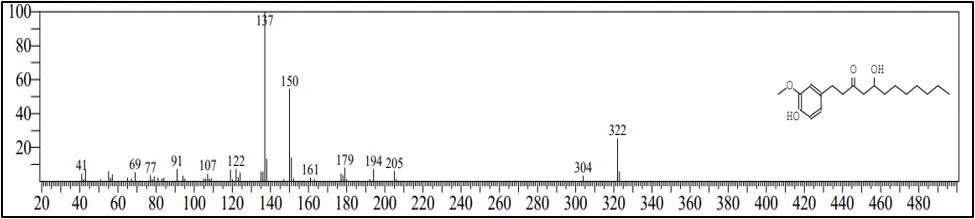
Fig .36: Structure of 5-Hydroxy-1-(4-hydroxy-3-methoxyphenyl)dodecan-3-one present in Zingiber officinale with retention time=42.449 using GC-MS analysis
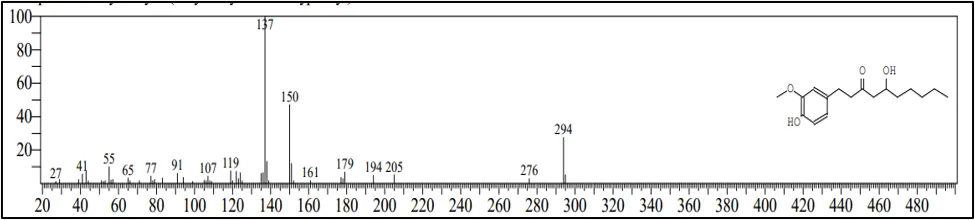
Fig .37: Structure of 5-Hydroxy-1-(4-hydroxy-3-methoxyphenyl)decan-3-one present in Zingiber officinale with retention time=42.738 using GC-MS analysis
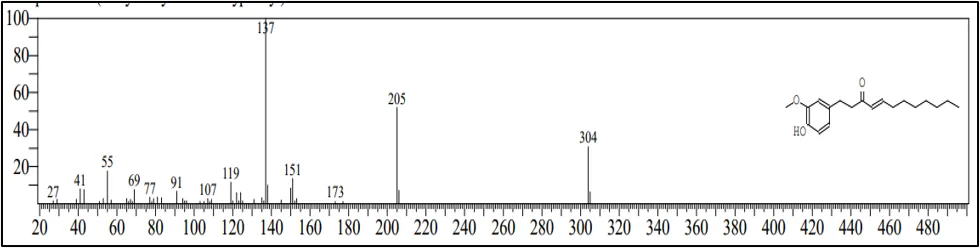
Fig .38: Structure of 1-(4-Hydroxy-3-methoxyphenyl)dodec-4-en-3-one present in Zingiber officinale with retention time=44.594 using GC-MS analysis
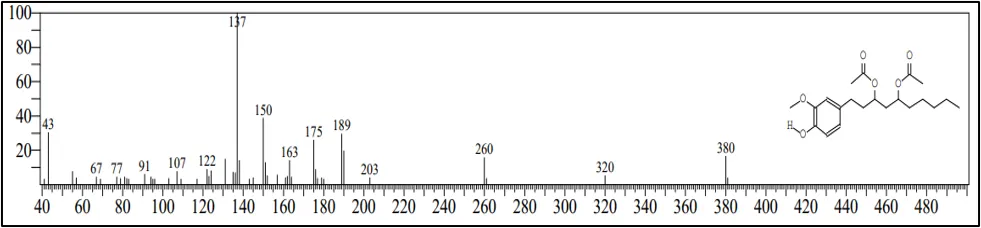
Fig .39: Structure of (3R,5S)-1-(4-Hydroxy-3-methoxyphenyl)decane-3,5-diyl diacetate present in Zingiber officinale with retention time=44.947 using GC-MS analysis
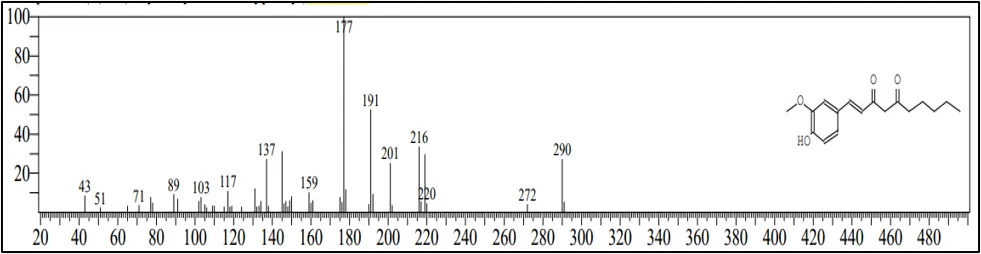
Fig .40: Structure of 1-(4-hydroxy-3-methoxyphenyl)tetradec-1-ene-3,5-dione present in Zingiber officinale with retention time=46.373 using GC-MS analysis
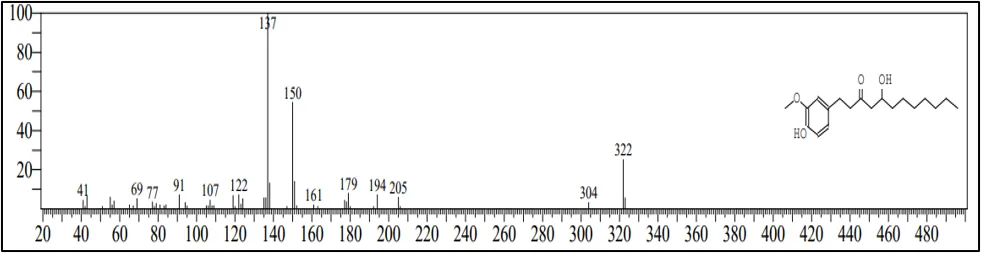
Fig .41: Structure of 5-Hydroxy-1-(4-hydroxy-3-methoxyphenyl)dodecan-3-one present in Zingiber officinale with retention time=46.489 using GC-MS analysis
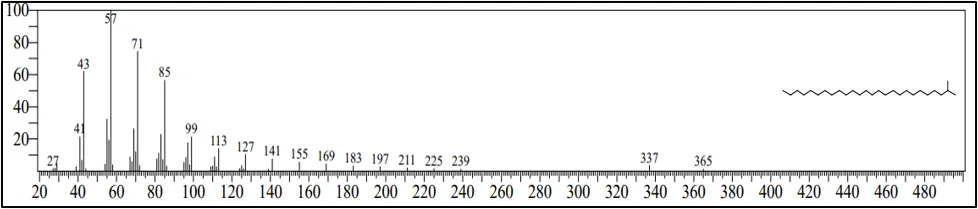
Fig .42: Structure of 2-Methylhexacosane present in Zingiber officinale with retention time=47.980 using GC-MS analysis
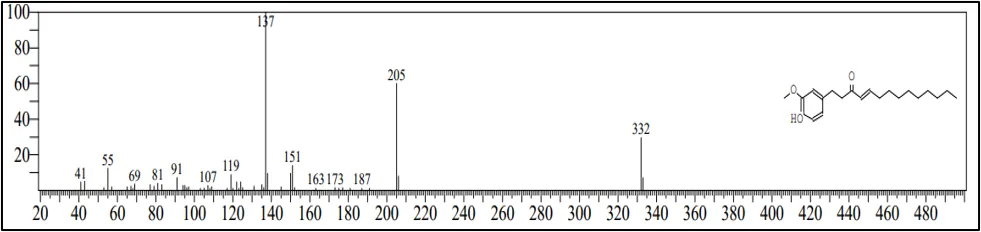
Fig .43: Structure of 1-(4-Hydroxy-3-methoxyphenyl)tetradec-4-en-3-one present in Zingiber officinale with retention time=48.519 using GC-MS analysis
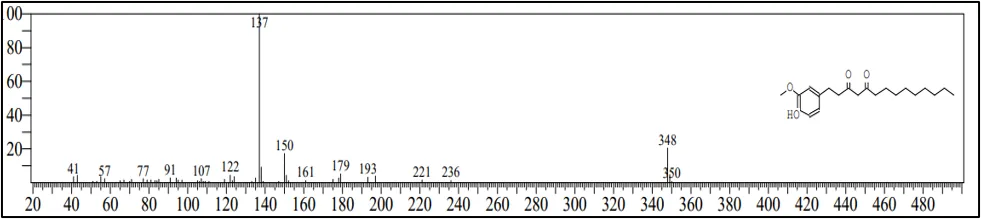
Fig .44: Structure of 1-(4-Hydroxy-3-methoxyphenyl)tetradecane-3,5-dione present in Zingiber officinale with retention time=49.325 using GC-MS analysis
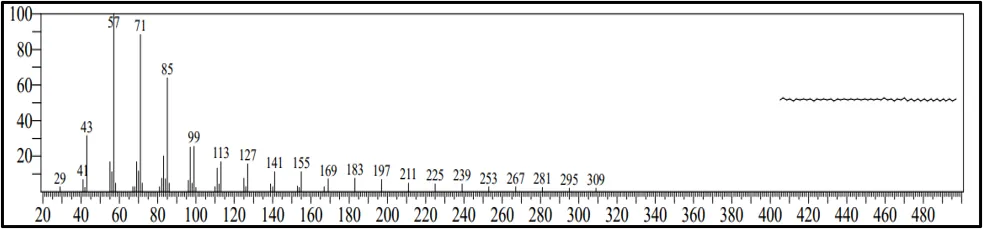
Fig .45: Structure of Tetrapentacontane present in Zingiber officinale with retention time=49.935 using GC-MS analysis
CONCLUSION
From the study's findings, it can be predicted that Zingiber officinale contains many different kinds of bioactive compounds. These compounds were extracted using a methanolic extract and then exposed to gas chromatography-mass spectrometry examination. These results suggest that the extraction and analysis of phytoconstituents can be done with greater accuracy and precision.
ACKNOWLEDGMENTS
The authors are thankful to the management of Department of pharmaceutical chemistry, Ashokrao Mane Institute of Pharmaceutical Sciences and Research, Save, Kolhapur, Maharashtra, India for providing Library and laboratory facility for completing this work successfully.
CONFLICT OF INTERESTS
The authors declare that there is no conflict of interest.
AUTHOR CONTRIBUTIONS
All the authors contributed significantly to this manuscript, participated in reviewing/editing, and approved the final draft for publication. The research profile of the authors can be verified from their ORCID IDs, given below
Dr. Avinash V. Chavan : https://orcid.org/0000-0003-1335-5006
Ms. Vrushali K. Patil : https://orcid.org/0009-0000-3959-2881
Ms. Prarthana U. Mane : https://orcid.org/0009-0006-0219-7988
REFERENCES




Abhijeet Kulkarni, Avinash Chavan, Vrushali Patil, Prarthana Mane, Bioactive Compounds Extraction and Analysis of Ginger: A Study of Zingiber officinale, Int. J. of Pharm. Sci., 2026, Vol 4, Issue 10, 569-591. https://doi.org/10.5281/zenodo.23165126
 10.5281/zenodo.23165126