

We use cookies to ensure our website works properly and to personalise your experience. Cookies policy
JES SND institute of pharmacy Babhulgaon Yeola Nashik -423401.
Background: Peptic ulcer disease (PUD) is a prevalent gastrointestinal disorder worldwide, characterized by damage to the protective mucosal lining of the stomach and duodenum. Its development is primarily associated with Helicobacter pylori infection, prolonged use of non-steroidal anti-inflammatory drugs (NSAIDs), and increased oxidative stress. Although conventional treatments, including proton pump inhibitors (PPIs) and histamine-2 receptor antagonists, are widely used and generally effective, their prolonged administration may be associated with adverse effects, antimicrobial resistance, and disease recurrence. These limitations have encouraged researchers to explore safer and more biologically derived therapeutic alternatives. Objective: This review aims to examine recent scientific evidence regarding the therapeutic potential of medicinal plants in the prevention and treatment of peptic ulcer disease, with particular emphasis on their phytochemical constituents and underlying pharmacological mechanisms. Methods: Relevant scientific publications from the past two decades were reviewed using electronic databases, including PubMed, ScienceDirect, Google Scholar, and Scopus. The review considers experimental findings from in vitro and in vivo studies, along with available clinical evidence concerning the gastroprotective and anti-ulcer properties of medicinal plants. Results: Several medicinal plants, including Glycyrrhiza glabra, Curcuma longa, Zingiber officinale, and Aloe vera, have demonstrated promising gastroprotective and ulcer-healing effects. Their biological activities are largely attributed to the presence of phytochemicals such as flavonoids, tannins, polyphenols, and terpenoids. These compounds may protect the gastric mucosa through several mechanisms, including the regulation of gastric acid secretion, enhancement of mucus and bicarbonate production, reduction of reactive oxygen species (ROS), inhibition of inflammatory mediators such as tumour necrosis factor-alpha (TNF-?) and interleukin-1 beta (IL-1?), and antimicrobial effects against H. pylori. Some herbal preparations have also demonstrated favourable tolerability in experimental studies, although their comparative safety requires further clinical
Peptic ulcer disease (PUD) is a gastrointestinal condition characterized by the development of open lesions in the inner mucosal lining of the digestive tract due to the damaging effects of gastric acid and pepsin. These lesions extend beyond the superficial epithelial layer and may involve deeper tissues, including the muscularis mucosae. The condition most frequently affects the stomach and the proximal portion of the duodenum, although ulceration may occasionally develop in other regions, such as the lower oesophagus, distal duodenum, and jejunum.
The clinical presentation of PUD commonly includes epigastric discomfort or abdominal pain. The timing of pain in relation to food intake may vary depending on the location of the ulcer. Gastric ulcer pain generally develops shortly after eating, often within 15–30 minutes, whereas duodenal ulcer pain is more likely to occur approximately 2–3 hours after meals. The diagnosis of PUD commonly involves testing for Helicobacter pylori infection, while upper gastrointestinal endoscopy may be recommended in patients with concerning clinical symptoms or when direct examination of the mucosal lesions is necessary. Treatment generally involves acid-suppressive medications, particularly proton pump inhibitors, together with appropriate antimicrobial therapy when H. pylori infection is identified.
The development of peptic ulcer disease is associated with several underlying factors; however, H. pylori infection and the prolonged or inappropriate use of non-steroidal anti-inflammatory drugs are considered the two major causes. These factors interfere with the normal protective mechanisms of the gastric mucosa, making it more vulnerable to acid-induced injury.
1.1 Classification of Ulcers
Ulcers can be classified according to their underlying causes, anatomical locations, and clinical characteristics.
1.1.1 Classification Based on Etiology
1.1.2 Classification Based on Anatomical Location
According to their anatomical site, ulcers can be classified as:
1.1.3 Classification Based on Clinical Appearance
Based on their physical appearance and extent of tissue damage, ulcers may be described as:
1.2 Etiological Factors Associated with Peptic Ulcer Disease
Peptic ulcer disease can arise from various infectious, pharmacological, physiological, and pathological conditions. The major contributing factors include:
Among these factors, H. pylori infection and NSAID exposure account for a substantial proportion of peptic ulcer cases.
1.3 Helicobacter pylori-Associated Peptic Ulcer Disease
Helicobacter pylori is a spiral-shaped, Gram-negative bacterium that colonizes the gastric mucosal surface and is one of the most important infectious causes of peptic ulcer disease. It is strongly associated with the development of both gastric and duodenal ulcers. Epidemiological studies have reported a high prevalence of this infection among individuals belonging to socioeconomically disadvantaged populations, with transmission frequently occurring during childhood.
The pathogenicity of H. pylori is attributed to several virulence factors that enable the organism to survive in the acidic gastric environment, attach to the gastric epithelial surface, and initiate an inflammatory response. Persistent colonization damages the gastric mucosal barrier and interferes with normal mucosal defence mechanisms. The resulting inflammation may alter gastric acid regulation and bicarbonate secretion, thereby contributing to mucosal injury and ulcer formation.
The severity and location of ulceration depend on several factors, including bacterial virulence, host immune responses, and the physiological condition of the gastric mucosa.
1.4 NSAID-Associated Peptic Ulcer Disease
Non-steroidal anti-inflammatory drugs (NSAIDs) represent another major cause of peptic ulcer disease. These medications are frequently prescribed for their analgesic, antipyretic, and anti-inflammatory properties. However, prolonged or inappropriate consumption can compromise the natural protective mechanisms of the gastrointestinal mucosa.
Under normal physiological conditions, prostaglandins play an essential role in maintaining gastric mucosal integrity. They promote mucus and bicarbonate secretion, support adequate mucosal blood circulation, and contribute to epithelial repair.
NSAIDs interfere with prostaglandin production by inhibiting cyclooxygenase enzymes, particularly cyclooxygenase-1 (COX-1). This inhibition reduces the synthesis of protective prostaglandins, resulting in decreased mucus and bicarbonate secretion, reduced mucosal blood flow, and increased susceptibility to gastric acid-induced damage. Consequently, prolonged NSAID exposure may lead to inflammation, erosion, and ulcer formation within the gastrointestinal tract.

Figure 1: Peptic Ulcers
Ficus benghalensis L., commonly known as the banyan tree or Indian banyan, belongs to the family Moraceae and is recognized as the national tree of India. The genus Ficus comprises numerous species, including Ficus benghalensis, Ficus auriculata, Ficus religiosa, Ficus carica, Ficus elastica, and Ficus benjamina. These species are predominantly distributed throughout tropical and subtropical regions of the world.
Members of the genus Ficus are characterized by the production of milky latex, a protective substance that contributes to the plant's defence against physical injury and other environmental stresses. The banyan tree is a large, evergreen species distinguished by its extensive horizontal branches, massive trunk, and numerous aerial roots that descend from the branches and eventually develop into supporting woody structures. Under favourable environmental conditions, an individual tree can spread over a considerable area and attain a height of approximately 30 metres.
The species is native to the Indian subcontinent, including India, Pakistan, Nepal, and Sri Lanka, and is also distributed across the eastern Himalayan region. It grows particularly well in tropical forests, monsoon environments, and other warm climatic conditions. The tree exhibits considerable tolerance to drought and can withstand occasional mild frost. Due to its attractive appearance and extensive canopy, it is widely cultivated in tropical countries as an ornamental and shade-providing tree.
The leaves are thick, leathery, and broadly ovate to elliptic in shape, with prominent lateral veins. The plant produces small, rounded figs that gradually change from green to orange or reddish colours during maturation. These fruits provide an important food source for fruit-eating birds, which also contribute to seed dispersal.
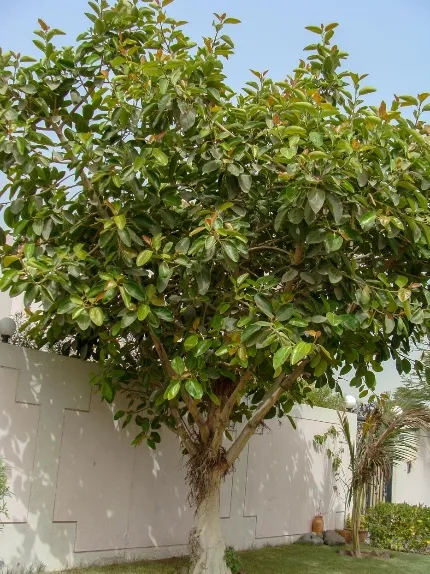
Figure 2: Ficus Benghalensis
Botanical Description
Ficus benghalensis is a large evergreen tree with a broad, spreading crown and a well-developed system of aerial roots. Its leaves are broadly ovate, with a cordate base and obtuse apex. The leaf lamina generally measures approximately 10–30 cm in length and 7–20 cm in width.
The leaves possess approximately 5–7 pairs of lateral veins, of which the basal pair is particularly prominent and extends towards the middle portion of the lamina. The petiole measures approximately 1.5–7 cm in length and is covered with fine hairs. The stipules are relatively thick, pubescent, and approximately 1–1.5 cm long.
The fruits occur in pairs and are sessile, pubescent, and globose to depressed-globose in appearance. They measure approximately 1.5–2 cm in diameter and develop an orange or reddish colour upon ripening. The fruit possesses an apical ostiole surrounded by small bracts, while the basal bracts are relatively broad and leaf-like.
Phytochemical Constituents
Various phytochemical investigations have identified several biologically active compounds in different parts of Ficus benghalensis. The major reported chemical constituents include:
Flavonoids: Quercetin, kaempferol, and other flavonoid derivatives with potential antioxidant and anti-inflammatory activities.
Phenolic compounds: Different phenolic acids and related compounds that may coo antioxidant activity.
2.2. Acacia nilotica (L.) Delile (Babul)
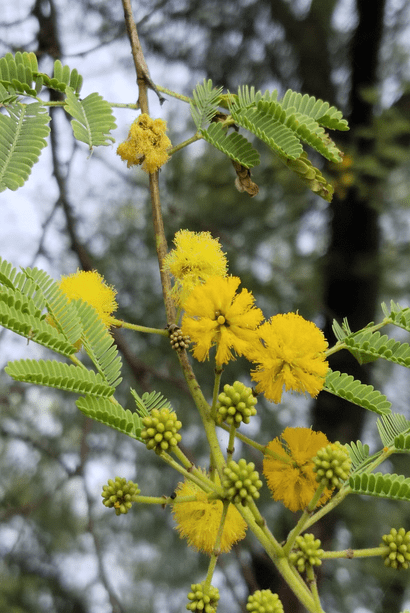
Figure None: 3 Acacia nilotica (L.)
General Description
Acacia nilotica (L.) Delile, commonly known as babul, kikar, or the Indian gum-arabic tree, belongs to the family Fabaceae, traditionally also referred to as Leguminosae. It is an important multipurpose tree widely distributed across tropical and subtropical regions, particularly in arid and semi-arid environments.
The genus Acacia comprises a large number of species, with substantial diversity occurring in Australia, Africa, and other tropical and subtropical regions. In India, several species of this genus are commonly known as babul and have a long history of application in traditional medicine for treating gastrointestinal, dermatological, dental, and other health-related conditions.
Acacia nilotica has been traditionally used for various medicinal purposes, including the management of diarrhoea, dysentery, respiratory complaints, sore throat, toothache, and certain inflammatory conditions. Previous pharmacological investigations have also explored its antimicrobial, antidiabetic, antiviral, and other biological activities.
Botanical Classification
Morphological Description
Acacia nilotica is a perennial tree or shrub that generally reaches approximately 2.5–10 metres in height. It possesses a dense, spreading crown with dark-coloured branches and a characteristic rough, fissured bark. The bark is generally reddish-brown to deep brown, with a relatively thin outer layer.
Young branches may contain paired, straight, and slender spines, which are usually greyish in colour. These spines are commonly arranged in pairs along the branches, although older trees may possess fewer spines or may become almost thornless.
The leaves are bipinnately compound and generally measure approximately 3–4 cm in length. Each leaf contains about 2–11 pairs of pinnae, with approximately 7–25 pairs of small leaflets on each pinna. The leaflets are relatively small and arranged opposite one another. Glandular structures are also present along the leaf axis and petiole.
Biological and Pharmacological Activities
Several pharmacological investigations have reported different biological properties of Acacia nilotica and its extracts.
1. Antidiabetic activity
Experimental investigations have indicated that seed extracts of Acacia nilotica may influence blood glucose levels. Certain seed-derived compounds have demonstrated glucose-lowering effects in normoglycaemic experimental animals. However, their effectiveness in diabetic animal models has not been consistently established. The proposed mechanism may involve stimulation of insulin secretion from pancreatic beta cells.
2. Antimutagenic activity
Methanolic bark extracts have demonstrated inhibitory effects against ultraviolet radiation-induced mutagenicity in experimental bacterial models, including Escherichia coli WP-2. This activity may be associated with the ability of certain extract constituents to interfere with DNA damage and mutation-related processes.
3. Antiproteolytic activity
Investigations involving different leguminous seeds have evaluated their ability to inhibit pancreatic proteolytic enzymes. These studies examined inhibitory effects against trypsin, chymotrypsin, and other proteases using specific enzymatic substrates. Such findings suggest that plant-derived protein inhibitors may contribute to the regulation of proteolytic activity.
4. Antifertility activity
Experimental studies have investigated the reproductive effects of aqueous flower extracts in animal models. Certain preparations have demonstrated reproductive toxicity, including adverse effects on fetal development. These findings indicate the importance of evaluating reproductive safety and toxicity before considering medicinal applications.
5. Antimicrobial activity
Extracts obtained from different plant materials have been investigated for their antimicrobial properties using organic and aqueous solvents. Antibacterial activity has been assessed against Gram-positive microorganisms, such as Staphylococcus aureus and Staphylococcus epidermidis, as well as Gram-negative bacteria, including Pseudomonas aeruginosa and Escherichia coli. Antifungal activity has also been investigated against organisms such as Aspergillus niger.
Note: Some antimicrobial findings in the supplied material concern Cuscuta reflexa extracts rather than Acacia nilotica alone; these should not be attributed directly to babul without verification.
2.3. Nerium oleander L. (Oleander)
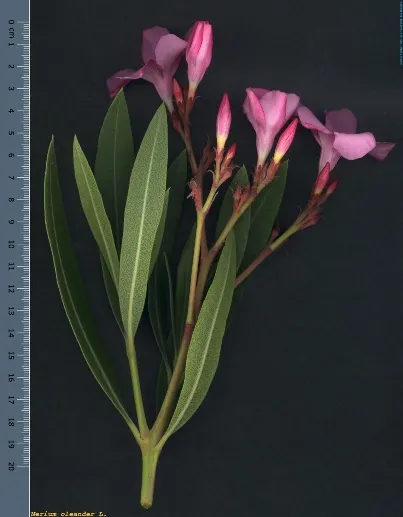
Figure None: 4 Nerium oleander L
General Description
Nerium oleander L., commonly known as oleander, is an evergreen shrub or small tree belonging to the family Apocynaceae. It is widely cultivated as an ornamental plant because of its attractive flowers, which are available in different colours, including white, pink, red, and occasionally yellow.
The plant has also been described under historical botanical names such as Nerium indicum Mill. and Nerium odorum Soland. Its superficial resemblance to olive plants contributed to the development of its common name, although the two plants belong to different botanical families.
Oleander contains several pharmacologically active compounds, particularly cardiac glycosides, which are responsible for many of its biological effects. Various chemical constituents have been reported in its roots, bark, leaves, and flowers.
Botanical Description
Nerium oleander generally grows to a height of approximately 2–6 metres. The plant develops upright stems that gradually spread outward as they mature. Young stems may have a smooth, slightly waxy appearance, whereas older stems develop greyish bark.
The leaves are arranged in opposite pairs or whorls of three. They are thick, leathery, dark green, and narrow-lanceolate in shape, generally measuring approximately 5–21 cm in length and 1–3.5 cm in width. The leaf margins are entire, and the surface is relatively smooth.
The flowers are arranged in clusters at the terminal portions of the branches. They possess a characteristic five-lobed corolla and are commonly white, pink, or reddish in colour. The fruits develop as elongated, narrow capsules measuring approximately 5–23 cm in length. Upon maturity, these capsules split open and release numerous seeds covered with fine hairs.
Distribution
The species is widely distributed throughout the Mediterranean region and subtropical parts of Asia. It is also native to the Indian subcontinent and occurs in different parts of India, Pakistan, Afghanistan, and neighbouring regions.
In India, oleander is commonly cultivated in gardens and ornamental landscapes. It is also reported from Himalayan regions, extending from Nepal towards Kashmir, as well as other subtropical environments.
Phytochemical Constituents
Different investigations have identified several secondary metabolites in Nerium oleander, particularly cardiac glycosides and other steroidal compounds.
The major reported constituents include:
Traditional Medicinal Uses
In traditional Ayurvedic literature, different preparations of oleander have been described for external medicinal applications.
Haemorrhoids: Root-derived preparations have been described in traditional medicinal practices.
General Description
Tecoma stans (L.) Juss. ex Kunth, commonly known as yellow bells, yellow trumpet bush, yellow elder, or Ginger-Thomas, belongs to the family Bignoniaceae. It is an ornamental flowering shrub or small tree valued for its attractive yellow, trumpet-shaped flowers.
The plant is native to the Americas, particularly Mexico and Central America, but has become widely distributed in tropical and subtropical regions, including India. It is frequently cultivated in gardens and landscapes because of its attractive flowers and adaptability to different environmental conditions. It can also grow as a naturalized or weedy species.
The plant is of considerable medicinal interest because different parts, particularly the leaves, bark, roots, and seeds, contain several biologically active chemical constituents. These plant materials have traditionally been used in different medicinal systems for various health conditions.
Botanical Classification
Tecoma stans is a rapidly growing perennial shrub or small tree that may reach approximately 5–7.6 metres in height under favourable conditions. It possesses a moderately spreading growth habit and develops pale brown to grey bark, which becomes rougher with increasing age.
The leaves are opposite, green, and compound, with an imparipinnate arrangement. Each leaf generally consists of 2–5 pairs of lateral leaflets and a larger terminal leaflet. The leaflets are lanceolate, with serrated margins and a smooth, green upper surface.
The flowers are characteristically bright yellow and trumpet-shaped, occurring in clusters. The fruits are elongated, narrow capsules containing numerous seeds.
Ethnobotanical Uses
Various parts of Tecoma stans, including the leaves, roots, and bark, have been used in traditional medicine, particularly in Mexico and Central America.
Several pharmacological activities have been investigated in different extracts of Tecoma stans.
1. Antidiabetic activity
The plant has received considerable attention for its potential blood glucose-lowering properties. Certain monoterpenoid alkaloids, particularly tecomine and tecostanine, have demonstrated hypoglycaemic effects in experimental investigations. Tecomine has been identified as one of the compounds potentially contributing to the antidiabetic activity of the plant.
2. Antioxidant activity
The presence of flavonoids and phenolic compounds suggests that Tecoma stans may possess free-radical-scavenging properties. These constituents may help reduce oxidative stress under experimental conditions.
3. Antimicrobial and antifungal activities
Different plant extracts have been investigated for their ability to inhibit selected bacterial and fungal microorganisms. These properties may be associated with the presence of alkaloids, phenolics, and other secondary metabolites.
4. Anti-inflammatory activity
Certain constituents of the plant have been investigated for their potential to modulate inflammatory responses, suggesting possible applications in inflammation-related conditions.
5. Other pharmacological activities
Experimental investigations have also explored its antispasmodic, antiproliferative, cytotoxic, and wound-healing properties. However, further research is necessary to establish their therapeutic relevance and clinical safety.
2.5. Aegle marmelos (L.) Corrêa (Bael)
General Description
Aegle marmelos (L.) Corrêa, commonly known as bael, Bengal quince, Indian quince, golden apple, stone apple, or bilva, is an important medicinal and fruit-bearing tree belonging to the family Rutaceae. It is native to the Indian subcontinent and is widely distributed throughout South and Southeast Asia.
The bael tree holds considerable cultural and religious importance in India and is regarded as a sacred plant in Hindu traditions. Its leaves and other plant parts are traditionally associated with religious practices and are offered during the worship of Lord Shiva and Goddess Parvati.
The medicinal importance of Aegle marmelos has been documented in traditional Ayurvedic literature, including classical texts such as the Charaka Samhita. The plant has been traditionally utilized for various gastrointestinal and other health-related disorders.
Bael is considered an underutilized fruit crop despite its nutritional and medicinal potential. It is cultivated and distributed across several countries, including India, Nepal, Bangladesh, Pakistan, Sri Lanka, Myanmar, Thailand, Cambodia, Vietnam, Indonesia, Malaysia, and China.
Botanical Description
Aegle marmelos is a slow-growing, medium-sized deciduous tree that generally reaches a height of approximately 7.5–9 metres (25–30 feet). It is characterized by a relatively short, thick trunk and a spreading crown.
The branches may be irregularly arranged, and some branches possess sharp spines measuring approximately 2–5 cm in length. The lower branches are often pendulous. The bark is thick, rough, and corky, generally exhibiting a yellowish-brown colour.
The bark characteristics may vary among different varieties, particularly in terms of colour, thickness, and splitting patterns. Reported variations include light yellow, grey, and dark grey bark, with different fissuring patterns.
The plant is adapted to subtropical climatic conditions and can tolerate relatively harsh environmental conditions, including periods of drought and low temperatures. It is commonly cultivated in the Indo-Gangetic plains, sub-Himalayan regions, northeastern India, and the dry deciduous forests of central and southern India.
Traditional Medicinal Importance
Different parts of Aegle marmelos, including the fruit, leaves, roots, bark, and seeds, have been used in traditional Ayurvedic medicine.
The fruit has particularly important traditional applications in gastrointestinal health. It has historically been used in preparations intended for managing diarrhoea, dysentery, and other digestive disturbances.
The plant is also recognized for its nutritional value and its potential as a source of bioactive phytochemicals. Its medicinal importance has encouraged scientific investigations into its pharmacological properties, including gastrointestinal protection and other biological activities.
Note: Your supplied material does not contain a detailed phytochemical profile or experimental anti-ulcer findings for Aegle marmelos. These should be added only after consulting appropriate scientific studies.
CONCLUSION
A comprehensive evaluation of the available scientific literature indicates that medicinal plants represent an important reservoir of naturally occurring bioactive compounds with promising gastroprotective and anti-ulcer properties. Their diverse phytochemical compositions provide opportunities for the development of alternative therapeutic agents and the identification of novel compounds for managing peptic ulcer disease.
Unlike conventional anti-ulcer medications, which primarily act through specific pharmacological targets, certain plant extracts may exert gastroprotective effects through multiple complementary biological pathways. These mechanisms may include the regulation of gastric acid secretion, enhancement of the gastric mucosal defence system, stimulation of mucus and bicarbonate production, reduction of oxidative stress, and modulation of inflammatory responses. Some plant-derived compounds have also demonstrated antimicrobial activity against Helicobacter pylori, suggesting an additional mechanism through which they may contribute to gastrointestinal protection.
The pharmacological activities of medicinal plants are largely associated with their structurally diverse secondary metabolites, particularly flavonoids, polyphenols, tannins, terpenoids, and other bioactive constituents. These compounds may contribute to the maintenance of mucosal integrity, protection against oxidative damage, modulation of inflammatory cytokines such as TNF-α and IL-1β, and promotion of tissue repair.
Nevertheless, the therapeutic potential of these plants should be interpreted cautiously because much of the available evidence is derived from preliminary laboratory investigations and animal studies. Variations in phytochemical composition, extraction procedures, dosage, bioavailability, and toxicity may influence their pharmacological effects.
Therefore, further investigations involving standardized plant extracts, detailed phytochemical characterization, mechanistic studies, toxicity evaluation, and well-designed human clinical trials are necessary to establish their efficacy and safety. Particular attention should also be given to possible herb–drug interactions and the development of reproducible herbal formulations.
Overall, medicinal plants offer promising opportunities for discovering new gastroprotective agents and developing complementary approaches to peptic ulcer management. However, their incorporation into mainstream therapeutic practice requires stronger scientific and clinical validation.
REFERENCES


Manish Ahire, Gayatri Shinde, Namrata Suryawanshi, Kanchan Wakchoure, Pavan Vaidya, Danish Shaikh, Vishal Shejwal, Sagar Vaidya, Review on Medicinal Plants Use on Peptic Ulcers , Int. J. of Pharm. Sci., 2026, Vol 4, Issue 11, 2355-2367. https://doi.org/10.5281/zenodo.24271850
 10.5281/zenodo.24271850