

We use cookies to ensure our website works properly and to personalise your experience. Cookies policy
P. R. Pote Patil College of Pharmacy, Kathora Road, Amravati-444604, Maharashtra, India.
Medication Adherence is an essential and important part of successful treatment, especially in case of chronic disease which need long term or lifelong medication. Earlier ‘compliance’ word used in place of ‘adherence’ then according to WHO in 2003 the term ‘compliance’ word shift to ‘adherence’. Medication adherence refers as extend to which patient taking medicines according to regimen or prescription provide by healthcare provider, physician including correct dose, timing, frequency and duration of treatment. Non-adherence in patients leads to disease progression, uncontrolled disease develops, increased in morbidity and mortality rate, higher healthcare cost, etc. Factors responsible for medication non adherence are patient related factors, therapy related factor, socioeconomic factors, healthcare related factor, etc. Medication non-adherence either intentional or unintentional. Precision medicine not fully but potentially supports medication adherence such as pharmacogenomic based medicine. Patient counselling is also key in overcoming barriers by improving medication knowledge, correcting misconceptions, explaining proper use of medicine and encourage patients to follow their treatment. Medication adherence assessed by self-report, pill counting, pharmacy refill records, proportion of days covered and electronic monitoring. Community pharmacists can play vital role in improving adherence because they are easily accessible and interact with patients regularly. Digital tools support medication adherence, although their effectiveness may vary from patient to patient. A personalized approach considers patient’s beliefs, health literacy, financial situation and treatment complexity may provide better care. Future research should focus long-term, real-world and location specific studies, standardized adherence assessment and interventions based on the specific reasons for non-adherence.
1.1 History of medication adherence
The term compliance was used earlier to describe patients followed medical advice. Earlier use term was associated with a physician-directed relationship in which patient was expected to follow instruction [1]. The WHO 2003 report upgrade use of term adherence, which better reflects the patient’s active role in treatment decisions and long-term disease management [2].
1.2 Definition of medication adherence
The WHO describes adherence as the extent to which a person's behaviour, including taking medicines, following dietary advice and making recommended lifestyle changes, corresponds with an agreed plan developed with a healthcare professional [2]. Thus, medication adherence is not limited to taking a tablet. It also includes using the correct medicine at the prescribed dose, frequency and time and continuing treatment for the recommended duration [4].
1.3 MEDICATION ADHERENCE IN CHRONIC DISEASE MANAGEMENT
Chronic disease are a long-term and lifelong diseases which requires continuous medication treatment. In chronic disease including hypertension, diabetes, and kidney disease, poor adherence leads to increased rates of organ damage and cardiovascular events. Poor adherence leads to reduce treatment effectiveness and cause progression of disease [4]. Non-adherence to prescribed treatment in chronic disease has serious consequences for patient contributes to increases in mortality and morbidity [3]. Medication adherence in chronic disease help to improve disease control and maintain therapeutic drug levels which lead to improve treatment effectiveness and reduced complication. Medication adherence plays vital role for successful treatment of chronic management. Improving medication adherence helps to reduces healthcare cost and better patient outcomes [4].
1) GLOBAL PERSPECTIVE OVER MEDICATION ADHERENCE
In 2002, WHO reported half of patients with chronic diseases in developed countries not follow there prescribed medicine treatment as recommended. Recent advances in healthcare, medication non-adherence remains a major concern. Recent studies of the patients with multiple chronic conditions report adherence rates of 44% to 77%, depends on the method used to measure adherence [4]. WHO estimated that 20%-50% of patients do not take prescribed medication [5].
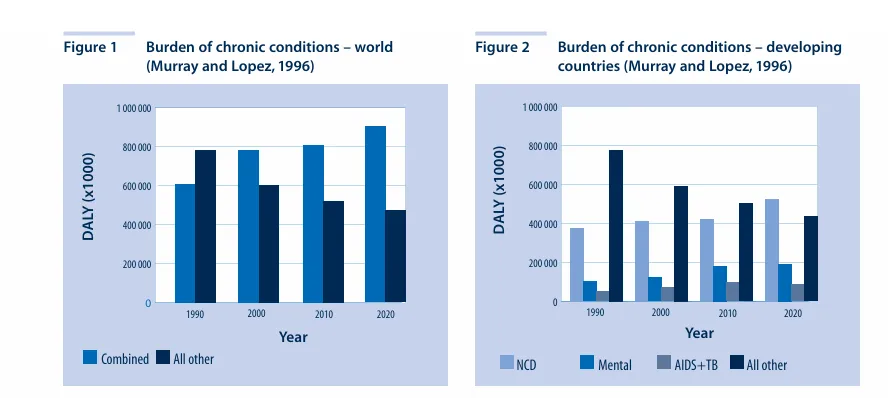
Figure 2.1: According to Who, Global Burden of Burden of Chronic Condition [2].
3) FACTORS AFFECTS ON MEDICATION NON-ADHERENCE.
3.1 Patient-related factors: Lack of knowledge, forgetfulness, low motivation, negative beliefs about medicines and poor confidence in managing treatment can contribute to non-adherence. Simply provided information not be enough; patients also need practical guidance, motivation and regular support [2,5].
Intervention: Pharmacists and healthcare professionals can provide counselling, check patient’s understanding, encourage to self-management and support for follow-up [2].
3.2 Social and economic factors: Financial difficulties, low education or health literacy, limited family support, transport problems, unemployment and high medicine costs may make it difficult for patients to continue treatment [2].
Intervention: Community support, social-support programmes, family involvement and appropriate education help to reduces these barriers [2].
3.3 Healthcare team and system-related factors: Short consultations time, limited follow-up, inadequate healthcare services, lack of provider training, poor medicine availability and limited support for patient education can negatively affect adherence [2,5].
Intervention: Healthcare professionals trained to provide brief interventions, identify non-adherence and use regular follow-up to support patients [2].
3.4 Condition-related factors: Disease progression, persistent symptoms, disability, disease severity, multiple illness and condition such as depression influence a patient’s willingness and ability to follow treatment [2].
Intervention: Healthcare professionals should manage and identify and manage disease-related problems and comorbidies. Appropriate and screening support for conditions such as depression also improve medication adherence [2].
4) INTENTIONAL AND UNINTENTIONAL MEDICATION NON-ADHERENCE
Medication non-adherence is generally divided into intentional and unintentional non-adherence. Intentional non-adherence occurs when patient consciously decides to skip, change or stop treatment. It results from concerns about side effects, doubts about the need or effectiveness of medicines treatment cost, poor communication with healthcare professionals or complex treatment regimen [4,6].Unintentional non-adherence caused when patients want to follow their treatment but face difficulties such as forgetfulness, confusion, poor medication knowledge, low health literacy, or problems obtaining medicines. [6]The distinction between the two is important because they require different approaches. Intentional non-adherence is better addressed through patient-centred counselling and discussion of concerns, whereas unintentional non-adherence may benefit from education, reminders, adherence aids and practical support. Community pharmacists can help identify these barriers and provide suitable interventions to improve adherence [6].
5) DISEASE SPECIFIC BARRIER MEDICATION ADHERENCE
Medication adherence can vary between chronic diseases because each condition has different symptoms, treatment requirements and self-care demands.
5.1 Diabetes:
Diabetes requires long-term treatment and continuous self-management. Adherence
Involves takes the medicines regularly with following dietary advice, monitoring, blood glucose, maintaining physical activity, foot care and regular eye examinations. Treatment complexity, long disease duration and comorbidities such as hypertension, obesity and depression can make adherence difficult. Emotional stress and depression may further reduce motivation for self-care [2].
5.2Asthma: Asthma requires regular medication use and active self-management. A common barrier is the belief that medicines are needed only when symptoms appear. Patients may therefore reduce or stop preventive treatment when they feel better. Poor understanding of asthma as a chronic condition and low perception of disease risk can also contribute to irregular medication use [2].
6) ECONOMIC AND CLINICAL CONSEQUENCES OF MEDICATION NON-ADHERENCE
Medication non-adherence can negatively affect not only patients but also healthcare systems. A review of 43 systematic reviews found that patients who did not take the medicines as prescribed were more likely to experience poorer treatment outcomes, reduced quality of life, hospitalisation, emergency department visits, and higher mortality. Non-adherence was also associated with worsening symptoms and complications, including cardiovascular events, poor blood pressure control and treatment failure in some conditions [24].
Across 14 disease groups found that low medication adherence was associated with higher healthcare costs in 79 studies. The estimated annual cost of non-adherence ranged from $949 to $44,190 per patient, depending on the disease, with costs related to medicines, inpatient and outpatient care, emergency department visits, and hospitalisation. In mental health conditions, the estimated annual cost ranged from $3,252 to $19,363 per patient. Although non-adherent patients may have lower medication costs, these savings can be outweighed by the additional costs of increased healthcare use. Non-adherence may also result in indirect costs through reduced work productivity. Overall, these findings suggest that improving medication adherence could help reduce avoidable healthcare costs while also supporting better patient outcomes [23].
Non-adherence to prescribed treatment in chronic disease has severe consequences for the patient such as: Reduced treatment effectiveness, Poor disease control, Disease progression and complications, Hospitalization, Increased healthcare cost, Reduced quality of life, Increased in morbidity and mortality rate [2,4].
7) MEASUREMENT METHODS USED FOR ASSESSING MEDICATION ADHERENCE
Assessment of medication adherence is important to understand whether patients are following the prescription treatment correctly. It also helps healthcare professionals to determine whether changes in health outcomes are related to the treatment regimen [8]. The measurement methods used for adherence depends on its validity and reliability. Different methods for assessing medication adherence include self-report methods, pill counting, medication event monitoring systems (MEMS), electronic monitoring devices, therapeutic drug monitoring (TDM), pharmacy refill records and insurance databases [7].
7.1 Therapeutic drug monitoring (TDM): Therapeutic drug monitoring is a systemic method in which the concentration of a medicine is measured in the blood or urine at specific period [7]. 7.2 Medication event monitoring system (MSME): MEMS is an electronic monitoring method in which medication packaging contains a microprocessor that records the date and time whenever the package is opened. It can also identify different patterns of medication taking behaviour where simply classifying patient as either good or poor adherence.
7.3 Insurance databases and pharmacy refill data: Data extraction from pharmacy or insurance databases is used to analyse medication-taking behaviour of patients. Insurance databases and pharmacy refill records can be used to asses medication use over time. Common measures include the Proportion of Days Covered (PDC) and Medication Possession Ratio (MPR). [7].
7.4 Pill count: Pill counting is a simple indirect method of assessing medication adherence. The number of remaining tablets or doses units is counted between two appointments and compared with the quantity originally provided. It is low cost and simple and also useful to calculates adherence ratio [7].
8) BEHAVIOURAL MODEL EXPLAINING MEDICATION ADHERENCE
Behavioural theories and models are increasingly used in pharmacy research to understand patient behaviour and guide the development of effective interventions. They are applied in different types of research and healthcare settings to study new approaches to improving patient care. Medication adherence is a behavior, so psychological, social and environmental factors influence whether a patient takes medicines as prescribed. These model helps to design intervention to improve medication adherence [9]. Models for explaining medication adherence is the IMB models (Information-Motivation-Behavioral Skills). According to the model, information and motivation can have a direct effect on adherence, while behavioural skills help patients put their knowledge and motivation into practice [10].
8.1 Information: Information refers to a knowledge a patient needs to use medicines correctly. This includes knowing the purpose of the medicine, prescribed dose, frequency and timing of administration, as well as how to deal with medication related problems. However, having knowledge alone does not always guarantee good medication adherence [10].
8.2 Motivation: Motivation consists of both personal and social factors. Personal motivation is related to a patient’s belief and feelings about medicines. Social motivation is important, support and encouragement from family members, friends and healthcare professional can influence a patient willingness to continue treatment [10].
8.3 Behavioural skills: Behavioural skills describe whether a patient is able and confident enough to carry out the required medication-taking behaviour. This includes fitting medicines into daily routines, dealing with medication-related adverse effects and communicating with healthcare professionals when problems occur [10].
Apart from the IMB model, different behavioural theories and frameworks have also been applied in pharmacy practice research. These include the theory of planned behaviour, transtheoretical model, COM-B model, health belief model and Theoretical domains framework. Such models help researchers and healthcare professionals understand the factors that influence behaviour and identify barriers and facilitators that can be addressed through appropriate interventions [9]. Apart from the IMB model, different behavioural theories and frameworks have also been applied in pharmacy practice research. These include the theory of planned behaviour, transtheoretical model, COM-B model, health belief model and theoretical domains framework. Such models help researchers and healthcare professionals understand the factors that influence behaviour and identify barriers and facilitators that can be addressed through appropriate interventions [9,10].
9) GOVERNMENT PERSPECTIVE
9.1 CDC-Centre for Disease Control
According to the CDC, taking medicines as prescribed is an important part of managing chronic diseases and achieving better health outcomes. Poor medication adherence can result in inadequate disease control, more hospital visits, increased illness and mortality, and higher healthcare costs. The CDC explains that medication non-adherence may be either intentional or unintentional. Patients may miss or stop their medicines because of forgetfulness, complicated treatment schedules, medicine costs, side effects, concerns or beliefs about the treatment, poor communication with healthcare providers, or difficulty accessing healthcare services. To improve adherence, the CDC supports a combination of approaches rather than relying on a single intervention. These include educating and involving patients in their treatment, providing team-based care with pharmacists and other healthcare professionals, reducing financial and access-related barriers, simplifying medication regimens, regularly monitoring adherence, and using health-information technologies such as electronic prescribing and medication reminders [11].
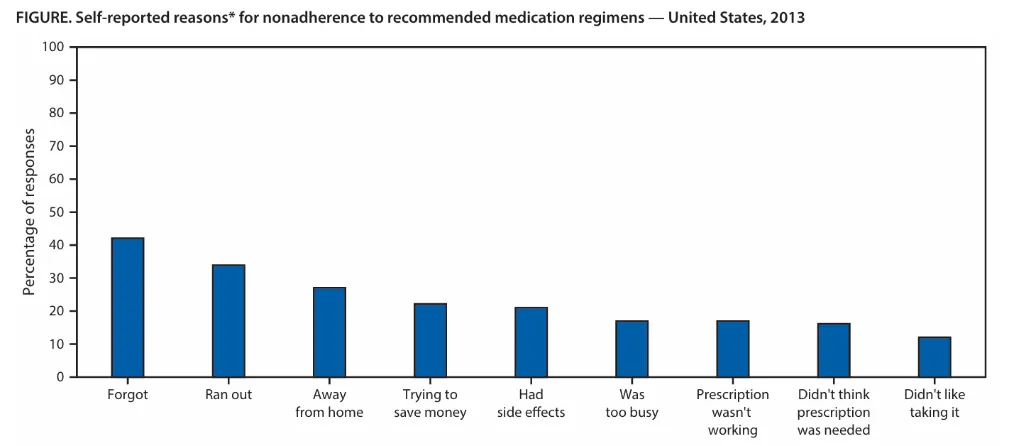
Figure 9.1: According to CDC Reasons for Non-Adherence to Recommended Medication Regimen [11].
9.2 The United Kingdom National Health Service
In the UK, medication adherence is considered an important part of managing long-term diseases effectively. Patients may not take their medicines as prescribed for different reasons. The UK National Health Service (NHS) focuses on providing patient-centred support instead of simply telling patients to follow their treatment.
Important Points of the UK Approach
9.3 World Health Organization- WHO
The World Health Organization (WHO), identifies poor medication adherence as an important challenge in the management of chronic diseases. WHO explains that failure to follow treatment should not be considered the responsibility of the patient alone. Adherence can be affected by several factors, including the patient’s understanding and beliefs, the treatment regimen, the disease itself, the healthcare system, and social and economic conditions. Therefore, patients should be supported rather than blamed when adherence problems occur. WHO also emphasizes that patients should be actively involved in decisions about their treatment. Good communication and a cooperative relationship between patients and healthcare professionals are therefore essential for improving adherence [2].
WHO-Recommended Interventions
10) ROLE OF COMMUNITY PHARMACIST
Community pharmacists are easily accessible healthcare professionals who regularly interact with patients using medicines for chronic diseases. They can identify reasons for non-adherence, provide simple counselling, review medicines, monitor treatment, and maintain follow-up and communication with doctors and other healthcare professionals [13,14]. Community pharmacists can also improve patients’ understanding of their medicines, explain the importance of regular treatment, identify barriers such as forgetfulness, side effects or complex regimens, and provide appropriate follow-up. WHO also emphasizes the involvement of pharmacists and other non-physician healthcare professionals in patient-centred behavioural support and self-management [15].
11) COMMUNITY PHARMACIST-LED STRATERGIES
12) DIGITAL TECHNOLOGY USED FOR MEDICATION ADHERENCE
Digital technologies are becoming an important part of medication adherence interventions as smartphones and other digital devices are now widely available around the world [16]. Mobile applications can help patients remember their medicines and may support better adherence to prescribing treatment [17]. Electronic prescribing systems are increasingly used in many countries because it improves the accuracy and efficiency of medication management reducing problems related to prescription and limited access to prescription information [18].
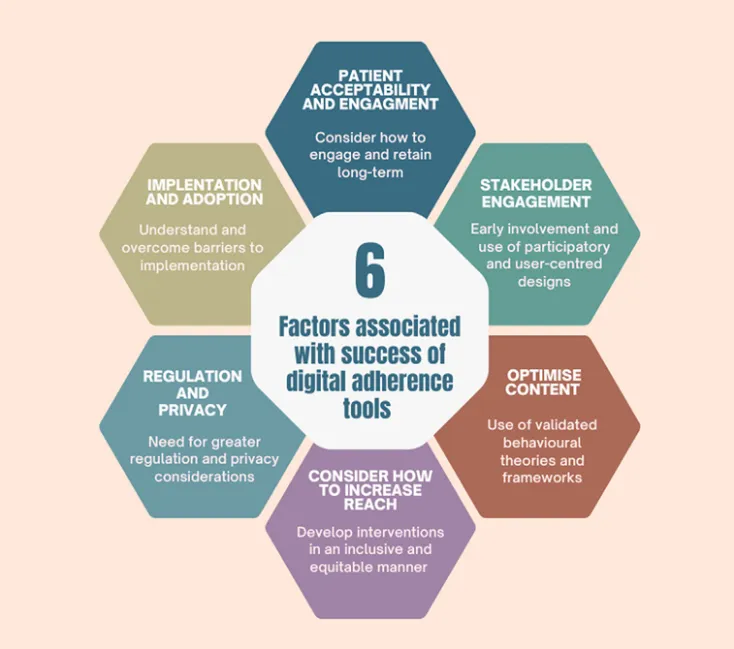
Fig. Factors associated with success of digital health adherence tools [18].
12.1 Digital tools to improve medication adherence
12.1.1 Electronic pill bottles: It is a normal bottle and electronic cap which contain a microchip, and that records the day- time stamp once when cap during opening the cap and removed. The transfer of adherence data depends on the different version of the electronic pill bottle device [31].
12.1.2 Electronic pill boxes or bags: It is similar to electronic pill bottle, electronic pill boxes which record a date and time stamp when that open. The capability of devices to store multiple medications makes better suited for complex multidrug regimens, this advantage is dependent on the device and that can vary in size and pill storage capacity. But that devices cannot directly confirm ingestion of medicines that raise the concern toward the medication adherence [31].
12.1.3 Blister pack technologies: The blister pack contained the microchip and conductive wire pattern when the medication removed from the blister pack that break the created circuit in blister and was recorded by the microchip with the day- time stamp. Patient medication adherence data are wirelessly transmitted to central servers allowing for the adherence monitoring [31].
12.1.4 Ingestible sensors: It is also referred as digital pills or digital ingestion monitoring which consist of microsensors, adhesive external monitor attached on abdomen and mobile app. The sensors are encapsulated with medicines and ingested into body where stomach gastric acid dissolve the capsules containing the medication and sensor. After medicine swallowed sensor comes into contact with gastric fluid a signal to the external devices. The detected ingestion is transfer to mobile app that uploads the event’s date- time stamp, along with recorded measures to a centre server [31].
13) PERSONALIZED/PRECISION APPROACHES
Personalized or precision medicine could be a useful approach to improving medication adherence because it considers the individual needs, preferences, barriers, and genetic characteristics of patients. Pharmacogenomic information may also help clinicians identify medicines that could be less suitable for a particular patient because of a higher risk of adverse effects or reduced treatment response [19,20].
A study by Christian et al. investigated that whether pharmacogenomic-guided prescribing would improve medication adherence. The study included 536 patients and examined their use of pharmacogenomically actionable medicines. Overall, providing pharmacogenomic information did not significantly improve adherence. However, patients who received genetically high-risk medications were more than twice as likely to have poor adherence compared with those receiving genetically suitable medications. The findings suggest that precision medicine may help improve adherence when genetic information is used to identify and avoid medications that may be less effective or cause adverse effects [19]. Pharmacogenomic and precision medicine approaches potentially support individual treatment of patient in future, but their role in directly improving medication adherence still requires evidence [19,20].
14) CASE STUDIES
14.1 A New Case Manager for Diabetic Patients
The case study examined whether community pharmacists could improve adherence to diabetes care plans in patients with type 2 diabetes. 40 patients were followed for 12 months, with pharmacists acting as case managers and helps patients to arrange check-ups, provide reminders, counselling and carried out some tests using telemedicine. The results were positive: adherence to the care plan increased to 98% in the first three months and reached 100% during the rest of the study. Patients also showed improvements in HbA1c, LDL cholesterol, and blood pressure, while waiting times for some investigations were reduced by around four months. Most patients reported that easier access to services and better information were major benefits. Overall, the study suggests that having a pharmacist as a regular point of contact can make diabetes care more accessible and help patients stay on track with their recommended monitoring. From that study approximately 10,000 euro per year saved the reason was reduced in complication, decreased hospitalization and better disease control and it can be concluded that medication adherence improves in diabetic patient [21].
14.2 Mental health disorders
Syrnyk and Glass evaluated the role of pharmacists in improving medication adherence among patients with mental health conditions. Out of 3,476 records identified, 11 studies were included in the review. The findings showed that pharmacists could support better medication use through counselling, medication reviews, follow-up, telehealth services, and support after hospital discharge. Pharmacists also helped identify common reasons for non-adherence, including forgetfulness, medication costs, side effects, and problems accessing medicines. Providing individualized support and simplifying medication regimens were found to help patients take their medicines more consistently. The authors suggested that pharmacists should have a greater role in multidisciplinary mental health teams and receive further training in psychiatric pharmacotherapy to better support patients [22].
15) HEALTH LITERACY AS DETERMINANT OF MEDICATION ADHERENCE
Health literacy is an important determinant of medication adherence because patients need to understand and correctly follow information about their medicines [26]. Health literacy includes the knowledge and skills needed to process medication information and use medicines correctly [27]. Patients with lower health literacy may have difficulty understanding medication labels, dosing schedules, and treatment instructions, which can lead to unintentional non-adherence and medication errors. A recent systematic review found that patients with inadequate health literacy had a 2.6-fold higher risk of non-adherence, while 68% misinterpreted medication schedules compared with 23% of patients with higher health literacy [25]. Therefore, clear and simple instructions, visual dosing aids, and pharmacist-led teach-back can help patients understand what dose to take, when to take it, how often to take it, and how to use it correctly, particularly in patients with complex medication regimens [26].
16) POLYPHARMACY, MEDICATION COMPLEXITY AND ADHERENCE
Polypharmacy is defined as when patient taking multiple medicines at the same time. It is different from regimen complexity, which refers to how complicated it is to follow a prescribed schedule. Regimen complexity is closely related to polypharmacy and may reduce medication adherence. Patient with chronic disease often need to take several medicines every day for a months or years. Following such a complicated medication schedule can become difficult and may cause poor medication adherence [29].
Polypharmacy and complicated medication schedules can make it harder for patients to understand and follow their treatment, increasing the risk of non-adherence. Pharmacists can help by reviewing patients’ medicines to identify unnecessary or duplicate drugs, drug-related problems, and difficulties with medication use. When appropriate, they can also simplify the treatment regimen by reducing the number of medicines or daily doses, while providing clear education and regular follow-up. These efforts can improve patients’ understanding of their medicines and adherence, while also helping to prevent medication-related problems and adverse drug reactions and promoting safer medication use [31]. Polypill/fixed-dose combination therapy can improve medication adherence mainly by reducing pill burden and simplifying the medication regimen, but it should be considered as one component of a broader adherence strategy [28].
17) FUTURE PERSPECTIVES
The future of medication adherence in chronic disease management shift towards a patient-centric, multidisciplinary ecosystem measuring ecosystem of care [32]. Research should also consider patients who are underrepresented in current evidence and distinguish between intentional and unintentional non-adherence when selecting interventions. Medication adherence monitoring helps identify problems with taking medicines, address barriers promptly, improve patient health, and reduce healthcare costs. [32].
Short follow-up: Many intervention studies have relatively short follow-up periods. Long-term adherence behaviour may differ considerable from short-term intervention effects.
Limited real-world evidence: Controlled trials may not fully represent the complexity of community pharmacy practice. More real-world community-pharmacy studies are required.
Pharmacist: Adherence identifier → Medication reviewer → Counsellor → Digital-health facilitator → Follow-up provider → Care coordinator.
SUMMARY
Medication adherence is an important for effective chronic disease management. The medication non-adherence is a multifunctional problem which influence by patient-related, socioeconomic factors, healthcare-system factors, condition related factors, etc from that can be finding discussed in this review. Forgetfulness, regimen complexity, polypharmacy, medication costs, health literacy and inadequate communication can prevent from following their prescribed treatment. Non-adherence may be intentional or unintentional, intentional when patient consciously decide to modify or discontinue treatment and unintentional when organizational difficulties interfere with medicine-taking behaviour.
The review highlights that medication adherence can be assessed using different methods such as self-report method, pill counting, pharmacy refill system, therapeutic drug monitoring and medication event monitoring system. Behavioural model also provides a better understanding of patient’s belief, motivation, perceived barriers and treatment related concerns.
Digital technologies, including electronic pill bottles, electric pill boxes, blister pack technologies and ingestible sensors can useful for additional to support medication-taking behaviour. Personalized approaches that consider clinical characteristics, medication beliefs, socioeconomic circumstances may further strengthen adherence support. Pharmacogenomic medicine contributes to treatment personalized in selected situations, although its direct effect medication adherence requires further investigation.
Community pharmacist has an essential role in improving medication adherence through patient counselling, regimen simplification, adherence aids, refill monitoring and regular follow-up. Their contribution is particularly valuable for patients with chronic diseases, multiple medications and complex treatment schedules. Future research should prioritize assessment methods, long-term follow-up, real-world evaluation of pharmacist-led interventions, integration of digital health technologies and more specific studies. Strengthening collaboration between community pharmacists, physicians and patients may help address adherence barriers, improve treatment outcomes and support more effective chronic disease management.
CONCLUSION
Medication adherence is an important element in effective chronic disease management. Non-adherence is altered by a combination of patient treatment, social, economic, healthcare, disease-related factors and it may be either intentional or unintentional. Understanding the reason behind missed or altered treatment is therefore essential. Community pharmacists can contribute through counselling, medication review, adherence monitoring, practical support and collaboration with other healthcare professionals. Digital technologies and personalized approaches may provide additional support. Community pharmacists are particularly well positioned to support medication adherence through counselling, medication review, regimen simplification, refill monitoring, adherence aids, follow-up and collaboration with other healthcare professionals. Digital technologies such as mobile applications, SMS, telepharmacy and electronic monitoring can complement these services but should not replace individualized patient care. Future adherence management move toward patient-centred, personalized, digitally supported and pharmacist-integrated models of care. More long-term, real-world and India-specific research is required to determine which combinations of interventions produce sustainable improvements in medication adherence and clinical outcomes.
REFERENCES


Shweta Maliye, Abhijeet Welankiwar, Medication Adherence in Chronic Disease Management: Role, Stratergies and Future Perspective of Community Pharmacist, Int. J. of Pharm. Sci., 2026, Vol 4, Issue 11, 2368-2380. https://doi.org/10.5281/zenodo.24271907
 10.5281/zenodo.24271907