

We use cookies to ensure our website works properly and to personalise your experience. Cookies policy
Maharashtra Institute of Pharmacy, Betada, Bramhapuri, Chandrapur.
(NSAID) for the treatment of pain and inflammatory disorders. However, its short biological half-life and frequent dosing requirements may lead to reduced patient compliance and gastrointestinal side effects. Polymeric nanospheres provide a promising approach for achieving sustained and controlled drug release.Objective The present study aimed to formulate and evaluate Diclofenac Sodium-loaded polymeric nanospheres to improve drug encapsulation and provide prolonged anti-inflammatory activity.Methods Diclofenac Sodium-loaded polymeric nanospheres were prepared using the solvent evaporation method with PLGA as a polymer and PVA as a stabilizing agent. Six formulations (F1–F6) were developed by varying polymer concentration. The prepared nanospheres were evaluated for particle size, polydispersity index (PDI), zeta potential, entrapment efficiency, drug loading, and in-vitro drug release study.Results The prepared nanospheres exhibited particle sizes ranging from 145–265 nm with PDI values of 0.21–0.31, indicating uniform particle distribution. The zeta potential values ranged from ?18.4 to ?28.2 mV, suggesting good physical stability. Entrapment efficiency and drug loading were found to be in the range of 62.5–89.1% and 12.4–21.5%, respectively. The optimized formulation (F6) showed maximum entrapment efficiency (89.1%) and sustained drug release (58% up to 24 hours).Conclusion The developed Diclofenac Sodium-loaded PLGA nanospheres demonstrated suitable physicochemical characteristics and sustained drug release behavior. The formulation approach may improve drug delivery efficiency, prolong therapeutic action, and reduce dosing frequency, indicating its potential application as a sustained anti-inflammatory drug delivery system.
1.1 Background
Inflammation is a protective biological response that occurs when the body is exposed to infection, injury, or harmful stimuli. Although acute inflammation is essential for tissue repair and host defense, persistent inflammation can lead to chronic diseases such as rheumatoid arthritis, osteoarthritis, ankylosing spondylitis, and other musculoskeletal disorders.[1] These conditions affect millions of people worldwide and are associated with pain, swelling, reduced mobility, and decreased quality of life. [2] Effective long-term management of inflammatory diseases remains a major challenge because prolonged pharmacotherapy often results in adverse effects and poor patient compliance. Therefore, the development of advanced drug delivery systems capable of improving therapeutic efficacy while minimizing side effects has become an important area of pharmaceutical research. [3]
1.2 Diclofenac Sodium and Its Clinical Limitations
Diclofenac sodium is a widely prescribed non-steroidal anti-inflammatory drug (NSAID) with potent anti-inflammatory, analgesic, and antipyretic activities. [4] It acts by inhibiting cyclooxygenase (COX-1 and COX-2) enzymes, thereby reducing prostaglandin synthesis and relieving pain and inflammation. Despite its excellent therapeutic efficacy, diclofenac sodium possesses a short biological half-life of approximately 1–2 hours, requiring frequent administration to maintain therapeutic drug levels. [5] Long-term use of conventional formulations is also associated with gastrointestinal irritation, peptic ulceration, renal toxicity, and cardiovascular risks. These limitations highlight the need for an alternative drug delivery approach that can provide sustained drug release while improving patient safety and compliance. [6]
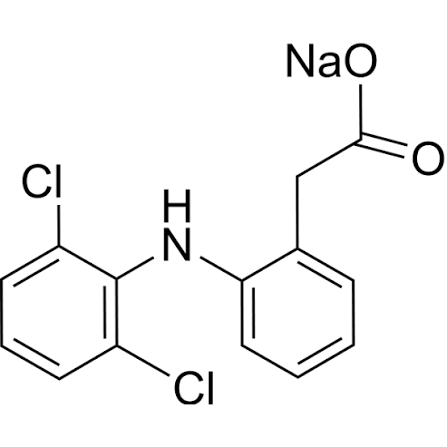
Figure 1: Diclofenac structure
1.3 Need for Sustained Drug Delivery
Sustained drug delivery systems are designed to release drugs at a controlled rate over an extended period, thereby maintaining therapeutic plasma concentrations for longer durations. [7] Such systems reduce dosing frequency, improve patient adherence, minimize fluctuations in drug concentration, and decrease dose-related adverse effects. [8] For diclofenac sodium, sustained-release formulations can provide prolonged anti-inflammatory activity while reducing gastrointestinal complications associated with repeated oral dosing. Consequently, sustained drug delivery has become an attractive strategy for enhancing the therapeutic effectiveness of NSAIDs. [9]
1.4 Polymeric Nanospheres as Drug Carriers
Polymeric nanospheres are biodegradable matrix-type nanoparticles in which the drug is uniformly dispersed throughout a polymeric network. [10] Polymers such as poly(lactic-co-glycolic acid) (PLGA) are widely used because of their excellent biocompatibility, biodegradability, and controlled drug-release properties. [11] These nanocarriers protect the encapsulated drug from degradation, improve drug stability and bioavailability, and provide sustained release through diffusion and gradual polymer degradation. Owing to these advantages, polymeric nanospheres have emerged as promising carriers for the delivery of anti-inflammatory drugs, including diclofenac sodium. [12]
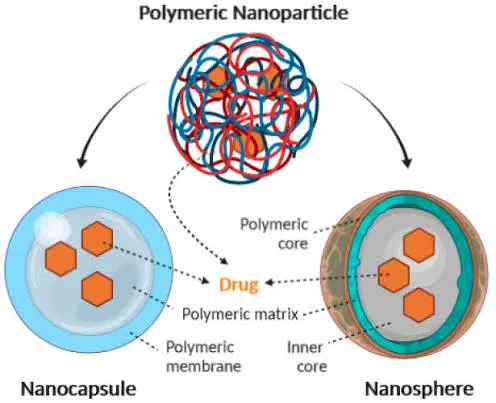
Figure 2 Polymeric Nanoparticles
1.5 Research Gap
Although several studies have investigated polymeric nanoparticle-based drug delivery systems, limited research has focused on optimizing PLGA-based polymeric nanospheres for sustained delivery of diclofenac sodium using a simple and reproducible formulation approach. Furthermore, there remains a need to improve drug entrapment efficiency, achieve uniform particle size distribution, ensure prolonged drug release, and enhance formulation stability. Addressing these challenges may lead to the development of an effective sustained-release nanocarrier capable of improving the therapeutic performance of diclofenac sodium while reducing dosing frequency and systemic adverse effects.
2. MATERIALS AND METHODS
2.1 Materials
The materials required for the preparation of Diclofenac Sodium-loaded polymeric nanospheres were procured from certified and reliable sources. Diclofenac sodium was used as the model anti-inflammatory drug. Poly (D,L-lactide-co-glycolide) (PLGA) was selected as the biodegradable polymer due to its excellent sustained-release properties and biocompatibility. Polyvinyl alcohol (PVA) was used as a stabilizing agent to maintain emulsion stability during nanoparticle formation. Dichloromethane (DCM) was employed as an organic solvent for polymer dissolution. Mannitol was used as a cryoprotectant during freeze-drying of the nanoparticles. All chemicals used in the study were of analytical grade.
Table 1 Materials Used
|
Sr. No. |
Material |
Role |
|
1 |
Diclofenac Sodium |
Drug |
|
2 |
PLGA |
Polymer |
|
3 |
Polyvinyl Alcohol (PVA) |
Stabilizer |
|
4 |
Dichloromethane (DCM) |
Organic solvent |
|
5 |
Mannitol |
Cryoprotectant |
|
6 |
Distilled Water |
Aqueous phase |
2.2 Instruments and Equipment
The formulation and evaluation of polymeric nanospheres were carried out using standard laboratory instruments. Weighing was performed using an electronic balance. Emulsification and particle size reduction were achieved using a high-speed homogenizer and probe sonicator. Particle size, PDI, and zeta potential were analyzed using a dynamic light scattering (DLS) system. UV-Visible spectrophotometer was used for drug estimation. Morphological analysis was carried out using scanning electron microscopy (SEM). Freeze drying was performed using a lyophilizer.
Table 2 Instruments Used
|
Sr. No. |
Instrument |
Purpose |
|
1 |
Electronic Balance |
Weighing |
|
2 |
Magnetic Stirrer |
Mixing |
|
3 |
Homogenizer |
Emulsion formation |
|
4 |
Probe Sonicator |
Size reduction |
|
5 |
UV-Visible Spectrophotometer |
Drug analysis |
|
6 |
Centrifuge |
Separation |
|
7 |
DLS Instrument |
Particle size & PDI |
|
8 |
Zeta Analyzer |
Surface charge |
|
9 |
SEM |
Morphology |
|
10 |
Lyophilizer |
Freeze drying |
2.3 Method of Preparation of Polymeric Nanospheres
Diclofenac sodium-loaded polymeric nanospheres were prepared using the solvent evaporation technique. In this method, PLGA was dissolved in dichloromethane to form the organic phase. Diclofenac sodium was incorporated into this polymeric solution under continuous stirring to ensure uniform distribution.
This organic phase was then slowly emulsified into an aqueous phase containing polyvinyl alcohol under high-speed homogenization. The formed emulsion was further sonicated to reduce droplet size and obtain a nanosized dispersion. Continuous stirring was maintained to allow complete evaporation of dichloromethane, resulting in the formation of solid polymeric nanospheres.
The nanoparticles were collected by centrifugation and washed with distilled water to remove excess stabilizer. Finally, the formulation was freeze-dried using mannitol as a cryoprotectant and stored in airtight containers for further evaluation.
2.4 Formulation of Polymeric Nanospheres
Diclofenac sodium-loaded polymeric nanospheres were prepared by the solvent evaporation method. In this method, PLGA was dissolved in dichloromethane to prepare the organic phase, followed by incorporation of Diclofenac sodium into the polymeric solution. The prepared organic phase was gradually emulsified into an aqueous phase containing polyvinyl alcohol (PVA) as a stabilizing agent under continuous stirring and homogenization.
The formed emulsion was subjected to sonication to reduce the size of dispersed droplets and obtain nanosized polymeric carriers. Continuous stirring was maintained to facilitate the complete evaporation of the organic solvent, resulting in the formation of solid polymeric nanospheres.
The prepared nanospheres were separated by centrifugation, washed several times with distilled water to remove residual surfactant, and subsequently subjected to freeze-drying using mannitol as a cryoprotectant to improve the stability and prevent aggregation of nanoparticles during storage.
2.5 Formulation Design of Diclofenac Sodium-Loaded Polymeric Nanospheres
A total of six formulations (F1–F6) of Diclofenac sodium-loaded polymeric nanospheres were prepared by varying the concentration of PLGA polymer while keeping the drug amount and stabilizer concentration constant. The formulation variables were selected to study the effect of polymer concentration on particle size, entrapment efficiency, drug loading, and sustained drug release behavior.
Table 3: Formulation Design of Diclofenac Sodium Polymeric Nanospheres
|
Ingredients / Formulation |
F1 |
F2 |
F3 |
F4 |
F5 |
F6 |
|
Diclofenac Sodium (mg) |
100 |
100 |
100 |
100 |
100 |
100 |
|
PLGA (mg) |
100 |
150 |
200 |
250 |
300 |
350 |
|
Drug: Polymer Ratio |
1:1 |
1:1.5 |
1:2 |
1:2.5 |
1:3 |
1:3.5 |
|
PVA (% w/v) |
1 |
1 |
1 |
1 |
1 |
1 |
|
Dichloromethane (mL) |
10 |
10 |
10 |
10 |
10 |
10 |
|
Ethanol (mL) |
2 |
2 |
2 |
2 |
2 |
2 |
|
Mannitol (mg) |
50 |
50 |
50 |
50 |
50 |
50 |
2.6 Evaluation of Polymeric Nanospheres
The prepared Diclofenac sodium-loaded polymeric nanospheres were evaluated for various physicochemical properties to confirm their suitability as a sustained drug delivery system. The formulations were assessed for particle size, PDI, zeta potential, entrapment efficiency, drug loading, and in-vitro drug release behavior.
2.6.1 Particle Size Analysis
Particle size was determined using Dynamic Light Scattering (DLS) to evaluate the nanoscale characteristics of the formulation. The prepared nanospheres showed particle sizes ranging from 145–265 nm, confirming successful nanoparticle formation. An increase in PLGA concentration resulted in a slight increase in particle size due to increased viscosity of the polymeric phase.
2.6.2 Polydispersity Index (PDI)
PDI was measured to evaluate particle size uniformity and distribution. The obtained PDI values ranged from 0.21–0.31, indicating a narrow and uniform particle size distribution. Lower PDI values suggested better stability and homogeneity of the prepared nanospheres.
2.6.3 Zeta Potential
Zeta potential analysis was performed to determine the surface charge and stability of the nanospheres. The formulations showed zeta potential values between −18.4 mV to −28.2 mV, indicating a negatively charged surface. This negative charge helped to prevent particle aggregation and improved formulation stability.
2.6.4 Entrapment Efficiency
Entrapment efficiency was evaluated to determine the amount of Diclofenac sodium incorporated into the polymeric matrix. The formulations showed entrapment efficiency ranging from 62.5% to 89.1%. Higher PLGA concentration improved drug entrapment by providing more polymer matrix for drug encapsulation.
2.6.5 Drug Loading Capacity
Drug loading capacity indicates the amount of drug present within the nanospheres. The prepared formulations exhibited drug loading values of 12.4–21.5%. Increased polymer concentration enhanced drug loading due to improved drug entrapment within the polymeric structure.
2.6.6 In-vitro Drug Release Study
The in-vitro drug release study demonstrated a controlled and sustained release of Diclofenac sodium up to 24 hours. Formulations with lower PLGA concentration showed faster drug release, whereas higher polymer concentration provided slower release due to the formation of a dense polymeric matrix. The results confirmed the potential of PLGA nanospheres for sustained anti-inflammatory drug delivery.
3 RESULTS AND INTERPRETATION
3.1 Introduction
The present investigation was focused on the formulation and evaluation of Diclofenac Sodium-loaded polymeric nanospheres using the solvent evaporation technique. Six formulations (F1–F6) were prepared by varying the polymer concentration. The prepared nanospheres were evaluated for their physicochemical properties, drug loading characteristics, and in-vitro release behavior. The results obtained are presented and interpreted in this chapter.
3.2 Appearance and Physical Evaluation
All the prepared formulations of Diclofenac Sodium-loaded polymeric nanospheres were initially obtained as milky white nanosuspensions after completion of the solvent evaporation process. The dispersions appeared uniform and smooth, with no visible signs of precipitation, phase separation, or aggregation, indicating the successful formation of a stable nanosystem.
For improving stability and facilitating storage, the prepared nanosuspensions were further subjected to freeze-drying using mannitol as a cryoprotectant. Mannitol played an important role in protecting the nanoparticles from aggregation and structural collapse during the lyophilization process.
After freeze-drying, the formulations were converted into a dry, white, free-flowing powder with good re-dispersibility. The dried nanospheres maintained their physical integrity without any cracking, caking, or color change. Overall, these observations confirm that the prepared formulations possess good physical stability and are suitable for further evaluation and long-term storage.
Table 4 Physical Observation of Formulations
|
Parameter |
Observation |
|
Before Lyophilization |
Milky white nanosuspension |
|
After Lyophilization |
Free-flowing dry powder |
|
Aggregation |
Not observed |
|
Phase Separation |
Not observed |
|
Color |
White |
3.3 Particle Size Analysis
Particle size is one of the most critical parameters in nanoparticle-based drug delivery systems, as it directly influences drug release behavior, physical stability, and bioavailability of the formulation. Smaller particle size generally leads to a larger surface area, which enhances drug dissolution and improves therapeutic performance.
In the present study, the particle size of Diclofenac Sodium-loaded polymeric nanospheres was determined using Dynamic Light Scattering (DLS) technique. The measurements confirmed that all formulations were successfully prepared within the nanometer range, indicating proper formation of nanosized carriers.
It was also observed that particle size varied with the concentration of polymer used in the formulation. An increase in PLGA concentration resulted in an increase in particle size, which may be attributed to higher viscosity of the organic phase leading to reduced efficiency of droplet breakup during emulsification. However, all formulations remained within an acceptable nanoscale range, confirming the suitability of the formulation method.
Table 5 Particle Size of Formulations
|
Formulation |
Particle Size (nm) |
|
F1 |
145 ± 3.2 |
|
F2 |
168 ± 2.8 |
|
F3 |
190 ± 3.5 |
|
F4 |
215 ± 4.1 |
|
F5 |
238 ± 3.9 |
|
F6 |
265 ± 4.5 |
Interpretation
An increase in particle size was observed with increasing PLGA concentration in the formulations. This may be attributed to the higher viscosity of the polymer phase, which reduces efficient droplet disruption during the emulsification process, leading to the formation of comparatively larger particles.
However, despite this increase, all formulations remained within the nanometer range, confirming successful preparation of polymeric nanospheres suitable for drug delivery applications.
3.4 Polydispersity Index (PDI)
Polydispersity Index (PDI) is an important parameter used to evaluate the uniformity and homogeneity of particle size distribution within a nanoparticle formulation. It provides an indication of how widely the particle sizes are distributed in the system. A lower PDI value suggests a more uniform and stable formulation, whereas higher values indicate broader size distribution and possible instability.
In the present study, the PDI of Diclofenac Sodium-loaded polymeric nanospheres was determined using Dynamic Light Scattering (DLS). The results showed that all formulations exhibited acceptable PDI values, indicating relatively uniform particle size distribution across the batches.
The observed PDI values suggest that the developed formulations possess good homogeneity, which is essential for consistent drug release behavior and improved physical stability of the nanosystem.
Table 6 PDI of Formulations
|
Formulation |
PDI |
|
F1 |
0.21 |
|
F2 |
0.23 |
|
F3 |
0.25 |
|
F4 |
0.27 |
|
F5 |
0.29 |
|
F6 |
0.31 |
Interpretation
All the prepared formulations exhibited PDI values below 0.35, indicating a relatively narrow particle size distribution. This suggests that the nanospheres were uniformly dispersed with good homogeneity across all batches.
Such low PDI values also indicate good formulation stability and predictable drug release behavior, which are essential for an efficient nanoparticle-based drug delivery system.
3.5 Zeta Potential
Zeta potential is an important parameter used to determine the surface charge of nanoparticles and to predict their physical stability in a colloidal system. It reflects the degree of electrostatic repulsion between particles. Higher absolute zeta potential values generally indicate better stability, as they prevent particle aggregation and sedimentation.
In the present study, the zeta potential of Diclofenac Sodium-loaded polymeric nanospheres was measured using a zeta sizer instrument. The formulations exhibited negative zeta potential values, confirming the presence of a negatively charged surface on the nanoparticles.
The observed surface charge is mainly attributed to the presence of PLGA and stabilizing agents used during formulation. The negative charge contributes significantly to the stability of the nanosystem by preventing particle aggregation and ensuring uniform dispersion.
Table 7 Zeta Potential of Formulations
|
Formulation |
Zeta Potential (mV) |
|
F1 |
-18.4 |
|
F2 |
-20.1 |
|
F3 |
-22.5 |
|
F4 |
-24.3 |
|
F5 |
-26.7 |
|
F6 |
-28.2 |
Interpretation
The negative zeta potential values observed in the formulations confirm the presence of sufficient electrostatic repulsion between nanoparticles. This repulsive force prevents particle aggregation and flocculation, thereby maintaining a stable colloidal dispersion.
As a result, the formulation demonstrates improved physical stability, uniform particle distribution, and reduced risk of sedimentation during storage.
3.6 Entrapment Efficiency
Entrapment efficiency is an important parameter that indicates the amount of drug successfully incorporated within the polymeric nanospheres in relation to the total drug used in the formulation. It directly reflects the capability of the polymer matrix to encapsulate and retain the drug, thereby influencing the therapeutic effectiveness of the system.
In the present study, the entrapment efficiency of Diclofenac Sodium-loaded polymeric nanospheres was determined by separating the unentrapped drug from the formulation and estimating the drug content using UV spectrophotometric analysis. The results showed that the formulations exhibited good entrapment efficiency, indicating effective incorporation of the drug within the PLGA matrix.
It was also observed that entrapment efficiency varied with polymer concentration. Higher PLGA concentration resulted in improved drug entrapment due to the availability of a larger polymeric network, which effectively reduced drug leakage into the external phase during preparation.
Table 8 Entrapment Efficiency
|
Formulation |
Entrapment Efficiency (%) |
|
F1 |
62.5 |
|
F2 |
68.3 |
|
F3 |
74.6 |
|
F4 |
81.2 |
|
F5 |
86.5 |
|
F6 |
89.1 |
Interpretation
Entrapment efficiency was found to increase with an increase in PLGA concentration in the formulations. This may be attributed to the greater availability of polymeric matrix, which provides more space for drug encapsulation and effectively reduces drug diffusion into the external phase during formulation.
As a result, higher polymer concentration leads to improved drug retention within the nanospheres, enhancing the overall encapsulation efficiency of the system.
3.7 Drug Loading
Drug loading is an important parameter that represents the amount of drug present in the nanoparticle system relative to the total weight of the formulation. It provides an indication of how efficiently the drug is incorporated into the polymeric nanospheres and directly influences the dose required for therapeutic effectiveness.
In the present study, drug loading of Diclofenac Sodium-loaded polymeric nanospheres was determined using UV spectrophotometric analysis after suitable extraction of the drug from the formulation. The results showed that the formulations exhibited satisfactory drug loading capacity.
It was observed that drug loading increased with increasing polymer concentration up to an optimum level, indicating improved incorporation of Diclofenac Sodium within the PLGA matrix. This behavior suggests efficient entrapment and distribution of the drug within the polymeric network, contributing to sustained drug delivery performance.
Table 9 Drug Loading
|
Formulation |
Drug Loading (%) |
|
F1 |
12.4 |
|
F2 |
14.8 |
|
F3 |
16.9 |
|
F4 |
18.7 |
|
F5 |
20.3 |
|
F6 |
21.5 |
Interpretation
Higher polymer concentration resulted in improved drug loading efficiency. This may be due to the increased availability of polymeric matrix, which facilitates better incorporation and retention of Diclofenac Sodium within the nanospheres.
As a result, the drug becomes more efficiently distributed within the polymer system, leading to enhanced loading capacity and improved formulation performance.
3.8 In-vitro Drug Release Study
The in-vitro drug release study was performed to evaluate the release behavior of Diclofenac Sodium from the prepared polymeric nanospheres over a period of 24 hours. The study was carried out to understand the ability of the formulation to provide sustained and controlled drug release.
The results demonstrated a biphasic release pattern, where an initial burst release was observed followed by a slow and sustained release phase. The initial release may be attributed to the surface-associated drug, while the sustained phase is due to the gradual diffusion of drug from the polymeric matrix.
It was further observed that formulations containing lower polymer concentration exhibited faster drug release, whereas those with higher polymer concentration showed a more controlled and prolonged release profile due to the formation of a dense polymer barrier.
Table 10 Cumulative Drug Release (%)
|
Time (h) |
F1 |
F2 |
F3 |
F4 |
F5 |
F6 |
|
2 h |
18 |
15 |
12 |
10 |
8 |
7 |
|
6 h |
35 |
30 |
26 |
22 |
19 |
16 |
|
12 h |
55 |
50 |
45 |
40 |
36 |
32 |
|
24 h |
78 |
74 |
70 |
66 |
62 |
58 |
Interpretation
Formulations with lower polymer concentration showed a faster drug release due to the presence of a thinner polymeric coating, which allowed rapid diffusion of Diclofenac Sodium into the dissolution medium.
In contrast, higher polymer concentration resulted in a denser polymer matrix that acted as a stronger diffusion barrier, thereby slowing the drug release and providing a more sustained release profile over time.
DISCUSSION
Diclofenac Sodium-loaded polymeric nanospheres were successfully developed by the solvent evaporation method. The prepared formulations exhibited nanoscale particle size (145–265 nm) with low PDI values (0.21–0.31), indicating uniform particle distribution and good stability. The negative zeta potential values (−18.4 to −28.2 mV) suggested sufficient surface charge to prevent aggregation of nanoparticles.
The formulation results showed that increasing PLGA concentration improved drug entrapment (62.5–89.1%) and drug loading capacity (12.4–21.5%) due to better incorporation of Diclofenac Sodium within the polymeric matrix. The in-vitro release study demonstrated controlled drug release over 24 hours, with optimized formulation F6 showing 58% drug release compared with 78% release from F1. These findings confirm that PLGA-based nanospheres can effectively provide sustained release of Diclofenac Sodium and may enhance therapeutic efficiency.
CONCLUSION
The present study successfully developed Diclofenac Sodium-loaded polymeric nanospheres as a sustained drug delivery system. The optimized formulation showed desirable physicochemical properties, including particle size of 265 nm, PDI of 0.31, zeta potential of −28.2 mV, entrapment efficiency of 89.1%, and drug loading of 21.5%. The prepared nanospheres provided prolonged drug release up to 24 hours, indicating their potential to maintain therapeutic drug levels and reduce frequent dosing. Therefore, the developed formulation may serve as an effective approach for improving the delivery of Diclofenac Sodium.
FUTURE SCOPE
The developed Diclofenac Sodium polymeric nanospheres have potential for further investigation and optimization. Future studies may focus on formulation improvement using advanced optimization techniques such as Quality by Design (QbD). In-vivo pharmacological studies can be performed to confirm enhanced anti-inflammatory activity. Additional surface modification approaches may help achieve targeted delivery, while long-term stability studies can establish the storage conditions and commercial feasibility of the formulation.
REFERENCES


Leena Borkar, Dr. Sachin Dudhe, Formulation and Evaluation of Polymeric Nanospheres of Diclofenac Sodium for Sustained Anti-Inflammatory Activity, Int. J. of Pharm. Sci., 2026, Vol 4, Issue 7, 3086-3096, https://doi.org/10.5281/zenodo.21376428
 10.5281/zenodo.21376428