

We use cookies to ensure our website works properly and to personalise your experience. Cookies policy
Department of Industrial Pharmacy, Bharat Technology, Uluberia, Howrah 711316
The present study focuses on the formulation and evaluation of ferrous sulphate sustained release floating tablets prepared by wet granulation technique. The aim was to increase the gastro protection period and give controlled drug release to increase iron absorption within the upper gastrointestinal tract. Organoleptic properties, solubility, UV analysis and drug-excipient compatibility were conducted as preformulating studies to ensure drug identity and appropriateness. Hydrophilic polymers such as HPMC were used in formulation of the tablets and effervescent compounds such as sodium bicarbonate were incorporated to make them buoyant. Ready granules were tested using the characteristics of flow, and compressed pills were treated using the characteristics of change in weight, hardness, friability and drug release in-vitro. Dissolution experiments showed that it was sustained at a release rate greater than 12 hours at satisfactory floating behavior. The evidence showed that the formulation developed is effective concerning its ability to enhance the drug release properties and patient compliance, which qualifies the modified formulation as a promising method to treat iron deficiency with iron supplementation.
The reason aimed at the ace of administration, cost, patient compliance, and formulation; oral drug delivery is the preferred form of administration that is the most acceptable (1). However, conventional oral dosage delivery systems tend to include drawbacks, including limited gastrointestinal residence period, imprecise absorption, and diminished bioavailability of drugs whose absorption may be mainly in the upper part of the gastrointestinal tract (GIT) (2). Such issues have prompted the creation of new drug delivery technologies towards better therapeutic effect and reduced dosing schedule. Gastroretentive drug delivery systems (GRDDS) have received much interest as such, due to their capability to increase the gastric residence time and improve the bioavailability of the drugs they include. Gastroretentive drug delivery systems are aimed at staying in the stomach tissue over a longer period which ends up releasing the drug in a controlled nature over the site of absorption (3). Various strategies have been investigated so as to obtain gastric retention, which include floating systems, bio adhesive systems, swelling systems, high density systems, and raft-forming systems (4). The most promising and most widely researched GRDDS is the floating drug delivery systems (FDDS). The systems are designed to possess less bulk density than the gastric fluid, so that they float on the content of the stomach over a long period of time without influencing gastric emptying (5). The use of floating tablets is especially beneficial with locally acting drugs in the stomach, which are incapable of persisting in the intestinal milieu, or whose absorption range is too limited within the upper GIT (6). Floating tablets are very useful since they maintain the release of the drug and enhance the absorption of the drugs within the stomach as they stay on the surface of the liquid. To prepare floating tablets, hydrophilic polymers, specifically the hydroxypropyl methylcellulose (HPMC) that swells due to its exposure to the gastric fluid and gas-generating agents like sodium bicarbonate are usually used to provide the floating effect (7). Ferrous sulphate is a well-known oral iron supplement to prevent and treat iron deficiency anemia, which is a common nutritional disease in a huge proportion of the global population especially women, children, and the ageing population at large(8).
Also, ferrous sulphate has gastrointestinal related side effects that include nausea, gastric irritation, epigastric pain, and constipation that may result in poor patient compliance. The development of a Gastroretentive floating tablet of ferrous sulphate offers a promising strategy to overcome these limitations. The floating tablet may be used to deliver ferrous sulphate to the stomach by increasing the time of gastric residence, which will ensure that it is constantly available at the primary absorption location (10). Controlled drug release not only increases the bioavailability but it also decreases the changes in plasma drug concentration and this minimizes gastrointestinal toxicity and thereby increases patient compliance to treatment. To develop a floating tablet of ferrous sulphate, excipients must be carefully selected and optimized in order to attain acceptable floating behavior, drug release properties and tablet integrity.
Hydrophilic polymers are important in the creation of the matrix and controlled release, whereas effervescent agents produce carbon dioxide in acidic acidic gastric environment allowing the pill to float (6). Other excipients like binders, diluents and lubricants are added to guarantee manufacturability, stability and strength of the pill. Testing of the developed Gastroretentive floating tablets is also a vital part of development in order to guarantee quality, safety, and effectiveness. Several pre-compression and post-compression factors are evaluated such as the powder flow characteristics, tablet hardness, pill friability, weight change, and drug content consistency (11). To analyze the floating behavior of the tablets, in vitro buoyancy experiments, including floating lag time and total floating duration are conducted. In vitro drug release is also performed to determine the release mechanism and kinetics of the drug release of the formulation. In summary, a gastroretentive drug delivery system developed into a floating tablet of ferrous sulphate is not only innovative and effective to enhance the therapeutic performance of an iron supplementation therapy, but also evaluative. Such a system can increase bioavailability, decrease side effects, and enhance patient compliance by improving gastrointestinal retention and controlled drug release. This strategy emphasizes the importance of gastroretentive floating drug delivery systems in contemporary pharmaceutical research and how the system is able to be utilized in treatment of iron deficiency anemia in the future.
2. Mechanism of action:
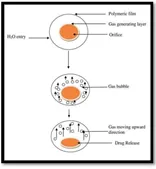
Gastroretentive floating drug delivery systems (GRDDS) of Ferrous Sulphate are created to make gastric residence time and absorb more iron, most of it is absorbed in the stomach and upper small intestine. The principle on which it works is the principle of buoyancy: the tablet carries the effervescent substances like sodium bicarbonate, which reacts with gastric acid to generate carbon dioxide. This gas trapezing a transpiring polymeric hydrophilic matrix (e.g. HPMC), which reduces the density of the tablet, permitting lift on the gastric fluid. The development typically consists of ferrous sulphate as the active component, polymers (HPMC) as a controlled release component, effusive agents (flotation) and excipients (binders, lubricants). When ingested, the tablet swells and dissolves, creating a gel barrier, that allows sustained drug release and descends and remains a float.
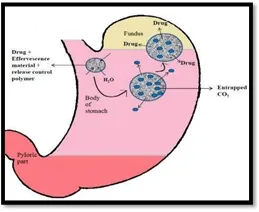
Assessment consists of pre- and post-compression research. Flow parameters in the course of pre-compression are angle of repose and bulk density. The tests which are done post compression are; I Hardness, friability, weight variation, uniformity of drug content, buoyancy lag time, total floating time, swelling index and in vitro dissolution studies. These tests aid in the correct migration of floats, regulated drug leakage, and enhanced bioavailability of iron.
Therapeutic efficacy of Ferrous sulphate:
I. Treatment of Iron Deficiency Anemia.
II. Enhancement of Oxygen Transport and Energy Levels. Support of Cognitive Function and Development.
III. Improvement of Maternal and Fetal Health
IV. Prolonged Gastric Retention Time.
3. Treatment of Iron Deficiency Anemia:
One of the most used iron deficiency anemia oral iron supplements is ferrous sulphate. It contains elemental iron needed to promote the synthesis of hemoglobin, thus enhancing the blood oxygen-carrying capacity. Regular administration in patients with anemia replenishes the lost body iron reserves, especially in the bone marrow, liver and in the spleen. This causes more red blood cells to be produced (erythropoiesis). A few weeks of clinical improvement is common, as are higher hemoglobin levels and fewer symptoms including fatigue, dizziness and shortness of breath. It is also cost-effective and has high bioavailability thus is used as a first-line treatment in different parts of the world. Also, it is particularly useful in populations with increased susceptibility to anemia such as women during pregnancy, children, and those with inadequate dietary iron uptake.
Enhancement of Oxygen Transport and Energy Levels:
Ferrous sulphate is very important in boosting oxygen levels in the body as it elevates the level of hemoglobin. Hemoglobin picks up oxygen in the lungs and transports it to tissues aiding respiration in the cell and generation of energy. Lack of iron also affects oxygen supply resulting in fatigue, weakness, and impaired performance.
Ferrous sulphate obtained through supplementation corrects this deficiency thereby enhancing energy metabolism and physical endurance. Patients experience a sense of increased vitality and less lethargy with regular use. Moreover, sufficient oxygen is a key to the normal functioning of important organs like the brain and heart. Special therapeutic ability is especially valuable in people with chronic fatigue related to iron deficiency as it allows them to restore the usual activity level and increases the quality of life in full.
Support of Cognitive Function and Development:
Iron is necessary in the normal operation of the brain and Iron supplementation greatly helps in mental performance and learning. The synthesis of neurotransmitters, such as dopamine and serotonin, which control mood, attention, and memory, involves iron. Iron deficiency may affect both the learning capacity and attention in children and overall cognitive development. Ferrous sulphate is used to normalize brain functioning by correcting the amount of iron in the body, which results in better concentration, memory and performance in school. In adults, it is used in lessening the symptoms of brain fog and inability to focus. Furthermore, iron is involved in myelination of nerve fibers, which is important in the transmission of signals in the nervous system effectively. Therefore, ferrous sulphate helps in improving mental clarity, and neurological health among various age groups.
Improvement of Maternal and Fetal Health:
During pregnancy ferrous sulphate is readily administered to prevent and treat iron deficiency anemia, common currency as resulted increased demand on iron. Sufficient levels of iron are necessary to stimulate blood volume growth in a pregnant woman and fetal growth. Supplementation decreases the chances of complications including low birth weight, preterm delivery and maternal weight fatigue. It also aids in good placental activity and provision of oxygen to the baby. Optimal hemoglobin in pregnant women works in avoiding extreme anemia which may extend to giving birth to complications. Moreover, adequate iron supply helps in the healthy growth and development of fetal brains.
Ferrous sulphate is hence regarded as a pivotal part of the antenatal care initiatives worldwide, both in maternal health and optimal fetal delivery.
Prolonged Gastric Retention Time:
The potential of floating drug delivery systems (GRDDS) to increase the period of retention in the stomach is one such important feature. They are made to be floating on gastric fluid on the account of being of low density as compared to the stomach fluid. Once ingested, the floating pill remains longer in the stomach without being emptied into the intestine in a brief time. This is especially advantageous when the drugs are absorbed in the stomach or the upper part of the small intestine such as Ferrous Sulphate. When the residence time is extended, the drug has more time to be absorbed and hence has a better bioavailability. Furthermore, sustained retention aids to sustain a constant rate of drug concentration in blood, which lowers drug dosing frequency and boosts the effectiveness of the treatment. GRDDS is particularly beneficial with drugs with narrow absorption windows.
Cardiovascular and Renal Outcome:
The formulation of gastroretentive floating tablets of Ferrous Sulphate contributes indirectly to improved cardiovascular and renal health by effectively managing iron deficiency anemia. In the cardiovascular system, adequate iron levels are essential for maintaining optimal hemoglobin concentration and oxygen transport. By enhancing gastric retention and sustained release, the floating drug delivery system ensures better absorption of iron, leading to improved red blood cell production.
This reduces cardiac workload, as the heart no longer needs to compensate for low oxygen-carrying capacity, thereby lowering the risk of tachycardia, fatigue, and cardiac stress associated with anemia. From a renal perspective, improved oxygenation of blood helps maintain proper kidney function. Chronic anemia can lead to reduced oxygen supply to renal tissues, impairing filtration and potentially worsening kidney conditions. The sustained delivery of ferrous sulphate via GRDDS supports stable hemoglobin levels, which enhances renal perfusion and function. Additionally, controlled drug release minimizes gastrointestinal irritation and fluctuations in plasma iron levels, reducing the risk of iron overload that could otherwise affect renal health.
Overall, this advanced formulation promotes better systemic outcomes by ensuring efficient and consistent iron therapy.
4. Tolerability of ferrous sulphate:
Ferrous sulphate is among the oral iron supplements that are mostly used and it is usually tolerable at proper therapeutic dose. Nonetheless, its tolerability tends to have been affected by the dose, administration frequency and type of formulation. The most common side effects that are reported are gastrointestinal which include abdominal pain, constipation, diarrhea, nausea, abdominal pain, and black or tarry stools. It is mostly because of irritation of the gastric mucosa and existence of unabsorbed iron in the gastrointestinal tract. Different formulation properties have also been designed to enhance tolerability like sustained release and gastroretentive floating drug delivery systems (GRDDS). These systems enable the slow release of iron in the stomach to avoid sharp mucosal irritation and the sudden increases of iron levels. This leads to fewer side effects to the gastrointestinal tract as well as higher treatment adherence. Also, one can reduce the dose of the drug daily or apply it after the meals hence eliminating or lessening the irritation but meals can moderate the absorption of iron Blythewood some extent. The side effects of ferrous sulphate are generally mild, temporary and can be controlled without necessitating its discontinuation.
Educating patients can also be significant in enhancing adherence, since they should be made aware of such harmless side effects as stool discoloration. Nevertheless, there is a risk of iron overload due to excessive or prolonged consumption that may cause systemic toxicity and damage of organs. In general ferrous sulphate is a safe, efficacious and cheap choice of iron supplement, able to be tolerated fairly well when it is appropriately prepared and administered.
5. Various drug interaction of Ferrous sulphate:
Interactions between drugs occur when one’s overall effect is discussed in relation to drugs, food, or other substances. Drug interactions with ferrous sulphate include both altering non-GI (gastro-intestinal tract) absorption and altering other drugs taken with ferrous sulphate.
I. Antacids (e.g., aluminum hydroxide, magnesium hydroxide):
Iron's absorption via ferrous sulphate can be greatly diminished by antacids as they increase the stomach pH. This is relevant as iron requires an acidic environment to dissolve and allow absorption in the stomach and duodenum. The simultaneous administration of antacids neutralizes stomach acidity which leads to less iron salts dissolving. As a consequence, bioavailability and therapeutic effect of ferrous sulphate will be reduced and consequently, its effect on iron deficiency anemia. As such, it is advised to take ferrous sulphate at least 2 hours prior to taking any antacids or 4 hours thereafter to avoid this interaction.
II. Tetracycline Antibiotics
Tetracyclines and ferrous sulfate form insoluble chelates in the gastrointestinal tract. This leads to reduced absorption of both iron and the antibiotic, resulting in decreased efficacy of both iron and the antibiotic therapy. The reduction in efficacy may lead to compromised treatment results, especially in infections where adequate antibiotic levels are necessary to treat successfully.
Therefore, it is suggested that a time interval of at least 2–3 hours between administering the two medications should be maintained.
III. Fluoroquinolone Antibiotics (e.g., ciprofloxacin)
Ciprofloxacin and other fluoroquinolone antibiotics Forman iron complex that decreases the drug’s absorption. The resulting decreased concentration of fluoroquinolone in the blood could result in inadequate levels of antibiotic to provide effective treatment for a given condition. The absorption of iron could also be adversely impacted. Therefore, patients should take fluoroquinolone antibiotics at least 2 hours before or 4–6 hours after ferrous sulphate to avoid this significant drug-to-drug interaction and achieve optimal therapeutic effect from both agents.
IV. Levothyroxine:
Levothyroxine absorption (via the intestine) is affected negatively by the presence of ferrous sulphate due to its formation of insoluble complexes, which can result in decreased effectiveness of thyroid hormone replacement therapy—with the attendant risk of hypothyroid symptoms (e.g., fatigue, weight gain, cold intolerance). To prevent this interaction, the concurrent use of levothyroxine and iron supplements should be separated. A separation of four hours is recommended.
V. Proton Pump Inhibitors (PPIs)
Omeprazole is a proton pump inhibitor that decreases the amount of stomach acid produced, and stomach acid is necessary for the absorption of iron. As a result, lower amounts of stomach acid can lead to less solubility of ferrous sulphate and cause less absorption of iron from your gastrointestinal tract. Because of this, patients on proton pump inhibitors for a long time should have their iron levels monitored or be prescribed a different form of iron (with improved absorption characteristics) to treat their iron deficiency anemia.
6. Safety and adverse effect:
Gastrointestinal side effects of ferrous sulphate include nausea, abdominal discomfort, constipation, and diarrhoea due to inflammation of the gastric lining and unabsorbed iron in the intestines.
Ferrous sulphate can produce dark stools, either black or dark green, due to oxidation of unabsorbed iron in the GI tract. The condition is safe and expected; there are no significant risks associated with it.
Excessive quantities of ferrous sulphate could produce iron toxicity in children, resulting in symptoms like vomiting, severe abdominal pain and possibly to serious damage to internal organs that would require immediate intervention.
Without monitoring, patients on long-term ferrous sulphate therapy are at risk of accumulating excess iron. Patients with pre-existing hemochromatosis are particularly vulnerable to drastic organ damage (liver and heart) if peaking iron levels are not monitored.
are Uncommon Some patients experience hypersensitivity reactions (rash, itching or swelling) but these are rarer than many other potential side effects of ferrous sulphate. Patients experiencing any hypersensitivity reactions should discontinue their iron therapy and seek the advice of their physician.
7. Sustained controlled release dosage form of ferrous sulphate tablet:
Sustained controlled release dosage forms of ferrous sulphate tablets are formulations aimed at releasing iron slowly over a long period to maintain a steady drug concentration in the blood. This method enhances the effectiveness of the therapy because it does not experience rapid fluctuations and falls in the plasma iron concentrations as observed in traditional immediate-release preparations. The systems increase the absorption of iron in the gastrointestinal tract, especially in the stomach and the upper part of the small intestine, the best areas of iron uptake.
Hydrophilic polymers like hydroxypropyl methylcellulose (HPMC),ethyl cellulose or Carbopol are usually used to create the formulation, with the se polymers forming a gel matrix when exposed to gastric fluids. This matrix regulates the diffusion of iron, which enables slow and predictable release of drugs. These systems are also used together with gastroretentive techniques in others like floating drug delivery systems to extend even more the gastric residence time and enhance bioavailability. Among the significant benefits of sustained release ferrous sulphate tablets, there is the fact that the patient is more likely to be compliant, as the number of doses is reduced, as well as the number of gastrointestinal side effects such as irritation and nausea. The slow release also minimizes the chances of iron overloading and improves tolerability.
8. Advantages of sustained controlled release dosage form of ferrous sulphate:
Sustained controlled-release formulations of Ferrous Sulphate are designed to release iron slowly over time in the gastrointestinal tract. This has a number of practical and clinical benefits:
I. Reduced gastrointestinal irritation.
Immediate-release iron may be associated with nausea, abdominal pain, constipation, or diarrhoea. The controlled release evenly spreads out the iron absorption over time which Reduces direct irritation of the stomach lining. Improves overall tolerability
II. Improved patient compliance:
This is due to the slow release of the drug: A smaller number of doses are required (not as many as several doses a day) Patients will be more likely to adhere to the treatment.
III. More stable blood iron levels:
Instead of sharp spikes and drops:
IV. Better utilization of iron:
Enhance intestinal absorption.
Minimize unabsorbed iron wastefulness.
V. Less interaction with food and other drugs:
The slow release of iron along various intestinal segments: It can be less susceptible to inhibitors such as phytates or calcium (but there are still interactions)
9. Disadvantages of sustained controlled release dosage form of ferrous sulphate:
I. Reduced absorption of iron:
The absorption of iron occurs in the duodenum and upper jejunum. Iron may be released even deeper into the intestine by controlled-release tablet.
This is able to reduce total bioavailability.
II. Slower onset of action:
Since iron is released in a slow manner. It takes longer to correct iron deficiency anemia Ideally, not in situations where quick improvement is required.
III. Higher cost:
Sustained-release preparations are more difficult to prepare.
Typically, pricier than immediate-release pills.
10. AIM & OBJECTIVES:
Aim: Formulation & evaluation of gastroretentive drug delivery system as a floating tablet of ferrous sulphate.
Objectives:
I. Formulation of gastroretentive floating tablets: The study aims to formulate floating tablets of ferrous sulphate using suitable hydrophilic polymers and excipients so that the dosage form remains buoyant in gastric fluid for a prolonged period, ensuring effective gastric retention and controlled drug release (12).
II. Optimization of buoyancy characteristics: An important objective is to optimize floating lag time and total floating duration by incorporating appropriate gas-generating agents, thereby ensuring rapid flotation and prolonged gastric residence of the tablets (13).
III. Evaluation of pre-compression parameters: The study focuses on evaluating flow properties, bulk density, tapped density, Carr’s index, and Hausner’s ratio of the powder blend to ensure uniform die filling and reproducible tablet quality (14).
IV. Evaluation of post-compression parameters: Another objective is to assess tablet hardness, friability, weight variation, thickness, and drug content uniformity to confirm mechanical stability and dosage accuracy of the prepared tablets (15).
V. Assessment of in vitro buoyancy and drug release: The study aims to evaluate floating behavior and in vitro drug release profile to ensure sustained release of ferrous sulphate and improved bioavailability (16).
VI. Analysis of release kinetics: The release data will be analyzed using various kinetic models to understand the mechanism of drug release from the gastroretentive floating system (17).
VII. Analysis of drug release kinetics: An additional objective is analyses the drug release data using various kinetic models such as zero-order, first-order, Higuchi, and Korsmeyer–Peppas models in order to understand the mechanism of drug release from the gastroretentive system (18).
VIII. Stability assessment of the optimized formulation: The study also aims to evaluate the short-term stability of the optimized floating tablet formulation under accelerated stability conditions to ensure physical integrity, drug content stability, and consistent release behavior over time (19).
IX. Comparison with conventional dosage forms: Another important objective is to compare the optimized gastroretentive floating tablet with conventional immediate-release ferrous sulphate tablets in terms of drug release behavior and potential therapeutic advantages (20).
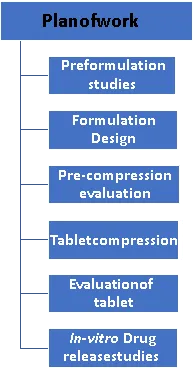
Preformulating studies:
Formulation Design:
Pre-compression evaluation:
Tablet compression:
Compression of powder blends into tablets using rotatory tablet press.
Evaluation of tablet:
In-vitro Drug release studies:
12. Material & Method:
Material:
|
API (Active pharmaceutical ingredient) |
Ferrous sulphate |
|
Polymer |
HPMC E-15 (Hydroxypropyl Methylcellulose) |
|
Diluent |
MCC (Microcrystalline Cellulose) |
|
Binder |
PVPK30 (Polyvinylpyrrolidone K30) |
|
Lubricant |
Magnesium Stearate |
|
Glidant |
Talc |
|
Gas generating agent |
Sodium bicarbonate |
Method:
Preparation Method of ferrous sulphate as a floating tablet of Sustained controlled Release Tablets by wet Granulation.
Weighing of Materials:
Accurate weighing of all ingredients such as ferrous sulphate (active pharmaceutical ingredient), hydroxypropylmethylcellulose (HPMC E15 as release retardant), sodium bicarbonate (gas-generating agents), microcrystalline cellulose (diluents), PVP K30 (binder), magnesium stearate (lubricant), and talc (glidant) was carried out using a calibrated analytical balance as per the formulation design. Proper weighing ensures dose uniformity and reproducibility of the formulation.
Sieving:
All the weighed materials, except lubricants and effervescent agents, were passed through a sieve of size #40 to obtain uniform particle size distribution and to eliminate aggregates or lumps.
Uniform particle size improves mixing efficiency and ensures consistent granule formation during wet granulation.
Blending:
The sieved powders containing ferrous sulphate, HPMC, and diluents were transferred into a suitable blender and mixed for 10–15 minutes to achieve a homogeneous mixture. Proper blending is essential to ensure uniform distribution of the drug within the polymer matrix, which directly influences the drug release profile.
Preparation of Binder Solution:
A binder solution was prepared by dissolving PVP K30 in an appropriate solvent such as isopropyl alcohol, ethanol, or purified water. The concentration of the binder solution was optimized to provide sufficient cohesiveness without over-wetting the powder blend.
Wet Granulation:
The binder solution was added gradually to the powder blend with continuous mixing to form a coherent and damp mass. The granulation process was carefully controlled to avoid over wetting or under-wetting, as this can affect granule quality, flow properties, and compressibility.
Screening of Wet Mass:
The wet mass was passed through a sieve (#10 or #16) to produce uniform wet granules. This step helps in breaking down large lumps and ensures consistent granule size, which is important for uniform drying and compression.
Drying:
The wet granules were dried in a tray dryer or hot air oven maintained at 40–50°C until a constant weight was achieved, indicating appropriate moisture content (generally 2–4%). Controlled drying is critical to prevent degradation of ferrous sulphate and to maintain the stability of the formulation.
Sizing (Dry Screening):
The dried granules were passed through a sieve (#20 or #30) to obtain uniformly sized granules with good flow properties. Proper sizing improves die filling during compression and ensures uniform tablet weight.
Addition of Effervescent Agents: Sodium bicarbonate was added to the dried granules and blended uniformly. These agents react in the presence of gastric fluid to produce carbon dioxide gas, which gets entrapped in the hydrated polymer matrix, thereby reducing tablet density and enabling buoyancy.
Lubrication:
Magnesium stearate and talc were added to the granules and mixed gently for 3–5 minutes. This step improves flowability, reduces friction during compression, and prevents sticking of granules to punches and dies. Overmixing was avoided as it may affect tablet hardness and drug release.
Compression of Tablets:
The lubricated granules were compressed into tablets using a rotary tablet compression machine fitted with appropriate punches. Compression force was carefully adjusted to achieve optimal hardness, thickness, and mechanical strength without affecting floating behavior and drug release characteristics.
Mechanism of Floating and Drug Release:
Upon contact with gastric fluid, the HPMC polymer hydrates and forms a gel layer around the tablet. Simultaneously, sodium bicarbonate reacts with citric acid to release carbon dioxide gas, which becomes trapped in the gel matrix, causing the tablet to float. The drug is then released slowly through diffusion and matrix erosion, providing sustained release over an extended period.
Storage:
The prepared tablets were stored in airtight, moisture-resistant containers to protect them from environmental humidity and oxidation. Proper storage conditions are essential to maintain the stability of ferrous sulphate and the integrity of the effervescent components.
Evaluation (Post-Compression Studies): The tablets were further evaluated for various quality control parameters such as weight variation, hardness, friability, drug content uniformity, floating lag time, total floating duration, and in-vitro dissolution studies. These tests ensure that the formulation meets pharmacopeial standards and desired performance characteristics.
13. Formulation Table:
|
Ingredients |
F1 (mg) |
F2 (mg) |
F3 (mg) |
|
Drug (Ferrous sulphate) |
10 |
10 |
10 |
|
Microcrystalline cellulose (MCC) |
4 |
2 |
0 |
|
PVP–K-30 |
9 |
8 |
7 |
|
HPMC E-15 |
60 |
60 |
60 |
|
Talc |
6 |
6 |
6 |
|
Magnesium Stearate |
4 |
4 |
4 |
|
Sodium Bicarbonate |
7 |
10 |
13 |
|
Total |
100 |
100 |
100 |
14. Result and Discussion:
Preformulating studies
Purpose:
The aim of the current research was to identify the properties of ferrous sulphate on the organoleptic characteristics in order to establish its identity, its purity and its suitability towards inclusion in a sustained release floating tablet formulation. Organoleptic assessment is a significant preformulating parameter because it gives some preliminary data on the sensory attributes of the drug that can impact patient compliance and formulation design.
Method: Visual observations were made of Colour and appearance on a white background in daylight. Odor was assessed by waving the air on the sample to the nose to determine the presence of any characteristic odor.
Tasting: When using laboratory safety precautions, a very small amount of the drug was placed on the tongue to test the drug.
Texture was identified by rubbing a small portion of powder between fingers to identify it as either crystalline or amorphous.
OBSERVATION OF ORGANOLEPTIC CHARACTERISTICS:
Method:
The shake-flask method was used to undertake the solubility study. Ferrous sulphate (Known amount of ferrous sulphate) was added to different solvents, e.g., distilled water, 0.1 N HCl (PH 1.2), phosphate buffer PH 6.8, methanol, and ethanol. The mixtures were stirred and left to stabilize at room temperature (24 hours). Whatman filter paper (0.45 µm) was subsequently used to filter the solutions, which were diluted appropriately before a UV-visible spectrophotometer was.
Serial No.
Solvent/Medium Observation
1. Distilled water Freely soluble
2. 0.1 N HCl (pH 1.2) Freely soluble
3. Phosphate buffer (pH 6.8) Slightly soluble
4. Methanol Sparingly soluble
5. Ethanol Sparingly soluble
Purpose:
To ascertain the solubility of the ferrous sulphate in various solvents which is crucial in deciding on the way of developing formulation strategies and dissolution media to be used in prolonged release dosage formulations.
Used to analyze the solutions.
|
Parameter |
Observation |
|
Colour |
Off-white |
|
Odour |
Odorless |
|
Taste |
Metallic and bitter |
|
Texture |
Crystalline |
|
Appearance |
Fine, free-flowing powder |
Purpose:
To identify the melting point of ferrous sulphate and the purity and identity of the substance.
Method:
A fine powdered sample of ferrous sulphate was put in a capillary tube and inserted in a melting point apparatus.
Temperature was raised slowly at a controlled rate of 1-2 o C/min and temperature at which the sample melted or decomposed was noted.
Observation: Ferrous sulphate is a pale green crystalline powder, which does not melt acutely, but decomposes. Its identity and purity were confirmed by the presence of hydrated of the compound, which decomposed at a temperature of about 64-70 degree (loss of water of crystallization).
Purpose:
The aim of the given experiment was to determine the presence of ferrous sulphate in the substance with the help of UV-visible spectrophotometer, λmax and to draw a standard calibration curve in order to estimate the quantity of substance quantitatively. This analysis is useful to validate the drug identity and makes it suitable in the subsequent analysis and formulation.
Method: Ferrous sulphate was well dissolved in 1 mg of the drug dissolved in 100 ml of an appropriate solvent (distilled water or 0.1 N HCl) to obtain a stock solution. To ascertain the maximum wavelength of absorbance (λmax), the ready solution was scanned in the UV-visible within the range of 200400 nm with a UV Spectro photometer. To calculate the calibration curve, a sequence of standard solution dilutions was made of the stock solution (e.g., 1 ppm, 2 ppm, 3 ppm, 4 ppm, and 5 ppm). Absorbance of every dilution was recorded at the λmax calculated. The plot of the concentration and absorbance was graphed.
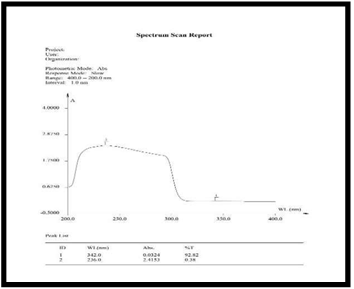
Observation: The spectrum scan indicated the highest absorbance (236 nm) at 236 nm with ferrous sulphate. There was a secondary minor peak at 342 nm with an insignificant absorbance. The plot of the calibration curve versus the two of concentration versus the absorbance was observed to be linear thus showing that Beer-Lambert law is obeyed by the drug in the chosen concentration range. The identity of ferrous sulphate is verified by this test and the use of this acid in quantitative analysis is justified.
Spectrophotometer (Ferrous Sulphate) Purpose:
The aim of the current research was to determine ferrous sulphate by way of Fourier Transform Infrared (FTIR) spectroscopy and to verify its structural features. FTIR is a significant preformulation technique that can help to confirm the identity of the drug and also identify the presence of these characteristic functional groups, thereby ensuring purity and formulations can be developed.
Method: A small sample of ferrous sulphate was used and combined with dry potassium bromide (KBr) and pressed into thin transparent pellet with the help of hydraulic press. The ready pellet was put into the FTIR spectrophotometer and was scanned in the spectral range of 4000-400 cm -1. The spectrum was measured and studied to identify typical absorption peaks.
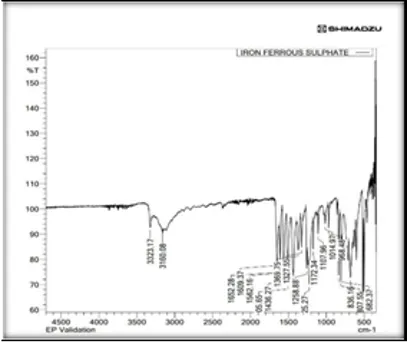
Observation: The FTIR spectrum of the ferrous sulphate revealed typical peaks of the functional groups of this compound and its hydrated state: A general peak at the region of 3323 cm -1 suggests the presence of OH stretching thus verifying the existence of the water of crystallization. A peak around 3160 cm -1 is also associated with the hydrogen-bonded O H stretching vibrations. The region with a peak of between 1600-1650 cm -1 is attributed to the H- O-H bending energies of water molecules. The peaks at strong absorption are in the range 1100-1000 -1 suggesting that S=O stretching of the sulfate group occurred. The presence of sulfate ions is confirmed by peaks of S-O bending vibrations around 600-700.
Purpose: To examine the compatibility of ferrous sulphate with various excipients to be used in the formulation and to make sure that there is no interaction to the drug stability.
Method: Ferrous sulphate was added to the excipients needed in the appropriate proportion. The mixture was mixed evenly with mortar and pestle. A little amount of the mixture was removed and combined with dry potassium bromide (KBr). A hydraulic press was used to compress the mixture into a thin pellet. The pellet was put into the FTIR instrument. The sample was scanned in the range of 4000–400 cm⁻¹. The spectrum obtained was compared to the spectrum of pure ferrous sulphate.
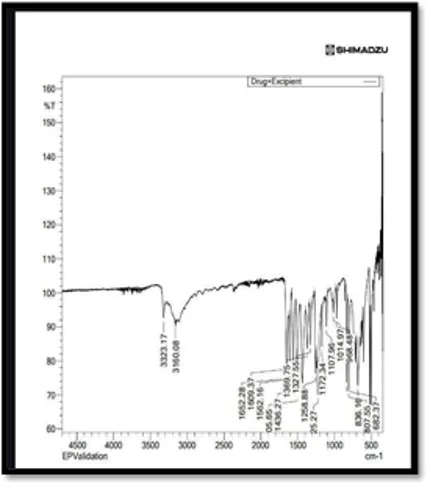
Observation: In the FTIR spectrum of the drug-excipient mixture, there were characteristic peaks at:
Pre-compression evaluation:
To establish the flow characteristics and filling capacity of the ferrous sulphate granules that affect filling of die and compression of tablets.
Method:
A known mass of the prepared granules was weighed and poured into a graduated cylinder to get the initial bulk volume (V 0 ). Density of bulk was determined. Cylinder was then tapped (100-500 times) to reach the same volume (Vf) to determine tapped density.
Bulk Density = Weight / V₀
Tapped Density = weight / Vf
Bulk density & tapped density of different batches:
|
Batch no |
Bulk density (g/ml) |
Tapped density (g/ml) |
|
Batch-1 |
0.42 |
0.48 |
|
Batch-2 |
0.40 |
0.46 |
|
Batch-3 |
0.38 |
0.44 |
To test the compressibility and flowability of granules prior to compression.
Method: Using bulk and tapped density values:
Carr’s Index (%) = [(Tapped Density – Bulk Density) / Tapped Density] × 100
Hausner’s Ratio = Tapped Density / Bulk Density
Carr’s index and Hausner ratio of different batches:
|
Batch no |
Carr’s index (%) |
Hausner’s ratio |
|
Batch-1 |
12.5 |
1.14 |
|
Batch-2 |
13.04 |
1.15 |
|
Batch-3 |
13.63 |
1.16 |
Purpose: To ascertain the flowability of granules to generate uniform filling in die during tablets compression.
Method: The granules were left to pass through a funnel with a fixed height to create a cone. Height (h) and radius (r) were taken, and angle of repose (θ) was determined. tan θ = h/r
Angle of repose of different batches:
|
Batch no |
Angle of repose |
|
Batch-1 |
27◦ |
|
Batch-2 |
28◦ |
|
Batch-3 |
29◦ |
Purpose:
To achieve uniformity of the weight of the tablets and accuracy of dosing.
Method: Ten tablets were randomly chosen and weighted separately. The average weight was calculated and deviation was compared with pharmacopeial limits.
Observation:
There were no differences in the weights of all tablets and all were within the IP limits (e.g., 200 mg ± 7.5%).
Purpose:
To determine the mechanical strength of tablets.
Method:
A hardness tester was used to test the tablets. The tablet was broken using force until it broke, after which values were measured.
Hardness of various Batches:
|
Sr no |
Batches |
Hardness |
|
1 |
Batch-1 |
4.5 kg/cm2 |
|
2 |
Batch-2 |
5.0 kg/cm2 |
|
3 |
Batch-3 |
4.8 kg/cm2 |
Purpose:
To test how resistant tablets can be against abrasion and chipping and mechanical stress during handling and transportation. The smaller friability value means robust and more resilient tablets.
Method:
Calculate the percentage friability using:
% Friability = [(W₀–Wf)/W₀] × 100
Acceptable Limit:
The weight loss should be less than 1% according to pharmacopeial standards. Tablets must not be cracked or broken or heavily damaged on the surface.
FRIABILITY TEST OF DIFFERENT BATCHES
|
Sr no |
Batch |
(%) |
|
1 |
Batch-1 |
0.72 |
|
2 |
Batch-2 |
0.80 |
|
3 |
Batch-3 |
0.88 |
DISSOLUTION TEST (IN VITRO DRUG RELEASE STUDY):
Purpose:
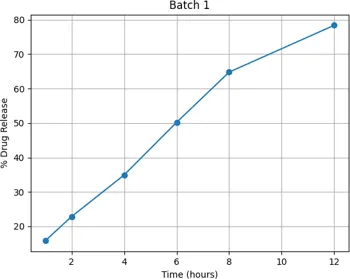
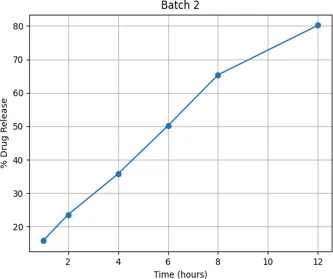
The dissolution experiment was conducted to find out the rate and degree of drug release of ferrous sulphate sustained release floating tablets under simulated gastric conditions. The test aids in assessing the efficacy of the formulation in the delivery of sustained drug release and therapeutic efficacy during a long period.
Methodology:
Data Analysis: The frequency of drug release was calculated and plotted against time to obtain drug release profile.
Dissolution data were fitted into different kinetic models such as:
Target Release Profile:
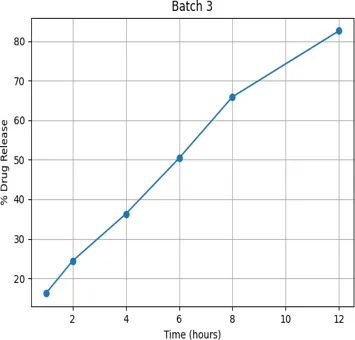
The floating tablets were sustained release so that it would release around 70-90 percent of the drug in the course of 12 hours so that the effect of the drug would be prolonged, and that the patient would adhere to it.
DISSOLUTION DATA BATCH 1
|
Time (hr) |
% of cumulative drug release |
|
1 |
16.2 |
|
2 |
24.4 |
|
4 |
36.3 |
|
6 |
50.4 |
|
8 |
65.9 |
|
12 |
82.6 |
DISSOLUTION DATA BATCH 2
|
Time (hr) |
% of cumulative drug release |
|
1 |
15.8 |
|
2 |
22.8 |
|
4 |
34.9 |
|
6 |
50.2 |
|
8 |
64.8 |
|
12 |
80.2 |
DISSOLUTION DATA BATCH 3
|
Time (hr) |
% of cumulative drug release |
|
1 |
16.2 |
|
2 |
24.4 |
|
4 |
36.3 |
|
6 |
50.4 |
|
8 |
65.9 |
|
12 |
82.6 |
CONCLUSION:
The purpose of the current research was to prepare and evaluate gastroretentive floating tablets of ferrous sulphate by using wet granulation method to obtain sustained drug release and enhanced gastric residence time. Drug identification, purity and compatibility studies were performed and confirmed the quality of the drug and its compatibility with the excipients. The granules showed fair flow properties with satisfactory bulk density, Carr's index, Hausner's ratio, and angle of repose. Tablet properties after compression, such as hardness, friability, weight variation, and drug content uniformity, were within the pharmacopeial standards, providing quality and mechanical strength. The use of HPMC as a hydrophilic polymer and sodium bicarbonate as an effervescent agent has ensured good buoyancy and sustained gastric retention. The in vitro release profiles showed sustained drug release for up to 12 hours for all batches. The highest cumulative drug release was observed for Batch 3, followed by Batch 2 and Batch 1, suggesting that the amount of effervescent agent present in the formulation increases drug release and buoyancy. In conclusion, the formulated tablet holds potential as a means to improve bioavailability, reduce gastrointestinal side effects and improve patient compliance for the treatment of iron deficiency anemia.
FUTURE PERSPECTIVE:
The invention of floating iron pills made of ferrous sulphate is a promising solution to the enhancement of iron therapy, especially in the treatment of iron deficiency anemia. Further improvements can be made in the future to make this drug delivery system more effective, stable and patient compliant. More complex polymer mixtures and new release modifiers can be investigated to obtain more specific and controlled drug release in the long term. Biodegradable and natural polymers could help to make it safer and minimize side effects in the long term. Also, there is optimization of floating mechanisms that can further enhance the retention time of the gastric system, resulting in improved absorption of the drug. In vivo assessment and clinical trials can also be used in future research to determine a high level of correlation between in vitro and in vivo drug release behavior. This will aid in establishing the therapeutic efficacy and bioavailability of the formulation. Nanotechnology and gastroretentive systems may be used to further improve drug delivery. It is possible that adding ferrous sulphate and absorption enhancers or vitamin C will enhance iron absorption and minimize gastrointestinal side effects. Furthermore, stability testing in various environmental conditions ought to be carried out in order to ascertain shelf life in the long term. Scale-up and industrial production feasibility studies can also be carried out to make the formulation commercially viable. In sum, sustained release floating tablets of ferrous sulphate hold great potential in the future as an effective, patient-friendly and reliable dosage form of iron supplementation.
REFERENCES


Pradipta Guha, Aveek Datta, Biplab Debnath, Formulation & Evaluation of Gastroretentive Drug Delivery System as a Floating Tablet of Ferrous Sulphate, Int. J. of Pharm. Sci., 2026, Vol 4, Issue 8, 4998-5018. https://doi.org/10.5281/zenodo.22165479
 10.5281/zenodo.22165479