

We use cookies to ensure our website works properly and to personalise your experience. Cookies policy
Department of Pharmacy Practice, The Oxford College of Pharmacy.
For people living with schizophrenia and other severe psychotic disorders, taking an oral antipsychotic every day can be difficult. Around half of patients are estimated to be completely nonadherent at any given time21. Long-acting injectable (LAI) antipsychotics were developed partly to address this problem. Instead of requiring a tablet every day, an LAI places the medicine in a depot that releases the drug gradually over several weeks or months after a single intramuscular injection. What is important, however, is that the way this depot is designed can influence safety once the medicine is used in routine clinical practice. In some cases, the formulation may be just as important as the drug molecule itself. This review follows that relationship from depot chemistry and pharmacokinetics through real-world effectiveness and, finally, adverse events identified in trials and post-marketing surveillance. Particular attention is given to injection-site reactions and post-injection delirium/sedation syndrome (PDSS). Oil-based decanoate depots and the aqueous olanzapine pamoate suspension appear to produce local injection-site reactions somewhat more often than polymer-microsphere and newer nanocrystal formulations, although pain, swelling, and occasional nodules can occur with almost any LAI system2,3. PDSS provides an even clearer example of a formulation-specific risk. The syndrome is seen almost exclusively with olanzapine pamoate and affects approximately 1–2% of patients1, while extensive safety monitoring of risperidone microspheres and paliperidone palmitate has found virtually no comparable signal4. The most likely explanation is related to the pharmaceutical formulation rather than the drug's receptor effects. If olanzapine pamoate crystals accidentally come into contact with blood instead of remaining in muscle, they can dissolve much more rapidly, causing a temporary rise in plasma olanzapine levels that resembles an overdose2. This finding led directly to the mandatory post-injection observation period for olanzapine pamoate3. At the same time, real-world studies suggest that the adherence benefit of LAIs, although meaningful, does not always translate into a dramatic reduction in relapse in pragmatic trials27. Overall, the evidence argues for evaluating LAI safety product by product. Understanding how an individual depot is constructed can often explain why a particular safety signal occurs and how it should be managed.
The Scale of the Adherence Problem
Not taking antipsychotic medication as prescribed remains one of the major challenges in the long-term treatment of schizophrenia. The exact percentage varies according to how adherence is defined and measured, but the different studies point in the same general direction: a substantial proportion of patients do not take their medication consistently. One frequently cited estimate places nonadherence as high as 50% among people with schizophrenia, while discontinuation of oral antipsychotics has been estimated at 26–44% 21. National administrative data using quality-measure reporting have placed overall nonadherence between 56% and 60% 23. A systematic review that used blood samples rather than self-report or prescription-refill data found an average nonadherence rate of about 41% among 13,217 outpatients across 39 studies24. Despite the very different measurement approaches, this estimate is broadly consistent with the wider literature.
The clinical consequence of missed medication is often relapse, and the connection between poor adherence and relapse has been repeatedly demonstrated. Evidence summarized in a study protocol for adherence improvement suggests that nonadherent patients have about 3.7 times the relapse risk of adherent patients 26. In a large Medicaid population, patients who remained adherent and persistent with antipsychotic treatment had substantially lower rates of psychiatric relapse, hospitalization for any cause, and emergency-department visits than patients who were nonadherent or discontinued treatment28. Even relatively short treatment gaps may matter. An analysis cited in a paliperidone palmitate study found that an interruption of only one to ten days could double the odds of hospitalization 25.
Long-Acting Injectables as a Pharmaceutical Response
LAI antipsychotics were developed as one practical response to this adherence problem. A single injection can provide continuous drug exposure for weeks or months, reducing the need for patients to remember and take a tablet every day. Producing that sustained exposure, however, requires different pharmaceutical strategies. The earliest depot agents, fluphenazine decanoate and haloperidol decanoate, are decanoate ester salts dissolved in an oil vehicle. The drug slowly leaves the oil depot and moves into surrounding tissue over days to weeks. Risperidone uses a different approach: the active drug is enclosed in biodegradable polymer microspheres that gradually break down. Olanzapine pamoate, paliperidone palmitate, and several aripiprazole products use aqueous suspensions containing poorly soluble microcrystalline drug salts. In these products, the rate at which the crystals dissolve largely determines how quickly the drug becomes available. More recent approaches include nanocrystal and prodrug technologies such as aripiprazole lauroxil, as well as longer-interval products designed to reduce injections to as few as two per year 25.
These differences are clinically relevant rather than simply technical. The formulation and delivery system can leave a recognizable imprint on the product's post-marketing safety profile, and that profile is not always predictable from the drug's receptor pharmacology alone. Injection-site reactions range from mild pain and swelling to nodules and, rarely, deeper infections, and their frequency varies with the vehicle and depot design8,9. PDSS provides an even more striking example. This cluster of sedation and delirium-like symptoms after injection has been reported almost exclusively with olanzapine pamoate despite extensive monitoring of other LAI antipsychotics 1,4.
Objective of This Review
Understanding why some safety signals are concentrated in particular products requires more than looking at adverse-event tables in isolation. It requires connecting the epidemiological reasons for developing LAIs with the chemistry of each depot, the pharmacokinetics produced by that formulation, evidence from real-world effectiveness studies, and safety information collected after widespread clinical use. This review brings these areas together, moving from adherence and relapse through depot design and pharmacokinetics, then examining injection-site reactions and PDSS before considering how mechanistic findings have influenced clinical practice.
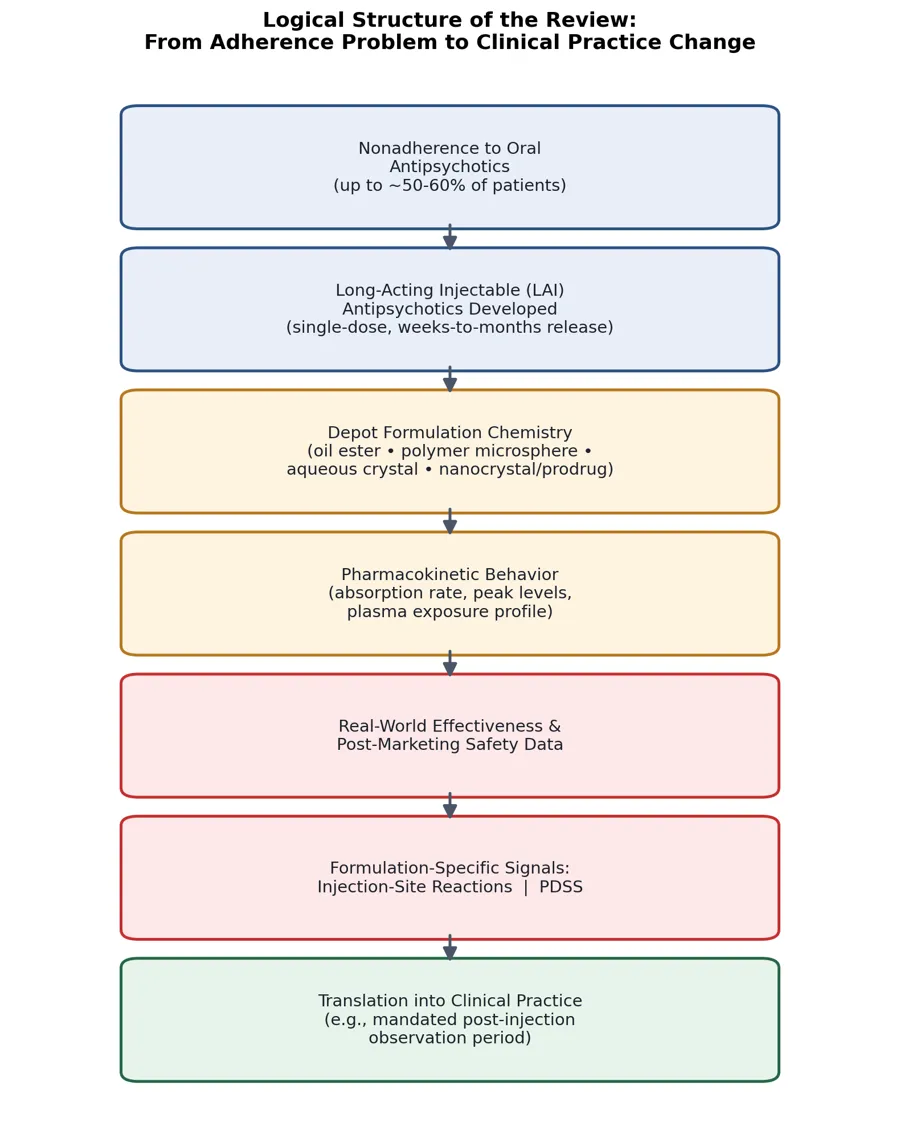
Figure 1. Logical structure of the review, tracing the argument from the adherence problem in schizophrenia through depot formulation chemistry and pharmacokinetics to post-marketing safety signals and resulting clinical practice changes.
METHODOLOGY
This narrative review used a targeted search of PubMed and related biomedical databases covering LAI formulation technology, pharmacokinetics, adherence, injection-site adverse effects, and PDSS. The search covered publications from the mid-2000s through 2026, with greater emphasis placed on work from the most recent decade. Search terms combined drug-specific and class-specific terms, including long-acting injectable antipsychotic, depot antipsychotic, olanzapine pamoate, risperidone microspheres, paliperidone palmitate, and aripiprazole lauroxil, with terms related to safety and effectiveness such as injection-site reaction, post-injection delirium, PDSS, pharmacovigilance, nonadherence, relapse, discontinuation, and adverse events. The review considered case reports, systematic reviews, post-marketing safety analyses, pharmacokinetic studies, pragmatic effectiveness trials, and mechanistic investigations that addressed formulation, adherence, or measurable safety outcomes. Rather than presenting the drugs one at a time, the evidence is organized from epidemiology to formulation, pharmacokinetics, and safety signals.
DEPOT FORMULATION ARCHITECTURE
Oil-Based Decanoate Esters
Haloperidol decanoate and fluphenazine decanoate represent the oldest and most straightforward depot strategy discussed here. The active drug is esterified with decanoic acid and dissolved in an oil vehicle, usually sesame oil. After intramuscular administration, the ester slowly leaves the oil depot and enters surrounding tissue. Esterases then remove the decanoate group, releasing the active drug into the circulation over approximately one to four weeks, depending on the drug and dose 9.
Polymer Microsphere Technology
Risperidone LAI uses a different type of depot. Micronized risperidone is enclosed within microspheres made from a biodegradable lactic-glycolic acid copolymer. Drug release therefore depends on gradual hydrolysis and breakdown of the polymer rather than simple diffusion. This produces a characteristic release pattern: a small initial burst, a period during which the polymer begins to erode, and then a more sustained release phase 9.
Aqueous Microcrystalline Suspensions
Olanzapine pamoate, paliperidone palmitate, and standard monthly aripiprazole monohydrate use another strategy: finely milled, poorly soluble crystalline drug salts suspended in water. Once injected into muscle, the drug becomes available as the crystals dissolve. Particle size and the solubility of the particular salt therefore play an important role in determining absorption 2,9.
Nanocrystal and Prodrug Innovations
Newer LAI technologies have pushed formulation design further. Aripiprazole lauroxil is a prodrug, specifically an N-acyloxy methyl derivative of aripiprazole, formulated as a nanocrystal dispersion. The formulation was developed to extend the dosing interval and also to permit treatment to begin on the same day using a smaller companion nanocrystal dose alongside the first injection, avoiding the weeks of oral supplementation traditionally needed with some depot products13. A ready-to-use 960-mg aripiprazole formulation given every two months was similarly developed to provide plasma exposure comparable with the monthly 400-mg formulation while reducing the number of clinic visits. Another microsphere-based aripiprazole formulation, described in trial literature as MS350, has been investigated as an alternative to standard microcrystalline aripiprazole monohydrate. Early comparative findings suggest steadier plasma concentrations and fewer treatment-emergent adverse events overall 17.
Pushing the Interval Further: Extended-Duration Formulations
The trend toward longer dosing intervals has continued. A paliperidone palmitate formulation designed for administration every six months is being studied, extending the same general aqueous microcrystalline approach used in the one-month and three-month products. The rationale is straightforward: if fewer injections are required each year, there are fewer opportunities for patients to miss treatment or experience gaps in care 25.
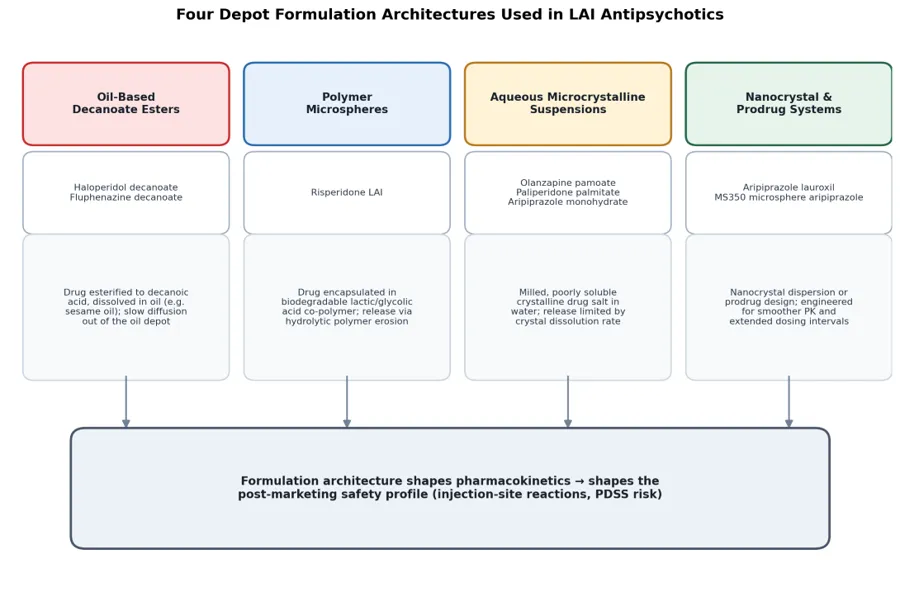
Figure 2. The four depot formulation architectures used in long-acting injectable antipsychotics — oil-based decanoate esters, polymer microspheres, aqueous microcrystalline suspensions, and nanocrystal/prodrug systems — with representative agents and release mechanisms for each.
PHARMACOKINETIC CONSEQUENCES OF FORMULATION DESIGN
The differences between these depot systems become especially clear when their pharmacokinetic profiles are compared. For example, once-monthly aripiprazole reaches peak plasma concentrations only after a median of approximately 24–34 days, depending on the dose, and has an elimination half-life measured in weeks. These data come from pharmacokinetic work in Chinese adults receiving 300- or 400-mg doses16. This slow, gradual rise in exposure is characteristic of the aqueous microcrystalline approach and is very different from the relatively rapid absorption seen with conventional oral dosing.
The ready-to-use 960-mg aripiprazole formulation administered every two months was designed to reproduce the plasma exposure of the monthly 400-mg formulation despite the longer interval between doses. In the pivotal randomized study, treatment-emergent adverse events occurred at almost identical rates in the two groups, at about 71% in each15. The finding illustrates why matching exposure during formulation development matters: changing the dosing schedule does not necessarily mean changing the established tolerability profile if the resulting drug exposure is kept comparable.
MS350 provides another useful example of how formulation can influence tolerability even when the active molecule remains the same. A multicenter randomized trial found the microsphere formulation to be bioequivalent to the standard microcrystalline product while producing smoother plasma concentration curves with less peak-to-trough fluctuation. This difference was accompanied by fewer extrapyramidal symptom-related adverse events: 1.9% with MS350 compared with 6.8% with the standard formulation17. In other words, the drug was the same, but the way the depot delivered it was different, and the safety profile changed accordingly.
Aripiprazole lauroxil has also been studied in relation to same-day treatment initiation. A pharmacokinetic comparison of one-day and 21-day initiation strategies found that the most common adverse events, occurring in at least 5% of patients, included injection-site pain, headache, weight gain, insomnia, dyspepsia, and anxiety 13. Overall, the profile was similar to what has been reported with other LAI antipsychotics and did not point to a clearly unique safety problem caused by the nanocrystal formulation.
INJECTION-SITE REACTIONS ACROSS FORMULATION TYPES
Overall Frequency and Character
Injection-site reactions are the most commonly reported non-systemic adverse effects associated with LAI antipsychotics. They can be as mild as temporary pain or redness, but they may also include induration, swelling, nodules, cysts, and, rarely, sterile abscesses or deeper tissue complications16. A systematic review of non-systemic adverse effects screened 189 citations and included 12 eligible studies. Across that literature, injection-site pain was the most frequently reported local reaction, although the overall incidence of injection-site reactions was generally low8.
Tissue-Level Basis of Local Reactions
At the tissue level, an injected depot is still a foreign material placed directly into muscle, so some degree of local response is expected. Histological studies have described reactions ranging from mild pain, redness, and induration to nodules, cysts, and, in some cases, granulomas—localized inflammatory lesions made up of clustered mononuclear phagocytes. Older oil-based haloperidol decanoate injections have historically produced reactions severe enough to become a reason for treatment discontinuation in some patients9.
Comparative Incidence Across Agents
The type of formulation appears to influence both the frequency and severity of local reactions. In general, aqueous second-generation formulations have lower injection-site reaction rates than older oil-based depots. Risperidone microspheres and paliperidone palmitate, for example, tend to have lower rates than haloperidol decanoate, although pain, redness, swelling, and nodules can still occur. Olanzapine pamoate has an injection-site reaction incidence of approximately 8.4%, placing it closer to the older oil-based products, while standard aripiprazole monohydrate has a somewhat lower rate of around 6.3%9.
The newer aripiprazole products show why formulation details still matter. In the pivotal trial of the ready-to-use two-month 960-mg formulation, injection-site pain occurred in 18.2% of patients compared with 9.0% in the monthly 400-mg group15. The investigators attributed this difference to the larger injection volume required for the extended-interval product rather than to a fundamentally different type of local tissue reaction. Injection-site pain was also among the common adverse events reported during aripiprazole lauroxil initiation, without evidence that its severity was outside the range generally seen with LAIs13.
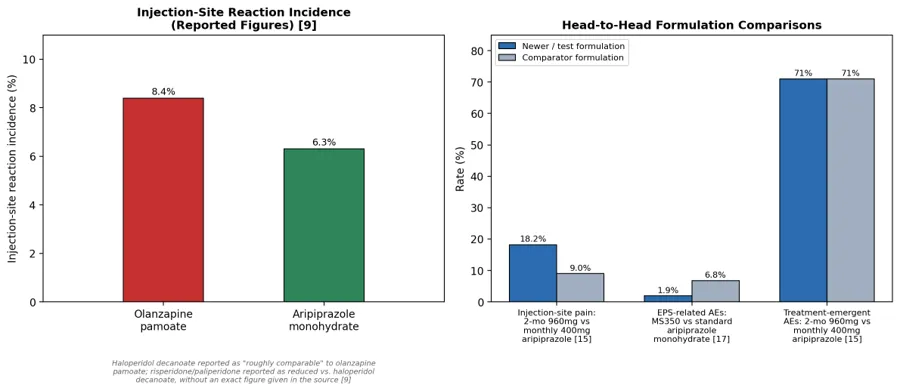
Figure 3. Comparative injection-site reaction and adverse-event incidence figures reported in the review, including formulation-level injection-site reaction rates and head-to-head comparisons between newer and comparator aripiprazole formulations.
Practical Delivery Differences Between Products
The formulation itself is only one part of the injection experience. LAI products also differ in their approved injection sites, needle sizes, injection volumes, dosing intervals, need for oral supplementation at treatment initiation, availability of pre-filled syringes, storage requirements, post-injection observation rules, and potential drug interactions. A comparative review of risperidone LAI and olanzapine pamoate found that weight gain was generally more common with olanzapine pamoate, while injection-site reactions were uncommon and usually mild with both products 12.
Rare Serious Local Complications
Although most injection-site reactions are minor, rare serious complications have been reported. One case involved a patient receiving paliperidone palmitate every three weeks who developed a necrotizing deep-tissue infection and sepsis at the injection site. The infection was identified late and ultimately required vasopressors, intubation, and surgery10. The case report emphasizes a practical point: when a patient receiving an LAI develops an unexplained infection, the injection site should be considered as a possible source, even when the formulation is generally regarded as well tolerated10.
The injection technique and anatomical site can also influence local tolerability independently of the formulation. A pharmacokinetic study comparing gluteal and deltoid administration of risperidone LAI evaluated both systemic exposure and patient-reported injection-site pain, highlighting that the location of the depot—not only its chemical composition—can affect the patient's experience 11.
POST-INJECTION DELIRIUM/SEDATION SYNDROME: A FORMULATION-SPECIFIC SIGNAL
Clinical Characterization
PDSS is perhaps the clearest example in this review of a safety signal that is closely tied to one formulation rather than to an entire class of medicines. The syndrome can involve sedation, delirium, dysarthria, ataxia, extrapyramidal symptoms, agitation, dizziness, and, rarely, seizures. Symptoms usually appear soon after injection and can resemble an oral olanzapine overdose1,3.
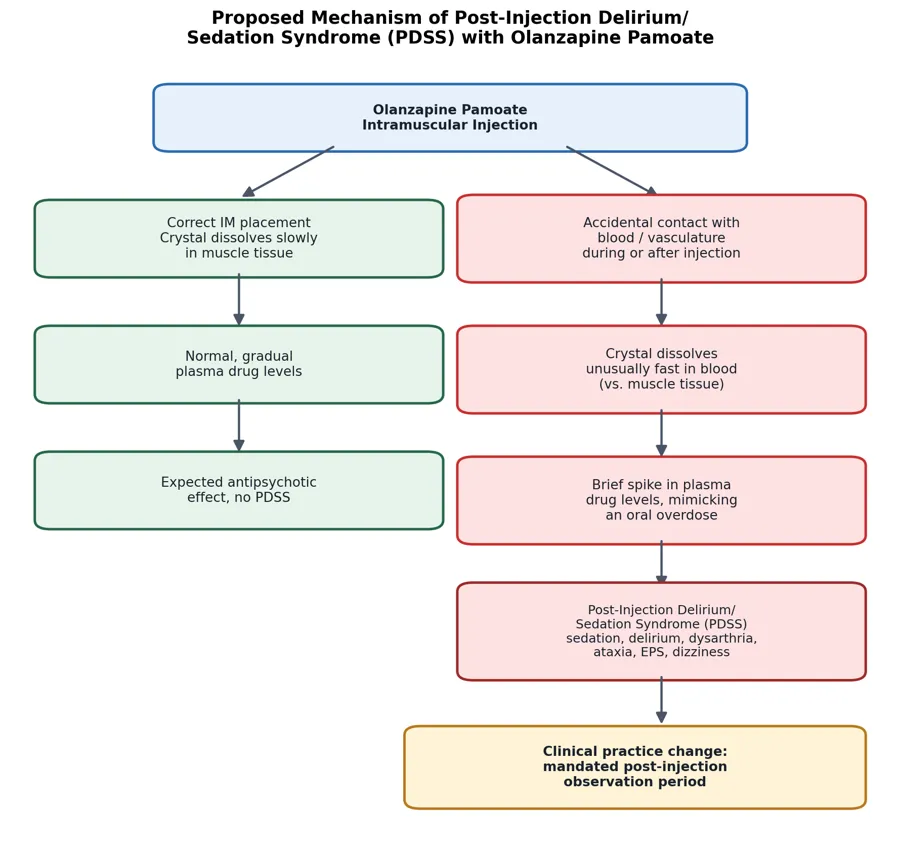
Figure 4. Proposed mechanism linking accidental intravascular injection of olanzapine pamoate to post-injection delirium/sedation syndrome (PDSS), contrasted with the normal intramuscular absorption pathway, and the resulting mandated post-injection observation period.
Incidence Data from Clinical Trials
An analysis of eight clinical trials of olanzapine pamoate conducted between August 2000 and October 2008 identified PDSS in approximately 0.07% of individual injections. When considered by patient rather than by injection, this represented about 1.4% of the patients studied: 30 events occurred in 29 individuals1.
Incidence Data from Post-Marketing Surveillance
A separate five-year post-marketing surveillance analysis using the manufacturer's global pharmacovigilance database identified 338 confirmed PDSS events. About 91% occurred within one hour of injection, and slightly more than half of those occurred during the first 15 minutes. None of the cases was fatal, and most resolved within 72 hours5. Later case reports show that the syndrome can occur even after prolonged exposure. One patient developed PDSS after her 31st scheduled olanzapine injection following approximately 18 months of uneventful treatment6. Another report described a case with detailed serial plasma concentrations and two years of follow-up7.
The Absence of a Comparable Signal with Other Agents
The contrast with other LAI antipsychotics is important. A safety analysis covering 15 completed risperidone LAI trials, more than 3,100 patients, and approximately 115,000 injections, together with post-marketing data, found no PDSS cases. A similar analysis of paliperidone palmitate included 10 trials, nearly 3,800 patients, and almost 34,000 injections. Only one possible case was identified, and that patient had been assigned to placebo, making a drug-related explanation unlikely4. The available pharmacokinetic and safety literature for aripiprazole depot formulations has likewise not identified a comparable PDSS signal despite increasing clinical and post-marketing exposure13-17.
Mechanistic Basis: Linking Formulation Chemistry to the Safety Signal
The investigation of PDSS is particularly useful because researchers were able to follow the safety signal back to a specific property of the formulation. Potential explanations such as manufacturing problems, incorrect reconstitution, and dosing errors were investigated and excluded. Product batches and used vials associated with confirmed cases did not support these explanations2.
Plasma drug concentrations provided a stronger clue. During PDSS episodes, olanzapine levels were substantially higher than the expected therapeutic range of approximately 5–73 ng/ml. Some samples exceeded 100 ng/mL, while the most extreme cases were above 600 ng/ml. Concentrations subsequently returned toward the therapeutic range over approximately 24–72 hours2.
Laboratory experiments helped explain these findings. Olanzapine pamoate was found to dissolve considerably faster in plasma than in media designed to reproduce the environment inside muscle. The resulting mechanism is therefore quite specific: if part of the injected depot accidentally enters the bloodstream or reaches a highly vascular area, the crystals may dissolve much faster than they normally would in muscle. This can produce a short-lived but substantial increase in systemic olanzapine exposure, effectively mimicking an overdose2. The mechanism depends on the solubility characteristics of the olanzapine pamoate salt rather than on a property shared by all LAI antipsychotics. This is consistent with the lack of a similar signal for risperidone microspheres, paliperidone palmitate, and aripiprazole formulations, which use different pharmaceutical platforms2,4.
REAL-WORLD EFFECTIVENESS AND THE ADHERENCE-SAFETY BALANCE
Do LAI Antipsychotics Actually Reduce Relapse in Practice?
Because improving adherence is a central reason for using LAI antipsychotics, it is important to ask whether that theoretical advantage consistently produces better outcomes in routine practice. The answer is more complicated than the basic adherence argument might suggest. A retrospective study of 52 patients who switched from oral antipsychotics to an LAI after an inpatient admission found no statistically significant reduction in hospital length of stay compared with their earlier admissions while taking oral medication21. The authors therefore cautioned against assuming that switching to an LAI automatically produces a major improvement in outcomes21.
The larger PROACTIVE pragmatic trial provides another important perspective. It randomized 305 patients with schizophrenia or schizoaffective disorder to either a long-acting injectable second-generation antipsychotic or an oral second-generation antipsychotic and followed them for 30 months27. Contrary to what might be expected from the adherence rationale alone, first relapse occurred in 42% of the injectable group compared with 32% of the oral group. Neither overall relapse rates nor time to later relapses differed significantly between the groups 27.
A separate five-year historical cohort study comparing oral atypical antipsychotics with depot typical antipsychotics found broadly similar relapse frequencies, although patients receiving oral atypical had somewhat longer remission periods between relapses 29. Taken together, these findings suggest that the strongest practical argument for LAIs may not be that they universally prevent more relapses than oral medicines. Instead, their major advantage may be reducing the specific risk of missed doses and unrecognized treatment gaps, particularly in patients for whom adherence has already been a problem 25.
Discontinuation Due to Adverse Events in Routine Practice
The formulation-specific safety concerns discussed above have not, overall, made LAI antipsychotics poorly tolerated as a group. A retrospective chart review of 157 patients receiving second-generation LAIs at one hospital found that adverse events led to discontinuation in about 7% of cases. The rate varied by product, from approximately 6.9% for once-monthly aripiprazole to 12.2% for paliperidone palmitate and 17.2% for risperidone LAI. Most adverse events were moderate and did not require hospitalization; only three patients in the cohort required hospital-based treatment for an adverse event. The investigators concluded that second-generation LAIs were generally acceptable and tolerable in routine practice20.
The newer aripiprazole depot formulations have generally shown safety profiles similar to established formulations. In the pivotal study of the two-month formulation, overall adverse-event rates were almost the same as those seen with the monthly formulation, with weight gain being the most frequently reported systemic event in both groups15. A separate placebo-controlled trial supporting the use of once-monthly aripiprazole for maintenance treatment of bipolar I disorder likewise found that treatment-emergent adverse events were mostly mild to moderate among the 266 patients who reached randomization18.
A Pharmacology-Driven Signal for Contrast
Not every safety concern associated with an LAI is caused by its depot design. Aripiprazole provides a useful contrast because its partial dopamine agonist activity has been linked to impulse-control disorders. A mini-review discussing aripiprazole LAI augmentation strategies noted published cases involving impulse-control problems, particularly pathological gambling, and recommended active monitoring for these symptoms during treatment. This is different from PDSS and injection-site reactions. Those two signals are closely connected to formulation and administration, whereas impulse-control effects are more plausibly related to the drug's underlying receptor pharmacology and could also occur with oral aripiprazole19.
TRANSLATIONAL RISK MITIGATION
The post-injection observation requirement for olanzapine pamoate is the clearest example in this review of mechanistic pharmacovigilance leading directly to a clinical safety measure. PDSS symptoms have been reported from almost immediately after injection to more than three hours later, with the greatest concentration of cases occurring during the first hour. Based on this timing and the seriousness of the syndrome, regulators required injections to be administered in a healthcare setting capable of managing sedation and delirium, followed by at least three hours of observation before the patient can leave3,5. This is a product-specific precaution rather than a class-wide rule. Comparable observation requirements do not apply to risperidone microspheres, paliperidone palmitate, or aripiprazole depot products because their safety data have not demonstrated a similar signal3,4.
The olanzapine example also illustrates a broader principle. A rare but serious safety signal was detected, investigated until a plausible pharmaceutical mechanism was identified, and then addressed with a targeted intervention. The response was therefore proportionate to the evidence rather than being extended unnecessarily to every LAI antipsychotic. This approach allows clinicians to manage a specific risk without removing the potential adherence benefits of the broader drug class.
DISCUSSION
Looking across the evidence, one conclusion becomes increasingly clear: the safety of an LAI antipsychotic cannot be understood fully by examining only its active drug molecule. The vehicle, particle or microsphere structure, and salt form all influence how the product behaves after injection. These formulation characteristics affect local tolerability and, in the case of PDSS, can also influence systemic safety in ways that would be difficult to recognize if all LAIs were treated as one uniform group.
Injection-site reactions occur to some extent with all of the formulations reviewed, but they appear more common with oil-based decanoate depots and olanzapine pamoate than with polymer-microsphere and paliperidone palmitate formulations8,9. This suggests that the vehicle and physical properties of the depot are important determinants of local tissue response. The higher rate of injection-site pain with the two-month aripiprazole formulation, which was attributed to its larger injection volume, reinforces the point that even relatively small engineering decisions can influence local tolerability 15.
PDSS is an even stronger example. It is a serious adverse event concentrated almost entirely in one pharmacologically related product and linked to a specific pharmaceutical mechanism: the unusual behavior of the olanzapine pamoate salt when exposed to blood2,4. The lesson extends beyond antipsychotics. A safety signal observed with one member of a drug class should not automatically be assumed to apply to every other member, especially when their physical formulations and delivery systems differ substantially.
The real-world effectiveness findings add an important layer to this discussion. If pragmatic studies such as PROACTIVE do not demonstrate a clear relapse-prevention advantage for LAIs over oral antipsychotics27, then the decision to accept a formulation-specific risk should be based on the individual patient's circumstances rather than on the assumption that an LAI is inherently more effective or safer for everyone. In practical terms, the relevant question is often whether a particular patient has a meaningful risk of missed doses or unrecognized treatment gaps and whether the benefits of a particular LAI outweigh its product-specific risks.
The evidence also highlights the importance of keeping pharmacovigilance data at the product level. The PDSS signal became convincing because large clinical-trial and post-marketing datasets allowed investigators to compare individual formulations directly, including olanzapine pamoate, risperidone microspheres, and paliperidone palmitate1,4,5. If all adverse events had been combined into a single category for 'LAI antipsychotics,' the distinctive pattern might have been diluted and much harder to detect. Future pharmacovigilance systems should therefore retain enough formulation-level detail to identify differences between products.
There are several limitations to the evidence base. Injection-site reaction rates come from studies with different follow-up periods, definitions, and comparator groups, so the reported percentages should not be interpreted as perfectly comparable head-to-head estimates8,9,15. The mechanism of olanzapine pamoate PDSS is well characterized, but similarly detailed mechanistic work has not been carried out for every newer LAI, particularly the most recent aripiprazole products. No comparable signal has been identified for these products so far, but continued surveillance remains important13,14,17. Finally, effectiveness studies are not completely consistent. Observational studies and pragmatic randomized trials do not always point to the same conclusion, so no single study should be treated as definitive evidence of how much benefit an LAI provides in every clinical setting21,27,29.
CONCLUSION
Overall, the evidence supports a clear relationship between the physical design of an LAI antipsychotic and the way its safety profile develops in clinical practice. The original reason for developing these medicines—the high level of nonadherence seen with oral antipsychotics and the increased relapse risk associated with treatment gaps—remains well supported by epidemiological research21,23,25,28. At the same time, pragmatic trials suggest that the additional relapse-prevention benefit of an LAI over an oral antipsychotic is not necessarily large or universal and may depend strongly on the individual patient 21,27,29.
Injection-site reactions occur across the LAI formulations studied, but their frequency varies with the vehicle, particle characteristics, and delivery system. In general, newer aqueous and polymer-based technologies appear to produce fewer local reactions than the oldest oil-based depots8,9. PDSS is the clearest formulation-specific safety signal in this literature. Its association with olanzapine pamoate can be explained by the unusual solubility behavior of that salt in blood and is not seen to a comparable extent with risperidone microspheres, paliperidone palmitate, or the aripiprazole depot formulations examined1,2,4.
Taken together, these findings support a product-by-product approach to pharmacovigilance rather than treating all LAI antipsychotics as a single safety category. The mandatory observation period after olanzapine pamoate injection also demonstrates how a well-characterized mechanism can be translated into a focused clinical safeguard 3,5. Applying the same formulation-centered and patient-matched approach to newer and less extensively studied LAIs, including emerging six-month paliperidone palmitate formulations, will be an important next step for the field25.
DECLARATIONS
Data availability: Not applicable — this is a narrative literature review; no new data were generated.
REFERENCES





Prema S, Chidananda G, Divya C K, Archana S, Aniruddha Chakraborty, From Depot Architecture to Post-Marketing Safety Translational Formulation–Safety Relationships in Long-Acting Injectable Antipsychotics, Int. J. of Pharm. Sci., 2026, Vol 4, Issue 9, 1851-1864. https://doi.org/10.5281/zenodo.22768824
 10.5281/zenodo.22768824