

We use cookies to ensure our website works properly and to personalise your experience. Cookies policy
1Project Guide,PRMSS Anuradha College of Pharmacy, Chikhli, Maharashtra, India.
2,3,4,56UG Students, PRMSS Anuradha College of Pharmacy, Chikhli, Maharashtra, India.
7Principal, PRMSS Anuradha College of Pharmacy, Chikhli, Maharashtra, India.
Cracked heels (heel fissures) are a very common foot problem caused by dryness and thickening of the skin of the heel, and they can be painful, bleed and become infected. Creams and ointments are easily rubbed off or washed away, whereas a patch that is applied on the heel stays in place for several hours, provides occlusion that hydrates the skin, and releases the active ingredients slowly. Aloe vera and turmeric (Curcuma longa) are easily available herbal drugs with reported moisturising, anti-inflammatory, antimicrobial and wound-healing properties. This review discusses the aetiology of cracked heels, the concept, advantages, limitations and composition of foot patches, the profile of Aloe vera and turmeric, the methods of preparation of patches, the polymers used, the factors affecting quality, and the parameters used for evaluation, with the important reports on the subject.
Cracked heels, medically called heel fissures, are a common condition in which the skin of the heel becomes dry, thick and hard, and splits into linear cracks. They are seen in people of all ages, but more often in women, in elderly people, in obese people, in diabetic patients and in persons who stand for long hours or walk barefoot or in open footwear. Dry weather, frequent washing, poor foot care and nutritional deficiencies also contribute[1,2,3]. In severe cases the fissures are deep, painful and bleeding, and they become entry points for bacterial and fungal infections.
The skin of the sole has a very thick stratum corneum and no sebaceous glands, so it depends on sweat and the water held in the horny layer to remain soft. When the water content of the stratum corneum falls, the skin loses its elasticity and the pressure of the body weight makes the heel fat pad expand sideways, and the hardened skin cracks. Treatment is therefore based on moisturising (emollients and humectants), softening of the thick skin (keratolytics) and the protection of the cracks from infection[1,2,3].
Creams and ointments applied on the feet are quickly lost by rubbing against socks and floors and by washing. A foot patch is a flexible patch that is stuck on the heel and stays in place for several hours. It protects the cracks, keeps the skin hydrated by occlusion and releases the active ingredients slowly. Herbal ingredients such as Aloe vera and turmeric are cheap, easily available and widely accepted by patients, and a herbal foot patch is therefore a useful, practical option.
Cracked Heels (Heel Fissures)
The heel fissure begins as dryness and scaling of the skin (xerosis) and thickening of the horny layer (hyperkeratosis). In the early stage the cracks are superficial and affect only the epidermis, and they are painless. In the later stages the cracks go deeper into the dermis and cause pain and bleeding, and walking becomes difficult. Infection by bacteria such as Staphylococcus aureus or by fungi such as Candida and dermatophytes may follow[1,3]. Moisturisation and occlusion are the most important parts of the treatment, since the water content of the horny layer decides its softness and flexibility[1,2].
Concept of Foot Patch
A herbal foot patch is a thin, flexible, adhesive patch that carries herbal active ingredients and humectants in a polymer matrix. It generally consists of (i) a backing layer, which protects the patch from outside and makes it occlusive, (ii) a polymer matrix containing the herbal ingredients and other excipients, which is in contact with the skin and is adhesive, and (iii) a release liner, which protects the adhesive surface during storage and is removed before use. When the patch is applied, it covers the heel, the water vapour from the skin is trapped under it and the horny layer swells and softens, while the herbal ingredients diffuse slowly into the skin[4,5,6].
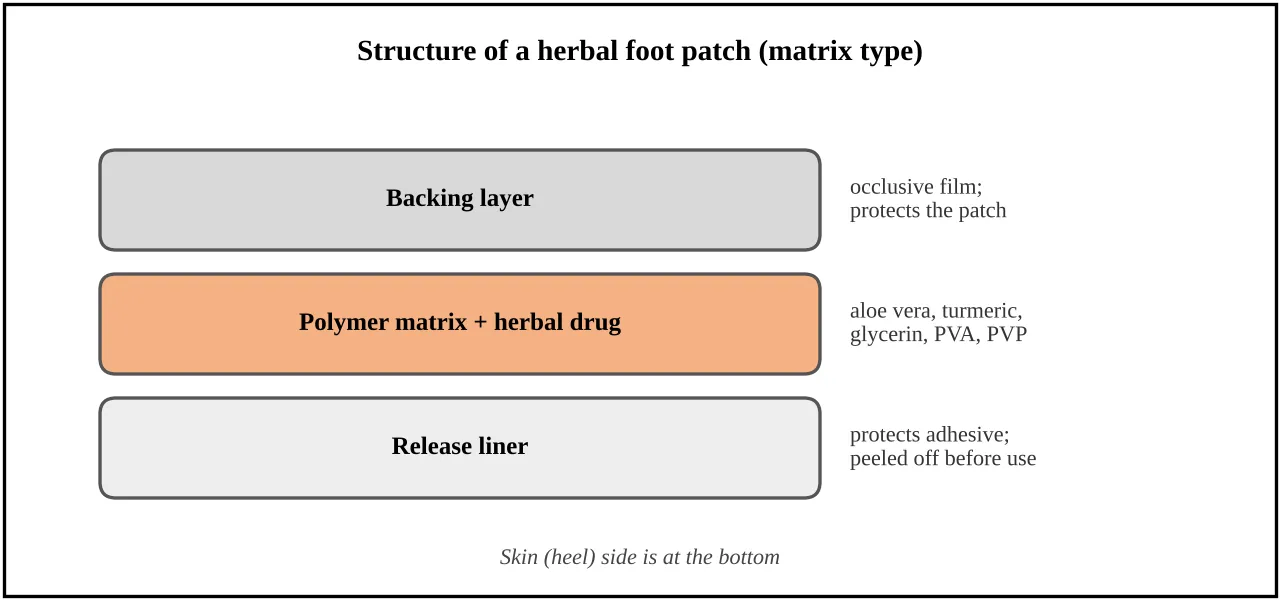
Figure 1: Structure of a Herbal Foot Patch
Advantages of Herbal Foot Patch
Limitations of Foot Patches
Characteristics of an Ideal Foot Patch
Composition of Foot Patch
The usual components of a matrix-type foot patch are given in the table below[6,7,8,9].
Table: General Composition of a Foot Patch
| Sr. No. | Component | Typical amount | Examples |
|---|---|---|---|
| 1 | Herbal active ingredient | 1 – 10% w/w | Aloe vera gel, turmeric extract |
| 2 | Film-forming polymer | 4 – 8% w/v of casting solution | PVA, HPMC, ethyl cellulose, Eudragit |
| 3 | Adhesive polymer | 1 – 3% w/v | PVP K30, acrylic adhesives, polyisobutylene |
| 4 | Plasticiser / humectant | 10 – 30% w/w of polymer | Glycerin, propylene glycol, PEG 400, sorbitol |
| 5 | Penetration enhancer | 1 – 5% | Propylene glycol, oleic acid, DMSO |
| 6 | Preservative | 0.02 – 0.2% | Methylparaben, propylparaben |
| 7 | Backing layer | – | Aluminium foil, polyethylene, polyester film |
| 8 | Release liner | – | Silicone-coated paper, butter paper |
| 9 | Solvent | q.s. | Purified water |
Description of Drug and Excipients
Both have a long history of use on the skin in India and have been widely studied.
Aloe vera
Table: Profile of Aloe Vera
| Sr. No. | Parameter | Details |
|---|---|---|
| 1 | Botanical name | Aloe vera (L.) Burm.f. (syn. Aloe barbadensis Miller) |
| 2 | Family | Asphodelaceae (Liliaceae) |
| 3 | Common names | Aloe, Ghritkumari (Hindi), Kumari (Sanskrit) |
| 4 | Part used | Clear mucilaginous gel from the leaf parenchyma |
| 5 | Major constituents | Water (about 99%), polysaccharides (acemannan, glucomannan), amino acids, vitamins A, C and E, enzymes, minerals, salicylic acid, sterols |
| 6 | Reported activities | Moisturising, emollient, wound healing, anti-inflammatory, antimicrobial, soothing |
| 7 | Traditional uses | Burns, wounds, sunburn, dry and cracked skin, skin diseases |
Aloe vera gel is rich in water-holding polysaccharides and acts as a natural humectant and emollient. It has been shown to increase skin hydration in formulations, to promote wound healing and to reduce inflammation and pain[10,11,12].
Turmeric (Curcuma longa)
Table: Profile of Turmeric
| Sr. No. | Parameter | Details |
|---|---|---|
| 1 | Botanical name | Curcuma longa Linn. |
| 2 | Family | Zingiberaceae |
| 3 | Common names | Turmeric, Haldi (Hindi), Haridra (Sanskrit) |
| 4 | Part used | Dried rhizome |
| 5 | Major constituents | Curcuminoids (curcumin, demethoxycurcumin, bisdemethoxycurcumin; 2 to 5%), volatile oil with turmerones, starch and resins |
| 6 | Reported activities | Anti-inflammatory, antioxidant, antimicrobial, wound healing |
| 7 | Traditional uses | Wounds, cuts, skin diseases, inflammation, as a cosmetic and antiseptic |
Curcumin, the main curcuminoid, reduces inflammation by inhibiting COX-2 and NF-κB, scavenges free radicals, is active against several bacteria and fungi, and increases collagen deposition and granulation tissue in wounds. These properties are useful in cracked heels, in which the skin is inflamed and often infected[13,14,15]. It also gives a yellow colour to the patch, which can be easily estimated by UV spectrophotometry at about 425 nm.
Role of Glycerin and Polymers
Glycerin is a humectant and plasticiser, which draws water into the horny layer and makes the patch flexible. Polyvinyl alcohol (PVA) is a water-soluble, non-toxic and biocompatible synthetic polymer which forms clear, strong, flexible films[16,17]. HPMC is a cellulose ether that gives clear films with good adhesion. PVP K30 is a water-soluble polymer with good tackiness, and it is used to give adhesion to the patch[17].
Methods of Preparation and Related Aspects
A foot patch is a type of topical (transdermal-type) patch, and the same methods are used for its preparation. The common methods are described below[7,8,9,18].
Methods of Preparation of Patches
1. Solvent casting (solvent evaporation) method: this is the simplest and the most commonly used method. The polymers are dissolved in a suitable solvent (water for water-soluble polymers), and the plasticiser, the herbal ingredients and other excipients are added. The solution is stirred until it is uniform, the air bubbles are removed, and the solution is poured into a levelled petri dish or mould and dried in an oven at a controlled temperature. The dried film is peeled off, cut to the required size, and a backing layer and a release liner are applied[7,8,18].
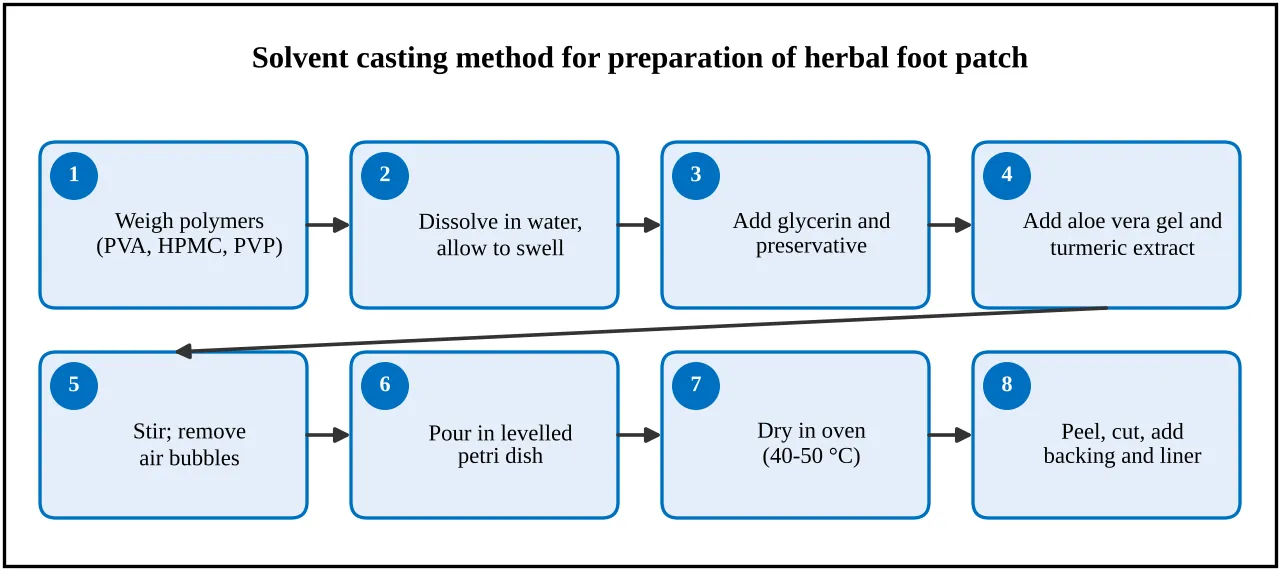
Figure 2: Solvent Casting Method for Preparation of Herbal Foot Patch
2. Circular Teflon mould method: solutions of the polymers in an organic solvent are poured in a circular Teflon mould placed on a levelled surface, and an inverted funnel is placed over it to control the rate of evaporation of the solvent. After 24 hours the film is removed and stored in a desiccator[8,9].
3. Mercury substrate method: the solution of the drug and plasticiser is poured over a levelled mercury surface and covered with an inverted funnel for slow evaporation. It gives smooth films, but it is not used much now because mercury is toxic[8].
4. Asymmetric TPX membrane method: a heat-sealable polyester backing film with a concave area is filled with the drug solution, covered with a TPX (poly 4-methyl-1-pentene) membrane and sealed with an adhesive. It gives a reservoir-type patch, but it needs special materials[8,9].
5. Hot-melt method: the polymers and the drug are melted together, and the molten mass is coated on a backing layer and cooled. It does not use solvents, but the heat may destroy herbal constituents[7,9].
6. Aluminium-backed adhesive film method: the drug is dispersed in a solution of an adhesive polymer in an organic solvent, and the solution is cast on aluminium foil. It is used for drugs that are unstable in some solvents, but the process uses organic solvents[8].
Table: Comparison of Methods of Preparation of Patches
| Sr. No. | Method | Main requirement | Advantage | Drawback |
|---|---|---|---|---|
| 1 | Solvent casting | Petri dish / mould, oven | Simple, aqueous, low cost | Long drying time |
| 2 | Circular Teflon mould | Teflon mould, funnel | Uniform films | Organic solvents |
| 3 | Mercury substrate | Mercury surface | Smooth films | Mercury is toxic |
| 4 | Asymmetric TPX membrane | TPX membrane, sealing | Reservoir patch | Special materials |
| 5 | Hot melt | Heating, coating unit | No solvent | Heat may degrade herbs |
| 6 | Aluminium-backed adhesive | Adhesive, foil, solvent | Good backing | Organic solvent used |
Types of Patches
Patches are of two main types according to their structure. In matrix (monolithic) patches the ingredients are dispersed uniformly in a polymer matrix, which also serves as the adhesive or is covered by an adhesive layer. In reservoir patches the ingredients are held in a liquid or gel compartment and the release is controlled by a membrane. Drug-in-adhesive patches may be single-layer or multi-layer.
Polymers Used for Patches
Table: Commonly Used Polymers for Patches
| Sr. No. | Polymer | Important features |
|---|---|---|
| 1 | Polyvinyl alcohol (PVA) | Water-soluble, biocompatible; clear, strong, flexible films; good film former |
| 2 | HPMC (E5, E15, K4M) | Cellulose ether; clear, flexible films; good adhesion; swells in water |
| 3 | PVP K30 | Water-soluble; tacky; improves adhesion and film flexibility |
| 4 | Ethyl cellulose | Water-insoluble; gives strong films; used with organic solvents |
| 5 | Eudragit RL / RS | Acrylic polymers; permeable films; used with organic solvents |
| 6 | Polyisobutylene / acrylic | Pressure-sensitive adhesives; need organic solvents or coating equipment |
Factors Affecting the Quality of Patches
The polymer concentration affects the thickness, strength and drying time; too much polymer gives a thick, stiff patch, while too little gives a weak one. The type and amount of plasticiser decide the flexibility, since a low amount makes the film brittle and a high amount makes it sticky and weak. Entrapped air bubbles and an uneven casting surface cause uneven thickness and defects. The drying temperature and time are important because a high temperature gives surface cracking and can destroy herbal constituents, while incomplete drying leaves moisture. The type of adhesive polymer controls the adhesion to the skin[7,8,16].
Evaluation Parameters
A herbal foot patch is evaluated for its physical properties, its adhesion, its moisture-related properties, its content and release of the herbal ingredients, its biological safety and its stability. The main parameters and the criteria generally expected are summarised in the table below.
Table: Evaluation Parameters and Expected Criteria
| Sr. No. | Parameter | Method / instrument | Expected criteria |
|---|---|---|---|
| 1 | Appearance | Visual inspection | Smooth, flexible, free of bubbles |
| 2 | Thickness / weight | Micrometer / balance | Uniform (low SD) |
| 3 | Folding endurance | Manual folding | More than 200 folds |
| 4 | Tensile strength | Tensile testing | Strong, does not tear on handling |
| 5 | Moisture content | Desiccator method | Low (preferably below 10%) |
| 6 | WVTR | Desiccant (cup) method | Moderate, gives occlusion |
| 7 | Surface pH | Digital pH meter | About 5 – 7 |
| 8 | Adhesion | Peel / tack tests | Good adhesion, easy removal |
| 9 | In vitro release | Franz diffusion cell | Sustained release over 8 hours |
| 10 | Antimicrobial activity | Agar well diffusion | Clear zone of inhibition |
| 11 | Irritation | HET-CAM test | Non-irritant |
Review of Literature
Rawlings and Harding (2004) reviewed moisturisation and the skin barrier function and explained that the water content of the stratum corneum decides the softness and flexibility of the skin, which is the basis of the use of humectants and occlusion for dry skin[1].
Pavicic and Korting (2006) reviewed xerosis and callus formation of the foot and its management, and described cracked heels as a result of dryness and hyperkeratosis, which should be treated with regular moisturising and softening of the skin[3].
Pastore et al. (2015) reviewed the history and development of transdermal patches, and Wokovich et al. (2006) showed that adhesion is a critical quality attribute for patches, which is important for a foot patch that must stay on the heel[6,19].
Dal'Belo et al. (2006) reported that cosmetic formulations containing Aloe vera extract improved skin moisturisation, when measured by skin bioengineering techniques, and Surjushe et al. (2008) reviewed its use for wounds and dry skin[10,12].
Akbik et al. (2014) reviewed curcumin as a wound-healing agent, and Kamoun et al. (2017) reviewed polyvinyl alcohol based dressings, which are flexible and absorb moisture, and are useful for the matrix of a foot patch[14,16].
Aggarwal et al. (2007) described the anti-inflammatory and antimicrobial actions of curcumin, and Gupta et al. (2013) discussed its therapeutic use in clinical trials[13,15].
CONCLUSION AND FUTURE PERSPECTIVES
A herbal foot patch is a simple and patient-friendly way of treating cracked heels, since it stays on the heel for a long time, hydrates the skin by occlusion, protects the fissures and releases the herbal ingredients slowly. Aloe vera and turmeric are cheap, easily available and have reported moisturising, anti-inflammatory, antimicrobial and wound-healing properties, and the solvent casting method with polymers such as PVA, HPMC and PVP is simple and suitable for water-compatible herbal ingredients.
The quality of the patch depends on the polymer and plasticiser, the adhesion, the moisture and water-vapour properties and the stability of the herbal constituents. More work is required on the standardisation of the herbal ingredients, on skin irritation and safety, and on clinical evaluation of such patches in patients with heel fissures.
REFERENCES

S. Kulkarni, Apeksha Kukde, Appasaheb Ghode, Aarti Borade, Bhumika Sontakke, Chanchal Dhamodkar, Dr. K. Biyani, Herbal Foot Patch for Cracked Heels: A Review of Formulation Approaches and Evaluation, Int. J. of Pharm. Sci., 2026, Vol 4, Issue 10, 3797-3804. https://doi.org/10.5281/zenodo.23657467
 10.5281/zenodo.23657467