

We use cookies to ensure our website works properly and to personalise your experience. Cookies policy
G.P pharmacy college.
Hypertension and fluid imbalance are common health conditions that significantly affect human health and quality of life. Herbal medicines and natural products have been used traditionally for the maintenance of health and management of various diseases, and medicinal plants continue to serve as important sources of bioactive phytoconstituents and potential therapeutic agents. [1–3] The present study was undertaken to evaluate the in-vitro antihypertensive and diuretic potential of the ethanolic leaf extract of Cleome viscosa Linn. Fresh, fully matured leaves of Cleome viscosa Linn. were collected from different regions of Tirupattur district, Tamil Nadu, India. The leaves were washed, shade-dried, powdered, defatted with n-hexane using Soxhlet extraction for 24 h and subsequently extracted with ethanol for 24 h. The concentrated ethanolic extract was subjected to preliminary phytochemical screening and in-vitro enzyme inhibition studies. The phytochemical screening revealed the presence of tannins, phenolic compounds, alkaloids, glycosides, flavonoids, steroids and triterpenoids, carbohydrates, and saponins. The antihypertensive potential was evaluated by angiotensin-converting enzyme (ACE) and renin inhibition assays, while the diuretic potential was evaluated by carbonic anhydrase and Na?/K?-ATPase inhibition assays. The ethanolic extract exhibited concentration-dependent inhibitory activity in all the evaluated assays. ACE inhibition increased from 22.8 ± 1.2% at 100 µg/mL to 73.6 ± 2.1% at 800 µg/mL, compared with 92.9 ± 1.1% for captopril. Renin inhibition increased from 15.6 ± 1.0% to 61.7 ± 1.9% at 100–800 µg/mL, compared with 94.2 ± 0.9% for aliskiren. Carbonic anhydrase inhibition increased from 18.62 ± 1.21% to 81.37 ± 1.35% at 25–400 µg/mL, compared with 94.25 ± 0.82% for acetazolamide. Na?/K?-ATPase inhibition increased from 18.6 ± 1.2% to 82.5 ± 2.3% at 25–400 µg/mL, compared with 95.4 ± 1.1% for ouabain. The findings provide preliminary in-vitro evidence for the antihypertensive and diuretic potential of the ethanolic leaf extract of Cleome viscosa Linn.
1.1 Herbal Medicine and Natural Products
Medicine refers to substances possessing nutritive, curative, or preventive properties, while herbal medicine refers to plant-based preparations used for health maintenance and the management of various diseases. Herbal medicine represents an interdisciplinary field associated with medicinal plants, botany, pharmacognosy, phytochemistry, botanical medicine, Ayurveda, and natural product research.[1] Herbal medicines have a long history of traditional use and have contributed to the development of therapeutic approaches based on natural products.[2] Herbal medicines may contain biologically active natural products derived mainly from herbs and herbal materials, and their use has been reported in different traditional healthcare systems.[3]
The use of herbal medicines has increased considerably, particularly because medicinal plants contain diverse phytoconstituents with potential biological activities. However, the increasing use of herbal medicines also emphasizes the importance of safety evaluation, quality control, standardization, and appropriate monitoring of adverse effects. [4,5] Herbal medicine use has also been reported among different population groups, highlighting the need for appropriate scientific evaluation and awareness regarding their benefits and risks.[6]
In India, medicinal plants are used in several traditional systems including Ayurveda, Siddha, Unani, and other systems of medicine. Herbal drugs are subject to regulatory requirements concerning quality, safety, and potency, and standardization is important for maintaining consistent quality and biological activity. [7,8] The pharmacovigilance of herbal medicines is also important because the use of herbal products may be associated with adverse reactions and potential interactions with conventional medicines.[9]
Natural products continue to provide opportunities for drug discovery because of their structural diversity and biological activities. The identification and characterization of bioactive constituents from medicinal plants may therefore contribute to the discovery of novel therapeutic agents. [10–12]
1.2 Hypertension – Disease Profile
Hypertension is an important cardiovascular condition associated with an increased risk of cardiovascular morbidity and mortality. Persistent elevation of blood pressure contributes to the development of cardiovascular and related complications. Effective reduction of blood pressure has been shown to reduce the risk of cardiovascular disease and death.[13]
The management of hypertension involves lifestyle modification and pharmacological therapy. Several classes of antihypertensive drugs are available, including thiazide and thiazide-like diuretics, calcium channel blockers, angiotensin-converting enzyme inhibitors, and angiotensin II receptor blockers. [14,18]
1.3 Pharmacological Management of Hypertension
Thiazide and thiazide-like diuretics are widely used as first-line antihypertensive agents. Hydrochlorothiazide has been extensively used; however, evidence from comparative studies has indicated differences in antihypertensive efficacy between hydrochlorothiazide and chlorthalidone. [15,16] Thiazide-type and thiazide-like diuretics have also been evaluated for their effects on cardiovascular events and mortality.[17]
Chlorthalidone and other thiazide-like diuretics have been reported to possess effective blood-pressure-lowering properties and are included among recommended antihypertensive therapies. [18,19] Differences between office and ambulatory blood pressure responses have also been reported with hydrochlorothiazide therapy.[20]
Resistant hypertension requires appropriate detection, evaluation, and management. Combination therapy with drugs belonging to different antihypertensive classes is frequently used when adequate blood pressure control is not achieved with monotherapy.[21]
Combination antihypertensive therapy can provide greater blood-pressure reduction than increasing the dose of a single drug. A meta-analysis has reported greater blood-pressure reduction with combination therapy compared with monotherapy.[22] Current therapeutic recommendations also support appropriate combinations of antihypertensive agents, including combinations involving angiotensin receptor blockers, angiotensin-converting enzyme inhibitors, calcium channel blockers, and diuretics. [23,24]
1.4 Diuretics and Their Role in Hypertension
Diuretics increase urinary excretion of water and electrolytes and have an important role in the management of hypertension and fluid retention. Thiazide and thiazide-like diuretics act mainly on the distal renal tubule and reduce sodium reabsorption through inhibition of the Na⁺/Cl⁻ cotransporter.[23]
Loop diuretics are more effective than thiazide diuretics in patients with substantially reduced renal function and are commonly used for the management of peripheral edema associated with congestive heart failure and other edematous conditions.[24] They are generally not considered first-line agents for uncomplicated hypertension.[25]
Potassium-sparing diuretics and mineralocorticoid receptor antagonists have important roles in selected patients, particularly those with resistant hypertension. Spironolactone and eplerenone may be used as add-on therapy in resistant hypertension, although careful monitoring is required because of the risk of hyperkalemia. [26,27] Spironolactone has demonstrated antihypertensive efficacy in patients with resistant hypertension.[28]
Thus, diuretics contribute to blood-pressure control by influencing renal sodium and water handling. Enzymes and transport systems involved in renal electrolyte regulation represent potential pharmacological targets for investigating diuretic activity.
1.5 Need for Natural or Plant-Based Antihypertensive and Diuretic Agents
Although several effective pharmacological treatments are available for hypertension and fluid-related disorders, medicinal plants remain an important area of research because they contain diverse phytoconstituents with potential biological activities. [10,11,12] The development of natural products as potential therapeutic agents requires systematic evaluation of their phytochemical composition, pharmacological activity, safety, and mechanisms of action. [8,9,10]
The search for plant-derived antihypertensive and diuretic agents is therefore relevant to the discovery of new bioactive compounds. Enzyme-based in-vitro models provide an initial approach for evaluating the possible interaction of plant extracts with biological targets associated with blood-pressure regulation and renal electrolyte handling.
1.6 Plant Profile – Cleome viscosa Linn.
Cleome viscosa Linn. belongs to the family Capparaceae. It is an annual herb traditionally known by several vernacular names. In Tamil, it is known as Manja-kadugu, Nai-kadagu, and Naivelai. Its English names include Asian Spiderflower and Tick Weed. Other vernacular names reported in the project include Pivli Tilvan in Marathi, Kukkavominta in Telugu, Kadu Sasive and Naayi Sasive in Kannada, Junglee Hur-Hur and Hul-Hul in Hindi, and Tilaparni in Sanskrit.
The taxonomical classification of Cleome viscosa Linn[26]
Kingdom: Plantae Division: Magnoliophyta Sub-division: Angiosperms Class: Magnoliopsida Sub-class: Dilleniidae Order: Capparales Family: Capparaceae Genus: Cleome Linn. Species: Cleome viscosa Linn.
Cleome viscosa is an annual, erect, sticky herb and has been described as a medicinally important plant. The plant and its different parts, including leaves, seeds, and roots, have been traditionally used for various medicinal purposes.[26,27]
1.7 Phytochemical Constituents of Cleome viscosa
Phytochemical investigations of Cleome viscosa have reported the presence of several classes of secondary metabolites. The plant has been investigated for compounds belonging to different chemical groups, including flavonoids, phenolic compounds, tannins, alkaloids, saponins, terpenoids, and other phytoconstituents.[26,28]
The diversity of phytoconstituents reported in Cleome viscosa provides a basis for investigating its pharmacological properties. Preliminary phytochemical screening is therefore useful as an initial step in identifying major classes of secondary metabolites present in the plant extract.[28]
1.8 Pharmacological and Traditional Relevance of Cleome viscosa
Cleome viscosa has a history of traditional medicinal use and has been investigated for several pharmacological activities. Previous reviews have reported activities including antimicrobial, analgesic, antiemetic, antidiarrhoeal, hepatoprotective, antifibrotic, antitumour, anticonvulsant, and other pharmacological effects. [26,27]
The reported phytochemical diversity and traditional medicinal importance of Cleome viscosa support further investigation of its biological activities. The presence of phenolic and flavonoid-type constituents and other secondary metabolites provides a basis for evaluating the pharmacological potential of its leaf extract. [26,28]
MATERIALS AND METHODS
2.1 Collection and Authentication of Plant Material
Fresh, fully matured leaves of Cleome viscosa Linn. were collected from different regions of Tirupattur district, Tamil Nadu, India, during the early morning hours. Healthy, disease-free, and insect-free leaves were selected for the study. The collected leaves were inspected and cleaned of foreign matter before being transported to the laboratory.
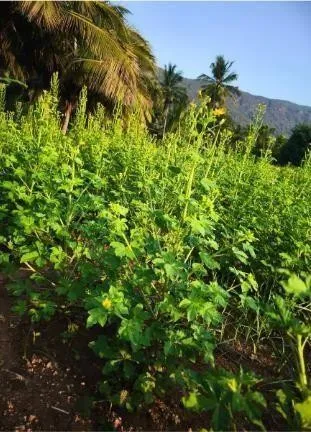
The plant material was identified and authenticated by a qualified botanist using standard taxonomic keys and herbarium records. A voucher specimen was prepared and deposited in the departmental herbarium for future reference. Photographs of the plant and leaves were also taken.
2.2 Preparation of Plant Material
The collected leaves were thoroughly washed under running tap water to remove dust, soil, and other contaminants and were subsequently rinsed with distilled water. The cleaned leaves were spread uniformly on clean trays and shade-dried at room temperature (25–30°C) for approximately 15–20 days. The leaves were periodically turned to ensure uniform drying and to prevent fungal growth.
After complete drying, the leaves were pulverized into coarse powder using a laboratory grinder. The powdered material was stored in airtight amber-colored glass containers until extraction.
2.3 Defatting of Leaf Powder
About 50 g of powdered leaf material was subjected to Soxhlet extraction using n-hexane for 24 h. Defatting was carried out to remove fats, waxes, chlorophyll, and other non-polar substances. After completion of extraction, the defatted powder was air-dried to remove residual n-hexane before further extraction.
2.4 Ethanolic Extraction
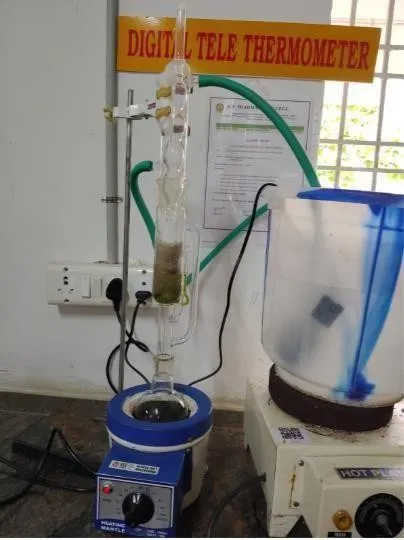
The defatted leaf powder (50 g) was extracted with ethanol using a Soxhlet apparatus for 24 h. The ethanol extract was concentrated under reduced pressure using a rotary evaporator at a temperature below 40°C. The concentrated extract was stored in amber-colored glass bottles at 4°C until further evaluation.
The percentage yield of the extract was calculated using the following formula:
Percentage yield = (Weight of dried extract / Weight of plant material) × 100
The obtained ethanolic extract was semi-solid and dark brown in appearance. The percentage yield was found to be 10% w/w.
2.5 Preliminary Phytochemical Screening
The ethanolic leaf extract of Cleome viscosa Linn. was subjected to preliminary phytochemical screening for the detection of major classes of secondary metabolites.
The following phytochemical groups were screened:
2.6 In-vitro Antihypertensive Evaluation
2.6.1 ACE Inhibition Assay
The ACE inhibitory activity of the ethanolic leaf extract was evaluated using Hippuryl-Histidyl-Leucine (HHL) as the substrate. Captopril was used as the standard drug. The extract was tested at concentrations of 100, 200, 400, and 800 µg/ml.
The reaction mixture was incubated at 37°C for 60 min. Fluorescence was measured at an excitation wavelength of 340 nm and an emission wavelength of 455 nm. The percentage inhibition of ACE was calculated from the obtained values.
2.6.2 Renin Inhibition Assay
Renin inhibitory activity was evaluated using a fluorogenic renin substrate. Aliskiren was used as the standard drug. The ethanolic extract was evaluated at concentrations of 100, 200, 400, and 800 µg/ml.
The reaction mixture was incubated at 37°C for 15 min. Fluorescence was measured at an excitation wavelength of 360 nm and an emission wavelength of 528 nm. The percentage inhibition was calculated from the experimental observations.
2.7 In-vitro Diuretic Evaluation
2.7.1 Carbonic Anhydrase Inhibition Assay
Carbonic anhydrase inhibitory activity of the ethanolic leaf extract was evaluated using 4-nitrophenyl acetate as the substrate. Acetazolamide was used as the standard inhibitor.
The extract was tested at concentrations of 25, 50, 100, 200, and 400 µg/ml. The reaction mixture was incubated for 10 min at room temperature, and absorbance was measured at 348 nm. The percentage inhibition was calculated.
2.7.2 Na⁺/K⁺-ATPase Inhibition Assay
The Na⁺/K⁺-ATPase inhibitory activity was evaluated using a fluorometric assay. Ouabain was used as the standard drug. The ethanolic leaf extract was tested at concentrations of 25, 50, 100, 200, and 400 µg/ml.
The reaction mixture was incubated at 37°C for 30 min. Fluorescence was measured at an excitation wavelength of 470 nm and an emission wavelength of 510 nm. The percentage inhibition was calculated from the experimental observations.
RESULTS
3.1 Physical Characteristics and Extraction Yield
The ethanolic extract obtained after Soxhlet extraction and concentration was semi-solid and dark brown in appearance. From 50 g of defatted leaf powder, approximately 5 g of concentrated ethanolic extract was obtained, corresponding to a percentage yield of 10% w/w.
Table 1: Physical Characteristics and Yield of Ethanolic Leaf Extract of Cleome viscosa Linn.
| Parameter | Observation |
|---|---|
| Plant part | Leaves |
| Extracting solvent | Ethanol |
| Extraction method | Soxhlet extraction |
| Colour | Dark brown |
| Physical nature | Semi-solid |
| Plant material used | 50 g |
| Extract obtained | Approximately 5 g |
| Percentage yield | 10% w/w |
3.2 Preliminary Phytochemical Screening
The preliminary phytochemical screening of the ethanolic leaf extract revealed the presence of several classes of phytoconstituents.
Table 2: Preliminary Phytochemical Screening of Ethanolic Leaf Extract of Cleome viscosa Linn.
| S. No. | Phytochemical constituent | Result |
|---|---|---|
| 1 | Tannins | Present |
| 2 | Phenolic compounds | Present |
| 3 | Alkaloids | Present |
| 4 | Glycosides | Present |
| 5 | Flavonoids | Present |
| 6 | Steroids and triterpenoids | Present |
| 7 | Carbohydrates | Present |
| 8 | Saponins | Present |
3.3 ACE Inhibition Assay
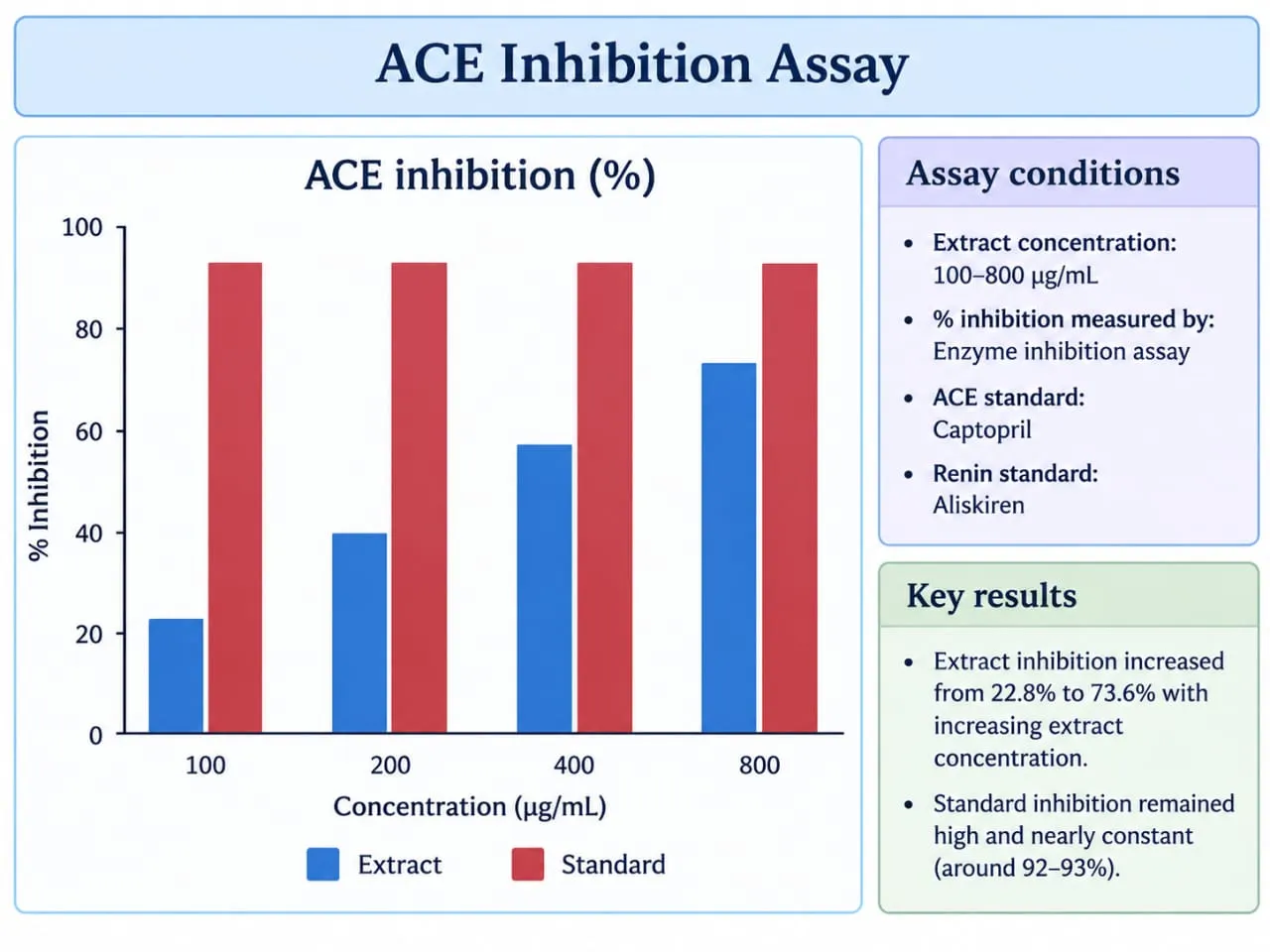
The ethanolic leaf extract demonstrated concentration-dependent inhibition of ACE. The percentage inhibition increased from 22.8 ± 1.2% at 100 µg/mL to 73.6 ± 2.1% at 800 µg/mL. Captopril, used as the standard drug, showed 92.9 ± 1.1% inhibition.
Table 3: ACE Inhibitory Activity of Ethanolic Leaf Extract of Cleome viscosa Linn.
| Concentration (µg/mL) | % ACE inhibition |
|---|---|
| 100 | 22.8 ± 1.2 |
| 200 | 39.7 ± 1.5 |
| 400 | 57.9 ± 1.8 |
| 800 | 73.6 ± 2.1 |
| Captopril | 92.9 ± 1.1 |
3.4 Renin Inhibition Assay
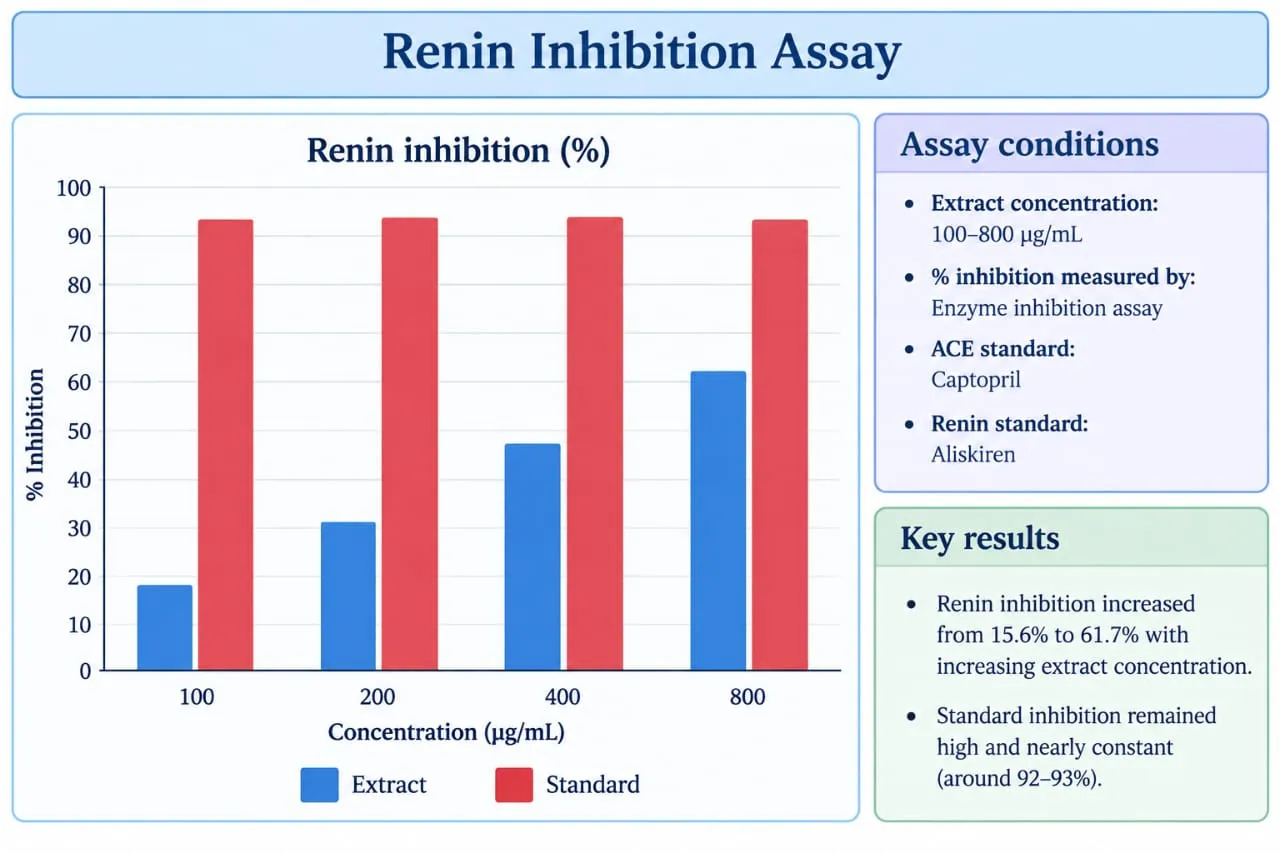
The ethanolic leaf extract exhibited concentration-dependent renin inhibition. The inhibition increased from 15.6 ± 1.0% at 100 µg/mL to 61.7 ± 1.9% at 800 µg/ml. Aliskiren exhibited 94.2 ± 0.9% inhibition.
Table 4: Renin Inhibitory Activity of Ethanolic Leaf Extract of Cleome viscosa Linn.
| Concentration (µg/mL) | % Renin inhibition |
|---|---|
| 100 | 15.6 ± 1.0 |
| 200 | 28.9 ± 1.3 |
| 400 | 45.8 ± 1.6 |
| 800 | 61.7 ± 1.9 |
| Aliskiren | 94.2 ± 0.9 |
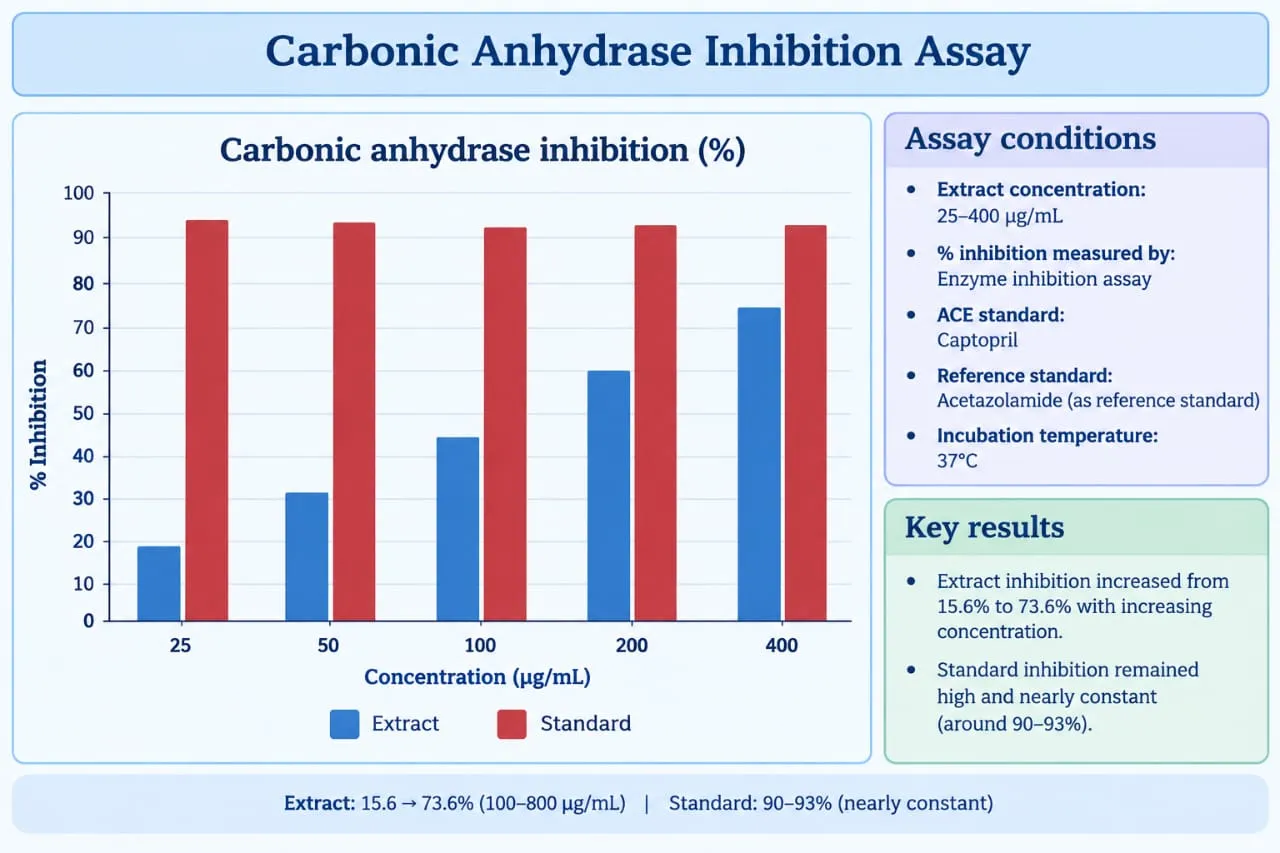
3.5 Carbonic Anhydrase Inhibition Assay
The ethanolic leaf extract showed concentration-dependent carbonic anhydrase inhibition. The percentage inhibition increased from 18.62 ± 1.21% at 25 µg/mL to 81.37 ± 1.35% at 400 µg/ml. Acetazolamide showed 94.25 ± 0.82% inhibition.
Table 5: Carbonic Anhydrase Inhibitory Activity of Ethanolic Leaf Extract of Cleome viscosa Linn.
| Concentration (µg/mL) | % Carbonic anhydrase inhibition |
|---|---|
| 25 | 18.62 ± 1.21 |
| 50 | 31.48 ± 1.46 |
| 100 | 46.83 ± 1.72 |
| 200 | 63.91 ± 1.58 |
| 400 | 81.37 ± 1.35 |
| Acetazolamide | 94.25 ± 0.82 |
3.6 Na⁺/K⁺-ATPase Inhibition Assay
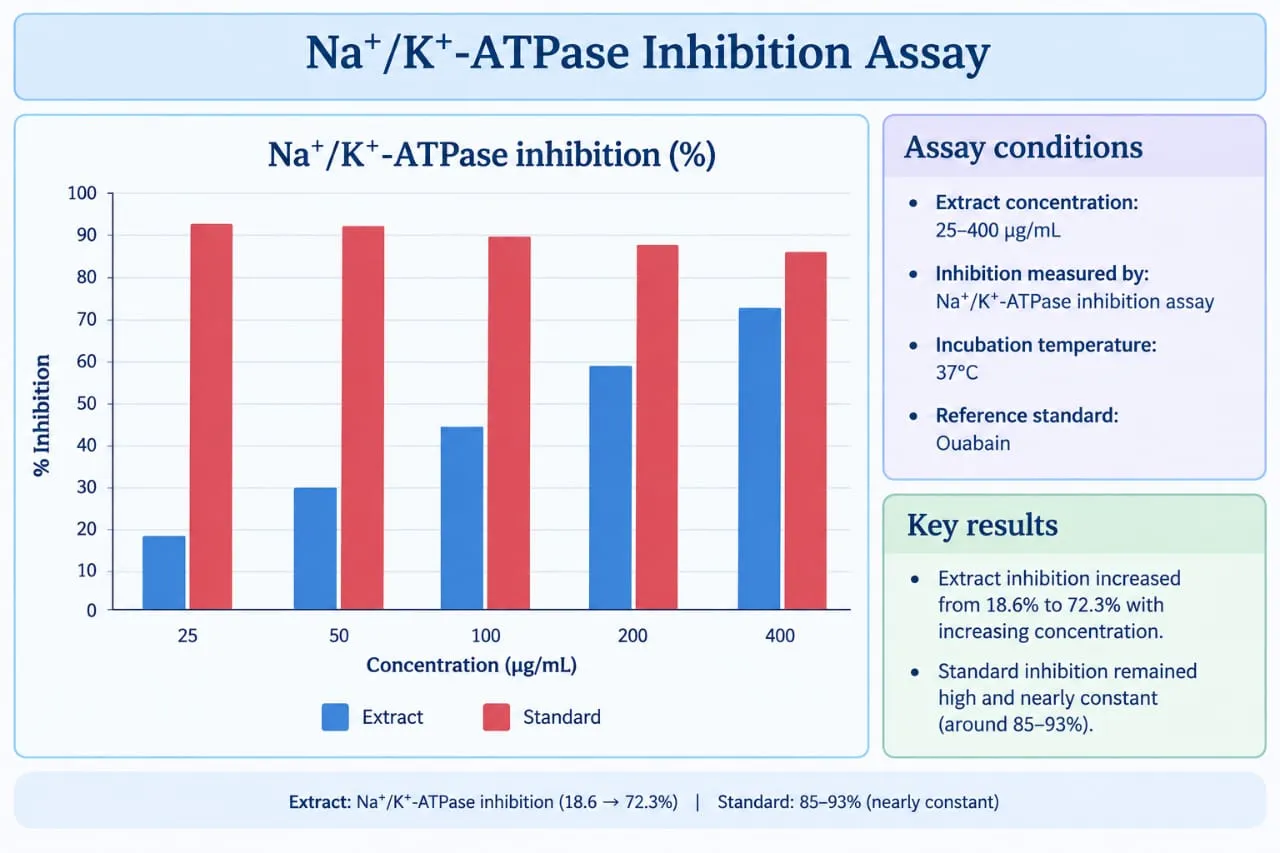
The ethanolic leaf extract demonstrated concentration-dependent Na⁺/K⁺-ATPase inhibition. The percentage inhibition increased from 18.6 ± 1.2% at 25 µg/mL to 82.5 ± 2.3% at 400 µg/mL. Ouabain showed 95.4 ± 1.1% inhibition.
Table 6: Na⁺/K⁺-ATPase Inhibitory Activity of Ethanolic Leaf Extract of Cleome viscosa Linn.
| Concentration (µg/mL) | % Na⁺/K⁺-ATPase inhibition |
|---|---|
| 25 | 18.6 ± 1.2 |
| 50 | 32.8 ± 1.5 |
| 100 | 49.7 ± 1.8 |
| 200 | 66.9 ± 2.1 |
| 400 | 82.5 ± 2.3 |
| Ouabain | 95.4 ± 1.1 |
DISCUSSION
The present study investigated the in-vitro antihypertensive and diuretic potential of the ethanolic leaf extract of Cleome viscosa Linn. The plant was selected based on its documented traditional medicinal significance and reported phytochemical and pharmacological properties.[38–40] The leaves were subjected to n-hexane defatting followed by ethanolic extraction to obtain an extract suitable for preliminary phytochemical and enzyme inhibition studies.
The ethanolic extract was semi-solid and dark brown, with a yield of 10% w/w. Preliminary phytochemical screening revealed the presence of tannins, phenolic compounds, alkaloids, glycosides, flavonoids, steroids and triterpenoids, carbohydrates, and saponins. The presence of diverse phytochemical classes is consistent with the reported phytochemical importance of Cleome viscosa.[38–40]
The ACE inhibition assay showed concentration-dependent inhibition by the ethanolic leaf extract. The inhibition increased from 22.8 ± 1.2% at 100 µg/mL to 73.6 ± 2.1% at 800 µg/ml, whereas captopril showed 92.9 ± 1.1% inhibition. The observed increase in inhibition with increasing extract concentration indicates the presence of constituents capable of producing ACE inhibitory activity under the experimental conditions. However, the activity of the extract was lower than that of the standard drug captopril.
Renin inhibition also increased with increasing extract concentration, from 15.6 ± 1.0% at 100 µg/mL to 61.7 ± 1.9% at 800 µg/ml. Aliskiren, used as the standard, produced 94.2 ± 0.9% inhibition. ACE and renin are associated with the renin–angiotensin system, which plays an important role in blood-pressure regulation. Therefore, the observed inhibitory activity in these models provides preliminary evidence for the possible antihypertensive potential of the extract.
The ethanolic extract also showed concentration-dependent inhibition of carbonic anhydrase. The inhibition increased from 18.62 ± 1.21% at 25 µg/ml to 81.37 ± 1.35% at 400 µg/ml, while acetazolamide produced 94.25 ± 0.82% inhibition. Carbonic anhydrase is involved in carbon dioxide and bicarbonate metabolism, and inhibition of carbonic anhydrase can influence renal electrolyte and fluid handling. The activity observed in the present study therefore provides preliminary evidence for further evaluation of the extract in relation to diuretic potential.
Similarly, Na⁺/K⁺-ATPase inhibition increased from 18.6 ± 1.2% at 25 µg/ml to 82.5 ± 2.3% at 400 µg/ml. Ouabain, used as the standard, showed 95.4 ± 1.1% inhibition. Na⁺/K⁺-ATPase is an important membrane enzyme involved in maintaining sodium and potassium gradients. The concentration-dependent inhibition observed with the extract suggests that constituents of Cleome viscosa may interact with this enzyme system under the experimental conditions.
The observed biological activities may be related to the combined presence of flavonoids, phenolic compounds, tannins, alkaloids, saponins, and other phytoconstituents identified during preliminary phytochemical screening. Previous reports have demonstrated that Cleome viscosa contains diverse phytochemical constituents and possesses several pharmacological activities.[38–40] However, the present study does not establish which individual compound or group of compounds is responsible for the observed enzyme inhibition.
Overall, the extract demonstrated activity in all four enzyme inhibition models. The highest concentration tested produced 73.6 ± 2.1% ACE inhibition, 61.7 ± 1.9% renin inhibition, 81.37 ± 1.35% carbonic anhydrase inhibition, and 82.5 ± 2.3% Na⁺/K⁺-ATPase inhibition. Although these findings provide preliminary evidence of biological activity, the results should not be interpreted as proof of clinical antihypertensive or diuretic efficacy.
The present investigation is limited to preliminary phytochemical screening and in-vitro enzyme inhibition assays. No in-vivo pharmacological evaluation, toxicity assessment, isolation of individual active compounds, or detailed mechanism-based investigation was performed. Therefore, further studies involving isolation and characterization of active constituents, toxicity studies, in-vivo evaluation, and mechanistic investigations are necessary to establish the pharmacological significance of Cleome viscosa Linn.
CONCLUSION
The present study evaluated the in-vitro antihypertensive and diuretic potential of the ethanolic leaf extract of Cleome viscosa Linn. The leaves were subjected to shade drying, pulverization, n-hexane defatting, and subsequent ethanolic extraction. The obtained extract showed a 10% w/w yield and was subjected to preliminary phytochemical screening.
The phytochemical screening revealed the presence of tannins, phenolic compounds, alkaloids, glycosides, flavonoids, steroids and triterpenoids, carbohydrates, and saponins. The ethanolic extract demonstrated concentration-dependent inhibition of ACE, renin, carbonic anhydrase, and Na⁺/K⁺-ATPase.
The findings provide preliminary in-vitro evidence supporting the potential antihypertensive and diuretic activity of the ethanolic leaf extract of Cleome viscosa Linn. The observed activity may be associated with the combined effects of its phytochemical constituents. However, further studies involving isolation and characterization of active constituents, toxicity evaluation, mechanism-based investigations, and in-vivo studies are required to confirm its pharmacological efficacy and establish its therapeutic significance.
REFERENCES







K. Arun, P. Haripriya, V. Harini, S. Shobhana, A. Harikrishnan, T. Madhan, In-Vitro Evaluation of Antihypertensive and Diuretic Activity of Cleome Viscosa Linn. Leaf Extract, Int. J. of Pharm. Sci., 2026, Vol 4, Issue 10, 3837-3847. https://doi.org/10.5281/zenodo.23657888
 10.5281/zenodo.23657888