

We use cookies to ensure our website works properly and to personalise your experience. Cookies policy
Department of Pharmaceutics, Karnataka college of Pharmacy, Bengaluru 560064
Rheumatoid Arthritis (RA) is a chronic systemic autoimmune disorder that is characterized by the presence of persistent synovial inflammation, progressive joint destruction, and high morbidity. Although there has been significant progress in conventional pharmacologic therapy, including non-steroidal anti-inflammatory drugs, corticosteroids, disease-modifying antirheumatic drugs, and biologic therapies, the long-term management of RA is still limited by systemic toxicity, variability in patient response, and the inability to completely suppress disease activity. This review aims to offer a comprehensive analysis of the current scenario in RA therapy, with a focus on recent developments in nanotechnology-based drug delivery systems. A particular emphasis will be placed on the role of solid lipid nanoparticles (SLNs) as a novel drug delivery system for the targeted and sustained release of anti-arthritic drugs. SLNs have several advantages, including improved solubility of drugs, enhanced bioavailability, controlled release, and a reduction in systemic toxicity, particularly when used as a topical and transdermal delivery system.
Rheumatoid arthritis (RA) is an inflammatory systemic autoimmune disease, which is linked to progressive disability, systemic complications, and premature death[1]. It is mainly characterized by chronic joint inflammation and hyperplasia leading to joint destruction, functional disability, and early mortality[2]. RA is an immune-mediated mechanism targeting the synovial tissues, leading to cartilage degradation and bone erosion. The disease has a prevalence of about 0.5-1 percent of the world population, with a higher prevalence in women, where its onset commonly occurs between the 4th and 6th decades of life[3]. If left untreated or inadequately managed, RA is associated with premature mortality, morbidity, and substantial socioeconomic burden[4].
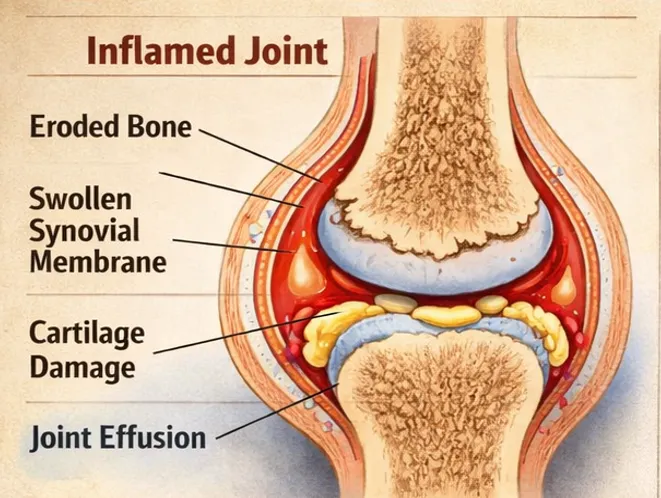
Fig no. 1 Rheumatoid arthritis
Epidemiology
Epidemiological studies carried out in Western countries have shown that the prevalence of RA ranges from 0.5–1.0% in the US[5]. Women are two to three times more likely to develop RA than compared to men. The estimated lifetime risk of adult-onset RA is 3.6% in women and 1.7% in men[6]. Environmental risk factors for RA are smoking and occasional silica exposure, among others. Both environmental risk and genetic factors contribute to RA pathogenesis, often requiring multiple risk factors to exceed the threshold at which RA is triggered[7].
In Rheumatoid arthritis (RA), an intricate interplay of immune cells and signalling molecules drives the disease, with cytokines standing out as key players in fuelling inflammation and joint damage. Their pivotal role is seen through the proven success of treatments like TNF-α blockers and IL-6 inhibitors, which dramatically ease symptoms for many patients [8].
Pathogenesis
Several studies have outlined some major factors responsible for the etiology of the disease. These factors fall under the two broad categories: genetic factors and environmental factors[9].
Synovial fibroblasts modulate the inflammatory responses, regulate the tissue homeostasis and mediate tissue damage, while synovial tissue in RA undergoes significant synovial fibroblast proliferation and infiltration into the adjacent cartilage and bone as the disease progresses[10].
B cells in RA pathogenesis are important in both antibody production, including anticyclic citrullinated peptide antibody (ACPA), and other B cell effector functions[11]. Patients with RA who are persistently positive for ACPA or RF suffer more progressive bone and joint erosions and worsening of function compared to seronegative RA[12].
Consequently, the B lymphocytes role in RA pathogenesis is supported by the beneficial effects on joint inflammation observed in B lymphocyte depletion clinical trials. The therapeutic efficacy of B-cell depletion is more effective in patients who are positive for ACPA or RF than in those who are negative for these antibodies [13].
T cells are important players in immune RA responses. Activated T cells, which are central to adaptive immune responses, comprise approximately ≥50% of synovial cells in RA[14]. T cells in patients fuel the development of RA by spotting self-proteins like citrullinated peptides, recruiting other immune cells, and releasing inflammatory signals that spark swelling in the joint lining and cartilage damage and bone breakdown[15].
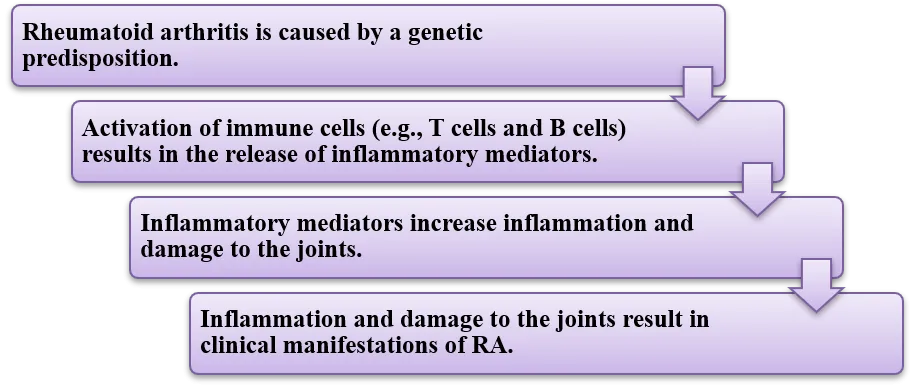
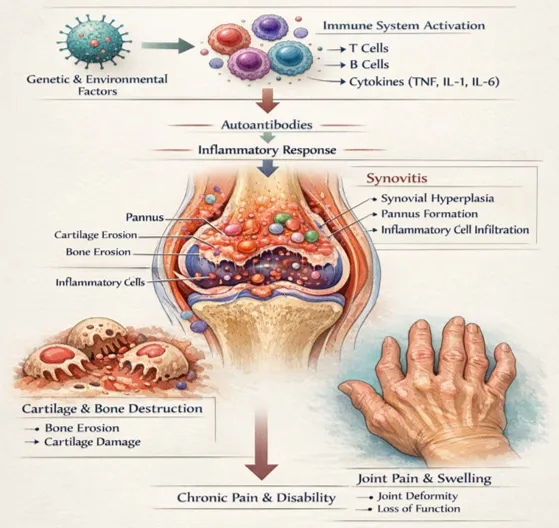
Fig no.2 Pathogenesis of Rheumatoid arthritis
Current Treatment approaches for Rheumatoid arthritis
Current therapeutic strategies primarily aim to alleviate symptoms, reduce the inflammation, and prevent irreversible joint damage, and the introduction of disease-modifying anti-rheumatoid drugs (DMARDs) [16]. Methotrexate particularly has significantly enhanced disease management and also improved patient quality of life. It helps in fighting against infection, attacks on joints, stiffness, and pain[17].
In response to these limitations, recent research emphasized safer, effective, and patient-friendly treatment modalities. A major interest is the design of the advanced drug delivery systems that enable targeted delivery of therapeutics directly to inflamed joint tissues[18]. Nanotechnology-based formulations—including solid lipid nanoparticles, liposomes, and polymeric carriers—have shown potential to enhance local drug concentrations while minimizing systemic exposure and toxicity[19].
Treatment Approaches for Rheumatoid Arthritis
Table No.1: Treatment approaches for Rheumatoid Arthritis
|
Sr. No |
Dosage form |
Class of drugs |
Drug |
Mechanism of Action |
Ref |
|
1. |
Topical |
NSAID |
Ibuprofen |
Selective Inhibition of COX-2 |
[20] |
|
2. |
Tablets |
NSAID |
Naproxen |
Reversible inhibition of COX-1 and COX-2-Anti inflammatory |
[21] |
|
3. |
Capsules |
DMARD |
Methotrexate |
Inhibits Dihydrofolate reductase and other folate-dependent pathways |
[22] |
|
4. |
Transdermal Patches |
NSAID |
Diclofenac sodium |
Inhibits prostaglandins and COX synthesis |
[23] |
Novel Nanotechnology for the Management of Rheumatoid Arthritis
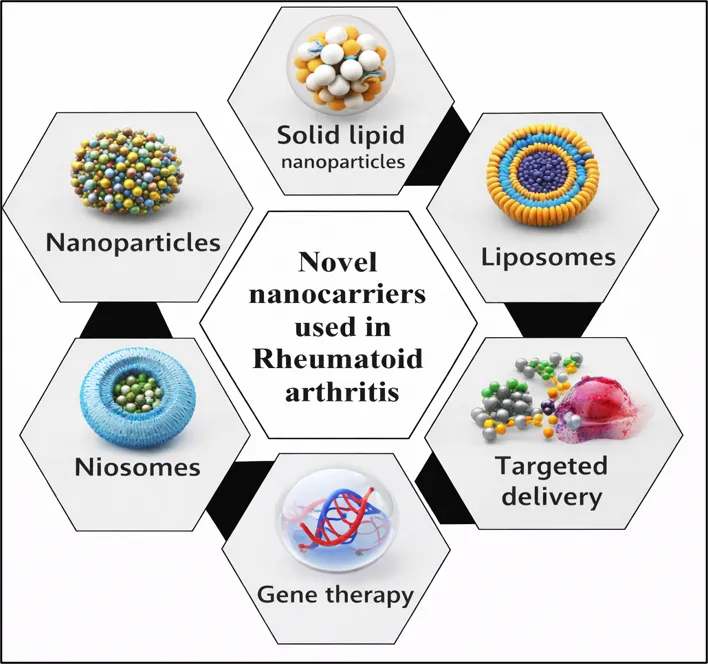
Fig no.3 Novel Nanotechnology for the management of Rheumatoid Arthritis
Characteristic features of nanocarrier
Table No.2: Characteristic features of Nanocarriers
|
Carrier |
Characteristic features |
Advantage |
Disadvantage |
Ref |
|
Liposomes |
Liposomes consist of phospholipid bilayer(s) surrounding an aqueous core ranging from 10 nm to 100 nm.
Composed mainly of natural or synthetic phospholipids and cholesterol.
Suitable for parenteral, topical, ocular, pulmonary, oral, and transdermal delivery. |
Protect drugs from enzymatic degradation, oxidation, and hydrolysis.
Release rate can be done by modifying lipid composition and vesicle size.
|
Prone to aggregation, fusion, and drug leakage during storage.
Limited encapsulation efficiency, especially for hydrophilic drug. |
[24], [25], [26] |
|
Solid Lipid Nanoparticles |
SLN is spherical in shape with a colloidal carrier ranging from 10-1000 nm.
Phospholipids are major SLN components.
They possess an amphiphilic nature, owing to which there is enhanced cutaneous absorption of hydrophilic as well as lipophilic drugs. |
SLNs exist in spherical morphology with a diameter from 50 to 1000 nm.
Phospholipidare amphiphilic in nature, because of which cutaneous absorption of lipophilic and hydrophilic drugs is increased |
SLNs on oral administration are degraded by enzymes in the GI fluids, reduces its targeting.
Capability Expulsion of drug following polymeric transition upon storage |
[27], [28], [29] |
Recent Patents on Nanocarrier for Rheumatoid Arthritis
Table No.3: Recent Patents on Nanocarrier for Rheumatoid Arthritis
|
Application Number |
Title of Inventions |
Summary of the Invention |
Ref |
|
AU 2014234992 B2 |
Methods for treating inflammation, autoimmune disorders, and pain |
This invention describes methods for the prevention of oral mucositis and inflammatory bowel diseases. The above kits are developed in conjunction with respective guidelines for administering a therapeutically effective dose of cationic steroid antimicrobial. |
[30] |
|
US 2015/ 0174069A1 |
Methods of Treating Arthritis |
The Invention Pertains to the treatments for arthritis, which include administering a sustained release composition that contains liposomes consisting of one or more phospholipids, cholesterol, and an active drug. |
[31] |
|
US 20170260276 |
Treatment for Rheumatoid arthritis |
This revelation is in reference to the treatment of RA through biological activity inhibition of granulocyte/ macrophage colony-stimulating factor receptor alpha subunit (GM-CSFRα), through the administration of an inhibitor like the therapeutic antibody mavrilimumab. |
[32] |
|
US20220349885 |
Biomarker for diagnosing rheumatoid arthritis and its uses |
The invention involves a marker composition for diagnosing rheumatoid arthritis through angiotensinogen (ACT). It consists of a method to detect rheumatoid arthritis, a composition for measuring the expression, and a detection kit. The method allows one to make a precise diagnosis of joint disease, such as rheumatoid arthritis. |
[33] |
Solid Lipid Nanoparticles:
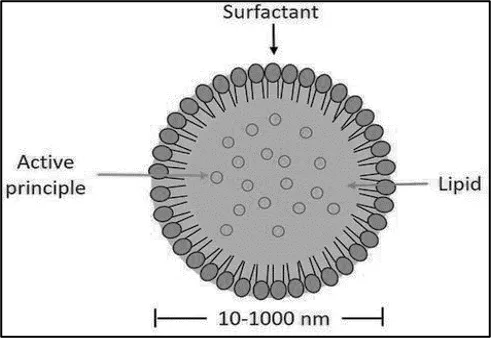
Fig no.4 Structure of solid lipid nanoparticle
Solid lipid nanoparticles (SLNs) are nanoscale colloidal carriers, typically ranging from 10-1000 nm, consisting of a solid lipid core stabilized by lipids and surfactants, and are primarily designed for controlled and sustained drug delivery. They are regarded as a promising alternative to conventional carriers such as emulsions, liposomes, and polymeric nanoparticles, especially for improving the performance of poorly soluble and liable drugs[34].
SLNs are submicron-sized lipid particles in which the liquid oil phase of conventional emulsions is replaced by a solid lipid matrix. This matrix remains solid in both body and room temperature. It is typically composed of biocompatible, physiologically acceptable, and biodegradable lipids such as fatty acids, waxes, triglycerides, and is stabilized in an aqueous phase by surfactant or emulsifiers[35].
SLNs exhibit small particle size and correspondingly large surface area, which support high drug loading and can significantly enhance the dissolution rate of poorly water-soluble drugs. The solid lipid matrix protects encapsulated drugs from chemical and physical degradation, improving stability and also enabling sustained release and reduced toxicity compared with many polymeric carriers[36].
By combining nano-sizing with a lipid-based matrix, SLNs can enhance the solubility, bioavailability, and cellular uptake of both hydrophilic and lipophilic drugs. Their composition, generally recognized as safe lipids, confers good biocompatibility and a favourable safety profile, making them suitable for long-term or chronic therapies due to their colloidal size and physiological lipid composition[37].
Various routes of administration have been explored with SLNs, including oral, parenteral, topical/dermal, ocular, pulmonary and even brain-targeted. They have demonstrated the ability to surpass solubility issues, enzyme damage, efflux transportation, and low permeability in all these routes, enhancing therapeutic activity in diverse drugs and cosmetic actives[38].
Goals of Solid Lipid Nanoparticles[39],[40].
Components of Solid Lipid Nanoparticles
Solid lipid is the basic structural building block of the matrix that is significant in dictating the traits and behaviour of the colloidal systems that use it. Out of the lipids typically used, about 70 percent of them are based on three major types: free fatty acids, fatty alcohols, and glycerol esters. The most common examples of them are stearic acid, tripalmitin, glycerol behenate and glyceryl monostearate, which are appreciated due to their biocompatibility and formulation design versatility [41],[42].
Surfactant is essential in the preparation of solid lipid nanoparticles because it decreases the interfacial energy between the aqueous and lipid phases when preparing the particles. Surfactants allow the formation of finely dispersed nanoparticles and reduce the tendency of lipid particles to coalesce by adsorbing at the lipid-water interface. Besides, surfactants create a stabilizing layer around the SLNs that aid in keeping the dispersion physically stable throughout storage. The charged surfactants also increase the stabilization of SLNs by adding a charge to the nanoparticles. This repulsion causes the particles to repel each other electrostatically and thus prevents aggregation to enhance colloidal stability[43].
Lipid-based delivery systems gained considerable attention for their versatility in incorporating multiple therapeutic agents, either as individual entities or within a combined codelivery framework. These systems are particularly advantageous for drugs that exhibit hydrophobicity and limited aqueous solubility. A wide spectrum of pharmacological agents has been effectively loaded into lipid nanoparticles which include anaesthetics, antipyretics, anti-inflammatory agents, antibiotics, antiparasitic, analgesic, antiretroviral, anticancer, and antihypertensive drugs, etc[44].
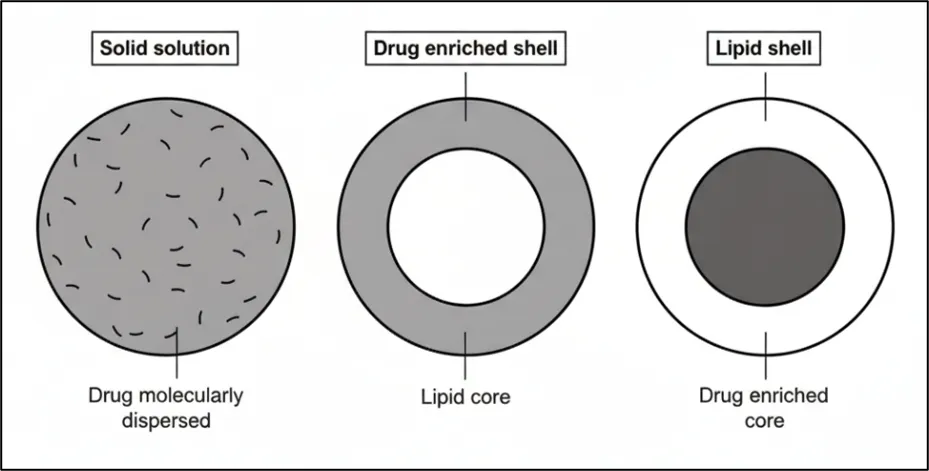
Fig no.5 Models of incorporation of active compounds into SLNs
Solid lipid nanoparticles as a drug delivery system
SLNs are an excellent drug delivery system in that they can be used to entrap a wide range of therapeutic drugs, including lipophilic and hydrophilic drugs. This flexibility is due to the design of SLNs, which have a solid lipid framework that is stabilized by surfactants. Lipophilic drugs are effectively entrapped in the solid lipid matrix through surface association, and the bioavailability and therapeutic efficacy of the entrapped agents are increased[45],[46].
Mechanism of Solid Lipid Nanoparticles in Drug Delivery
SLNs are used to deliver drugs, trapping them inside a protective lipid core that is safe and biocompatible and is solid at room and body temperature. The drug gets uniformly distributed in this lipid matrix or gets deposited in certain areas depending on the compatibility to the lipid. The lipid remains solid, leading to a slowdown in the rate of drug movement and thus the medicine is released slowly instead of being released at once. Surfactants coat and stabilize the particles, so that they do not clump together and are dispersed uniformly [47].
Due to their very small size, SLNs have a high level of interaction with the biological membranes, and it is easier to penetrate tissues, particularly the skin. This lipid encapsulation also provides protection to sensitive drugs to prevent degradation, enhancing their stability, absorption, and overall performance in therapy[48].
Effective treatment of SLN
SLN exhibits better penetration of the drugs to the stratum corneum and deeper layers of skin than the conventional creams and lotions. The lipid barriers of the skin are increased by the nanoscale size of SLNs, which improves their capacity to penetrate directly to the inflamed region with the anti-inflammatory agents. This is an efficient method of delivery that enhances therapeutic efficacy and minimizes drug wastage and systemic exposure.
The lipid matrix of SLNs shields the encapsulated agents against degradation caused by environmental factors like light, heat or oxidation. This improves the shelf life and bioavailability of the active ingredient and maintains the therapeutic efficacy of the ingredient throughout the treatment.
Formulations based on SLN could provide drugs in the locality with low levels of systemic absorption minimizing the adverse effects. The patients also have decreased chances of being irritated, reddened, or feeling sensitive relative to the traditional topical treatments.
This deep penetration, as well as the prolonged action of SLNs, does not allow inflammation to recur once again. It comes in handy with the Rheumatoid arthritis case because the latter is always likely to recur.
The hydrophilic and lipophilic drugs can be encapsulated as SLNs with a wide range of drugs, thus forming a flexible and adaptable delivery system. They may also interact with other active substances, including anti-inflammatory agents, to enhance the therapeutic effects even more.
The rates of clinical cure (the appearance of the symptoms resolution) and mycological cure (the elimination of the inflammation) are greater in patients receiving the anti-inflammatory preparations based on SLN. Such double effectiveness not only provides quicker relief from symptoms but also reduces the possibility of relapse.
Role of Solid lipid nanoparticles in Rheumatoid arthritis[54],[55]
Role of Transdermal Formulation in Managing Rheumatoid Arthritis:
Transdermal drug delivery has become a significant and patient-centred method of treating rheumatoid arthritis as it allows delivering therapeutic agents directly to the problem areas with minimum exposure to the system. The drugs taken orally over the skin would show increased bioavailability and predictable plasma levels because the initial metabolism in the liver is bypassed. Topical application to inflamed joints can prevent the gastrointestinal, renal, and cardiovascular side effects that are typical of oral therapy over time[56].
Further, transdermal systems can deliver sustained and controlled drug release which provides sustained therapeutic effect and lessens the number of doses. This non-invasive route enhances patient adherence because it is easy to administer and it does not require patients to take the drug on a daily basis. More recent innovations, such as solid lipid nanoparticles and transdermal patches, can further increase the skin penetration and drug concentration at the sites of action, leading to a greater therapeutic effect and general outcomes during the management of rheumatoid arthritis[57].
Anti-inflammatory and Analgesic Agents:
They are regularly employed in the alleviation of pain and swelling in diseases like rheumatoid arthritis. They mainly contain an effect of inhibiting the cyclooxygenase enzymes (COX-1 and COX-2) and hence decreasing the production of prostaglandins that cause pain, inflammation, and fever. Consequently, NSAIDs are effective in alleviating joint pain, swelling, and stiffness, which leads to symptomatic relief. Nevertheless, these agents have no effect on the underlying disease progression or the avoidance of structural joint damage. Commonly used NSAIDs are ibuprofen, diclofenac, naproxen, and aspirin with selective COX-2 inhibitors like celecoxib having a relatively lower risk of gastrointestinal side effects. NSAIDs still have the potential to cause gastrointestinal, renal, and cardiovascular toxicities, which may limit their use in the long run, accentuating the necessity of careful use and proper clinical surveillance. [58],[59].
Corticosteroids will continue to be a part of managing RA due to their effective anti-inflammatory and immunosuppressive properties. Their useful therapeutic qualities are closely related to clear-cut pharmacokinetic and pharmacodynamic characteristics. These agents are lipophilic and hence are well absorbed and distributed throughout the body tissues. They are metabolized in the liver and excreted mainly via the kidneys and their biological half-life depends on the corticosteroid being administered. Pharmacodynamically, corticosteroids have their action through binding to intracellular glucocorticoid receptors, which cause a change in gene expression that is related to inflammation and immune reactions. The interaction has the effect of suppressing important pro-inflammatory cytokines like TNF-alpha and IL-6, inhibiting the migration of leukocytes to inflamed areas and decreasing immunoglobulin levels. Taken together, these measures help to quickly suppress the inflammation and relieve symptoms in rheumatoid arthritis patients. [60],[61].
DMARDs are the mainstay of long-term treatment in rheumatoid arthritis since they do not merely relieve symptoms but directly address the pathogenesis of the disease. These agents are characterized by various pharmacokinetic profiles, which are different in their chemical nature, and route of administration. Although traditional DMARDs are taken orally, some are given by subcutaneous injection or intravenous infusion, which results in differences in absorption rates and action onset. After absorption, DMARDs tend to exhibit extensive tissue distribution, though some agents are preferentially taken up in certain organs like in the case of hepatic tissue with methotrexate. The majority of DMARDs are hepatically metabolized, and renal excretion can be considered one of the primary excretion pathways. Pharmacodynamically, DMARDs have their therapeutic effects due to their ability to modify their effects on the immune system. They prevent the growth and action of activated lymphocytes, and block the production of major inflammatory cytokines that promote synovial inflammation. DMARDs reduce the rate of disease progression, halt the osteoarthritis destruction, and maintain joint integrity and functional ability with time in rheumatoid arthritis patients through these mechanisms. [62],[63].
Biological agents are a more specific and focused treatment approach in the treatment of rheumatoid arthritis and their pharmacokinetic properties distinctly differentiate them with small-molecule drugs. These agents are mainly used by subcutaneous injection or intravenous infusion and their bioavailability can differ according to the method of administration.
Due to their high molecular weight, and complicated protein structure, biological therapies have a relatively small volume of distribution and are retained to a large extent in vascular and interstitial compartments.
Their absorption and breakdown are not highly mediated by hepatic enzymes like traditional drugs but rather proteolytically into peptides and amino acids. They are cleared by the reticuloendothelial system, with a secondary role played by renal pathways [64],[65].
Methods of Preparation of Solid lipid nanoparticle
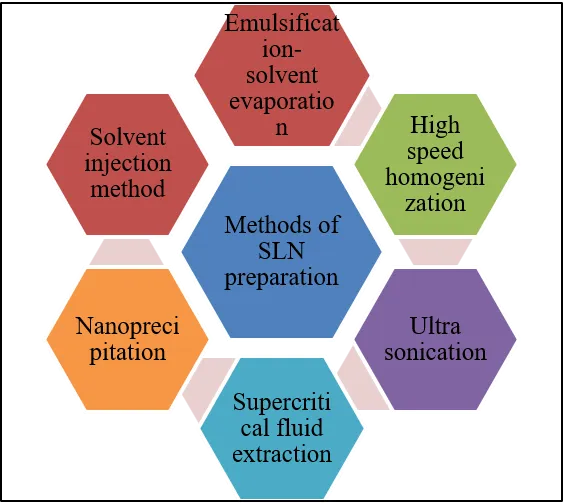
Figure no.6 Method of Preparation for SLNs
Method of Preparation of Solid Lipid Nanoparticles
The lipid is first heated to a temperature above its melting point, allowing the drug to be uniformly dispersed within the molten lipid matrix. This drug–lipid melt is then mixed with an aqueous phase containing a suitable emulsifier to form a coarse pre-emulsion. The pre-emulsion is subsequently subjected to high-pressure homogenization (typically 100–2000 bar), where it is forced through a narrow gap. The intense shear stress and cavitation generated during this process break down the lipid droplets, leading to a significant reduction in particle size and the formation of nanoparticles in the submicron range[66],[67],[68].
The lipid and drug are blended in their solid form without applying heat and then dispersed in an aqueous phase containing a stabilizer. The mixture is processed using high-pressure homogenization, similar to hot homogenization but carried out at lower temperatures. By avoiding lipid melting, this approach is particularly suitable for heat-sensitive drugs, as it minimizes the risk of thermal degradation while still producing nanoparticles with controlled size[69],[70].
2. Ultrasonication: In this method, ultrasonic waves are used to create intense shear forces that cause the lipid particles to be broken down into smaller ones. One can use either a probe or a bath sonicator to perform ultrasonication. Though this is an effective process in the generation of minute particles, it can cause metal contamination by the probe, and may cause instability of the formulation physically [71].
3. Supercritical Fluid Method: This is a more recent method in which the solvent is supercritical carbon dioxide that dissolves the lipid. In the case of a rapid growth of the system the lipid precipitates as nanoparticles. The procedure is solvent free and allows the generation of the dry nanoparticle powders directly without the creation of liquid suspensions [72].
4. Microemulsion-Based Method: A low-melting fatty acid, appropriate emulsifiers and water are used to form a hot microemulsion. In case of rapid dilution of this microemulsion with cold water, solid lipid nanoparticles are formed. As the droplet structure is already pre-assembled in the microemulsion, no further energy is needed to reduce the size of the particles. [73].
5. Precipitation Technique: A lipid is initially dissolved in an organic solvent like chloroform and emulsified in water. The lipid separates out to produce nanoparticles as the solvent evaporates. The method is easy, but solvent removal needs to be carefully controlled to achieve a stable and uniform formation of nanoparticles. [74].
6. Solvent Injection Technique: The lipid in this process is dissolved in a solvent that is water-soluble, like ethanol, and injected into a stirring aqueous solution with emulsifiers. The lipid droplets are stabilized by the emulsifiers as they are formed, resulting in the formation of the nanoparticles. The method is rapid, easy and it does not involve complex or expensive equipment. [75].
Evaluation of SLNs
The ready SLN preparations were of off-white, smooth, semisolid, nature. The PH varied between 7.0 and 8.0, which means it is compatible with the skin and can be used in the dermis. The rheological analysis revealed that it exhibited non-Newtonian, shear-thinning behaviour, which is favourable in topical formulations, as it can be spread easily under applied stress. This flow behaviour was further confirmed by a decrease in viscosity with increase in the spindle speed. All these physicochemical and rheological characteristics suggest that the formulation is stable and can be used in practice during topical drug delivery[76].
Particle size analysis showed that the optimised SLN formulations had mean particle diameters in the desirable nanometre range of 100 -500 nm that is regarded as being optimal in topical and transdermal drug delivery. Such tiny nanoparticles offer a higher surface area, making them easier to contact with the skin and enhance the diffusion of the drug to deeper layers[77],[78].
The presence of enough surface charge to maintain colloidal stability preventing aggregation of particles during storage was indicated by zeta potential values of -15.3 to -43.2 mV. Stability of this nature is vital in ensuring uniform release and performance of drugs. In totality, a nanoscale particle size and constant zeta potential favourable effect on skin penetration justifies the strength and effectiveness of the formulation [79].
The efficiency of entrapment is a useful parameter that is employed to comprehend the effectiveness with which a drug is encased in SLNs. It is the proportion of the drug which is effectively entrapped in the lipid matrix of all the amount introduced during formulation. The entrapment efficiency of a lipid system is high, which means that the lipid system is able to hold the drug effectively hence reducing the amount of drug loss and enhancing the overall formulation efficiency[80].
Some of the factors that influence entrapment efficiency in SLNs include the nature of the lipid, compatibility between the drug and lipid, concentration of the surfactants and the mode of preparation. The lipophilic drugs tend to be more effectively entrapped because they have a high affinity to the solid lipid core. High entrapment efficiency facilitates the sustained release of drugs, improves the stability of formulations and leads to an increase in the therapeutic effectiveness of SLN-based delivery systems [81].
One of the useful non-destructive methods that are beneficial in knowing the solid-state properties of SLNs is the Powder X-Ray Diffraction (PXRD). It gives a good understanding of the crystalline character of the lipid matrix, and the physical condition of drug incorporated.
PXRD can be used to determine changes in crystallinity or conversion to a more amorphous form following the formation of nanoparticles by comparing the diffraction patterns of pure components with those of SLNs. Successful incorporation of drugs in the lipid core is usually indicated by such changes. PXRD is usually applied in combination with DSC to further elucidate the formulation stability, drug release characteristics and overall performance of SLNs [82].
Analysis of drug content revealed that there was very good uniformity of the SLN formulations with all drug content values exceeding 94% indicating an effective drug loading and low inter-lot deviation. This homogeneity is essential to guarantee proper dosing and reliable therapeutic effects.
The release profile in vitro showed sustained and controlled over 24-hour profile, which is especially desirable in the case of prolonged drug activity and eliminating frequent dosing. It is worth noting that, the SLN formulations demonstrated slow and controlled release profile than that of the commercial formulation, which indicates enhanced drug retention within the lipid matrix. This controlled release property highlights the importance of SLNs to improve patient compliance in the long-term treatment regimens as well as increase therapeutic efficacy [83].
DSC is an important method of measuring the thermal behaviour and internal structure of solid lipid nanoparticles. It is a metric of heat transfer related to phase changes like melting and recrystallization of the lipid and the drug that has been incorporated. DSC is employed in the determination of the physical state of the drug in SLN formulations, whether the drug is in the crystalline form or dispersed in the molecular form within the lipid matrix. The decrease, displacement or loss of the melting peak of the drug indicates effective drug incorporation and loss of crystallinity. Polymorphic transitions and the extent of lipid crystallinity are also indicated by changes in lipid melting point and enthalpy and these characteristics determine the loading, stability and release properties of drugs [84],[85].
One of the key instruments in assessing surface morphology and structural properties of solid lipid nanoparticles is the Scanning Electron Microscopy (SEM). It is a high-resolution microscopy that directly visualizes particle shape, surface texture, and dispersion. SEM is used to verify the good morphology, uniformity, and lack of aggregation in SLN formulations, which are characteristics of good physical stability. The method also visually verifies the nanoscale measurements of the particles by measuring their size. In general, SEM analysis helps learn more about the structural integrity of SLNs, which plays a significant role in the prediction of formulation stability and performance in drug release [86].
The 40˚C + 2˚C and 75% + 5% relative humidity were carried out over four weeks in short-term accelerated stability experiments. The formulation did not experience any significant drug content, in vitro drug release profile, or physical appearance alterations over the course of the study.
The fact that no degradation or instability can be observed suggests that the formulation retains its physicochemical stability under stressed storing conditions. These findings affirm the strength and stability of the formulation, which supports its capacity to maintain therapeutic performance and product quality over time, which is critical in facilitating maintaining consistent efficacy in storage and handling of the formulation in real life use. [87],[88].
Application for Solid Lipid Nanoparticles
SLNs are a potential solution in the area of cancer chemotherapy as they assist the anticancer drugs to dissolve more easily and stay longer without breaking down.
With its ability to deliver drugs with increased precision to tumour locations and controlled release, SLNs will decrease the amount of undesired side effects and enhance the overall effectiveness of treatments as compared to traditional chemotherapy [89],[90].
SLNs are equally attracting interest as a promising vaccine adjuvant, as they facilitate the protection of vaccine antigens against degradation and facilitate their release gradually with time.
SLNs facilitate enhanced, long lasting immune responses by enhancing uptake by immune cells and is safe and well tolerated [91].
SLNs offer a dependable method of administering peptides and proteins as they protect them against enzyme degradation and keep them stable.
Their gradual release of such molecules contributes towards better bioavailability and overall therapeutic performance [92].
Topical use of SLNs is especially beneficial due to the potential to promote the penetration of drugs into the skin and their controlled release. They are also able to enhance stability of formulations and reduce systemic side effects, and are therefore best suited in the treatment of local skin and inflammatory conditions [93].
SLNs offer an effective method to treat parasitic diseases by allowing poorly soluble antiparasitic drugs to dissolve more effectively and to be maintained.
SLNs help reduce side effects and enhance the overall treatment effectiveness and patient adherence by delivering drugs more efficiently to the location of infection and releasing them in a controlled manner [94].
The anti-tubercular drugs are better dissolved and stable in the body with the help of SLNs. They increase intestinal absorption and slow release of the drug, thereby decreasing the number of doses required, increasing the effectiveness of treatment, and simplifying long-term treatment in the patients [95].
SLN finds application in cosmetical products, particularly in the cosmetical products that are active in nature since they aid in the stability of the active ingredient and the skin penetration of the active ingredient.
The gradual release of these ingredients by SLNs enhances skin hydration, prolongs the effects of cosmetics, and makes cosmetic formulations safe and well-tolerated [96].
Table No. 4: Recent Rheumatoid Arthritis Clinical Trials
|
Clinical trials Code |
Trail name |
Phase |
Population/ Key Inclusion |
Primary outcomes |
Ref |
|
NCT04539964 |
RESET-RA (Vagus Nerve Modulation) |
Phase III, randomized, double-blind, sham-controlled |
Adults with moderate–to–severe RA with inadequate response/ intolerance to biologic/ tsDMARDs |
ACR20 responses; safety and durability; neuroimmune modulation efficacy |
[97] |
|
NCT02675426 |
SELECT-NEXT (Upadacitinib) |
Phase III |
csDMARD-IR moderate-to-severe RA |
ACR responses & safety outcomes |
[98] |
|
NCT02629159 |
Upadacitinib SELECT-COMPARE |
Phase III, randomized, double-blind |
Active RA on background MTX, inadequate response |
Clinical and radiographic efficacy, long-term safety |
[99] |
|
NCT02092467 |
ORAL Surveillance (Tofacitinib Safety) |
Phase IIIb/IV, active comparator |
RA aged ≥50 y with CV risk factors |
MACE, malignancy, serious safety outcomes |
[100] |
Challenges occur in the Solid Lipid Nanoparticles
The crystalline structure of solid lipids is very well organized, limiting the size of drug molecules in their accommodation, especially hydrophilic drugs, leading to low drug loading efficiency.
Lipid polymorphic changes in less to more stable crystalline forms upon storage may cause drug to be expelled out of the lipid matrix, which can alter content uniformity and efficacy.
Physical stability and reproducibility may be impaired by the fact that SLNs can be seen to increase or aggregate in size over time because they have not been adequately stabilized.
Certain SLN dispersions are prone to gelation during storage, resulting in higher levels of viscosity, which may influence the handling, processing, and release behaviour of drugs.
Drug entrapment, stability, and release properties can be affected by the existence of various lipid polymorphic forms, complicating the optimization of formulations.
FUTURE PERSPECTIVE
CONCLUSION
Solid lipid nanoparticles (SLNs) have become a very promising drug delivery system in enhancing the management of rheumatoid arthritis. SLNs can be used to combine anti-inflammatory and anti-arthritic drugs on a biocompatible lipid backbone, thereby increasing the solubility of the drug, preventing its degradation, and facilitating controlled and persistent drug release. They achieve this by their nanoscale dimension enabling them to penetrate the inflamed joint tissues better, thereby facilitating localized drug action and minimizing systemic exposure.
Consequently, SLN-based preparations have the potential to significantly decrease the gastrointestinal, renal, and cardiovascular adverse effect of the oral therapy taken over the long-term. Moreover, topical and transdermal SLN systems provide a patient-friendly, non-invasive approach, enhancing adherence with low dosing frequency. Despite the current difficulties associated with stability of formulation, scale-up production and regulatory approval, continued research and technological development should enable successful clinical translation of SLNs as an effective and safer therapeutic method to manage rheumatoid arthritis.
REFERENCES


Keerthana V R*, Rashmi Mathews, Beny Baby, S Rajarajan, Lalitha C, Innovative Treatment Modalities for Rheumatoid Arthritis: Current Trends and Future Perspectives, Int. J. of Pharm. Sci., 2026, Vol 4, Issue 9, 2142-2162. https://doi.org/10.5281/zenodo.22832998
 10.5281/zenodo.22832998