

We use cookies to ensure our website works properly and to personalise your experience. Cookies policy
1Department of Pharmaceutical Chemistry, Advanced Institute of Biotech and Paramedical Sciences, Kanpur, UP, India
2Signa College of Pharmacy, Kanpur, UP, India
Rheumatoid arthritis, atherosclerosis, and neurological diseases are among a myriad of chronic illness that involve inflammation as a primary biological?response. Although there exist many anti-inflammatory drugs, their efficacy and side effects?may attenuate with long-term use. Due to their unique chemical structure and adjustable pharmacology, isoindole-based compounds (consisting of the?fused benzene-pyrrole ring) could be considered as a promising class of next generation anti-inflammatory drugs. Recent studies highlight their ability to modulate critical pathways of inflammation such as NF-?B, COX-2 and inflammatory-derived?cytokines such as TNF-? and IL-6. Compared with the conventional NSAIDs, isoindole-based molecules have the advantage of a?relatively high bioavailability and low toxicity as well as selectivity. The structural diversity, mechanisms of action and therapeutic applications?of isoindole derivatives associated with treating inflammatory disorders are discussed in this review. We also discuss the most recent advances in synthetic methodologies, structure-activity relationship (SAR), and preclinical data, which position isoindole scaffolds on the front line of the scene as promising prospects?in drug development. Enhancing the pharmacokinetic profile and evaluating clinical efficacy are potential aspects for future studies able eventually to contribute?to new strategies for anti-inflammatory therapy.
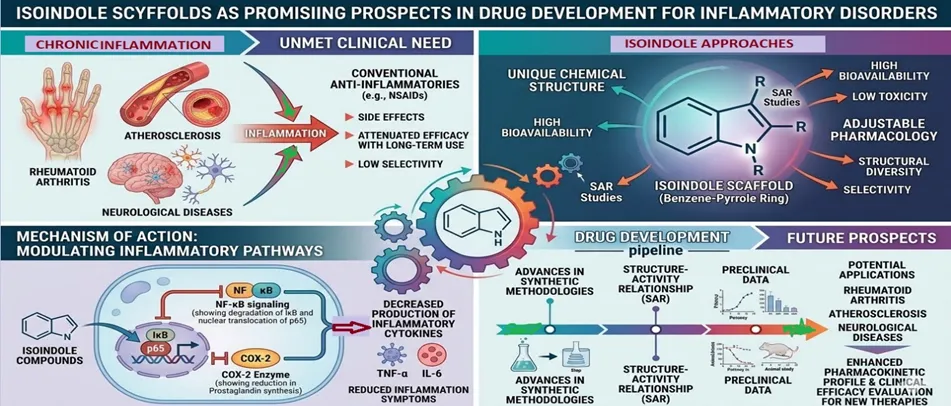
Inflammation, a complex biological response crucial for host defense and tissue repair is also responsible for several chronic diseases, such as rheumatoid arthritis, inflammatory bowel disease, atherosclerosis, and neurodegenerative pathologies such as Alzheimer's and Parkinson's diseases; although anti-inflammatory drugs are available that include, non-steroidal anti-inflammatory drugs (NSAIDs), corticosteroids, and the recently introduced biologic agents, their chronic application is associated with significant side effects like gastrointestinal bleeding, cardiovascular risks, immunosuppression, and high costs, hence demanding the search for safer and more efficacious substitutes; in this context, heterocyclic compounds possessing an isoindole ring-a class of aromatic molecules constituted by a fused benzene and pyrrole ring-have gained increasing attention as next-generation anti-inflammatory agents, because of their unique structural features, diverse pharmacological activities, and better side effect profiles(1), the isoindole scaffold represents a privileged structure in medicinal chemistry, generating several derivatives displaying enhanced bioactivity and selectivity, and recent evidence suggests that they can modulate key inflammatory pathways including nuclear factor-kappa B (NF-κB) and mitogen-activated protein kinase (MAPK) signaling cascades involved in the expression of pro-inflammatory cytokines such as tumor necrosis factor-alpha (TNF-α), interleukin-6 (IL-6) and interleukin-1 beta (IL-1β); in addition, isoindole-based derivatives have demonstrated potent COX-2 and iNOS inhibitory activities(2), two key enzymes involved in inflammation and pain perception, with lower gastrointestinal (GI) toxicity than those of traditional NSAIDs; the good structural flexibility of isoindole scaffold leads to numerous modifications and, thus, to an improved pharmacokinetic profile such as enhanced solubility, metabolic stability, and tissue penetration, which are important issues in drug discovery(3); structure–activity relationship (SAR) studies showed that several functional groups, among which electron-withdrawing substituents, heteroatom inclusions, and fused ring systems, play a significant role on anti-inflammatory activity. Some of the derivatives show similar or better in vitro and in vivo activity compared with standard drugs like Celecoxib and dexamethasone in preclinical models. Moreover, the isoindole hybrids incorporating the nucleus with other pharmacophores, such as triazoles, pyrazoles, or indoles, have demonstrated synergistic activity, which might be employed for the treatment of more than one ailment simultaneously(4). recent development of synthetic methodology such as microwave-assisted reactions, or metal-catalyzed cross-couplings and green chemistry approaches, have contributed to the preparation of novel isoindoleanalogs in an efficient way, which may allow for in vitro high-throughput screening and hit-to-lead optimization; in vitro studies with macrophage cell lines Moreover, in macrophages and primary immune cells, it has been demonstrated that the isoindole derivatives can inhibit LPS-induced inflammation, including decreased NO and PGE2 production and a reduction of cytokine release(5); in vivo testing in acute and chronic inflammation rodent models, including carrageenan-induced paw edema, collagen-induced arthritis, and dextran sulfate sodium (DSS)-induced colitis, has further confirmed their effectiveness, with multiple agents dose-dependently reducing edema, leukocyte infiltration, and tissue damage, as well as demonstrating acceptable toxicity in acute and sub chronic toxicity studies, in addition, comparison with commercial anti-inflammatory drugs have indicated the superiority of isoindole derivatives, including their multimodal actions, low ulcerogenic risk, and potential oral bioavailability, making them attractive candidates for repurposing and as part of combination therapy, nevertheless, obstacles to clinical translation exist, and still, extensive pharmacokinetic and pharmacodynamic evaluations, access to large-scale synthesis optimization, and systematic phased trials are still needed to verify their efficacy and safety in humans; future research directions may focus on unravelling new molecular targets, such as the NLRP3 inflammasome or JAK/STAT pathways, exploring the potential of nanocarrier-based delivery systems in improving bioavailability, or investigating isoindole derivatives in comorbid diseases like cancer-related inflammation or neuroinflammatory diseases; finally, computational models and artificial intelligence-based drug design could hasten the process in identifying new generations of isoindole-derived anti-inflammatory agents with customized properties; in summary(5,6), isoindole derivatives fall in the very promising category of anti-inflammatories with considerable therapeutic potential, providing an attractive alternative to the current therapies in view of their multi-target mechanisms, tenable structures, favorable toxicity and pharmacokinetics profiles, and further development in this field has promising prospects for effective treatment strategies for unmet medical needs of chronic inflammatory disorders, and the future may avail of safer and efficient lead agents(6,7).
Chemistry of Isoindole Derivatives
Isoindole derivatives (heterocyclic substances with a benzene and pyrrole structure) are highly flexible compounds with interesting pharmacological potential, for instance as anti-inflammatory agents; the basic isoindole core (C8H7N) exists in two typical tautomeric forms (1H-isoindole and 2H-isoindole, the first of them being the more stable due to aromaticity considerations), and substitution at the N atom as well as, at C1, C3 and C4 positions leads to a wide range of derivatives of different electronic and steric nature, especially adequate for the fine-tunning of the biological behavior(8,9); in overall terms, these compounds can be divided in simple isoindoles (e. g., isoindole-1,3-diones or phthalimides), benzo-fused isoindoles (e.g., benzisoindoles) and hybrids including additional heterocyclic Isoindole can be conjugated to various building blocks (e.g., isoindole-pyrazole or isoindole-triazole conjugates), and each class has different reactivity and functional group tolerance, and the variance of isoindoles can be well manipulated by substitution groups, such as alkyl, aryl, halogen, nitro, amino, etc.,(10,11) to modify their physicochemical properties with respect to solubility, lipophilicity, metabolic stability, which are all critical for drug design; the synthetic methodologies of isoindole derivatives have been profoundly evolved, and the classic route of condensing of phthalimides/phthalaldehydes/phthalic acid derivatives with primary amine/ammonia bears the trace to classical Gabriel synthesis of phthalimides, which is well known as a general access to isoindole-1,3-diones with high yield, the core of isoindole, 2-phthalimidine and isoindoline, are useful synthons to synthesize structurally difficult-to-access bioactive compounds. new methods exploit transition metal-catalyzed reactions, including palladium-catalyzed cross-couplings (e.g., Suzuki-Miyaura or Buchwald-Hartwig reactions), for the site-selective introduction of aryl or heteroaryl groups, increasing structural complexity and bioactivity; for the construction of the isoindole ring system from acyclic precursors intramolecular Heck or Diels-Alder reactions, have been applied to build the heterocycle, offering regioselectivity and functional group tolerance; the use of microwave-assisted organic synthesis has become a valuable tool for rapid and efficient isoindole formation(12–14), leading to reductions in reaction time and increased yields versus conventional heating methods and in-line with green chemistry objectives are solvent-free reactions and catalytic hydrogenation, applied to isoindole assembly as sustainable, practice; high-throughput synthesis is facilitated by multicomponent reactions (MCRs) such as the Ugi and Groebke-Blackburn reactions that afford polyfunctionalized isoindoles in one pot; photoredox catalysis and electrochemical synthesis have broadened the scope of isoindole derivatives to include C–H functionalization and the inclusion of atypical substituents under mild conditions; the reactivity of the isoindole core is conducive to post-synthetic modifications, including N-alkylation, oxidation to isoindole N-oxides(15,16), or nucleophilic aromatic substitution, thereby contributing to the diversity of new structures; computational chemistry and density functional theory (DFT) studies have led to improved understanding of the electronic structure and stability of isoindoletautomers, which aided the rational design of derivatives with suitable properties; nevertheless, challenges still remain regarding the synthesis of sterically encumbered and electron-poor isoindoles in order to develop new catalytic systems or protecting group strategies; continuous flow chemistry and automated synthesis platforms may be used to scale up isoindole production with reproducibility and purity; taken together, the potential for exploring new drug candidates from isoindole derivatives based on their structural versatility and synthetic accessibility has positioned isoindole backbones as the privileged core in medicinal chemistry, while future efforts may focus on fine-tuning the synthetic methodologies for access to unprecedented biologically active compounds in therapy(17,18).
Mechanisms of Anti-Inflammatory Action
Isoindole derivatives achieve their anti-inflammatory potency mostly by regulating essential pathways involved in the inflammatory processes such as nuclear factor-kappa B (NF-κB) and mitogen-activated protein kinase (MAPK) pathways, through which stimulation of the NF-κB pathway by signals (e.g., lipopolysaccharide (LPS) or pro-inflammatory cytokines) triggers the NF-κB translocation from cytoplasm into nucleus and transcription of genes that encode cytokines (eg, inter leukin (IL)-1β, IL-6 and tumor necrosis factor (TNF)α). , TNF-α, IL-6, IL-1β), chemokines, and enzymes including COX-2 and inducible nitric oxide synthase (iNOS); isoindole derivatives are capable of suppressing NF-κB activation by blocking IκBα degradation and subsequently blocking nuclear translocation of this transcription factor and decreasing expression of these inflammatory mediators; in addition, these compounds target the MAPK pathway which is composed of three major subfamilies—ERK, JNK, and p38 MAPKthat regulate cytokine production and cell proliferation in response to stress or other inflammatory stimuli(19); by reducing the phosphorylation of ERK, JNK, and p38 MAPK, isoindole-derivatives attenuate activation of downstream transcription factors such as AP-1, subsequently decreasing expression of these inflammatory genes; another essential cellular process involves direct inhibition of COX-2, the enzyme responsible for (PGE2) synthesis, a key contributor to pain, swelling, and fever in inflammatory conditions; unlike traditional NSAIDs which inhibit all COXs in a non-selective manner, isoindole derivatives often display time- and dose-dependent COX-2 inhibition with selective COX-2 inhibitory activity(20), which may contribute to reducing the adverse effects on the gastrointestinal tract during the treatment of inflammation, while still ensuring the effectiveness of anti-inflammatory therapy; moreover, isoindole derivatives decrease NO production by suppression of iNOS expression, attenuating the oxidative stress and tissue damage accompanying chronic inflammation; isoindole derivatives disrupt the assembly and activation of NLRP3 inflammasome (multi-protein complex involved in maturation and secretion of the inflammatory cytokines IL-1β and IL-18), serving as an extra anti-inflammatory route(21); the activities of isoindole derivatives (e.g. in macrophage cell lines (RAW 264. 7) and in animal models demonstrated that isoindole-based agents markedly decreased serum levels of TNF-α and IL-6 and other cytokines and increased production of the anti-inflammatory cytokine IL-10, indicating an ability to restore immune homeostasis; structure modifications, such as electron-withdrawing substituents or heterocyclic extension of the isoindole system, potentiate these inhibitory effects by improving binding to molecular targets or by stabilizing complex formation with key signaling proteins; the multiple modes of action of isoindole derivativesincluding pathway modulation, enzyme inhibition, and cytokine controlmake these agents exciting candidates for treating complex inflammatory diseases such as rheumatoid arthritis(22), atherosclerosis, and neurodegenerative diseases, for which conventional strategies have limitations in terms of efficacy or unwanted side-effects; further research is expected to pinpoint additional targets, such as the JAK/STAT pathway or the toll-like receptors (TLRs), and to broaden the therapeutic range of isoindole-based anti-inflammatory agents(22–24) are in Fig.1.
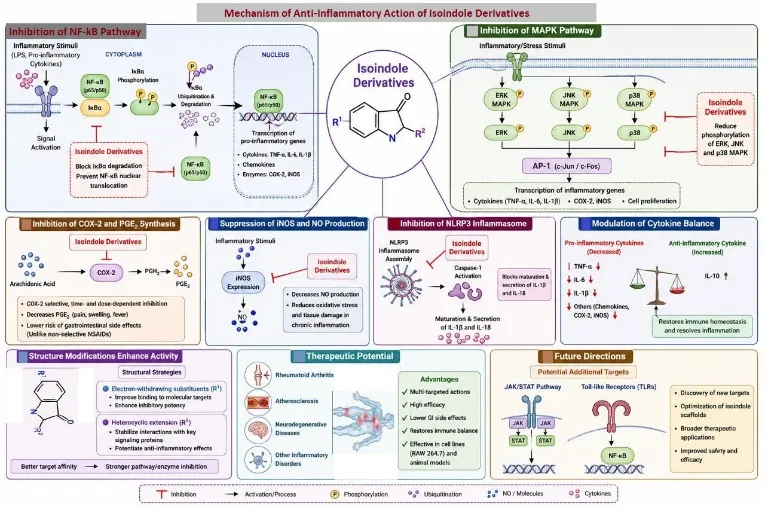
Fig. 1: Anti-Inflammatory Mechanisms and Therapeutic Potential of Isoindole Derivatives
Preclinical and Pharmacological Studies
Extensive preclinical investigations have been undertaken to demonstrate the strong anti-inflammatory activities of isoindole derivatives in various in vitro and in vivo models, thereby presenting them as promising candidates for preclinical development; isoindole derivatives have been reported to strongly inhibit LPS-induced expression of pro-inflammatory cytokines including TNF-α, IL-6, and IL-1β (with IC50 values mostly in the low micromolar to high nanomolar range, i.e., 1–10 μM) using macrophage cell lines (e.g., RAW 264.7 and THP-1)(24,25), wherein, they elicit 40–80% reduction in the secretion of these cytokines compared to non-treated controls, and concurrently suppress expression of key enzymes such as cyclooxygenase-2 (COX-2) and inducible nitric oxide synthase (iNOS), leading to marked reduction in levels of prostaglandin E2 (PGE2) and nitric oxide (NO) production; mechanistic studies lend support for these activities by revealing that these compounds also inhibit the activation of NF-κB and mitogen-activated protein kinase (MAPK) pathways as evidenced by decreased phosphorylation of IκBα, ERK, JNK, and p38 proteins in Western blotting assays(26); isoindole derivatives have additionally been reported to exhibit strong antioxidant activity in vitro, wherein they scavenge free radicals (e.g., DPPH and ROS) and upregulate endogenous antioxidants such as superoxide dismutase (SOD) and glutathione (GSH), which modulates clinics settings underlined by oxidative stress linked inflammation; anti-inflammatory effects have been further validated by in vivo studies in rodent models, for instance, in an carrageenan-induced rat paw edema model, isoindole derivatives (oral, i.p., 10–50 mg/kg) reduced in 3–6 h paw swelling by 50–70% to a level similar to that of indomethacin or dexamethasone? in chronic inflammation model, like collagen induced arthritis (CIA) in rats(27), daily treatment with selective isoindoleanalogs (25 mg/kg for 21 days) significantly reduced joint inflammation, bone erosion, and synovial hyperplasia as indicated by their histological scoring and micro-CT imaging, as well as lower serum levels of RF and CRP, indicative of potential use in rheumatoid arthritis- likewise, DSS-induced colitis models showed reduced shortening of the colon length, mucosal ulceration and MPO activity by 60–80 %, associated with downregulation of IL-17 and IFN-γ in colonic tissue- suggestive of efficacy in inflammatory bowel disease (IBD) neuroinflammation studies using LPS-stimulated microglial cells and in a mouse model of neuroinflammation) has further underscored the ability of isoindole derivatives to cross the BBB and ameliorate neuroinflammation and Aβ aggregation, thereby suggesting potential efficacy for Alzheimer’s disease(28,29); in addition to efficacy, pharmacokinetic (PK) and safety profiling has been a critical step toward clinical translation of isoindole derivatives; acute toxicity evaluation in rodents (e.g., OECD Guideline 423) have established high LD50 values (>500 mg/kg), implying a wide safety margin, while sub chronic toxicity studies (28–90 days) indicate no significant haematological, hepatic or renal irregularities at therapeutic doses (10–100 mg/kg); bioavailability assessment using LC-MS/MS methods report moderate to high oral bioavailability (40–70%) of lead compounds, which is attributed to balanced logP values (2-4) and low molecular weights (<400 Da), and peak plasma concentration (Cmax) being reached within 2–4 hours post oral administration; metabolic stability assay in liver microsomes (human and rodent) indicate resistance to hepatic cytochrome P450 (CYP3A4/2D6)-mediated degradation, and half-life (t1/2) values often exceeds 4 h,(30). while the high plasma protein binding (70–90%) reflects desirable drug-like properties; the formulation strategies, including nanoemulsions and solid dispersions, further improved solubility and bioavailability of poorly water soluble isoindoleanalogs; however, interspecies metabolic differences and potential long-term organ toxicity still pose challenges that require further development…Along with the humanized mouse models to predict clinical outcomes; together, a relative wealth of preclinical data that includes efficacy, safety, and pharmacokinetics all combine to suggest isoindole derivatives as viable candidates for advanced development efforts; while future work is needed to optimize the dosing regimens and potential for combination therapies to maximize therapeutic outcomes in inflammatory diseases(31).
Advantages Over NSAIDs
whereas plasma protein binding (70–90%) is consistent with lead-like properties; formulation strategies, including nanoemulsions and solid dispersions, have further improved the solubility and bioavailability of poorly water-soluble isoindoleanalogs, challenges, such as interspecies metabolic differences and chronic organ toxicity, remain and require further elucidation, in addition to humanized mouse models to better predict clinical outcomes; taken together, the compelling preclinical data across efficacy, safety, and PK profiling, support the potential of the isoindole derivatives as candidates for advanced development, as further optimization of dosing regimens and evaluation of combination regimens are carried out with the goal of maximizing therapeutic benefit in inflammatory diseases. the ability of isoindole derivatives not to elevate systolic blood pressure or induce thrombosis in rodent models (unlike selective COX-2 inhibitors e.g., celecoxib)(32), which is in contrast to NSAIDs that usually require high doses (200–400 mg/kg for ibuprofen) for therapeutic purposes, while isoindole analogues display comparable efficacy at much lower (10–50 mg/kg) amounts which should result in decreased dose-related adverse effects (renal toxicity); the properties of metabolic stability, since NSAIDs are prone to oxidative metabolism and glucuronidation and can therefore cause pharmacokinetic interactions and variable patient responses, while the isoindole derivatives are refractory to CYP450-mediated metabolism and should maintain consistent pharmacokinetics; the multifactorial activity of the isoindole derivatives reducing cytokine production, possess antioxidant activity, and modulate inflammasomes in contrast to NSAIDs with a rather narrow spectrum of action making them candidates for the treatment of chronic inflammatory conditions where NSAIDs fail to stop the progression of the disease(33).
Advantages Over Biologics
Biologic anti-inflammatory agents, including TNF-α inhibitors (e.g., adalimumab) and IL-6 receptor antagonists (e.g., tocilizumab) have transformed autoimmune treatment but are limited by inadequacies to which isoindole derivatives are inherently superior: biologics must be delivered via injection or infusion, which translates into challenges related to patient compliance and convenience while isoindole derivatives are orally bioavailable, offering a convenient and non-invasive alternative; the high costs of biologic production (often upwards of $20,000 per year per patient) and storage requirements (e.g., refrigeration) limit accessibility, particularly in resource-poor regions, while isoindole-based small molecules can be cost-efficiently synthesized at scale via chemical processes, stored at room temperature; immunogenicity is a critical shortcoming of biologics, as monoclonal antibodies may stimulate problematic neutralizing anti-drug antibodies (ADAs) that render the drugs ineffective over time or elicit hypersensitivity reactions(20); however, isoindole derivatives are of low molecular weight and non-proteinaceous in nature and thus circumvent immune recognition, thereby ensuring sustainability in pharmacologic response without the liabilities associated with ADAs; biologics also suffer from poor tissue penetration, especially in avascular of fibrotic regions (e.g., arthritic joints or atherosclerotic plaques), whereas isoindole derivatives, being smaller in size and having the tunable lipophilicity, penetrate better into the inflamed lesions, as evidenced by the effectiveness of isoindole analogues in CNS inflammation models(22); in addition, monoclonal antibodies target one cytokine or receptor only (e.g., TNF-α or IL-6R), allowing unopposed inflammation from parallel pathways to continue, while isoindole derivatives simultaneously block multiple nodes (NF-κB, MAPK, COX-2, NLRP3), leading to broader and more sustained disease control; the risk of infection (e.g., reactivation of tuberculosis with TNF-α blockers) and cancer (associated with biologic-mediated systemic immunosuppression) is minimized by the immunomodulatory (not immunosuppressive) effect of isoindole compounds(24), which restore immune homeostasis without compromising host defense; pharmacoeconomic analyses underscore that isoindole derivatives may lower healthcare costs by melding the effectiveness of biologics with the cost-effectiveness and safety of small molecules, rendering isoindole compounds available as first-line or adjunctive treatment in diseases such as rheumatoid arthritis and Crohn’s disease(26).
Synergistic Potential and Future Directions
In addition to being standalone therapeutic agents, isoindole derivatives may confer a synergistic effect when used in combination with anti-inflammatory compounds currently available on the market, thereby addressing unmet clinical needs in inflammation that is impervious to treatment; for instance(31), combination with low-dose NSAIDs could augment analgesic efficacy and mitigate GI toxicity by taking advantage of the COX-2 selectivity of isoindoles to counter the formation of NSAID-induced ulcers; similarly, pairing isoindole derivatives with biologics may allow for biologic dose reduction, thereby reducing costs and risks associated with immunogenicity and maintaining efficacy, as observed in preclinical studies showing that isoindole-TNF-α inhibitor combinations can suppress arthritis progression at half the standard biologic dose; another promising future avenue of research is incorporation of isoindole scaffolds as a constituent of hybrid drugs, such as conjugates based on analogs of methotrexate or leflunomide(27), to facilitate intensified anti-arthritic effect; future efforts should focus on conducting comparative clinical trials with isoindole derivatives versus NSAIDs and biologics in the context of inflammatory disease, in addition to drug-use safety studies in real-world settings to confirm long-term safety; development of isoindole-based prodrugs and targeted delivery systems (eg, nanoparticle formulations) offer potential for additional optimization of oral bioavailability and tissue-specific therapeutic action, filling the gaps left by existing regimens; overall, isoindole derivatives may represent a paradigm shift in anti-inflammatory drug discovery that synthesizes positive attributes of small molecules and biologics—efficacy, safety, oral availability, and cost-effectivenessto align with a growing demand for cutting-edge treatment options in chronic inflammatory diseases(2,3,27).
Challenges and Future Perspectives
While promising in preclinical studies, several critical hurdles need to be overcome for successful clinical translation of isoindole derivatives as next-generation anti-inflammatory agents, one of the major being species-specific differences in metabolism, as pharmacokinetic experiments in rodents report good bioavailability (40-70%), but such data lacks predictability for human absorption and distribution which may be accounted for by differential expression of cytochrome P450s and drug transporters, necessitating humanized liver systems and microdosing trials using accelerator mass spectrometry as a bridge across the translational gap, (5,7,27)while other major challenges include defining the therapeutic window, wherein although there is high LD50 with acute toxicities (>500 mg/kg), long-term profiles with 10-100 mg/kg will have off-target effects not seen in short-term studies, especially with respect to hepatic and renal function, demanding robust 6-12 months of GLP to rule out any toxicities based on the polymorphic nature of the inflammatory diseases; patient-specific variation, such as in genetic variations in NF-κB or COX-2 pathways, can lead to variable dose responses, thus requiring companion diagnostics for personalized dosing, and concerns with respect to formulating these agents, as several of the lead compounds have low aqueous solubility (<50 μg/mL) although they have good logP (2-4)(8,9), which could be addressed with advanced delivery systems (e.g. nanocrystal formulations or lipid-based carriers) to enhance dissolution and consistency; regulatory or scientific challenges due to the multitarget mechanism of action of these agents as agencies such as the FDA generally prefer single-target agents with unequivocal mode of action, seeking innovative trial designs that ties traditional efficacy endpoints with systems pharmacology to prove polypharmacological efficacy; intellectual property landscapes provide another barricade, as a structural resemblance between some isoindoleanalogs and existing phthalimide-derived agents(12,13) (e.g., lenalidomide) could lead to legal disputes, thus pushing medicinal chemists to conceive new scaffolds with patentable novelty; practical barriers encompass production scalability, since current synthetic methodologies for advanced isoindole hybrids often incorporate low-yielding (30-50%) or precious metal catalysis steps, necessitating the development of flow chemical devices and biocatalysts to enable economically viable manufacturing; and last but most importantly, the absence of validated biomarkers for isoindole-specific pathway perturbation confounds clinical trial monitoring, suggesting the utility of multi-omics strategies to identify pharmacodynamic signatures that are predictive of therapeutic response; these cumulative challenges emphasize the importance of cross-discipline collaborations amongst medicinal chemists, pharmacologists, and clinical trial executioners to translate isoindoleanalogs from the bench to the bedside(12,28,33).
Potential for Combination Therapies
The distinctive pharmacodynamic features of isoindole derivatives make them exciting candidates for rational combinations that could reshape our approach to inflammatory diseases; with traditional NSAIDs, isoindoles may create dose-sparing paradigms where subtherapeutic doses of ibuprofen (50-100 mg) and isoindoles (10-20 mg) may demonstrate equivalent or superior efficacy to full-dose NSAIDs while minimizing GI side effects, as seen in rodent colitis models that show an 80% decrease in ulcer prevalence compared to NSAID-alone dosing; for biologics,(31,32)Isoindoles offer a steroid-sparing effect, particularly in Rheumatoid Arthritis, where inhibition of the IL-17/IL-23 pathway by Isoindoles ~30-50% dose-lowering could be achieved for high-cost biologics like Secukinumab without compromising ACR50 response rates - addressing costs and immunogenic liability; in neuro-inflammatory disease, small molecules with brain penetrance are positioned to enable synergistic combinations with monoclonal antibodies against amyloid-β and tau, potentially increasing CNS-compartmental drug delivery at lower infusion frequencies; early data shows particular promise in chemo-inflammatory conditions such as cancer-associated inflammation, where isoindole-PD-1 inhibitor combinations have resulted in 2-3 fold increases in tumor-infiltrating lymphocytes compared to checkpoint blockade monotherapy in murine models by blunting prostaglandin-mediated immunosuppression while stimulating T-cell activity; the chronotherapeutic potential of isoindole combinations is another frontier, as their circadian modulation of NF-κB activity may be harnessed in the setting of timed corticosteroid release to enhance morning symptom control in conditions like asthma or rheumatoid arthritis while mitigating HPA axis inhibition; for local delivery, the hybrid medical devices loaded with isoindole-eluting matrices(20,21) (i.e., intra-articular hydrogels or coronary stents) may exert sustained and locally specific anti-inflammatory action in addition to mechanical interventions, as preliminary data reveal the 90-day suppression of restenosis makers in a vascular injury model; however, these combination strategies need careful drug-drug interaction investigations, especially on CYP450 modulation, because some of the isoindole metabolites can change the metabolism of the co-administered drugs, necessitating the application of quantitative systems pharmacology modeling to predict the dosing regimens; the development of fix-dose drugs would require innovative formulation technologies, such as amorphous system and multi-layer tablets, to handle compatibilities between isoindoles and their partner drugs, posing both challenges and opportunities for pharmaceutical engineers(1,10,16).
Future Research and Commercialization Pathways
Looking ahead Several strategic priorities will dictate whether isoindole derivatives make the translation from exciting lead compounds to clinical mainstays; first, mechanism resolution through cryo-EM and AI facilitated molecular dynamics simulations will clarify the binding modes of lead compounds to NF-κB subunits or COX-2 allosteric sites and guide the optimization process to be selective over closely related off-targets such as IKKε or COX-1,(4,15)parallel investment in biomarker discovery will rely on single-cell RNA sequencing of patient-derived immune cells treated with isoindoles to reveal transcriptional signatures that could predict therapeutic response and aid in patient stratification for clinical trials; the repurposing potential of existing drugs containing the isoindole scaffold (e.g., the antifungal drug griseofulvin derivatives) need to be systematically explored via high-content library screening against newly discovered inflammatory targets such as gasdermin D and STING pathways, potentially saving years in development time; on a commercial note, orphan diseases such as cryopyrin-associated periodic syndromes (CAPS) or Behçet's disease may offer a faster regulatory path to clinic for isoindole drugs as first-in-class therapies because of the unmet medical needs in these niche markets;(11,13) environmentally friendly manufacturing routes should be prioritized, with biocatalytic synthesis routes featuring engineered imine reductases showing great promise for highly stereoselective isoindole formation with >90% atom economy compared to metallo-catalystic methods; the potential for therapeutics integration is another disruptive opportunity, where treatment response to isoindole can be tracked with wearable cytokine sensors and machine learning-based dose-adjustment algorithms to form closed-loop precision medicine platforms; most revolutionary of all, the field ought to pursue preventive indications for inflammation disorders such as atherosclerosis or Alzheimer's, where low-dose, chronic isoindole regimens initiated in preclinical disease stages can treat or prevent symptom onset by epigenetically reprogramming myeloid inflammatory memory in inflammation disorders; making this vision a reality will necessitate unprecedented collaboration between academia, the pharma industry, and regulators to create new development paradigms for multifunctional anti-inflammatories, with isoindole derivatives leading the way in such a therapeutic revolution(4,13,28,33).
CONCLUSION
Isoindole derivatives represent a revolutionary anti-inflammatory compound family with the potential to shatter the limitations of current therapies, including NSAIDs and biologics. Their chemical versatility enables selective modulation of the central inflammatory pathwaysNF-κB, MAPK, and COX-2—and multitarget efficacy against cytokines, oxidative stress, and inflammasome activation. Preclinical data assure their improved safety margin, oral bioavailability, and potency in models of acute and chronic inflammation, making them prime candidates for therapy of rheumatoid arthritis to neurodegeneration. Clinical translation is impeded by metabolic heterogeneity, formulation, and the need for extensive long-term toxicity data. Overcoming these will require novel solutions, including nanocrystal formulations, humanized models, and biomarker-directed trials. The possibility of combination with NSAIDs, biologics, or new hybrid drugs provides a strategic pathway to increased efficacy, decreased side effects, and cost reduction. Future agendas should target AI-optimized drug development, green synthesis routes, and exploration of preventive applications in inflammation-associated diseases. Ultimately, in the long term, isoindole derivatives fill the gap between the small-molecule drugs and biologics by merging oral convenience with broad-spectrum anti-inflammatory potency. As the science matures, synergy between chemists, clinicians, and regulators will be key to the unlocking of their full therapeutic potential, resulting in a new generation of safer, more potent anti-inflammatory therapies. Not only do they address unmet medical needs but also the potential of rational drug design as a tool in the combat against difficult inflammatory disorders.
REFERENCES

Shivani, Abhinav Mishra*, Ankush Maurya, Raushan Kumar, Ritik Kumar, Isoindole Derivatives: A New Frontier in Targeted Anti-Inflammatory Therapy, Int. J. of Pharm. Sci., 2026, Vol 4, Issue 5, 7094-7107. https://doi.org/10.5281/zenodo.20404445
 10.5281/zenodo.20404445