

We use cookies to ensure our website works properly and to personalise your experience. Cookies policy
Goel institute of pharmacy and sciences lucknow.
Tuberculosis (TB) remains the leading cause of death from a single infectious agent, and drug-resistant Mycobacterium tuberculosis (Mtb) continues to threaten treatment success. The WHO Global Tuberculosis Report 2025 estimates 10.7 million new TB cases and 1.23 million deaths in 2024, including roughly 390,000 new cases of multidrug-/rifampicin-resistant TB (MDR/RR-TB). Bedaquiline, delamanid and pretomanid have transformed the management of resistant disease, yet resistance to bedaquiline, drug toxicity and drug-drug interactions underline the need for new chemotypes acting on new targets. The benzimidazole nucleus is a privileged scaffold in medicinal chemistry, and over the past decade benzimidazole derivatives have emerged as one of the more productive antitubercular chemotypes. This review critically summarises the evidence for the principal mycobacterial targets of benzimidazoles. The mycolic acid transporter MmpL3 is now the best-supported target, with three series (the EJMCh compounds, the HC2099/MSU-43085 series and the 2,5,6-trisubstituted benzimidazoles originally proposed as FtsZ inhibitors) showing evidence of MmpL3 engagement; for the third series, however, the reassignment from FtsZ rests on a single recent study that did not exclude additional targets and awaits direct biochemical and independent confirmation. The cytochrome bc1 complex (QcrB), through lansoprazole sulfide and 2-(benzylthio)benzimidazoles, and type II NADH dehydrogenase (NDH-2), through 2-aryl-benzimidazoles, provide energy-metabolism targets, while benzimidazole ureas illustrate ATP-site inhibition of DNA gyrase in other bacteria. We discuss structure-activity relationships using quanti-tative data from the primary literature, hybrid design strategies, pharmacokinetic and safety liabilities (in-cluding the short half-life and lack of chronic-model efficacy of MSU-43085), and the evaluation cascade needed to convert in vitro hits into clinical candidates. We conclude with priorities for resistance-informed, structure-guided development of benzimidazoles within combination regimens.
Tuberculosis, caused by Mycobacterium tuberculosis, remains a major global health problem. According to the WHO Global Tuberculosis Report 2025, an estimated 10.7 million people fell ill with TB in 2024 and 1.23 million died, making TB again the leading cause of death from a single infectious agent [1]. Drug resistance is a central obstacle: the report estimates about 390,000 incident cases of MDR/RR-TB in 2024 (95% uncertainty interval 360,000 to 430,000) and about 150,000 deaths from MDR/RR-TB, with MDR/RR-TB accounting for 3.2% of new and 16% of previously treated cases [1]. According to the same report, India accounted for 25% of the estimated global TB incidence and 32% of the estimated global MDR/RR-TB incidence in 2024 [1]. Drug-susceptible TB is curable with a six-month regimen of isoniazid, rifampicin, pyrazinamide and ethambutol, but the long duration makes adherence difficult, and incomplete therapy selects for resistant mutants.
Under current WHO definitions, MDR/RR-TB is resistance to rifampicin (with or without isoniazid resistance), pre-extensively drug-resistant TB (pre-XDR-TB) is MDR/RR-TB with additional fluoroquinolone resistance, and XDR-TB is pre-XDR-TB with additional resistance to bedaquiline and/or linezolid [1]. The diarylquinoline bedaquiline, which inhibits ATP synthase, was the first new TB drug class in about 40 years [2], and the nitroimidazoles delamanid and pretomanid followed. In a randomised trial, delamanid added to an optimised background regimen increased 2-month sputum culture conversion in MDR-TB, although QT prolongation was reported more frequently with delamanid [3]. The all-oral bedaquiline-pretomanid-linezolid (BPaL) regimen achieved a favourable outcome in 90% of 109 patients with highly drug-resistant TB in the Nix-TB trial, but linezolid-associated peripheral neuropathy (81%) and myelosuppression (48%) were common [4]. Resistance to bedaquiline has already been described: mutations in Rv0678, the repressor of the MmpS5-MmpL5 efflux pump, reduce susceptibility to bedaquiline and confer cross-resistance to clofazimine [5,6]. A pipeline of chemically diverse inhibitors acting on distinct targets, designed for combination regimens, is therefore essential [7].
Benzimidazole (1H-benzo [d]imidazole) is a privileged heterocycle that forms the core of anthelmintics (albendazole), proton-pump inhibitors (omeprazole, lansoprazole), antihistamines, antivirals and anticancer agents [8,9]. Interest in the scaffold for TB was sharpened by the observation that the proton-pump inhibitor lansoprazole is converted, through intracellular sulfoxide reduction in host cells, to lansoprazole sulfide, which inhibits the cytochrome bc1 complex of Mtb and is active against drug-resistant clinical isolates [10]. More recently, several benzimidazole series with nanomolar whole-cell potency have been shown to engage the mycolic acid transporter MmpL3 [15,16,17]. This review provides a critical, target-oriented overview of benzimidazole derivatives active against Mtb, drawing on quantitative data from primary studies, with emphasis on mechanism, structure-activity relationships (SAR), liabilities and the steps required to advance these compounds towards the clinic.
2. Drug-Resistant TB: Biological and Pharmacological Challenges
2.1 Mechanisms of resistance in M. tuberculosis
Resistance in Mtb arises almost exclusively through chromosomal mutations rather than horizontal gene transfer. Representative mechanisms include:
2.2 Phenotypic tolerance
Beyond genetic resistance, Mtb persists in host tissues in non-replicating or slowly replicating states, where drug penetration is limited and metabolism is altered. Agents acting on energy metabolism retain activity against such populations and are therefore attractive for shortening therapy [7]. This is one reason why benzimidazoles acting on the respiratory chain are of particular interest.
2.3 Desirable properties of new anti-TB agents
An ideal new agent should: (i) act on a novel target or bind a known target in a way unaffected by existing resistance mutations; (ii) show activity against MDR/XDR clinical isolates without cross-resistance; (iii) be active against replicating and non-replicating bacilli; (iv) have favourable oral pharmacokinetics and a low risk of drug-drug interactions, especially with rifamycins and antiretrovirals; (v) display a high selectivity index; and (vi) be compatible with short, combination regimens [7].
3. The Benzimidazole Scaffold
3.1 Structure and physicochemical features
Benzimidazole consists of a benzene ring fused to the 4,5-positions of an imidazole ring. The N1 atom is a pyrrole-type hydrogen-bond donor (when unsubstituted) and N3 is a pyridine-type hydrogen-bond acceptor. The scaffold is amphoteric (pKa of the conjugate acid about 5.5; N-H acidity about 12.8), planar and aromatic, supporting π-π stacking and hydrophobic interactions. Its resemblance to purines allows interaction with nucleotide-binding sites, while the N1, C2, C5 and C6 positions provide convenient vectors for diversification [8,9].
3.2 Synthetic accessibility
The most widely used route is the Phillips condensation of o-phenylenediamines with carboxylic acids or acid derivatives under acidic conditions. Condensation with aldehydes in the presence of an oxidant (for example sodium metabisulfite) provides 2-substituted benzimidazoles, and microwave, ultrasound and green-chemistry variants are widely used. N-alkylation, S-alkylation of 2-mercaptobenzimidazoles, halogenation and cross-coupling (Suzuki, Buchwald-Hartwig, click chemistry) enable late-stage diversification and the construction of hybrids. This flexibility facilitates rapid generation of focused libraries for SAR studies.
3.3 Drug-likeness
Benzimidazoles generally have moderate molecular weight and lipophilicity and are compatible with Lipinski’s rule of five [11]. However, the lipophilicity often needed for potent whole-cell activity against Mtb frequently compromises solubility and metabolic stability, a recurring theme in the optimisation of antitubercular benzimidazoles (Section 9).
4. Molecular Targets of Antitubercular Benzimidazoles
Table 1 summarises the targets for which benzimidazoles have been reported, together with the strength of the evidence. Target assignment in this field has been revised more than once, and the level of evidence differs markedly between series. Figure 1 places these targets in the mycobacterial envelope and respiratory chain.
Table 1: Principal Mtb targets associated with benzimidazole scaffolds and strength of evidence.
| Target | Function in Mtb | Benzimidazole evidence | Strength of evidence |
|---|---|---|---|
| MmpL3 | Transport of trehalose monomycolate (mycolic acid export) | EJMCh-4/-6 [16]; HC2099/MSU-43085 [17]; 2,5,6-trisubstituted SBZ-6B/-A38 [15] | Strong: resistance mutations in mmpL3, MIC shifts with MmpL3 expression, lipid analysis (EJMCh); for SBZ, a single study with direct biochemical assays still pending |
| QcrB (cytochrome bc1) | Electron transport; proton-motive force | Lansoprazole sulfide [10]; 2-(benzylthio)benzimidazoles [23] | Strong for lansoprazole sulfide; inferred for benzylthio series |
| NDH-2 | Type II NADH dehydrogenase; respiratory chain entry | 2-Aryl-benzimidazoles [28] | Moderate: biosensor and resistant-mutant data |
| DNA gyrase B | ATP-dependent DNA supercoiling | Benzimidazole ureas (dual GyrB/ParE) [24] | Established in other bacteria; not demonstrated in Mtb |
| FtsZ | Cell division GTPase | Original proposal for SBZ series [12] | Not supported in a 2025 re-evaluation [15] |
| DprE1, Pks13 | Arabinan and mycolic acid biosynthesis | Reference chemotypes only (BTZ043, TAM16) [25,26,27] | No firm benzimidazole evidence |
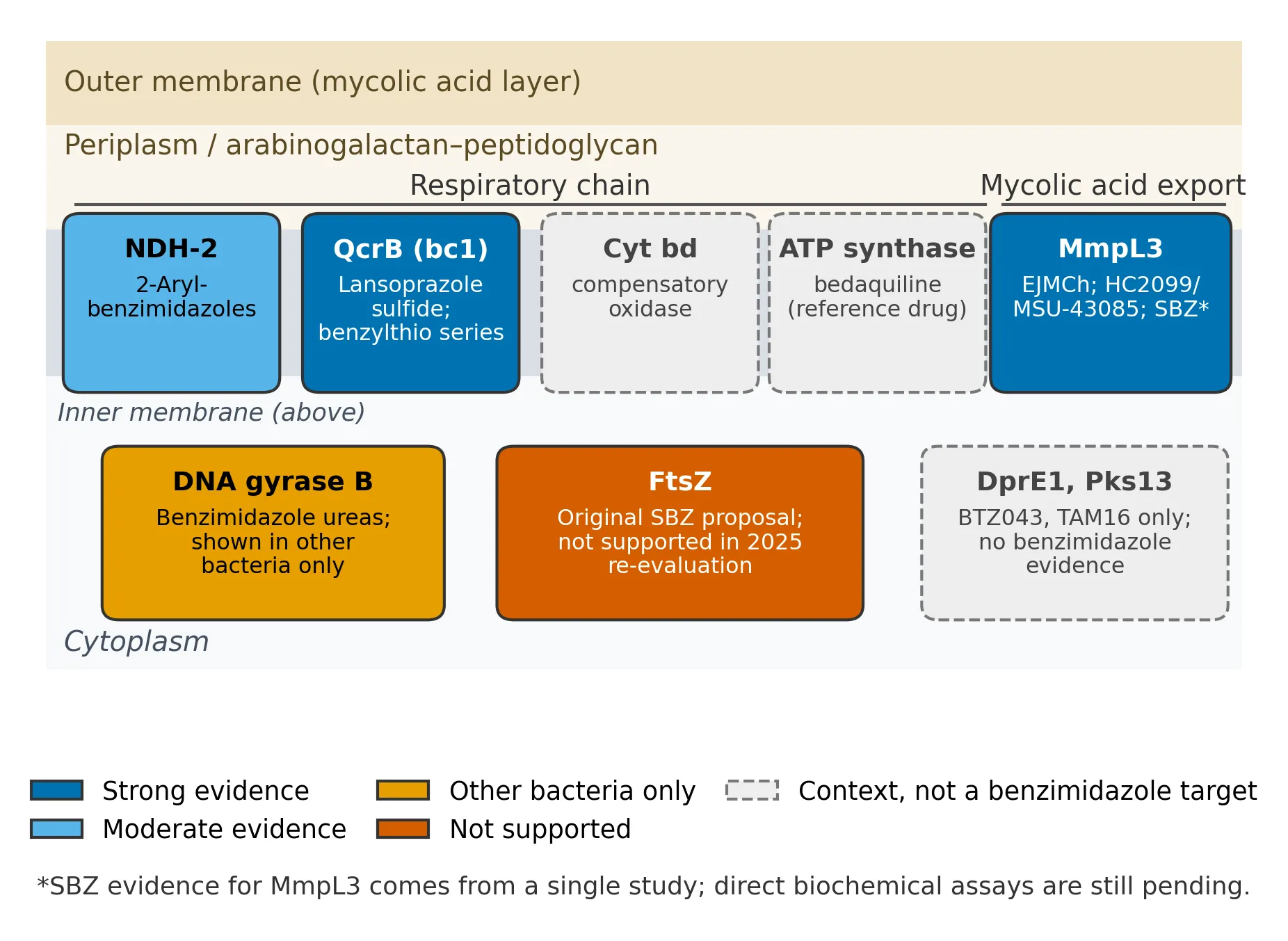
Figure 1: Mtb targets associated with benzimidazole scaffolds, placed in the mycobacterial envelope and respiratory chain and coloured by strength of evidence (see Table 1). Cytochrome bd, ATP synthase, DprE1 and Pks13 are shown for context only and are not established benzimidazole targets. *The evidence for MmpL3 engagement by the SBZ series comes from a single study [15].
4.1 MmpL3 inhibitors
MmpL3 exports trehalose monomycolate across the inner membrane and is essential for mycolic acid incorporation into the cell envelope. It is a chemically and genetically validated target and is notable for its promiscuity: more than 30 chemical scaffolds have been reported to inhibit it, and many lipophilic whole-cell hits turn out to act on it [15,18]. Three independent benzimidazole lines converge on MmpL3.
EJMCh series. Korycka-Machała and colleagues showed that 1H-benzo [d]imidazoles with nanomolar antitubercular activity, notably EJMCh-4 (5-bromo-2-(2-cyclohexylethyl)-1H-benzimidazole) and EJMCh-6 (2-(2-cyclohexylethyl)-5,6-dimethyl-1H-benzimidazole), are active against intracellular Mtb and select for resistance mutations in mmpL3; the resistant phenotype was reproduced by overexpressing the mutant alleles, radiolabelling showed reduced trehalose dimycolate synthesis and mycolylated arabinogalactan, and no cross-resistance to SQ109 was observed [16]. For H37Rv, MIC50/MIC90 values were 0.029/0.145 µM for EJMCh-6 and 1.22/2.44 µM for EJMCh-4, while mmpL3 mutants (V684A, V240A, G253E for EJMCh-6) showed MIC50 values of about 0.77 µM [16].
HC2099 and MSU-43085. Optimisation of the benzimidazole hit HC2099 produced MSU-43085, which has an EC50 of about 120 nM, roughly ten-fold more potent than SQ109 but about three- to five-fold less potent than NITD-304 and NITD-349 [17]. MSU-43085 is orally bioavailable and was active in an acute mouse infection model, but it lacked activity in a chronic model; pharmacokinetic and metabolite studies attributed this to in vivo metabolism and a short half-life [17]. This report is an instructive proof of concept: the target is druggable in vivo, but metabolic stability limits exposure.
2,5,6-Trisubstituted benzimidazoles (SBZ). A series of more than 500 compounds was developed by the Ojima and Slayden groups with the hypothesis of FtsZ inhibition [12,14]. The lead compounds showed MICs in the nanomolar range, activity against drug-resistant strains and, for SBZ-A38 and related analogues, efficacy equivalent to isoniazid in the acute murine infection model [13]. In 2025, Zhang and co-workers re-evaluated SBZ-6B and SBZ-A38 and concluded that their primary target is MmpL3 [15]. Bacterial cytological profiling grouped the compounds with the MmpL3 inhibitors AU1235 and SQ109, they induced an intracellular ATP increase and activation of the iniBAC cell-wall-stress operon without altering membrane potential, and MICs shifted in strains with regulated mmpL3 expression (for example 6.2-fold and 39-fold increases for SBZ-6B and SBZ-A38 on MmpL3 overexpression) [15]. The MmpL3 S591I mutant was 16-fold and about 6-fold less susceptible to SBZ-6B and SBZ-A38, respectively, relative to wild type (MICs of 0.3 and 0.64 µM against H37Rv) [15]. Docking to MmpL3 placed the benzimidazole N-H in hydrogen-bonding distance of Asp645, with π-π stacking to Tyr646, resembling the SQ109 binding mode [15]. The authors note that direct biochemical assays (lipid profiling, TMM flippase or proton-translocation assays) are still needed and that additional targets are not excluded. The reassignment of this series from FtsZ to MmpL3 therefore rests on data from a single study (Zhang and co-workers) and has not yet been independently replicated; until direct biochemical evidence and independent confirmation are available, MmpL3 is best regarded as the probable, rather than the established, primary target of the SBZ series. Figure 2 summarises the genetic shifts reported in that study.
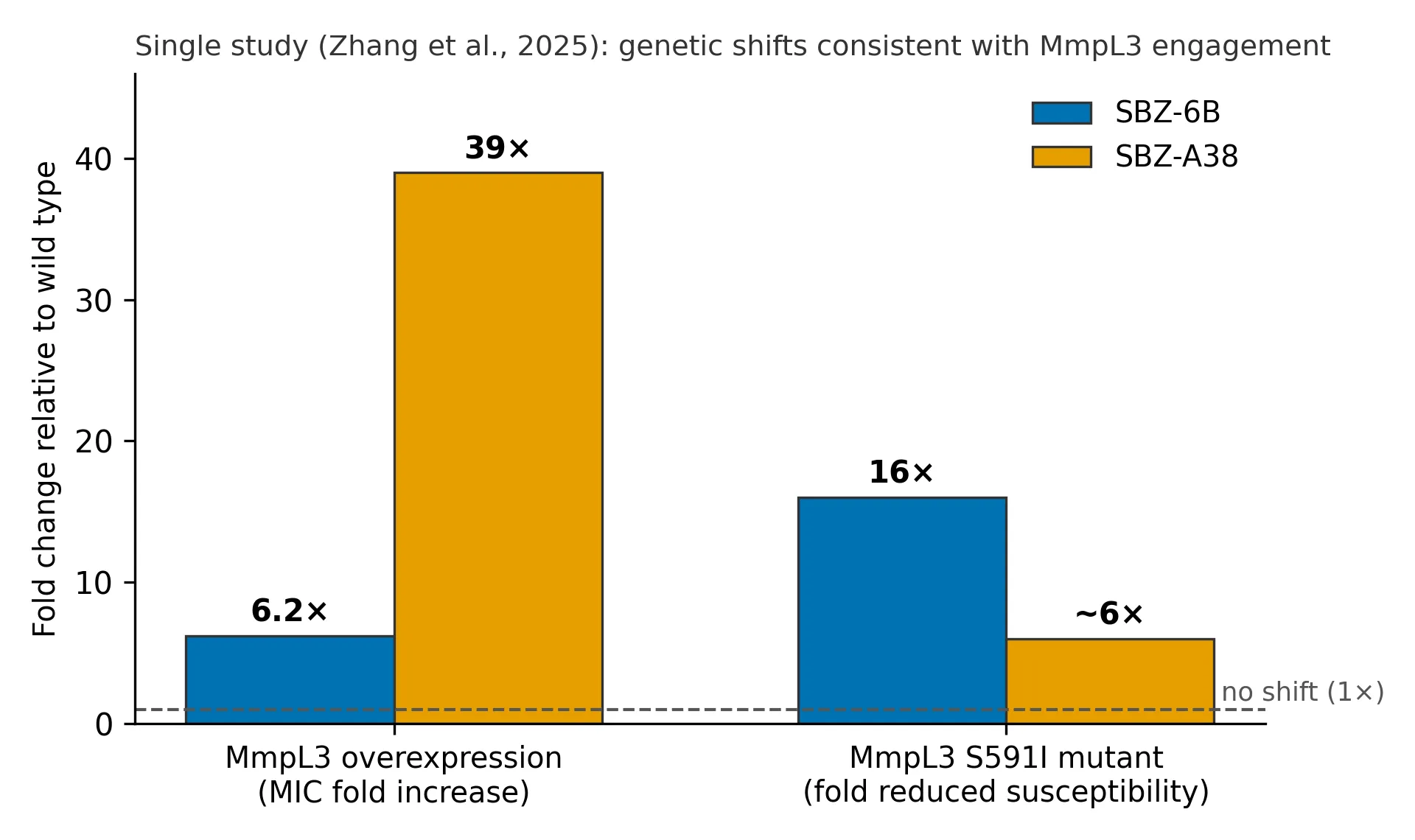
Figure 2. Genetic evidence for MmpL3 engagement by the trisubstituted benzimidazoles SBZ-6B and SBZ-A38: MIC fold increase on MmpL3 overexpression and reduced susceptibility of the MmpL3 S591I mutant, relative to wild type. Values are as reported in the text of Zhang et al. [15]; the S591I shift for SBZ-A38 was reported as about 6-fold. Both data sets come from this single study.
Together these data make MmpL3 the best-supported benzimidazole target, although the evidence for the SBZ series is the least mature of the three lines. Two cautions apply. First, because MmpL3 is a frequent off-target of lipophilic compounds, every new benzimidazole hit should be profiled in MmpL3 over- and under-expression strains and resistant-mutant assays. Second, MmpL3 inhibitors from different chemical classes show distinct resistance profiles, and the SBZ resistance mutations only partially overlap with those reported for other benzimidazole MmpL3 inhibitors, suggesting different binding modes [15].
4.2 FtsZ: a revised assignment
The first reports on 2,5,6-trisubstituted benzimidazoles proposed Mtb FtsZ as the target, based on inhibition of FtsZ polymerisation and GTPase activity in vitro and on observed filamentation [12,14]. However, the 2025 re-evaluation found that SBZ-6B, SBZ-A38 and the first-generation lead SBZ-P3G2 at concentrations up to 100 µM neither inhibited nor stimulated FtsZ GTPase activity, produced no thermal shift of FtsZ, and did not change the cell length of treated bacteria, whereas a known FtsZ inhibitor and GTPγS did [15]. Resistant mutants could not be selected. On this evidence FtsZ should not be assumed to be the primary target of these benzimidazoles, and published SAR for this series is better interpreted in an MmpL3 context, with the caveat that this revised assignment is itself based on a single study and has not been independently confirmed. FtsZ remains a valid target in principle, but whole-cell benzimidazole activity attributed to it should be treated with caution unless supported by genetic target validation.
4.3 Cytochrome bc1 (QcrB) inhibitors
The mycobacterial respiratory chain is clinically validated: bedaquiline inhibits ATP synthase and the imidazopyridine amide telacebec (Q203) inhibits the cytochrome bc1 complex [19]. The imidazo[1,2-a]pyridine series identified QcrB as a vulnerable target, with MICs of 0.03 to 5 µM and a qcrB T313A resistance mutation [20]. Rybniker and colleagues demonstrated that lansoprazole, a benzimidazole-based proton-pump inhibitor, is a prodrug that is activated by sulfoxide reduction in the cytoplasm of host cells to lansoprazole sulfide, which targets cytochrome bc1, is highly active against drug-resistant clinical isolates and spares the human H+/K+-ATPase [10]. Rambo and colleagues designed 2-(benzylthio)-5-methoxybenzimidazoles by molecular simplification and hybridisation from quinoline- and thioacetamide-benzimidazole leads; the best compounds, 6p and 6z, had MICs of 6.9 and 3.8 µM against H37Rv, were active against multidrug-resistant strains, showed no apparent toxicity to Vero and HepG2 cells, and had good aqueous solubility and plasma stability, with cytochrome bc1 inferred as the target [23].
A biological caveat is that the alternative terminal oxidase, cytochrome bd, can sustain respiration when bc1:aa3 is inhibited, rendering Q203 largely bacteriostatic; deletion of cydAB made Q203 bactericidal and active against persisters, demonstrating synthetic lethality between the two oxidases [21]. A cytochrome bd inhibitor, ND-011992, was bactericidal in combination with Q203 and improved efficacy in mice [22]. Benzimidazole bc1 inhibitors are therefore best developed as part of combinations that also block cytochrome bd or other energy-metabolism targets.
4.4 Type II NADH dehydrogenase (NDH-2)
NDH-2 feeds electrons from NADH into the respiratory chain, does not pump protons and is absent from the mammalian genome. Saha and colleagues reported 2-aryl-benzimidazoles as NDH-2 inhibitors; after medicinal chemistry optimisation, analogue 8 had an MIC of 4 µg/mL and an ATP IC50 of 0.05 µg/mL against H37Rv mc2 6230, analogues 6 and 8 were active against mono- and multidrug-resistant strains and were bactericidal, and target engagement was supported by a Peredox-mCherry NADH/NAD+ biosensor and by single-nucleotide polymorphisms in mutants resistant to the known NDH-2 inhibitor CBR-5992; the safety index was above 10 [28]. The MICs are modest compared with the MmpL3 series, but NDH-2 inhibition offers a mechanism complementary to bc1 and cytochrome bd inhibition.
4.5 DNA gyrase B
Fluoroquinolones target the GyrA subunit and are cornerstones of MDR-TB therapy, but gyrA mutations are common. The ATPase subunit GyrB is a complementary target. Charifson and colleagues described benzimidazole ureas as dual-targeting inhibitors of DNA gyrase and topoisomerase IV that bind in the ATP sites and have potent activity against a wide spectrum of bacterial pathogens [24]. These compounds were developed against other bacteria, and adaptation to Mtb GyrB, which has distinct ATP-site features, and to the mycobacterial envelope has not been demonstrated in the studies cited here. The theoretical advantage of retained activity against gyrA-mutant, fluoroquinolone-resistant isolates therefore remains to be tested.
4.6 Cell-wall targets DprE1 and Pks13: reference chemotypes
DprE1 was identified as the target of benzothiazinones such as BTZ043, which are nitro prodrugs reduced in the bacterium to a nitroso derivative that reacts covalently with an active-site cysteine of DprE1 [25,26]. Pks13, which catalyses the final condensation of mycolic acid biosynthesis, is inhibited by the benzofuran TAM16, which showed in vivo efficacy equal to isoniazid in mouse models and a resistance frequency about 100-fold lower than isoniazid [27]. To our knowledge, genetically validated inhibition of DprE1 or Pks13 by benzimidazoles has not been firmly established, so these enzymes remain design opportunities in which benzothiazinone and benzofuran pharmacophores can serve as templates.
5. Structure-Activity Relationships
The SAR below is derived from published series; it describes tendencies rather than universal rules because target, strain and assay differ between studies. Table 2 summarises representative compounds with quantitative data from the primary literature. Figure 3 compares the reported potencies of these compounds, and Figure 4 maps the main SAR trends onto the scaffold, and Figure 5 shows the structures of the principal benzimidazole series discussed in this review.
Table 2: Representative antitubercular benzimidazoles with quantitative data. Values come from different laboratories and assay formats and are not directly comparable.
| Compound / series | Key structural features | Activity (Mtb H37Rv unless stated) | Target / evidence | Ref. |
|---|---|---|---|---|
| EJMCh-6 | 2-(2-Cyclohexylethyl)-5,6-dimethyl | MIC50 0.029 µM; MIC90 0.145 µM | MmpL3 (resistant mutants, lipid analysis) | [16] |
| EJMCh-4 | 2-(2-Cyclohexylethyl)-5-bromo | MIC50 1.22 µM; MIC90 2.44 µM | MmpL3 | [16] |
| MSU-43085 | HC2099-derived | EC50 about 120 nM | MmpL3; active in acute, not chronic, mouse model | [17] |
| SBZ-6B | 2,5,6-Trisubstituted | MIC 0.3 µM | MmpL3 (re-evaluation) | [15] |
| SBZ-A38 | 2,5,6-Trisubstituted; trifluoromethoxybenzyl group | MIC 0.64 µM | MmpL3 | [15] |
| 6p / 6z | 2-(Benzylthio)-5-methoxy | MIC 6.9 / 3.8 µM; active vs MDR strains | Cytochrome bc1 (inferred) | [23] |
| Analogue 8 | 2-Aryl-benzimidazole | MIC 4 µg/mL; ATP IC50 0.05 µg/mL | NDH-2 | [28] |
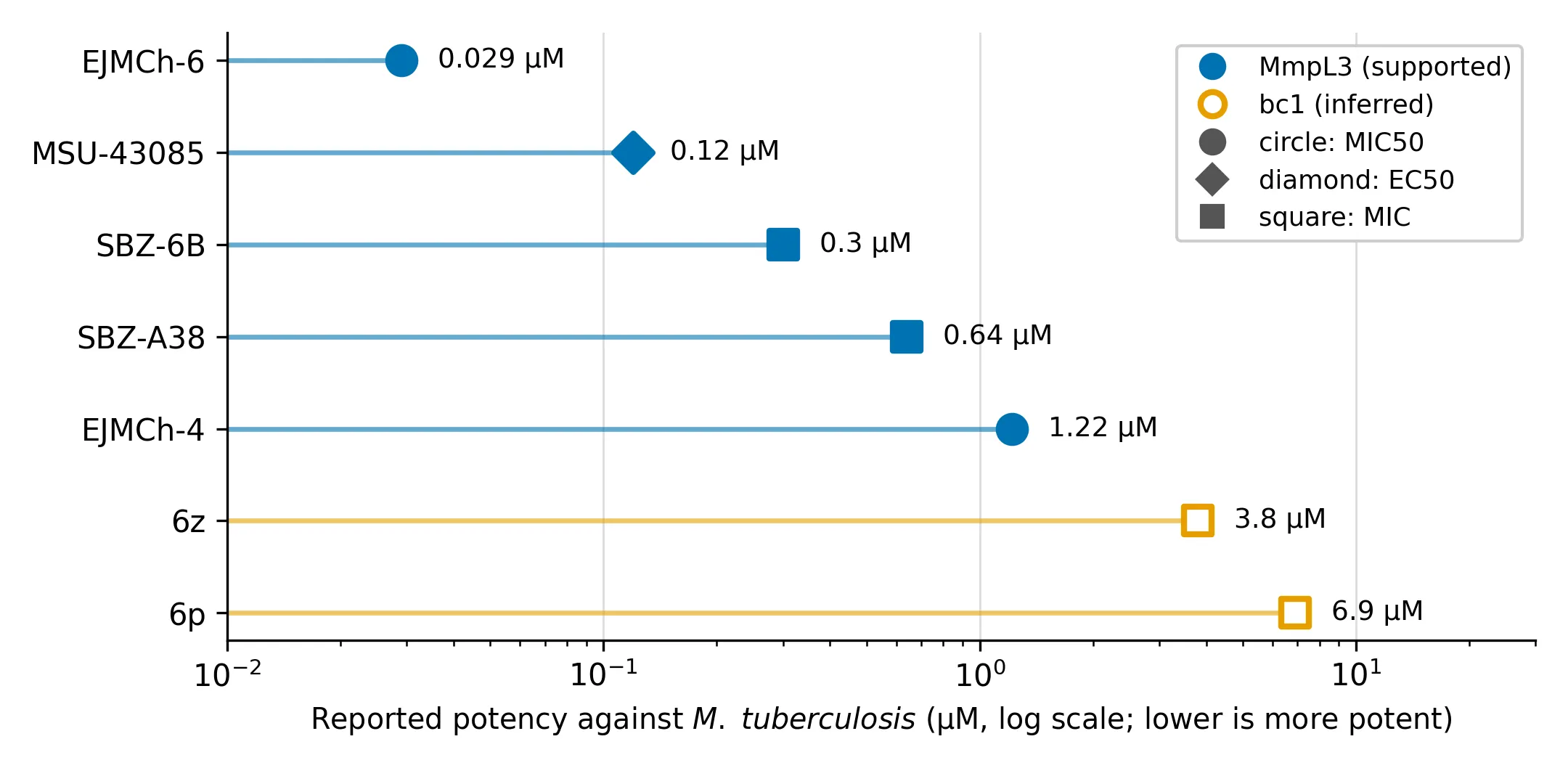
Figure 3. Reported potencies of representative antitubercular benzimidazoles (data from Table 2; refs 15–17, 23). Values come from different laboratories, assay formats and potency metrics (MIC50, EC50, MIC) and are not directly comparable. Analogue 8 (NDH-2 series; MIC 4 µg/mL [28]) is omitted because its molar concentration cannot be derived from the data given. Open symbols: target inferred rather than demonstrated.
5.1 C2 substitution
C2 is the most frequently varied position. In the MmpL3 series derived from HC2099 and in the EJMCh compounds, optimisation has concentrated on C2, where a lipophilic 2-(2-cyclohexylethyl) group is associated with nanomolar potency [15,16]. In NDH-2 inhibitors an aryl group at C2 is the defining feature [28], and in the bc1-directed series a benzylthio group at C2 combined with 5-methoxy gave low-micromolar MICs and favourable solubility and plasma stability [23]. Thioether and amino linkers provide a handle for attaching additional pharmacophores for hybrid design.
5.2 N1 substitution
In the docking model of the SBZ compounds, the free benzimidazole N-H donates a hydrogen bond to Asp645 of MmpL3 [15]; this suggests, as a hypothesis to be tested, that N1 alkylation could be detrimental in MmpL3-directed series. In other contexts, N1 alkylation increases lipophilicity and may improve membrane penetration, and the effect is therefore target-dependent.
5.3 C5/C6 substitution
The comparison between EJMCh-4 and EJMCh-6, which share the same C2 side chain, is instructive: replacing 5-bromo by 5,6-dimethyl lowered the MIC50 from 1.22 µM to 0.029 µM, an approximately 40-fold improvement [16]. The SBZ series was the first to incorporate substantial substituents at position 6, whereas the HC2099/EJMCh lines had mostly explored position 2 [15]; substitution at C5/C6 therefore offers a way to tune potency, metabolic stability and pharmacokinetics. Bulky C6 groups may have consequences for binding to mutant MmpL3, as the benzo-trifluoride-containing SBZ-A38 could not be docked to a triple-mutant model [15].
5.4 Linkers and appended heterocycles
Amide, thioacetamide, hydrazone, triazole and sulfonamide linkers connecting the benzimidazole to a second pharmacophore influence conformation, hydrogen bonding and permeability. In the 2-(imidazo[2,1-b][1,3,4]thiadiazol-5-yl)-1H-benzimidazole series, seven of 29 compounds had MICs of 3.125 µg/mL, a p-substituted phenyl ring (p-tolyl or p-chlorophenyl) and a chloro group on the benzimidazole improved activity, and a nitro group on the benzimidazole reduced it [29].
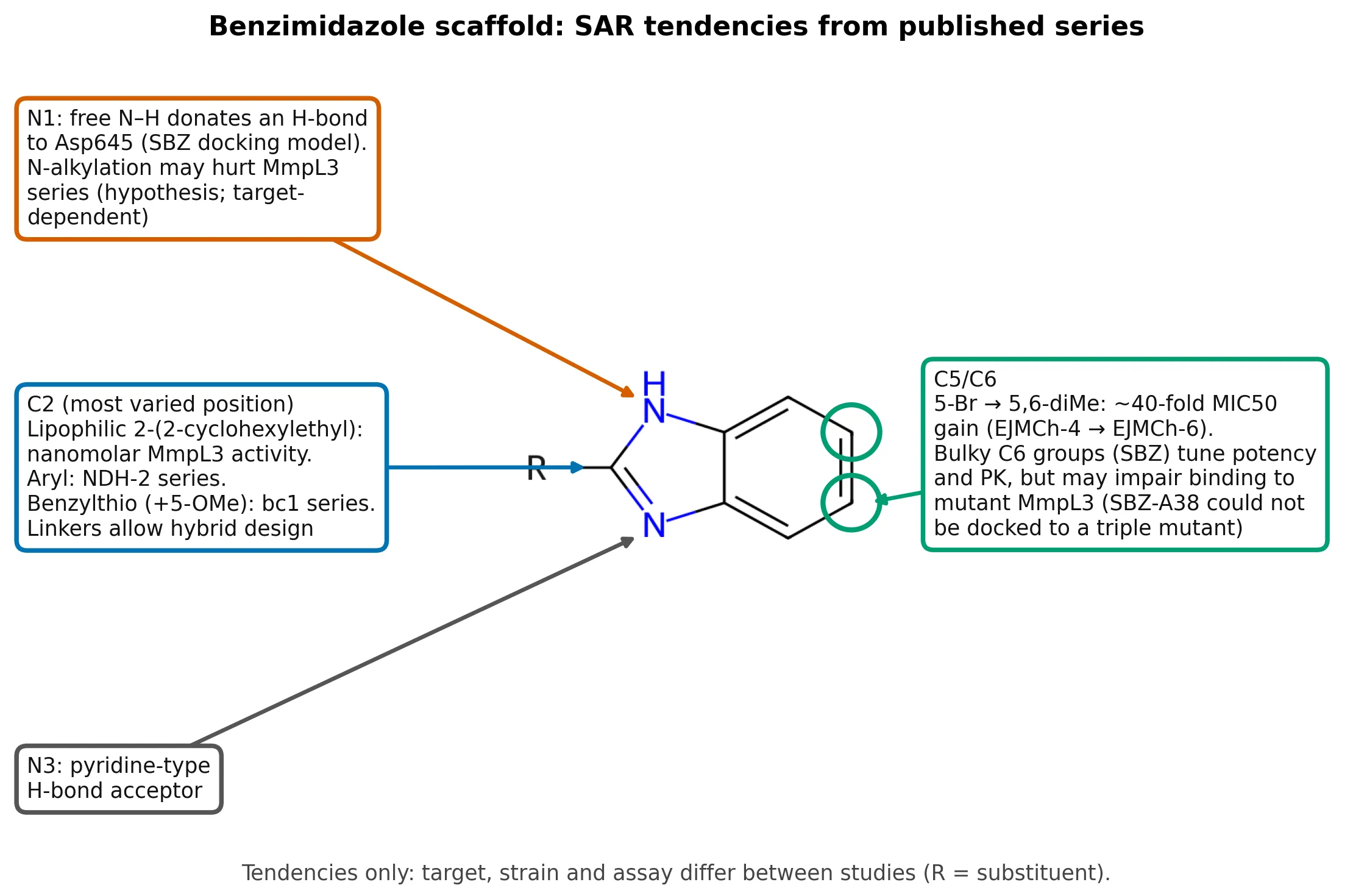
Figure 4: Structure–activity tendencies mapped onto the benzimidazole scaffold, compiled from Sections 5.1–5.3 [15,16,23,28]. These are tendencies drawn from different series, not universal rules.
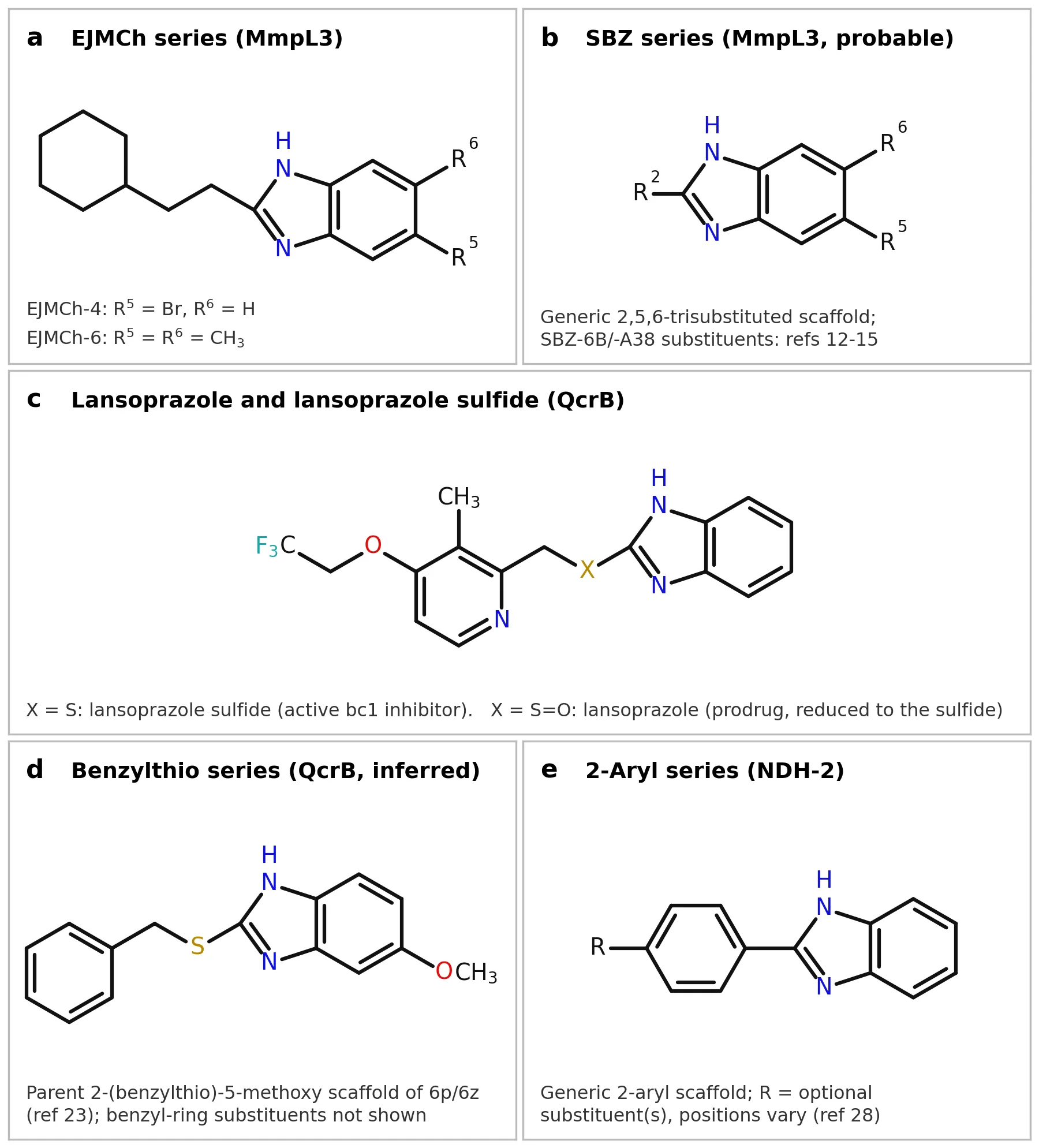
Figure 5. Structures of the benzimidazole series discussed in this review, grouped by proposed target: (a) EJMCh series (MmpL3) [16]; (b) generic 2,5,6-trisubstituted (SBZ) scaffold (MmpL3, probable) [12–15]; (c) lansoprazole (X = S=O) and lansoprazole sulfide (X = S) (QcrB) [10]; (d) 2-(benzylthio)-5-methoxybenzimidazole scaffold of compounds 6p/6z (QcrB, inferred) [23]; (e) generic 2-aryl-benzimidazole scaffold (NDH-2) [28]. Generic scaffolds are drawn where the specific substituents are not given in the text; R groups are defined in each panel.
6. Hybrid and Multi-Target Strategies
Because Mtb readily acquires single-target resistance, hybridisation and polypharmacology are prominent design strategies. Rambo and colleagues combined features of a 2-quinoline lead and a 2-[(1H-benzimidazol-2-yl)thio]acetamide lead into 2-(benzylthio)benzimidazoles [23], and imidazothiadiazole-benzimidazole hybrids have been reported with low-micromolar MICs [29]. Hybridisation offers possible advantages (engagement of more than one target, improved physicochemical properties, synergy with existing drugs) but also risks: increased molecular weight and lipophilicity, synthetic complexity, and the possibility that apparent potency reflects non-specific membrane effects.
The SBZ study illustrates both sides of polypharmacology. The authors could not select spontaneous resistant mutants despite repeated attempts, which they speculate could reflect a fitness cost or a distinct binding mode, but they also note that membrane-disruptive or additional activities would raise concerns about off-target effects and cytotoxicity, and they recommend comprehensive selectivity profiling [15]. Rigorous mechanistic work, including whole-genome sequencing of resistant mutants where obtainable, gene-dosage experiments and biochemical assays, is therefore necessary before multi-target claims are accepted.
7. Computational and Structure-Guided Design
High-resolution structures of MmpL3 and the availability of QcrB and GyrB models allow structure-based design of benzimidazoles. In the SBZ study, Glide docking against the M. smegmatis MmpL3-SQ109 complex (PDB 6AJG) gave scores of −7.39 and −7.11 kcal/mol for SBZ-6B and SBZ-A38; a homology model of Mtb MmpL3 improved the scores to −9.23 and −8.26 kcal/mol, and the corresponding triple-mutant model gave weaker scores for SBZ-6B (−7.42 kcal/mol), in qualitative agreement with the modest MIC shift of that mutant [15]. Typical workflows combine pharmacophore generation, docking, molecular dynamics with binding free-energy estimation, in silico ADMET prediction and quantitative SAR or machine-learning models trained on whole-cell data. Such predictions are hypotheses that require experimental validation, and docking scores should not be over-interpreted, particularly for membrane transporters and when comparing across species.
8. Biological Evaluation Pipeline
A rational evaluation cascade for benzimidazole leads includes the following steps (Figure 6):
1. Primary screening: MIC against H37Rv (for example microplate Alamar Blue assay) and a panel of MDR, pre-XDR and XDR clinical isolates, including isolates carrying Rv0678 mutations.
2. Selectivity: cytotoxicity in mammalian cells (Vero, HepG2) to calculate selectivity indices, and spectrum profiling against other mycobacteria and bacteria.
3. Disease-relevant conditions: intracellular macrophage assays, hypoxic and nutrient-starvation models and time-kill kinetics.
4. Mechanism of action: resistant-mutant selection and sequencing; MIC shifts in conditional-expression strains (for example mmpL3-TetON and overexpression strains); bacterial cytological profiling; ATP-level, iniBAC cell-wall-stress and membrane-potential assays; lipid analysis for TMM/TDM; respiratory-chain assays; and direct biochemical assays with purified targets [15,16].
5. ADME-Tox: solubility, microsomal stability, plasma protein binding, CYP inhibition/induction, hERG liability and genotoxicity testing.
6. In vivo efficacy: acute and chronic mouse models, with combination studies; the contrast between acute and chronic efficacy of MSU-43085 shows that both models are needed [17].
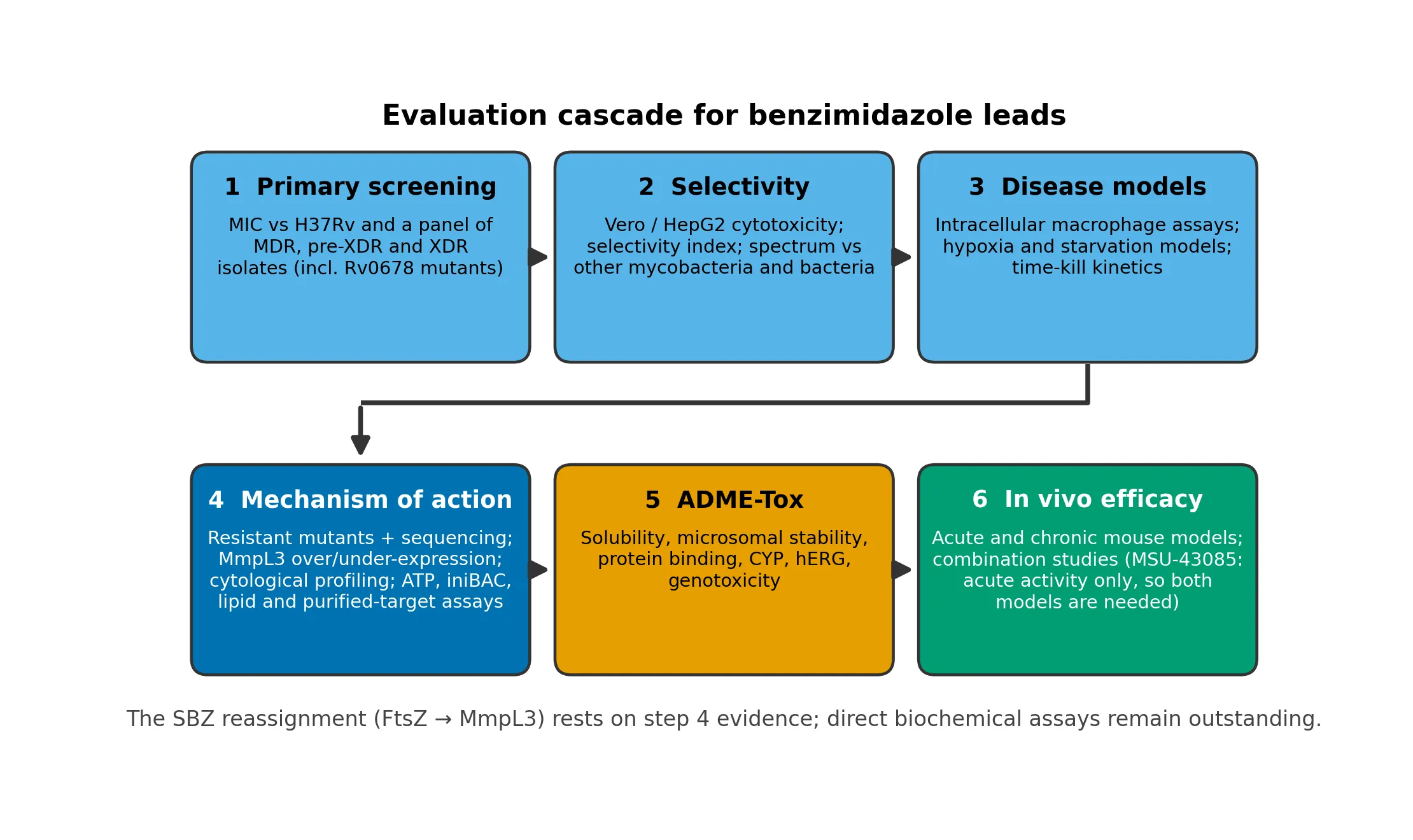
Figure 6: Evaluation cascade for benzimidazole leads (Section 8) [15–17].
9. Pharmacokinetic, Safety and Translational Challenges
Metabolic stability and exposure. MSU-43085 is orally bioavailable but is rapidly metabolised, and high doses were needed to saturate clearance and achieve efficacy in an acute model; it was inactive in a chronic model [17]. Improving metabolic stability is therefore a priority for MmpL3-directed benzimidazoles.
Solubility and lipophilicity. Potent whole-cell benzimidazoles are often highly lipophilic. Some series have shown favourable properties, for example the good aqueous solubility and plasma stability of the 2-(benzylthio)benzimidazoles [23], but this must be established for each series.
Selectivity and off-target effects. MmpL3 is a promiscuous target, and membrane-active or multi-target activity can mimic target-specific inhibition [15,18]. For benzimidazoles, selectivity against mammalian tubulin and other host targets should be verified, since anthelmintic benzimidazole carbamates act on tubulin. Cardiac liabilities (hERG inhibition, QT prolongation) deserve early assessment, since QT prolongation was reported more frequently with delamanid in its pivotal trial [3] and new agents will be combined with such drugs.
Drug-drug interactions. Standard TB regimens include rifamycins (strong CYP3A4 inducers) and, in HIV co-infection, antiretrovirals, so interaction potential should be assessed early.
Target-specific vulnerabilities. Respiratory-chain inhibitors can show slow kill kinetics because of compensatory oxidases [21,22]. For MmpL3 inhibitors, resistance is possible through single mutations such as S591I [15], although the SBZ series did not yield spontaneous resistant mutants in the study cited.
Translational gap. Most reported antitubercular benzimidazoles are supported by in vitro MIC data only, with limited in vivo pharmacokinetics and few robust target-engagement data. Standardised reporting, including activity against clinical resistant isolates, cytotoxicity and early ADME parameters, would increase reproducibility and value [7].
10. Future Perspectives
1. Resistance-informed design. Prioritise scaffolds that remain active against isolates with mutations in rpoB, katG/inhA, gyrA, atpE and Rv0678, and screen routinely against well-characterised resistant panels.
2. Rigorous target validation. The revision of the SBZ target from FtsZ to MmpL3 [15] shows that biochemical inhibition and whole-cell potency can be misleading, although that revision itself rests on a single study and still needs direct biochemical and independent confirmation. New series should be supported by genetic target validation and orthogonal assays.
3. Improve metabolic stability of MmpL3 benzimidazoles. Use the SAR at C5/C6 and the metabolite-identification data from the HC2099 series [15,17] to block metabolic soft spots without losing potency.
4. Energy-metabolism combinations. Pair bc1- or NDH-2-directed benzimidazoles with agents that block compensatory pathways, such as cytochrome bd inhibitors or ATP synthase inhibitors [21,22].
5. Beyond MIC. Adopt assays that model persisters and intracellular bacteria, and apply PK/PD modelling early.
6. AI-assisted discovery. Use predictive and generative models trained on curated antimycobacterial data to propose analogues with optimised potency, ADMET and synthetic accessibility, with experimental validation.
7. Delivery and collaboration. Explore inhaled or nanoparticle formulations to improve lung exposure, and use public-private partnerships to supply standardised assays and in vivo infrastructure for academic leads.
CONCLUSION
Benzimidazoles are a versatile and synthetically accessible class of antitubercular chemotypes. The current evidence places the mycolic acid transporter MmpL3 at the centre of the field, with the EJMCh, HC2099/MSU-43085 and SBZ series all showing nanomolar to sub-micromolar potency and MmpL3-linked genetic or phenotypic evidence (for the SBZ series from a single study), while the cytochrome bc1 complex and NDH-2 provide complementary energy-metabolism targets. At the same time, the field illustrates the importance of rigorous target validation, as shown by the reassignment of the SBZ series from FtsZ to MmpL3 (itself still awaiting independent confirmation), and of pharmacokinetic optimisation, as shown by the lack of chronic-model efficacy of MSU-43085. Clinical progress will depend on improving metabolic stability and selectivity, confirming activity against MDR/XDR isolates and demonstrating efficacy within combination regimens. If these hurdles are addressed, next-generation benzimidazoles could contribute to short, safe and effective regimens for drug-resistant tuberculosis.
Declarations
Conflict of interest:
The authors declare no conflict of interest.
Funding:
[To be completed by the authors.]
Author contributions:
[To be completed by the authors.]
REFERENCES

Anubhav Kumar Kannaujiya, Sweta Shukla, Next-Generation Benzimidazole Derivatives as Potent Inhibitors of Drug-Resistant Mycobacterium Tuberculosis: A Review, Int. J. of Pharm. Sci., 2026, Vol 4, Issue 10, 3586-3598. https://doi.org/10.5281/zenodo.23637216
 10.5281/zenodo.23637216