

We use cookies to ensure our website works properly and to personalise your experience. Cookies policy
Department of pharmaceutical science Ettumanoor Kottayam 686008 Kerala India.
Hydrangea macrophylla is a medicinal plant belongs to the family Hydrangeaceae traditionally used for various therapeutic purposes. Different parts of Hydrangea macrophylla, such as leaves, roots, flowers, and stems, contain various bioactive phytoconstituents such as Flavonoids, terpenoids/steroids, alkaloids, tannins, Phenolics, betacyanin, terpenoids, glycosides, flavonoids, quinones, saponins, and coumarins. The wide range of phytochemicals present in different plant parts may contribute to the diverse pharmacological properties reported for Hydrangea macrophylla. Compounds such as hydrangenol and phyllodulcin have been identified as important constituents and have attracted attention because of their biological effects. The plant shows many pharmacological effects including antioxidant, immunostimulatory, anti-inflammatory, antidiabetic, anti-malarial and other pharmacological effects. Recent studies have provided increasing evidence supporting its diverse therapeutic potential, particularly through its antioxidant, anti-inflammatory activities. This review summarizes the botanical characteristics, phytochemical constituents, traditional uses, and reported pharmacological activities of Hydrangea macrophylla, highlighting its potential as a valuable source of biologically active compounds and providing a basis for future pharmacological and phytochemical investigations
Medicinal plants have historically been acknowledged for their healing properties, attributed to the numerous bioactive compounds they possess, each exhibiting distinct biological effects. Hydrangea is a woody shrubs that belong to the Hydrangeaceae family. It is increasingly being acknowledged for its potential health benefits .[1] According to recent research, Hydrangea macrophylla leaves show a variety of pharmacological characteristics, such as immunostimulatory, antimalarial, antidiabetic, anti-wrinkle, anti-photoaging, skeletal muscle-enhancing and other pharmacological effects .[2]
|
|
|
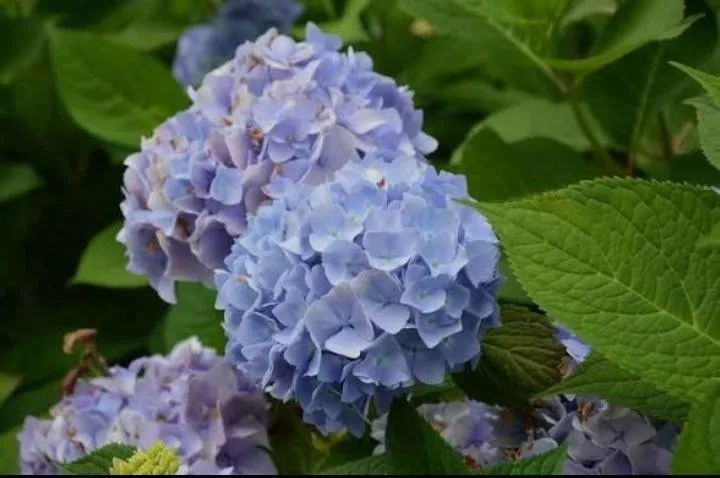
(Fig no:01) Hydrangea macrophylla |
II. PLANT PROFILE:
Synonyms: Hortensia opuloides Lam, Hydrangea hortensia Siebold, Hydrangea hortensis Sm, Hortensia mutabilis Schneev, Hortensia japonica J.F.Gmel, Hydrangea florida Salisb,Viburnum macrophyllum Thunb .[3]
Taxonomy:
Kingdom : Plantae
Division : Magnoliophyta
Class : Dicotyledonae
Order : Cornales
Family : Hydrangeaceae
Genus : Hydrangea
Species : Hydrangea macrophylla.[4]
DISTRIBUTION
At least 23 species of the genus Hydrangea are found natively in subtropical Central and South America, as well as temperate parts of Eastern Asia and North America. The genus is separated into two sections: Cornidia, which includes climbing species from tropical and subtropical regions, and Hydrangea, which primarily includes species with temperate climates.[5]There is a great deal of potential for producing high-quality hydrangeas in India, especially in regions with cool climates like Kashmir, Himachal Pradesh, Nainital, Kalimpong, Darjeeling, the southern and northern highlands of Shillong, Sikkim, and Ooty. In addition to pot plants, it is cultivated commercially under protected cultivation and produces beautiful cut flowers that are used in both fresh and dried flower arrangements.[3] . It is also grown in Kerala, Maharashtra, Tamil Nadu, Uttarakhand in India.
Identification features
A robust bush. Opposite, elliptic to broadly ovate leaves are coarsely serrated, acuminate at the apex, cuneate at the base, and frequently decurrent into petioles. Pink, blue, or white flowers with a terminal cyme .[3]
IV. TRADITIONAL USES
The Hydrangeaceae plant known as “soogook,” which is indigenous to the Korean mountains, has long been used in traditional medicine to cure a variety of illnesses, including diabetes and liver problems. It has been observed that HM and its active components have antioxidant, anti-diabetic, anti-malarial, and immunostimulatory characteristics. .[6,7,8,9]
V. CHEMICAL CONSTITUENTS
Several secondary metabolites are present in Hydrangea Macrophylla.The most significant secondary metabolites found in plants are phenolics and flavonoids, which have potent antioxidant properties. Flavonoids, terpenoids/steroids, alkaloids, and tannins are secondary metabolite compounds found in the flower buds of the Hydrangea Macrophylla. Phenolics,
terpenoids/steroids, β-sitosterols, flavonoids, polyphenols, alkaloids, ad anthrax are all found in the leaves of this plant. Akaloids, betasianin, cardioglycosides, terpenoids, steroids, glycosides, flavonoids, quinones, phenolics,saponins, tannins, and coumarin are all found in root. .[6]
VI. PHARMACOLOGICAL EFFECTS
Numerous research has proven the various pharmacological activities of the plant Hydrangea macrophylla, including antioxidant, anti-malarial, antidiabetic, and immunostimulatory properties.
Immunostimulatory Effect
Lactococcus lactis subsp. Lactis LM1185, a lactic acid bacterium, was isolated from Hydrangea macrophylla.Strain LM1185 demonstrated 50.5% acid tolerance at pH 2.5, and after twenty-four hours, it demonstrated 30.4% tolerance to 0.3% (w/v) bile salt. It also exhibit bis-(3ethylbenzothiazoline-6- sulfonic acid) radical scavenging activity.
There was no cytotoxicity seen when strain LM1185 was applied to RAW 264.7 macrophage cells.This strain significantly increased nitric oxide production and had high levels of mRNA expression for cytokines,nducible nitric oxide synthase (iNOS) and tumor necrosis factor-α. This strain triggered the nuclear factor-kB signaling pathway, which led to the synthesis of iNOS and cyclooxygenase-2 as detected by western blotting. Lactis LM1185 has the potential as probiotic and may be essential for the immunostimulatory impact on macrophages.[10,11,12]
Antidiabetic Effect:
Processed leaves of Hydrangea macrophylla var. thunbergii have been reported to have potential antidiabetic effects. Zhang et al. (2007) found that substances isolated from these processedleaves, including hydrangenol, phyllodulcin, thunberginol A, and hydrangeaic acid, induced adipogenesis in 3T3-L1 cells. Among these, hydrangenol showed significant impacts by boosting adiponectin release and raising adiponectin, PPARγ2, and GLUT4 mRNA levels while decreasing the expression of IL-6 mRNA. Furthermore, hydrangenol increased the absorption of glucose in 3T3L1 adipocytes in a concentration-dependent way. Hydrangenol administered orally at a dose of 200 mg/kg/day for two weeks significantly reduced blood glucose and free fatty acid levels in KKAy mice. According to this study, hydrangenol may be a good option for an antidiabetic
medication. .[13,14]
Antioxidant effect:
The effects of Hydrangea macrophylla leaf extract, namely its hexane layer (HLH), on oxidative stress in Caenorhabditis elegans were studied by Cho et al. (2024). The worms were fed a 2% glucose diet to cause metabolic stress and boost ROS generation. Under both normal and 2% glucose circumstances, HLH treatment decreased ROS levels in a concentration-dependent manner, suggesting that HLH protected against oxidative stress brought on by glucose. Additionally, catalase (CAT) activity was elevated by HLH in a concentration-dependent manner, indicating that the antioxidant defense system was linked to its protective impact. Additionally, the study found that separated phyllodulcin (PD) decreased ROS levels and identified PD as a significant component of the hexane fraction. .[15,16,17]
Antimalarial effect:
Hydrangea macrophylla leaf extract prevented Plasmodium falciparum from growing parasitically. Hydrangea macrophylla leaf extract has an IC50 value of 0.18 microg/ml against Plasmodium falciparum.The IC50 for a normal mouse cell line, NIH 3T3-3, was 7.2 microg/ml. Selective toxicity was therefore 40.For the in vivo test, ddY mice were injected with the rodent malaria parasite Plasmodium berghei and given Hydrangea macrophylla leaf extract (3.6 mg/0.2 ml) orally three times daily for three days.on days three or four following the parasite inoculation, malaria parasites were detected in the blood of the control group but not in the blood of the treated mice. Four of the five mice who received leaf extract twice a day for three days did not develop malaria parasites, but one mouse did.day for three days did not develop malaria parasites, but one mouse did.Additionally, mice infected with Plasmodium berghei with a parasitemia of 2.7% were given the leaf extract orally three times a day for three days. Malaria parasites in the latter group vanished on day three following the start of treatment, however they reappeared on day five or 6. These findings indicated that the Hydrangea macrophylla leaf extract did contain an orally active antimalarial agent, even if they were unable to completely cure the mice.[18]
Anti-inflammatory effect:
A water extract of processed H. macrophylla leaf (WH) was tested for its anti-inflammatory properties in RAW264.7 macrophage cells treated with lipopolysaccharide (LPS). LPS-stimulated pro-inflammatory mediators like nitric oxide (NO), prostaglandin E2 (PGE2), and tumor necrosis factor-α (TNF-α), as well as its regulatory genes inducible NO synthase(iNOS), cyclooxygenase2 (COX-2), and TNF-α, were all suppressed by WH without causing any cytotoxicity. Furthermore, via inhibiting IκBα phosphorylation and degradation, WH dramatically reduced the nuclear translocation of the NF-κB subunits, p65 and p50, as well as the LPS-induced DNA-binding activity of nuclear factor-κB (NF-κB). Additionally, WH enhanced Akt dephosphorylation, which inhibited NF-κB’s ability to bind DNA in LPS-stimulated RAW264.7 macrophage cells. According to their findings, WH suppresses Akt-mediated NF-κB activity in LPS-stimulated RAW264.7 macrophage cells, thereby downregulating the expression of pro-inflammatory mediators such NO, PGE2, and TNF-α. .[19,20,21]
CONCLUSION
The present review emphasizes Hydrangea macrophylla’s significant pharmacological and therapeutic potential with reported antioxidant, anti-inflammatory, anti-malarial, immunostimulatory, antidiabetic activities. More thorough research on H. macrophylla and its bioactive components may offer a useful platform for the development of new medications.
REFERENCES


Shan Mohammad, Arjun Abhilash, Pharmacological Importance of Hydrangea Macrophylla- A Review , Int. J. of Pharm. Sci., 2026, Vol 4, Issue 10, 1986-1992, https://doi.org/10.5281/zenodo.23357235
 10.5281/zenodo.23357235