

We use cookies to ensure our website works properly and to personalise your experience. Cookies policy
Nehru College of Pharmacy, Thrissur, Kerala.
Zamioculcas zamiifolia is a tropical perennial ornamental plant of the family Araceae, widely appreciated for its glossy foliage, drought resistance, low-light tolerance, and low maintenance requirements. Native to Eastern and Southeastern Africa, it has become one of the most popular indoor ornamental plants worldwide. Beyond its horticultural value, the plant has traditional medicinal importance in African communities, where its leaves, roots, and other parts are used for treating earache, gastric disorders, inflammatory conditions, and skin ulcerations. Phytochemical studies have reported the presence of flavonoids, phenolics, alkaloids, terpenoids, tannins, steroids, and apigenin derivatives, suggesting potential biological activity. The plant is a succulent geophyte with underground rhizomes, fleshy roots, and pinnately compound leaves, adaptations that support survival under drought conditions. It is mainly propagated by rhizome division, leaf cuttings, and petiole cuttings. Recent reports indicate antioxidant and antibacterial activities, likely associated with its secondary metabolites. This review summarizes the taxonomy, geographical distribution, botanical description, ornamental significance, traditional uses, phytochemistry, cultivation, propagation, and pharmacological potential of Z. zamiifolia, highlighting its dual importance as an ornamental and medicinally promising species
Zamioculcas zamiifolia (Lodd.) Engl. is a tropical perennial plant belonging to the family Araceae. It has emerged as one of the most commercially successful indoor ornamental plants worldwide due to its attractive glossy foliage, tolerance to low light intensity, ability to withstand irregular watering, and minimal maintenance requirements. The plant is prized for its drought resistance, low light tolerance, and capacity to thrive in a variety of environmental circumstances. These qualities have led to Zamioculcas zamiifolia considerable commercial significance in the global horticulture and nursery sectors. The plant is indigenous to Eastern Africa, particularly places like Kenya, Tanzania, and Zanzibar, where it usually grows well in rocky settings, dry grasslands, and the edges of shady forests. In its natural habitat, the plant is suited to seasonal drought conditions by the existence of dense underground rhizomes that store water1,2
Synonyms
Caladium zamiaefolium, Zamioculcas loddigesii, Zamioculcas lanceolate.
Vernacular names
Dollar Plant, ZZ Plant, Aroid palm, Eternity Plant, African cootie, Zanzibar gem
Biological source
It consists of dried leaves of Zamioculcas zamiifolia which belonging to the family Araceae.3
Geographical source
The plant, which is native to eastern and southeast Africa, thrives in rocky grasslands, forest margins, and seasonally dry tropical ecosystems in places like Kenya, Tanzania, Malawi, Mozambique, Zimbabwe, and South Africa. Its reputation as a highly durable and drought- tolerant species is largely due to its natural adaption to extended dry spells.
Taxonomical classification
|
Kingdom |
Plantae |
|
Division |
Angiosperms |
|
Class |
Monocotyledonae |
|
Order |
Alismatales |
|
Family |
Araceae |
|
Genus |
Zamioculcas |
|
Species |
zamiifolia |
Ornamental value
Zamioculcas zamiifolia is widely recognized as an important ornamental foliage plant due to its attractive morphological features and excellent adaptability to indoor environments. The plant possesses thick, glossy, dark green pinnate leaves arranged on upright succulent petioles, which provide a neat, elegant, and aesthetically appealing appearance. Its symmetrical growth habit, compact form, and long-lasting evergreen foliage make it highly suitable for interior landscaping and decorative horticulture. In addition, the species is valued for its remarkable tolerance to low light intensity, drought, and minimal maintenance conditions, allowing it to retain its ornamental quality even under unfavourable indoor settings. Because of these characteristics, Zamioculcas zamiifolia is extensively used in homes, offices, hotels, and public spaces as a decorative pot plant and is regarded as one of the most popular low-maintenance ornamental indoor plants4,5.
Traditional uses
In various African countries, specific parts of the Zamioculcas zamiifolia plants are utilized for their therapeutic properties.
• Earache Treatment: In the Mulanje District of Malawi and the east mountains of Tanzania, juice extracted the leaves is traditionally used to treat earache, particularly in children.
• Gastric & Stomach issues: The Sukuma people in north western Tanzania use the roots to treat stomach disorders & gastric problems.
• Inflammatory condition: In Tanzania and south Africa, a poultice made from bruished plant material is used as a treatment for ‘mshipa’ a term used locally for various inflammatory condition and pain.
• Ulceration: Roots are applied topically to treat skin ulceration6
Chemical constituents
The ZZ plant (Zamioculcas zamiifolia) contains several important phytochemical constituents including both primary and secondary metabolites. It is composed of water, carbohydrates, proteins, lipids, amino acids, chlorophyll, vitamins, and mineral elements, which are essential for its growth and metabolism. In addition to these basic constituents, phytochemical studies reveals the presence of important secondary metabolites such as Flavonoids, Polyphenols, Alkaloids, Terpenoids, Steroids, Tannins, Apigenin derivatives7,.
Botanical description
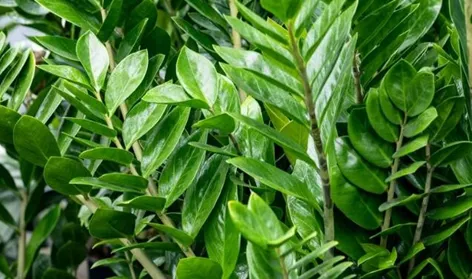
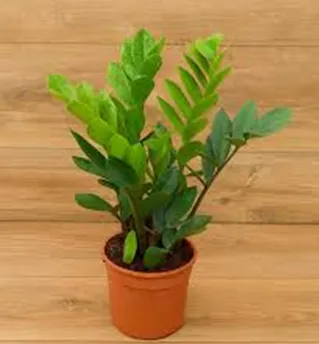
Fig1: Zamioculcas zamiifolia
Botanically, Z. zamiifolia is a succulent geophyte characterized by thick underground rhizomes, fleshy roots, and pinnately compound leaves with numerous glossy, dark green leaflets. These structural features are important adaptive mechanisms that enable efficient water and nutrient storage, allowing the plant to survive under drought and low-humidity conditions. The plant
typically exhibits slow growth, but under favorable environmental conditions it can develop into a robust clump-forming perennial with high decorative value. The leaves are erect, fleshy, and waxy in texture, which not only enhance ornamental appeal but also reduce transpiration and water loss. The underground part is made up of a bulbous, thick, meaty rhizome that holds nutrients and water. The plant is greatly resistant to drought and can withstand dry circumstances because to this rhizome. The visible aerial portions that resemble stems are actually rachises and thick, succulent petioles that emerge from the rhizome. They are smooth, meaty, green, and gradually taper upward. The stem is actually very short and mostly underground, associated with the rhizome. The visible upright green structures that many people think are stems are actually fleshy petioles/rachises of compound leaves, not true aerial stems8
Cultivation
Zamioculcas zamiifolia is a ornamental plant that is widely cultivated for its glossy foliage, drought tolerance, and low maintenance requirements. In order to avoid waterlogging and rhizome rot, the plant prefers well-drained, loose, porous soil, such as a potting mixture made of garden soil, sand, cocopeat, and compost. The plant needs moderate to low watering because it has subterranean rhizomes that store water. In between waterings, the soil should be allowed to partially dry. The most frequent reason for cultivation failure is overwatering. Although it can adapt well to indoor circumstances, it prefers moderate humidity and grows best at temperatures between 18 and 30°C. Rhizome division is the quickest and most dependable technique of propagation; stem division and leaf cuttings are also frequently used. Applying a balanced liquid fertilizer on occasion during active growth might encourage the formation of healthy leaves. The Zamioculcas zamiifolia plant can be planted outdoors in shaded spots in frost-free locations, but it is typically grown in pots, containers, and indoor decorative settings. The essential elements for this plant's successful growing are adequate drainage, little watering, and protection from intense sunlight9.
Propagation
The most frequent vegetative techniques for propagating Zamioculcas zamiifolia are rhizome division, leaf cuttings, and stem or petiole cuttings. The most popular and successful of these techniques is rhizome division, which involves carefully removing adult plants from the container and dividing the subterranean rhizomes into pieces that contain roots and shoots before replanting in potting media that drains well. Use leaf cuttings is to put individual healthy leaflets or petiole segments into a moist, porous media. This approach is slower and may take several months, but it gradually forms little rhizomes and roots before producing new shoots. Warm temperatures, indirect light, and moderate moisture are typically used for propagation because too much watering might lead to rotting. The Zamioculcas zamiifolia plant's slow growth pattern makes it difficult to produce new plants, but vegetative propagation is still the best way to preserve uniformity and the plant's attractive ornamental qualities10,11.
Pharmacological activities of ZZ Plant12,13,14,15
The plant contains various secondary metabolites such as flavonoids, phenolic compounds, alkaloids, tannins, and terpenoids, which are known to contribute to biological activities including Antibacterial Activity, Antioxidant Properties, Antifungal and Antiviral Potential activity
• Antioxidant activity
An antioxidant is a chemical that helps shield cells from the harm that free radicals unstable molecules created during regular metabolism, pollution, stress, radiation, etc. cause. In addition to contributing to aging, inflammation, cancer, diabetes, and heart disease, free radicals can induce oxidative stress, which can harm lipids, proteins, and DNA. By giving free radicals electrons, antioxidants neutralize them and stop cell damage. They are frequently present in plants, fruits, vegetables, vitamins (such C and E), flavonoids, and phenolic compounds. They can be manufactured or natural. Zamioculcas zamiifolia antioxidant activity has mostly identified from the plant. Plant shown the capacity to scavenge free radicals and lessen oxidative stress in in vitro tests. The presence of flavonoids, polyphenols, triterpenoids, and steroidal chemicals found during phytochemical screening is thought to be the cause of this activity.
• Antibacterial Activity
Antibacterial activity is the ability of a substance to inhibit the growth of bacteria or kill bacteria. Plant extracts, drugs, or chemical compounds showing antibacterial activity can act against harmful bacterial microorganisms by interfering with their cell wall synthesis, protein synthesis, DNA replication, or metabolic processes. The antibacterial activity of medicinal plants is typically assessed by testing the plant extract against various bacterial strains using techniques including the minimum inhibitory concentration (MIC), minimum bactericidal concentration (MBC), disc diffusion method, and agar well diffusion method.
• Antifungal Activity
Antifungal activity is the capacity of a substance to inhibit the growth of fungi or eliminate fungal organisms, including molds and yeasts. Zamioculcas zamiifolia exhibits promising antifungal properties because it contains bioactive constituents such as flavonoids, alkaloids, and phenolic compounds in its leaves and rhizomes. Plant extracts can suppress the growth of various fungal species by interfering with cellular activities and limiting spore formation. Owing to these characteristics, the plant is being investigated for potential applications in natural antifungal products and therapeutic uses.
• Anti-inflammatory activity
Zamioculcas zamiifolia leaves are considered to have potential anti-inflammatory properties because they contain phytochemicals like flavonoids, phenolics, and alkaloids. These active compounds may aid in lowering inflammation by suppressing inflammatory mediators and shielding cells from oxidative damage. Due to these beneficial effects, the leaf extracts are being explored for their possible applications in herbal treatments and pharmaceutical products used to treat inflammatory disorders.
REFERENCES

G. N Pramodini, Akshaya Rajan. P, E. Aswathi, Phytobotanical And Pharmacological Profile Of Zamioculcas Zamiifolia, Int. J. of Pharm. Sci., 2026, Vol 4, Issue 6, 2668-2673, https://doi.org/10.5281/zenodo.20624191
 10.5281/zenodo.20624191