

We use cookies to ensure our website works properly and to personalise your experience. Cookies policy
1 The Mina and Everard Goodman Faculty of Life Sciences, Bar-Ilan University, Ramat Gan, Israel
2 School of Life Sciences, Bharathidasan University, Tiruchirappalli, Tamil Nadu, India
3 Department of Genetic Engineering, Faculty of Engineering & Technology, SRM Institute of Science and Technology, Kattankulathur, Chennai, Tamil Nadu, India
4 Department of Biomedical Science, Bharathidasan University, Tiruchirappalli, Tamil Nadu, India
Malaria remains a major global health challenge, with the continued adaptation of Plasmodium parasites and Anopheles mosquitoes reducing the effectiveness of existing treatment and control measures. Artemisinin partial resistance, partner-drug resistance, insecticide resistance and diagnostic escape have created additional barriers to malaria elimination. This review examines emerging strategies integrating next-generation antimalarial drugs, multistage therapeutics, radical cure, transmission-blocking approaches, vaccines, long-acting monoclonal antibodies, molecular diagnostics, genomic surveillance and precision vector control. Emphasis is placed on K13-associated artemisinin resistance, novel compounds such as Ganaplacide-lumefantrine, targeting of P. vivax hypnozoites and P. falciparum gametocytes, and the use of RTS, S/AS01, R21/Matrix-M and long-acting antibodies for malaria prevention. CRISPR-based functional genomics, targeted nanopore sequencing and AI-assisted diagnostics can improve the identification of resistance-associated variants, diagnostic-escape genotypes and changes in parasite populations. Genomic and spatial approaches can also support surveillance of insecticide resistance and the expansion of Anopheles stephensi, while computational modelling can help identify transmission and resistance hotspots. An integrated framework combining therapeutic, immunological, genomic, diagnostic and vector-control approaches may therefore support more targeted and evolution-informed malaria elimination. However, challenges including emerging drug and insecticide resistance, diagnostic limitations, variable vaccine and antibody protection, genomic diversity, accessibility, cost and translation into endemic settings remain important considerations.
Malaria remains a major global health challenge, particularly in tropical and subtropical regions, where Plasmodium parasites continue to cause substantial disease, transmission, and mortality. The burden of malaria is influenced by several interacting factors, including parasite genetics, mosquito vector competence, host immunity, environmental conditions, climate, and access to healthcare. Although major advances in malaria control have been achieved through artemisinin-based combination therapies (ACTs), insecticide-treated nets, indoor residual spraying, rapid diagnostic tests, chemoprevention, and vaccines, malaria transmission persists in many endemic regions [1,2]. The situation is further complicated by the ability of Plasmodium parasites to adapt to antimalarial drug pressure and develop resistance-associated genetic changes. Artemisinin partial resistance, mainly associated with mutations in the P. falciparum kelch13 (K13) gene, has emerged in several regions and may reduce the rate of parasite clearance following treatment [3,4]. Resistance to ACT partner drugs can further increase the risk of treatment failure and threaten the long-term effectiveness of existing antimalarial combinations [5,6].
Malaria elimination is also challenged by parasite stages that are not adequately targeted by conventional blood-stage treatments. In P. vivax infections, dormant liver-stage hypnozoites can remain in the host and reactivate later, causing recurrent infections [7]. Similarly, mature gametocytes of P. falciparum can remain in the blood and contribute to transmission from infected individuals to mosquitoes even after clinical symptoms have disappeared [8]. Asymptomatic and submicroscopic infections create another important challenge because they may remain undetected by routine microscopy and rapid diagnostic tests while continuing to contribute to community transmission. In addition, genetic changes such as pfhrp2/pfhrp3 deletions can reduce the ability of commonly used HRP2-based rapid diagnostic tests to detect P. falciparum infections [9,10]. These challenges indicate that malaria control requires strategies that address not only symptomatic blood-stage infections but also persistent liver stages, transmission stages, hidden infections, and diagnostic escape.
At the same time, the mosquito vector is undergoing its own evolutionary adaptation. Increasing insecticide resistance in Anopheles mosquitoes can reduce the effectiveness of conventional vector-control approaches, while the geographical expansion of Anopheles stephensi has raised concerns because of its ability to adapt to urban environments and artificial water-storage habitats [11]. New vector-control strategies involving insecticides with different modes of action, spatially targeted interventions, population suppression, and genetic approaches such as CRISPR-based gene drives are therefore being explored. Advances in genomics and molecular biology are also providing new ways to understand how resistance develops and spreads. Population-scale parasite sequencing, targeted nanopore sequencing, CRISPR-based functional genomics, and molecular surveillance can help identify resistance-associated mutations, track parasite lineages, detect diagnostic-escape variants, and understand changes in parasite populations [12,13]. Similarly, genomic analysis of mosquito populations can provide information about insecticide resistance, population structure, and the spread of important vector species.
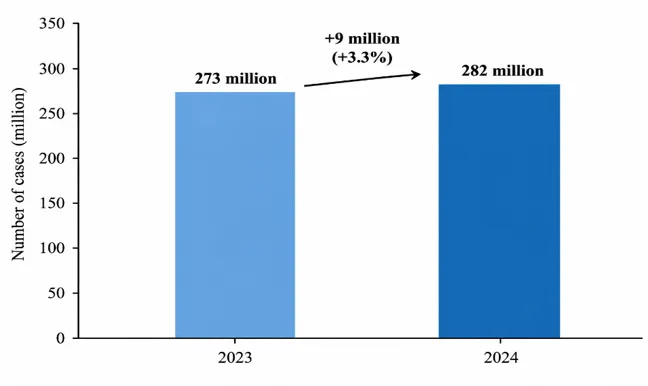
Figure 1: Estimated global malaria cases in 2023 and 2024. Global malaria cases increased from 273 million in 2023 to 282 million in 2024, representing an increase of approximately 9 million cases (3.3%). Data source: World Malaria Report 2025.
Recent developments in next-generation antimalarial drugs, multistage therapies, radical-cure strategies, transmission-blocking compounds, vaccines, long-acting monoclonal antibodies, molecular diagnostics, artificial intelligence, genomic surveillance, and precision vector control provide new opportunities for improving malaria prevention and treatment [14]. Novel compounds such as ganaplacide, cipargamin, SJ733, and M5717/cabamiquine are being investigated for their ability to target different parasite stages and overcome limitations of existing therapies. Vaccines such as RTS, S/AS01 and R21/Matrix-M, together with long-acting monoclonal antibodies, can provide additional protection against malaria infection and clinical disease [15,16]. Computational approaches can further integrate genomic, epidemiological, climatic, and spatial information to identify resistance and transmission hotspots and support better targeting of interventions [13]. Therefore, this review examines emerging therapeutic, immunological, genomic, diagnostic, and vector-control strategies for malaria, with particular emphasis on understanding parasite and mosquito evolution, improving detection of resistant and hidden infections, targeting multiple stages of the parasite life cycle, and developing integrated approaches that can support sustainable and evolution-informed malaria elimination.
ARTEMISININ RESISTANCE AND THE NEW ERA OF ANTIMALARIAL DRUG RESISTANCE
Artemisinin partial resistance has become an important challenge for the treatment of Plasmodium falciparum malaria because artemisinin-based combination therapies (ACTs) remain the main treatment option in many endemic regions. The development of resistance is mainly associated with nonsynonymous mutations in the propeller region of the P. falciparum Kelch13 (pfk13) gene, which can increase the survival of early ring-stage parasites following artemisinin exposure and result in delayed parasite clearance [3,17]. Although artemisinin resistance was first widely recognized in the Greater Mekong Subregion, resistant K13 lineages are now being identified independently in different parts of Africa. Mutations such as R561H, C469Y/F, P441L, R622I, and A675V have been reported in African parasite populations, highlighting the emergence of distinct resistance patterns rather than a single route of spread [12,18]. According to WHO reports, confirmed artemisinin partial resistance has been identified in Eritrea, Rwanda, Uganda, and Tanzania, while suspected resistance has also been reported in Ethiopia, Namibia, Sudan, and Zambia [2,19]. The problem becomes more serious when parasites develop reduced susceptibility to the partner drugs used in ACTs, as this can weaken the overall effectiveness of combination treatment and increase the possibility of treatment failure. Genetic changes involving pfcrt, pfmdr1, pfdhfr, and pfdhps are among the molecular factors associated with reduced partner-drug susceptibility, although their effects can vary between parasite populations and geographical regions UFF [14]. Recent genomic surveillance has therefore become increasingly important for understanding how resistance-associated markers are distributed and how resistant parasite populations emerge and spread (12,20). Resources such as MalariaGEN, WWARN, and the WHO Malaria Threats Map enable researchers to integrate molecular and geographical information to monitor these changes on a larger scale. A major 2026 Lancet Infectious Diseases spatiotemporal modelling study analyzed 3,806 molecular surveys containing 182,071 genotyped samples and identified distinct patterns of K13 resistance emergence across Africa [12]. These findings show that antimalarial resistance is no longer a localised problem and emphasise the need for continuous treatment-efficacy monitoring, molecular surveillance, resistance mapping, appropriate use of existing ACTs, and the development of effective non-artemisinin drug combinations [2,14]. Together, these approaches can help detect resistance earlier, guide treatment decisions, and maintain the effectiveness of antimalarial therapies as parasite populations continue to evolve.
NEXT-GENERATION ANTIMALARIAL DRUGS: FROM NOVEL TARGETS TO GANAPLACIDE–LUMEFANTRINE
The growing problem of partial resistance to artemisinin and to ACT partner drugs has created a need for new antimalarial drugs that can act in different ways, clear parasites effectively, and reduce the likelihood of resistance developing [14,21]. Researchers are therefore looking beyond older antimalarial drug classes and exploring new targets such as PfATP4, dihydroorotate dehydrogenase (DHODH), protein translation, and imidazolopiperazine-based compounds. PfATP4 inhibitors such as cipargamin (KAE609) and SJ733 affect sodium balance inside the parasite and can cause rapid parasite death, although resistance and further drug optimization remain concerns. DHODH inhibitors target the parasite’s de novo pyrimidine synthesis pathway, which is important because Plasmodium has limited ability to obtain pyrimidines through salvage pathways. Another approach is to interfere with parasite protein production. M5717/cabamiquine (DDD107498), for example, targets eukaryotic translation elongation factor 2 (eEF2) and blocks protein synthesis in the parasite. ZY-19489 (sutidiazine) is another chemically different compound being studied as part of combination treatment strategies. Overall, these developments show a shift towards antimalarial drugs that can act against different parasite stages, reduce parasite numbers quickly, and potentially have a lower risk of resistance compared with drugs that mainly target asexual blood-stage parasites [14,22].
Ganaplacide (KAF156) is one of the newer candidates that has progressed further into clinical development. It belongs to the imidazolopiperazine class and has shown activity against asexual blood-stage parasites, liver-stage parasites, and gametocytes. Studies suggest that it may affect processes such as protein trafficking, lipid metabolism, and cellular homeostasis, although its exact molecular target is still not completely understood. Resistance studies have also identified changes involving PfCARL, PfACT, and PfUGT, which highlights the importance of monitoring parasite genetics as the drug moves through development. A major step forward was the KALUMA Phase III trial, which tested ganaplacide–lumefantrine (GanLum) in 1,688 patients across 34 sites in 12 African countries. GanLum produced a 97.4% PCR-corrected cure rate, compared with 94.0% for artemether–lumefantrine, and met the study’s non-inferiority criteria. The combination also showed activity against parasites carrying resistance-associated mutations and had effects against mature gametocytes. These findings make GanLum a promising option for the next generation of malaria treatment. If successfully introduced, it could provide an alternative to artemisinin-based combinations and reduce the current dependence on a single major antimalarial drug class [14].
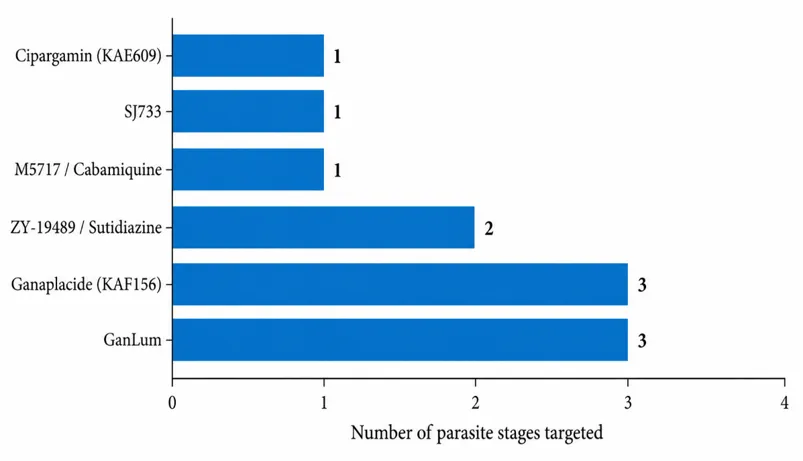
Figure 2: Number of parasite life-cycle stages targeted by selected next-generation antimalarial candidates. Cipargamin (KAE609), SJ733, and M5717/cabamiquine show activity against one parasite stage, whereas ZY-19489/sutidiazine, ganaplacide (KAF156), and ganaplacide–lumefantrine (GanLum) exhibit broader stage activity [14,22].
BEYOND PARASITE CLEARANCE: LIVER-STAGE, TRANSMISSION-BLOCKING AND SINGLE-DOSE THERAPIES
Current malaria treatment mainly focuses on clearing parasites from the blood, but this may not always be enough to achieve long-term control or prevent further transmission. Some Plasmodium parasites can remain in the liver, develop into transmission-stage gametocytes, or persist at very low levels without causing noticeable symptoms. For this reason, newer antimalarial strategies are increasingly being designed to target different stages of the parasite life cycle. Multistage drugs, radical-cure therapies, transmission-blocking compounds, long-acting drugs, and simpler single-dose regimens aim to clear parasites from the blood, eliminate persistent liver stages, reduce the formation or transmission of gametocytes, and target hidden infections [14,23]. Together, these approaches are shifting the goal of malaria treatment from simply treating clinical disease towards preventing recurrence and reducing transmission at the community level.
Blood-Stage and Multistage Antimalarial Therapies
Most currently used antimalarial drugs mainly target the asexual blood-stage parasites, which are responsible for symptoms such as fever and anaemia and can also cause severe malaria. However, clearing parasites from the blood does not necessarily mean that the infection has been eliminated. Parasites may remain in the liver or develop into gametocytes that can later infect mosquitoes. Because of this, researchers are increasingly interested in drugs that can act against more than one stage of the Plasmodium life cycle. Compounds such as ganaplacide, cipargamin, SJ733, and M5717/cabamiquine are being investigated for their different mechanisms of action and, in some cases, their activity beyond the conventional blood stage. Drugs with broader stage activity could reduce the risk of recrudescence, lower the number of parasites available for transmission, and decrease the need for repeated treatment. Therefore, newer antimalarial development is considering not only whether a compound can clear blood-stage parasites, but also which parasite stages it affects, how quickly it reduces parasite numbers, how rapidly parasites disappear from the blood, and how likely resistance is to develop [21].
P. vivax Radical Cure and Hypnozoite Elimination
Plasmodium vivax presents an additional treatment challenge because it can form dormant liver stages known as hypnozoites. These parasites may remain in the liver after the blood-stage infection has been cleared and can become active again later, leading to recurrent malaria. A radical cure therefore requires treatment of both the blood-stage parasites and the dormant hypnozoites. Primaquine and tafenoquine are currently the main drugs used for this purpose and belong to the 8-aminoquinoline class. Their use, however, requires careful consideration in people with G6PD deficiency because these drugs can cause haemolysis. Response to primaquine can also differ between individuals because genetic variation in the CYP2D6 enzyme can affect its metabolism and effectiveness [7]. Tafenoquine has an advantage in this regard because of its long half-life, which allows radical cure with a single-dose regimen in suitable patients. Improving quantitative G6PD testing, supporting treatment adherence, and considering pharmacogenomic differences will therefore be important for expanding radical-cure strategies and reducing recurrent P. vivax infections and continued transmission.
Gametocytocidal and Transmission-Blocking Therapeutics
Gametocytes are the sexual stages of Plasmodium falciparum that allow the parasite to continue its development after being taken up by a mosquito. Since these stages are responsible for transmission from infected people to mosquitoes, eliminating mature gametocytes could help reduce the infectious reservoir within a community. A 2025 study published in Nature Communications developed an integrated in vitro–in vivo approach to evaluate drug activity against mature stage V gametocytes. Several clinical candidates, including cipargamin, SJ733, MMV390048, artefenomel, and ganaplacide, showed varying levels of gametocytocidal activity RAN [8]. These findings suggest that some newer antimalarial compounds may have benefits beyond clearing the parasites responsible for clinical symptoms. Including mature-gametocyte assays, mosquito infection studies, and pharmacodynamic evaluation during drug development could help identify compounds that can both treat malaria and reduce its transmission [8]. This represents an important shift in malaria treatment, where the aim is not only to cure individual patients but also to reduce the number of infections that can be passed on within the community.
Long-Acting, Single-Dose and Combination Therapies
Long-acting and simplified antimalarial regimens are being developed to make treatment easier to complete and to provide longer protection against recurrent infection. This is particularly important in areas where healthcare facilities may be difficult to access, and patients may not be able to return for repeated doses. Tafenoquine is one example of a long-acting antimalarial, while newer compounds are being investigated for their ability to maintain effective drug concentrations for longer periods with fewer doses. Another strategy is the development of triple artemisinin-based combination therapies (TACTs), which combine an artemisinin derivative with two partner drugs that have different mechanisms of action. Using multiple drugs in this way can make it harder for resistant parasites to survive and may reduce the risk of treatment failure associated with resistance to individual partner drugs [6]. Mathematical modelling and clinical studies suggest that carefully designed combinations can slow the development of resistance and extend the useful life of antimalarial therapies. However, long-acting drugs also present a potential problem because drug concentrations may remain in the body after they have fallen below effective levels. This prolonged subtherapeutic period, or drug tail, could create conditions that favour the selection of resistant parasites. Future long-acting regimens therefore need to consider pharmacokinetics, drug–drug interactions, safety, adherence, and the potential for resistance selection [14].
Targeting Asymptomatic and Submicroscopic Infections for Malaria Elimination
Asymptomatic and submicroscopic Plasmodium infections can allow malaria transmission to continue even when reported clinical cases decline. Individuals with these infections may have few or no noticeable symptoms but can still carry parasites and gametocytes capable of infecting mosquitoes. Detecting these infections is difficult because microscopy and many routine rapid diagnostic tests may not be sensitive enough to identify very low parasite densities [24]. As a result, these infections can remain undiagnosed and act as a hidden reservoir within the community [13,25]. Malaria elimination programmes are therefore increasingly using molecular surveillance and more sensitive diagnostic methods to identify low-density infections. Depending on the transmission setting, targeted treatment, mass drug administration, and focal interventions may also help reduce these hidden reservoirs. This changes the focus of malaria control from treating only people who develop symptoms towards identifying and removing infections that continue to support transmission. Combining reservoir-targeted treatment with transmission-blocking interventions, effective vector control, and genomic surveillance could improve the identification of persistent transmission hotspots and support elimination efforts, particularly in areas where routine case-based surveillance cannot detect low-density infections [4].
NEXT-GENERATION MALARIA VACCINES AND MONOCLONAL ANTIBODY-BASED PREVENTION
Next-Generation Malaria Vaccines: From RTS, S and R21 to Multistage Vaccine Platforms
Malaria vaccine development has progressed from early experimental studies to the use of two WHO-recommended vaccines, RTS, S/AS01 and R21/Matrix-M. Both vaccines mainly target the Plasmodium falciparum circumsporozoite protein (PfCSP), which is present during the early, pre-erythrocytic stage of the parasite [2,26]. In a phase III trial involving 4,878 children, R21/Matrix-M showed 75% efficacy against the first clinical malaria episode at sites with seasonal transmission and 68% efficacy at sites with standard transmission over 12 months. Protection was also observed against repeated clinical episodes. The highest protection was seen in children aged 5–17 months, reaching 79% in seasonal-transmission areas and 75% in standard-transmission areas, while higher levels of anti-NANP antibodies were associated with better protection [15]. A 2026 systematic review of 11 randomized controlled trials involving 27,178 African children estimated pooled RTS, S efficacy at 32% against the first clinical malaria episode, while the available phase III data for R21 showed 68% efficacy. However, differences in study design, populations, and transmission settings mean that these results need to be interpreted carefully.
An important development in malaria vaccination has been the transition from clinical trials to routine vaccination programmes. The WHO-coordinated Malaria Vaccine Implementation Programme introduced RTS, S in Ghana, Kenya, and Malawi between 2019 and 2023, reaching more than 2 million children. Independent evaluations reported a 13% reduction in mortality among children eligible for vaccination, together with reductions in hospitalizations due to severe malaria. However, protection from both RTS, S and R21 decreases over time, which is why several doses are required [1,10]. WHO currently recommends a four-dose schedule beginning at around 5 months of age, with an additional dose considered in areas where malaria transmission remains high. When either vaccine is used seasonally in areas with highly seasonal malaria transmission together with seasonal malaria chemoprevention, WHO estimates that around 75% of malaria episodes could be prevented [2,19].
Although RTS, S and R21 have provided an important advance in malaria prevention, their focus on PfCSP has encouraged researchers to explore vaccines that target other stages of the parasite life cycle. These include whole-sporozoite vaccines, blood-stage vaccines, transmission-blocking vaccines, and newer mRNA- and nanoparticle-based platforms 27]. Whole-sporozoite vaccines expose the immune system to a broader range of parasite antigens and aim to generate both antibody and cellular responses during the liver stage. Blood-stage vaccines, including RH5-, AMA1-, and MSP1-based candidates, are designed to interfere with merozoite invasion and multiplication inside red blood cells. Transmission-blocking vaccines take a different approach by targeting sexual-stage proteins such as Pfs48/45, Pfs230, and Pfs25, intending to prevent parasite development inside the mosquito. The growing interest in these different approaches is reflected in the WHO clinical-development landscape, which reported 147 malaria vaccine candidates entering clinical development by December 2025. Of these, 43 were still active, including 28 candidates in phase I, 14 in phase II, and two in phase IV, covering pre-erythrocytic, blood-stage, and sexual-stage targets [26].
New vaccine technologies are also being investigated to improve antigen delivery, strengthen immune responses, and make it possible to include multiple parasite antigens in a single vaccine platform. mRNA vaccines and nanoparticle-based systems are particularly promising because they may allow more flexible antigen design and improved immune stimulation, although most of these approaches are still in preclinical or early clinical development [10]. Future malaria vaccines are therefore moving towards broader protection rather than focusing only on blocking parasite entry into liver cells. An important question is whether combining antigens from the pre-erythrocytic, blood, and sexual stages can provide complementary protection, reduce clinical disease, and decrease the number of parasites capable of continuing transmission. Such multistage vaccine strategies could eventually complement existing vaccines and other malaria-control measures
Monoclonal Antibody-Based Prevention and Transmission Interruption
Long-acting monoclonal antibodies (mAbs) are being explored as another way to prevent malaria because they can provide immediate passive protection without requiring the body to develop an immune response first. Two of the most advanced anti-sporozoite antibodies, CIS43LS and L9LS, target conserved regions of PfCSP and can act against sporozoites before they reach the liver and establish infection. A 2026 systematic review of seven clinical studies involving 776 participants found that CIS43LS and L9LS provided approximately 66–88% protection against P. falciparum infection for up to six months. CIS43LS showed 75–88% efficacy at doses of ≥10 mg/kg, while L9LS provided around 66–77% protection following subcutaneous administration. Their relatively long half-lives, approximately 56–80 days for CIS43LS and around 46 days for L9LS, make them particularly interesting for seasonal malaria prevention [16, 28].
Recent clinical findings have further increased interest in L9LS. A 2026 phase II randomized trial in western Kenya evaluated L9LS in 420 children aged 5–59 months living in an area with intense and year-round malaria transmission. Children who received two doses six months apart had a 42.7% lower risk of P. falciparum infection over 12 months, while a single dose provided approximately 46% protection over six months. Protection against clinical malaria was around 48% with both dosing schedules. No serious adverse events were considered to be related to treatment, supporting its potential safety in young children who are particularly vulnerable to malaria. However, the level of protection was lower than the 66–77% reported previously in older children from seasonal-transmission settings. This difference suggests that age, drug pharmacokinetics, transmission intensity, and the frequency of parasite exposure can all influence the effectiveness of monoclonal antibody-based prevention [29].
Other antibody candidates are being developed with different objectives. MAM01 is another antibody targeting PfCSP and has an estimated serum half-life of about 71 days and approximately 58% subcutaneous bioavailability. Pharmacokinetic studies suggest that serum concentrations above around 88 μg/mL may be associated with protection during controlled malaria challenge. TB31F has a different role because it targets the sexual-stage antigen Pfs48/45. Rather than preventing infection in humans, TB31F is designed to interfere with parasite development inside the mosquito and therefore reduce transmission. A 2026 systematic review reported more than 80% transmission-reducing activity for TB31F, with the effect potentially lasting for around 160 days.
The development of these monoclonal antibodies creates a link between vaccination, chemoprevention, and transmission control. Anti-CSP antibodies such as CIS43LS, L9LS, and MAM01 can provide temporary protection during periods of high malaria risk, while antibodies such as TB31F may help reduce the number of parasites that successfully develop inside mosquitoes. Their use could therefore be particularly useful for populations with predictable seasonal or epidemiological risk, including young children and communities living in areas with intense transmission (16,25). However, wider implementation will depend on factors such as the ease of subcutaneous administration, manufacturing costs, duration of protection, age-specific dosing, activity against different parasite populations, and overall cost-effectiveness. The recent L9LS findings from Kenya also show that protection observed in older children or in seasonal-transmission settings cannot simply be assumed to be the same in infants and young children living in areas where malaria transmission occurs throughout the year.
Overall, malaria prevention is gradually moving from a vaccine-only approach towards a combination of active and passive immunoprophylaxis. RTS, S and R21 stimulate the body's own immune response, while long-acting monoclonal antibodies can provide immediate protection without waiting for immunity to develop. Transmission-blocking antibodies add another layer by targeting the parasite stages responsible for onward transmission. Combining these approaches with seasonal chemoprevention, effective diagnosis, and mosquito-control measures could protect several points in the Plasmodium life cycle [27]. This integrated approach may be particularly valuable in high-risk populations and could help reduce both clinical malaria and the number of infections that continue to sustain transmission in endemic communities.
CRISPR, GENOMICS AND PRECISION MALARIA DIAGNOSTICS
CRISPR and genomic technologies are becoming increasingly useful for understanding how genetic changes in Plasmodium affect drug resistance, parasite development, and transmission. CRISPR/Cas9 allows researchers to directly modify or replace specific genetic variants and then observe how these changes affect the parasite. This is important because finding a mutation in resistant parasites does not necessarily prove that the mutation itself causes resistance. Gene editing can provide stronger evidence by testing the effect of the mutation experimentally. CRISPR is also being used to study parasite stages that have traditionally been difficult to investigate. A 2025 Nature Communications study developed a CRISPR-based homing system for post-fertilisation stages of Plasmodium berghei and achieved around 90% homozygous gene conversion in oocysts [30]. The study identified a chloroquine-resistance-transporter-like protein that was important for oocyst growth and sporogony, showing how gene editing can help identify possible targets for transmission-blocking strategies. CRISPR-based diagnostic systems using Cas12 and Cas13 are also being developed for nucleic-acid detection and may eventually help identify Plasmodium species and resistance-associated genetic variants during diagnosis.
Genomic surveillance is also changing the way antimalarial resistance is monitored. Instead of examining only one resistance gene at a time, researchers can now study several important genetic markers and parasite populations together [12]. Targeted nanopore sequencing can analyse P. falciparum DNA directly from dried blood spots and provide information on drug-resistance genes, diagnostic markers, vaccine targets, and genetic variation within infections. A 2024 Nature Communications study generated 3–4 kb sequencing reads covering eight or sixteen surveillance targets and detected variants involving pfcrt, pfkelch13, pfmdr1, pfdhfr, pfdhps, and pfhrp2/3 deletions. The estimated cost was around US$25 per sample, suggesting that this approach could become useful for surveillance in malaria-endemic regions. Similar genomic studies have expanded to larger populations, including an Ethiopian study involving 604 successfully sequenced isolates across six major resistance loci and a 2026 continental-scale nanopore framework for resistance surveillance across sub-Saharan Africa. An important advantage of these approaches is that they may identify emerging resistant lineages, expanding parasite clones, mixed infections, and diagnostic-escape variants before these changes become clearly visible through conventional treatment-failure monitoring [9,31].
Artificial intelligence is providing another possible tool for malaria diagnosis, particularly through automated analysis of blood-smear images. AI-assisted microscopy can use computer-vision methods such as convolutional neural networks to recognize parasite-infected red blood cells. However, the accuracy of these systems can vary depending on parasite density, blood-smear quality, imaging equipment, and differences between parasite populations. This means that AI microscopy is unlikely to replace other diagnostic and surveillance methods on its own. A more useful approach may be to combine AI-assisted diagnosis with CRISPR-based molecular tests, targeted or whole-genome sequencing, resistance-marker analysis, and epidemiological information. Such an integrated system could help identify where resistance is emerging, predict whether parasites are likely to respond to particular drugs, and distinguish recrudescence from a new infection. Longitudinal pharmacogenomic surveillance in Uganda provides an example of this approach, where sequencing of 80 parasite genes from 1,114 isolates identified changes in susceptibility to lumefantrine and dihydroartemisinin and linked them with variants in pfk13, pfmdr1, pfcrt, and pfCARL. Overall, precision malaria diagnostics is therefore moving towards combining genetic, molecular, epidemiological, and computational information to follow parasite evolution and guide malaria-control decisions according to local conditions [13].
PRECISION VECTOR CONTROL: NEW INSECTICIDES, ANOPHELES STEPHENSI AND GENE DRIVES
Malaria vector control is also changing because mosquito populations are adapting to existing control measures. Resistance to commonly used insecticides can reduce the effectiveness of conventional interventions, while the spread of invasive mosquito species such as Anopheles stephensi creates additional problems, particularly in urban areas. As a result, newer vector-control strategies are moving beyond the widespread use of conventional pyrethroids and are exploring insecticides with different modes of action, spatial control technologies, mosquito population genomics, and CRISPR-based genetic approaches. The aim is to understand the biology and genetics of local mosquito populations and use this information to select more suitable interventions rather than applying the same control strategy everywhere [11].
Insecticide Resistance and Next-Generation Vector-Control Technologies
Resistance to commonly used insecticides is becoming a major problem in Anopheles mosquitoes. Mosquitoes can develop metabolic resistance, where they break down or remove an insecticide more efficiently, or target-site resistance, where genetic changes alter the biological target of the insecticide and reduce its effectiveness. WHO surveillance has reported pyrethroid resistance in 48 countries, increasing the need for insecticides that work through different mechanisms. Chlorfenapyr is one example and acts by interfering with mitochondrial energy production through uncoupling, with benefits reported against pyrethroid-resistant Anopheles populations. Pyriproxyfen works differently by disrupting juvenile hormone signalling and affecting mosquito development and reproduction. WHO recommendations in 2025 also introduced isocycloseram as another next-generation insecticide option. Spatial emanators are being explored as a complementary approach and work by releasing volatile active compounds that can alter mosquito host-seeking behaviour or cause mosquito death. Importantly, the success of these interventions needs to be measured not only by mosquito mortality but also by their effects on mosquito survival, blood feeding, entomological inoculation rates, and ultimately malaria transmission [11,13].
Invasive Anopheles stephensi and Urban Malaria Expansion
The spread of Anopheles stephensi has become an important concern because this mosquito can survive well in urban environments and breed in artificial water containers around human settlements. This makes it different from many malaria vectors that are more strongly associated with rural environments. According to WHO, A. stephensi had been reported in nine African countries by 2025. A 2026 Science study analysed 645 whole-genome sequences from Africa, Asia, and the Middle East to investigate how the mosquito entered and spread across Africa. The genomic evidence suggested a South Asian origin, with Djibouti acting as an important bridgehead population followed by several independent routes of expansion. The study also identified copy-number variation in detoxification-related gene clusters, including Cyp6, Gste, and Coeae, which may contribute to the ability of these mosquitoes to tolerate insecticide exposure [20,22]. These findings show that controlling A. stephensi will require more than conventional mosquito-control methods. Combining population genomics with mosquito ecology, insecticide-resistance monitoring, and urban surveillance could help identify newly established populations earlier and guide control measures in areas at risk of urban malaria transmission [32,33].
CRISPR-Based Mosquito Engineering and Gene-Drive Population Suppression
CRISPR-based gene drives are being studied as a possible way to reduce malaria-vector populations by increasing the probability that an engineered genetic change is passed from one generation to the next. A 2025 Nature Communications study tested a homing gene drive targeting the female-specific exon of the doublesex (dsx) gene in Anopheles stephensi. The system used two guide RNAs together with germline Cas9 expression so that the engineered allele could be copied onto the corresponding chromosome during inheritance. The initial system produced moderate gene-drive conversion with relatively few resistance alleles, while the addition of vasa-Cas9 increased conversion to 100% in the experimental mosquito population. This suggests that CRISPR gene drives may eventually provide a way to suppress A. stephensi populations. However, laboratory success does not mean that the same system will behave similarly in natural populations. Gene-drive efficiency, formation of resistance alleles, effects on mosquito reproduction and fitness, and the behaviour of the engineered gene in different mosquito populations all need to be understood before any field application can be considered [13].
Population Replacement, Ecological Risk and Precision Elimination
Genetic vector-control approaches generally follow two main strategies: population suppression and population replacement. Population suppression aims to reduce mosquito numbers by disrupting genes that are important for reproduction or survival. Population replacement takes a different approach. Instead of removing mosquitoes, it aims to increase the proportion of mosquitoes that are unable to support Plasmodium development and therefore less able to transmit malaria. Both approaches have potential, but their movement from laboratory studies to real-world use requires careful evaluation. Resistance to gene drives, fitness costs, mosquito population structure, movement of genes between populations, and possible effects on the surrounding ecosystem all need to be considered. These issues may be particularly important for invasive A. stephensi populations because their genetic backgrounds and levels of insecticide resistance can differ between geographical regions. Future precision vector control will therefore need to bring together population genomics, spatial epidemiology, ecological modelling, and genetic engineering to determine where interventions are most likely to work and how they can be used safely. Rather than relying on a single mosquito-control method, this approach could allow vector-control strategies to be adapted to local mosquito populations and transmission conditions [10,19].
INTEGRATED AND PRECISION MALARIA ELIMINATION: DIAGNOSTICS, CHEMOPREVENTION, AI AND FUTURE STRATEGIES
Malaria elimination is becoming increasingly dependent on the use of several control strategies together rather than relying on antimalarial drugs or mosquito-control measures alone. Seasonal malaria chemoprevention can help reduce P. falciparum infections during periods of high transmission, while vaccination can provide additional protection against infection and clinical disease [2]. Combining these approaches may provide better protection than using either strategy separately. However, elimination also requires attention to asymptomatic and submicroscopic infections, which can remain undetected because parasite levels are often too low for routine diagnostic methods to identify. Although people with these infections may not develop obvious symptoms, they can still carry parasites and gametocytes and contribute to continued transmission within the community [24]. More sensitive molecular methods can help detect these low-density infections, while parasite genomic data can provide information about transmission patterns and the emergence and spread of drug resistance. When genomic information is combined with climate, geographical, and epidemiological data, it can help identify areas where malaria transmission or resistance is more likely to increase. Artificial intelligence and other computational approaches can further assist by analysing large datasets and identifying patterns that may be difficult to detect using conventional methods. Together, these approaches could help shift malaria control from broad interventions towards strategies that are better adapted to the transmission and resistance patterns of individual regions [1].
Another important challenge is diagnostic escape, which occurs when Plasmodium parasites lose genes encoding proteins detected by commonly used rapid diagnostic tests. Many P. falciparum rapid tests depend on proteins such as HRP2 and HRP3, and parasites carrying pfhrp2/pfhrp3 deletions may therefore produce false-negative results. This can allow infected individuals to remain untreated and may contribute to continued transmission. By 2024, pfhrp2/pfhrp3 deletions had been reported in 42 malaria-endemic countries, with prevalence above 15% in Brazil, Djibouti, Eritrea, Ethiopia, Nicaragua, and Peru. In response, WHO recommends considering alternative diagnostic approaches when false-negative results associated with these deletions reach 5% or more. A 2025 study in Clinical Infectious Diseases evaluated a rapid diagnostic test that detects both HRP2 and PfLDH in an Ethiopian setting where approximately 80% of P. falciparum infections carried hrp2 or hrp3 deletions. The test achieved 77.4% sensitivity and 96% specificity, compared with sensitivities of 55.9% and 56.8% for two conventional HRP2-based tests. These findings show that diagnostic escape is becoming an important form of parasite adaptation and should be considered alongside antimalarial drug resistance. Future elimination programmes will therefore need to combine non-HRP2-based diagnostics, sensitive molecular testing, genomic surveillance, AI-assisted prediction, and climate-informed transmission modelling. Such an integrated system could help detect resistance and diagnostic escape earlier and allow malaria-control measures to be directed towards areas where transmission remains active [2,10,26].
FUTURE PERSPECTIVES
The future of malaria elimination will increasingly depend on combining genomic, computational, immunological, and epidemiological approaches. Population-scale sequencing can provide information about parasite population structure, resistance-associated mutations, and the movement of resistant lineages between regions, while decentralized nanopore sequencing could make rapid molecular surveillance more practical in malaria-endemic settings. At the same time, newer antimalarial drugs, multistage therapies, vaccines, long-acting monoclonal antibodies, transmission-blocking interventions, and improved chemoprevention are expanding the options available for malaria control [4,34]. These developments will also need to be supported by improved vector-control strategies because insecticide resistance and the spread of Anopheles stephensi are changing the way malaria is transmitted in some regions. Artificial intelligence and other computational approaches may help bring these different sources of information together by analysing genomic, climatic, spatial, and epidemiological data. Such integration could allow emerging resistance or changes in transmission to be identified earlier and interventions to be adjusted before these problems become more widespread. In this way, malaria elimination could move towards a more evolution-informed framework in which control strategies are adapted to the changing biology of both parasites and mosquito vectors [15,35].
The current malaria situation also shows that sustainable elimination will require a shift from conventional disease treatment towards coordinated control of transmission at the local level. Artemisinin partial resistance and resistance to ACT partner drugs continue to threaten the durability of existing therapies, while newer combinations such as ganaplacide–lumefantrine (GanLum) may provide an important non-artemisinin treatment option. Multistage and transmission-blocking therapies could further extend treatment beyond the asexual blood stages and help reduce the parasite reservoir available for transmission. Vaccines such as RTS, S/AS01 and R21/Matrix-M, together with long-acting monoclonal antibodies such as CIS43LS and L9LS, provide additional opportunities for preventing infection, while seasonal chemoprevention can protect during periods of high transmission. At the diagnostic level, the emergence of pfhrp2/pfhrp3 deletions highlights the need for alternative and more sensitive testing methods. CRISPR-based functional genomics, targeted sequencing, genomic epidemiology, and artificial intelligence can further improve the detection and tracking of resistance and diagnostic-escape variants. Ultimately, sustainable elimination is unlikely to be achieved through a single intervention. Combining stage-specific parasite control with measures targeting human infection reservoirs, mosquito populations, and local transmission conditions will be essential for maintaining progress towards long-term malaria elimination [19,26].
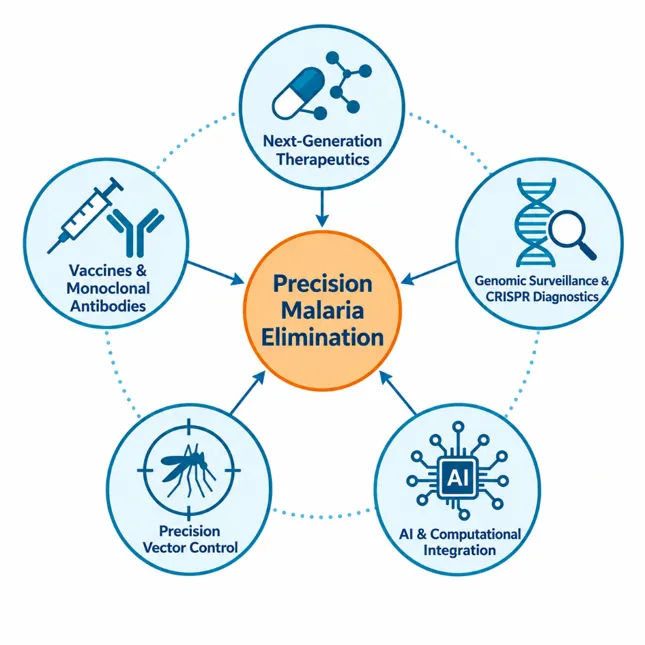
Figure 3: The framework illustrates the convergence of next-generation therapeutics, vaccines and monoclonal antibodies (mAbs), genomic monitoring and CRISPR diagnostics, precision vector control, and AI-driven computational techniques. Their interconnected functions support directed avoidance, diagnosis, treatment, monitoring, and transmission control toward viable malaria eradication.
CONCLUSION
Malaria control is becoming more challenging as Plasmodium parasites and mosquito vectors continue to adapt to existing interventions. The emergence of K13-associated artemisinin partial resistance, together with resistance to ACT partner drugs, threatens the effectiveness of conventional malaria treatment and highlights the need for combinations with different mechanisms of action [34,36]. Newer treatments such as Ganaplacide-lumefantrine, along with multistage and transmission-blocking therapies, may provide additional options for treating parasites at different stages of their life cycle and reducing the risk of treatment failure. Vaccines such as RTS, S/AS01 and R21/Matrix-M and long-acting monoclonal antibodies also provide new opportunities for preventing infection and reducing transmission. At the same time, increasing insecticide resistance and the spread of Anopheles stephensi show that mosquito-control strategies must continue to adapt alongside changes in the parasite. Genomic surveillance, CRISPR-based functional studies, and advanced sequencing can help identify resistance-associated changes and emerging threats at an earlier stage. However, malaria transmission is influenced by the parasite, mosquito, human host, environment, and local epidemiological conditions, making it unlikely that any single intervention will be sufficient for elimination. Future malaria control will therefore depend on bringing together effective therapeutics, vaccines, chemoprevention, sensitive diagnostics, genomic surveillance, and locally appropriate vector-control strategies. An integrated and evolution-informed approach could improve the ability to respond to emerging resistance, reduce ongoing transmission, and support more sustainable malaria elimination.
REFERENCES




Biswa Bhusan Sarangi, Omm Bhusan Sarangi, Mohammed Mundhir, Seyam Sundar, Plasmodium Adaptation and the Emerging Pharmacology of Precision Malaria Elimination, Int. J. of Pharm. Sci., 2026, Vol 4, Issue 9, 3661-3678. https://doi.org/10.5281/zenodo.23021797
 10.5281/zenodo.23021797