
View Article

Abstract

Medicinal plants remain an important source of therapeutic agents due to their diverse bioactive constituents and favourable safety profiles. Psidium guajava L. (guava) has attracted considerable scientific attention for its antioxidant, antimicrobial, and anti-inflammatory properties. The leaves are rich in flavonoids, phenolic acids, tannins, and triterpenoids, which contribute to multiple pharmacological effects. Inflammation and oxidative stress are closely interrelated processes involved in the progression of chronic diseases. Guava leaf extracts modulate inflammatory mediators such as cytokines, prostaglandins, and nitric oxide through inhibition of nuclear factor-kappa B (NF-?B) signaling pathways [1,5]. Additionally, their antioxidant activity plays a crucial role in minimizing oxidative damage [2,3]. This review critically summarizes the phytochemistry, mechanisms of action, pharmacological activities, and formulation approaches of Psidium guajava leaves, highlighting their potential in topical ointment development.

Keywords

Psidium guajava, guava leaves, anti-inflammatory activity, antioxidant activity, phytochemistry, flavonoids, topical formulation, herbal ointment.

Introduction

× Popup Image

Medicinal plants have long been used for disease prevention and treatment and continue to play a vital role in modern healthcare. Their therapeutic potential is attributed to bioactive compounds such as phenolics, flavonoids, and tannins, which exhibit strong antioxidant properties [1–3]. Reactive oxygen species (ROS) contribute significantly to oxidative stress, which is implicated in chronic diseases including cancer, cardiovascular disorders, and neurodegenerative conditions [3]. Natural antioxidants are considered safer alternatives to synthetic agents; however, their efficacy may vary depending on extraction methods and phytochemical composition [2].

Psidium guajava L., belonging to the Myrtaceae family, is widely recognized for its medicinal value. The leaves contain flavonoids such as quercetin and guaijaverin, along with phenolic acids and tannins, contributing to antioxidant, antimicrobial, and anti-inflammatory activities [10]. Traditionally, these leaves have been used for treating diarrhoea, wounds, infections, and inflammatory conditions [4].

2. Habitat and Distribution

Geographical Location

Psidium guajava is native to Central and South America but is now widely distributed in tropical and subtropical regions including India, Asia, and Africa [1,10].

Altitude

The plant grows from sea level up to approximately 1500–2000 m altitude, thriving best in low to moderate elevations [10].

Environmental Conditions

Guava grows well in warm climates (15–30°C), with moderate rainfall (1000–2000 mm) and well-drained soils (pH 4.5–7.5). It is drought-tolerant but sensitive to frost [10,16].

Associated Vegetation

It commonly occurs in tropical forests, agricultural lands, and roadside vegetation, often as part of mixed plant communities [1,4].

3. Traditional Uses

Guava leaves have long been used in traditional medicine systems:

  1. Gastrointestinal disorders: Treatment of diarrhoea and dysentery due to antimicrobial properties [4].
  2. Wound healing and skin infections: Applied as poultices for wounds and ulcers [4,10].
  3. Metabolic and respiratory conditions: Used for diabetes, cough, bronchitis, and oral infections [10].

4. Botanical Overview

Psidium guajava is an evergreen shrub or small tree (1–10 m height) with smooth reddish-brown bark. Leaves are opposite, elliptical, and aromatic. Flowers are white and fragrant, while fruits are berries with variable pulp color [8].
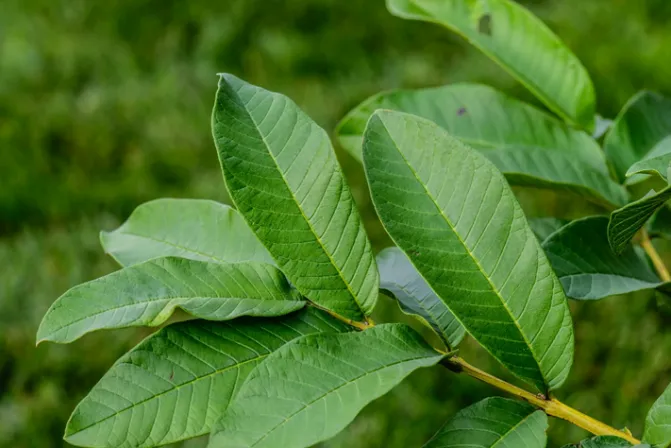
Fig. 1: Psidium guajava leaves
Source: Adapted from Kumar et al. [10]

5. Phytochemistry

Guava leaves contain diverse bioactive compounds responsible for pharmacological effects [10,25].

Table 1: Major Phytochemicals, Activities, and Mechanisms

Compound

Class

Activity

Mechanism

Quercetin

Flavonoid

Anti-inflammatory, antioxidant

NF-κB inhibition

Guaijaverin

Flavonoid

Antimicrobial

Cell membrane disruption

Gallic acid

Phenolic acid

Antioxidant

Free radical scavenging

Ursolic acid

Triterpenoid

Anti-inflammatory

COX-2 inhibition

Tannins

Polyphenols

Astringent, antimicrobial

Protein precipitation

6. Mechanism

Guava leaf extracts exert their effects through inhibition of NF-κB signaling pathways, reducing cytokine production (TNF-α, IL-1β) [5]. Additionally, suppression of COX-2 and iNOS decreases prostaglandin and nitric oxide synthesis. Phenolic compounds contribute to free radical scavenging activity [3]. However, most mechanistic studies are based on in vitro models, and their direct translation to clinical efficacy remains uncertain. Variations in extraction methods and phytochemical composition further influence biological activity.

7. Pharmacological Activities

Guava leaf extracts exhibit anti-inflammatory, antioxidant, antimicrobial, and wound healing activities. These effects have been demonstrated in both in vitro and in vivo models; however, differences in experimental conditions and extract standardization often lead to variability in results.

8. Formulation Perspective

Guava leaf extract can be incorporated into ointment bases such as petrolatum and emulsifying systems. Concentrations of 5–15% extract are commonly used. The formulation provides localized anti-inflammatory, antimicrobial, and wound healing effects with improved patient compliance [22,23].

9. Standardization and Quality Control

Standardization of herbal extracts is essential to ensure consistency, safety, and therapeutic efficacy. In the case of Psidium guajava leaf extract, standardization primarily involves the quantification of total phenolic content (TPC) and total flavonoid content (TFC), as these compounds are responsible for its antioxidant and anti-inflammatory activities. The Folin–Ciocalteu method is widely used for estimating phenolic content, while the aluminium chloride colorimetric method is employed for flavonoid determination [26,27]. Advanced analytical techniques such as High-Performance Liquid Chromatography (HPLC), Thin Layer Chromatography (TLC), and Gas Chromatography–Mass Spectrometry (GC–MS) are used for qualitative and quantitative analysis of bioactive constituents. Marker compounds such as quercetin and gallic acid are often used for standardization of guava leaf extract [28]. Quality control parameters also include evaluation of physicochemical properties such as moisture content, ash values, extractive values, and microbial contamination. These parameters ensure the purity, identity, and quality of the herbal material, making it suitable for pharmaceutical formulation [29].

10. In vitro and In vivo Studies

In vitro studies of Psidium guajava leaf extract have demonstrated significant antioxidant activity using assays such as DPPH, ABTS, and nitric oxide scavenging methods. These assays confirm the ability of guava leaf phytoconstituents to neutralize free radicals and reduce oxidative stress [30]. Anti-inflammatory activity has been evaluated in vitro by assessing inhibition of inflammatory mediators such as nitric oxide and cytokines in cultured cells. These studies suggest that guava leaf extract effectively suppresses inflammatory responses at the cellular level [31]. In vivo studies further support these findings. Animal models such as carrageenan-induced paw edema have shown significant reduction in inflammation following administration of guava leaf extract. Wound healing studies in experimental animals have demonstrated enhanced epithelialization, increased collagen deposition, and faster wound contraction when treated with guava-based formulations [32]. These findings validate the pharmacological potential of guava leaf extract and support its use in topical therapeutic applications.

11. Toxicity and Safety Evaluation

Toxicity evaluation is crucial for establishing the safety profile of herbal formulations. Acute and sub-acute toxicity studies of Psidium guajava leaf extract have shown that it is generally safe at therapeutic doses, with no significant toxic effects observed in animal models [33]. Dermal toxicity and skin irritation studies are particularly important for topical formulations such as ointments. Guava leaf extract has been reported to be non-irritant and well tolerated when applied to the skin, indicating its suitability for dermatological use [34]. Furthermore, the natural origin and low toxicity of plant-based compounds contribute to their safety advantage over synthetic drugs. However, standardization and dose optimization are essential to ensure safe and effective use.

12. Stability Studies

Stability studies are conducted to evaluate the shelf life and quality of pharmaceutical formulations under different environmental conditions. For herbal ointments containing guava leaf extract, stability is influenced by factors such as temperature, humidity, and light exposure. Accelerated stability studies are typically performed at conditions such as 40°C ± 2°C and 75% ± 5% relative humidity to predict long-term stability. Parameters such as physical appearance, pH, viscosity, spreadability, and drug content are monitored over time [35]. Guava leaf extract formulations have shown good stability when stored in suitable containers, with minimal changes in physicochemical properties. Proper formulation design and packaging play a key role in maintaining stability and ensuring product efficacy [36].

13. Research Gap

Despite extensive pharmacological investigations, several limitations persist. Most studies are restricted to in vitro and animal models, with limited clinical validation. Variability in extraction methods leads to inconsistencies in phytochemical composition and biological activity. Furthermore, standardized and optimized topical formulations ensuring reproducibility and stability are still lacking. Addressing these challenges is essential for translating experimental findings into clinical applications.

CONCLUSION

Psidium guajava leaves are a rich source of bioactive compounds with significant antioxidant, anti-inflammatory, and antimicrobial properties. Their incorporation into topical ointments represents a promising, safe, and cost-effective approach for managing wounds and inflammatory conditions. However, further clinical studies and formulation optimization are necessary to establish their therapeutic efficacy and support large-scale pharmaceutical applications.

REFERENCES

  1. Gutiérrez RMP, Mitchell S, Solis RV. Psidium guajava: A review of its traditional uses, phytochemistry and pharmacology. J Ethnopharmacol. 2008;117(1):1–27. doi:10.1016/j.jep.2008.01.025
  2. Nyirenda KK, Saka JDK, Naidoo D, Maharaj VJ, Muller CJF. Antidiabetic, antioxidant and antimicrobial activities of Fadogia ancylantha extracts from Malawi. J Ethnopharmacol. 2012;143(1):372–376. doi:10.1016/j.jep.2012.07.002
  3. Kähkönen MP, Hopia AI, Vuorela HJ, Rauha JP, Pihlaja K, Kujala TS, et al. Antioxidant activity of plant extracts containing phenolic compounds. J Agric Food Chem. 1999;47(10):3954–3962. doi:10.1021/jf990146l
  4. Biswas B, Rogers K, McLaughlin F, Daniels D, Yadav A. Antimicrobial activities of leaf extracts of guava (Psidium guajava L.) on Gram-positive and Gram-negative bacteria. Int J Microbiol. 2013;2013:746165. doi:10.1155/2013/746165
  5. Han EH, Hwang YP, Choi JH, Yang JH, Seo JK, Chung YC, et al. Psidium guajava extract inhibits TARC/CCL17 production in human keratinocytes by inducing heme oxygenase-1 and blocking NF-κB and STAT1 activation. Environ Toxicol Pharmacol. 2011;32(2):136–145. doi:10.1016/j.etap.2011.04.004
  6. Cheng FC, Shen SC, Wu JSB. Effect of guava (Psidium guajava L.) leaf extract on glucose uptake in rat hepatocytes. J Food Sci. 2009;74(5):H132–H138. doi:10.1111/j.1750-3841.2009.01149.x
  7. Jayanthi P, Lalitha P. Reducing power of solvent extracts of Eichhornia crassipes. Int J Pharm Pharm Sci. 2011;3(Suppl 3):126–128
  8. Okuda T, Yoshida T, Hatano T, Yazaki K, Ikegami Y, Shingu T. Guavins A, C and D: Complex tannins from Psidium guajava. Chem Pharm Bull (Tokyo). 1987;35(1):443–446. doi:10.1248/cpb.35.443
  9. Ravi K, Divyashree P. Psidium guajava: A review on its potential as an adjunct in treating periodontal disease. Pharmacogn Rev. 2014;8(16):96–100. doi:10.4103/0973-7847.134233
  10. Kumar M, Tomar M, Amarowicz R, Saurabh V, Nair MS, Maheshwari C, et al. Guava (Psidium guajava L.) leaves: Nutritional composition, phytochemical profile, and health-promoting bioactivities. Foods. 2021;10(4):752. doi:10.3390/foods10040752
  11. Brand-Williams W, Cuvelier ME, Berset C. Use of a free radical method to evaluate antioxidant activity. LWT Food Sci Technol. 1995;28(1):25–30. doi:10.1016/S0023-6438(95)80008-5
  12. Reddy NS, Navanesan S, Sinniah SK, Wahab NA, Sim KS. Phenolic content, antioxidant effect and cytotoxic activity of Leea indica leaves. BMC Complement Altern Med. 2012;12:128. doi:10.1186/1472-6882-12-128
  13. Stanojević L, Stanković M, Nikolić V, Topuzović M, Solujić S, Mladenović-Ranisavljević I. Antioxidant activity and total phenolic and flavonoid contents of Hieracium pilosella extracts. Sensors (Basel). 2009;9(7):5702–5714. doi:10.3390/s90705702
  14. Moreno MI, Isla MI, Sampietro AR, Vattuone MA. Comparison of free radical-scavenging activity of propolis from several regions of Argentina. J Ethnopharmacol. 2000;71(1–2):109–114. doi:10.1016/S0378-8741(99)00189-0
  15. Do QD, Angkawijaya AE, Tran-Nguyen PL, Huynh LH, Soetaredjo FE, Ismadji S, et al. Effect of extraction solvent on total phenolic content and antioxidant activity of Limnophila aromatica. J Food Drug Anal. 2014;22(3):296–302. doi:10.1016/j.jfda.2013.11.001
  16. Gutierrez Montiel D, et al. Influence of extraction method on polyphenolic profile and antioxidant activity of Psidium guajava leaves. Molecules. 2024;29(1):85. doi:10.3390/molecules29010085
  17. Ainsworth EA, Gillespie KM. Estimation of total phenolic content and other oxidation substrates in plant tissues using Folin–Ciocalteu reagent. Nat Protoc. 2007;2(4):875–877. doi:10.1038/nprot.2007.102
  18. Majhi R, Maharjan R, Shrestha M, Basnet A, Baral M, Duwal R. Effect of altitude and solvent on Psidium guajava leaf extracts: phytochemical analysis and biological activities. BMC Chem. 2023;17:48. doi:10.1186/s13065-023-00948-9
  19. Cowan MM. Plant products as antimicrobial agents. Clin Microbiol Rev. 1999;12(4):564–582. doi:10.1128/CMR.12.4.564
  20. Hackman HK, Arhin RE, Azumah BK, Boateng D. In vitro antibacterial activity of Psidium guajava leaves against resistant bacteria. J Med Plants Res. 2020;14(9):475–479
  21. Nostro A, Papalia T. Antimicrobial activity of plant extracts against skin pathogens. Int J Antimicrob Agents. 2012;30(4):291–295
  22. R SM, R SD, P SP, B MS. Formulation and evaluation of anti-inflammatory ointment. Int J Pharm Sci Res. 2024;6(3):1–9
  23. Suryawanshi SS, Patil PP, Kadam SS, Patil SV, Gaikwad RG. Formulation and evaluation of herbal ointment containing plant extract. Int J Pharm Sci Rev Res. 2021;10:75–78
  24. Suresh KP, Chandrashekara S. Sample size estimation and power analysis for clinical research studies. Indian J Anaesth. 2012;56(5):647–653. doi:10.4103/0974-1208.97779
  25. Naseer S, Hussain S, Naeem N, et al. The phytochemistry and medicinal value of Psidium guajava. Clin Phytosci. 2018;4:32. doi:10.1186/s40816-018-0093-8
  26. Singleton VL, Orthofer R, Lamuela-Raventós RM. Analysis of total phenols by Folin–Ciocalteu reagent. Methods Enzymol. 1999;299:152–178
  27. Chang CC, Yang MH, Wen HM, Chern JC. Estimation of total flavonoid content by aluminium chloride colorimetric method. J Food Drug Anal. 2002;10(3):178–182
  28. Da Silva AJR, et al. Phytochemical analysis of Psidium guajava leaves using chromatographic techniques. J Chromatogr Sci. 2016;54(1):123–130
  29. World Health Organization. Quality control methods for medicinal plant materials. Geneva: WHO; 2011
  30. Re R, Pellegrini N, Proteggente A, Pannala A, Yang M, Rice-Evans C. Antioxidant activity applying ABTS radical cation decolorization assay. Free Radic Biol Med. 1999;26(9–10):1231–1237
  31. Middleton E Jr, Kandaswami C, Theoharides TC. The effects of plant flavonoids on mammalian cells: implications for inflammation. Pharmacol Rev. 2000;52(4):673–751
  32. Nayak BS, Pereira LM. Catharanthus roseus flower extract has wound healing activity in Sprague Dawley rats. BMC Complement Altern Med. 2006;6:41
  33. OECD. Guidelines for the testing of chemicals: Acute oral toxicity. Paris: OECD; 2001
  34. Draize JH, Woodard G, Calvery HO. Methods for the study of irritation and toxicity of substances applied to the skin. J Pharmacol Exp Ther. 1944;82:377–390
  35. International Conference on Harmonisation (ICH). Stability testing of new drug substances and products Q1A(R2). Geneva: ICH; 2003
  36. Aulton ME, Taylor K. Aulton’s pharmaceutics: the design and manufacture of medicines. 5th ed. Edinburgh: Elsevier; 2018

Reference

  1. Gutiérrez RMP, Mitchell S, Solis RV. Psidium guajava: A review of its traditional uses, phytochemistry and pharmacology. J Ethnopharmacol. 2008;117(1):1–27. doi:10.1016/j.jep.2008.01.025
  2. Nyirenda KK, Saka JDK, Naidoo D, Maharaj VJ, Muller CJF. Antidiabetic, antioxidant and antimicrobial activities of Fadogia ancylantha extracts from Malawi. J Ethnopharmacol. 2012;143(1):372–376. doi:10.1016/j.jep.2012.07.002
  3. Kähkönen MP, Hopia AI, Vuorela HJ, Rauha JP, Pihlaja K, Kujala TS, et al. Antioxidant activity of plant extracts containing phenolic compounds. J Agric Food Chem. 1999;47(10):3954–3962. doi:10.1021/jf990146l
  4. Biswas B, Rogers K, McLaughlin F, Daniels D, Yadav A. Antimicrobial activities of leaf extracts of guava (Psidium guajava L.) on Gram-positive and Gram-negative bacteria. Int J Microbiol. 2013;2013:746165. doi:10.1155/2013/746165
  5. Han EH, Hwang YP, Choi JH, Yang JH, Seo JK, Chung YC, et al. Psidium guajava extract inhibits TARC/CCL17 production in human keratinocytes by inducing heme oxygenase-1 and blocking NF-κB and STAT1 activation. Environ Toxicol Pharmacol. 2011;32(2):136–145. doi:10.1016/j.etap.2011.04.004
  6. Cheng FC, Shen SC, Wu JSB. Effect of guava (Psidium guajava L.) leaf extract on glucose uptake in rat hepatocytes. J Food Sci. 2009;74(5):H132–H138. doi:10.1111/j.1750-3841.2009.01149.x
  7. Jayanthi P, Lalitha P. Reducing power of solvent extracts of Eichhornia crassipes. Int J Pharm Pharm Sci. 2011;3(Suppl 3):126–128
  8. Okuda T, Yoshida T, Hatano T, Yazaki K, Ikegami Y, Shingu T. Guavins A, C and D: Complex tannins from Psidium guajava. Chem Pharm Bull (Tokyo). 1987;35(1):443–446. doi:10.1248/cpb.35.443
  9. Ravi K, Divyashree P. Psidium guajava: A review on its potential as an adjunct in treating periodontal disease. Pharmacogn Rev. 2014;8(16):96–100. doi:10.4103/0973-7847.134233
  10. Kumar M, Tomar M, Amarowicz R, Saurabh V, Nair MS, Maheshwari C, et al. Guava (Psidium guajava L.) leaves: Nutritional composition, phytochemical profile, and health-promoting bioactivities. Foods. 2021;10(4):752. doi:10.3390/foods10040752
  11. Brand-Williams W, Cuvelier ME, Berset C. Use of a free radical method to evaluate antioxidant activity. LWT Food Sci Technol. 1995;28(1):25–30. doi:10.1016/S0023-6438(95)80008-5
  12. Reddy NS, Navanesan S, Sinniah SK, Wahab NA, Sim KS. Phenolic content, antioxidant effect and cytotoxic activity of Leea indica leaves. BMC Complement Altern Med. 2012;12:128. doi:10.1186/1472-6882-12-128
  13. Stanojevi? L, Stankovi? M, Nikoli? V, Topuzovi? M, Soluji? S, Mladenovi?-Ranisavljevi? I. Antioxidant activity and total phenolic and flavonoid contents of Hieracium pilosella extracts. Sensors (Basel). 2009;9(7):5702–5714. doi:10.3390/s90705702
  14. Moreno MI, Isla MI, Sampietro AR, Vattuone MA. Comparison of free radical-scavenging activity of propolis from several regions of Argentina. J Ethnopharmacol. 2000;71(1–2):109–114. doi:10.1016/S0378-8741(99)00189-0
  15. Do QD, Angkawijaya AE, Tran-Nguyen PL, Huynh LH, Soetaredjo FE, Ismadji S, et al. Effect of extraction solvent on total phenolic content and antioxidant activity of Limnophila aromatica. J Food Drug Anal. 2014;22(3):296–302. doi:10.1016/j.jfda.2013.11.001
  16. Gutierrez Montiel D, et al. Influence of extraction method on polyphenolic profile and antioxidant activity of Psidium guajava leaves. Molecules. 2024;29(1):85. doi:10.3390/molecules29010085
  17. Ainsworth EA, Gillespie KM. Estimation of total phenolic content and other oxidation substrates in plant tissues using Folin–Ciocalteu reagent. Nat Protoc. 2007;2(4):875–877. doi:10.1038/nprot.2007.102
  18. Majhi R, Maharjan R, Shrestha M, Basnet A, Baral M, Duwal R. Effect of altitude and solvent on Psidium guajava leaf extracts: phytochemical analysis and biological activities. BMC Chem. 2023;17:48. doi:10.1186/s13065-023-00948-9
  19. Cowan MM. Plant products as antimicrobial agents. Clin Microbiol Rev. 1999;12(4):564–582. doi:10.1128/CMR.12.4.564
  20. Hackman HK, Arhin RE, Azumah BK, Boateng D. In vitro antibacterial activity of Psidium guajava leaves against resistant bacteria. J Med Plants Res. 2020;14(9):475–479
  21. Nostro A, Papalia T. Antimicrobial activity of plant extracts against skin pathogens. Int J Antimicrob Agents. 2012;30(4):291–295
  22. R SM, R SD, P SP, B MS. Formulation and evaluation of anti-inflammatory ointment. Int J Pharm Sci Res. 2024;6(3):1–9
  23. Suryawanshi SS, Patil PP, Kadam SS, Patil SV, Gaikwad RG. Formulation and evaluation of herbal ointment containing plant extract. Int J Pharm Sci Rev Res. 2021;10:75–78
  24. Suresh KP, Chandrashekara S. Sample size estimation and power analysis for clinical research studies. Indian J Anaesth. 2012;56(5):647–653. doi:10.4103/0974-1208.97779
  25. Naseer S, Hussain S, Naeem N, et al. The phytochemistry and medicinal value of Psidium guajava. Clin Phytosci. 2018;4:32. doi:10.1186/s40816-018-0093-8
  26. Singleton VL, Orthofer R, Lamuela-Raventós RM. Analysis of total phenols by Folin–Ciocalteu reagent. Methods Enzymol. 1999;299:152–178
  27. Chang CC, Yang MH, Wen HM, Chern JC. Estimation of total flavonoid content by aluminium chloride colorimetric method. J Food Drug Anal. 2002;10(3):178–182
  28. Da Silva AJR, et al. Phytochemical analysis of Psidium guajava leaves using chromatographic techniques. J Chromatogr Sci. 2016;54(1):123–130
  29. World Health Organization. Quality control methods for medicinal plant materials. Geneva: WHO; 2011
  30. Re R, Pellegrini N, Proteggente A, Pannala A, Yang M, Rice-Evans C. Antioxidant activity applying ABTS radical cation decolorization assay. Free Radic Biol Med. 1999;26(9–10):1231–1237
  31. Middleton E Jr, Kandaswami C, Theoharides TC. The effects of plant flavonoids on mammalian cells: implications for inflammation. Pharmacol Rev. 2000;52(4):673–751
  32. Nayak BS, Pereira LM. Catharanthus roseus flower extract has wound healing activity in Sprague Dawley rats. BMC Complement Altern Med. 2006;6:41
  33. OECD. Guidelines for the testing of chemicals: Acute oral toxicity. Paris: OECD; 2001
  34. Draize JH, Woodard G, Calvery HO. Methods for the study of irritation and toxicity of substances applied to the skin. J Pharmacol Exp Ther. 1944;82:377–390
  35. International Conference on Harmonisation (ICH). Stability testing of new drug substances and products Q1A(R2). Geneva: ICH; 2003
  36. Aulton ME, Taylor K. Aulton’s pharmaceutics: the design and manufacture of medicines. 5th ed. Edinburgh: Elsevier; 2018

Photo
Yograj
Corresponding author

School of Pharmacy, Department of Pharmaceutics, Abhilashi University, Chail Chowk, Distt. Mandi, H.P, India

Photo
Abhishek Soni
Co-author

School of Pharmacy, Department of Pharmaceutics, Abhilashi University, Chail Chowk, Distt. Mandi, H.P, India

Photo
Chinu Kumari
Co-author

School of Pharmacy, Department of Pharmaceutics, Abhilashi University, Chail Chowk, Distt. Mandi, H.P, India

Photo
Nishant Sharma
Co-author

School of Pharmacy, Department of Pharmaceutics, Abhilashi University, Chail Chowk, Distt. Mandi, H.P, India

Photo
Vineet Kapoor
Co-author

School of Pharmacy, Department of Pharmaceutics, Abhilashi University, Chail Chowk, Distt. Mandi, H.P, India

Photo
Shivansh
Co-author

School of Pharmacy, Department of Pharmaceutics, Abhilashi University, Chail Chowk, Distt. Mandi, H.P, India

Yograj*, Abhishek Soni, Chinu Kumari, Nishant Sharma, Vineet Kapoor, Shivansh, Psidium guajava Leaves: Phytochemistry, Pharmacological Activities, and Potential in Topical Anti-inflammatory Formulations, Int. J. of Pharm. Sci., 2026, Vol 4, Issue 5, 7494-7500. https://doi.org/10.5281/zenodo.20420886

More related articles
Evaluation of Pharmacological Effects of Bauhinia ...
Muskan Jain, Rajesh Asija, Richa Agarwal...
Formulation and Evaluation of Multipurpose Herbal Liquid Shampoo...
Aarti Lahamage, Dhananjay Deshmukh, Dipak Ahire, Dipti Naikwadi, Jayraj Khedkar...
Herbal Based Microneedle Patches for Diabetes Management: A Novel Approach to In...
Dhanasekar J., Snehal P., Nandhakumaran S., Lathamani L., Sudhamani T., Selvakumar M., Monika P., Ka...
Formulation And Evaluation of Wound Healing Nanoemulgel Containing Tridax Procum...
Sakshi Surwase, Pramod Ingale, Bindu Rani Ram, Samiksha Jadhav...