View Article

Abstract

Chromatography is a powerful separation technique used to isolate and analyze components within complex mixtures. The method is based on the differential distribution of analytes between a stationary phase and a mobile phase, which allows for their separation according to various properties, such as size, polarity, or charge. Different forms of chromatography, including paper chromatography, thin-layer chromatography (TLC), gas chromatography (GC), liquid chromatography (LC), high-performance liquid chromatography (HPLC), and size exclusion chromatography (SEC), cater to a wide range of applications across diverse fields, such as analytical chemistry, biochemistry, environmental science, and pharmaceuticals.Chromatographic techniques are primarily used for the purification of compounds, qualitative and quantitative analysis, and the identification of unknown substances. These methods vary in terms of mobile and stationary phase interactions, with each type offering unique advantages in resolving specific analytes. For instance, HPLC provides high resolution and sensitivity for complex biological samples, while SEC offers a gentle, size-based separation ideal for macromolecules like proteins and polymers.The analytical goal of chromatography is to determine the qualitative and quantitative chemical makeup of a sample, and its primary purpose is to purify and extract one or more components of a sample. This paper will discuss the and basics of what chromatography is meant and the main principles of how we can run it. besides, we will mention and focus on an application for each chromatographic type such as HPLC, TLC, gas, liquid, affinity, column, SEC separation techniques.

Keywords

Paper chromatography,Thin layer chromatography (TLC),Column chromatography,Liquid chromatography, Gas chromatography, Affinity chromatography, Ion chromatography, High performance liquid chromatography (HPLC), Size exclusion chromatography, Adsorption chromatography

Introduction

× Popup Image

Chromatography means colour-writing and the more specific definition is, it is a physical  process of separation at which a mixture of compounds can be separated and isolated, purified

into different molecules that depend on different distribution rates depending on

1. Solubility

2. Affinity (if polar or non-polar molecules)

3. Interaction with fixed material (the stationary phase, which we will define later),

the components in the mixture are dispersed between two phases, the stationary phase, and the

mobile phase, that moves at various speeds in a specified direction. [8]

It is known that Michael tswett, the Russian botanist in 1901 observe that chlorophyll pigments

are separated into different coloured components when he uses a column containing CaCO3

and moves its mixture on it .so, he is named the founder and father of chromatography, Archer

John Porter Martin and Richard Laurence Millington in 1952 won Nobel Prize in Chemistry

for their work and efforts in developed many- based separation techniques like partition (liquidliquid chromatography).

PRINCIPLE :-

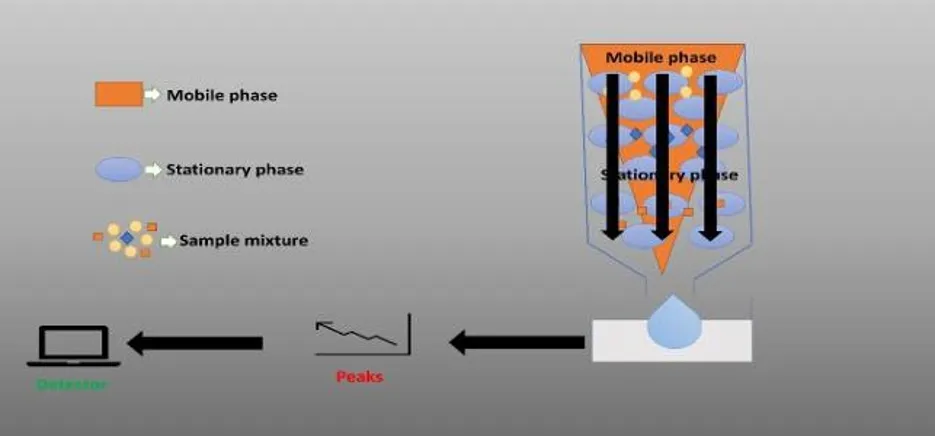
Chromatography is based on the principle where molecules in mixture applied onto the surface or into the solid, and fluid stationary phase (stable phase) is separating from each other while moving with the aid of a mobile phase. The factors effective on this separation process include molecular characteristics related to adsorption (liquid-solid), partition (liquid-solid), and affinity or differences among their molecular weights . Because of these differences, some components of the mixture stay longer in the stationary phase, and they move slowly in the chromatography system, while others pass rapidly into mobile phase, and leave the system faster [5]. Based on this approach three components form the basis of the chromatography technique.

    • Stationary phase: This phase is always composed of a “solid” phase or “a layer of a liquid adsorbed on the surface a solid support”
    • Mobile phase: This phase is always composed of “liquid” or a “gaseous component.”

Separated molecules

The main purpose of chromatography is in between primitive that depend on separate and isolate only the mixture sample rather than determine the concentration of the purified sample, and the analytical that determine the chemical composition of a sample and its conce

CLASSIFICATION:-

the chromatographic method technique into three different ways as the following:
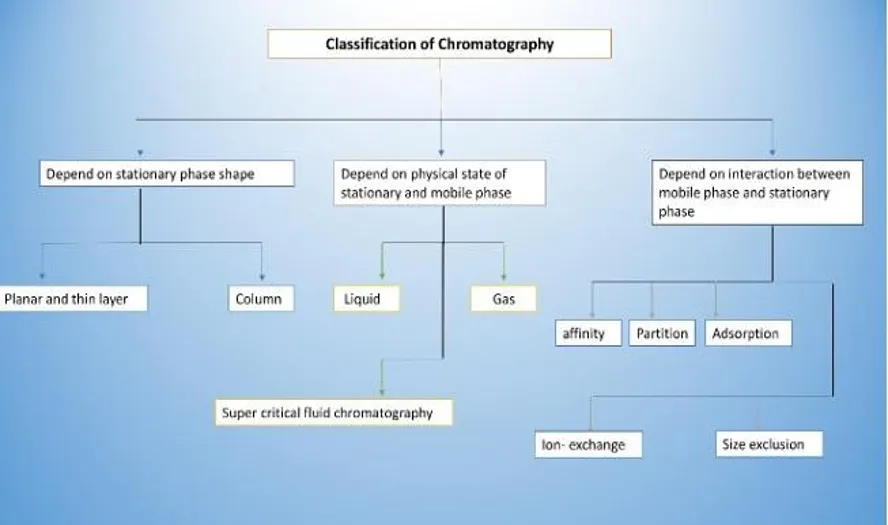
  1. Depend on the shape of the stationary phase. e.g.- planar and column chromatography.
  2. Depend on the physical state of both stationary and mobile phase. e.g.-gas and liquid chromatography.
  3. Depend on the interaction between stationary and mobile phase


Fig.1 A graphical diagram shows the classification of chromatography according to three different parameters to form many and vary techniques.


se. e.g.- affinity, ion exchange, partition, adsorption, size exclusion chromatography.


TYPES OF CHROMATOGRAPHY:-

    1. Paper chromatography
    2. Thin layer chromatography (TLC)
    3. Column chromatography
    4. Liquid chromatography
    5. Gas chromatography
    6. Affinity chromatography
    7. Ion chromatography
    8. High performance liquid chromatography (HPLC)
    9. Size exclusion chromatography
    10. Adsorption chromatography

TYPES OF METHODOLOGY

  1. PAPER CHROMATOGRAPHY:

In this method of separation the mixture of compounds by using specially designed chromatographic paper as stationary phase into individual compounds.

Intrumention:-

    • Stationary phase and papers – filter paper of different grades, paper impregnated with silica or alumina.
    • Mobile phase – mixture of solvents, pure solvents
    • Sample applicator.
    • Chromatographic chamber.

Principle:- In paper chromatography, partitioning and absorption occur both. However, the primary one is partition chromatography in which the compounds are divided in two liquid phases. The movement of mobile phase, due to the capillary action of pores in the paper, separates the mixture compounds.

Procedure:- The sample mixture is placed on the piece of chromatography paper which is later place in a container solvent. Individual components travel to a varying degree of distances based on the various in their adsorbent and solvent affinity. Polar molecules are adsorbed onto the filter paper and transported to smaller distances while non-polar molecules migrate further. The extent of movement of components is measured by calculating the “Rf value”. Rf value is defined as the distance travelled by the component from application point divided by distance travelled by solvent from application point. Rx value is the ratio of distance travelled by the sample and the distance travelled by the standard. Rx value is always closer to one. Rf value is always less than one but Rx can be greater than one. The factors affecting the Rf value are the solvent system and its composition, temperature, pH of the solution, quality of paper and adsorbents and distance through which the solvent runs. [10]

Advantages:-

Simple and easily available equipment.

    • Better efficacy of separation.
    • Closely related homologous, isomers, isotopes and very labile, reactive substances can be separated.

Disadvantages:-

      1. low Sensitivity: It can't detect compounds in low concentrations.
      2. Poor Resolution: Close compounds may overlap, making separation less clear.
      3. Qualitative Only: It’s not suitable for precise quantitative analysis.
      4. Limited to Polar Compounds: It works best for polar substances, not non-polar ones.
      5. Time-Consuming: The process can take longer compared to more advanced methods.

Applications:- Specially used for isolation of polar and non-polar compounds from mixtures. It also use for separation of amino acid, pigments, dyes and inks. To recognize organic and other biochemical compounds in urine, for hormones and medicine determination, evaluation of inorganic compounds like complexes and salts.
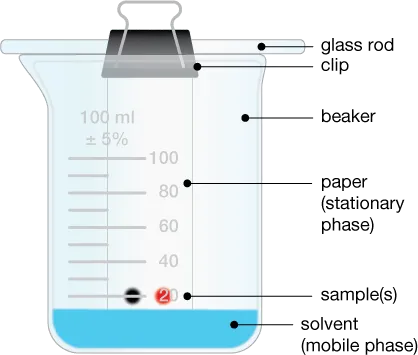


Fig.3Representation of paper chromatography.


THIN LAYER CHOMATOGRAPHY:-

TLC exists mainly as a complementary technique to other column based liquid chromatographic methods to provide additional knowledge in separations (multi modal separation techniques). TLC plays a crucial role in the early phase of drug development when there is insufficient information on impurities and degradation products in drug substance and drug product.

Principle:- TLC operates upon the absorption principle. Nonetheless there is normally adsorption and partition or a mixture of both. Elements with more affinity fly slower and vice versa.

Instrumentation :-

Procedure:-

The sample mixture spots are placed, near the bottom of the thin layer plate. Solvents are allowed to percolate up the plate by capillary action. The chamber is saturated with solvent vapor so as to prevent the solvent evaporating from the plate surface and also controlling the retention mechanism by surface deactivation. The plate is then placed in the chamber without allowing dipping of sample spot. A constituent that is strongly adsorbed will move slower. Results are represented by Rf value same as in paper chromatography.
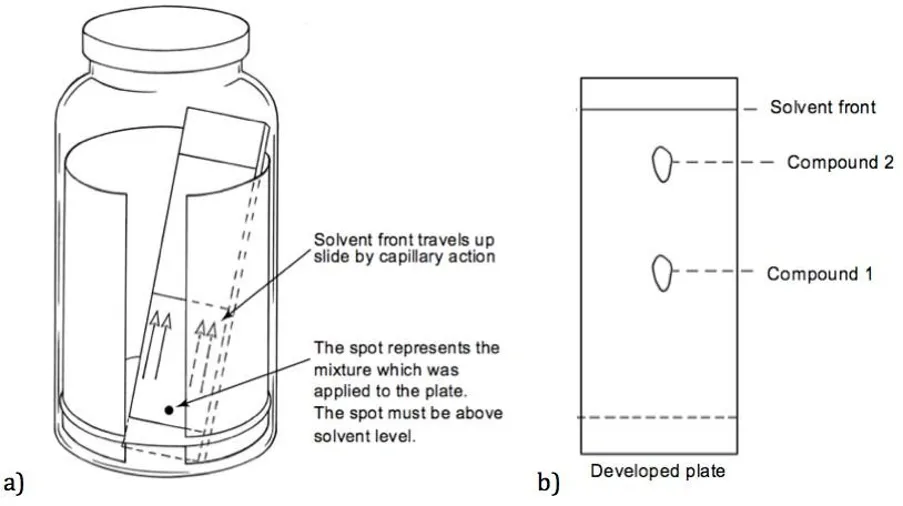


Fig. 4: Schematic representation of TLC.


Advantages :-

  1. Quick, simple, inexpensive high sample throughput technique.
  2. Wide choice of the mobile phases.
  3. Sample preparation is minimum.
  4. Several samples can be run simultaneously using mobile phase in small quantity.
  5. Used in analytical laboratories for limited resources.

Disadvantages:-

  1. Time-Consuming: It can take a long time, especially for complex mixtures.
  2. Low Efficiency: Separation may not be as efficient as other methods.
  3. Large Sample Size: Requires relatively large amounts of sample material.
  4. High Solvent Use: Consumes large volumes of solvents.

Application :-

  1. It is used for separation of all types of natural products. E.g., acids, alcohols, amines, amino acids and proteins, etc.
  2. Mostly used for identification and purification.
  3. To check the performance of other separation processes.
  4. To measure the reaction process by assessment of intermediates, reaction course, etc.
  5. For separation of Inorganic Ions – Used for separating cationic & anionic substances.
  6. Separation of vitamins – Vitamin E, Vitamin D3, vitamin A.
  7. Quantitative analysis

2.COLUM CHROMATOGRAPHY:-

Column chromatography is a technique in which the substances to be separated are introduced onto the top of a column packed with an adsorbent, passed through the column at different rates that depend on the affinity of each substance for the adsorbent and for the solvent or solvent mixture, and are usually collected in solution as they pass from the column at different times.
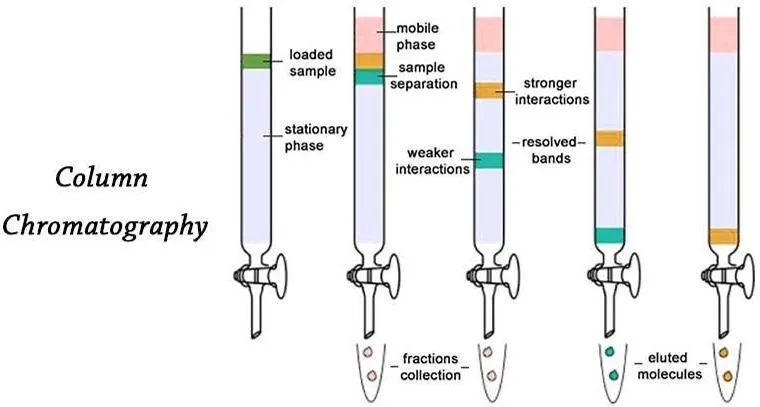
  • It is a solid–liquid technique in which the stationary phase is a solid & mobile phase is a liquid or gas.
  • It was developed by the American chemist D.T Day in 1900 while M.S. Tswett, the Polish botanist, in 1906 used adsorption columns in his investigations of plant pigments.


Fig.5 column chromatography process.


Instrumention:-

  1. A stationary phase:
    • A column: In liquid chromatography these are generally 25- 50 cm long and 4mm internal diameter and made of stainless steel whereas in gas chromatography they are 1-3m long and 2-4mm internal diameter and made of either glass or stainless steel.
    • They may be either of the conventional type filled with the stationary phase, or of the microbore type in which the stationary phase is coated directly on the inside wall of the column.
  2. A mobile phase and delivery system:
  • An injector system
  • A detector and chart recorder
  • A fraction collector

Principle:-

      • In column chromatography the stationary phase is packed into a glass or metal column.
      • The mixture of analytes is then applied and the mobile phase, commonly referred to as the eluent, is passed through the column either by use of a pumping system or applied gas pressure.
      • The stationary phase is either coated onto discrete small particles (the matrix) and packed into the column or applied as a thin film to the inside wall of the column.
  • As the eluent flows through the column the analytes separate on the basis  of their distribution coefficients and emerge individually in the eluate as it leaves the column

Application :-

Column chromatography is one of the most useful methods for the separation and purification of both solids and liquids

  • Separation of mixture of compounds.
  • Removal of impurities or purification process.
  • Isolation of active constituents.
  • Isolation of metabolites from biological fluids.
  • Estimation of drugs in formulation or crude extracts.

Advantages:-

  • Any type of mixture can be separated by column chromatography.
  • Any quantity of the mixture can also be separated.
  • Wider choice of mobile phase.
  • In preparative type, the sample can be separated and reused.
  • Automation is possible.

Disadadvantages:-

  • Time-Consuming: It can take a long time for separation.
  • Low Efficiency: It may provide less efficient separation than other methods.
  • Large Sample Size: Requires relatively large amounts of sample material.
  • High Solvent Use: Consumes a large volume of solvents.
  • Manual Operation: Often prone to human error.

High performance liquid chromatography (HPLC) is an advanced analytical technique used to separate, identify, and quantify components in a mixture. It is widely utilized in various fields, including pharmaceuticals, biochemistry, environmental science, and food industry, due to its high resolution sensitivity, and precision.

Principles

Separation is depended on the relative solubility between two liquid phases of the analyte. HPLC utilizes various types of stationary phase (typically, hydrophobic saturated carbon chains), a pump that pushes the mobile phase and analytes through the column, and a detector that provides a characteristic retention time for the analyte. The retention time of analyte varies depending on the column temperature, the ratio/composition of solvent used, and the mobile phase flow rate. For HPLC, a pump (rather than gravity) provides the higher pressure needed to propel the mobile phase through the densely packed column and analyte.
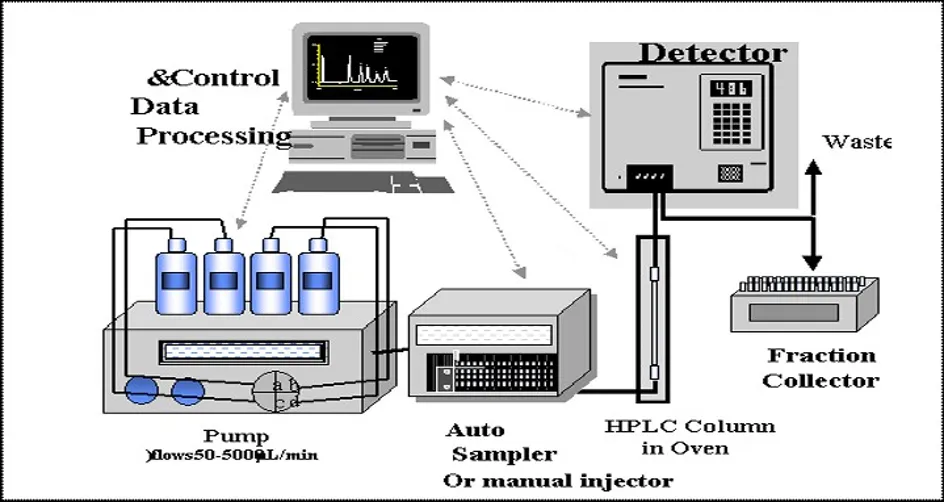


Fig. 6   schematic representation of HPLC


Instrumentation

  1. SOLVENT RESERVOIR:

Hold the mobile phase, which is the solvent or solvent mixture used to carry the sample through the column.

  1. PUMP :

Delivers the mobile phase at a constant and precise flow rate and pressure, typically ranging from 1 to 10 mL/min.

  1. INJECTOR:

Introduces the sample into the mobile phase stream.

This can be done manually or automatically using an autosampler.

  1. COLUMN:

The heart of HPLC system, packed with stationary phase material. The columns properties determine the separation process.

  1. DETECTOR:

Monitors the eluent coming out of the column and provides data on the components based on their interaction with the detector.

Common types includes UV-Vis, fluorescence, and mass spectrometry.

  1. DATA SYSTEM:

Collect and processes the data from the detector, often displaced as a

Chromatogram, which shows the separation of compounds over time.

Procedure:-

High-Performance Liquid Chromatography (HPLC) is a powerful analytical technique used to separate, identify, and quantify components in a sample. The general steps of HPLC analysis are as follows:

1.Sample preparation :-

    • Sample Selection: Choose the sample to be analyzed.
    • Sample Filtration: Filter the sample to remove particulates or solid impurities that might clog the column.
    • Dissolution: If necessary, dissolve the sample in an appropriate solvent to ensure it is in the liquid phase.
    • Concentration Adjustment: Adjust the concentration of the sample to fit the sensitivity            range of the detector.

2.System setup:-

    • Mobile Phase Preparation: Prepare the mobile phase (solvent or a mixture of solvents) according to the method specifications. This could involve using a single solvent or a gradient.
    • Column Selection: Choose the appropriate stationary phase (column) based on the sample's chemical properties.
    • System Calibration: Ensure the HPLC system is calibrated, including setting the flow rate, pressure, and temperature, based on the required method.

3.Injection of sample

    • The sample is injected into the HPLC system, usually through an autosampler or manual injection system, where it enters the column along with the mobile phase.

4.separation process (chromatographic run

    • Separation in the Column: As the sample travels through the column, the components of the sample interact differently with the stationary phase (column packing material) and mobile phase, leading to their separation.
    • Retention Time: Each component is retained by the column for different lengths of time (retention time), depending on its interaction with the stationary phase.

5.detection

    • Detection Method: As separated components elute from the column, they are detected by a detector (e.g., UV-Vis, fluorescence, or mass spectrometry).
    • Signal Generation: The detector generates a signal, typically measured as absorbance or fluorescence intensity, which is recorded as a chromatogram.

6.Data analysis

    • Chromatogram Review: The chromatogram is analyzed for peak identification and quantification.
    • Peak Identification: The retention time of each peak is compared to known standards to identify the components.
    • Quantification: The area under each peak is integrated, and the concentration of each component is calculated based on calibration curves.

7.mehod validation

    • After analysis, validate the method by ensuring reproducibility, precision, accuracy, and the correct identification and quantification of the components.

8.clening and validation

    • After the analysis is complete, clean the column and other components to maintain the system's longevity and performance.

9.application

HPLC is suitable for the separation of the non-volatile and thermally unstable chemical and biological compounds.

  • Pharmaceuticals like aspirin, ibuprofen, or acetaminophen.
  • Potassium phosphate, sodium chloride and other salts.
  • Proteins like blood protein, egg white.
  • Organic chemicals like polymers (e.g., polystyrene, polyethylene).
  • Motor oil and other hydrocarbons.
  • Many natural products such as ginseng, herbal medicines, plant extracts.
  • Thermally unstable compounds such as trinitrotoluene (TNT), enzymes.

HPLC instruments are everywhere in drug research and development, pharmaceutical manufacturing, quality assurance, diagnostics, toxicology, research and other laboratories.

Advantages

    1. High Sensitivity: Detects compounds at low concentrations.
    2. High Resolution: Provides excellent separation of similar compounds.
    3. Quantitative Analysis: Accurate for both identification and measurement.
    4. Fast: Quick analysis compared to other methods.
    5. Versatile: Can separate a wide variety of compounds.
    6. Automated: Reduces human error and increases reproducibility.
    7. Wide Detectors: Can use various detectors for enhanced sensitivity.
    8. Reproducible: Consistent and reliable results.

Disadvantages:-

    1. xpensive: The equipment and maintenance can be costly.
    2. Complex Operation: Requires skilled operators for setup and analysis.
    3. Time-Consuming: Some analyses can take longer than expected, especially for complex samples.
    4. Solvent Use: Uses large amounts of solvents, which can be costly and environmentally hazardous.
    5. Requires Regular Maintenance: The system needs frequent maintenance and calibration to ensure accuracy.
    6. Size Limitation: Not ideal for very large sample sizes or high-throughput applications.
    7. Column Fouling: Columns can get contaminated and need regular cleaning or replacement.

2. GAS CHROMATOGRAPHY:-

Gas chromatography (GC) is a powerful analytical technique used to separate and analyze compounds that can be vaporized without decomposition. It is widely used in chemistry, biochemistry, environmental science, and forensics to identify the components of a mixture and quantify their concentrations.[20]

Principle:

The principle of gas chromatography (GC) is based on the separation of components in a mixture due to differences in their interaction with a stationary phase and their rate of movement through a mobile phase.

  • Separation occurs because different compounds interact with the stationary phase to different extents, resulting in different rates of movement through the column.
  • Detection identifies the compounds based on their time of elution (retention time), and the area under each peak in the chromatogram correlates with the concentration of each compound in the sample.

Procedure

Gas chromatography involves passing a sample through a column that is coated with a stationary phase while an inert gas (usually helium or nitrogen) serves as the mobile phase. The sample is vaporized in the injection port and carried through the column by the gas. The stationary phase interacts with the components of the sample, causing them to travel at different speeds based on their physical and chemical properties. As the compounds exit the column, they are detected, usually by a detector like a flame ionization detector (FID) or mass spectrometer (MS). [10,12]
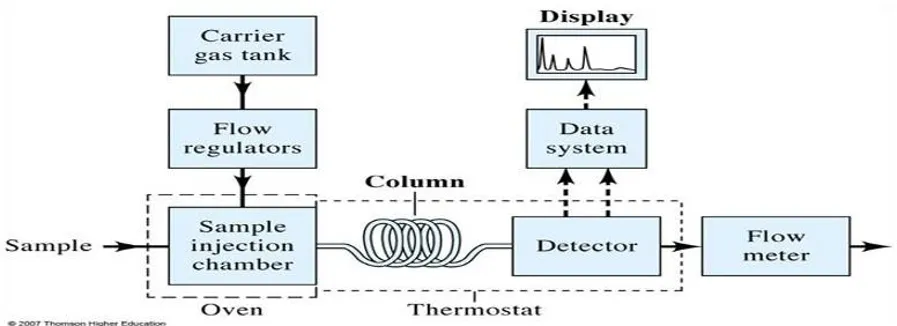


Fig.7 Schematic representation of gas chromatography.


Instrumentation:

  1. Injector: The sample is introduced into the system, typically as a liquid or solid, and vaporized in the injector before entering the column.
  2. Column: This is the heart of the GC system where separation occurs. It is typically a long, narrow tube, often made of glass or stainless steel, and is coated with a stationary phase.
  3. Mobile Phase (Carrier Gas): An inert gas like helium, hydrogen, or nitrogen that carries the vaporized sample through the column.
  4. Detector: The detector measures the presence of compounds as they exit the column. Common detectors include:
    • Flame Ionization Detector (FID): Sensitive to organic compounds and often used for general analysis.
    • Thermal Conductivity Detector (TCD): Measures changes in the thermal conductivity of the effluent gases.
    • Mass Spectrometer (MS): For more detailed structural analysis.

Applications:

  • Environmental Monitoring: Detecting pollutants in air, water, or soil.
  • Forensic Analysis: Identifying drugs or toxins in biological samples.
  • Food and Flavor Testing: Analyzing essential oils, flavors, or contaminants.
  • Pharmaceuticals: Quality control and analysis of drugs.
  • Petrochemical Industry: Identifying and quantifying components in fuels and oils. GC is valuable for its precision, sensitivity, and ability to handle complex mixtures.
  1. ION CHROMATOGRAPHY:

Ion Chromatography (IC) is a type of liquid chromatography that is used to separate ions and polar molecules based on their charge. It is particularly effective for analyzing anions (negatively charged ions) and cations (positively charged ions) in complex samples. Here’s a detailed explanation of how ion chromatography works and its steps

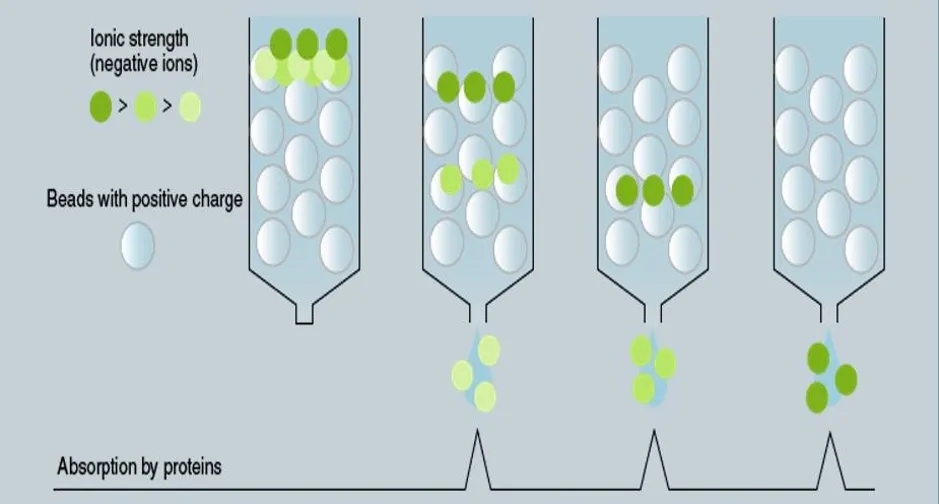
Principle : Ion chromatography separates ions in a sample based on their interaction with an ion-exchange resin packed in a column. The sample ions are retained to different extents based on their affinity for the resin, allowing for separation. The elution of these ions is typically achieved by passing a conductive mobile phase (called the eluent) through the column, which exchanges ions with the stationary phase.

Procedure:

  1. Sample Preparation
    • Filtration: The sample is usually filtered to remove any particulate matter that could clog the system or interfere with the analysis.
    • Dilution: Samples may be diluted if the ion concentration is too high for the detector's sensitivity range.
    • Pre-treatment: In some cases, samples may require specific pre-treatment (e.g., acid digestion for solid samples) to release the ions.
  2. System Setup
    • Selection of Column: Choose an ion-exchange column suited for the type of ions being analyzed (e.g., anion or cation exchange).
    • Mobile Phase (Eluent): Prepare the eluent, which is typically a solution of a weak acid, base, or salt, designed to facilitate ion exchange. The pH and concentration of the eluent will vary depending on the analysis.
    • Detector Setup: Select an appropriate detector, such as conductivity or UV detection. Ion chromatography commonly uses conductivity detection, where the changes in ion concentration cause variations in electrical conductivity.
  3. Injection of Sample
    • The sample is injected into the chromatographic system, usually via an autosampler or manual injection system. It enters the column along with the mobile phase
  4.  Separation in the Column
    • The sample is separated as it passes through the ion-exchange column. The column is packed with resin beads that have charged functional groups (e.g., sulfonic acid groups for cations or quaternary ammonium groups for anions).
    • Ion Exchange Process: When the sample is injected, ions from the sample interact with the charged sites on the resin. Ions with a stronger affinity for the resin are retained longer, while ions with a weaker affinity elute first.

Elution: The mobile phase (eluent) flows through the column, replacing the sample ions with ions from the eluent, thus allowing the separated ions to move through the column at different rates.

1.Detection

    • Conductivity Detection: Most commonly, ion chromatography uses conductivity detection. As ions elute from the column, they change the electrical conductivity of the mobile phase. The detector measures these conductivity changes, producing a chromatogram.
    • UV or Other Detection: In some cases, UV or other types of detectors may be used if the ions of interest absorb light or can be detected using other methods.
  1. Data Analysis
    • Chromatogram Interpretation: The detector output is recorded as a chromatogram. Peaks represent individual ions that have been separated.
    • Peak Identification: The retention times of the peaks are compared to known standards to identify the ions.
    • Quantification: The area under the peak is integrated, and the concentration of each ion is determined using calibration curves prepared with standards of known concentrations.

3.Method Validation

    • After the analysis, method validation is performed to ensure accuracy, precision, and reproducibility.
    • The calibration curve is also verified with standards to ensure correct quantification.

4. Cleaning and Maintenance

    • Column Cleaning: After the analysis, the ion-exchange column may need to be cleaned to prevent ion buildup and ensure continued performance. Regular maintenance of the system and cleaning of components (like the sample injector and detector) is also necessary.

5. Applications :

Ion chromatography is widely used in various fields for the analysis of:

    • Environmental Analysis: Detection of anions and cations in water, soil, and air samples (e.g., sulfate, nitrate, fluoride, and sodium).

Pharmaceuticals: Analysis of drug formulations, especially for determining the concentration of ionic impurities.
    • Food and Beverage: Detection of food additives, preservatives, and contaminants.
    • Clinical Chemistry: Measurement of ions in biological samples (e.g., sodium, potassium, chloride).


Fig. 8 Ion chromatography process.


6.AFFINITY CHROMATOGRAPHY:

Affinity chromatography is a technique used in biochemistry and molecular biology to separate and purify proteins, nucleic acids, or other biomolecules based on their specific interactions with a ligand. The process relies on the principle of molecular recognition, where a target molecule binds specifically to a ligand that is attached to a solid support (usually a column material).

Principle:

The principle of affinity chromatography is based on the specific, high-affinity interaction between a target molecule (such as a protein, nucleic acid, or other biomolecule) and a ligand that is immobilized on the stationary phase (e.g., a column matrix). This interaction is highly selective, allowing for the purification of the target molecule from a complex mixture

Procedure:

  1. Ligand Attachment: A specific ligand (which can be a small molecule, peptide, antibody, or any other molecule that has high specificity for the target) is covalently attached to a stationary phase, typically a solid matrix like agarose or sepharose.
  2. Sample Application: A mixture of molecules, which may contain the target biomolecule, is passed through the column. Only the target biomolecule will bind to the ligand on the stationary phase. Other molecules that do not have a strong affinity for the ligand will flow through.
  3. Washing: After the sample has been loaded, the column is washed with a buffer to remove any unbound or weakly bound substances.
  4. Elution: To retrieve the bound target molecule, an elution buffer is applied. The buffer might change conditions (such as pH, ionic strength, or the presence of competing molecules) to break the specific interaction between the target and the ligand, causing the target to elute (come off the column).
  5. Purification: The target molecule, now separated from other substances, is collected in the elution fractions and can be further analyzed or used for downstream applications.

Affinity chromatography is highly specific because it exploits the natural binding properties of biomolecules. It's widely used for purifying proteins (such as His-tagged proteins using nickel or cobalt resins) or antibodies and nucleic acids.

Applications:

Affinity chromatography is used for selectively purifying specific molecules based on their interaction with a ligand. Key applications include:

  1. Protein Purification: Isolating specific proteins, enzymes, or antibodies.
  2. DNA/RNA Purification: Isolating genes, gene fragments, or specific RNA molecules.
  3. Antibody Isolation: Purifying monoclonal or polyclonal antibodies.
  4. Protein-Protein Interaction Studies: Capturing protein complexes or studying enzyme-substrate interactions.
  5. Recombinant Protein Purification: Isolating tagged proteins.
  6. Small Molecule and Drug Purification: Isolating bioactive compounds.
  7. Viral Purification: Purifying virus-like particles for research or vaccine development.
  8. Chiral Separation: Separating enantiomers in pharmaceuticals.

It's essential in biotechnology, research, diagnostics, and drug development


Fig. 9   affinity chromatography


Advantages:

    • High Specificity: Selectively separates target molecules based on specific interactions.
    • High Purity: Provides highly purified products.
    • Efficient Separation: Effectively separates biomolecules with minimal contamination.
    • Versatility: Suitable for various biomolecule separations.
    • Mild Conditions: Preserves biological activity and structure.
    • High Yield: Often results in high yields of the target molecule.
    • Reusability: The column can be reused after regeneration.

Disadvantages:

    • xpensive: Affinity ligands and columns are costly.
    • Limited to Specific Interactions: Only works for molecules with known binding partners.
    • Low Capacity: Limited capacity for large-scale separations
  1. SIZE EXCLUSION CHROMATOGRAPHY:

Size exclusion chromatography (SEC), also known as gel filtration chromatography, is a technique used to separate molecules based on their size and shape. The process works by passing a mixture of molecules through a column packed with porous beads. Smaller molecules enter the pores and take longer to elute, while larger molecules bypass the pores and elute faster.

Principle:

The principle of size exclusion chromatography (SEC) is based on the separation of molecules according to their size as they pass through a column containing porous beads (stationary phase).

Working:

    • Stationary Phase: The stationary phase in SEC consists of a column packed with porous gel beads made from materials like agarose, dextran, or polystyrene. These beads have pores of a defined size that allow molecules to enter and exit depending on their size.
    • Mobile Phase: A buffer or solvent flows through the column. The sample is introduced at the top, and the mobile phase pushes the sample down the column.
    • Separation Mechanism:
    • Large molecules: Molecules that are too large to enter the pores of the stationary phase beads will travel around them and pass through the column faster.
    • Small molecules: Smaller molecules can enter the pores of the beads, which means they spend more time inside the pores and take longer to travel through the column.
    • The separation is based purely on the size of the molecules, with larger molecules eluting first (because they bypass the pores), and smaller molecules eluting later (because they spend more time in the pores).

Application:

    • Protein Purification: SEC is commonly used for the purification and analysis of proteins or other biomolecules. It helps separate proteins of different sizes after processes like cell lysis, or to remove small contaminants like salts and small molecules.
    • Example: After protein expression, SEC can help separate the protein of interest from smaller contaminants or buffer components.
    • Polymer Characterization: In polymer chemistry, SEC is used to determine the molecular weight distribution of polymers. It is particularly important for analyzing synthetic polymers and determining their uniformity and distribution of sizes (polydispersity index).
    • Nucleic Acid Analysis: SEC can be used for separating nucleic acids (like DNA and RNA) based on size, particularly when analyzing different fragments from enzymatic digestion or PCR amplification.
    • Desalting and Buffer Exchange: SEC is a gentle method to remove salts or exchange buffers without altering the sample's structure. This is often used for biological samples like proteins or nucleic acids to prepare them for further analysis.
    • Drug Delivery and Pharmaceutical Applications: SEC is used to study macromolecular drugs or formulations such as liposomes, micelles, or nanoparticles, where size consistency and stability are important for effectiveness.

RESULT & DISSCUSION

Chromatography is a widely utilized analytical technique designed for the separation, identification, and quantification of chemical components within a mixture. In this review, we discuss the significance of the experimental findings, the implications of the results, and the challenges encountered during chromatography experiments.

CONCLUSION

It can be concluded from the entire review that each type of chromatographic separation technique has its great effective, sensitive, major work application in industry and clinical and most human being fields. Chromatography techniques improve chemical and instrumentation productivity by giving more information due to increased resolution, speed, and sensitivity. The time spent refining new methods can be significantly reduced.

Chromatography techniques play a crucial role in a wide range of scientific and industrial applications, offering effective methods for separating, analyzing, and purifying complex mixtures. By exploiting the differential interactions between the mobile and stationary phases, chromatography enables the separation of components based on various properties such as size, polarity, charge, and molecular weight. Techniques like High-Performance Liquid Chromatography (HPLC), Gas Chromatography (GC), Size Exclusion Chromatography (SEC), and Thin-Layer Chromatography (TLC) have proven invaluable in analytical chemistry, biochemistry, environmental monitoring, pharmaceuticals, and biotechnology.

Despite their many advantages, challenges such as resolution limitations, sample preparation, and the need for precise calibration remain. However, continued advancements in chromatographic technology, including automated systems and novel stationary phases, have significantly enhanced the sensitivity, speed, and versatility of these methods. The ability to separate even the most complex mixtures with high precision makes chromatography an indispensable tool for researchers and professionals across various fields.

In conclusion, chromatography remains one of the most reliable and widely used techniques in modern science, offering powerful solutions for chemical, biological, and environmental analysis. As technology progresses, the applications and efficiency of chromatography are expected to continue expanding, further enhancing its role in research, quality control, and diagnostics.

REFERENCES

  1. Kondeti, R. R., Mulpuri, K. S., & Meruga, B. Advancements in column chromatography: A review. World Journal of Pharmaceutical Sciences, (2014)1375-1383.
  2. Soyseven, M., & Sezgin, B. THE EFFECT OF MOBILE PHASE pH ON CAPACITY FACTOR  AND  SELECTIVITY  IN  HIGH  PERFORMANCE  LIQUIDCHROMATOGRAPHY. Mathematics and Natural Sciences,(2021) 57.
  3. Kondeti, R. R., Mulpuri, K. S., & Meruga, B. Advancements in column chromatography: A review. World Journal of Pharmaceutical Sciences,(2014) 1375-1383.
  4. Miskaki, P., Lytras, E., Kousouris, L., & Tzoumerkas, P. Data quality in water analysis: validation of ion chromatographic method for the determination of routine ions in potable water. Desalination,(2007) 213(1-3), 182-188.
  5. Coskun, O. Separation techniques: chromatography. Northern clinics of Istanbul,(2016) 3(2), 156.
  6. Martin, M., & Guiochon, G. Effects of high pressure in liquidchromatography. Journal of Chromatography A,(2006) 1090(1-2), 16-3
  7. PETERSON, B. L., & CUMMINGS, B. S. A review of chromatographic methods for the assessment of phospholipids in biological samples. BMC. Biomedical chromatography, (2006)20(3), 227-243.
  8. Giddings, J. C. Chromatography. Prieiga per internetą: http://www. britannica. com/science/chromatography.(1997).
  9. Chittum, J. W. Chromatography: A review of principles and applications. revised (Lederer, Edgar, and Lederer, Michael).(1957).
  10. Bergh, J. J., & Breytenbach, J. C. Stability-indicating high-performance liquid chromatographic analysis of trimethoprim in pharmaceuticals. Journal of Chromatography A, (1987)387, 528-531.
  11. Sayed, M. A. A review of Chromatography: principles, Classification, Applications. Department of Chemistry, Helwan University,(2021) October, 1-17.

Reference

  1. Kondeti, R. R., Mulpuri, K. S., & Meruga, B. Advancements in column chromatography: A review. World Journal of Pharmaceutical Sciences, (2014)1375-1383.
  2. Soyseven, M., & Sezgin, B. THE EFFECT OF MOBILE PHASE pH ON CAPACITY FACTOR  AND  SELECTIVITY  IN  HIGH  PERFORMANCE  LIQUIDCHROMATOGRAPHY. Mathematics and Natural Sciences,(2021) 57.
  3. Kondeti, R. R., Mulpuri, K. S., & Meruga, B. Advancements in column chromatography: A review. World Journal of Pharmaceutical Sciences,(2014) 1375-1383.
  4. Miskaki, P., Lytras, E., Kousouris, L., & Tzoumerkas, P. Data quality in water analysis: validation of ion chromatographic method for the determination of routine ions in potable water. Desalination,(2007) 213(1-3), 182-188.
  5. Coskun, O. Separation techniques: chromatography. Northern clinics of Istanbul,(2016) 3(2), 156.
  6. Martin, M., & Guiochon, G. Effects of high pressure in liquidchromatography. Journal of Chromatography A,(2006) 1090(1-2), 16-3
  7. PETERSON, B. L., & CUMMINGS, B. S. A review of chromatographic methods for the assessment of phospholipids in biological samples. BMC. Biomedical chromatography, (2006)20(3), 227-243.
  8. Giddings, J. C. Chromatography. Prieiga per internet?: http://www. britannica. com/science/chromatography.(1997).
  9. Chittum, J. W. Chromatography: A review of principles and applications. revised (Lederer, Edgar, and Lederer, Michael).(1957).
  10. Bergh, J. J., & Breytenbach, J. C. Stability-indicating high-performance liquid chromatographic analysis of trimethoprim in pharmaceuticals. Journal of Chromatography A, (1987)387, 528-531.
  11. Sayed, M. A. A review of Chromatography: principles, Classification, Applications. Department of Chemistry, Helwan University,(2021) October, 1-17.

Photo
Lale Payal
Corresponding author

Student, Department Of Pharmacognocy, Latur Collage Of Pharmacy Hasegaon Latur ,India

Photo
Dolare Namrata
Co-author

Student, Department Of Pharmacognocy, Latur Collage Of Pharmacy Hasegaon Latur ,India

Photo
Mhetre Ankush
Co-author

Student, Department Of Pharmacognocy, Latur Collage Of Pharmacy Hasegaon Latur ,India

Photo
Karad Shrinivas
Co-author

Lecturer, Department Of Pharmacognocy, Latur Collage Of Pharmacy Hasegaon Latur ,India

Lale Payal, Dolare Namrata, Mhetre Ankush, Karad Shrinivas, Research On Chromatography, Int. J. of Pharm. Sci., 2026, Vol 4, Issue 8, 4691-4707, https://doi.org/10.5281/zenodo.22144518

More related articles
Quality By Design Based Preparation and Evaluation...
Mohammad Noufal, Dr Satheesha Babu B K ...
Assessment Of Post-Operative Medication Utilizatio...
Dr. Sarfaraz Md, Hashir Maaz, Kushal Bellary, Naisuddin Seikh, Ad...
A Green Analytical Method Development, Validation ...
Sanskruti More, Sakshi Gavali, Vrushabh Madake...
Vancomycin-Induced Hypersensitive Reaction: A Case report...
Madheshwhararaj K, Nithishya. P, Dr. Siddharthan. J...
The Hidden Variable: Gut Microbiota as a Determinant of Drug Response in Animal ...
Sumedh Moharil , Aniket Wadalkar, Bharat Joshikatariya, Dr. Sudhir Mule ...
Nanotechnology-Based Herbal Sunscreens: Current Trends, Challenges and Future Pe...
Kamaleshwari B, Rakesh S S, Sakthikaran K, Kalaimani A...
Related Articles
In-Hospital Empagliflozin Therapy for Congestion Relief and Renal Function in Pa...
E. D. Rivadeneira, A. M. Baquero, A. C. Montiel, M. L. Jaraba, J. T. Alvarez...
An Herbal Chocolate: A Nutraceutical Approach to PMS Relief...
Mukund Sharma, Dr Swati Patil, Rujuta Gandhi, Nikhil Tawarmalani, Monica Rohra, Dhiraj Rewlani ...
Design, Synthesis, And in Silico Adme Prediction of Novel Combretastatin A-4 Ana...
Anshika shukla, Meena K Yadav, Dr Ankita Srivastava, Dr Gaurav Dubey...
More related articles
Assessment Of Post-Operative Medication Utilization in Surgical Ward of a Tertia...
Dr. Sarfaraz Md, Hashir Maaz, Kushal Bellary, Naisuddin Seikh, Aditya Kalyankar...