

We use cookies to ensure our website works properly and to personalise your experience. Cookies policy
1Assistant Professor Department of Microbiology, TKCFW.
2,3II- M.Sc Microbiology Department of Microbiology, TKCFW.
The genus Artocarpus, belonging to the family Moraceae, comprises several economically, nutritionally, and medicinally important species. Among them, Artocarpus heterophyllus Lam. (Jackfruit), Artocarpus hirsutus Lam. (Wild Jack), and Artocarpus altilis (Parkinson) Fosberg (Breadfruit) are widely recognized for their edible fruits, traditional medicinal uses, and diverse pharmacological properties. A. heterophyllus is an important fruit tree producing large, nutritious fruits, while A. hirsutus is predominantly distributed in the Western Ghats and is traditionally used in various therapeutic applications. A. altilis is an important staple and multipurpose agro forestry tree, particularly in Oceania and tropical regions. Morphologically, these species show characteristic variations in their flowers, leaves, seeds, bark, and fruits, which are useful for their identification and pharmacognostic evaluation. Different parts of these three Artocarpus species have been traditionally used for the management of several ailments, including diabetes, diarrhoea, skin disorders, asthma, hypertension, wounds, inflammation, and gastrointestinal disorders. Phytochemical investigations have revealed the presence of important secondary metabolites such as flavonoids, tannins, saponins, alkaloids, phenolic compounds, terpenoids, steroids, and other bioactive constituents. A. heterophyllus exhibits antioxidant, antimicrobial, antibacterial, antidiabetic, anti-inflammatory, and anticancer activities, with its fruit, leaves, seeds, and bark contributing to its therapeutic potential. A. hirsutus has demonstrated antimicrobial, antifungal, antibacterial, antidiabetic, antioxidant, and skin-brightening activities in various experimental studies. Similarly, A. altilis has shown antioxidant, antimicrobial, antibacterial, antihypertensive, and cytotoxic properties, particularly in studies involving its leaves, fruits, roots, and bark.
Artocarpus species are known for its large edible fruit with high nutritive values. These plants are native to the tropical and subtropical regions of Southeast Asia, India, and the Pacific Islands. The genus is globally famous for producing some of the largest and most economically vital edible aggregate fruits in the world, most notably Jackfruit (Artocarpus heterophyllus) and Breadfruit (Artocarpus altilis). Fruits of specific Artocarpus species are edible such as jackfruit and breadfruit, whereas other species of this genus (notably, A. beterophyllus Lam., A. altilis (Parkinson) Fosberg, A. hirsutus Lam, A. lakoocha Roxb. and A. camansi) usually find broad application as traditional medicines for treating diseases like dia-betes, diarrhoea, dermatitis, malarial fever, asthma, tapeworm infection and anaemia (1).
The multipurpose tree also supplies medicine, construction materials, and animal feed. It grows 15–21 m tall, begins fruiting within 3–5 years, and remains productive for several decades. It is easy to propagate and adapts to various ecological conditions, making it valuable for subsistence and small-scale commercial production. It grows at an altitude ranging from sea level at an elevation of 1000 meters in places with an annual rainfall of 1500 or more (2). Wild Jackfruit, also called Wild Jack, has the latin name Artocarpus hirsutus Lam, Belonging to the Moraceae family. It is common in Western Ghats from north Karnataka to Malabar Coast and Travancore (3).
1.1. Taxonomy of Artocarpus heterophyllus:
Kingdom: Plantae (Plants)
Phylum: Tracheophyta (Vascular plants)
Class: Magnoliopsida (Dicotyledons)
Order: Rosales
Family: Moraceae (Mulberry and fig family)
Genus: Artocarpus (Breadfruit and jackfruit genus)
Species: Artocarpus heterophyllus (Jackfruit).
1.2. Taxonomy of Artocarpus hirsutus :
Kingdom: Plantae (Plants)
Clade: Tracheophytes (Vascular plants)
Clade: Rosids
Order: Rosales
Family: Moraceae (Mulberry family).
Genus: Artocarpus (Breadfruit and jackfruit genus
Species: A. hirsutus
1.3. Taxonomy of Artocarpus altilis:
Kingdom: Plantae (Plants)
Clade: Tracheophytes (Vascular plants)
Clade: Rosids
Order: Rosales
Family: Moraceae (Mulberry and fig family)
Genus: Artocarpus (Breadfruit and jackfruit genus)
Species: Artocarpus altilis.
Natural products from plants, known as secondary metabolites, are derived from primary metabolites such as carbohydrates, amino acids, chlorophyll, and lipids. Plants synthesize a wide variety of these chemical substances, which include alkaloids, steroids, flavonoids, terpenoids, glycosides, saponins, tannins, and phenolic compounds. Many secondary metabolites serve as potent antioxidant compounds. Furthermore, this richness of bioactive phytochemicals provides significant antioxidant, antitumor, antimutagenic, anticarcinogenic, and antiparasitic activities.
2. Comparative Floral Morphology of Selected Artocarpus Species:
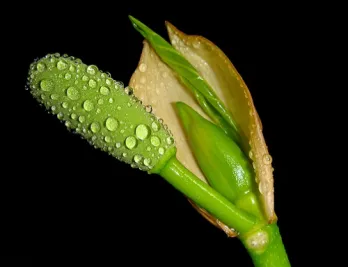
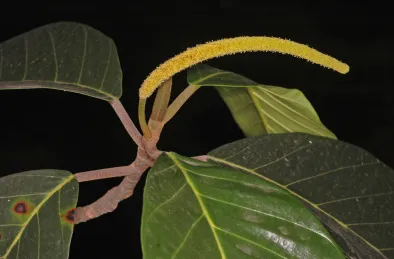
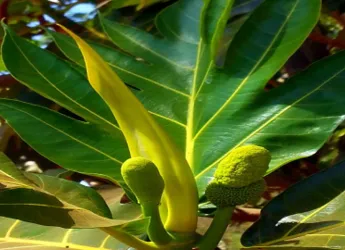
1.Artocarpus heterophyllus 2. Artocarpus hirsutus 3. Artocarpus altilis
2.1.Artocarpus heterophyllus:
This species is monoecious, with separate male and. female spikes on the same tree. Male spikes are dense, fleshy, cylindrical to club-shaped, pale green when young, and occur on younger branches above the female spikes. Female flowers are larger, rounded or elliptic, and have a hairy, tubular perianth and ovary. Pollination occurs mainly through insects and wind, with a high rate of cross-pollination. Flowering occurs from December to February (4).
2.2. Artocarpus hirsutus:
Separate male and female flowers with numerous, minute, greenish yellow flowers can be separately seen in different heads of the same plant in the leaf axils. Male heads are cylindrical, about 15 cm long and 1cm wide, pendulous with age of about 3 cm long hairy peduncles. Female heads are ovoid about 3 cm long and 1.5 cm wide. Flowering normally takes place in between December to January (5).
2.3. Artocarpus altilis:
Monoecious with male and female flowers on the same tree and the male inflorescence appearing first. Male lowers are club shaped, up to 5 cm (2 in) in diameter and 45 cm (18 in) long. Thousands of tiny flowers with two anthers are attached to a central, spongy core. Female inflorescences consist of 1500–2000 reduced flowers attached to a spongy core. The flowers fuse together and develop into the fleshy, edible portion of the fruit (5).
3. Comparative Leaf Morphology of Selected Artocarpus Species
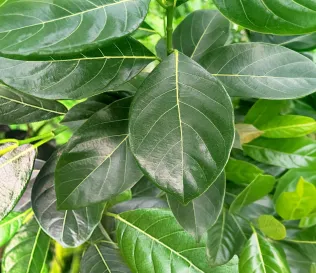
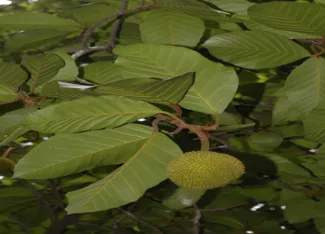
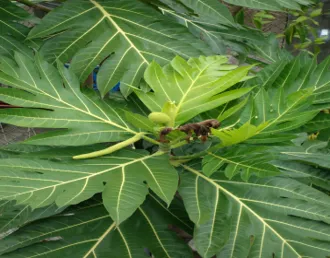
1.Artocarpus heterophyllus 2. Artocarpus hirsutus 3. Artocarpus altilis
3.1. Artocarpus heterophyllus:
The leaves are dark green, alternate, spirally arranged, simple, glossy, thick, leathery, and elliptic to oval or oblong-ovate in shape. They have smooth margins and a petiole 2.5 - 7.5 cm long. Juvenile leaves are often deeply lobed, while mature leaves are larger and rounded (6).
3.2. Artocarpus hirsutus:
Leaves are simple, alternate and spirally arranged. Petiole is stout and hairy. Lamina is ovate to broadly elliptic or obovate, coriaceous, with an entire or undulate margin. Apex is subacute to shortly acuminate and base is rounded or subacute. Young leaves are densely hairy beneath and become nearly glabrous when mature. Venation is reticulated with 10–12 pairs of ascending secondary veins (5).
3.3 Artocarpus altilis:
Leaves are alternate, broadly ovate to obovate, smooth, glossy, and dark green. They may be slightly too deeply lobed, with up to six pairs of lobes and a large tip. Veins may be green or yellow-green with white to reddish hairs. Young leaves are larger and hairier, ranging from 15–60 cm long (5).
4. Comparative Seed Morphology of Selected Artocarpus Species
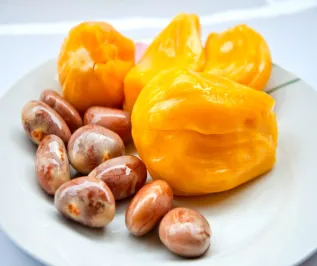
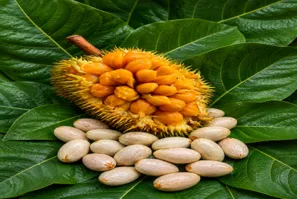
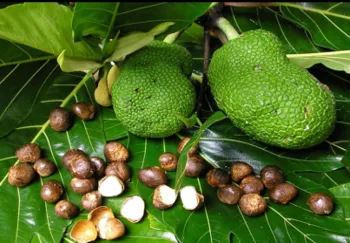
1.Artocarpus heterophyllus 2. Artocarpus hirsutus 3. Artocarpus altilis
4.1. Artocarpus heterophyllus:
Jackfruit seeds constitute about 10–15% of the fruit weight and are rich in carbohydrates, protein, starch (22%), dietary fiber (3.19%), potassium, fat, and minerals. They contain beneficial phytonutrients such as lignans, isoflavones, and saponins, which exhibit antioxidant, anticancer, antihypertensive, antiaging, and antiulcer properties. The seeds also contain the lectins jacalin and artocarpin, with jacalin being useful in evaluating the immune status of HIV-1-infected patients. Seed flour can be used as an alternative food product (7).
4.2. Artocarpus hirsutus:
The seeds of Artocarpus hirsutus are ovoid to ellipsoid, smooth, and brown to dark brown when mature. They are enclosed within the fleshy fruit and have a thin seed coat. The seeds are relatively small, with a distinct hilum and contain a well-developed embryo surrounded by starchy endosperm/cotyledonous tissue (5).
4.3. Artocarpus altilis:
Seeds are thin-walled, subglobose or obovoid, irregularly compressed, 1–2 cm (0.4 - 0.8 in) thick, and embedded in the pulp. The outer seed coat is usually shiny dark brown with a light brown inner seed coat. Seeds have little or no endosperm and no period of dormancy; they germinate im- mediately and are unable to withstand desiccation. Seeds are distributed by lying foxes, where they occur. Seeds are rarely used for propagation (5).
5. Comparative Bark Morphology of Selected Artocarpus Species
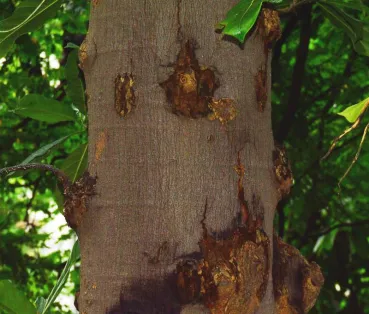
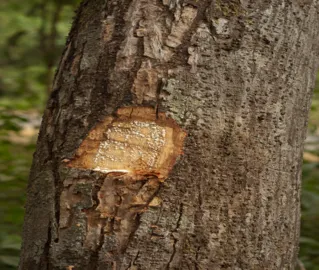
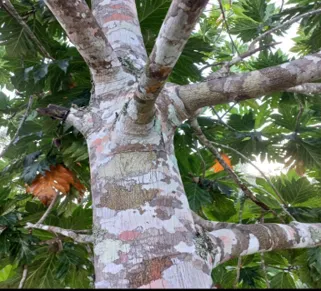
1.Artocarpus heterophyllus 2. Artocarpus hirsutus 3. Artocarpus altilis
5.1. Artocarpus heterophyllus:
Bark dark brown with orange patches, trunk with woody knobs, white milky sap drips from the wound. Leaves thick, dark green with rough texture. Evergreen trees to 25 m high, bark 10-12 mm thick, blackish-grey, mottled with green and black, exfoliating in large thick flakes, exfoliated surface orange-red; blaze pinkish-yellow; exudation milky white latex; trunk with warty tubercles; branchlets glabrous (8).
5.2. Artocarpus hirsutus:
The bark of Artocarpus hirsutus Lam. is dull grey-brown to dark brown in colour and is relatively smooth in younger trees. With maturity, the bark becomes scaly or flaky and may show thin exfoliators, leaving a reddish, fibrous surface. Lenticles are present on the bark, and the blaze is creamy, gradually becoming pinkish-yellow. When injured, the bark exudes a profuse, sticky, milky-white latex. These characters are useful for the field identification of Artocarpus hirsutus (9).
5.3. Artocarpus altilis:
The bark is smooth, light grey to grey-brown in young trees, becoming slightly rough and lenticellate with age, with a trunk diameter of 30-100 cm often with buttresses. All parts including bark exude abundant white milky latex on injury. The inner bark is fibrous, cream-yellow, about 1.5-2 cm thick, with a faint odour and astringent taste (12).
6. Comparative Fruit Morphology of Selected Artocarpus Species
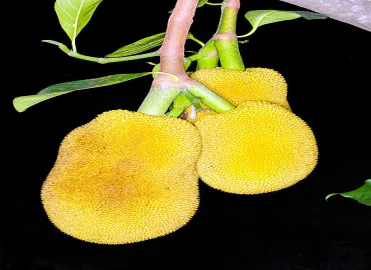
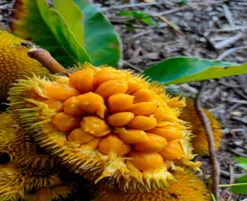
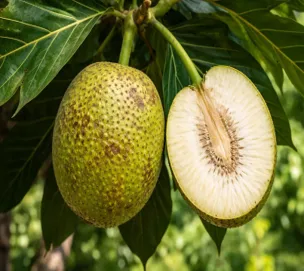
1.Artocarpus heterophyllus 2. Artocarpus hirsutus 3. Artocarpus altilis
6.1. Artocarpus heterophyllus:
Jackfruit (Artocarpus heterophyllus Lam.) produces a high yield and bears one of the largest edible fruits, weighing up to 35 kg. The large, oblong to cylindrical fruits develop mainly on short stalks arising from the trunk and inner branches, showing cauliflorous fruiting. The fruit is a multiple fruit (syncarp) with a green to yellowish-brown, rough rind and a thick, whitish to yellowish wall. Fruits are usually 30–40 cm long and 13–50 cm in diameter, with a typical weight of 4.5–30 kg. They mature within 3–6 months. The ripe fruit is sweet, aromatic and nutritious, consisting mainly of edible bulbs (carpels), seeds, rind, sheath, core and undeveloped floral parts (10).
6.2. Artocarpus hirsutus:
The fruit of Artocarpus hirsutus Lam. (Wild Jack; Family: Moraceae) is a multiple fruit (syncarp/sorosis), generally globose to ovoid or ellipsoid in shape. The surface is echinate (spiny), with closely arranged, cylindrical and pointed projections. The immature fruit is green and changes to yellow or orange when mature. The fruit is usually about 6–7.5 cm in diameter, although considerable variation occurs depending on growing conditions. The ripe fruit contains yellowish to orange, sweet and fleshy edible pulp, arranged around a central core. Numerous ovoid, white seeds are embedded within the fleshy portions of the fruit (11).
6.3.Artocarpus altilis:
The fruit is generally round, oval or cylindrical in shape. It usually weights around 1–4 kg, depending on the variety. The immature fruit is green, and its colour may change to yellowish-green as it matures.The fruit surface is covered with polygonal or hexagonal sections. Its skin is relatively thin, and the edible flesh is usually white, cream-coloured or pale yellow. The flesh has a starchy texture and is commonly consumed after cooking (12).
7. Benefits and Different Part of Artocarpus Heterophyllus:
7.1. Fruit:
The fruit is edible, roots as antidiarrheal and overcoming fever, leaves as antisyphilitic and vermifuge, ulcers and heal wounds. Anti-diabetic activity: While research exploring in detail the results suggest jackfruit's potential for managing obesity (13).
7.2. Leaf:
Extract from leaves is used to treat asthma, prevent ringworm, and regulate diabetes. Heat from leaves relieves pain and heals wounds, abscesses, and ear issues. A mature leaf infusion used to treat gallstones. Jackfruit leaf ash is used to treat ulcers (7).
Antibacterial activity was tested using the disc diffusion method. Bacterial suspensions were adjusted to 0.5 McFarland standard and spread on Mueller-Hinton agar plates. Sterile 6 mm paper discs containing the plant extract were placed on the agar. Solvent discs served as negative controls, while streptomycin (10 mg) was used as a positive control. The plates were incubated at 37°C for 24 hours, and the zone of inhibition was measured. The experiment was performed in triplicate (14).
7.3. Seed:
Aphrodisiac properties of roasted seeds. Vitamin A is abundant in the ripe jackfruit's kernels. Seed extract aids in digestion and is beneficial for diarrhea and dysentery (12). The Artocarpus heterophyllus seeds and exudate have good antioxidant and anticancer properties. The extracts showed strong phenolic content, DPPH and hydroxyl radical scavenging, and reduced activity. Compounds such as carpachromene, cudraflavone B and cycloartocarpesin showed promising anticancer activity in molecular docking studies. The extracts also showed selective cytotoxicity against HepG2 liver cancer cells with low toxicity to normal Chang liver cells. Overall, A. heterophyllus seeds and exudate may be useful sources of antioxidant and anticancer compounds, but further studies are needed (15).
7.4. Bark:
Bark extracts also help cure dysentery while the ash produced by burning bark can cure abscesses and ear problems (16). Jackfruit stem bark contains anthraquinones and other phytochemicals that fight harmful bacteria and microbes. Rich in polyphenols and flavonoids, the bark helps lower oxidative stress and reduce swelling (17).
7.5.Phytochemical Activity of Artocarpus heterophyllus:
| Phytochemical activity | Fruit | Leaf | Bark | Seed | Reference |
|---|---|---|---|---|---|
| Sapanin | + | + | + | + | 18,20,21,22 |
| Flavonoids | + | + | + | + | 18,19,20,21 |
| Tannins | + | + | + | + | 18,19,20, 22 |
| Carotenoids | + | - | - | - | 18 |
| Alkaloids | + | + | + | + | 20,22 |
8. Benefits and Different Part of Artocarpus hirsutus:
8.1. Bark:
As of the plant bark mixed with coconut oil is used for Dhobi's itch' and ring worm infection. Bark paste in coconut oil is used externally for snake bite and paste of bark with palm sugar is applied for animal bone fracture (18). Phytochemical constituents and antimicrobial efficacy of the aqueous bark extract of A. hirsutus. This study concluded that the aqueous bark extract of Artocarpus hirsutus Lam is a suitable antimicrobial agent against E. coli, Pseudomonas and Bacillus sp. even at low concentrations (23).
8.2. Leaf:
Dried leaves are used for Joint pain and rigidity. Leaves crushed with turmeric can treat chronic haemorrhage. Dry leaves are used for the treatment of swelling of testicles originating from contusion (23). The evaluated skin-brightening activity of ethanolic extract of leaf, wood and bark of Artocarpus hirsutus Lam by tyrosinase inhibition, melanogenesis inhibition using murine melanoma cells. Activity guided fractionation of wood extract yielded oxyresveratrol. Isolated pure oxyresveratrol exhibited significant tyrosinase inhibition, melanogenesis inhibition (24).
8.3. Seed:
Roasted with crushed onion fried in yogurt and inserted rectally to treat constipation. It is also used as a laxative. The ethyl acetate extract of Artocarpus hirsutus seeds showed significant antidiabetic activity in diabetic rats. It reduced blood glucose levels and increased antioxidant enzymes such as SOD and catalase. It also decreased MDA levels, indicating reduced oxidative stress. Thus, the seed extract showed both antidiabetic and antioxidant effects (25).
8.4. Fruit:
Oil from the fruits are used for the treatment of skin diseases. Fruits are a rich source of carbohydrates, 8-carotene and essential amino acids. Unripe fruits are useful in vitiated conditions of vata and pitta and anorexia. The ripe fruits possess sour, sweet, cooling, appetizing, constipating and aphrodisiac properties. It causes flatulence, colic, tridosa and rakta vitiations (26). The fruit extracts of A. hirsutus showed antimicrobial activity. Acetone extracts had strong antibacterial activity, especially against S. aureus with a maximum inhibition zone of 55 mm. Ethanolic extracts showed good antifungal activity, particularly against A. tamarii, with an inhibition zone of 20 mm.
8.5. Phytochemical Activity of Artocarpus hirsutus:
| Phytochemical activity | Fruit | Leaf | Bark | Seed | Reference |
|---|---|---|---|---|---|
| Sapanin | - | + | + | + | 18,19,20 |
| Flavonoids | + | + | + | + | 19,20 |
| Tannins | - | + | + | + | 18,20 |
| Carotenoids | - | - | - | - | 20,26 |
| Alkaloids | + | - | + | + | 18,19 |
9. Benefits and Different Part of Artocarpus altilis:
9.1.Bark :
The bark is also used to treat headaches in several islands.Bark extracts exhibited strong cytotoxic activities against leukaemia cells in tissue culture, and extracts from roots and stem barks showed some antimicrobial activity against Gram-positive bacteria and may have potential in treating tumours (27). A. altilis stem bark extracts showed strong activity against K. pneumoniae, E. coli, P. vulgaris, and P. aeruginosa (20).
9.2.Leaf :
In the West Indies, the yellowing leaf is brewed into tea and taken to reduce high blood pressure and to relieve asthma. The tea is also thought to control diabetes. Breadfruit leaves treat various conditions, including diabetes, high blood pressure, kidney disease, enlarged spleen, liver disease, and hepatitis. Additionally, the flavonoid content in breadfruit leaves helps prevent increased blood cholesterol levels (28). The leaf extract of Artocarpus altilis showed hypotensive and negative chronotropic effects in normotensive rats. It moderately inhibited CYP3A4 and CYP2D6 enzyme activities, suggesting that A. altilis may reduce blood pressure through α-adrenoceptor and Ca²? channel antagonism.
9.3.Fruit:
The Study evaluated a methanolic extract of fruits for antioxidant and antimicrobial activity against Staphylococcus aureus, Klebsiella pneumonia, Salmonella spp, Penicillium notatum, Aspergillus niger and Candida albicans. The extract showed antioxidant characteristics by DPPH assay and showed maximum inhibition against one bacterial species i.e., Staphylococcus aureus (28).
9.4.Phytochemical Activity of Artocarpus altilis:
| Phytochemical activity | Fruit | Leaf | Bark | Reference |
|---|---|---|---|---|
| Sapanin | + | - | - | 29,30,31,32,33,34 |
| Flavonoids | + | + | + | 29,30,31,32,33,34 |
| Tannins | + | - | - | 29,30,31,32,33,34 |
| Carotenoids | - | - | - | 29,30,31,32,33,34 |
| Alkaloids | + | - | - | 29,30,31,32,33,34 |
CONCLUSION :
The three Artocarpus species—Artocarpus heterophyllus, Artocarpus hirsutus and Artocarpus altilis are economically and medicinally important members of the family Moraceae. Their leaves, fruits, seeds, and bark possess diverse morphological characteristics and contain several bioactive phytochemicals, including flavonoids, tannins, saponins, alkaloids, carotenoids, and phenolic compounds. These constituents are associated with various pharmacological activities such as antioxidant, antimicrobial, antibacterial, antifungal, antidiabetic, antihypertensive, anti-inflammatory, antiulcer, and anticancer effects. A. heterophyllus is particularly valued for its nutritious fruit and seeds, while A. hirsutus has considerable traditional medicinal importance, especially its bark, leaves, seeds, and fruit. A. altilis (breadfruit) also demonstrates promising antihypertensive, antimicrobial, antioxidant, and cytotoxic activities. Overall, the available evidence indicates that different parts of these Artocarpus species are valuable sources of phytochemicals with potential therapeutic applications. However, further pharmacological, toxicological, and clinical studies are required to establish their safety, mechanisms of action, and therapeutic effectiveness and to support their development as standardized herbal medicines.
REFERENCES

Dr. M. Revathi, R. Keerthana, D. Narmadha, Review of Morphology, Phytochemical Meditional Uses of Artocarpus Species, Int. J. of Pharm. Sci., 2026, Vol 4, Issue 10, 4031-4040. https://doi.org/10.5281/zenodo.23659577
 10.5281/zenodo.23659577