

We use cookies to ensure our website works properly and to personalise your experience. Cookies policy
Dr. Rajendra Gode College of Pharmacy, Amravati, Maharashtra, 444602
Nyctanthes arbor-tristis Linn., commonly known as Night-Flowering Jasmine or Harsingar, is an important medicinal plant widely used in Ayurveda, Siddha, and Unani systems. This review summarizes the plant’s morphology, taxonomy, geographical distribution, phytochemical composition, propagation methods, microscopic characteristics, and pharmacological activities. The plant is rich in iridoid glycosides, flavonoids, phenolic compounds, essential oils, sterols, and alkaloids that contribute to its broad spectrum of therapeutic properties. Various plant parts—leaves, flowers, bark, seeds, and stem exhibit activities such as antioxidant, antibacterial, antifungal, anti-inflammatory, hepatoprotective, immunomodulatory, and analgesic effects. Traditional applications include treatment of fever, rheumatism, skin diseases, helminthiasis, diabetes, and inflammatory conditions. This review highlights the medicinal significance of N. arbor-tristis and supports its potential for future pharmacological and therapeutic research.
Rigveda, the oldest active of information on this subcontinent, includes the earliest references to traditional medicine. Later, Ayurveda originated as the basis for all medicine science systems, rooted in the Vedic concept of life “Phyto” originates from the Greek term for plant, and Plants generate substances referred to as phytochemicals. [1] Utilizing plants for medicinal purposes has been documented in historical literary pieces for a considerable duration. With peeling grey bark, it is a small tree or shrub that can attain a measurement of 10 meters in height. These straightforward, contrasting leaves range from six to twelve cm long and 2-6.5 cm wide. The entire margin and offer advantageous healingproperties. he aromatic blossoms contain 5 to 8 lobes. White corolla tube containing an orange-red centers; Between two and seven clusters are formed. The flowers and seeds and Leaves possess antiviral, hepatoprotective, antileishmanial, immunostimulant, and antifungal characteristics (Puri et al., 1994). [2] The terrestrial woody perennial can survive for a duration of five to twenty years. It is primarily a shrub or a small tree with attractive, delightfully fragrant leaves the flower during the night and wither before dawn, resulting in a charming combination of red in the ground beneath. and ivory. As a result, the plant slowly fades in all its vibrancy and is referred to as an arbortristis, or “Tree of Sadness”. It is likewise referred to as Coral Jasmine, Parijat, Queen of the Night, Blooming Jasmine. [3] It is widely recognize and very advantageous herbal remedy that is a member of the Oleacae. Nyctanthes arbortristis is a humble, esteemed decorative tree that is widely recognize across the country for its lovely white flowers and fragrance. Ten meters in height, N.arbortristis features coarse foliage, young twigs, rigid, pale hairs, and peeling gray skin. [4] Natural treatments can be created from an assortment of healing plants present in nature. One of the greatest A valuable plants in India’s traditional medicine is Nyctanthes arbor-tristis Linn, commonly known as night jasmine or Parijatak. [5]
Vernacular Names: [6]
Table No. 1: Name of the plant in various languages:
|
Sanskrit Name |
Parijatha |
|
Hindi Name |
Harsingar |
|
Gujarati Name |
Jaya Parvati |
|
Oriya Name |
Gangas Uli |
|
Bengal Name |
Sephalika |
|
English Name |
Night Jasmine |
TAXONOMICAL CLASSIFICATION: [7]
Table No. 2: Taxonomical Classification
|
Kingdom of plants |
Plantae |
|
Subkingdom of plant |
Viridiana |
|
Infrakingdom of Plant |
Streptophyta |
|
Division of Plant |
Tracheophyta |
|
Super division of Plant |
Spermatophytina |
|
Class of Plant |
Magnoliopsida |
|
Order of Plant |
Lamiales |
|
Family of Plant |
Oleaceae |
|
Genus of Plant |
Nyctanthes |
|
Species of Plant |
Nyctanthes arbortristis |
|
Binomial Name of the Plant |
Nyctanthes arbortristis |
GEOGROPHICAL DISTRIBUTION:
It flourishes in dry slopes and deciduous forests. It originates from southern Asia and flourishes in different seasons and rainfall patterns, varying from sea level to 1500 meters above sea level. It flourishes in the Godavari, East Assam, West Bengal, Tripura, the Himalayas, and Jammu and Kashmir in India. [8] India (outer Himalayas, Jammu and Kashmir, Assam, Bengal, Tripura, central region, Godavari River in the south) along with Indo-China and Southeast Asia (Thailand, Malaysia, Indonesia) [9]. Its original habitat is reported as the subtropical Himalayas of Nepal and India. [10]. It occurs naturally on rocky terrain in arid hillsides and as underbrush in dry deciduous forests, typically from sea level to around 1,500 m in elevation. [11]. Nyctanthes arbortristis Linn is native to India it is also frequently encountered in Bangladesh, It tolerates partial shade and is often found as undergrowth in dry deciduous forests [12]
THE CHIEF FEATURES:
Morphological Characteristics:
Leaves:
Nyctanthes arbor-tristis: In Ayurvedic medicine, the leaves of this plant are utilized to treat various ailments, including internal worm infections, sciatica, chronic fever, and rheumatism. Furthermore, they are employed as diuretic, laxative, and sweating-inducing medication. For alleviating coughs, utilize leaves. To ease a cough, combine leaves with sugar and extract, then administer three times daily. In managing a disease, increased blood Leaf paste is utilized for treating diabetes, hypertension, and Dear. The juice extracted from the leaves possesses laxative and diaphoretic qualities. Diuretic, invigorating with a touch of bitterness, and remedy for reptile venoms. Additionally, leaves play a role in the spleen. Growth. Leaf extract is used for the treatment of piles, chronic fever, resistant sciatica, rheumatism, intestinal parasites, biliary disorders, liver problems, and decreased appetite and temperature [18]

Fig No.1: Leaves
Flower:
The flowers possess multiple medicinal properties, such as alleviating piles, various skin disorders, eye ailments, and acting as a carminative, astringent for the intestines, antibilious, expectorant, and personal care. The bright orange corolla tubes of the blossoms are tinted with nyctanthin, the same compound as Crocetin found in Saffron. Silk was formerly colored with corolla tubes, occasionally alongside turmeric or safflower [19].

Fig No.2 : Flower
Barks:
The bark serves as a tanning agent, whereas the leaves are sometimes utilized to shine ivory and wood Bark contains glycosides and alkaloids that serve various purposes. Bark can sometimes be quite beneficial in healing injuries [20].
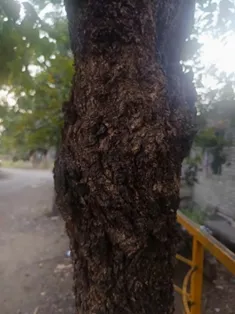
Fig No.3: Bark
Stem:
The stem features branches that are sparsely covered with coarse hairs and have a somewhat flexible quality, twisting and bending. (young adult) with short hair. These strands are especially prominent on the thinner branches. The stems contain Β-sitosterol and the glycosides naringenin-4-0-βglucopyranosyl-α-xylopyranosid [21]
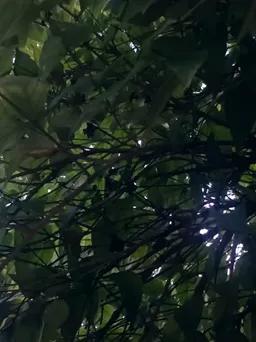
Fig no. 4: Stem
MICROSCOPIC CHARACTERISTICS:
Mesophyll: located under the upper epidermis, generally consists of 2–4 layers of palisade parenchyma (elongated cells) succeeded by spongy parenchyma featuring intercellular spaces. Vascular bundles: collateral (xylem located on the upper side, phloem on the lower); xylem vessels frequently lignified; phloem and related cells are present. Trichomes: Non-glandular unicellular trichomes occur in specific areas (e.g., leaves).Mesophyll area of corolla: polygonal to polyhedral parenchyma cells (≈15–30 µm), many containing amber-hued granular deposits; existence of prismatic calcium oxalate crystals, tannin-rich cells, and oil globules. Stomata: amniocytic stomata were also observed on the epidermis of floral components. Powder characteristics of the flower: non-glandular unicellular trichomes, oil droplets, pollen grains, cells filled with tannins; valuable for recognizing the crude drug. Botanical structure of fruits: Epicarp: outer layer made of tightly packed polygonal cells featuring slightly anticlinal walls, topped with a thin cuticle. Beneath the epidermis: 1–3 layers of collenchyma, succeeded by spongy parenchyma, followed by sclerenchyma Tous fibers and oil glands. [23]Leaf microscopy Based on the pharmacogenetic analysis of its leaves: The leaf exhibits epidermis on both surfaces with amniocytic stomata (i.e., stomata lacking distinct subsidiary cells) on the outer epidermis. Existence of unicellular (or occasionally bicellular) trichomes on the exterior. The leaf powder displays: pieces of trichomes, amniocytic stomata, oil droplets, brown pigment cells (similar features found in flower powder) and calcium oxalate crystals. Microscopic cross-section (T.S.) showed clear layers: cuticle, epidermis, cortex, vascular system (primary & secondary xylem/phloem), poorly developed endodermis, and pith. Microscopic examination of flower (corolla tube/petal) Based on independent research on the components of the flower: The petal structure: external epidermis featuring a thick cuticle, papillose cells, amniocytic stomata more abundant on the outer than the inner epidermis; mesophyll (30-45 µm diameter cells) containing intercellular spaces and oil droplets. Powder microscopy of flower reveals non-glandular unicellular trichomes, amniocytic stomates, oil droplets, brown pigment cells, pollen grains. Diagnostic characteristics and importance for standardization. Amniocytic stomata and unicellular trichomes act as effective diagnostic microscopic indicators for the leaves and floral structures of N. [24]
PROPAGATION AND PLANTING:
1. Nyctanthes arbortristis (Parijata / Jasmine de Nuit): This is a comprehensive propagation and planting strategy for Nyctanthes arbortristis, customized for your situation (Nagpur, Maharashtra, India).
A. Through seeds: Nyctanthes arbortristis can be easily grown from seeds. Seed gathering: Collect fruit once it is mature (flat, brown, heart-shaped pod). Seed treatment: Certain studies observe reduced germination resulting from phenolic compounds leaching from the seed coat; pre-treatment might enhance germination. Planting: Utilize well-drained seedbed or nursery containers. Gently cover. Maintain soil dampness without saturating it. Germination conditions: A warm tropical climate is ideal; offer some shade at first if the direct sunlight is excessively intense.
B. Through stem cuttings Propagation through semi-hardwood cuttings is possible. “Cutting preparation: Obtain 8-12 cm long shoot cuttings containing 2-3 nodes, ideally from a healthy parent plant, strip lower leaves while keeping a few at the top. Utilize rooting hormone (such as IBA) to enhance rooting. Media and rooting: Utilize a well-draining mix (sand: soil: organic material ~ 1:1:1), maintain partial shade, and ensure high humidity (mini greenhouse or misting).
C. In-vitro / tissue culture (for research / premium propagation): When studying medicinal applications, investigate micropropagation [25]
2.Propagation Methods: Seeds are planted and sprout into new vegetation. Benefits: genetic variation, typically more robust. Drawbacks: fluctuations in characteristics, extended maturation period Advantages: generating clones that are identical to the original plant (crucial when chemical composition or medicinal characteristics need to be maintained). Typical techniques for healing herbs: Cuttings: remove a segment of stem or root and propagate it in managed settings. Division: separating plants that possess several crowns/roots. Layering: remains connected to the parent plant until roots form, then removed. Micropropagation / tissue culture: for rare medicinal plants or large-scale production in sterile environments. Soil must be rich and preferably loamy, containing ample organic matter; steer clear of soils tainted by heavy metals or high levels of agricultural chemical residues (particularly for growing medicinal plants) [26]
CHEMICAL CONSTITUENT:
Key constituents: Iridoid glycosides: e.g., arbortristoside A, B, C (especially from the seeds), Flavonoids / flavanol glycosides: e.g., astragalin, noctilucine from leaves, Sterols / triterpenoids: β-sitosterol, oleanolic acid, lupeol, friedelin Aliphatic acids / fatty acids (in seeds): glycerides of linoleic acid, oleic acid, lignoceric acid, stearic, palmitic, myristic acids, Carbohydrates / polysaccharides: a water-soluble polysaccharide composed of D-glucose and D-mannose from seeds ,Phenolic compounds / tannins: tannic acid, benzoic acid, general phenolics in leaves Volatile/essential oil components (especially flowers): phytol, methyl palmitate, cis-9-tricosene, n-pentosane, linalool, and major components such as 1-octanol (~74.8%) from one study Other: D-mannitol, methyl salicylate, carotene, nyctanthic acid (a characteristic acid named after the plant) Plant part Notable constituents: SeedsArbortristoside A/B/C, fatty acid glycerides (linoleic, oleic, palmitic etc.), nyctanthic acid, polysaccharide of glucose/mannose ,Leaves: D-mannitol, β-sitosterol, astragalin, noctilucine, oleanolic acid, nyctanthic acid, tannic acid, ascorbic acid, methyl salicylate, carotene, friedelin, lupeol, iridoid glycosides ,Flowers / flower oil Essential oil components (1-octanol, phytol, linalool etc.), crocetin derivatives (β- monogentiobioside ester of α-crocetin, etc.)
Stem / bark Stem: glycoside-naringenin-4’-0-β-glucopyranosyl-α- xylopyranoside & β-sitosterol. Bark: glycosides and alkaloids. [27]. Botanical extracts: Anabolic steroids, sugars, polyphenols, and nitrogenous compounds. Flavonoids and substances: apigenin, kaempferol, and quercetin. Anthocyanins’-mannitol, glucose. Carotenoids. Components of essential oils: for instance, α-pinene, p-cymene, 1-hexanol, methyl heptanone, phenyl acetaldehyde, 1-decanol, anisaldehyde. Glycosides such as β-monogentiobioside and β-digentiobioside.The colorant known as “nyctanthin.” Plant extracts, Alkaloid "nyctanthin."β-Amyrin, β-sitosterol. Hentriacontan. Benzene carboxylic acid. Mannitol (once more). Astragalin, nicotiflorin.Oleanolic acid, lupeol, resinous compounds, tannic acid, ascorbic acid, carotene, and small amounts of essential oil. Extracts from stem / bark / root / seed. Stem: glycosides like naringenin-4-O-β-glucopyranosyl-α-xylopyranoside and sitosterol. Root (chloroform extract): numerous alkaloids, tannins, glycosides, β-sitosterol, and olivanic acid. Seeds: sterols, phenolics, tannin compounds, flavonoids, glycosides, saponins, alkaloids; arbortristosides A and B, nyctanthic acid, nyctanthoside. [28]

[29]
Table No. 3: Phytoconstituent
|
Sr. No. |
Phytoconstituent |
Chemical Class |
Parts of the Plants Constituting the Phytochemicals |
Structure of the phytoconstituent |
|
|
|
|
|
|
|
1 |
Desrhamnosylverbacoside |
Iridoid Glycoside |
Leaf |

|
|
2 |
b-sitosterol |
Steroid |
Leaf, stem, seed |
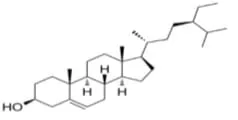
|
|
3 |
Friedeline |
Terpenes |
Leaf |
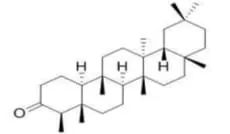
|
|
4 |
Lupeol |
Terpenes |
Leaf |

|
|
5 |
Nicotiflorin |
Flavonoid |
Leaf |

|
|
6 |
Arbortristoside A, B,C,D and E |
Iridoid Glycoside |
Seed |
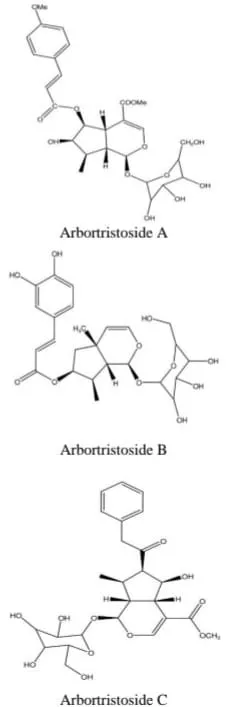
|
|
7 |
6-o-trans-cinnamoyl-7o-acetyl-6B-hydroxyloganin |
Iridoid Glycoside |
Flower |

|
|
8 |
Arborside C |
Iridoid Glycoside |
Flower |

|
|
9 |
6B-hydroxyloganin |
Iridoid Glycoside |
Flower |
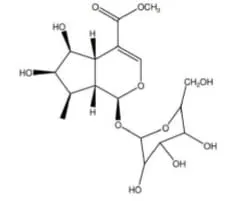
|
|
10 |
Oleanolic acid |
Terpenes |
Leaf |
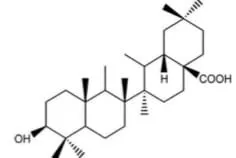
|
[30]
Pharmacological Uses of Nycanthes arbortristis linn:
Antioxidant capacity: Anowar et al. in their study on the plant determined the oxidative and safeguarding function of hydro-ethanol flower extract of NAT in combating oxidative stress of hydrogen peroxide, H2O2. H2O2 serves as a mild oxidizer. able to pass through the cell membrane and enter the cell where it interacts with Fe2+ and Cu2+ ions and produces hydroxyl extremists. These hydroxyl radicals additionally lead to harm to the cell by engaging with the micro and macromolecules within the cell and deactivate enzymes typically through oxidation of the sulfhydryl (-SH) groups. They managed the isolated lymphocytes. from chicken blood with H2O2 that reduced the viability of cells by decreasing the cellular antioxidant, diminished glutathione (GSH). The amount of GSH was raised by 1.22-fold markedly when the lymphocytes received treatment using NAT's flower extract. Concurrently, the particular action of indicator of membrane injury, lactate Dehydrogenase (LDH) was observed to decline as in contrast to untreated lymphocytes, which implies the absence of harmful impact of extract on the cellular system. It seems that your input is incomplete. The study's experimental data indicated the presence of antioxidants. characteristic of the raw extract of NAT [2]. A few additional Studies have determined that the leaves and stem of Nyctanthes arbor-tristis as a possible origin of natural antioxidant. Phytochemical examination of the leaves and stem of the plant. indicated the existence of flavonoids, tannins, saponins, glycosides, alkaloids, steroids, and phenolic substances. [31]
Anti- Bacterial Activity: Antibacterial properties of the blossom, ethyl acetate and chloroform extract from leaf, seed, and fruit against gram-positive (Staphylococcus aureus) and gram-negative (E. coli, Klebsiella pneumoniae, Pseudomonas) K. Priya et al. studied the bacteria Pseudomonas aeruginosa in 2007. 300 µl of the extracts from both ethyl acetate and chloroform demonstrated notable antibacterial effectiveness against the bacteria examined. Flower ethyl acetate and seed chloroform extracts demonstrated wide-ranging antibacterial effectiveness against gram-negative along with gram-positive bacteria, whereas leaf extract demonstrated antibacterial effectiveness solely against all the gram-negative microorganisms. Fruit and seed ethyl acetate, alongside flower and seed. The chloroform extract demonstrated an inhibitory effect solely against Pseudomonas aeruginosa and Klebsiella pneumoniae. It was also discovered that the antibacterial properties of fresh plant components were greater than those of the dehydrated one. Phytochemical examination uncovered existence of phytosterols, phenolics, tannins, flavonoids, glycosides, and saponins. Phenolic substances and tannin were discovered to be effective against the bacteria. Tannins are known to create irreversible complexes. with proline-rich proteins that lead to the inhibition of the cell protein synthesis and serve a crucial function as stable and powerful antioxidant, astringent, and in the management of diarrhea. [32]
Anti-fungal properties: Various sections of the NAT plant were assessed for antifungal effectiveness against the three leading common clinical pathogenic fungus - Aspergillus Niger, Penicillium and Aspergillus parasiticus. New and grown leaves, seeds, stems, bark, and flowers were gathered and dried, and Extraction was conducted using distilled water, methanol, and chloroform. The extracts demonstrated antifungal activity. assessed using the well diffusion technique in relation to "zone of “suppression” of fungal growth. The findings showed that just distilled water extract from the stem and bark of NAT demonstrated antifungal effectiveness solely against A. Niger, whereas chloroform The leaf extract was effective solely against A. flavus. Research demonstrated that the most successful outcomes for antifungal activity were demonstrated by methanolic extract of stems, leaves and bark of NAT versus both Aspergillus and Penicillium [33]
Industrial uses for plant:
REFERENCES
S. Smita Parekh, Nyctanthes arbor-tristis: Comprehensive review on its activity.
24. K. B. A. V. R. J. Leena Tamnar, Night-Flowering Jasmine: A Review of Its Morphology and Pharmacological Activity.
A. S. B. 3. S. S. A. 4. C. S. Ms. Shinde Sharayu S., Review on Nyctanthes arbor-tristis: A Night-Flowering Jasmine, ratnagiri.
S. Smita Parekh, Nyctanthes arbor-tristis: Comprehensive review on its activity.
24. K. B. A. V. R. J. Leena Tamnar, Night-Flowering Jasmine: A Review of Its Morphology and Pharmacological Activity.
A. S. B. 3. S. S. A. 4. C. S. Ms. Shinde Sharayu S., Review on Nyctanthes arbor-tristis: A Night-Flowering Jasmine, ratnagiri.

Neha Badukale, Gayatri Rathod, Vaishnavi Ratnaparkhi, Sanskruti Gode, Samruddhi Chirmade, Dr. Abhijit Raut, Dr. Harigopal Sawarkar, Review of Night-Flowering Jasmine: A Review of its Pharmacogenetic and Pharmacological Activity, Int. J. of Pharm. Sci., 2026, Vol 4, Issue 6, 6130-6144, https://doi.org/10.5281/zenodo.20827992
 10.5281/zenodo.20827992