We use cookies to ensure our website works properly and to personalise your experience. Cookies policy
Malla Reddy College Of Pharmacy
Breast cancer is one of the most commonly diagnosed cancers among women worldwide and remains a leading cause of cancer-related mortality. Among its subtypes, Triple-Negative Breast Cancer (TNBC) is considered one of the most aggressive and therapeutically challenging forms because of the absence of estrogen receptors (ER), progesterone receptors (PR), and human epidermal growth factor receptor-2 (HER2). Due to the lack of these receptors, TNBC patients have limited treatment options and often depend on chemotherapy, surgery, and radiotherapy, which are associated with recurrence, metastasis, and poor prognosis.Recent advances in cancer biology have highlighted the importance of metabolic pathways and micronutrients in tumor progression and therapy. Vitamin K and riboflavin (vitamin B2) have emerged as promising bioactive compounds due to their ability to influence oxidative stress, mitochondrial metabolism, apoptosis, inflammation, and cancer cell signaling pathways. Vitamin K, especially vitamin K2 (menaquinone), has demonstrated anti-proliferative and pro-apoptotic activity in several cancer cell models including breast cancer. It modulates pathways such as NF-?B, PI3K/Akt, and MAPK while also affecting angiogenesis and cancer stem cell survival.Riboflavin acts as a precursor of flavin adenine dinucleotide (FAD) and flavin mononucleotide (FMN), essential cofactors involved in mitochondrial respiration and cellular redox balance. TNBC cells exhibit altered metabolism and increased oxidative stress, making them highly dependent on flavin-mediated enzymatic reactions. Studies suggest that targeting riboflavin transporters and flavoprotein-dependent pathways can impair tumor growth and sensitize cancer cells to chemotherapy and photodynamic therapy.Emerging nanotechnology-based delivery systems, including riboflavin-functionalized nanoparticles and vitamin-mediated targeted drug delivery, further support the therapeutic potential of these micronutrients. Although current evidence is largely preclinical, early findings indicate that vitamin K and riboflavin may serve as supportive or adjunctive agents in TNBC management.This review summarizes the molecular mechanisms, pharmacological actions, preclinical evidence, therapeutic applications, and future research prospects of vitamin K and riboflavin in TNBC treatment.
Breast cancer represents a major global health burden and is one of the leading causes of cancer-related morbidity and mortality among women worldwide¹⁻³. According to global cancer statistics, breast cancer accounts for millions of new cases every year and contributes significantly to healthcare challenges across both developed and developing nations⁶˒⁷. Among the different molecular subtypes of breast cancer, Triple-Negative Breast Cancer (TNBC) accounts for approximately 15–20% of all breast cancers and is characterized by aggressive biological behavior, early metastasis, high recurrence rates, and poor overall survival¹³˒¹⁴.
TNBC lacks the expression of estrogen receptors (ER), progesterone receptors (PR), and HER2 receptors, making hormonal therapy and HER2-targeted therapies ineffective¹³˒¹⁴. As a result, chemotherapy remains the primary systemic treatment option. However, resistance to chemotherapy and tumor relapse continue to limit treatment success¹². Therefore, there is an urgent need to identify safer and more effective therapeutic approaches targeting alternative molecular pathways.
Over the past decade, researchers have increasingly focused on the role of metabolism and micronutrients in cancer progression¹²˒¹⁷. Cancer cells undergo metabolic reprogramming to support rapid growth and survival under stressful conditions¹⁵˒¹⁶. This altered metabolism creates vulnerabilities that can potentially be targeted therapeutically. Vitamins and micronutrients involved in oxidative metabolism and mitochondrial function have gained considerable attention as potential anticancer agents.
Vitamin K, a fat-soluble vitamin traditionally associated with blood coagulation and bone metabolism³, has recently shown promising anticancer properties¹˒⁵. Different forms of vitamin K include phylloquinone (vitamin K1) and menaquinones (vitamin K2). Studies have demonstrated that vitamin K2 can inhibit tumor growth, induce apoptosis, suppress angiogenesis, and regulate cancer cell signaling pathways⁵˒¹². In breast cancer models, vitamin K has shown selective toxicity toward malignant cells while sparing normal tissues¹.
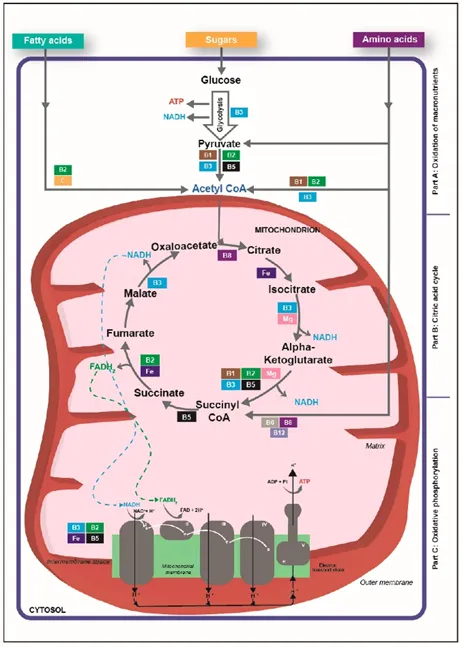
Similarly, riboflavin (vitamin B2) is an essential water-soluble vitamin required for cellular energy production and redox reactions⁸˒¹¹. Riboflavin functions as a precursor for FMN and FAD, which are crucial cofactors in mitochondrial oxidative phosphorylation and antioxidant defense systems⁸˒¹⁰. Since TNBC cells rely heavily on altered mitochondrial metabolism and oxidative stress regulation, riboflavin-dependent pathways have become attractive therapeutic targets¹²˒¹⁵.
Recent studies also suggest that riboflavin transporters are overexpressed in aggressive breast cancer subtypes, enabling targeted drug delivery through riboflavin-conjugated nanoparticles²¹˒²³. This approach may improve drug selectivity, reduce systemic toxicity, and enhance therapeutic efficacy.
In addition to their direct anticancer effects, both vitamin K and riboflavin may improve treatment tolerance and reduce chemotherapy-induced oxidative damage¹⁷˒¹⁸. Their low toxicity profiles and nutritional importance make them promising adjunctive therapeutic agents.
This review discusses the biological roles, molecular mechanisms, therapeutic potential, preclinical evidence, drug delivery strategies, clinical implications, and future research directions regarding vitamin K and riboflavin in targeting TNBC.
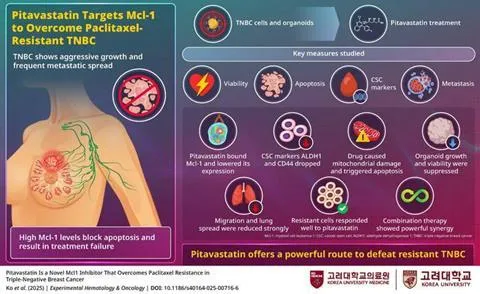
Breast cancer represents a major global health burden and is one of the leading causes of cancer-related morbidity and mortality among women worldwide. According to global cancer statistics, breast cancer accounts for millions of new cases every year and contributes significantly to healthcare challenges across both developed and developing nations. Among the different molecular subtypes of breast cancer, Triple-Negative Breast Cancer (TNBC) accounts for approximately 15–20% of all breast cancers and is characterized by aggressive biological behavior, early metastasis, high recurrence rates, and poor overall survival.
TNBC lacks the expression of estrogen receptors (ER), progesterone receptors (PR), and HER2 receptors, making hormonal therapy and HER2-targeted therapies ineffective. As a result, chemotherapy remains the primary systemic treatment option. However, resistance to chemotherapy and tumor relapse continue to limit treatment success. Therefore, there is an urgent need to identify safer and more effective therapeutic approaches targeting alternative molecular pathways.
Over the past decade, researchers have increasingly focused on the role of metabolism and micronutrients in cancer progression. Cancer cells undergo metabolic reprogramming to support rapid growth and survival under stressful conditions. This altered metabolism creates vulnerabilities that can potentially be targeted therapeutically. Vitamins and micronutrients involved in oxidative metabolism and mitochondrial function have gained considerable attention as potential anticancer agents.
Vitamin K, a fat-soluble vitamin traditionally associated with blood coagulation and bone metabolism, has recently shown promising anticancer properties. Different forms of vitamin K include phylloquinone (vitamin K1) and menaquinones (vitamin K2). Studies have demonstrated that vitamin K2 can inhibit tumor growth, induce apoptosis, suppress angiogenesis, and regulate cancer cell signaling pathways. In breast cancer models, vitamin K has shown selective toxicity toward malignant cells while sparing normal tissues.
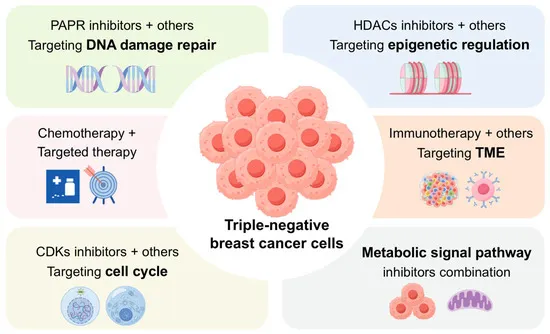
Similarly, riboflavin (vitamin B2) is an essential water-soluble vitamin required for cellular energy production and redox reactions. Riboflavin functions as a precursor for FMN and FAD, which are crucial cofactors in mitochondrial oxidative phosphorylation and antioxidant defense systems. Since TNBC cells rely heavily on altered mitochondrial metabolism and oxidative stress regulation, riboflavin-dependent pathways have become attractive therapeutic targets.
Recent studies also suggest that riboflavin transporters are overexpressed in aggressive breast cancer subtypes, enabling targeted drug delivery through riboflavin-conjugated nanoparticles. This approach may improve drug selectivity, reduce systemic toxicity, and enhance therapeutic efficacy.
In addition to their direct anticancer effects, both vitamin K and riboflavin may improve treatment tolerance and reduce chemotherapy-induced oxidative damage. Their low toxicity profiles and nutritional importance make them promising adjunctive therapeutic agents.
This review discusses the biological roles, molecular mechanisms, therapeutic potential, preclinical evidence, drug delivery strategies, clinical implications, and future research directions regarding vitamin K and riboflavin in targeting TNBC.
Triple-negative breast cancer is more frequently observed in younger women, African and Asian populations, and individuals carrying BRCA1 gene mutations. Compared with other breast cancer subtypes, TNBC demonstrates rapid tumor growth, increased metastatic potential, and poor clinical outcomes.
Common metastatic sites include:
TNBC patients often present with larger tumor sizes and higher histological grades at diagnosis. The absence of receptor targets contributes to limited treatment options and shorter disease-free survival.
Risk factors associated with TNBC include:
Due to the aggressive nature of TNBC, there is increasing interest in novel therapies targeting cancer metabolism, oxidative stress, inflammation, and mitochondrial dysfunction.
ROLE OF OXIDATIVE STRESS IN TNBC
Oxidative stress plays a major role in cancer initiation and progression. Reactive oxygen species (ROS) are generated during normal cellular metabolism, particularly within mitochondria. In cancer cells, ROS levels are significantly elevated due to increased metabolic activity and mitochondrial dysfunction.
Moderate ROS levels promote:
However, excessive ROS accumulation can induce apoptosis and cell death. Therefore, TNBC cells depend on strong antioxidant defense systems for survival.
Vitamin K and riboflavin influence oxidative stress pathways by modulating mitochondrial function and redox balance. Their ability to disrupt ROS homeostasis may contribute to selective cancer cell toxicity.
VITAMIN K AND ITS BIOLOGICAL FUNCTIONS
Vitamin K is a fat-soluble vitamin classified into:
Vitamin K is naturally found in:
Traditionally, vitamin K is known for:
Recent studies have demonstrated additional biological roles including:
Among its forms, vitamin K2 has shown the strongest anticancer potential.
MECHANISM OF ACTION OF VITAMIN K IN TNBC
Vitamin K2 promotes apoptosis by disrupting mitochondrial membrane potential and increasing cytochrome c release. This activates caspase-dependent apoptotic pathways, leading to programmed cell death.
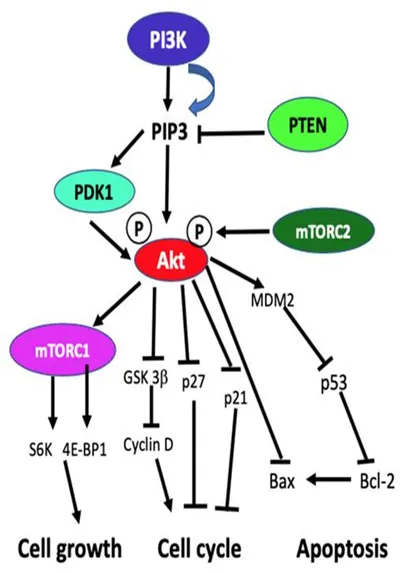
2. Inhibition of PI3K/Akt Pathway
The PI3K/Akt signaling pathway is frequently activated in TNBC and contributes to cell survival, proliferation, and chemoresistance. Vitamin K suppresses Akt phosphorylation, reducing tumor growth and promoting apoptosis.
NF-κB regulates inflammatory responses and tumor progression. Vitamin K inhibits NF-κB activation, thereby decreasing inflammatory cytokines and reducing cancer cell survival.
Tumor growth depends on angiogenesis for nutrient supply. Vitamin K inhibits vascular endothelial growth factor (VEGF) expression, thereby limiting blood vessel formation and metastasis.
5. Oxidative Stress Modulation
Vitamin K increases intracellular ROS levels beyond the tolerance limit of cancer cells, resulting in oxidative damage and apoptosis.
Studies suggest that vitamin K induces G1 and G2/M phase arrest in cancer cells, preventing uncontrolled proliferation.
PRECLINICAL STUDIES ON VITAMIN K IN BREAST CANCER
Several experimental studies have evaluated the anticancer effects of vitamin K in breast cancer models.
Animal studies have also indicated reduced tumor growth and angiogenesis following vitamin K supplementation.
RIBOFLAVIN AND ITS BIOLOGICAL FUNCTIONS
Riboflavin (Vitamin B2) is a water-soluble vitamin essential for cellular metabolism. It acts as a precursor for:
These cofactors are essential for:
Dietary sources of riboflavin include:
Deficiency of riboflavin can impair mitochondrial function and increase oxidative stress.
MECHANISM OF ACTION OF RIBOFLAVIN IN TNBC
TNBC cells rely heavily on altered mitochondrial metabolism for survival. Riboflavin-dependent enzymes are essential for mitochondrial respiration. Targeting these pathways can disrupt ATP production and induce cancer cell death.
2. Reactive Oxygen Species Generation
Riboflavin modulation can increase ROS production in cancer cells. Excessive ROS causes:
3. Sensitization to Chemotherapy
Studies indicate that riboflavin enhances the efficacy of chemotherapeutic agents by increasing oxidative stress and reducing resistance mechanisms.
4. Regulation of Antioxidant Enzymes
Riboflavin affects glutathione reductase and other flavoproteins involved in antioxidant defense. Disruption of these enzymes weakens cancer cell survival mechanisms.
5. Targeting Riboflavin Transporters
Aggressive breast cancer cells overexpress riboflavin transporters, enabling selective targeting through riboflavin-conjugated drug delivery systems.
RIBOFLAVIN-MEDIATED NANOPARTICLE THERAPY
Nanotechnology has emerged as an innovative strategy for targeted cancer treatment.
Riboflavin-functionalized nanoparticles offer several advantages:
These nanoparticles can carry:
Photodynamic therapy using riboflavin has also shown promising anticancer effects through ROS-mediated tumor destruction.
COMBINATION THERAPY WITH CHEMOTHERAPY
Both vitamin K and riboflavin may improve the effectiveness of conventional chemotherapy.
Potential benefits include:
Combination therapy may also allow dose reduction of cytotoxic drugs, minimizing adverse effects.
Although most current evidence is preclinical, early clinical observations suggest potential therapeutic benefits.
Possible clinical applications include:
However, standardized dosing guidelines and long-term safety data remain limited.
Despite promising findings, several challenges remain:
Further studies are necessary to validate the therapeutic potential of vitamin K and riboflavin in TNBC patients.
Triple-negative breast cancer remains one of the most difficult breast cancer subtypes to treat due to its aggressive nature and lack of targeted therapies. Recent evidence suggests that vitamin K and riboflavin possess significant anticancer potential through modulation of oxidative stress, mitochondrial dysfunction, apoptosis, inflammation, and metabolic signaling pathways.
Vitamin K, particularly vitamin K2, has demonstrated anti-proliferative, pro-apoptotic, anti-inflammatory, and anti-angiogenic effects in TNBC models. Riboflavin, through its role in mitochondrial metabolism and redox regulation, has shown promise in disrupting cancer cell survival and improving responsiveness to chemotherapy.
Emerging approaches such as riboflavin-mediated nanoparticle delivery systems and combination therapies may further improve treatment outcomes while reducing systemic toxicity.
Although current evidence is encouraging, most findings remain limited to preclinical studies. Therefore, further clinical trials are required to establish therapeutic efficacy, optimal dosing, safety, and long-term outcomes.
Overall, vitamin K and riboflavin represent promising adjunctive therapeutic candidates in the evolving landscape of TNBC management and may contribute to the development of safer, targeted, and metabolism-based cancer therapies.
REFERENCES



Gummadavelli Rithwic Mani, Gampa Jyothi, Anusha Yadav, Review on Emerging Role of Vitamin K and Riboflavin in Targeting Triple Negative Breast Cancer Patients, Int. J. of Pharm. Sci., 2026, Vol 4, Issue 6, 1061-1070, https://doi.org/10.5281/zenodo.20539358
 10.5281/zenodo.20539358