

We use cookies to ensure our website works properly and to personalise your experience. Cookies policy
Yash Institute of Pharmacy, Chhatrapati Sambhajinagar, Maharashtra, India, 431136.
Phytosomes, a novel lipid-based vesicular drug delivery system, have been developed to address these limitations by complexing phytoconstituents with phospholipids, thereby enhancing solubility, stability, and membrane permeability. The incorporation of phytosomes into a gel matrix results in phytosomal gels, which combine the advantages of vesicular carriers with the ease of application, improved spreadability, and enhanced patient compliance associated with topical formulations. These systems provide a promising platform for improving dermal and transdermal drug delivery.This review highlights the concept, formulation strategies, and physicochemical characteristics of phytosomal gel systems, with particular emphasis on their role in enhancing topical drug delivery. Phytosomal gels offer several advantages over conventional formulations, including improved skin penetration, sustained drug release, enhanced stability, and reduced irritation.Despite these benefits, certain limitations such as formulation complexity, stability concerns, and scale-up challenges remain. Overall, phytosomal gels represent an effective and promising approach for enhancing the topical delivery of phytoconstituents and other poorly permeable drugs in pharmaceutical and cosmeceutical applications.
“Phyto” refers to a plant, whereas “some” refers to something that looks like a cell. The other term for it is herbosomes. This is a brand-new, patented technique that mixes phospholipids with systematic herbal extracts or moisture phytocomponents to produce lipid-consistent tiny composites that significantly increase absorption and bioavailability. Phosphatidylcholine, phosphatidylinositol, phosphatidylserine, and phosphatidylethanolamine are frequently used phospholipids.1 Phytosomal gel systems are advanced topical drug delivery systems developed to enhance the bioavailability and therapeutic efficacy of herbal and plant-derived bioactive compounds. Many phytoconstituents such as flavonoids, polyphenols, and alkaloids possess excellent pharmacological activities but suffer from poor water solubility, low lipid permeability, and limited stability. These drawbacks significantly restrict their effectiveness when formulated in conventional topical dosage forms.2-3
The concept of phytosomes is based on the formation of a molecular complex between a phytoconstituent and a phospholipid, most commonly phosphatidylcholine. In this system, the polar functional groups of the phytoconstituent interact with the polar head of the phospholipid through hydrogen bonding, while the lipophilic tail of the phospholipid provides membrane compatibility.4 This interaction converts the hydrophilic phytoconstituent into a lipid-compatible form, thereby improving its permeability across biological membranes.When these phytosomal complexes are incorporated into a gel base, the resulting formulation is referred to as a phytosomal gel. The gel matrix provides appropriate viscosity, ease of application, and prolonged residence time at the site of application, while the phytosomal system enhances penetration through the stratum corneum. Thus, phytosomal gels combine the advantages of vesicular drug delivery systems and topical gels in a single formulation.5
Phytosomal gel systems improve drug solubility, protect the phytoconstituent from degradation, provide controlled and sustained drug release, and enhance local drug concentration at the target site. Due to their biocompatibility and lipid-friendly nature, phytosomal gels interact effectively with skin lipids, resulting in improved absorption and therapeutic performance.6
1.1 Phytosomes or phytophospholipid complexes or herbosomes
This is the novel approach to drug delivery system that combines biologically active phytoconstituents of herbal extracts surrounded and bound by phospholipids. By treating plant extracts, ginseng, flavonoids, etc., phytosome technology improves the bioavailability, lipid solubility, and stability of herbal extract. Phytophospholipid complexes called phytosomes are created by combining phytoconstituents with lipid-compatible phospholipids. Phospholipids, such as soy lecithin components like phosphotidylcholine, phosphotidylethanolamine, and phosphotidylserine, are used in the creation of phytosomes.
Active ingredients are complexed at precise mole ratio with phospholipids (phosphatidylcholine) under certain conditions to produce phytophospholipid complexes. The choline fraction is hygrophilous, and the phosphatidyl fraction is hydrophobic, making phosphatidylcholine a bifunctional molecule. The choline lead about the phosphatidylcholine speck attaches to the photosensitive ingredient in the phytophospholipid complex, while the lipid-soluble section wraps around it. As a result, phytophospholipid complex is produced (Figure 1).
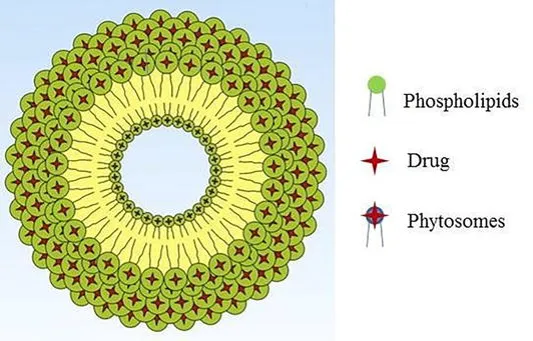
Figure 1: Structure of phytosome-loaded complex10
1.2 Components of phytosomes
There are three main components of phytosomes11-12
1.2.1Phospholipids
Both cellular and sub-cellular membranes include phospholipids. Humans, animals, and plants all have them. A polar head and nonpolar acyl chains that are once more connected to alcohol make up phospholipids. There are many phospholipids present as a result of differences in hydrophilic groups, aliphatic chains, and alcohols. Examples of phospholipids found in eukaryotic cell membranes include phosphatidylcholine, cardiolipin, phosphatidylethanolamine, phosphatidylserine, sphingolipids, and phosphatidylinositol 7. Many various types of formulations use phospholipids, including natural, synthesized, and hydrogenated phospholipids such as soy lecithin components like phosphatidylcholine.
Relying on their backbone, phospholipids are classified as glycerophospholipids or sphingomyelins. Phosphatidylcholine (PC), phosphatidylethanolamine (PE), phosphatidylserine (PS), phosphatidic acid (PA), phosphatidylinositol (PI), and phosphatidylglycerol (PG) are all examples of glycerophospholipids (PG). The main phospholipids utilized to make complexes with a hydrophilic head group and two hydrophobic hydrocarbon chains are PC, PE, and PS. Phospholipid complexes are most often made with phosphatidylcholine, which is the most widespread phospholipid. The amphipathic features of phosphatidylcholine offer it moderate solubility in both water and lipid mediums, which is one of its advantages. Furthermore, because phosphatidylcholine is a necessary component of cell membranes, it has a high level of biocompatibility and is low in toxicity. Hepato-protective properties of phosphatidylcholine molecules have been observed in the remedy of liver-colored illnesses such as “hepatitis, fatty liver, and hepatocirrhosis”.
1.2.2 Active phytoconstituents
Flavonoids make up a large portion of phytomedicines’ bioactive components (e.g., milk bramble contains silymarin, bilberry has anthocyanidins, and green tea comprises catechins). The majority of flavonoids, however, are poorly absorbed. Phytosomes are generated from standardized plant extracts, primarily flavonoids. Flavonoids are chosen from a category that includes “quercetin, kaempferol, quercretin-3, rhamnoglucoside, quercetin-3-rhamnoside, hyperoside, vitexine, diosmine, 3-rhamnoside, (+) catechin, (-) epicatechin, apigenin-7-glucoside, luteolin, luteolinglucoside, ginkgetin, isogink”.
1.2.3 Solvents
In the preparation of phytosomes, the phospholipids are mixed with inorganic solvents; phytosomes are prepared by a one solvent or mixed solvent system. Though several publications have utilized mixed solvent systems in which the phospholipids are dissolved in a separate solvent than the drug/extract, for example, aprotic solvent tetrahydrofuran, dichloromethane, diethyl ether and chloroform, protic solvents ethanol, even though typical preparation procedures use a single solvent. More subsequently, protonic solvents including ethanol and methanol have been used to make phospholipid aggregates.
2. Formulation Strategies of Phytosomal Gel Systems
Formulation strategies for phytosomal gel systems focus on enhancing the solubility, stability, and skin penetration of phytoconstituents while ensuring patient acceptability and formulation stability. The development of an effective phytosomal gel involves two major steps: preparation of phytosomes and incorporation of phytosomes into a gel base.13
2.1 Selection of Phytoconstituent and Phospholipid
The first step involves selecting a suitable phytoconstituent such as flavonoids, polyphenols, or alkaloids with known therapeutic activity. Phosphatidylcholine is commonly used as the phospholipid due to its biocompatibility, amphiphilic nature, and ability to form stable complexes with phytoconstituents. The drug-to-phospholipid ratio plays a critical role in determining complex formation, entrapment efficiency, and skin permeation.14
2.2 Preparation of Phytosomal Complex
Phytosomes are prepared by dissolving the phytoconstituent and phospholipid in an appropriate organic solvent such as ethanol or dichloromethane. The solvent is then evaporated under controlled conditions to form a thin film or complex. The resulting phytosomal complex is further hydrated with aqueous medium to form vesicular structures. This step ensures molecular interaction between the phytoconstituent and phospholipid.15
2.3 Optimization of Process Variables
Process parameters such as temperature, solvent type, stirring speed, hydration time, and sonication affect the size, stability, and drug loading of phytosomes. Optimization of these variables is essential to achieve nanosized vesicles with uniform distribution and high stability. Design of Experiments (DoE) can be employed to systematically optimize formulation parameters.16
2.4 Incorporation into Gel Base
The optimized phytosomal dispersion is incorporated into a suitable gel base prepared using polymers such as carbopol, HPMC, or chitosan. Neutralizing agents like triethanolamine are added to adjust the pH and achieve desired viscosity. The gel base enhances spreadability, ease of application, and prolonged contact with the skin.17
2.5 Addition of Stabilizers and Permeation Enhancers
Stabilizers and preservatives are added to improve shelf-life and prevent microbial growth. Optional permeation enhancers may be included to further enhance skin penetration, provided they are safe and compatible.18
2.6 Evaluation and Stability Studies
The final phytosomal gel is evaluated for physicochemical properties such as pH, viscosity, drug content, vesicle size, and in vitro release. Stability studies are conducted to ensure long-term formulation integrity.19
3. Characteristics of phytosomes
3.1 Chemical properties
Phytocomplexes are prepared as a result of a reaction between substrate and polymer (phospholipids) generally in ratios 1:1 and 1:2 or based on the essential quantity of phospholipids and substrate. There is evidence of the establishment of hydrogen bonding during the time when both parties were in contact, in the polar regions of both phospholipids and substrate molecules. It is possible to investigate it using a spectroscopic apparatus. While phytosomes are linked to the phospholipids’ glacial surface, they can transform into a portion of the molecular film’s interior where OH bonds with the phenol hydroxyls of the flavone moiety can be formed. As long as the signals from the fatty sequence are largely unaffected, it is possible to make the NMR of the phytosomes more similar to that of the unaltered precursor, which would demonstrate the phytosomes’ accessibility through the evaluation of substance properties.
3.2 Biological properties
Phytosomes are the sophisticated as a natural world for herbal crops with the aim of these products making the superior absorption and consumption as improved domino effect over the entire predictable herbal drugs. It has been established as a result of in vitro and in vivo studies for better invention of herbs in living thing.
3.3 Advantages, limitations and challenges
Phytosomes show various advantages over poorly water-soluble drugs and protects phytoconstituents from degradation. Over their advantages some limitations and challenges are found which are summarized in Table 1.
Table 1: Advantages, limitations and challenges of Phytosomes20
|
Advantages |
|
|
Enhanced skin penetration |
Phytosomes improve lipid compatibility of phytoconstituents, enhancing penetration through the stratum corneum |
|
Improved solubility |
Phytosomes convert poorly water soluble |
|
Increased bioavailability |
Enhances local drug concentration at the site of action |
|
Sustained drug release |
Provides controlled and prolonged release of drug |
|
Improved drug stability |
Protects phytoconstituents from degradation |
|
Reduced dosing frequency |
Prolonged action reduces need for frequent application |
|
Better patient compliance |
Gel form offers ease of application and cosmetic acceptability |
|
Biocompatibility |
Uses natural phospholipids, reducing toxicity |
|
Limitations |
|
|
High production cost |
Use of phospholipids and organic solvents increases cost |
|
Physical instability |
Risk of vesicle aggregation or fusion during storage |
|
Drug leakage |
Possible loss of drug from phytosomal complex over time |
|
Limited drug loading |
Not suitable for all types of phytoconstituents |
|
Short shelf life |
Requires careful storage conditions |
|
Challenges |
|
|
Scale-up difficulties |
Maintaining uniform vesicle size during large-scale production |
|
Stability optimization |
Need for stabilizers and optimized formulation parameters |
|
Regulatory concerns |
Lack of standardized guidelines for phytosomal products |
|
Reproducibility |
Batch-to-batch consistency can be difficult |
|
Limited clinical data |
Need for more in vivo and clinical studies |
4. Application
Phytosomes have the following benefits over conventional medicinal herbs
Evodiamine, a quinoline alkaloid from Evodia rutaecarpa, shows various pharmacological activities. Its phytosomal formulation enhances dissolution, absorption, and bioavailability with prolonged drug action. Phytosomes may also reduce first-pass metabolism by bypassing hepatic degradation. Compared to pure evodiamine, phytosomes significantly increased bioavailability (3787.24 vs. 1772.35 μg h⁻¹ L⁻¹) and half-life (2.07 vs. 1.33 hours).
4.2 Antimicrobial Application
Phytosomes improve the efficacy of antimicrobial phytoconstituents by enhancing their penetration into the skin. This helps in effectively targeting microbial infections at the site of action. Additionally, improved stability of phytoconstituents prevents degradation, thereby maintaining their activity. These properties make phytosomal gels useful in managing skin infections.
4.3 Cancer treatment:
Medicinal plant constituents such as flavonoids and catechins exhibit strong antioxidant and anticancer potential. Phytosomes enhance the solubility, permeability, and effectiveness of these compounds, making them more efficient therapeutic agents. They may also reduce the side effects associated with conventional cancer treatments. A study by Shalini et al. demonstrated that the phytosomal formulation of Terminalia arjuna showed greater antiproliferative activity on MCF-7 breast cancer cells compared to the extract alone. The IC₅₀ value of the phytosome (15 μg/ml) was significantly lower than that of the extract (25 μg/ml), indicating improved efficacy.21
4.4 Anti-inflammatory Application
Phytosomes enhance the delivery of anti-inflammatory phytoconstituents, leading to improved therapeutic outcomes. They reduce inflammation by increasing drug concentration at the target site. The lipid-based system also minimizes irritation commonly associated with conventional formulations. This makes phytosomal gels suitable for treating inflammatory skin conditions.
4.5 Wound healing:
Sinigrin, a glucosinolate from the Brassicaceae family, has shown significant wound healing potential when formulated as phytosomes. A study by Mazumder et al. demonstrated complete wound healing (100%) with sinigrin phytosomes compared to 71% with the free phytoconstituent. Additionally, sinigrin phytosomes exhibited enhanced anticancer activity against A-375 melanoma cells. These findings highlight the improved therapeutic efficacy of phytosomal formulations.22-23
4.6 Antioxidant Delivery
Phytosomes enhance the stability and bioavailability of antioxidant phytoconstituents, protecting them from degradation. They facilitate deeper penetration into the skin, thereby improving their effectiveness against oxidative stress. This helps in preventing cellular damage caused by free radicals. As a result, phytosomal formulations improve overall skin health.
4.7 Transdermal application:
Phytosomes can overcome skin barriers, and are therefore effective carriers for herbal medicines. They are often made by mixing phospholipid molecules with phytoconstituent substances found in extracts from medicinal plants. By increasing the bioavailability and absorption of phytoconstituents like polyphenols, they have enhanced their clinical applications.24
Phytoconstituent-based phytosomal gel formulations, highlighting the use of active compounds derived from different plant sources. Phytosome Technology enhances the incorporation of these compounds into gel dosage forms, improving skin penetration and bioavailability. For example, compounds like curcumin and quercetin exhibit antioxidant and anti-inflammatory properties.
Table 2:Reported Phytosomal Gel Formulations for Topical Drug Delivery25-29
|
Sr. No. |
Phytoconstituent / Drug |
Plant Source |
Dosage Form |
Indication |
Key Outcome |
|
1 |
Curcumin Phytosome |
Curcuma longa |
Gel |
Anti-inflammatory |
Improved skin penetration and bioavailability |
|
2 |
Quercetin Phytosome |
Allium cepa |
Gel |
Antioxidant, wound healing |
Enhanced permeation and stability |
|
3 |
Silymarin Phytosome |
Silybum marianum |
Gel |
Hepatoprotective (antioxidant use) |
Increased dermal absorption |
|
4 |
Green Tea Phytosome |
Camellia sinensis |
Gel |
Anti-aging, antioxidant |
Better skin retention and activity |
|
5 |
Ginkgo biloba Phytosome |
Ginkgo biloba |
Gel |
Anti-aging |
Improved circulation and antioxidant effect |
|
6 |
Resveratrol Phytosome |
Vitis vinifera |
Gel |
Anti-aging, antioxidant |
Enhanced stability and penetration |
|
7 |
Hesperidin Phytosome |
Citrus fruits |
Gel |
Anti-inflammatory |
Improved topical bioavailability |
|
8 |
Boswellic Acid Phytosome |
Boswellia serrata |
Gel |
Anti-inflammatory |
Enhanced permeation and efficacy |
|
9 |
Aloe vera Phytosome |
Aloe vera |
Gel |
Wound healing |
Faster healing and hydration |
|
10 |
Naringenin Phytosome |
Citrus species |
Gel |
Antioxidant |
Increased skin permeability |
|
11 |
Luteolin Phytosome |
Ocimum sanctum/others |
Gel |
Anti-inflammatory |
Improved stability and skin retention |
|
12 |
Apigenin Phytosome |
Matricaria chamomilla |
Gel |
Anti-inflammatory |
Better dermal delivery |
|
13 |
Glycyrrhizin Phytosome |
Glycyrrhiza glabra |
Gel |
Anti-inflammatory |
Enhanced bioavailability |
|
14 |
Rutin Phytosome |
Fagopyrum esculentum |
Gel |
Antioxidant |
Increased penetration and stability |
|
15 |
Kaempferol Phytosome |
Various plants |
Gel |
Antioxidant |
Improved dermal absorption |
The market availability of various phytosome-based formulations, highlighting their phytoconstituents, dosage forms, and therapeutic applications. Phytosome Technology plays a key role in enhancing the bioavailability and effectiveness of herbal compounds such as silymarin, curcumin, and green tea extract. Most of the listed products are commercially available in capsule or tablet forms and are widely used for hepatoprotective, anti-inflammatory, antioxidant, and cardiovascular benefits. Additionally, some formulations like cosmetic creams and phytosomal gels are either limited in availability or still in the research stage. Overall, the growing market presence and therapeutic potential of phytosome-based products shows in Table 3.
Table 3. Market Availability of Phytosome-Based Formulations30-32
|
Sr. No. |
Product Name |
Phytoconstituent |
Dosage Form |
Application |
Market Status |
|
1 |
Siliphos |
Silymarin (Silybum marianum) |
Capsule/Tablets |
Hepatoprotective |
Commercially Available |
|
2 |
Meriva |
Curcumin (Curcuma longa) |
Capsule/Tablets |
Anti-inflammatory |
Commercially Available |
|
3 |
Greenselect |
Green tea (EGCG) |
Capsule |
Antioxidant / Weight management |
Commercially Available |
|
4 |
Quercefit |
Quercetin |
Capsule |
Antioxidant |
Commercially Available |
|
5 |
Casperome |
Boswellic acid (Boswellia serrata) |
Capsule |
Anti-inflammatory |
Commercially Available |
|
6 |
Leucoselect Phytosome |
Grape seed extract |
Capsule |
Cardiovascular health |
Commercially Available |
|
7 |
Relissa |
Melissa officinalis |
Capsule |
Stress relief |
Commercially Available |
|
8 |
Phytosomal cosmetic creams (various brands) |
Curcumin / Green tea / Herbal extracts |
Cream / Lotion |
Skin care / Anti-aging |
Limited Availability |
|
9 |
Experimental Phytosomal Gel (Curcumin, Quercetin, etc.) |
Various phytoconstituents |
Gel |
Topical delivery |
Research Stage Only |
CONCLUSION
Phytosomal gel systems represent an advanced and promising approach for enhancing topical drug delivery, particularly for herbal and poorly permeable drugs. Conventional topical formulations often fail to deliver adequate drug concentrations due to the strong barrier properties of the skin, leading to reduced therapeutic effectiveness. Phytosomes overcome these limitations by forming stable complexes between phytoconstituents and phospholipids, thereby improving solubility, permeability, and stability. Incorporation of phytosomes into a gel base further enhances formulation performance by improving spreadability, residence time, and patient acceptability. Phytosomal gels provide controlled and sustained drug release, resulting in improved therapeutic outcomes and reduced frequency of application. Although challenges related to stability, cost, and large-scale production remain, continuous advancements in pharmaceutical technology are expected to address these limitations.
Phytosomal gels offer a novel, safe, and effective platform for enhanced topical drug delivery and hold significant potential for future applications in dermatology, cosmeceuticals, and herbal medicine.
REFERENCES

Vishakha Sawant, Aditi Dhondre, Vandana Patil, Reshma Patil, Schidanand Angad, Review on Phytosomal Gel for Enhanced Topical Drug Delivery, Int. J. of Pharm. Sci., 2026, Vol 4, Issue 7, 2554-2563. https://doi.org/10.5281/zenodo.21339410
 10.5281/zenodo.21339410