

We use cookies to ensure our website works properly and to personalise your experience. Cookies policy
Department of Pharmacy, YSPM’s, YTC, Faculty of Pharmacy, Satara, Maharashtra, India Yashoda Technical Campus, Satara, Wadhe. -415011.
They are necessary in the treatment of a number of cardiovascular diseases. Rosuvastatin is a medicine that lowers cholesterol and other lipids in the blood to help prevent heart, brain and blood vessel problems. Clopidogrel and aspirin are medicines that prevent blood clots. These drugs are available in single and combination form in the market. Rosuvastatin is a lipoprotein-lowering agent used in the treatment of various cardiovascular, cerebrovascular, and peripheral vascular disorders. These drugs are now widely marketed both as single entities and in combination dosage forms. There are a number of well-established analytical methods for estimation of these drugs in individual and combination dosage forms.A simple, precise, fast, and accurate RP-HPLC method was developed and validated for the simultaneous detection of aspirin, rosuvastatin, and clopidogrel in pharmaceutical dosage forms. Chromatographic separation was achieved using a reverse-phase C18 column with the appropriate mobile phase under optimal circumstances. The developed method showed good resolution, low retention times, and strong peak symmetry for all three medications.
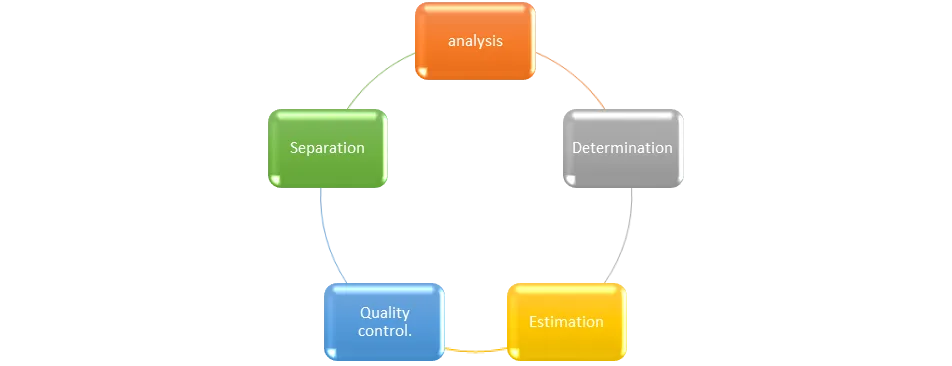
Potentiometers, HPLC, and aqueous and non-aqueous titrations are only a few of the analytical methods used in the discipline. Aqueous and non-aqueous titrations are also used in the analytical field. Chromatography uses adsorption as a mass transfer technique. The basis for separation in both the normal phase mode and the reverse phase mode is adsorption, in which the substances move or separate according to their individual affinities. HPLC is essential for separating various compounds from combinations of substances in the field of pharmaceutical studies today [3]. Reverse phase high performance liquid chromatography is one of the most popular analytical techniques for the simultaneous quantification of pharmaceutical formulations with multiple components (RP-HPLC). Aspirin and Clopidogrel bisulphate are used to treat cardiovascular disorders such myocardial infarction, hyperlipidemia, and stroke prevention.
These drugs must be estimated concurrently in combination dose forms for quality assurance and regulatory compliance. RP-HPLC is the recommended analytical technique because to its high sensitivity, specificity, repeatability, and capacity to separate compounds with different polarity. The pharmaceutical sector uses the technique extensively for impurity profiling, assay determination, stability analysis, and dissolution research.
Principle of RP-HPLC –
The partition chromatography principle, which RP-HPLC employs, calls for a non-polar stationary phase and a moderately polar mobile phase. Compounds are separated through hydrophobic interactions with the stationary phase. C18 columns are widely used in pharmaceutical analysis due to their outstanding retention qualities and separation efficiency. Aqueous buffers that have been pH-adjusted and blends of organic solvents, including acetonitrile or methanol, are frequently used as the mobile phase. Due to the high UV absorbance of aspirin, clopidogrel, and rosuvastatin, UV detectors are commonly used for detection. [5]
Need for RP-HPLC Method Development-
Introduction to Drug Profile –

1-Aspirin –Aspirin is a common painkiller that you may be familiar with. This drug aids in lowering pain, fever, and inflammation. It's interesting to note that by preventing blood clots, it's frequently taken in small doses to help reduce the risk of heart attacks and strokes. Aspirin, chemically known as acetylsalicylic acid, is frequently taken in conjunction with other drugs such as rosuvastatin and clopidogrel since it is crucial for heart health. When combined, these help prevent heart attacks, strokes, and associated blood clot problems. Aspirin is thoroughly inspected to guarantee its identification, purity, and stability in pharmaceutical products throughout the creation of novel drug testing techniques.
Pharmacological action – By permanently blocking the cyclooxygenase-1 (COX-1) enzyme, aspirin lowers the synthesis of thromboxane A2, which prevents platelet aggregation and blood clot formation. Because of its antiplatelet activity, aspirin is mostly used in cardiovascular conditions to prevent myocardial infarction (heart attack), ischemic stroke, and other coronary artery diseases. Prostaglandins and thromboxane A2 are consequently produced less frequently. . Consequently, it exhibits analgesic (pain-relieving), antipyretic (fever-reducing), antiplatelet, and anti-inflammatory properties.
Therapeutic use –
Reported Method of Aspirin-
|
SR.No. |
. DRUGS |
METHOD |
BRIEF INTRODUCTION |
REF.NO |
|
|
1 |
Aspirin and clopidogrel bisulphate |
RP-HPLC |
Mobile phase- Phosphate Buffer: Acetonitrile (60:40 v/v)
|
[9] |
|
|
2 |
Aspirin and Rosuvastatin |
RP-HPLC |
Mobile phase -Methanol: Water (70:30 v/v) Flow rate--1.0 mL/min Wavelength-230 nm Column- C18 Column |
[10] |
|
|
3 |
Aspirin and Atorvastatin |
RP-HPLC |
Mobile phase Buffer; Acetonitrile (65:35v/v) Flow rate-1.2 mL/min Wavelength-245 nm Column- C18 Column |
[11] |
|
|
4 |
Aspirin an Prasugrel
|
RP-HPLC |
Mobile phase -Methanol; Phosphate Buffer: (75:25 v/v) Flow rate-1.0 mL/min Wavelength-254 nm Column- C18 Column |
[12] |
|
|
5 |
Aspirin and Metoprolol |
RP-HPLC |
Mobile phase - Methanol; Buffer: ( 68;58 v/v) Flow rate-1.0 mL/min Wavelength-225 nm Column-- C18 Column |
[13] |
|
|
6 |
Aspirin and Ramipril |
RP-HPLC |
Mobile phase - Phosphate Buffer: Acetonitrile (60:40 v/v) Wavelength-235 nm Column- C18 Column |
[14] |
|
|
7 |
Aspirin and Simvastatin |
RP-HPLC |
Mobile phase -Methanol;Water;ACN(60;20;20) Flow rate-1.0 mL/min Wavelength-238 nm Column- C18 Column |
[16] |
|
|
8 |
Aspirin and Amlodipine
|
RP-HPLC |
Mobile phase -- Phosphate Buffer: Acetonitrile (70:30 v/v) Flow rate-1.0 mL/min Wavelength-239nm Column-- C18 Column |
[17] |
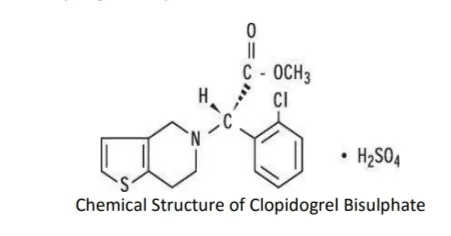
Clopidogrel Bisulphate -One common antiplatelet medication used to prevent thrombotic events such myocardial infarction, stroke, and peripheral arterial disorders is clopidogrel bisulphate. It works by specifically preventing platelet aggregation caused by adenosine diphosphate (ADP) and is a member of the thienopyridine class of medications. In order to prevent cardiovascular problems, clopidogrel and aspirin are frequently administered as dual antiplatelet treatment.
Therapeutic use-
• Thrombosis prevention
• Acute coronary syndrome treatment
Reported Method of Clopidogrel Bisulphate –
|
SR NO. |
DRUGS |
METHOD |
BRIEF INTRODUCTION |
REF.NO. |
|
1 |
Clopidogrel and Aspirin
|
RP-HPLC |
Mobile phase -ACN: Buffer (60:40 v/v) Flow rate- 1.0 mL/min Wavelength-240 nm Column- C18 Column |
21 |
|
2 |
Clopidogrel and Rosuvastatin
|
RP-HPLC |
Mobile phase -Methanol: Buffer (70:30 v/v) Flow rate-1.0 mL/min Wavelength-238 nm Column- C18 Column |
22 |
|
3 |
Clopidogrel and Atorvastatin
|
RP-HPLC |
Mobile phase -ACN:Water (65:35 v/v) Flow rate-1.0 mL/min Wavelength-235 nm Column-- C18 Column |
23 |
|
4 |
Clopidogrel and Atorvastatin, Aspirin
|
RP-HPLC |
Mobile phase -Methanol: Buffer (72:28 v/v) Flow rate-1.0 mL/min
Wavelength-242 nm Column- C18 Column |
24 |
|
5 |
Clopidogrel and Metoprolol
|
RP-HPLC |
Mobile phase - ACN: Buffer (58:42 v/v) Flow rate-1.0 mL/min Wavelength-230 nm Column- C18 Column |
26 |
|
6 |
Clopidogrel and Telmisartan
|
RP-HPLC |
Mobile phase - Methanol: Buffer (70:30 v/v) Flow rate-1.0 mL/min Wavelength-232 nm Column C18 Column - |
27 |
|
7 |
Clopidogrel and Olmesartan
|
RP-HPLC |
Mobile phase - Methanol: Buffer (65:35v/v) Wavelength-234 nm Column- C18 Column Flow rate-1.0 mL/min |
28 |
Rosuvastatin Calcium - One member of the statin drug class that lowers cholesterol is rosuvastatin calcium. It is frequently recommended for heart disease-related lipid problems, particularly high cholesterol. This medication is frequently used either alone or in combination with other drugs like aspirin and clopidogrel to treat coronary artery disease. To ensure that rosuvastatin calcium formulations are precise, pure, and stable, researchers in the pharmaceutical industry commonly employ a method known as RP-HPLC.

Pharmacological action -By inhibiting a certain liver enzyme that is crucial for the production of cholesterol, rosuvastatin calcium lowers cholesterol levels. This lowers triglycerides and bad cholesterol (LDL) while raising HDL (good cholesterol). This drug effectively supports improved cardiovascular health by avoiding the accumulation of cholesterol in blood arteries, which can cause major health problems like heart attacks and strokes.
Therapeutic use –
• High cholesterol
• Low cholesterol
• Avoiding heart-related illnesses
Reported Method of Rosuvastatin Calcium-
|
SR NO |
DRUGS |
METHOD |
BRIEF INTRODUCTION |
REF. NO. |
|
1 |
Rosuvastatin and Metformin
|
RP-HPLC |
Mobile phase - ACN:Water (67:33 v/v) Flow rate-1.1 mL/min Wavelength-243 nm Column- C18 Column |
30 |
|
2 |
Rosuvastatin and Ramipril
|
RP-HPLC |
Mobile phase - Methanol: Buffer (70:30v/v) Flow rate-1.0 mL/min Wavelength-240 nm Column- C18 Column |
31 |
|
3 |
Rosuvastatin and Fenofibrate
|
RP-HPLC |
Mobile phase - ACN: Water (68:32v/v) Flow rate-1.2 mL/min Wavelength-250 nm Column- C18 Column |
32 |
|
4 |
Rosuvastatin and Ezetimibe
|
RP-HPLC |
Mobile phase - Methanol: Buffer (72:28v/v) Flow rate-1.0 mL/min Wavelength-242 nm Column- C18 Column |
33 |
|
5 |
Rosuvastatin and Olmesartan
|
RP-HPLC |
Mobile phase - ACN: Water (67:33v/v) Flow rate-1.1 mL/min Wavelength-243 nm Column- C18 Column |
34 |
|
6 |
Rosuvastatin and Pioglitazone
|
RP-HPLC |
Mobile phase - Methanol: Buffer (70:30v/v) Flow rate-1.0 mL/min Wavelength-247 nm Column- C18 Column |
35 |
|
7 |
Rosuvastatin and Clopidogrel
|
RP-HPLC |
Mobile phase -ACN :Buffer(65 :35 v/v) Flow rate-1.0 mL/min Wavelength-238 nm Column- C18 Column |
36 |
|
8 |
Rosuvastatin and Aspirin
|
RP-HPLC |
Mobile phase - Methanol: Water (70:30v/v) Flow rate-1.0 mL/min Wavelength-230 nm Column- C18 Column |
37 |
|
9 |
Rosuvastatin and Atorvastatin
|
RP-HPLC |
Mobile phase - Methanol: Buffer (60:40v/v) Flow rate-1.0 mL/min Wavelength-240 nm Column- C18 Column |
38 |
Reported Method Of Aspirin, Rosuvastatin Calcium, Clopidogrel Bisulphate With Each Other -
|
SR NO. |
DRUGS |
METHOD |
BRIEF INTRODUCTION |
REF.NO |
|
1 |
Rosuvastatin and Atorvastatin
|
RP-HPLC |
Mobile phase - Methanol: Buffer (60:40v/v) Flow rate-1.0 mL/min Wavelength-240 nm Column-- C18 Column |
39 |
|
2 |
Aspirin and clopidogrel
|
RP-HPLC |
Mobile phase - ACN: Buffer (60:40 v/v)
Flow rate-1.0 mL/min
Wavelength-240 nm Column--C18 Column |
40 |
|
3 |
Rosuvastatin and Aspirin
|
RP-HPLC |
Mobile phase - Methanol: Water (70:30v/v) Flow rate-1.0 mL/min
Wavelength-230 nm Column- C18 Column |
41 |
|
4 |
Clopidogrel, Atorvastatin and Aspirin
|
RP-HPLC |
Mobile phase - Methanol: Buffer (60:40v/v) Flow rate-1.0 mL/min Wavelength-243 nm Column- C18 Column |
42 |
|
5 |
Rosuvastatin, Atorvastatin and Aspirin
|
RP-HPLC |
Mobile phase - ACN: Water (68:32v/v) Flow rate-1.0 mL/min
Wavelength-230 nm Column- C18 Column |
43 |
|
6 |
Clopidogrel and Rosuvastatin
|
RP-HPLC |
Mobile phase - ACN: Buffer (65:30v/v) Flow rate-1.0 mL/min Wavelength-238 nm Column- C18 Column |
44 |
|
7 |
Aspirin and Rosuvastatin
|
RP-HPLC |
Mobile phase - Methanol: Water (68:32v/v) Flow rate-1.0 mL/min Wavelength-237 nm Column- C18 Column |
45 |
Method development –
1-Selection of Column
The most often cited techniques:
Hypersil BDS C18
Water C18
BISCOF C18
ODS C18 Inertsil
Typical measurements:
• 250 mm × 4.6 mm
• Particle size: 5 µm
C18 columns provide: Enhanced symmetry at the top
• High retention
• Outstanding resolution
• A reduction in peak tailing [47] 2-Selection of Mobile Phase
Optimizing the mobile phase is essential to
• Sharp peaks • Sufficient retention time;
• Better resolution;
• A reduction in tailing Optimizing the mobile phase is essential to
• Sharp peaks
• Sufficient retention time;
• Better resolution;
• A reduction in tailing
3-Detection Wavelength-
Most described RP-HPLC methods used UV detection at 230 nm, 235 nm, 240 nm, and 242 nm.
Most described RP-HPLC methods used UV detection at
4-Flow Rate -
The most efficient methods used were
At a flow rate of 1.0 mL/min, better resolution and a controllable run time were achieved.
5-Retention Time- Typical retention times reported were
|
Drug |
Retention Time |
|
Aspirin |
2–4 min |
|
Clopidogrel |
4–13 min |
|
Rosuvastatin |
4–6 min |
Most methods achieved complete separation within 15 minutes
Validation According to ICH Guidelines -
1-Linearity
Linearity determines the proportionate relationship between concentration and detector response.
Most studies showed: • Excellent linearity across the operating concentration range
2-Accuracy
Recovery studies were used to assess accuracy at:
• 80%
• 100%
This verified the developed approaches' correctness.
3-Precision
The precision studies included:
• The capacity for repetition;
• Accuracy during the day;
• Accuracy throughout the day Most of the ways that are described:
• Outstanding accuracy and repeatability are indicated by percent RSD < 2%.
4-Specificity -
Research on specificity confirmed: No excipient interference
Peak separation of analytes that is suitable
Accurate calculation in the formulation.[48]
4-Robustness -To assess robustness, small, deliberate changes were made to:
5-LOD and LOQ
LOD and LOQ studies demonstrated the exceptional sensitivity of RP-HPLC methods.
Decreased LOQ and LOD values indicate: [49]
1. Increased sensitivity
2. Suitable for examination at low concentrations
Applications of RP-HPLC
RP-HPLC techniques are widely employed for
Assay analysis;
Advantage of RP-HPLC
Method validation

CONCLUSION
Aspirin, rosuvastatin calcium, and clopidogrel bisulphate are important in numerous disorders, including cardiovascular diseases. There are numerous formulations of these medications with varying dosages on the market. Numerous techniques for estimating these medications have been documented, however as of right now, no technique has been documented for simultaneously estimating these medications in their combined dosage form. For their simultaneous estimation in a combined dosage form, a suitable, accurate, and verified method must be developed.[50]
REFERENCES

Rutuja Pawar, Dr. Avinash Bhagwat, Dr. Prakash Jadhav, Review on RP-HPLC Method Development and validation for Simultaneous Estimation of Aspirin, Rosuvastatin Calcium, Clopidogrel Bisulphate in Pharmaceutical Dosage Form, Int. J. of Pharm. Sci., 2026, Vol 4, Issue 6, 2305-2314, https://doi.org/10.5281/zenodo.20609926
 10.5281/zenodo.20609926