

We use cookies to ensure our website works properly and to personalise your experience. Cookies policy
Krupanidhi College of Pharmacy, Carmelaram, Karnataka, India 560035
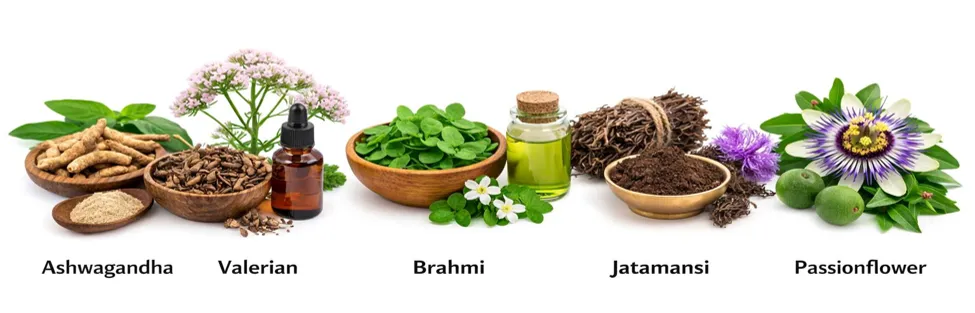
Anxiety and insomnia are common and widely observed neuropsychiatric disorders that mainly affect mental health, daily life and overall quality of life. These conditions often arise due to increasing academic pressure, lifestyle changes, and stress-related factors. Although conventional drugs such as benzodiazepines and sedative–hypnotics are effective, their long-term use is frequently associated with adverse effects, tolerance, and dependence. In recent years, there has been growing interest in herbal drugs as safer and more acceptable alternatives for the management of anxiety and sleep disorders. Herbal medicines have been traditionally used in various systems of medicine due to their anxiolytic and sedative properties, with better patient tolerability during prolonged use. Several medicinal plants, including Ashwagandha (Withania somnifera), Valerian (Valeriana officinalis), Brahmi (Bacopa monnieri), Jatamansi (Nardostachys jatamansi), and Passionflower (Passiflora incarnata), have demonstrated potential benefits in reducing anxiety, promoting relaxation, and improving sleep quality. Their effects are associated with modulation of GABAergic, serotonergic and melatonin-related pathways, regulation of the hypothalamic–pituitary–adrenal axis, and reduction of stress-related responses. This review discusses commonly used herbal drugs for anxiety and insomnia, their mechanisms of action, therapeutic benefits, role in stress-induced anxiety, and limitations. Despite their potential benefits, variations in phytochemical composition, lack of standardization, limited clinical evidence, and possible herb–drug interactions remain important concerns. The increasing preference for plant-based therapies highlights the importance of scientific evaluation, quality control, standardization, and well-designed clinical studies, which may contribute to the development of safer and more effective treatment options for anxiety and insomnia.
Anxiety and insomnia are among the most frequently and commonly reported mental health disorders worldwide. Anxiety commonly presents with persistent fear, nervousness, and excessive worry, while insomnia refers to problems related to falling asleep or maintaining sleep. These conditions often coexist and can negatively impact daily functioning, emotional stability, and overall health. [1,2]
Conventional pharmacological treatments such as benzodiazepines, antidepressants, and hypnotic agents are commonly prescribed for these disorders. Prolonged use of these drugs may lead to adverse effects including daytime sedation, cognitive impairment, tolerance, and dependence. Due to these limitations, there is increasing interest in alternative treatment approaches. [1-3]
Herbal drugs have been used for centuries in traditional systems of medicine such as Ayurveda and Traditional Chinese Medicine for the management of stress-related disorders and many mental health disorders. Herbal drugs are often considered safer, especially when long-term treatment is required. Many medicinal plants possess anxiolytic and sedative properties and are considered safer for long-term use. Herbal drugs appear to be effective in reducing anxiety symptoms in many patients. [1,3,24,25] This review focuses on herbal drugs used in the management of anxiety and insomnia and their therapeutic action.
Etiology and Pathophysiology of Anxiety and Insomnia
The etiology of anxiety and insomnia is multifactorial which involves various factors such as psychological, biological, and environmental factors. Chronic stress, emotional disturbances, academic or occupational pressure and lifestyle changes are common contributing factors. Neurotransmitter imbalance is considered a key factor in anxiety, particularly involving mediators such as gamma-aminobutyric acid (GABA), serotonin, and melatonin. [1,2,24,25]
Pathophysiologically, anxiety is associated with increased neuronal excitability in brain regions responsible for emotional regulation. Insomnia often results from persistent hyperarousal of the central nervous system. Reduced GABAergic activity leads to inadequate inhibition of neuronal firing, contributing to anxiety and sleep disturbances. [1,2]
In addition, prolonged activation of the hypothalamic–pituitary–adrenal (HPA) axis during stress results in elevated cortisol levels, which further disrupt sleep patterns and worsen anxiety symptoms. [4,7,24,25]
Herbal Drugs Used in the Management of Anxiety and Insomnia
Several medicinal plants have demonstrated anxiolytic and sedative effects which are commonly used in the management of anxiety and insomnia. [1,3,23]
Ashwagandha is a well-known adaptogenic herb used to reduce stress and anxiety. It helps regulate cortisol levels and enhances resistance to stress. Ashwagandha also promotes relaxation and improves sleep quality. It has been used in Ayurvedic medicine for its rejuvenating and stress-relieving properties. Several studies show that it may help shorten the time required to fall asleep and reduce symptoms associated with chronic stress. [4-8,25]
Valerian root is widely used as a natural sedative. It helps to increase GABA levels in the brain, thereby reducing anxiety and improving sleep onset. Valerian is commonly used in mild to moderate insomnia. Traditionally, valerian has been used in Europe for the management of sleep disorders and nervous tension. It is commonly recommended for individuals who have difficulty falling asleep, particularly when sleep problems are associated with stress or anxiety. [9,10,23]
Brahmi is traditionally used as a brain tonic. It exhibits anxiolytic properties and helps improve cognitive function. Additionally, Brahmi also supports mental calmness and reduces stress-related symptoms. In addition to its anxiolytic effects, Brahmi is widely recognized for its ability to improve memory and learning. This makes it particularly beneficial for individuals experiencing mental fatigue and cognitive impairment related to stress. [11]
Jatamansi possesses sedative and neuroprotective properties. It is commonly used in the management of anxiety, insomnia, and stress-related disorders by calming the central nervous system. In traditional medical practice, Jatamansi is valued for its calming effects on the mind and is commonly recommended for conditions marked by restlessness and disturbed sleep. [12]
Passionflower has mild sedative and anxiolytic effects. It is often used as an adjunct therapy for anxiety and sleep disturbances due to its ability to enhance GABA activity. It is often used in combination with other sedative herbs to improve its overall effectiveness in the management of anxiety-related insomnia. [13-15]
Commercially Available Herbal Formulations
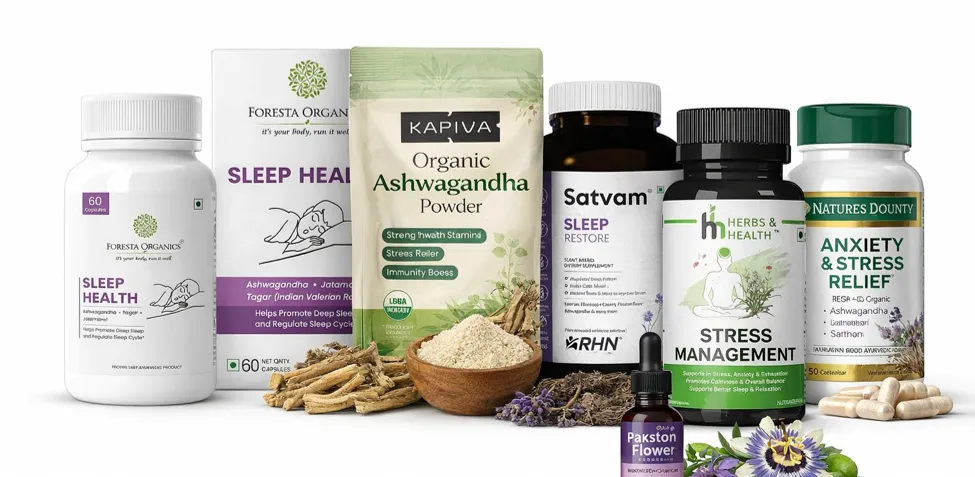
Several herbal formulations are commercially available for the management of anxiety and insomnia. These products usually contain a combination of adaptogenic and sedative herbs such as Ashwagandha, Valerian, Brahmi, and Jatamansi. Such formulations are designed to promote relaxation, reduce stress-related symptoms, and improve sleep quality. However, their clinical efficacy may vary depending on formulation, dosage, and quality of herbal extracts. [1,19-22]
Content: Ashwagandha + Jatamansi + Valerian (Tagar) extracts.
Uses: Helps reduce stress hormone (cortisol) and calm the nervous system so sleep initiates more easily and sleep quality improves. The combination of adaptogenic (Ashwagandha) and sedative (Jatamansi, Valerian) herbs supports both anxiety reduction and restful sleep.
Content: Jatamansi, Brahmi, Ashwagandha.
Uses: Traditionally used to relieve night-time stress, promote relaxation, and support sleep onset. These herbs also help reduce mental fatigue and support emotional calm.
Content: Plant-based formula with Valerian, Ashwagandha, and Brahmi.
Uses: Designed to support calmness, emotional balance, and improved sleep quality by easing stress-related anxiety and promoting nervous system relaxation.
Content: Ashwagandha, Brahmi, Jatamansi, Chamomile extracts.
Uses: Helps reduce stress, supports calmness, and improves sleep quality by targeting symptoms of nervous tension.
Mechanism of Action of Herbal Drugs
Herbal drugs produce their anxiolytic and sedative effects through various actions on the central nervous system. Many of these plants enhance the activity of GABA, a neurotransmitter that reduces the activity of nerve cells, that leads to relaxation and better sleep. This process is somewhat similar to how some standard anti-anxiety medications work, but herbal drugs have a lower risk of causing dependency or other unwanted side effects. [1,9,10,13,23]
In addition, influencing GABA, some herbal drugs also impact other chemical messengers in the body, such as serotonin and melatonin. These substances play key role in controlling emotions and maintaining the sleep–wake cycle. By supporting the balance of these neurotransmitters, herbal drugs can help improve emotional stability and maintain regular sleep patterns. [1,2,24,25]
Furthermore, certain herbs work by influencing the body’s response to stress, especially through the hypothalamic–pituitary–adrenal (HPA) axis. These herbs can help decrease levels of cortisol, a stress hormone, and improve how the body deals with stress. This can reduce feelings of anxiety and prevent sleep problems caused by stress. Moreover, some herbal drugs have antioxidant and protective effects on the brain, protecting nerve cells from damage caused by harmful free radicals. This supports overall brain health. The combination of these effects contributes to better mood, less anxiety, and improved sleep quality. [4,7,11,12,24,25]
Advantages and Limitations of Herbal Therapy
Herbal therapy offers several benefits when compared to standard pharmaceutical treatments. These include better tolerance by the body, a decreased chance of drug dependent, and the ability to be used for long period of time. Herbal medicines are typically well-received by patients and are linked to fewer harmful side effects than synthetic drugs. Moreover, their natural source and long-standing use in traditional practices help build patient confidence and encourage adherence, especially among those who prefer holistic or alternative care approaches. [1,3,23]
One key benefit of herbal treatment is its ability to show their action on multiple targets at once. Unlike standard medicines that usually work on a single pathway, herbal remedies contain various active components that work together to produce calming and sleep-inducing effects. This combined action can lead to improved treatment results while reducing serious side effects. [1,24,25]
However, herbal therapy also has some drawbacks. There is often a lack of uniformity and standardization in herbal products, which can lead to variations in the active ingredients they contain. Differences in how herbs are grown and prepared can also influence the quality and effectiveness of these treatments. Additionally, the scientific proof supporting some herbal remedies is not strong enough because there are not enough large-scale studies or clinical trials. [1-3,19-23]
Another important consideration is the possibility of interactions between herbs and other medications. This is particularly important for people who are already taking conventional drugs. Using herbs incorrectly or without guidance can result in harmful side effects. As a result, more research, strict quality control, and clinical testing are necessary to ensure that herbal treatments are both safe and effective for managing anxiety and sleep disorders. [19-22]
Role of Herbal Drugs in Anxiety with Insomnia
Anxiety and insomnia frequently occur together and share overlapping neurobiological mechanisms. Individuals suffering from anxiety often experience difficulty in initiating or maintaining sleep due to persistent mental arousal, excessive worry, and heightened neuronal activity. At the same time, inadequate or poor-quality sleep further worsens anxiety symptoms, creating a bidirectional relationship between the two conditions. Effective management therefore requires therapeutic approaches that address both anxiety and sleep disturbances simultaneously. [1,2]
Herbal drugs play an important role in managing anxiety associated with insomnia by exerting anxiolytic as well as sedative effects. Many medicinal plants act on the central nervous system by modulating neurotransmitters involved in anxiety and sleep regulation, particularly gamma-aminobutyric acid (GABA), serotonin, and melatonin. Enhancement of GABAergic activity helps reduce neuronal excitability, leading to calming effects and improved sleep onset. [1,9,10,13]
Herbs such as Valerian, Jatamansi, and Passionflower are commonly used to promote sleep and reduce anxiety. These herbs produce a mild sedative effect without causing significant dependence or tolerance, making them suitable for long-term use. [9,12,13,23] In addition, adaptogenic herbs like Ashwagandha help normalize stress responses and support emotional balance, which indirectly improves sleep quality in anxious individuals. [4-8,25]
The combined anxiolytic and sleep-promoting effects of herbal drugs make them particularly beneficial in patients with anxiety-related insomnia. Their multi-target mechanism and safety profile support their role as effective alternatives or complementary therapies in the management of these coexisting conditions. [1,2,23-25]
Stress-Induced Anxiety and Herbal Management
Stress-induced anxiety is a common mental health condition resulting from prolonged exposure to psychological, emotional, or environmental stressors. Chronic stress leads to dysregulation of the hypothalamic–pituitary–adrenal (HPA) axis, resulting in elevated cortisol levels and increased neuronal excitability. Over time, this persistent stress response contributes to symptoms such as nervousness, irritability, restlessness, and sleep disturbances. [4,7,24,25]
Herbal management of stress-induced anxiety focuses on restoring physiological balance and improving the body’s ability to cope with stress. Adaptogenic herbs play a crucial role in this process by enhancing stress resistance and reducing excessive cortisol release. Ashwagandha is one of the most extensively studied adaptogens and has shown significant benefits in reducing stress-related anxiety and improving overall well-being. [4-8,25]
Other herbs such as Brahmi support mental clarity, emotional stability, and cognitive function, making them useful in individuals experiencing anxiety associated with mental fatigue. Sedative herbs including Jatamansi and Passionflower help calm the central nervous system, reduce restlessness, and promote relaxation during periods of stress. [12-15]
In addition to their anxiolytic effects, many herbal drugs possess antioxidant and neuroprotective properties that protect the brain from stress-induced oxidative damage. This contributes to long-term mental health benefits and reduces the likelihood of recurrence. Overall, herbal management provides a holistic, well-tolerated, and effective approach for controlling stress-induced anxiety, particularly in individuals seeking natural or complementary treatment options. [1,11,12,24,25]
CONCLUSION
Anxiety and insomnia are common mental health issues that greatly affect an individual’s daily activities, emotions, and quality of life. While traditional medication can help manage symptoms, long-term use often leads to side effects, the body getting used to the medication, and dependency. These issues have led to more interest in safer and longer-lasting treatment options. [1-3]
Natural remedies, especially herbal medicines, have become popular because they can help reduce anxiety and promote better sleep. These herbs work by regulating the neurotransmitters and stress-related processes. Plants like Ashwagandha, Valerian, Brahmi, Jatamansi, and Passionflower have shown benefits in treating anxiety and improving sleep. Their use in traditional medicine also suggests they could be valuable in overall mental health care. [1,4-15]
Still, more high-quality research and standardized herbal products are needed to determine the effective doses, ensure safety, and confirm long-term effectiveness. With proper scientific support, herbal treatments could be a safe, effective, and helpful addition to managing anxiety and sleep problems. [1-3,19-22]
CONFLICT OF INTEREST
The author declares no conflict of interest.
REFERENCES

Rupam Majee, Reviewed Literature on Herbal Medicines Used in the Management of Anxiety and Insomnia, Int. J. of Pharm. Sci., 2026, Vol 4, Issue 8, 5370-5377. https://doi.org/10.5281/zenodo.22220449
 10.5281/zenodo.22220449