

We use cookies to ensure our website works properly and to personalise your experience. Cookies policy
Centre for Pharmaceutical Sciences, UCESTH, JNTUH, Kukatpally, Hyderabad.
Indole is a heterocyclic aromatic compound that has gained considerable attention in medicinal chemistry because of its diverse pharmacological properties, particularly its promising antibacterial activity.Pharmacological agents that kills bacteria are essential drugs in some tropical countries. In this review ,a series of 2-(4-Bromophenyl)-1H-indole derivatives (5a-e) have been synthesized by the conventional method. The obtained derivatives were purufied by recrystallization using methanol as a solvent or columa chromatography. They are characterized by melting point, TLC, FT-IR, 13C NMR, 1H NMR, MASS spectral data. These compounds wewrw evaluated in silico by using softwaew’s (Pubchem for novality, Lipinski’s rule of 5, Molsoft molecular property explorer, OSIRIS for toxicity studies, PASS prediction and Molecular docking studies). These compounds were evaluted for their possible antibacterial activity against gram +ve bacteria (Staphylococcus aureas, Bacillus subtilis). These derivatives are compared with standard antibacterial drug (Norfloxacin).All the novel derivatives shows antibacterial activity but the derivative 5d shows high potent activity towards bacteria. Molecular docking studies guided and proved the biological activity against Dihydrofolate reductase protein (3SRQ). In conclusion these novel indole derivatives have promising potential as antibacterial activity for treatment of many bacterial infections.
The widespread use of antibiotics has significantly improved public health by reducing the incidence and severity of bacterial infections. However, the inappropriate and excessive use of these agents has accelerated the emergence of antibiotic-resistant bacterial strains, thereby diminishing the effectiveness of conventional antimicrobial therapies. The rapid development of antimicrobial resistance has become a major global health concern and highlights the urgent need for the discovery of novel antibacterial agents. Among the promising heterocyclic scaffolds, benzimidazole and indole derivatives have attracted considerable attention because of their broad spectrum of biological activities. These aromatic heterocyclic compounds serve as valuable structural frameworks in medicinal chemistry and are extensively utilized for the design, synthesis, and structural modification of new pharmaceutical agents with enhanced therapeutic potential.
The indole nucleus is a pharmacologically important bicyclic heterocyclic ring with nitrogen atom which exhibits a broad spectrum of biological activities. Owing to its versatile chemical structure, indole has been extensively employed in medicinal chemistry to enhance the antibacterial potential of therapeutic compounds. Furthermore, indole derivatives have demonstrated significant pharmacological activities, including antitumor, antimicrobial, antibacterial, antiviral, antifungal, and anti-HIV effects.
MATEERIALS AND METHODS
Phenylhydrazine, 4-bromo acetophenone, Ethanol, Glacial acetic acid, Dilute HCL, Rectified spirit, Polyphosphoric acid, Activated charcoal, Potassium carbonate, Dimethyl formamide, Alkyl halides (Chloro fluro benzene, 2-chloro ethanol, Chloroacetonitrile, 2-chloro acetamide, Trifluoromethyl).
All the reactions werw performed in dried borosilicate glass beakers, round bottemed flask, Heating mantle with reflux condenser. Precoated silica gel plates (MERCK) were useed for TLC to monitor progress of the reaction. Compounds melting points were determined by capillary method and are uncorrected. JASCO UV chamber was used for detection of spots in TLC. IR spectra were recorded on BRUKER FTIR spectrometer. 1H NMR spectra were recorded on 400MHZ spectrometer using DMSO as solvent. The chemical shift data were expressed as values relative to TMS in ppm. Mass spectra were recoded on a 3-5kvESI-MS instrument. 13C NMR spectra were recoded on 100MHZ spectrometer using DMSO as solvent. Elemental analyses (C,H, and N) of the compounds were obbtained from perki-Elmer 240B analyzer and were within ± 0.4% of the theoretical values.
Experimental
In Silico Screening
Lipinski’s rule of 5 filtration
The molecular structures were prepared and uploaded in one of the supported formats, including *.pdb, *.mol, *.mol2, *.xyz, *.sdf, or *.smiles. The input file names were carefully checked to ensure they contained no blank spaces or unnecessary characters. After uploading the files, the pH was adjusted within the range of 0–14 according to the study requirements. The files were then submitted, and the molecular property results were generated following the method described by Lipinski (2004).
OSIRIS Property Explorer
In the present study, OSIRIS Property Explorer Version 2, a Java-based software application, was employed to predict the physicochemical and toxicity properties of the designed compounds. The chemical structures were either drawn directly within the software or imported in SMILES format for analysis. The software generated property predictions using a color-coded display, where green indicated a favorable or non-toxic property, while red signified a potential toxicity risk. This approach facilitated the preliminary assessment of the drug-likeness and safety profile of the synthesized compounds prior to further computational and experimental investigations.
Prediction of Activity Spectra for Substances (PASS)
Compounds that satisfied the Lipinski rule of five were further evaluated using the online PASS (Prediction of Activity Spectra for Substances) software to predict their potential biological activities. The prediction was based on the probability of activity (Pa) and probability of inactivity (Pi) values, which range from 0.000 to 1.000. These values were used as the selection criteria for assessing the likelihood of various biological activities of the designed molecules.
Molsoft Property Explorer
In the present study, Molsoft Property Explorer (Version 3.7-2) was employed to evaluate the physicochemical properties of the designed compounds. The molecular structures were either drawn directly within the software interface or imported in MOL, InChI, or SMILES formats. The software was used to calculate key molecular descriptors, including MlogP (octanol/water partition coefficient) and MlogS (aqueous solubility), which are important parameters for assessing the drug-likeness of the compounds.
Molecular Docking
Molecular docking studies were performed using AutoDock 4.2 to investigate the binding interactions of the synthesized indole derivatives (5a–5e) with the bacterial target enzyme Dihydrofolate Reductase (DHFR). The crystal structure of DHFR was retrieved from the Protein Data Bank (PDB) and prepared by removing water molecules and heteroatoms, followed by the addition of polar hydrogens and Kollman charges. The synthesized compounds and the standard drug, Norfloxacin, were drawn using ChemDraw, converted into 3D structures, energy minimized, and saved in PDBQT format. Docking simulations were carried out using the Lamarckian Genetic Algorithm (LGA) in AutoDock 4.2. The docked complexes were analyzed based on binding energy, hydrogen bonding, hydrophobic interactions, and interacting amino acid residues. The compound with the lowest binding energy was considered the most stable, and the results were compared with Norfloxacin to evaluate the antibacterial potential of the synthesized indole derivatives.
Chemistry
Synthesi of (E)-1-(4-bromophenyl)ethanone phenylhydrazone
A solution of 4-bromoacetophenone (1 mmol) in ethanol (10 mL) was treated with phenylhydrazine (1 mmol), followed by the addition of 2–3 drops of glacial acetic acid as a catalyst. The reaction mixture was refluxed at 70–80°C for 2–4 h, and the progress was monitored by TLC. After completion, the mixture was cooled to room temperature and then in an ice bath to induce precipitation of the hydrazone. The solid product was collected by filtration, washed successively with dilute hydrochloric acid and rectified spirit, and recrystallized from ethanol to afford pure (E)-1-(4-bromophenyl)ethanone phenylhydrazone.
Synthesis of 2-(4-bromophenyl)-1H-indole
Polyphosphoric acid (PPA) was gently warmed until liquefied, and (E)-1-(4-bromophenyl)ethanone phenylhydrazone (1 mmol) was added portion-wise with continuous stirring. The reaction mixture was heated at 100–120°C for 20–30 min, and the progress was monitored by TLC. After completion, the mixture was cooled and poured onto crushed ice to precipitate the crude indole derivative. The solid was filtered, washed thoroughly with cold water, and dried. The crude product was purified by recrystallization from hot ethanol using activated charcoal, filtered, and the filtrate was allowed to evaporate to obtain the purified indole derivative, which was stored in an airtight container.
Synthesis of N- substituted-2-(4-bromophenyl)-1H indole derivatives (1a-e)
2-(4-Bromophenyl)-1H-indole (1 mmol) was dissolved in dry DMF (10 mL), followed by the addition of K₂CO₃ (1.5 mmol). After stirring for 30 min at room temperature, the appropriate alkyl halide (1.2 mmol) was added dropwise. The reaction mixture was heated at 80–90°C for 6–8 h with continuous stirring, and the progress was monitored by TLC. Upon completion, the reaction mixture was cooled and poured into ice-cold water to precipitate the product. The crude solid was collected by filtration, washed with water, dried, and recrystallized from ethanol to afford the pure N-substituted indole derivatives.
SCHEME:
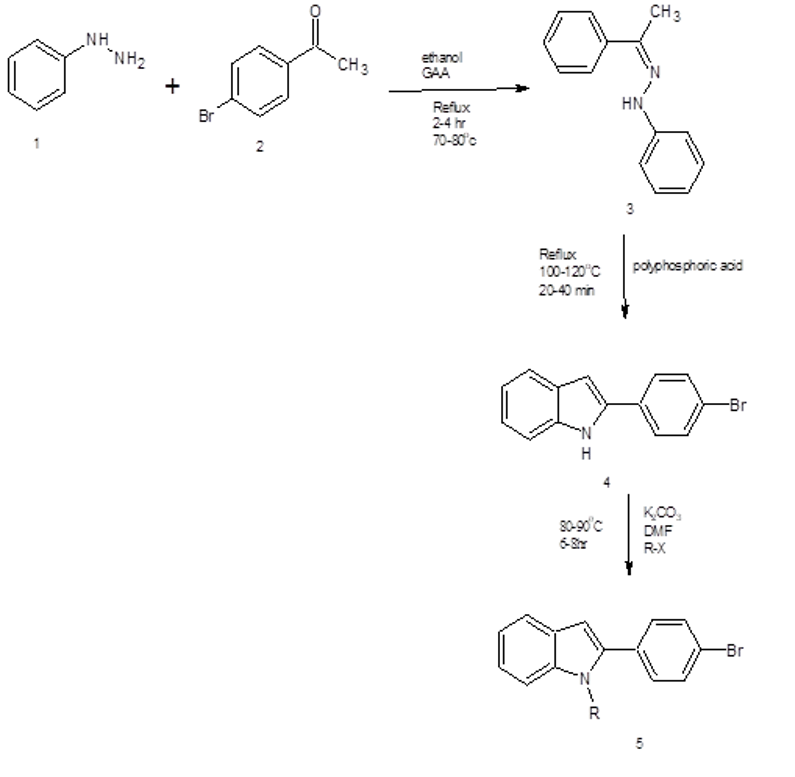
R = a = -C6H5F
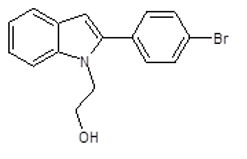
b = -CH2CH2OH
c = -CH2CN
d = -CH2CONH2
e = -CF3
Spectral Characterisation
The synthesised indole derivatives were characterised using FTIR, ^1H NMR, and ESI-MS techniques to verify their chemical structures. FTIR spectroscopy was used to identify the characteristic functional groups, while ^1H NMR analyses confirmed the proton and carbon environments within the molecules. ESI-MS was employed to determine the molecular mass and isotopic pattern. The combined spectral data confirmed the successful synthesis and structural identity of the target compounds. Among all ( 5a-e ) derivatives 5d shows the maximum spectral acctiity as shown below.
FTIR (KBr, cm⁻¹): 3310 (N–H, str); 3075 (Ar–C–H, str); 2921 (Aliphatic C–H, str); 1620 (C=N, azomethine, str); 1585 (Ar C=C, str); 1585 (N–H, bend); 1456 (C–N, str); 1310 (C–N, str); 1175 (C–N, str); 1078 (C–C, str); 760 (Ar C–H, out-of-plane bend); 690 (C–Br, str).
ESI-MS (m/z): 367.0687 ([M+H]⁺), 369.0666 ([M+H+2]⁺, ^79Br/^81Br isotopic peak), 394.0481 ([M+Na]⁺), 405.0300 ([M+K]⁺), 733.1273 ([2M+H]⁺); fragment ions at m/z 318.0764, 288.1016, 273.1135, 249.0922, 224.1079, 179.0828, 152.0706 and 121.0651.
¹H NMR (400 MHz, DMSO-d₆, δ ppm): 10.85 (s, 1H, NH), 7.75–7.68 (d, J = 8.4 Hz, 2H, Ar–H), 7.55–7.48 (d, J = 8.4 Hz, 2H, Ar–H), 7.42–7.18 (m, 5H, Ar–H), 2.28 (s, 3H, CH₃).
Evaluation of Antibacterial activity
Agar Well Diffusion Method
Mueller–Hinton agar was prepared according to the manufacturer's instructions, sterilized at 121°C for 15 min, and dispensed into sterile Petri plates. A standardized bacterial inoculum of Staphylococcus aureus or Bacillus subtilis (0.5 McFarland standard; approximately 1.5 × 10⁸ CFU/mL) was uniformly spread over the agar surface using a sterile cotton swab. Wells of 6 mm diameter were prepared using a sterile cork borer. The synthesized indole derivatives were dissolved in DMSO to obtain concentrations of 25, 50, 75, and 100 µg/mL, while Norfloxacin at the same concentrations served as the positive control and DMSO as the negative control. Fifty microlitres (50 µL) of each test solution were dispensed into the respective wells, and the plates were incubated at 37°C for 24 h. Following incubation, the zone of inhibition (ZOI) surrounding each well was measured in millimetres (mm) to evaluate the antibacterial activity of the synthesized compounds.
Broth Dilution Method
The minimum inhibitory concentration (MIC) of the synthesized indole derivatives was determined using the broth dilution method. Serial dilutions of the test compounds (25, 50, 75, and 100 µg/mL) were prepared in sterile nutrient broth and inoculated with a standardized Staphylococcus aureus or Bacillus subtilis suspension. The inoculated tubes were incubated at 37°C for 24 h, and the lowest concentration exhibiting no visible bacterial growth was recorded as the minimum inhibitory concentration (MIC
RESULTS AND DISCUSSIONS
In Silico Screening
Lipinski Rule of 5 Filtration
All the synthesized indole derivatives obey the Lipinski rule of 5 (Table 1).
TABLE 1: Results of Lipinski’s filtration
|
Compound |
Molecular weight(daltons) |
Hydrogen bond donors |
Hydrogen bond acceptors |
Log P |
Molar refractivity m3mol-1 |
|
5a |
366.23 |
0 |
1 |
5.77 |
96.37 |
|
5b |
316.19 |
1 |
1 |
3.58 |
82.30 |
|
5c |
311.18 |
0 |
1 |
3.89 |
80.89 |
|
5d |
329.19 |
1 |
1 |
3.09 |
84.05 |
|
5e |
340.14 |
0 |
3 |
5.23 |
76.37 |
|
Standard norfloxacin |
319.33 |
2 |
5 |
0.69 |
92.55 |
Prediction of Activity Spectra for Substances (PASS)
The Pa values for all the synthesized compounds (5a-5e) were found greater than 0.1. Compound 5d exhibited the highest Pa value amongst the series. However, it wsas found to be less than the standard Norfloxacin (Table 2)
TABLE 2: Results of PASS prediction
|
Compound |
Antibacterial activity |
|
|
|
Pa |
Pi |
|
5a |
0.137 |
0.081 |
|
5b |
0.288 |
0.069 |
|
5c |
0.217 |
0.153 |
|
5d |
0.325 |
0.066 |
|
5e |
0.243 |
0.126 |
|
Standard norfloxacin |
0.892 |
0.003 |
Pa =Probability to be active
Pi =Probability to be inactive
OSIRIS Molecular property Explorer
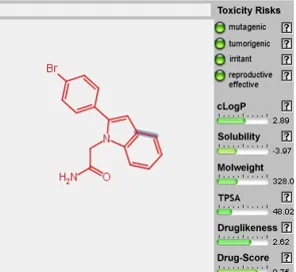
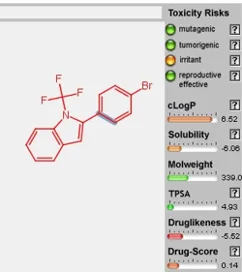
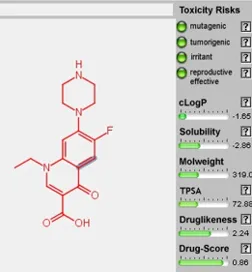
OSIRIS Molecular Property explorer revealed that the standard drug was non irritent, non-toxic to reproductive and non mutagenic. In the same way all synthesized compounds non- mutagenic, non-tumorigenic, non-reproductive effect. Where ony 5c and 5e shows the irritant effect. (Table 3).
TABLE 3
|
Compound |
Toxicity |
Clogp |
Solubility |
Molecular weight (grams) |
TPSA |
Drug Likeness |
Drug Score |
|
5a |
NO |
5.74 |
-8.36 |
365 |
4.93 |
-0.93 |
0.2 |
|
5b |
NO |
3.64 |
-3.91 |
315 |
25.16 |
1.46 |
0.68 |
|
5c |
Irritant |
3.81 |
-4.57 |
310 |
28.72 |
-2.93 |
0.21 |
|
5d |
NO |
2.89 |
-3.97 |
328 |
48.02 |
2.62 |
0.75 |
|
5e |
Irritant |
6.52 |
-6.06 |
339 |
4.93 |
-5.52 |
0.14 |
|
Standard Norfloxacin |
NO |
-1.65 |
-2.86 |
319 |
72.88 |
2.24 |
0.86 |
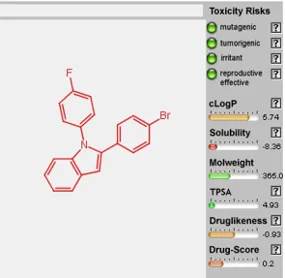
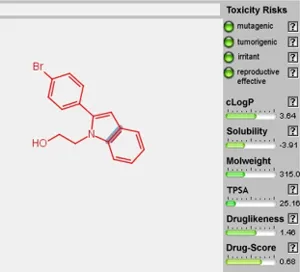
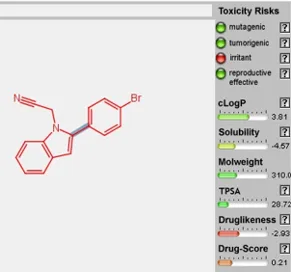
Molsoft Property Explorer
All the synthesized compounds and the Standard Norfloxacin shows the significant Molsoft values. (Table 4)
TABLE 4
|
Compound |
Molecular formula |
Mol.Weight (grams) |
HBA |
HBD |
MlogP |
MlogS |
Mol PSA |
Mol volume (m3/mol) |
|
5a |
C20H13BrFN |
365.02 |
0 |
0 |
6.67 |
-6.99 |
1.16 A2 |
296.68 A3 |
|
5b |
C16H14BrNO |
315.03 |
1 |
1 |
4.63 |
-4.78 |
17.33 A2 |
257.71 A3 |
|
5c |
C16H11BrN2 |
310.01 |
1 |
0 |
4.85 |
-5.36 |
18.16 A2 |
265.04 A3 |
|
5d |
C16H13BrN2O |
328.02 |
1 |
2 |
3.91 |
-4.26 |
34.08 A2 |
269.45 A3 |
|
5e |
C15H9BrF3N |
338.99 |
0 |
0 |
5.87 |
-6.91 |
0.51 A2 |
242.57 A3 |
|
Standard Norfloxacin |
C16H18FN3O3 |
319.13 |
4 |
2 |
-0.20 |
-2.14 |
59.08 A2 |
323.78 A3 |
Docking Analysis
Among the synthesized indole derivatives (5a–5e), compound 5d exhibited the highest binding affinity toward the DHFR active site, as indicated by its lowest (most negative) binding energy (-9.26) due to the presence of acetamide substitution suggesting that the strongest ligand–protein interaction with potential antibacterial activity.(Table 5).
TABLE 5
|
Compound |
Key Residue |
Distance (Ao) |
No.of Hydrogens |
Docking Score (Kcal/Mol) |
|
5a |
- |
- |
0 |
-8.97 |
|
5b |
SER |
2.915 Ao |
1 |
-8.81 |
|
5c |
- |
- |
0 |
-8.90 |
|
5d |
- |
- |
0 |
-9.26 |
|
5e |
- |
- |
0 |
-8.09 |
|
Standard Norfloxacin |
TYR GLU TYR ARG |
1.383Ao 2.044Ao 1.946Ao 3.048 Ao |
4 |
-6.79 |
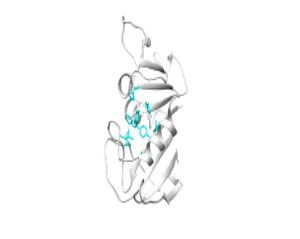
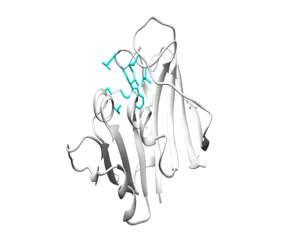
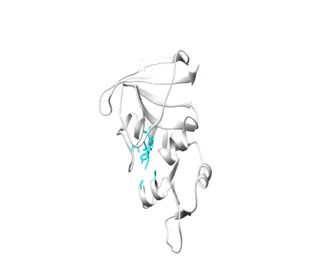
5a 5b 5c
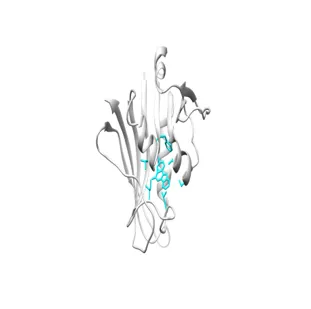
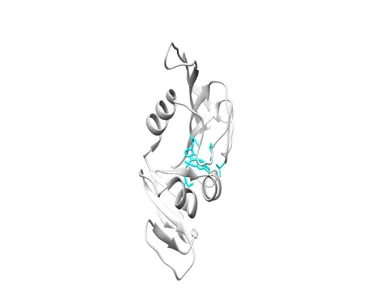
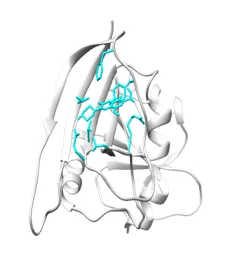
5d 5e Standard(Norfloxacin)
Physical Characterisation for Synthesized Derivatives
The synthesized indole derivatives (5a–5e) were evaluated for their physical characteristics, including appearance, color, percentage yield, melting point, molecular weight, and Rf values. The compounds exhibited satisfactory yields and distinct melting points, indicating a good degree of purity, while the Rf values confirmed the successful synthesis of the intended derivatives are shown in (Table 6)
TABLE 6
|
Compound |
Structure |
Molecular formula |
Molecular weight |
Melting point |
Rf value |
Percentage Yeild |
|
5a |

|
C20H13BrFN |
365 |
188 |
0.62 |
78% |
|
5b |
|
C16H14BrNO |
315 |
153 |
0.46 |
80% |
|
5c |

|
C16H11BrN2 |
310 |
172 |
0.58 |
82% |
|
5d |

|
C16H13BrN2O |
328 |
198 |
0.40 |
78% |
|
5e |

|
C15H10BrF3N |
339 |
118 |
0.68 |
84% |
Evaluation of antibacterial activity
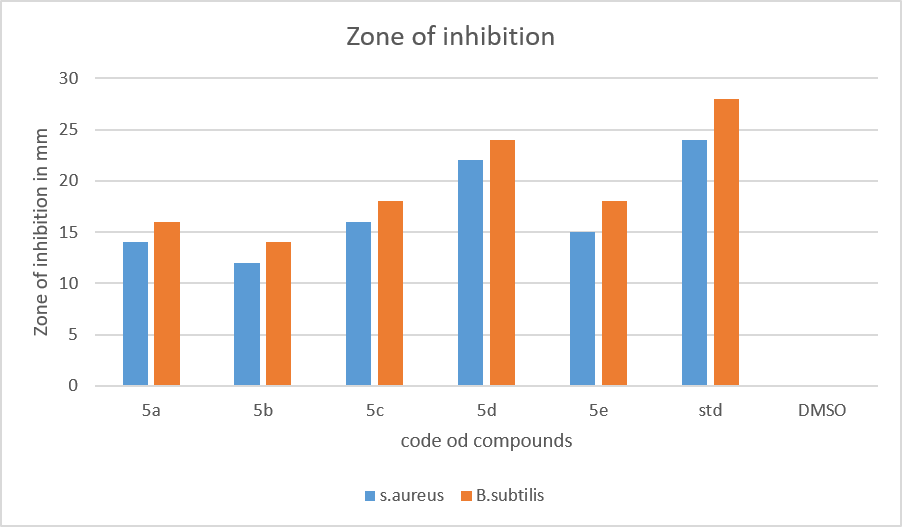
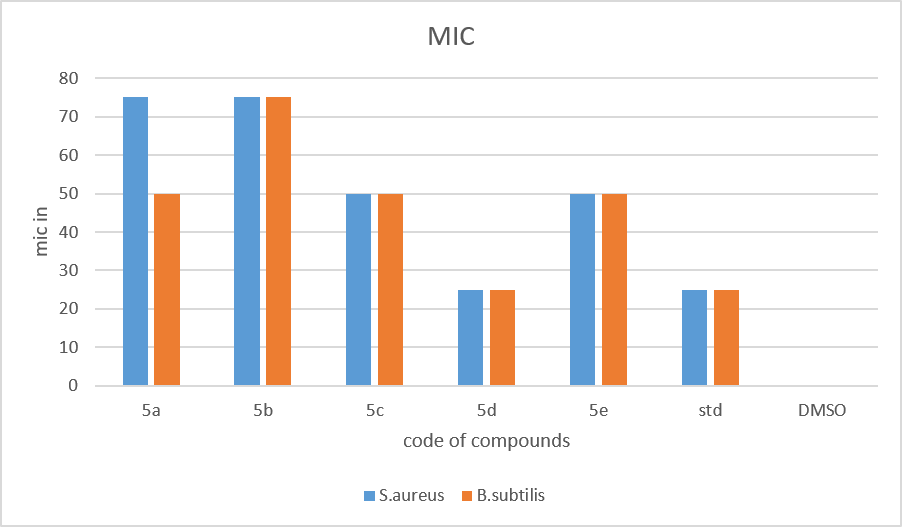
The novel indole derivatives (5a-5e) are screened for their antibacterial activity by using the gram positive bacteria Staphylococcus aureas and bacillus subtilis and compared with standard drug norfloxacin. All the synthesized compounds shows the potential activity towards the bacteria among all 5d shows the high antibacterial activity with more zone of inhibition and Low minimum inhibitory concentration. These significant activity displayed in (Table 7) and (Table 8)
TABLE 7: Zone oF Inhibition (Concentration µ/ml )
|
Sr. No |
Compound |
Staphylococcus aureas |
Bacillus subtilis |
||||||
|
|
|
25 µg/mL |
50 µg/mL |
75 µg/mL |
100 µg/mL |
25 µg/mL |
50 µg/mL |
75 µg/mL |
100 µg/mL |
|
1 |
5a |
- |
- |
14 ±0.2 |
18 ± 0.3 |
- |
12 ± 0.3 |
16 ± 0.3 |
20 ± 0.3 |
|
2 |
5b |
- |
- |
12 ±0.3 |
16 ± 0.3 |
- |
- |
14 ± 0.3 |
18 ± 0.3 |
|
3 |
5c |
- |
12 ±0.3 |
16 ±0.2 |
20 ± 0.3 |
- |
14 ± 0.3 |
18 ± 0.3 |
22 ± 0.3 |
|
4 |
5d |
14±0.3 |
18 ±0.3 |
22 ±0.3 |
26 ± 0.3 |
16 ± 0.3 |
20 ± 0.3 |
24 ± 0.3 |
28 ± 0.3 |
|
5 |
5e |
- |
12 ±0.3 |
15 ±0.3 |
20 ± 0.3 |
- |
14 ± 0.3 |
18 ± 0.3 |
22 ± 0.3 |
|
6 |
Standard norfloxacin |
16±0.3 |
20 ±0.3 |
24 ±0.2 |
38 ± 0.3 |
18 ± 0.3 |
22 ± 0.3 |
28 ± 0.3 |
40 ± 0.3 |
|
7 |
DMSO |
- |
- |
- |
No mimimal inhibition |
- |
- |
- |
No mimimal inhibition |
TABLE 8: Minimum inhibitory concentration
|
Sr. No |
Compound |
MIC (µ/ml) |
|
|
|
|
Staphylococcus aureas |
Bacillus subtilis |
|
1 |
5a |
75 |
50 |
|
2 |
5b |
75 |
75 |
|
3 |
5c |
50 |
50 |
|
4 |
5d |
25 |
25 |
|
5 |
5e |
50 |
50 |
|
6 |
Standard norfloxacin |
25 |
25 |
|
7 |
DMSO |
- |
- |
CONCLUSION
The present study successfully designed, synthesized, and characterized a series of novel indole derivatives (5a–5e). The synthesized compounds were confirmed by spectroscopic techniques such as FTIR, ^1H NMR, ^13C NMR, and mass spectrometry. Biological evaluation against Staphylococcus aureus and Bacillus subtilis demonstrated that several derivatives exhibited promising antibacterial activity, with compound 5d showing the Potent inhibitory effect. Molecular docking studies with Novel indole derivative, Standard Norfloxacin and the DHFR (3SRQ) target protein further supported the experimental findings, as the most active compounds exhibited favorable binding affinities and stable interactions within the active site. Overall, the combined experimental and computational results indicate that the synthesized indole derivatives possess significant potential as antibacterial agents and may serve as promising lead molecules for the development of new antimicrobial drugs. Further optimization and in vivo studies are recommended to establish their therapeutic efficacy and safety.
REFERENCES



K. Shiva Ramulu, M. Ajitha, Guduru Sai Krishna, Synthesis Insilico Screening and Evaluation of Novel Indole Derivatives for Possible Biological Activity, Int. J. of Pharm. Sci., 2026, Vol 4, Issue 9, 1895-1906. https://doi.org/10.5281/zenodo.22769763
 10.5281/zenodo.22769763