

We use cookies to ensure our website works properly and to personalise your experience. Cookies policy
Bachelor of Pharmacy, VP College of Pharmacy, Madkhol, Dr. Babasaheb Ambedkar Technological University.
Targeted drug delivery systems are advanced therapeutic approaches designed to transport drugs directly to specific tissues, cells, or organelles while minimizing exposure to healthy areas. This review highlights the principles, advantages, limitations, and technological progress behind targeted delivery. Unlike conventional drug delivery methods that disperse the drug throughout the body, targeted systems enhance therapeutic efficacy by improving drug absorption, reducing toxicity, controlling release, and maintaining optimal drug concentration at the action site. Several factors—including drug solubility, half-life, molecular weight, specificity, pH sensitivity, and physiochemical properties—play a key role in determining the suitability of targeted delivery. The article also discusses a wide range of delivery approaches such as nanoparticles, liposomes, micelles, polymeric systems, monoclonal antibodies, prodrugs, exosomes, and implantable devices. Various carriers including liposomes, niosomes, dendrimers, pharmacosomes, aquasomes, microspheres, SLNs, nanoparticles, and resealed erythrocytes are explained in detail, emphasizing their structural features and therapeutic applications. Evaluation methods such as particle size analysis, SEM, FTIR, DSC, XRD, in-vitro drug release, kinetic modeling, and stability studies are also summarized. Overall, targeted drug delivery represents a transformative step in modern therapeutics, offering greater precision, reduced side effects, and improved patient compliance.
The therapeutic efficacy of a drug depends largely on its ability to reach the intended site of action at an appropriate concentration and for a suitable duration. Conventional drug delivery systems often distribute drugs throughout the body, which may result in exposure of healthy tissues and an increased risk of systemic adverse effects. Targeted drug delivery systems are designed to overcome these limitations by directing therapeutic agents preferentially toward specific tissues, organs, cells, or cellular compartments, thereby improving therapeutic efficacy while minimizing unwanted effects.[1,2]
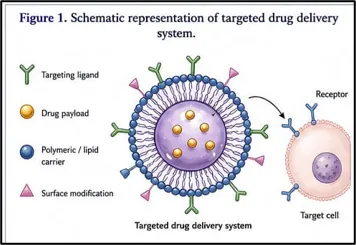
Fig no.01 Schematic representation ofTDDS
Targeted drug delivery represents an important approach in modern pharmaceutical sciences because it enables the delivery of therapeutic agents to their desired sites while controlling their distribution and release. Unlike conventional dosage forms, which may undergo absorption and distribution throughout the body, targeted systems aim to achieve greater localization of the drug at the site of action. Conventional routes and dosage forms, including oral tablets, capsules, solutions, injections, creams, and ointments, have several limitations depending on the physicochemical and biological characteristics of the drug. For example, oral administration may be unsuitable for certain peptide and protein drugs because of enzymatic degradation and poor gastrointestinal absorption, whereas parenteral administration can be invasive and may provide limited control over drug distribution.[1,2]
The development of targeted drug delivery systems has therefore focused on improving drug localization, protecting therapeutic agents from premature degradation, enhancing their delivery to specific biological sites, and controlling drug release. Effective targeting involves several important steps, including incorporation of the therapeutic agent into an appropriate delivery system, protection of the drug during transport, delivery of the system to the intended target, and release of the drug at the desired site and time.[3,4]
Various targeting strategies and carrier systems have been investigated to achieve these objectives. These include passive and active targeting approaches as well as vesicular, particulate, polymeric, and nanoparticle-based delivery systems. The selection of an appropriate targeting strategy depends on factors such as the nature of the drug, target site, biological barriers, physicochemical properties, and desired therapeutic outcome. Thus, targeted drug delivery has emerged as a promising strategy for improving the safety, efficacy, and precision of pharmacotherapy.[1,2,4]
1. Site-specific drug delivery: Targeted systems facilitate preferential delivery of therapeutic agents to specific tissues, organs, cells, or cellular compartments.[1,2]
2. Reduction in systemic toxicity: Localization of the drug at the desired site may reduce its distribution to healthy tissues and consequently minimize systemic adverse effects.[1,2,3]
3. Dose reduction: Improved drug localization may allow therapeutic effects to be achieved with lower doses compared with conventional drug administration.[1,3]
4. Improved therapeutic efficacy: Targeting can increase the concentration of the drug at the site of action, thereby enhancing its pharmacological effect.[1,2,3]
5. Protection of therapeutic agents: Appropriate carrier systems can protect drugs from premature degradation and unfavorable physiological conditions.[3,4]
1. Rapid elimination: Some targeted carriers may be rapidly cleared from the body, which can reduce their accumulation at the intended site.
2. Immunological responses: Certain carrier materials may interact with the immune system and produce undesirable immune responses.
3. Limited targeting efficiency: The delivery system may not remain at the target site for a sufficient period to produce the desired therapeutic effect.
4. Drug redistribution: After release from the carrier, the therapeutic agent may redistribute to non-target tissues.[4,5]
5. Complex formulation and manufacturing: Development, manufacturing, storage, and administration of targeted delivery systems may require specialized technologies and expertise.
6. Potential toxicity: Excessive accumulation of the drug or carrier at the target site may result in local or systemic toxicity.
7. Stability concerns: Maintaining the physical, chemical, and biological stability of targeted delivery systems during storage and administration can be challenging.[3,4]
The primary objective of targeted drug delivery is to deliver an appropriate amount of therapeutic agent to the desired site of action while minimizing exposure to non-target tissues. Targeting can be achieved through different strategies, including receptor-mediated targeting, pH-responsive delivery, enzyme-mediated release, and the use of specialized carrier systems.[1-6]
The major objectives of targeted drug delivery include improving drug localization, enhancing therapeutic efficacy, reducing systemic toxicity, protecting therapeutic agents from premature degradation, and providing controlled drug release. These systems are therefore designed to achieve an appropriate drug concentration at the target site while minimizing unwanted effects on healthy tissues.
Targeted drug delivery has been investigated for the treatment and management of several diseases and therapeutic conditions. The major applications include:
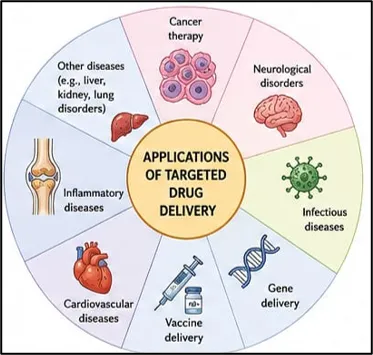
Fig no.02 Major application of TDD
Vaccine Delivery
Targeted delivery approaches can facilitate the delivery of vaccine components to specific immune cells or tissues and may enhance antigen presentation and immune responses. Nanocarrier-based systems have therefore been investigated for improving vaccine delivery.[7]
Wound Healing
Targeted delivery systems can facilitate localized administration of therapeutic agents to wound sites. Vesicular systems such as liposomes have been investigated for incorporation into wound dressings to provide localized and controlled release of therapeutic agents.[8]
Ophthalmic Disorders
Targeted delivery to ocular tissues can improve drug localization while reducing unnecessary exposure to surrounding tissues. Vesicular systems, including niosomes, have been investigated for improving ocular drug delivery and enhancing drug residence and absorption.[9]
Cancer Therapy
Cancer is one of the major areas of application for targeted drug delivery. Liposomes, nanoparticles, antibody-based systems, and other nanocarriers can be designed to preferentially deliver anticancer agents to tumor tissues or cancer cells. Such approaches aim to enhance antitumor efficacy while reducing exposure of healthy tissues to cytotoxic drugs.[3,10]
Cardiovascular diseases
Targeted delivery systems have been investigated for delivering therapeutic agents to cardiovascular tissues. Site-specific delivery may improve drug localization and therapeutic efficacy while potentially reducing systemic adverse effects.[1,3]
Neurological Disorders
Targeted drug delivery has considerable potential in the management of neurological disorders, including epilepsy, Alzheimer's disease, Parkinson's disease, and multiple sclerosis. Specialized delivery systems are being investigated to improve drug transport to the central nervous system and overcome biological barriers such as the blood–brain barrier.[1,9]
Infectious Diseases
Targeted delivery can facilitate the localized delivery of antimicrobial agents to sites of infection. Liposomes and other nanocarriers have been investigated for improving the delivery of antibacterial, antiviral, and antiparasitic agents.[1,4]
Gene Therapy
Targeted delivery systems can transport genetic materials such as nucleic acids to specific cells or tissues. Nanocarriers, viral vectors, and other delivery platforms have been investigated for improving the efficiency and specificity of gene delivery.[2,3]
Personalized Medicine
Targeted drug delivery supports the concept of personalized medicine by enabling therapeutic strategies to be designed according to specific disease characteristics and patient requirements. Target-specific delivery may improve therapeutic outcomes while reducing unnecessary systemic exposure.[3]
Dermatological Disorders
Targeted delivery systems can improve the localization of therapeutic agents within the skin and may be useful in the management of disorders such as acne, psoriasis, and other dermatological conditions.[1,2]
1. Safety and biocompatibility: The carrier should be non-toxic, biocompatible, and preferably biodegradable. It should maintain adequate physicochemical stability during formulation, storage, and administration.
2. Target specificity: The system should preferentially deliver the therapeutic agent to the intended cells, tissues, organs, or biological compartments.
3. Controlled drug release: Drug release should occur at a predictable and controllable rate to maintain an appropriate therapeutic concentration.[3,4]
4. Efficient delivery and release: Drug delivery to the target site and subsequent release should occur efficiently without compromising the integrity of the delivery system.
5. Therapeutic drug concentration: The amount of drug delivered should be sufficient to produce the desired therapeutic effect while remaining within a safe range.[3,6]
6. Minimal drug leakage: Premature leakage of the therapeutic agent during circulation or transportation should be minimized to reduce non-specific exposure.
7. Safe elimination of the carrier: The carrier should undergo appropriate biodegradation or elimination from the body without producing significant toxicity or adversely affecting normal physiological functions.[4,5]
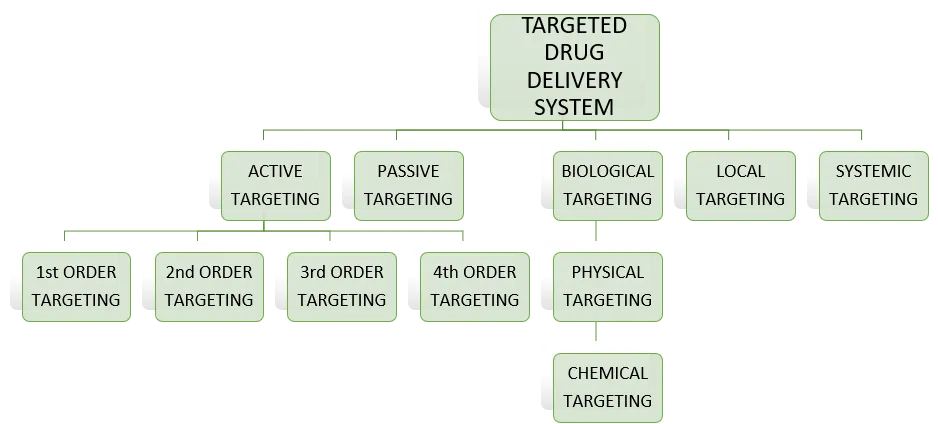
Targeted drug delivery systems can be classified according to the mechanism of targeting, the biological level at which targeting occurs, and the route or location of drug delivery. The major approaches include active targeting, passive targeting, biological targeting, physical targeting, chemical targeting, local targeting, systemic targeting, inverse targeting, dual targeting, double targeting, combination targeting, location-based targeting, and disease-based targeting.[1,2]
Active Targeting
Active targeting involves the incorporation of specific ligands onto a drug carrier to facilitate recognition of receptors or other molecular targets present on the target cells. Common targeting ligands include antibodies, peptides, proteins, nucleic acids, and small molecules. The ligand interacts with its corresponding receptor, promoting preferential association or uptake of the drug-delivery system by the target cell. [1,2]
Orders of Active Targeting
Active targeting can be classified according to the level of specificity achieved:
First-order targeting: Delivery of the therapeutic agent to the capillary bed or a particular tissue or organ.
Second-order targeting: Selective delivery to specific cell types within the target tissue, such as tumor cells.
Third-order targeting: Delivery of the therapeutic agent to specific intracellular sites or compartments.
Fourth-order targeting: Targeting of specific intracellular macromolecules, such as DNA or proteins. [1,2]
Passive Targeting
Passive targeting involves the preferential accumulation of a drug or drug carrier at particular tissues as a result of physiological and pathological characteristics of the target site rather than a specific ligand–receptor interaction. In cancer therapy, passive accumulation of nanoparticles has commonly been associated with the enhanced permeability and retention (EPR) effect, which is related to abnormal vascular permeability and impaired lymphatic drainage within tumors.
However, the effectiveness of passive targeting can vary according to the characteristics of the disease and the delivery system. Therefore, passive targeting may be combined with other strategies to improve localization and therapeutic efficacy. [1,2,10]
Biological Targeting
Biological targeting uses biological molecules or recognition mechanisms to direct therapeutic agents toward specific cells, tissues, or molecular targets. Antibodies, peptides, proteins, and receptor-specific ligands can be incorporated into delivery systems to facilitate selective recognition of target sites. [1,2]
Physical Targeting
Physical targeting utilizes physical characteristics or externally applied physical stimuli to influence the localization or release of a therapeutic agent. Factors such as particle characteristics, magnetic properties, temperature, or other physical stimuli may be exploited to control drug delivery. [1,6]
Chemical Targeting
Chemical targeting involves the use of chemical properties or chemical transformations to achieve site-specific drug delivery. This may include site-specific prodrugs or enzymatically activated drug systems, in which the active therapeutic agent is generated preferentially at the desired site. [6,11]]
Local Targeting
Local targeting involves delivering the therapeutic agent directly to or near the intended site of treatment. This approach can increase drug concentration at the local site while potentially reducing unnecessary systemic exposure. [1,2]
Systemic Targeting
Systemic targeting involves administration of the drug or drug carrier into the systemic circulation, followed by preferential distribution toward the desired target site. Carrier characteristics and targeting mechanisms can be used to influence biodistribution and improve drug localization. [1,2]
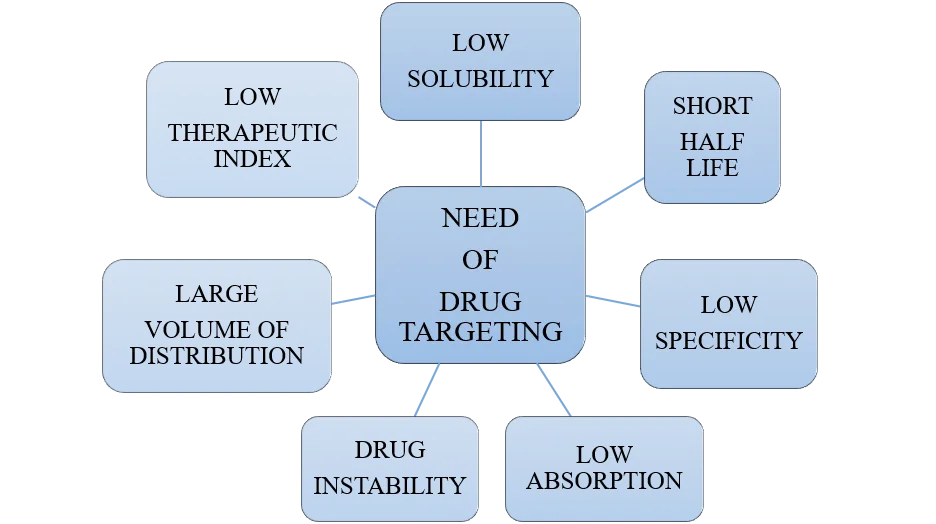
The effectiveness of a targeted drug delivery system depends on several drug-related, biological, and formulation-related factors. These factors influence drug absorption, distribution, target-site accumulation, cellular uptake, and release. Understanding them is essential for designing a delivery system with adequate targeting efficiency and therapeutic performance. [2,4,5]
Drug-Related Factors
Molecular weight:
The molecular weight of a drug can influence its absorption, diffusion, distribution, and ability to cross biological barriers. Drugs with different molecular sizes may therefore exhibit different distribution patterns and targeting efficiencies. [4,5]
Solubility:
Drug solubility affects dissolution, absorption, bioavailability, and the amount of drug available for delivery to the target site. Poorly soluble drugs may require suitable carriers or formulation strategies to improve their delivery. [4]
Lipophilicity:
The lipophilicity of a drug influences membrane permeability, tissue distribution, protein binding, and interaction with biological membranes. These properties can affect the extent to which a drug reaches and enters the target tissue. [4,5]
Ionization and pH:
The ionization state of a drug can change with environmental pH and can influence its solubility, membrane permeability, and distribution. Differences in pH between normal and pathological tissues can also be exploited in pH-responsive targeted delivery systems. [4,6]
Pharmacokinetic Factors
Absorption:
The extent and rate of drug absorption influence the amount of therapeutic agent available for distribution. Inadequate absorption can reduce systemic availability and consequently affect delivery to the intended target. [1,4]
Biological half-life:
The biological half-life determines how long a drug remains available in the body. Drugs with a short half-life may require delivery systems capable of protecting the drug or providing sustained release. [1,4]
Volume of distribution:
Volume of distribution reflects the extent to which a drug distributes from the circulation into tissues. A high volume of distribution may result in extensive tissue distribution and can influence the ability to achieve adequate drug concentrations at the intended target site. [1,4]
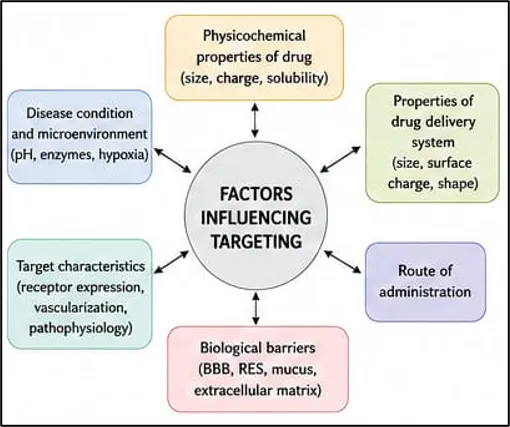
Fig no.03 Factor influencing TDD
Target Specificity
Target specificity is an important determinant of the effectiveness of targeted drug delivery. The delivery system should preferentially recognize and interact with the intended tissue, cell, or molecular target while minimizing interaction with non-target tissues. Targeting ligands, receptor-mediated interactions, and disease-specific biological characteristics can be used to improve specificity. [1,2,3]
Therapeutic Index
The therapeutic index influences the need for precise drug delivery. Drugs with a narrow therapeutic window require careful control of drug exposure because small changes in concentration may result in reduced efficacy or increased toxicity. Targeted delivery may help improve the therapeutic index by increasing drug concentration at the desired site while reducing systemic exposure. [1,3]
Drug Concentration
The concentration of drug at the target site is an important determinant of therapeutic response. An effective targeted delivery system should provide an adequate concentration of the drug at the desired site while minimizing unnecessary exposure to healthy tissues. [1,3]
Particle Size and Surface Characteristics
For particulate and nanocarrier-based systems, particle size and surface characteristics can significantly influence biodistribution, cellular uptake, circulation time, and target-site accumulation. Appropriate control of these characteristics is therefore important for achieving efficient delivery. [4,5]
Biological Barriers
Biological barriers can substantially affect the ability of a drug or carrier to reach its intended target. These barriers may include vascular barriers, cellular membranes, biological clearance mechanisms, and tissue-specific barriers. The design of a targeted delivery system should therefore consider the physiological and pathological characteristics of the target site. [4,5]
Physiological and Pathological Conditions
The physiological or pathological environment of the target tissue can influence drug accumulation and release. Factors such as local pH, enzyme activity, vascular permeability, blood flow, and tissue characteristics may affect the performance of targeted delivery systems. Such differences can also be exploited to develop stimulus-responsive delivery approaches. [1,2]
Carrier Properties
The properties of the selected carrier influence drug loading, stability, release behaviour, biodistribution, and targeting efficiency. Carrier composition, particle size, surface charge, surface modification, drug-loading capacity, and release characteristics should therefore be considered during formulation design. [3,4]
Various approaches have been developed to improve the selective delivery of therapeutic agents to specific tissues, cells, or biological targets. These approaches utilize different drug carriers, targeting mechanisms, and delivery strategies to improve drug localization and therapeutic effectiveness. The major approaches include nanoparticle-based delivery, liposome- and micelle-based systems, polymer-based delivery, monoclonal antibody-mediated targeting, inorganic nanoparticle systems, prodrug approaches, exosome-based delivery, and implantable drug delivery systems. [1-4]
Nanoparticle-Based Drug Delivery
Nanoparticle-based drug delivery systems utilize nanoscale carriers to transport therapeutic agents toward specific tissues or cells. Their small size and modifiable surface properties make them useful for targeted delivery. Nanoparticles can improve drug solubility, stability, and controlled release while providing opportunities for surface modification to enhance interaction with specific biological targets. [3,4,5]
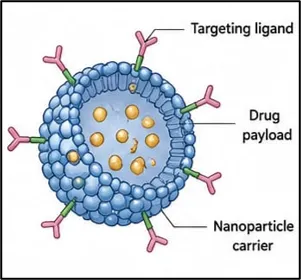
Fig no.04 Nanoparticle-based drug delivery
Liposome- and Micelle-Based Delivery
Liposomes and micelles are widely investigated as drug carriers because they can improve drug solubility, stability, and delivery to target tissues. Liposomes consist of lipid-based vesicular structures capable of incorporating suitable therapeutic agents, whereas micelles contain amphiphilic molecules that form structures with a hydrophobic core and hydrophilic exterior.
These systems can be modified with targeting components to improve drug localization and may also provide controlled drug release. [6,12]
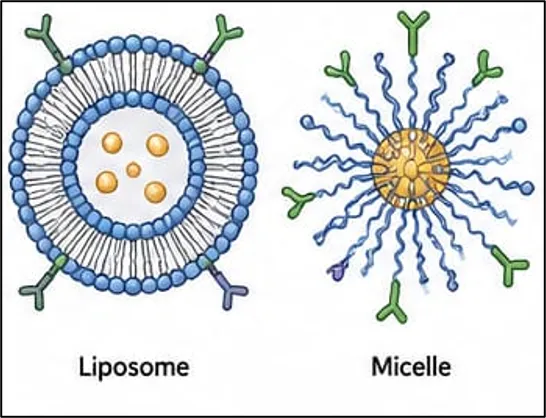
Fig no.05 liposome and micelle-based delivery
Polymer-Based Drug Delivery
Polymer-based delivery systems utilize natural or synthetic polymers as carriers for therapeutic agents. Polymers can be designed to control drug release and modify the distribution of the incorporated drug. Their physicochemical properties can be adjusted according to the desired delivery characteristics, making polymeric systems useful for targeted and controlled drug delivery. [13,14]
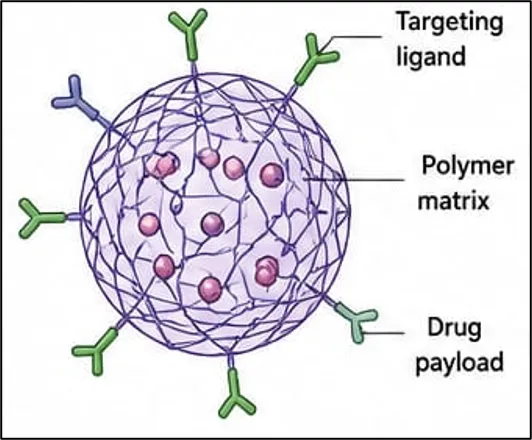
Fig no.06 Polymer based drug delivery
Monoclonal Antibody-Mediated Targeting
Monoclonal antibodies can be used as targeting agents because of their ability to recognize specific antigens or receptors. Antibodies may be incorporated into drug-delivery systems or used to direct therapeutic agents toward cells expressing the corresponding target. This approach can improve selectivity and is particularly relevant when specific molecular markers are present on target cells. [15]
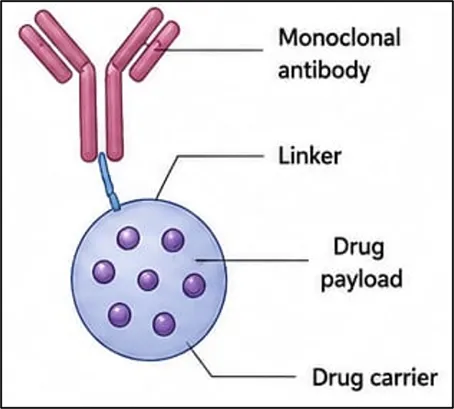
Fig no.07 Monoclonal Antibody-Mediated Targeting
Inorganic Nanoparticle-Based Delivery
Inorganic nanoparticles provide another platform for targeted drug delivery. Their physicochemical properties can be modified according to the intended application, and their surfaces can be functionalized to facilitate interaction with biological targets. These systems have therefore been investigated for the delivery of therapeutic agents and for applications requiring specialized nanoparticle properties. [16]
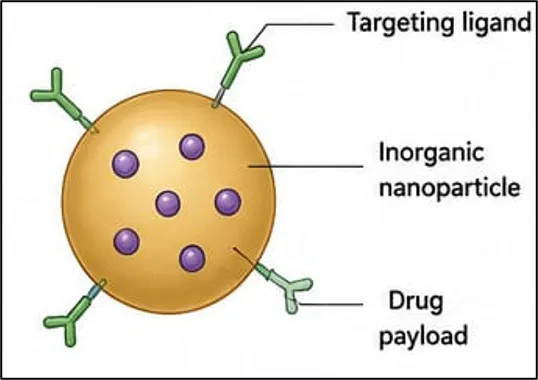
Fig no.08 Inorganic Nanoparticle-Based Delivery
Prodrug Approach
The prodrug approach involves modifying a pharmacologically active drug to produce a derivative that is converted into the active therapeutic agent under appropriate biological or chemical conditions. This strategy can be used to modify drug properties and improve delivery to the desired site. Site-specific activation can help reduce exposure of non-target tissues and improve therapeutic performance. [17]
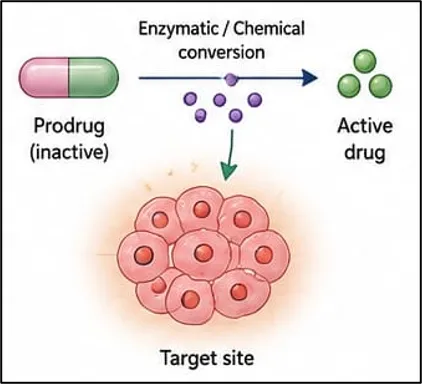
Fig no.09 Prodrug Approach
Exosome-Based Drug Delivery
Exosomes are naturally occurring extracellular vesicles that can participate in intercellular communication and transport biological molecules. Their biological origin and ability to interact with cells have led to their investigation as potential drug-delivery systems. Exosome-based approaches may provide opportunities for delivering therapeutic molecules while exploiting naturally occurring cellular communication mechanisms. [18,19]
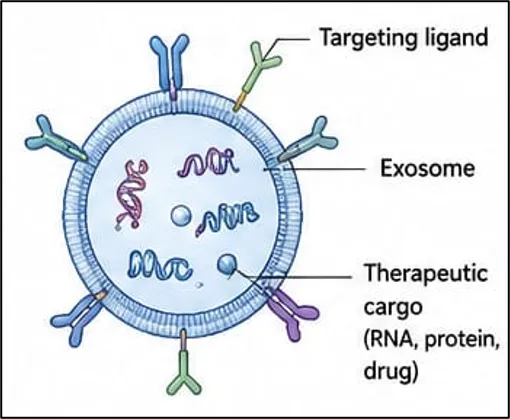
Fig no.10 Exosome-Based Drug delivery
Implantable Drug Delivery Systems
Implantable drug delivery systems are designed to provide drug release directly at or near the intended site for a prolonged period. These systems can help maintain drug concentrations over an extended duration and may reduce the need for repeated administration. Implantable approaches can therefore be useful when prolonged or localized drug delivery is required. [20]
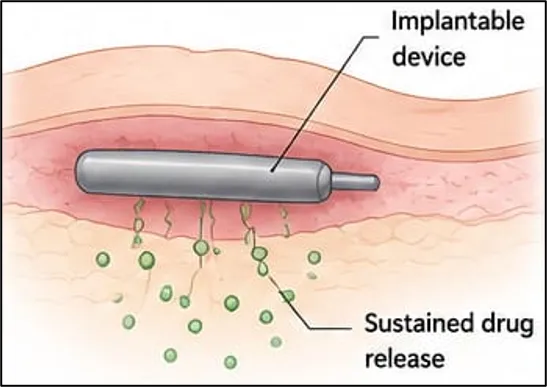
Fig no.11 Implantable Drug Delivery Systems
Despite significant advances in targeted drug delivery, several challenges continue to limit its effective translation from laboratory research to clinical applications. Achieving precise targeting remains difficult because drug-delivery systems must overcome complex biological barriers and physiological clearance mechanisms before reaching the intended site. Variations in tissue characteristics, receptor expression, blood flow, and disease conditions can also result in differences in targeting efficiency among patients.
Targeting Specificity
Achieving high specificity for the intended tissue or cell while minimizing uptake by non-target tissues remains a major challenge. The expression of target receptors may vary between patients and between healthy and diseased tissues, which can affect the performance of ligand-mediated targeting systems.
Biological Barriers and Clearance
Drug carriers must overcome biological barriers such as vascular and cellular barriers to reach the target site. In addition, recognition and clearance by the body's defense mechanisms can reduce the circulation time and targeting efficiency of delivery systems.
Toxicity and Biocompatibility
The safety of both the therapeutic agent and the delivery carrier is an important consideration. Some carrier materials may produce unwanted biological responses or accumulate in tissues. Therefore, biocompatibility, biodegradability, and long-term safety need to be carefully evaluated before clinical application.
Stability and Drug Release
Maintaining the stability of the carrier during storage and after administration is essential. Premature drug leakage or uncontrolled release can reduce targeting efficiency and may increase systemic exposure. Developing delivery systems with predictable and controlled release remains an important challenge.
Manufacturing and Scale-Up
Although many targeted delivery systems demonstrate promising results at the laboratory level, large-scale manufacturing can be challenging. Maintaining consistent particle size, drug loading, surface characteristics, stability, and batch-to-batch reproducibility is essential for successful development and commercialization.
Clinical Translation
A significant challenge is translating promising laboratory and preclinical findings into clinically effective products. Differences between experimental models and human physiology can influence therapeutic outcomes. Standardized evaluation methods, appropriate clinical studies, and long-term safety assessment are therefore necessary.
Future Perspectives
Future research in targeted drug delivery is expected to focus on developing more precise, safe, and patient-specific delivery systems. Advances in nanotechnology, molecular targeting, biomaterials, and stimulus-responsive systems may allow therapeutic agents to be delivered more selectively and released according to specific biological conditions.
The integration of multiple targeting strategies, multifunctional carriers, personalized medicine, and advanced diagnostic technologies may further improve treatment precision. Continued research into biological barriers, target identification, carrier design, toxicity, manufacturing, and clinical translation will be essential for converting targeted drug-delivery technologies into reliable therapeutic approaches.
CONCLUSION
Targeted drug delivery systems represent an important approach in modern pharmaceutical sciences for improving the therapeutic performance of drugs. By directing therapeutic agents toward specific tissues, cells, or biological targets, these systems have the potential to enhance drug localization, improve therapeutic efficacy, reduce exposure to non-target tissues, and minimize unwanted effects. The effectiveness of targeted delivery depends on several factors, including the physicochemical properties of the drug, pharmacokinetic characteristics, target specificity, biological barriers, carrier properties, and the physiological or pathological conditions of the target site. Various targeting strategies, including active, passive, biological, physical, and chemical approaches, have been investigated to overcome these challenges.
Overall, continued research and optimization of targeting strategies and delivery systems may contribute to the development of more effective, selective, and patient-specific therapeutic approaches.
REFERENCES

Pooja Rawool, Targeted Drug Delivery System, Int. J. of Pharm. Sci., 2026, Vol 4, Issue 8, 4290-4303. https://doi.org/10.5281/zenodo.22105585
 10.5281/zenodo.22105585