

We use cookies to ensure our website works properly and to personalise your experience. Cookies policy
MES college of pharmacy, Mehkar,Ram Nagar, Mehkar,Dis, Buldhana State-Maharastra 443301.
Individual differences in how drugs work and cause side effects present a significant challenge in preclinical drug development and translational medicine. Although host genetics and liver metabolism have typically been the main focus, the gut microbiota has surfaced as an important metabolic entity that can directly alter drug compounds or indirectly affect how the host clears them [1]. Differences in the baseline gut microbiota among various commercial animal suppliers and housing environments represent an underrecognized "hidden variable" that contributes to the lack of reproducibility in animal models [4]. This review consolidates the various direct and indirect biotransformation routes through which commensal bacteria influence pharmacokinetic (PK) and pharmacodynamic (PD) results in preclinical rodent studies. We thoroughly assess the drawbacks of existing animal models—such as germ-free, antibiotic-depleted, and humanized faecal microbiota transplantation (FMT) mice—and recommend a standardized framework for incorporating pharmacomicrobiomic profiling into initial xenobiotic screening
Preclinical studies on drug safety and effectiveness predominantly use inbred rodent strains, especially C57BL/6 and BALB/c mice, to determine baseline pharmacokinetic profiles. The fundamental assumption for these models is the genetic and physiological consistency. Nevertheless, even with strict genetic management, laboratories often experience considerable discrepancies in drug bioavailability, systemic toxicity, and therapeutic outcomes when assessing the same compounds in various facilities or vendor groups [4].
The new area of pharmacomicrobiomics highlights the gastrointestinal microbial community as a significant factor influencing the observed differences [3,5]. With more than 100 times the number of functional genes compared to the host genome, the gut microbiome produces a wide variety of unique metabolic enzymes that can modify structures in ways that differ from those of host liver pathways [2]. It is crucial to comprehend and account for this microbial element to enhance the consistency of animal models and avoid misleading findings or premature elimination of candidates during preclinical studies.
2. Mechanisms of Microbiota-Mediated Drug Metabolism
Two different mechanisms are used by gut microbes to affect host response: direct structural alteration of drug molecules and indirect alteration of host drug-metabolizing enzymes and transporters [1].
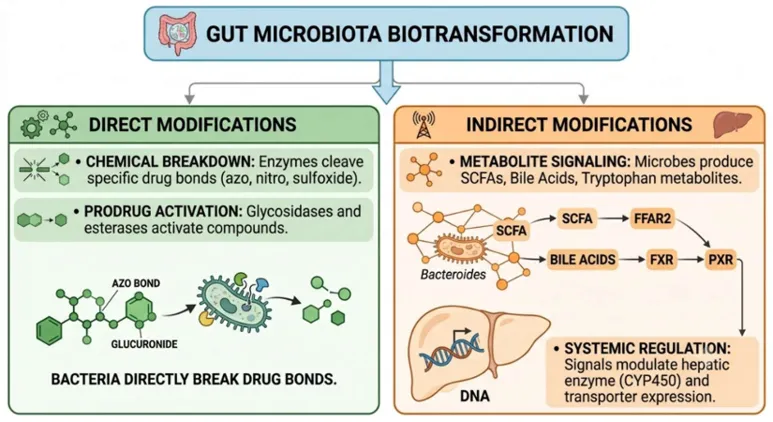
Figure 1. Mechanisms of Gut Microbiota-Mediated Drug Biotransformation and Systemic Regulation
2.1 Direct Microbial Modifications
In contrast to the mostly oxidative reactions (Phase I CYP450s) of host liver metabolism, anaerobic intestinal bacteria mainly carry out reductive and hydrolytic reactions:
• •Azo- and Nitro-Reduction: Bacterial azoreductases and nitroreductases cleave azo-bonds (e.g sulfasalazine into 5-ASA in the colon) or decrease nitro groups, changing the potency of the medication or producing hazardous metabolites.
• •De-conjugation via beta-glucuronidases: By removing glucuronide moieties from host Phase II biliary metabolites, microbial $\beta$-glucuronidase enzymes re-release the parent drug into the intestinal lumen and promote enterohepatic recirculation (e.g. (g). irinotecan toxicity of SN-38).
• Bioaccumulation: Commensal bacteria can effectively reduce systemic exposure by sequestering particular small-molecule medications intracellularly without undergoing chemical modification [5].
2.2 Indirect Host Modulation via Signalling Metabolites
Short-chain fatty acids (SCFAs) and secondary bile acids are examples of active metabolites produced by commensal microbes that act as endogenous ligands for host receptors:
• Cytochrome P450 Regulation: Microbial bile acid transformation products modulate FXR and PXR activity, which are downstream regulators of intestinal P-glycoprotein (P-gp) expression and hepatic CYP3A4.
• Competitive Inhibition: By competing with host Phase II sulfotransferases (SULTs) and UDP-glucuronosyltransferases (UGTs), microbial end products change the ability of co-administered xenobiotics to be cleared from the body [5].
3. Animal Models in Pharmacomicrobiomics: Strengths and Limitations
Evaluating microbial contributions to xenobiotic disposition requires specialized animal models, each presenting specific experimental advantages and methodological trade-offs.
Table 1: Table 1. Comparative Strengths, Limitations, and Applications of Gut Microbiota Animal Models
|
Animal Model System |
Key Strengths |
Critical Limitations |
Primary Applications |
|
Germ-Free (GF) Rodents |
Complete absence of microbiota; provides a definitive baseline for host-only drug metabolism. |
Altered mucosal immunity, enlarged cecum, abnormal intestinal motility, and altered hepatic CYP profiles. |
Establishing absolute microbial necessity in drug clearance or activation. |
|
Antibiotic-Depleted (ABX) |
Rapid, cost-effective depletion of gut flora in conventional, adult rodents. |
Off-target drug-drug interactions (e.g., neomycin/metronidazole impact on host enzymes); incomplete clearance. |
High-throughput screening of microbial contributions to short- term PK profiles. |
|
Humanized FMT Models |
Recapitulates human donor-specific gut communities in a controlled animal background. |
Incomplete engraftment of human taxa; host-species incompatibility with foreign immune and metabolic signalling. |
Evaluating inter-patient PK variability and responder vs. non-responder phenotypes. |
|
Gnotobiotic / Monostrain |
Controlled colonization with specific candidate bacteria or recombinant strains. |
Lacks the competitive and cooperative metabolic interactions present in complex native ecosystems. |
Causal verification of specific bacterial genes/enzymes (e.g., E. lenta cgr operon). |
4. Vendor and Environmental Divergence: The Reproducibility Challenge
Commercial rodent suppliers maintain distinct barrier facilities, resulting in stable vendor-specific gut microbiota profiles across genetically identical animal strains [4].
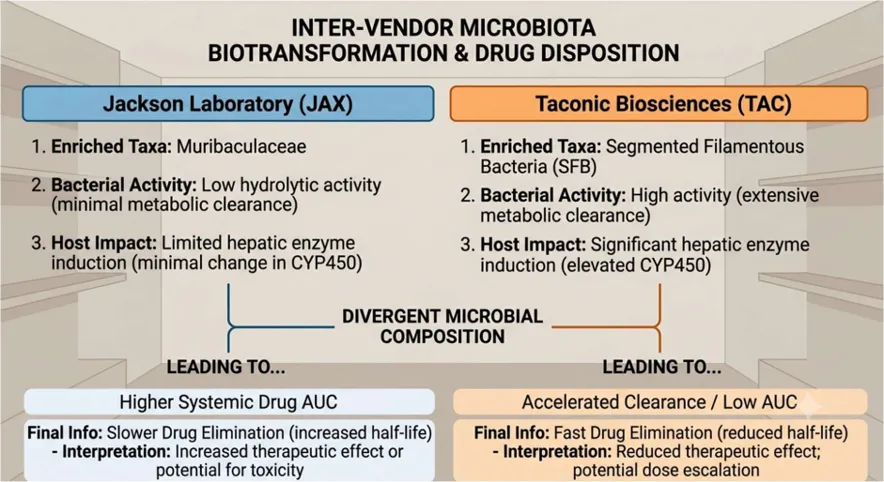
Figure 2. Vendor-Dependent Gut Microbiota Variation as a Determinant of Drug Clearance and Systemic Exposure
Significant variations in baseline drug exposure, half-life, and toxicological thresholds seen across identical study protocols can be explained by these baseline taxonomic disparities [4]. In addition to vendor origin, factors such as caging systems (ventilated vs. open), co-housing stress, bedding, and dietary fibre content change microbial composition and complicate long-term preclinical trials [4].
5. Integrating Pharmacomicrobiomics into Preclinical Drug Discovery
In order to avoid pharmacomicrobiomic confounders disrupting early-stage drug development, pharmaceutical protocols must evolve beyond traditional host-centric models.
1. In Vitro Anaerobic Incubation Protocols: High-throughput screening of prospective leads against pooled human and rodent cecal lysates to detect early microbial biotransformation.
2. Reporting Guidelines (MIABiP – Minimum Information About a Microbiome-Informed Animal Protocol): Mandatory reporting of vendor origin, vivarium housing type, dietary composition, and baseline 16S/metagenomic sequencing data in animal studies.
3. PBPK Model Expansion: Adding microbial clearance compartments to Whole-Body Physiologically Based Pharmacokinetic (PBPK) modelling software to predict co-metabolism in vivo between the host and the microbiome.
REFERENCES




Sumedh Moharil, Dr. Sudhir Mule, Bharat Joshikatariya, Aniket Wadalkar. The Hidden Variable: Gut Microbiota as a Determinant of Drug Response in Animal Models, Int. J. of Pharm. Sci., 2026, Vol 4, Issue 8, 4670-4673, https://doi.org/10.5281/zenodo.22144314
 10.5281/zenodo.22144314