

We use cookies to ensure our website works properly and to personalise your experience. Cookies policy
Department of Pharmaceutical Chemistry, College of Pharmaceutical Sciences, Government Medical College, Thiruvananthapuram
Thienopyrimidine is an important and versatile class of heterocyclic compounds formed by the fusion of a thiophene ring with a pyrimidine nucleus. They contain sulfur and nitrogen atoms which help in proper interactions with various biological targets. This makes them an ideal scaffold to focus on developing the lead compounds. The unique physicochemical and pharmacological properties of thienopyrimidines have enabled the development of numerous derivatives exhibiting a broad spectrum of biological activities, including anticancer, antimicrobial, anti-inflammatory, antiviral, antidiabetic, anti-Alzheimer's and kinase inhibitory effects. This review mainly focuses on the anticancer and antimicrobial potential of the ring. Particular emphasis is placed on structure–activity relationships, mechanisms of action, and the influence of structural modifications on biological efficacy. The collective findings underscore the importance of the thienopyrimidine scaffold as a versatile platform for the development of novel therapeutic agents. Continued exploration of this scaffold is expected to facilitate the discovery of more potent, selective, and clinically relevant compounds for the treatment of cancer and infectious diseases.
Heterocycles are the compounds that contain one or more heteroatoms like nitrogen, oxygen, sulphur or a combination of two or more hetero atoms with at least one carbon, within the cyclic structure 1. They are a prominent source of biologically active compounds due to their diverse structures. They have been frequently found in various drugs, biomolecules and biologically active compounds and exhibit a broad spectrum of biological activities, such as anti-fungal, anti-inflammatory, anti-bacterial, anti-viral and anti-cancer activities 2. Among these heterocycles, N-containing fused heterocycles represent a class of important and unique cyclic scaffolds. They are broadly present in many synthetic compounds and natural products, such as vitamins, antibiotics, organic materials and agrochemicals 3. N-containing heterocycles include pyrrole, pyrazole, imidazole, indole, pyrimidine, quinazoline etc. Among the condensed pyrimidines are thienopyrimidines, which can take the following forms, depending on their articulation: thieno[2,3-d]pyrimidines, thieno[3,2-d]pyrimidines, and thieno[3,4-d]pyrimidines 4.
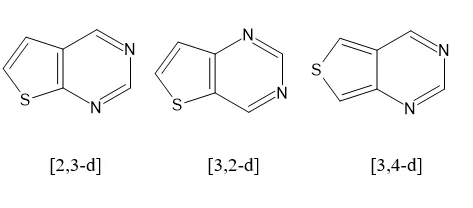
The continued investigation of thienopyrimidine-based compounds holds great promise for advancing the field of medicinal chemistry and contributing to the development of more effective and selective drugs 5.
Versatile pharmacological activities of thienopyrimidine (fig 1), includs anticancer (Mghwary et al. 2019), kinase inhibition (Ghith et al. 2017), antioxidant (Elsayed et al. 2023), anti-inflammatory (el-Kerdawy et al. 1996; Nagaraju et al. 2018), antimicrobial, antiviral (Ahmed et al. 2022), antituberculosis (Chiarelli et al. 2020). This scaffold has also shown promising results in neurological disorders and as enzyme inhibitors 6.
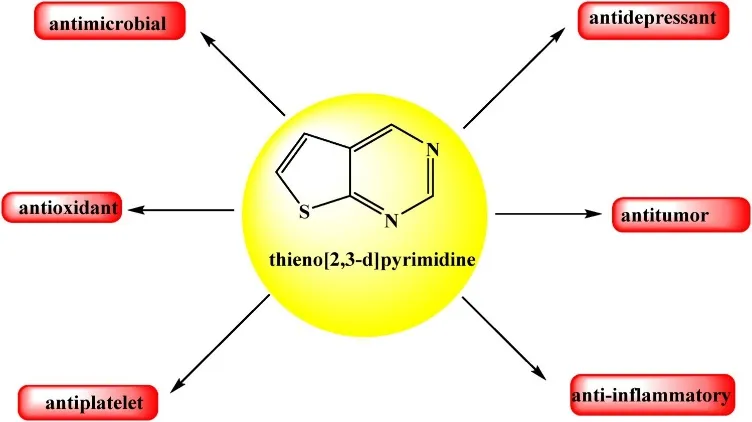
Fig 1: Various biological activities of thienopyrimdine7
THIENOPYRIMIDINE AS ANTICANCER AGENTS
Cancer is a type of tumor that demonstrates abnormal cell growth with the potential to invade or spread from its originating organ (“site”) to other parts of the body 8. Tumors gain their potential to invade or spread by acquiring multiple malignant phenotypes through genetic and epigenetic alterations that disrupt key cellular pathways such as DNA damage and repair, control of proliferation, and avoiding immune destruction 9.
Fig 2: Thienopyrimidine derivatives as anticancer kinase inhibitors 10.
Thienopyrimidine is extensively studied as anticancer and antiproliferative agents. They are one of the promising scaffold which is able to interfere with uncontrolled cell division by acting on various targets that involved in the cell division.
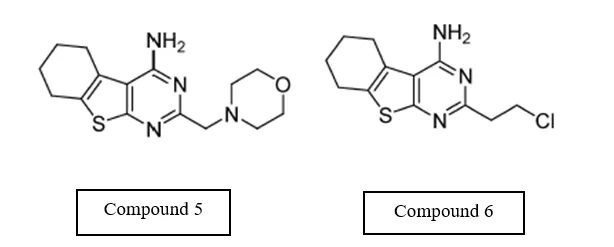
Ivan Iliev et al., (2026) evaluated a series of seven 4-amino-2-substituted tetrahydrobenzothieno[2,3-d]pyrimidines for their cytotoxic, antiproliferative, and mechanistic effects against oral cancer cell lines with different metastatic potential (HSC-3 and SCC-9), alongside non tumorigenic keratinocytes (HaCaTs). Among this, Compounds 5 and 6 showing the most favorable balance between potency and selectivity. The SAR assessment revealed that compounds 5 and 6 meet the criteria for lead- and drug-likeness 11.
Higazy et al., (2024) designed Eighteen novel compounds harboring the privileged thienopyrimidine scaffold (5a-q, and 6a) based on molecular hybridization strategy. These compounds were synthesized and tested for their inhibitory activity against four different carbonic anhydrase isoforms: CA I, II, IX, and XII. Compounds 5b, 5g, 5l, and 5p showed the highest inhibition activity against the four CA isoforms. Compound 5p exhibited promising inhibitory activity against CA II, CA IX and CA XII with KI values of 8.6, 13.8, and 19 nM, respectively, relative to AAZ, where KIs = 12, 25, and 5.7 nM, respectively. Compound 5n showed 80.38, 83.95, and 87.39 % growth inhibition against the leukemic cell lines CCRF-CEM, HL-60 (TB), and RPMI-8226, respectively. Also, 5h showed 87.57 % growth inhibition against breast cancer cell line MDA-MB-468; and 66.58 and 60.95 % inhibition against renal cancer cell lines UO-31, and ACHN, respectively 12
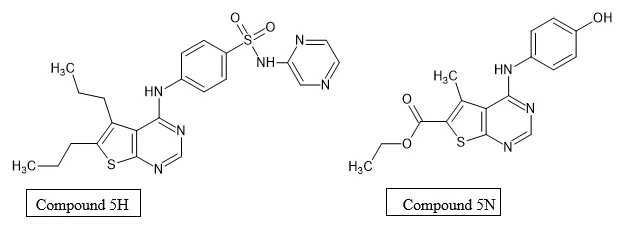
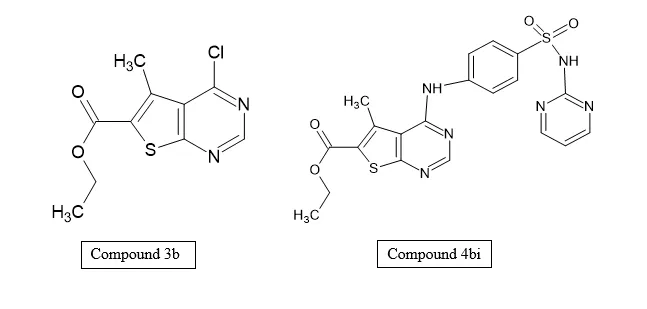
Elmongy et al., (2023) reported the design and synthesis of new hybrids of thienopyrimidine and sulfonamides. The binding affinity of the prepared compounds to FGFR-1 enzyme and caspase-3 was investigated via molecular docking. The cytotoxic effect of the synthesized compounds was estimated against two human breast cancer cell lines (MCF-7 and MDA-MB231) using Doxorubicin as a reference. Among the tested compounds 3b and 4bi were the best. In MCF-7 cells, compound 4bi displayed the highest cytotoxic activity among all the tested compounds, with IC50 of 6.17 ± 1.3 µM, while compound 3b recorded the lowest IC50 value against MDA-MB-231 cells with IC50 of 4.45 ± 0.31 µM13.
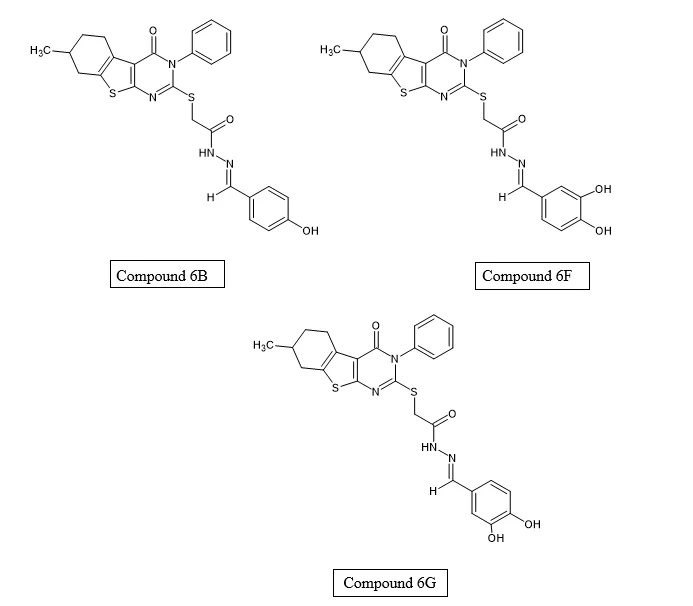
Safaa E. Seif et al., (2023) designed and synthesized New thieno[2,3‐d]pyrimidine derivatives. The National Cancer Institute (NCI) evaluated the synthesized novel compounds against a panel of 60 tumor cell lines for their antiproliferative activity. Compounds 6b, 6f and 6g showed potent anticancer activity at 10 μM dose, with mean GI of 20.86%,76.41%, and 31.49%, respectively. Compound 6f was selected for five‐dose concentrations evaluation. Compound 6f scored a sub micromolar range of GI50values against 10 cancer cell lines, indicating broad‐spectrum and potent antiproliferative activity. Compound 6f TGI values were recorded in the cytostatic range of 4.02–95.1 μM. In comparison to sorafenib, the tested compounds 6b, 6f, and 6g inhibited VEGFR‐2 with IC50 values of 0.290 ± 0.032, 0.066 ± 0.004, and 0.16 ± 0.006 μM, correspondingly 14. Tp6- 6B, 6F, 6G
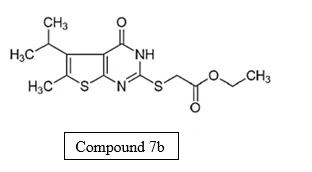
Khedr et al., (2021) designed new group of synthetic thienopyrimidine analogues (1–9) aims as mGluR-1 inhibitors with anticancer activity. In-vitro antiproliferative assessment was carried out using viability assay against cancer cell lines (MCF-7, A-549 and PC-3) compared to WI-38 normal cell line. Analogues showed variable anticancer activity with IC50 ranging from 6.60 to 121 μg/mL with compound 7b is the most potent analogue against the three cancer cell lines (MCF-7; 6.57 ± 0.200, A-549; 6.31 ± 0.400, PC-3;7.39 ± 0.500 μg/mL) compared to Doxorubicin, 5-Flurouracil and Riluzole controls. Molecular docking and dynamic studies confirmed the biological potency through strong binding and stability modes of 7b where it was faster in reaching the equilibrium point and achieving the stability than Riluzole over 20 ns MD. These results suggest compound 7b as a promising mGluR inhibitory scaffold with anticancer activity that deserves further optimization and in-depth In-vivo and clinical investigations 15.
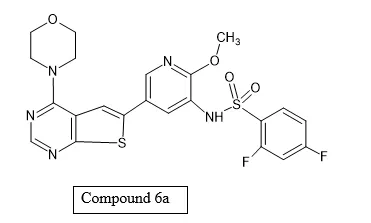
Yan Sun et al., (2020) designed and synthesized two new series of thieno[2,3-d]pyrimidine and thiazolo[5,4-d]pyrimidine derivatives for use as PI3K inhibitors. Our structure–activity relationship studies led to the identification of thieno[2,3-d]pyrimidine 6a and thiazolo[5,4-d] pyrimidine 7a, which exhibited remarkable nanomolar PI3K potency, good antiproliferative activity, favorable pharmacokinetic properties and significant in vivo anti-cancer efficacy. 6a and 7a strongly suppressed phosphorylation of the PI3K downstream effectors including AKT, S6RP, and 4E-BP1 and arrested HGC-27 cells at the G0/G1 phase 16.
THIENOPYRIMIDINE AS ANTIMICROBIAL AGENTS
The antibacterial action of thienopyrimidines has been related to their capacity to interfere with different microbial targets, including DNA synthesis, protein production, cell wall building, and key enzymatic processes. Given their broad-spectrum antimicrobial potential and favorable medicinal chemistry profile, thienopyrimidines have emerged as valuable lead structures in the search for next-generation antimicrobial agents. The present section summarizes recent advances in the design, synthesis, structure–activity relationships, and antimicrobial evaluation of thienopyrimidine derivatives, highlighting their potential as therapeutic candidates for combating resistant microbial infections.
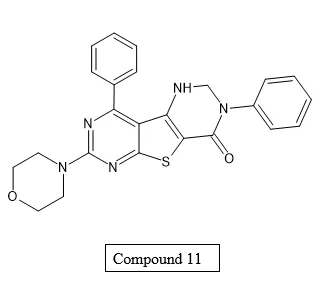
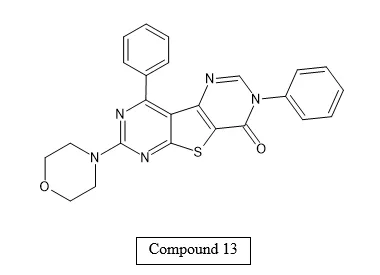
Mostafa Sayed et al., (2026) a series of novel thienopyrimidine derivatives was successfully synthesized and systematically evaluated to explore their antimicrobial potential and molecular interaction profiles. Structural modications across the scaffold produced clear SAR trends, demonstrating that increased polarity through Mannich substitution selectively enhanced Gram-positive activity, whereas rigid fused heterocycles improved the ability to inhibit Gram-negative organisms. Compound 11 exhibited the highest activity against B. subtilis, while compound 13 emerged as the most promising broad-spectrum candidate due to its enhanced inhibition of E. coli and superior docking affinity toward DNA gyrase B17.
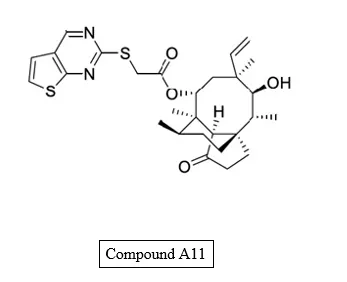
Rongcai Ding et al., (2022) synthesized ,evaluated and docked a series of pleuromutilin derivatives with thienopyrimidines were synthesized and their MICs were measured against S. aureus, S. agalactiae, E. coli, and MRSA. Compound A11 exhibited the highest antibacterial activity, and real-time growth curve analysis showed that it exhibited concentration-dependent inhibitory effects. The time-kill curves showed that compound A11 exhibited rapid bactericidal activity against S. aureus at higher concentrations, and the inhibition of human LO2 and HEK293T cells was controlled in the higher concentration range. Compound A11 was the most active and displayed bacteriostatic activities against methicillin-resistant S. aureus, with MIC values as low as 0.00191 mg/mL, which is 162 and 32 times lower than that of the marketed antibiotics tiamulin and retapamulin, respectively 18.
Hongwang Zhang et al., (2019) synthesized and identified compounds 16a and 16b, two novel thienopyrimidine derivatives displaying anti-influenza A activity in the single digit nanomolar range in cell culture. Binding of these unique compounds in the influenza polymerase PB2 pocket was also determined using molecular modeling. Compounds 16a and 16b represent the most potent alternatives with distinct tradeoffs. They achieved single-digit nanomolar activity in cell culture, with 16a showing an EC50 of 0.006µM and 16b showing an EC50 of 0.017µM19.
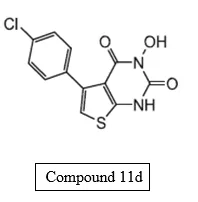
Jayakanth Kankanala et al., (2017) reported a series of novel N-hydroxy thienopyrimidine-2,3-diones, which potently and selectively inhibited RNase H in low sub-micromolar range and with considerable potency against HIV-1 in cell culture. The best compound 11d exhibited low nanomolar inhibition of RNase H (IC50 ¼ 0.04 mM) with considerable antiviral activity (EC50 ¼ 7.4 mM) and no cytotoxicity (CC50 > 100 mM) 20.
Marcella Bassetto et al., (2016) analysed a library of ~450000 commercially available compounds in silico and 21 structures were selected for biological evaluation in the HCV replicon assay. One hit characterized by a substituted thieno-pyrimidine scaffold was found to inhibit the viral replication with an EC50 value in the sub-micromolar range and a good selectivity index. Different series of novel thieno-pyrimidine derivatives were designed and synthesised; several new structures showed antiviral activity in the low or sub-micromolar range 21.
FUTURE PROSPECTS
Future studies should focus on creating new thienopyrimidine analogs or hybrid compounds that minimize off-target problems while maintaining the positive effects. Their safety profile may be greatly improved by structural modification to improve target selectivity, lessen side effects, and promote partial agonism. New thienopyrimidine-based drugs with better clinical results and lower toxicity may be made possible by these developments.
CONCLUSION
Thienopyrimidines represent an important class of fused sulfur-containing heterocyclic compounds that have emerged as privileged scaffolds in contemporary medicinal chemistry. Their structural resemblance to purine bases, coupled with the presence of strategically positioned nitrogen and sulfur atoms, enables them to interact effectively with a wide range of biological targets. Among the various therapeutic applications of thienopyrimidines, their anticancer potential has received considerable attention. Numerous derivatives have demonstrated potent cytotoxic activity against a broad spectrum of cancer cell lines through diverse mechanisms, including inhibition of protein kinases, interference with cell-cycle progression, induction of apoptosis, suppression of angiogenesis, and modulation of key signaling pathways involved in tumor growth and metastasis. Several thienopyrimidine-based molecules have shown activity comparable to or superior to established anticancer agents, highlighting the scaffold’s potential for the development of targeted cancer therapeutics.
In addition to their anticancer properties, thienopyrimidines have exhibited promising antimicrobial activity against a variety of bacterial and viral pathogens. Structural modifications of the thienopyrimidine nucleus have led to compounds capable of inhibiting microbial growth through multiple mechanisms, including disruption of nucleic acid synthesis, inhibition of essential enzymes, and interference with microbial metabolic pathways. The ability of these compounds to act against resistant microbial strains further emphasizes their potential as lead molecules for addressing the growing challenge of antimicrobial resistance.
Future research should focus on the rational design of novel thienopyrimidine analogues guided by structure–activity relationship studies, molecular modeling, artificial intelligence-assisted drug design, and target-based approaches. The integration of hybrid pharmacophore strategies, prodrug design, nanotechnology-based drug delivery systems, and combination therapies may further enhance the therapeutic potential of this scaffold. Additionally, extensive preclinical and clinical studies are necessary to establish the safety and efficacy profiles of promising candidates..
REFERENCES


Anjali M.*, Girish Kumar K., Thienopyrimidine as Multifunctional Therapeutic Agent: A Review on Anticancer and Antimicrobial Potential, Int. J. of Pharm. Sci., 2026, Vol 4, Issue 7, 2301-2311. https:// 10.5281/zenodo.21309157
 10.5281/zenodo.21309157