

We use cookies to ensure our website works properly and to personalise your experience. Cookies policy
Mandesh Institute of Pharmaceutical Science and Research Center, Mhaswad, Satara
A simple and precise RP-HPLC method was developed and validated for the quantification of Tofacitinib and upadacitinib.This study aimed to establish and validate a reliable RP-HPLC assay method for the quantification of tofacitinib (TFC), a janus kinase (JAK) inhibitor, in pharmaceutical formulations. The newly developed method exhibits simplicity, specificity, precision, and sensitivityThe imperative need for a swift and efficient RP-HPLC method for analyzing TFC led to the successful development and validation of this technique. Consequently, the RP-HPLC method has undergone thorough validation, establishing it as a user-friendly and trustworthy means for Tofacitinib analysis. Upadacitinib is a selective Janus kinase (JAK) inhibitor which is approved by the US Food and Drug Administration, the European Medicines Agency, as well as other agencies around the world for the treatment of several chronic inflammatory diseases, including rheumatic, dermatologic, and gastrointestinal diseases. The safety profile of upadacitinib supported a favorable benefit–risk profile across all the approved indications. In this article, we review the mechanism of action of upadacitinib and describe how the JAK–STAT (Janus kinase–signal transducers and activators of transcription) pathway is involved in the pathogenesis of several chronic and progressive immune-mediated inflammatory diseases.
Pharmaceutical analysis is a branch of chemistry which deals not only with medicaments (drugs and their formulations) but also with their precursors i.e. with the raw material on which degree of purity and quality of medicament depends. The quality of the drug is determined after establishing its authenticity by testing its purity and the quality of pure substance in the drug and its formulations There are various methods which are used to study the physical phenomenon that occurs as a result of chemical reactions. The most important methods are:
Optical Method:
RP-HPLC method development is a systematic process of optimizing stationary phase chemistry (commonly mobile phase composition (polar solvents like methanol/acetonitrile), pH, and flow rate to achieve efficient separation, identification, and quantification of analytes. The goal is to maximize resolution and minimize analysis time.
AbbVie's Rinvoq, formerly known as Upadacitinib, received FDA approval in 201 9 for the treatment of moderate to severe RA. Upadacitinib, with an IC50 value of 43 nM, is a potent and selective JAK1 inhibitor that can be taken orally and has demonstrated effectiveness [66]. Cellular experiments that relied on specific, pertinent cytokines, demonstrated a selectivity of around 74 times for JAK1 compared to JAK2 (with a potency of 200 nM). Additionally, it exhibited a selectivity of approximately 58 times for JAK1 over JAK3, which is involved in immunosurveillance [66–68]. The improved selectivity of Upadacitinib for JAK1 in comparison to JAK2 and JAK3 has the potential to enhance the benefit-risk profile for patients with RA [69]. The indications currently approved for Upadacitinib include not only RA, but also non-radiographic axial.
spondyloarthritis, UC, AD, ankylosing spondylitis, and PA. Indications in the clinical trial phase include Crohn's disease, vasculitis, vitiligo, and systemic lupus erythematosus.
Upadacitinib (Rinvoq) and Tofacitinib (Xeljanz) are both oral Janus kinase (JAK) inhibitors used for autoimmune conditions like ulcerative colitis (UC) and rheumatoid arthritis.
Tofacitinib: (brand name Xeljanz) is an oral, targeted synthetic DMARD and Janus kinase (JAK) inhibitor approved for adults with moderate-to-severe active rheumatoid arthritis (RA) who have had an inadequate response or intolerance to at least one DMARD. It effectively reduces joint pain, swelling, and radiographic progression, often used when methotrexate or TNF blockers fail, either as monotherapy or in combination with methotrexate.
Key Companies between TOFACITINIB and UPADACITINIB:
Efficacy in UC: Upadacitinib is associated with higher steroid-free clinical remission rates at 8–1 4 weeks and 48–60 weeks compared to tofacitinib.
Long Term Outcomes: A 1 2-month study found upadacitinib better at avoiding colectomy than tofacitinib.
Mechanism: Tofacitinib is a pan-JAK inhibitor (inhibits multiple JAK enzymes), while Upadacitinib is a more selective JAK1 inhibitor.
Safety: Both drugs have similar safety profiles in clinical settings. Key warnings for both include venous thromboembolism (blood clots), serious infections, cardiovascular events, and malignancy.
Usage: Both are highly effective in biologic-experienced patients.
1.Literature Review:
1. Srinivasan KK et.al (2007): A Derivative Spectrophotometric procedure has been developed for the simultaneous determination of individual combination of Aceclofenac and UDB with Paracetamol in combined tablet preparation. Tablet extracts of the drugs were prepared in distilled water. The zero crossing point technique and the compensation technique were used to estimate the amount of each drug in the combined formulations, and were compared. The results were found to be accurate and free from interferences. The procedure is rapid, simple, nondestructive, and does not require solutions of equations. Calibration graphs are linear (r2 = 0.9999), with a zero intercept up to 24 mg / ml of each drug in combination with Paracetamol. Detection limits at the p = 0.05 level of significance were calculated to be 0.5 mg / ml of Aceclofenac, UDB and Paracetamol respectively.
2. Ines Toral M et.al(2008): A rapid method for the simultaneous determination of Acetaminophen and UDB by Second Derivative Spectrophotometric has been developed. From a solvent effect study and the spectral behaviours of Acetaminophen and UDB , ethanol was selected as solvent. For a Δλ value of 21 0 nm a smoothing factor of 8,000 and scale factor of 1 ,000,000 were selected, because in these conditions the signal / noise ratio determination of Acetaminophen / UDB in a molar relation of 1 7 / 1 contained in pharmaceutical formulations. At 285.7 nm the Second Derivative value is UDB concentration dependent, corresponding to zero- crossing point of Acetaminophen. On the other hand, UDB does not absorb between 296.0 - 400.0 nm, thus 308.0 nm was selected for Acetaminophen determination by graphic method. The determination ranges for Acetaminophen and UDB were 8.1 x1 0-7 - 5 1 x1 0-5 mol / L and 3.4 x1 0-7 5.0 x1 0-5 mol / L, respectively and can be determined with good precision and accuracy, without previous separation.
3. Manisha Puranik et.al (2006): Two simple, accurate, and precise methods for simultaneous estimation of UDB hydrochloride and Chlorzoxazone in combined dosage form have been described. The first method employs formation and solving of simultaneous equations using 272.20 and 248.30 nm as two analytical wavelengths. The second method is absorption ratio method, which uses 272.20 nm and 257.50 nm as two analytical wavelengths. Both the methods allow the simultaneous.
Determination of UDB hydrochloride and Chlorzoxazone in concentration ranges employed for this purpose with the standard deviation of < 1 .0 % in the assay oftablet.
4. Hisham E et.al (2002): The first method is based upon a kinetic investigation of the oxidation reaction of the drug with alkaline potassium permanganate at room temperature for a fixed time at 20 min. The absorbance of the colored manganate ions was measured at 61 0 nm. The second method is based on the reaction of UDB hydrochloride with 4-chloro- 7- nitrobenzofurazan (NBD–Cl) in presence of 0.1 M sodium bicarbonate. The Spectrophotometric measurements were recorded by measuring the absorbance at 467 nm, at fixed time at 25 min on thermostated water bath at 90 ± 1 °C. All variables affecting the development of the colour have been investigated and the conditions were optimised. The absorbance concentration plots in both methods were rectilinear over the range 5 – 25 and 50 – 250 μg / ml, for the first and second methods, respectively.
5. Aysel Kucuk et al: Two newly developed simple and sensitive methods for determination of UDB hydrochloride in ampoule dosage forms were described and validated. Measurements for Spectrophotometric method were performed using UV- Vis Spectrophotometer in ranges of 200 – 400 nm. The solutions of standard and the samples were prepared in methanol and water media and the UV absorption spectrums of UDB were monitored with maximum absorptions at 275 and 271 nm for both mediums, respectively. The standard calibration curves of UDB were constructed by plotting absorbance vs. concentration in the concentration range with the final dilution of 1 0 – 1 00 μg / ml. Reversed phase chromatography for HPLC method was conducted using a Phenomenex Bondclone C-1 8 column with an isocratic mobile phase consisting of 25 % acetonitrile in 75 % 0.01 M phosphate buffer (pH 3). The effluent was monitored on a DAD detector at 21 8 nm. Linear response (r2 > 0.99) was observed over the range of 0.5 – 40 μg / ml for methanol and water and run on six different occasions.
Aim and Objective
Aim: To Review the Rp-Hplc Method Development and Validation of Upadacitinib (Udb) And Tofacitinib (Tfc) In Bulk and Pharmaceutical Dosage Form.
Objectives:
Plan of Work
Materials & Methods
UDB is a fluoroquinolone antibiotic indicated for bacterial infections. having themolecular structure[1 9] as shown in Fig: 1 .8.
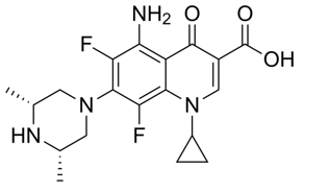
Fig. 1.8. Structure of UDB
Nomenclature:
(3R,4R)-3-ethyl-4-(1,5,7,10-tetraazatricyclo[7.3.0.0²,⁶]dodeca-2(6),3,7,9,11-pentaen-1-yl)-N-(2,2,2-trifluoroethyl)pyrrolidine-1-carboxamide
Molecular Formula: C₁₇H₁₉F₃N₆O
Molecular Weight: 380.4 g/mol
Characteristics: Bitter, crystalline, and odorless
Category: Janus kinase (JAK) inhibitor
Solubility: Rapidly soluble in water and ethanol
Brand Names: RINVOQ, REMATIB
Pharmacokinetic Data
Bioavailability: 92%
Protein Binding: 45%
Metabolism: Hepatic glucuronidation
Cytochrome P450 System: Not involved
Elimination Half-Life: 16 to 30 hours
Excretion: Fecal (50%) and renal (50%)
TFC is an oral Janus kinase (JAK) inhibitor indicated for the treatment of autoimmune diseases such as rheumatoid arthritis, psoriatic arthritis, and ulcerative colitis. The molecular structure of TFC is shown in Fig: 1 .9.
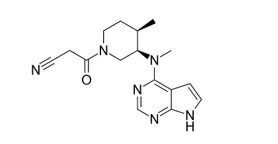
Fig. 1.9. Structure of TCF
Nomenclature:
3-[(3R)-2-methyl-3-[(4-methyl-1H-pyrazol-1-yl)methyl]phenyl]-3H-imidazo[4,5-b]pyridine-5-carbonitrile.
Molecular Formula: C₁₆H₂₀N₆O
Molecular Weight: 312.37 g/mol
Characteristics: Bitter, crystalline, and odorless
Category: Janus kinase (JAK) inhibitor
Solubility: Rapidly soluble in water and ethanol
Brand Names: TOFLAC, TOFAJAK
Pharmacokinetic Data:
Bioavailability: 74%
Protein Binding: 40%
Metabolism: Hepatic metabolism via CYP450 enzymes, primarily CYP3A4 and CYP2C19
Elimination Half-Life: 3 hours
Excretion: Primarily renal (70%), with a smaller portion excreted in feces (30%).
REFERENCES


Gayatri V. Maneri, Davkare S. A. Kodalkar, S. V., Nagaraju Potnuri, To Review “RP-HPLC Method Development and Validation of Upadacitinib (UDB) And Tofacitinib (TFC) In Bulk and Pharmaceutical Dosage Form, Int. J. of Pharm. Sci., 2026, Vol 4, Issue 6, 1003-1009. https://doi.org/10.5281/zenodo.20536812
 10.5281/zenodo.20536812