

We use cookies to ensure our website works properly and to personalise your experience. Cookies policy
Student, Shri Ganpati Institute of Pharmaceutical Sciences and Research, Tembhurni. 413211.
Background: Type 2 diabetes mellitus (T2DM) is a progressive metabolic disease in which the incretin effect is blunted. Glucagon-like peptide-1 receptor agonists (GLP-1 RAs) and the dual glucose-dependent insulinotropic polypeptide (GIP)/GLP-1 agonist tirzepatide restore incretin signalling and have reshaped treatment goals from glucose control alone toward weight reduction and organ protection. Objective: To summarise the pharmacology, glycaemic and non-glycaemic efficacy, safety, and clinical positioning of GLP-1 RAs and dual-incretin therapies, including agents approaching or reaching the market in 2026. Methods: A narrative review of landmark randomised trials, consensus guidelines, and recent pipeline reports, organised thematically. Findings: Long-acting GLP-1 RAs lower HbA1c by roughly 1 to 1.8 percentage points with clinically meaningful weight loss and a low intrinsic risk of hypoglycaemia. Several agents reduce major adverse cardiovascular events, and semaglutide reduces kidney outcomes in diabetic kidney disease. Tirzepatide produces larger reductions in HbA1c and weight than semaglutide in head-to-head testing. Gastrointestinal adverse effects are the main tolerability issue, while gallbladder disease, pancreatitis, retinopathy changes, and perioperative aspiration require attention. In 2026, the first oral small-molecule agent, orforglipron, was approved for weight management, and triple-agonist and amylin-combination therapies reported promising phase 3 data in T2DM. Conclusion: Incretin-based therapy is now a cornerstone of individualised T2DM management, particularly for people with obesity, cardiovascular, kidney, or liver disease. Access, cost, and long-term durability remain the key challenges.
Type 2 diabetes affects hundreds of millions of people worldwide and is closely tied to obesity, cardiovascular disease, chronic kidney disease, and fatty liver disease. Older glucose-lowering drugs control blood sugar but often add weight or risk hypoglycaemia. The discovery that of the oral glucose produces a far larger insulin response than the same glucose given intravenously, the incretin effect, pointed to a better target [1,2].
In type 2 diabetes this effect is reduced, yet the pancreas still responds to pharmacological doses of GLP-1. Native GLP-1 is degraded within minutes by dipeptidyl peptidase-4, so drug development focused on analogues that resist degradation and persist for days [1]. Tirzepatide goes a step further by activating the GIP receptor as well [3].
This review explains how these agents work, summarises the evidence for their effects on glucose, weight, and organ outcomes, outlines their risks, and describes emerging therapies that are changing the field in 2026.
2. Review Methods:
This is a narrative review. Landmark randomised controlled trials (for example SUSTAIN-6, LEADER, REWIND, PIONEER 6, SURPASS-1 and -2, FLOW) and consensus documents (ADA/EASD 2022 and the ADA Standards of Care 2026) were selected for their influence on practice [4-10,16,17]. Information on agents in late-stage development or newly approved was gathered in November 2026 from recent pipeline and conference reports [22-28]. These secondary sources were used to locate results, and readers should confirm figures against the primary publications and current prescribing information.
No formal systematic search, risk-of-bias scoring, or meta-analysis was performed, so conclusions reflect expert synthesis rather than pooled estimates. Efficacy figures from different trials come from different populations and durations and should not be compared directly unless the trial was head-to-head.
3. Thematic Discussion:
3.1 Pharmacology and mechanisms of action
3.1.1 Whole-body actions:
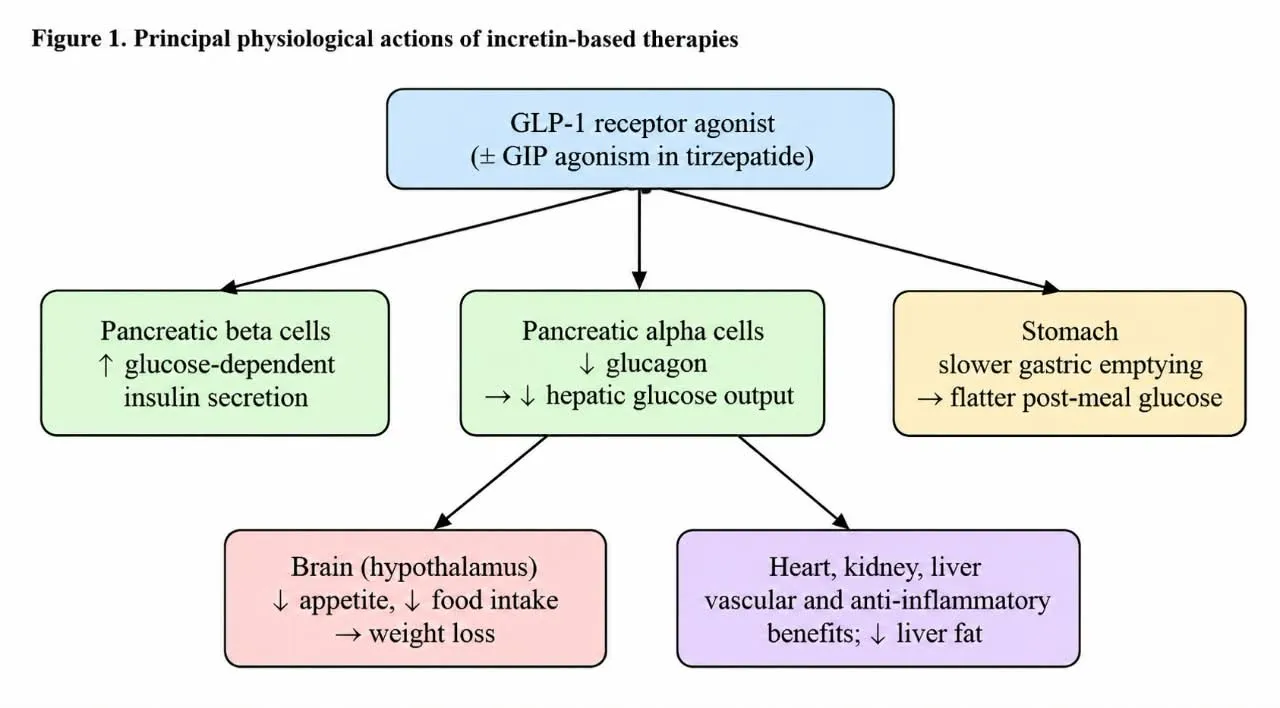
Activation of GLP-1 receptors in pancreatic beta cells enhances insulin release in response to glucose, clarifying the minimal risk of hypoglycemia when used independently of insulin or sulfonylureas. In alpha cells it suppresses glucagon, reducing hepatic glucose output. Slowed gastric emptying flattens post-meal glucose rises, and action in the hypothalamus and brainstem reduces appetite and food intake [1,18]. Figure 1 summarises these actions.
3.1.2 Signalling inside the beta cell:
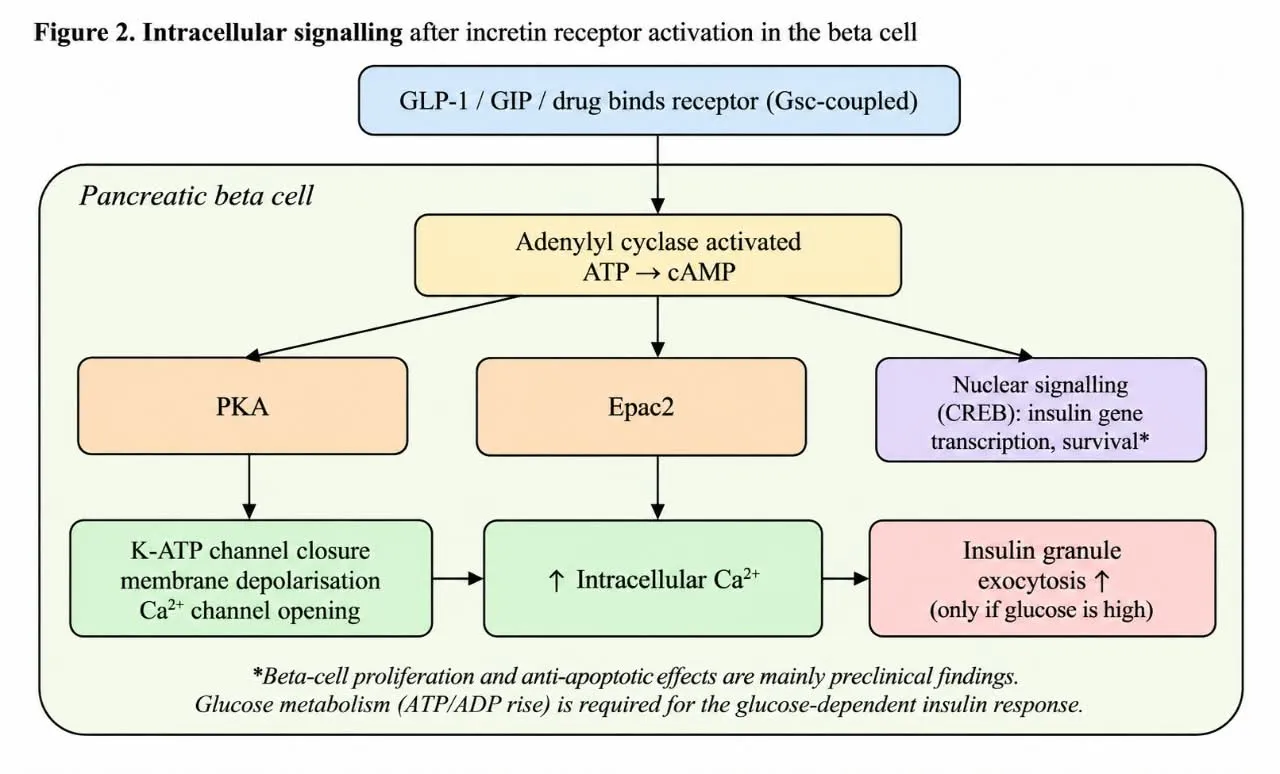
The GLP-1 receptor is a G-protein-coupled receptor associated with Gas.. Ligand binding activates adenylyl cyclase and raises intracellular cAMP, which acts through protein kinase A (PKA) and the exchange protein Epac2. These pathways close ATP-sensitive potassium channels, depolarise the membrane, open voltage-gated calcium channels, and sensitise the insulin granule release machinery, so exocytosis increases [1,2,18]. The effect is amplified only when glucose metabolism has already raised the ATP/ADP ratio, which is why insulin release is glucose-dependent and turns off as glucose falls. cAMP signalling also supports insulin gene transcription, and preclinical studies show reduced beta-cell apoptosis and increased proliferation, although durable beta-cell preservation in humans is not established [1]. Figure 2 shows this cascade.
3.1.3 Molecular design and duration of action:
Native GLP-1 has a half-life of only a few minutes because DPP-4 cleaves it and the kidneys clear it. Drug design therefore uses two strategies: resisting DPP-4, often by substituting the second amino acid, and extending circulation time by binding albumin or fusing to a large carrier protein. Semaglutide, for example, carries a fatty diacid side chain that binds albumin, giving a half-life of about one week and allowing weekly dosing [19]. Table 5 (Section 4) compares these design features. Exenatide, derived from a lizard peptide, takes a different route and is only partly homologous to human GLP-1.
3.1.4 Dual and triple agonism: the role of GIP and glucagon:
Tirzepatide is a single 39-amino-acid peptide based on the GIP sequence, with a fatty diacid chain for albumin binding, which activates both GIP and GLP-1 receptors [3]. In vitro work shows it is an imbalanced and biased agonist: it binds the GIP receptor with affinity similar to native GIP but binds the GLP-1 receptor more weakly than native GLP-1, and at the GLP-1 receptor it favours cAMP generation over beta-arrestin recruitment, which may limit receptor internalisation [20]. In T2DM the insulin-releasing effect of GIP is blunted, but it is partly restored when glucose is improved, and GIP also acts on adipose tissue (lipid handling) and in the brain, where it may counter nausea and add to appetite suppression. The exact contribution of GIP agonism versus antagonism remains debated [21].
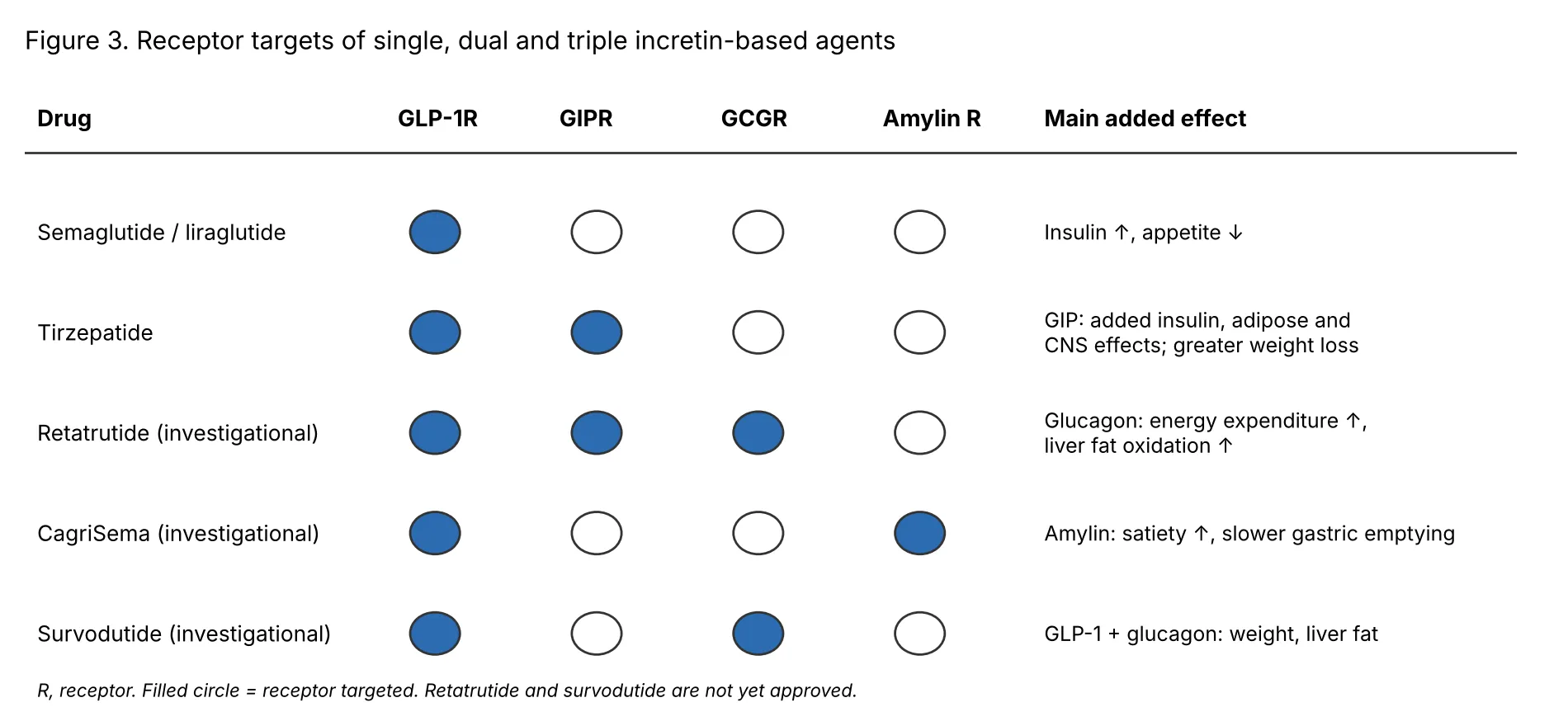
Adding glucagon receptor activation, as in retatrutide and survodutide, increases energy expenditure and hepatic fat oxidation, while the glucose-raising effect of glucagon is offset by the GLP-1 and GIP components. Combining semaglutide with the amylin analogue cagrilintide (CagriSema) adds a separate satiety pathway. Figure 3 maps which receptors each agent targets.
3.2 Available agents:
Agents differ in dosing frequency, route, and evidence base, as shown in Table 1. Once-weekly injections (semaglutide, dulaglutide, tirzepatide) are generally preferred for convenience and adherence.
3.3 Glycaemic efficacy:
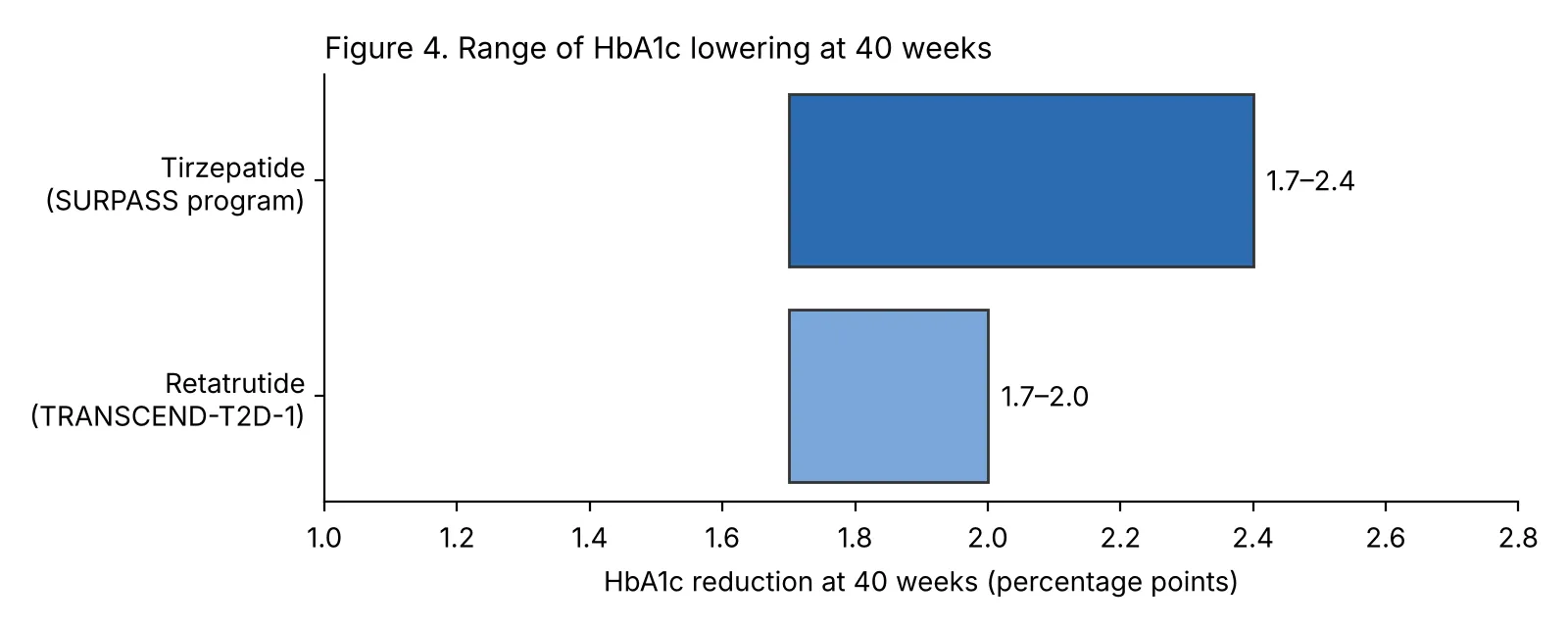
Long-acting GLP-1 RAs lower HbA1c by about 1 to 1.8 percentage points depending on agent, dose, and baseline control. In SURPASS-2, all tirzepatide doses were superior to semaglutide 1 mg for HbA1c reduction and weight loss [8]. The SURPASS programme reported HbA1c reductions of 1.7 to 2.4 percentage points at 40 weeks [24]. Figure 4 contrasts this with the investigational triple agonist retatrutide.
3.4 Weight reduction:
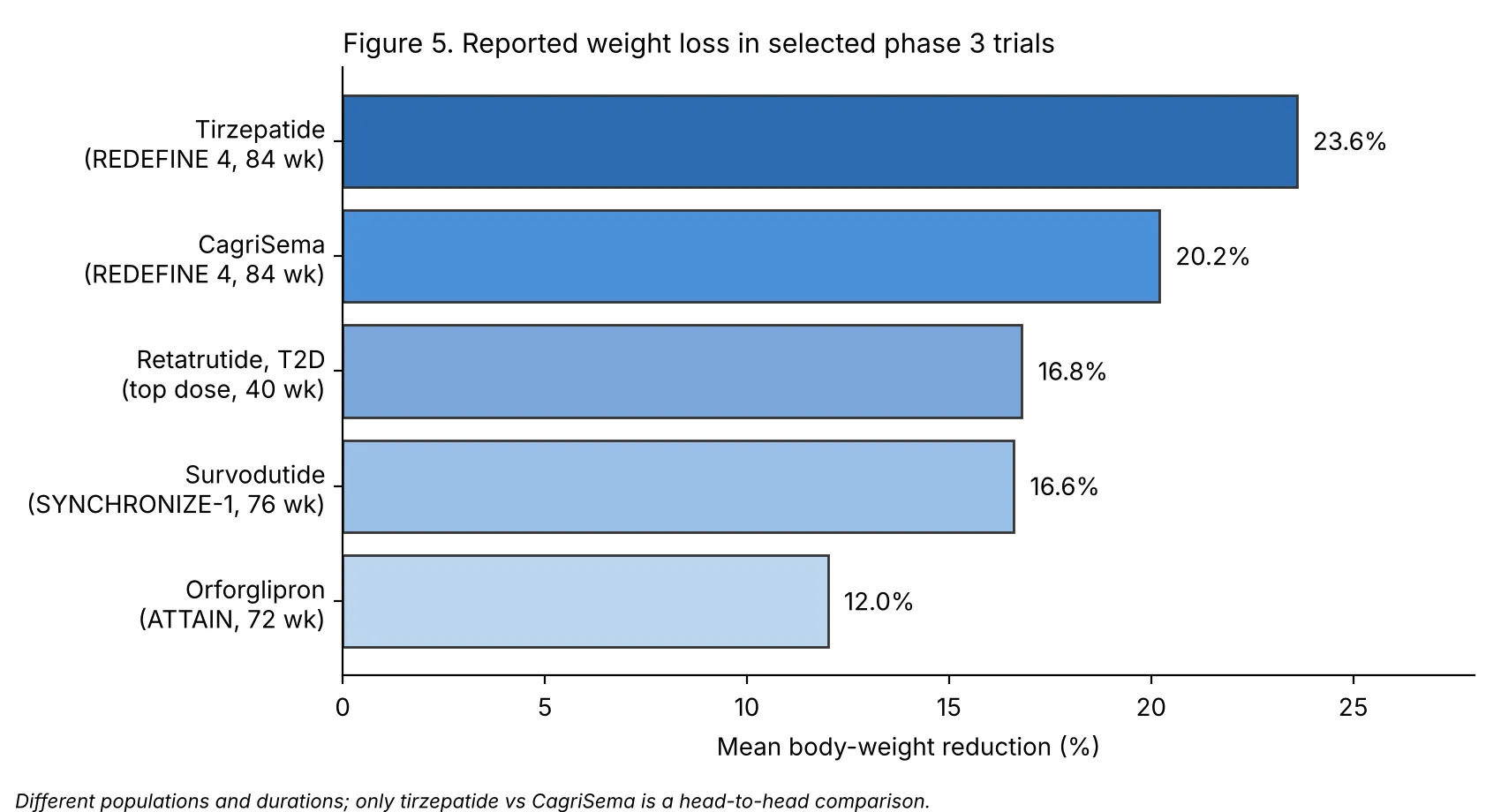
Weight loss is a defining advantage over many older drugs. Weight loss in people with diabetes is typically smaller than in those without, but remains clinically meaningful [12,13]. In the REDEFINE 4 head-to-head trial in obesity, tirzepatide produced about 23.6% weight loss at 84 weeks compared with 20.2% for CagriSema, which failed to show non-inferiority [22,27,28]. Figure 5 places selected results side by side, with the caveat that populations and durations differ.
3.5 Cardiovascular, kidney, and liver outcomes:
Cardiovascular outcome trials showed reductions in major adverse cardiovascular events with liraglutide, semaglutide (subcutaneous), and dulaglutide in people with T2DM at high risk [4-6], while oral semaglutide showed cardiovascular safety [7]. Tirzepatide has a pending regulatory decision for a cardiovascular indication based on SURPASS-CVOT [27].
In For liver disease, semaglutide improved steatohepatitis resolution in a phase 2 trial [11], and the 2026 ADA Standards of Care list GLP-1 RAs among preferred agents for people with T2DM and MASH or elevated fibrosis risk [17,27]. Table 2 summarises these findings.
3.6 Safety and tolerability:
Gastrointestinal effects (nausea, vomiting, diarrhoea, constipation) are the most common reason for discontinuation, are dose-related, and usually ease with slow titration [15]. Gallbladder and biliary disease risk is increased [14]. Pancreatitis, though rare, requires prompt evaluation of severe abdominal pain. Rapid HbA1c improvement with semaglutide was associated with worsening retinopathy complications in SUSTAIN-6, so eye screening should continue [4]. Because gastric emptying is delayed, anaesthetists should be told about use before procedures. A boxed warning relates to thyroid C-cell tumours in rodents; these drugs are avoided with a personal or family history of medullary thyroid carcinoma or MEN 2. They are not recommended in pregnancy. Table 3 summarises key risks.
3.7 Clinical positioning and guidelines:
Current consensus favours an individualised approach rather than metformin first for all. A GLP-1 RA or dual agonist is preferred when weight management is a priority or when there is established atherosclerotic cardiovascular disease, high cardiovascular risk, or chronic kidney disease [16,17]. Practical factors, including cost, injection preference, and tolerability, strongly shape real-world choice, particularly in low- and middle-income settings.
3.8 Emerging agents in 2026:
Orforglipron (Foundayo): the first oral small-molecule, non-peptide GLP-1 RA, approved by the FDA in April 2026 for weight management [22]. In ACHIEVE-3 it beat oral semaglutide for HbA1c and weight, with somewhat higher gastrointestinal discontinuation; its type 2 diabetes filing was expected later in 2026 [25,26].
CagriSema: semaglutide combined with the amylin analogue cagrilintide. The REIMAGINE trials showed superior HbA1c reduction and weight loss versus semaglutide alone [25,26]. An FDA decision was still pending [28].
Retatrutide: a GIP/GLP-1/glucagon triple agonist. TRANSCEND-T2D-1 reported HbA1c reductions of 1.7 to 2.0 points and weight loss of 11.5 to 16.8% at 40 weeks, with a dysaesthesia signal at higher doses [24,25,28]. It is not yet approved.
Others: survodutide reported 16.6% weight loss at 76 weeks in its first phase 3 trial, and monthly-dosing and additional oral agents are in development [23,28].
4. Tables and Figures:
Table 1: Principal Incretin-Based Agents in Type 2 Diabetes
| Class | Examples | Key features |
|---|---|---|
| Short-acting GLP-1 RA | Exenatide, lixisenatide | Daily or twice-daily; mainly post-meal glucose effect; largely superseded |
| Long-acting GLP-1 RA (injection) | Liraglutide (daily); dulaglutide, semaglutide (weekly) | Strong HbA1c and weight effect; cardiovascular benefit for several agents |
| Oral GLP-1 RA | Oral semaglutide | Daily tablet taken fasting with a small sip of water |
| Dual GIP/GLP-1 RA | Tirzepatide (weekly) | Greatest approved HbA1c and weight reduction; label expanding |
RA, receptor agonist.
Table 2: Selected Outcome Evidence
| Domain | Trial / agent | Finding |
|---|---|---|
| Cardiovascular | SUSTAIN-6, LEADER, REWIND | Fewer major cardiovascular events with semaglutide, liraglutide, dulaglutide [4-6] |
| Kidney | FLOW (semaglutide) | 24% lower risk of major kidney events in T2DM with CKD [10,27] |
| Liver | Semaglutide phase 2 | Higher steatohepatitis resolution than placebo [11] |
| Head-to-head | SURPASS-2 | Tirzepatide superior to semaglutide 1 mg for HbA1c and weight [8] |
CKD, chronic kidney disease.
Table 3: Safety Considerations
| Issue | Details | Practical response |
|---|---|---|
| Gastrointestinal effects | Nausea, vomiting, diarrhoea, constipation; dose-related [15] | Slow titration, smaller meals |
| Gallbladder disease | Increased biliary events [14] | Evaluate right upper abdominal pain |
| Pancreatitis | Rare | Stop and investigate severe abdominal pain |
| Retinopathy | Early worsening with rapid HbA1c fall [4] | Maintain eye screening |
| Thyroid C-cell warning | Rodent signal; boxed warning | Avoid with MTC or MEN 2 history |
| Anaesthesia | Delayed gastric emptying | Inform anaesthetist before procedures |
| Pregnancy | Not recommended | Plan contraception and stop before conception |
MTC, medullary thyroid carcinoma; MEN 2, multiple endocrine neoplasia type 2.
Table 4: Selected Newer Agents (Status as of November 2026, per Secondary Sources)
| Agent | Mechanism | Status / key data |
|---|---|---|
| Orforglipron | Oral small-molecule GLP-1 RA | FDA approved April 2026 for weight management; type 2 diabetes filing expected [22,25] |
| CagriSema | GLP-1 + amylin | FDA decision pending; weight loss about 20% at 84 weeks vs 23.6% for tirzepatide [28] |
| Retatrutide | GIP/GLP-1/glucagon | Phase 3; HbA1c −1.7 to −2.0%, weight −11.5 to −16.8% at 40 weeks [24,25] |
| Survodutide | GLP-1/glucagon | Phase 3 obesity data: 16.6% at 76 weeks [28] |
Table 5: Molecular Design Features of Selected Agents
| Agent | Origin / receptors | Half-life strategy | Approx. half-life / dosing |
|---|---|---|---|
| Exenatide | Exendin-4 (lizard peptide); GLP-1R | Natural DPP-4 resistance | A few hours; twice daily or weekly depot form |
| Liraglutide | Human GLP-1 analogue; GLP-1R | C16 fatty acid binds albumin | About 13 hours; daily |
| Semaglutide | Human GLP-1 analogue; GLP-1R | Modified residue plus C18 fatty diacid binding albumin | About 1 week; weekly (or daily oral) |
| Dulaglutide | GLP-1 dimer fused to IgG4 Fc; GLP-1R | Large Fc fusion protein | About 5 days; weekly |
| Tirzepatide | GIP-based peptide; GIPR and GLP-1R | C20 fatty diacid binding albumin | About 5 days; weekly |
Half-lives are approximate and taken from product pharmacology; check current prescribing information. GLP-1R, GLP-1 receptor; GIPR, GIP receptor.
CONCLUSION AND FUTURE DIRECTIONS:
GLP-1 receptor agonists and dual-incretin therapy have moved type 2 diabetes care beyond glucose lowering to include weight loss and protection of the heart, kidneys, and liver. Tirzepatide currently offers the largest approved glycaemic and weight effects, while semaglutide has the broadest outcome evidence. Treatment should be individualised to comorbidities, goals, tolerability, and affordability.
Future work should address several gaps:
Long-term safety and durability beyond a decade of use, and outcomes after discontinuation, including weight regain.
Head-to-head trials of newer agents using hard clinical outcomes rather than surrogate markers.
Preservation of lean mass and effects on bone and muscle during weight loss.
Oral and monthly formulations to improve access and adherence, with real-world cost-effectiveness data for low- and middle-income countries.
Effects in younger people with T2DM, in early disease, and on possible remission.
Understanding the dysaesthesia signal seen with triple agonists.
REFERENCES

Kshitija Navale, Nikita Ranmal, A Comprehensive Review of GLP-1 Receptor Agonists and Dual-Incretin Therapies in the Management of Type 2 Diabetes Mellitus, Int. J. of Pharm. Sci., 2026, Vol 4, Issue 11, 2190-2197. https://doi.org/10.5281/zenodo.24216933
 10.5281/zenodo.24216933