

We use cookies to ensure our website works properly and to personalise your experience. Cookies policy
D. B. College of Pharmacy and Research, Latur
The aim of this study was to develop simple, advance, accurate and precise method for the quantification of Montelukast and Rupatadine in Pharmaceutical Dosage form and Bulk by using high Performance Liquid Chromatography (HPLC) technique.The chromatogram was run through a Kromosil C18 Column, 5 µm, 4.6 mm X 150 mm, with a mobile phase containing Buffer 0.01N Potassium dihydrogen phosphate: Acetonitrile taken in a ratio of 70:30 %v/v pumped through the column at a flow rate of 1.0 ml/min. The optimal wavelength chosen for this method was 232.0 nm, and Retention time of Montelukast and Rupatadine were found to be 2.361 min and 3.100 min. %RSD of the Montelukast and Rupatadine were and found to be 0.6% and 0.4% respectively. %Recovery was obtained as 100.22% and 99.00% for Montelukast and Rupatadine respectively. LOD, LOQ values obtained from regression equations of Montelukast and Rupatadine were 0.02, 0.06 and 0.02, 0.06 respectively. %Assay was obtained as 99.76% and 99.37% for Montelukast and Rupatadine respectively. Regression equation of Montelukast is y = 84727x + 8121.7, y = 59604x + 5241.2 of Rupatadine, the developed method was also applied to monitor the forced degradation studies on the drug for testing for its ability to resolve the drug from their degradation products. The specificity of the developed method was evaluated by applying acid, base, oxidation, thermal, photolytic and neutral stress conditions to the drug. It was concluded that the estimation of Montelukast and Rupatadine in bulk and its pharmaceutical dosage form was found to be successfully conducted by using the method.
A class of pharmacological medications known as antihistamines is used to treat illnesses that are mediated by histamine. Histamine receptors can be divided into two major classes: H-1 and H-2. Allergies and allergic rhinitis are typically treated with antihistamine medications that bind to H-1 receptors.1-2 Upper gastrointestinal disorders brought on by too much stomach acid can be treated with medications that bind to H-2 receptors.3-4 Members of an interprofessional team that oversees the treatment of patients with conditions that respond to histamine receptor blockade need to be aware of the indications, contraindications, activity, adverse events, and other crucial aspects of antihistamine therapy in the clinical setting. Montelukast and Rupatadine are used to treat runny noses and sneezing brought on by allergies.5 Rupatadine is an antiallergic that inhibits the action of histamine, a chemical messenger that causes sneezing, watery eyes, and runny nose. Montelukast is an antagonist of leukotrienes. It functions by preventing leukotriene, another chemical messenger, from doing its job. This alleviates symptoms by decreasing inflammation (swelling) in the nose and airways.6
Background:
Montelukast- Chemically known as
C35H36ClNO3S, Chemical Nomenclature of the drug given by IUPAC:-
2-[1-({[(1R)-1-{3-[(1E)-2-(7chloroquinolin-2-yl)ethenyl]phenyl}-3-[2-2hydroxypropan-2yl) phenyl]propyl]sulfanyl}methyl)cyclopropyl]acetic acid.7 It is a leukotriene receptor antagonist used as part of an asthma therapy regimen, to prevent exercise induced bronchoconstriction, and to treat seasonal allergic rhinitis.
Rupatadine - Chemically known as
C26H26ClN3, Chemical Nomenclature of the drug given by IUPAC- 13-chloro-2-{1-[(5-methylpyridin-3-yl)methyl]piperidin-) azatricyclo [9.4.0.0^{3,8}]pentadeca-1(15),3(8),4,6,11,13-hexaene, Rupatadine, a dual histamine H1 receptor and platelet activating factor receptor antagonist, is used to treat chronic spontaneous urticaria and seasonal and perennial rhinitis.8
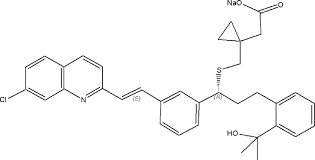
Montelukast
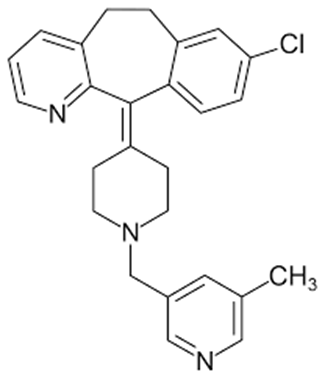
Rupatadine
Figure-1: Structures of Montelukast, Rupatadine.
A comprehensive literature review revealed that numerous analytical methods have been documented, with the identification of more cost-effective approaches. However, no method has been reported for estimating stability studies. Therefore, a straightforward and economical method for determining the stability of Montelukast, Rupatadine in a pharmaceutical dosage form using RP-HPLC is proposed.9-13 must be developing and validated as per the guidelines of ICH (Q2 specification) 14.
Materials and Reagents.
Montelukast, Rupatadine, the respective pure drugs were acquired from Akrivis Pharma Pvt Ltd. The Montelukast, Rupatadine, combination tablet (Emaxgalin) was purchased from local market in Hyderabad. The chemicals and buffers utilized in this estimation were obtained from Rankem, an Indian supplier.
Instrumentation
The development and method validation were conducted using a water hplc_2695, equipped with a PDA detector. The system also included an automated sample injector and the Empower 2 software.
Objective:
The main aim of this study is to develop a highly dependable, precise, sensitive, specific, consistent, and efficient analytical technique for simultaneously measuring the amounts of Montelukast and Rupatadine in both their pure state and tablet form.
Table 1: Optimized Chromatographic Conditions:
|
Flow rate |
1.0 mL/min |
|
Column |
Kromosil C18 Column, 5 µm, 4.6 mm × 150 mm |
|
Buffer |
0.01 N KH?PO? |
|
Detector |
232.0 nm |
|
Temperature |
Ambient |
|
Injection volume |
20.0 µL |
|
Run time |
6.0 min |
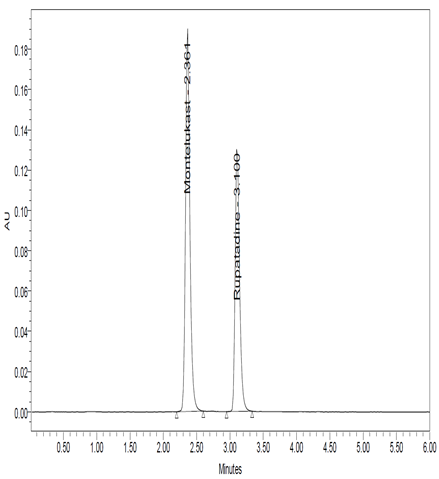
Fig 2 Optimized Chromatogram of Montelukast, Rupatadine.
Preparation of Buffer
Preparation of 0.01N Na2HPO4Buffer: Weighed 1.41gm of Disodium phosphate in a 1000ml of Volumetric flask add about 900ml of milli-Q water added and degas to sonicate and finally make up the volume with water then PH adjusted to 3.8 with dil. Acetic acid solution.
Preparation of Standard solution:
Accurately weighed 5mg of Montelukast, 5mg of Rupatadine and transferred to 50ml volumetric flasks and 3/4 th of diluents was added to these flasks and sonicated for 10 minutes. Flask was made up with diluents and labeled as Standard stock solution. (100µg/ml of Montelukast and 100µg/ml Rupatadine)
Preparation of Standard working solution: 1ml from stock solution was pipetted out and taken into a 10ml volumetric flask and made up with diluent. (10µg/ml of Montelukast and 10µg/ml Rupatadine)
Preparation of Sample solution: 10 Tablets were accurately weighed and average weight equivalent [(Rupatadine (10mg) + Montelukast (10mg)]_Avg wt_325.8 mg to 1 tablet was transferred into a 50ml volumetric flask, 25ml of diluents was added and sonicated for 20 min, further the volume was made up with diluent and filtered by HPLC filters (200µg/ml of Montelukast and 200µg/ml of Rupatadine)
Preparation of Sample working solution: 0.5ml of filtered sample stock solution was transferred to 10ml volumetric flask and made up with diluent. (10µg/ml of Montelukast and 10µg/ml Rupatadine)
Method Validation
The HPLC method was validated according to the ICH guidelines for the simultaneous estimation of the drug substances Montelukast and Rupatadine. This was conducted to demonstrate the method's suitability for regular analysis.
SSystem suitability:
The system suitability parameters were established by creating standard solutions of Montelukast at a concentration of 40 parts per million (ppm) and Rupatadine at a concentration of 10 ppm. The solutions were subsequently administered six times in order to ascertain parameters such as peak tailing, resolution, and USP plate count. The RSD for the area of six standard injections must not surpass 2%. System suitability chromatogram was shown in figure 4 and Optimized conditions are mentioned in the table 1 and System suitability values in the table no 2.
Specificity (Selectivity):
Verification of the interference in the optimized approach. No interfering peaks have been detected in the blank and placebo samples at the specific retention times of these drugs using this method. This method was described as specific; Specificity chromatogram was shown in figure 3
Table 2: Specificity data
|
Sample name |
Retention time (mins) |
Area |
|
Montelukast |
2.284 |
636711 |
|
Rupatadine |
3.672 |
124850 |
Figure 4 displays a representative chromatogram, while Table 2 provides the experimental data.
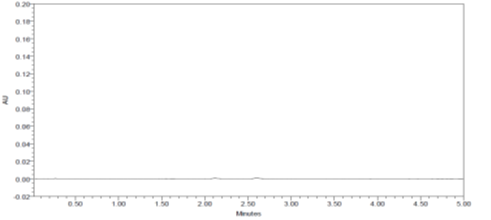
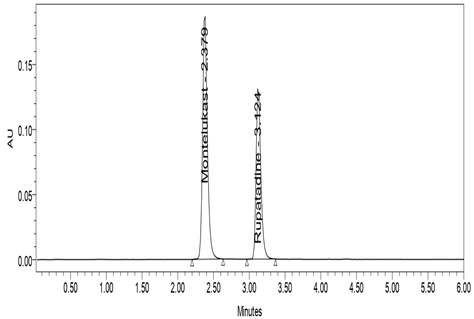
Figure 3: Specificity Chromatogram of Montelukast, and Rupatadine
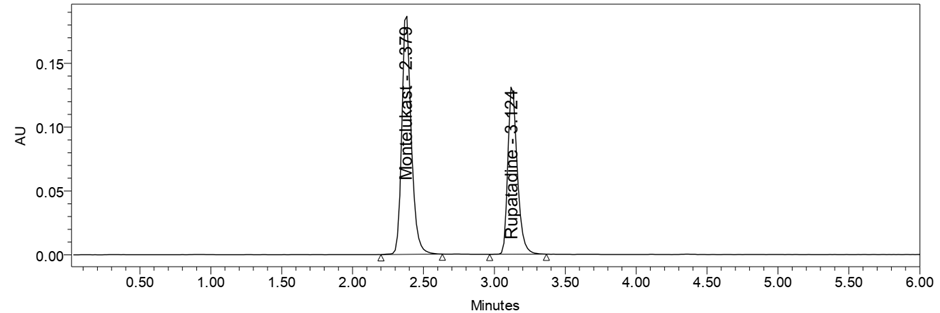
Figure 4: System suitability Chromatogram of Montelukast and Rupatadine.
Table 2: System suitability results
|
Sr. No |
Montelukast |
Rupatadine |
|||||
|
Inj |
RT(min) |
USP Plate Count |
Tailing |
RT(min) |
USP Plate Count |
Tailing |
Resolution |
|
1 |
2.365 |
6648 |
1.2 |
3.108 |
10574 |
1.3 |
6.1 |
|
2 |
2.365 |
6719 |
1.2 |
3.108 |
10582 |
1.3 |
6.1 |
|
3 |
2.366 |
6698 |
1.2 |
3.109 |
10550 |
1.3 |
6.1 |
|
4 |
2.368 |
6898 |
1.2 |
3.112 |
10442 |
1.3 |
6.1 |
|
5 |
2.370 |
6746 |
1.2 |
3.117 |
11192 |
1.3 |
6.1 |
|
6 |
2.379 |
6296 |
1.2 |
3.124 |
10672 |
1.3 |
6.2 |
According to System Suitability Criteria the obtained results are plate count obtained from the first injection of standard solution of montelukast and rupatadine found to 6648, The tailing factor obtained from the first injection of standard solution of montelukast and rupatadine found to be 1.2, The Resolution obtained between the standard solution of montelukast and rupatadine is 6.1. hence all the system suitable parameters were passed and were within the limits
Linearity: - Six linear concentrations of Montelukast (2.5-15µg/ml) and Rupatadine (5-30µg/ml) were injected in a duplicate manner. Average areas were mentioned above and linearity equations obtained for Montelukast was y = 84727x + 8121.7. And of Rupatadine was y = 59604x + 5241.2. Correlation coefficient obtained was 0.999 for the two drugs.
Table 3: Linearity data of montelukast and rupatadine
|
Montelukast |
Rupatadine |
||
|
Conc (μg/mL) |
Peak area |
Conc (μg/mL) |
Peak area |
|
0 |
0 |
0 |
0 |
|
2.5 |
217770 |
2.5 |
156137 |
|
5 |
436203 |
5 |
307057 |
|
7.5 |
640186 |
7.5 |
457921 |
|
10 |
857192 |
10 |
602522 |
|
12.5 |
1066825 |
12.5 |
737663 |
|
15 |
1278715 |
15 |
904578 |
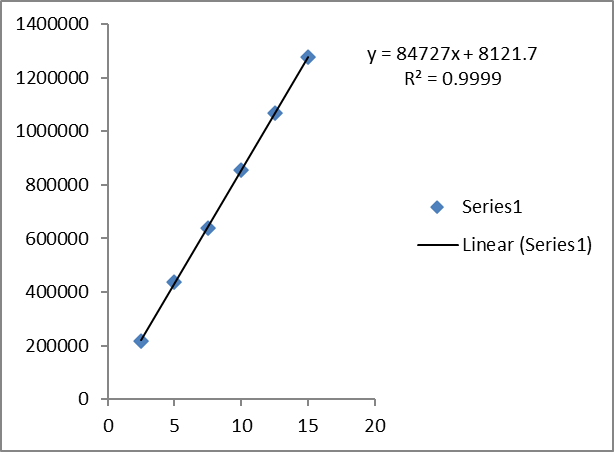
Figure 5: Montelukast Calibration curve
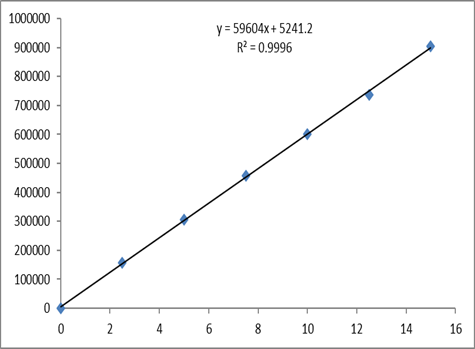
Figure 6: Rupatadine Calibration curve
Accuracy:- Three levels of Accuracy samples were prepared by standard addition method. Triplicate injections were given for each level of accuracy and mean %Recovery was obtained as 100.22% and 99.00% for Montelukast and Rupatadine respectively.
Table 4: Accuracy (% Recovery data)
|
|
Montelukast |
Rupatadine |
||||
|
% Level |
Amount Spiked (μg/mL) |
Amount recovered (μg/mL) |
% Recovery |
Amount Spiked (μg/mL) |
Amount recovered (μg/mL) |
% Recovery |
|
50% |
5 |
4.97 |
99.32 |
5 |
4.88 |
97.65 |
|
5 |
5.02 |
100.41 |
5 |
4.93 |
98.55 |
|
|
5 |
5.01 |
100.18 |
5 |
5.01 |
100.24 |
|
|
100% |
10 |
10.11 |
101.13 |
10 |
9.82 |
98.20 |
|
10 |
10.01 |
100.07 |
10 |
9.78 |
97.75 |
|
|
10 |
9.99 |
99.94 |
10 |
9.97 |
99.72 |
|
|
150% |
15 |
15.13 |
100.85 |
15 |
14.78 |
98.55 |
|
15 |
15.03 |
100.22 |
15 |
15.02 |
100.10 |
|
|
15 |
14.99 |
99.92 |
15 |
15.04 |
100.24 |
|
System Precision: From a single volumetric flask of working standard solution six injections were given and the obtained areas were mentioned above. Average area, standard deviation and % RSD were calculated for two drugs. % RSD obtained as 0.5% and 0.5% respectively for Montelukast and Rupatadine. Results of peak area are summarized in Table 5
Table 5: System precision data
|
Injection |
Montelukast |
Rupatadine |
|
1 |
858528 |
604917 |
|
2 |
857329 |
604839 |
|
3 |
859978 |
604061 |
|
4 |
865188 |
607995 |
|
5 |
862777 |
611490 |
|
6 |
868042 |
606964 |
|
Avg |
861974 |
606711 |
|
Std dev |
4128.7 |
2767.6 |
|
%RSD |
0.5 |
0.5 |
Method Precision: Multiple sampling from a sample stock solution was done and six working sample solutions of same concentrations were prepared, each injection from each working sample solution was given and obtained areas were mentioned in the above table. Average area, standard deviation and % RSD were calculated for two drugs and obtained as 0.6% and 0.3% respectively for Montelukast and Rupatadine. Data obtained is summarized in Table 6.
Table 6: Method precision data
|
Injection |
Montelukast |
Rupatadine |
|
1 |
856383 |
604089 |
|
2 |
869602 |
606025 |
|
3 |
859348 |
602654 |
|
4 |
857318 |
603471 |
|
5 |
862024 |
603968 |
|
6 |
859983 |
600915 |
|
Avg |
860776 |
603520 |
|
Std dev |
4761.9 |
1693.4 |
|
%RSD |
0.6 |
0.3 |
Robustness: - The robustness conditions, including a flow rate decrease of 0.9ml/min, a flow rate increase of 1.1ml/min, a decrease in mobile phase composition to 65% B and 35% A, an increase in mobile phase composition to 75% B and 25% A, a decrease in temperature to 25°C, and an increase in temperature to 35°C, were maintained. The samples were injected in duplicate. The system suitability parameters were minimally impacted and all parameters met the required criteria. The %RSD value fell within the specified limit.
Table 7 Robustness data for Montelukast and Rupatadine.
|
Sr. no |
Condition |
%RSD of Montelukast |
%RSD of Rupatadine |
|
1 |
Flow rate (-) 0.9ml/min |
0.4 |
0.2 |
|
2 |
Flow rate (+) 1.1ml/min |
1.0 |
0.5 |
|
3 |
Mobile phase (-) 75B:25A |
0.1 |
0.2 |
|
4 |
Mobile phase (+) 65:35A |
0.2 |
0.2 |
|
5 |
Temperature (-) 24°C |
0.3 |
1.0 |
|
6 |
Temperature (+) 34°C |
0.3 |
0.3 |
Forced degradation Studies: - For montelukast and rupatadine, strong degradation was observed in basic conditions. no degradation was detected in the samples when they were subjected to acid, hydrolysis, thermal, light, and water. Based on the stress study, Base of the degradation products co-eluted with the peaks formed by the active drug.
Table 8: Forced degradation conditions for Montelukast and Rupatadine.
|
Stress condition |
Solvent |
Temp (0C) |
Exposed time |
|
Acid |
2N HCL |
600c |
30 mins |
|
Base |
2N NAOH |
600c |
30 mins |
|
Oxidation |
20% H2O2 |
600c |
30 mins |
|
Thermal |
Diluent |
1050c |
6 hours |
|
Photolytic |
Diluent |
- |
- |
|
Hydrolytic |
Water |
600c |
|
Table 9: Degradation profile results
|
Type of degradation |
Rupatadine |
Montelukast |
||
|
% RECOVERED |
% DEGRADED |
%RECOVERED |
% DEGRADED |
|
|
Acid |
96.92 |
3.08 |
96.19 |
3.81 |
|
Base |
93.25 |
6.75 |
93.70 |
6.30 |
|
Peroxide |
97.35 |
2.65 |
95.91 |
4.09 |
|
Thermal |
97.45 |
2.55 |
98.69 |
1.31 |
|
Uv |
96.91 |
3.09 |
99.34 |
0.66 |
|
Water |
98.24 |
1.76 |
99.82 |
0.18 |
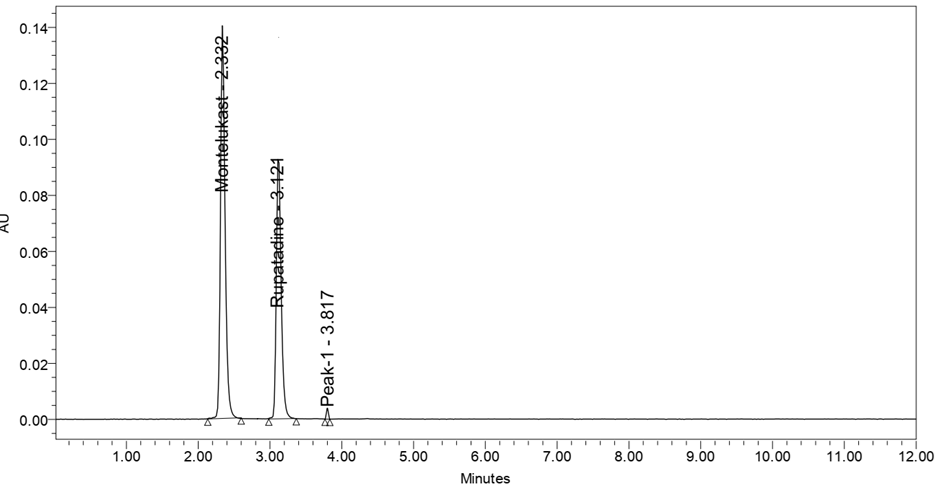
Fig. No. 7 Base chromatogram of Montelukast and Rupatadine
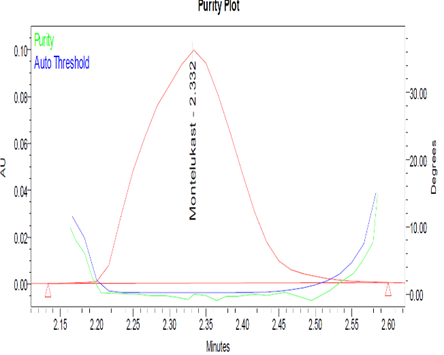
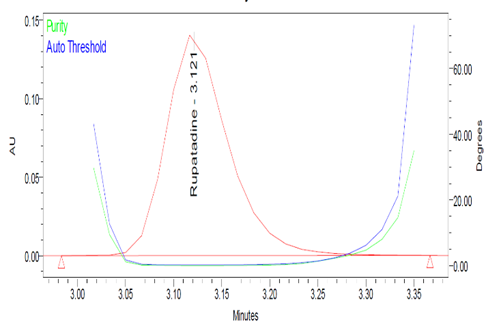
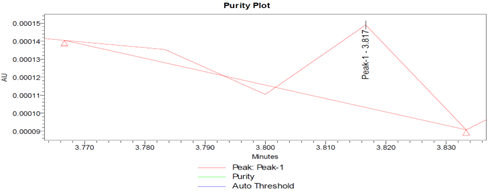
Figure 8: Purity plots of Base degraded chromatogram of Montelukast and Rupatadine
Assay: - Rupanex M formulation assay was performed against the standard solution. Average % Assay for Montelukast and Rupatadine obtained was respectively
Table 10: Assay results for Montelukast and Rupatadine
|
|
Label claim dose |
%Assay |
|
Montelukast |
10mg |
99.76 |
|
Rupatadine |
10mg |
99.37 |
Assay was performed by: -
Formulation mixture 10mg tablet, bearing the label claim Montelukast 10mg, Rupatadine 10mg. Assay was performed with the above formulation. 10 Tablets were accurately weighed and average weight equivalent [(Rupatadine (10mg) + Montelukast (10mg)]_Avg wt_325.8 mg to 1 tablet was transferred into a 50ml volumetric flask, 25ml of diluents was added and sonicated for 25 min, further the volume was made up with diluent and filtered by HPLC filters (100µg/ml of Montelukast and 100µg/ml of Rupatadine), 0.5ml of filtered sample stock solution was transferred to 10ml volumetric flask and made up with diluent. (10µg/ml of Montelukast and 10µg/ml Rupatadine)
Assay was calculated by: -
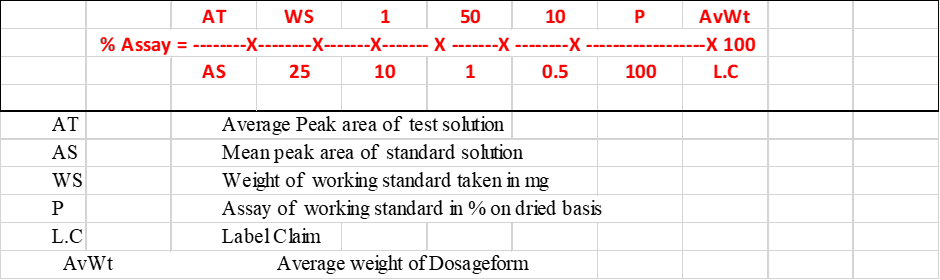
Figure 9: Assay Chromotogram
CONCLUSION
A novel and validated stability indicating analytical approach was developed using RP-HPLC methodology. The study's results will significantly contribute to the monitoring of the quality of Montelukast and Rupatadine in pharmaceutical dosage forms. This is attributed to the study's uncomplicated sample preparation technique, which employs a minimal quantity of mobile phase and necessitates only a short analysis duration. After examining two medications in a combined dosage form, the results showed a nearly perfect effectiveness of 100% using the newly developed methodology. The recovery studies yielded positive results, suggesting that the excipient has no discernible impact.
REFERENCES




Monika Ingale, Shantanu Mane, Gopal Shinde, Ganesh Saraf, Analytical Method Development and Validation for Simultaneous Estimation of Montelukast and Rupatadine by Using RP-HPLC Method Development on Bulk and Solid Dosage Forms, Int. J. of Pharm. Sci., 2026, Vol 4, Issue 1, 3612-3621. https://doi.org/10.5281/zenodo.18442222
 10.5281/zenodo.18442222