

We use cookies to ensure our website works properly and to personalise your experience. Cookies policy
PRES’s College of Pharmacy (for Women),Chincholi Nashik MH,India 422103.
Viral infection remain an important global health problem Because viruses change quickly, some become resistant to current medications, and many viral diseases lack effective treatments, viral infections continue to be a major global health concern. Medicinal plants offer a chemically varied source of secondary metabolites that may provide antiviral lead compounds. Plant extracts and purified components, such as flavonoids, phenolic compounds, terpenoids, alkaloids, lignans, coumarins, saponins, polysaccharides, and essential oils, have shown antiviral activity in studies. Proposed mechanisms include interference with viral attachment and entry, disruption of viral envelopes or structural proteins, inhibition of viral polymerases and proteases, suppression of viral genome replication and transcription, modification of host signaling pathways, and control of antiviral immune responses. Plants have been studied against influenza, herpes, HIV, hepatitis, dengue, chikungunya, Zika, and coronaviruses, among others. However, much evidence remains preclinical, especially in vitro, and an extract’s activity does not guarantee clinical efficacy or safety. Standardization, active constituent identification, pharmacokinetics, toxicity assessment, bioavailability, and well-designed clinical trials are essential before medicinal plants or their components can be considered reliable antiviral treatments. This review outlines the current scientific rationale, significant medicinal plants and phytochemicals, mechanisms of action, research findings, constraints, and potential future paths for natural antiviral drug discovery.
Viruses are infectious agents that replicate in living host cells and can cause a wide range of acute and chronic diseases in humans. Viral infections continue to be a major threat to public health because of the emergence of new viral pathogens, the development of antiviral resistance, genetic variation, and the lack of effective treatments for many viral diseases.[1].A wide range of medicinal plants and plant-derived compounds have been investigated against viruses such as herpes simplex virus, influenza virus, hepatitis viruses, human immunodeficiency virus and other clinically important viral pathogens. Examples of phytochemical classes investigated for antiviral activity include flavonoids, terpenoids, alkaloids, lignans, coumarins and saponins.[2].For centuries, traditional health systems have utilized medicinal plants, which contain a variety of chemical metabolites. Compounds derived from plants can act at several stages of the viral life cycle, according to recent pharmacological research. The antiviral properties of flavonoids, alkaloids, polysaccharides, terpenoids, lignans, coumarins, saponins, essential oils, and other classes are described in reviews of the field. These substances are interesting as sources of lead molecules and complementary research candidates because they can interact with both viral targets and host-cell pathways.[3,4]. The Zika, Chikungunya, and Mayaro viruses currently lack effective treatments or vaccines, underscoring the critical need for novel antiviral drugs. Finding novel inhibitors for these arboviruses is therefore crucial. HIV continues to have an impact on people all over the world, with over 42.3 million deaths reported in the last forty years. Fifteen proteins necessary for viral replication and immune evasion are encoded by its single-stranded RNA genome. Antiretroviral treatments have greatly decreased viral loads, but they are not curative and frequently have negative side effects. There is still no preventative vaccine.[5].The focus on medicinal plants with antiviral qualities has increased due to the rising prevalence of viral infections, drug resistance issues, and side effects of traditional antiviral treatments. Alkaloids, flavonoids, polyphenols, coumarins, and lignans are among the many phytochemicals found in medicinal plants that offer a natural and frequently safer substitute for synthetic medications. These phytochemicals exhibit a variety of modes of action, including preventing viral entry, replication, and assembly, which makes them appealing candidates for the development of antiviral medications.[6].Deeply ingrained in traditional beliefs, ethnobotanical knowledge is essential in directing the development of contemporary antiviral drugs. Plants have been used for centuries to treat a variety of illnesses in many cultures, many of which are currently being supported by the scientific studies presented in this review article. As viruses become more resistant to synthetic medications, plant-based antivirals are a safer and more natural alternative.[7].One of the main causes of infectious diseases in humans is RNA viruses. Their high rates of mutation lead to the development of novel viral subtypes and genotypes that are resistant to current treatments, creating ongoing risks of new outbreaks.[8]. Recent developments in plant-derived extracts and phytochemicals that block different stages of the viral life cycle of influenza, dengue, zika, chikungunya, mayaro, coronavirus, and HIV are presented in this review (Figure 1), highlighting their potential for the development of antiviral drugs.[9].Several extracts and fractions of Tilia platyphyllos, Camellia sinensis, and Myrtus communis showed in vitro hemagglutination inhibition following HIN1 treatment, according to a phytochemical analysis. This could be because the extracts and fractions had less physical contact with the virus surface hemagglutinin glycoprotein.[10].Lastly, using extracts from its dry buds and flowers—which are high in acidic flavonoids—Lonicera japonica has been investigated for its antiviral qualities against HINl. According to in vivo research, mice given 600 mg/kg/day of the acidic extracts for eight days were shielded from dying from influenza.[11]. The root extracts of medicinal plant Heracleum maximum Bartr. (Umbelliferae) which possess antiviral effects besides antifungal and antibacterial properties, stimulated Interleukin 6 (IL-6) production in the macrophage activation assay, confirming antiviral effects association with the immunostimulatory properties.[12].
AIMS :
To review the potential of medicinal plants and their bioactive phytochemicals as natural sources of antiviral agents, with emphasis on their mechanisms of action, therapeutic potential, advantages, limitations, and future applications in antiviral drug development.
OBJECTIVES:
An extract from a medicinal plant that has anti-dengue, anti-zinka, anti-chikungunya, And anti-mayaro properties.
Found that extracts from a number of plant species, such as Plumeria alba, Ancistrocladus heyneanus, Bacopa monnieri, and Vitex negundo, which are frequently used in traditional medicine in Belagavi, India, have anti-Dengue and anti-Chikungunya properties in vitro. In particular, the hydroalcoholic extract of the entire B. monnieri plant and the chloroform extract of the bark of P. alba and A. heyneanus decreased the replication or infection of the Dengue and Chikungunya viruses, whereas the chloroform extract of V. negundo leaves only demonstrated activity against Dengue. Furthermore, the isolated compound eugenol (1-hydroxy-2-methoxy-4-allylbenzene) found in Ocimum sanctum, a traditional Ayurvedic herb known as Vishnu-Priya or Tulsi, demonstrated strong inhibition of Dengue-2
replication, reaching complete inhibition in in vitro assays. Eugenol interacts with Dengue non-structural proteins NS1 and NS5 with binding energies of 5.33 and 5.75 kcal/mol,respectively, according to docking analysis, indicating possible pharmacological use in Dengue treatment.[12].Baicalin: AutoDock Vina predicted a binding affinity of −9.8 kcal/mol for nsP3, indicating that it is anticipated to be a potentially effective candidate against the chikungunya virus. Baicalin is a flavonoid compound extracted from Scutellaria baicalensis.[13]. Subfractions of the extract considerably reduced viral adsorption to cells, according to research on the antiviral potential of aqueous extracts from the roots of Glycer glabra (Leguminosae) against dengue. Carvalho (2023).[14].Found that ethyl acetate extracts of Gynura bicolor and Sechium edule inhibit the replication of the Chikungunya virus in vitro, while Ocimum americanum inhibits both the virus’s infection and replication. The Brazilian Cerrado biome is home to the xanthone-rich Bignoniaceae species Fridericia formosa, whose ethanolic leaf extract demonstrated potent anti-Mayaro
virus activity.[15]. Lycorine and a number of alkaloids from the cherylline, crinine, and galanthamine groups were found in Crinum jagus, according to phytochemical studies. These compounds effectively inhibited the Dengue and Zika viruses. In particular, cherylline successfully inhibited RNA synthesis in both viruses, suggesting that its primary target is RNA replication.[16].The increasing amount of literature shows preliminary relationships between the antiviral target class and alkaloid scaffold architecture (Figure 3A–G). Despite having distinct structural subtypes (pyrrolo [de]phenanthridine, 5,10bethanophenanthridine, 4-arylisoquinoline, and related isocarbostyril scaffold of pancratistatine), Amaryllidaceae alkaloids (lycorins haemanthamine, cherylline, andpancratistatine) share a low molecular weight (~285–325 Da) and seem to preferentially target intracellular post-entry steps.[17].Both in vitro and in vivo, sinococuline, an aqueous extract from the stem of Cocculus hirsutus, has demonstrated effectiveness against DENV.
Additionally, it has been proven to be safe for humans. In an AG129 mouse model, this compound exhibits protective effects against secondary DENV infection, suggesting its potentialto control severe infections and making it a promising candidate for further development.[18].
Extracts from medicinal plants with anti-Coronavirus and anti-SARS-CoV 2 activity
Finding potent medications from those on the market may be the best and quickest way to develop a treatment against COVID-19. It can be quickly applied for quick clinical patient care once its efficacy has been established. Because recombination events occur frequently, finding drugs to combat CoV is a significant challenge. Another crucial element is the development of vaccines.More information is desperately needed regarding theCoV's biological makeup and life cycle thatcan speed up the CoV medication or vaccinationgrowth. Once more, as a safety measure, closeTo anticipate an event, it's critical to keep an eye on how the virus changes on varioushosts.[19].Thus,phytochemicals, or substances derived from plants, have also been regarded as possible compositions for the treatment or prevention of SARS-CoV-2. Current remedies for COVID-19 requires a novel medication or vaccine.advancement that focuses on the human immune system system or the virus itself. Rebuttal de novo Target-based drug repurposing/repositioning has become a fast-track advantageous alternative in drug/vaccine development due to its proven safety, low cost, and knowledge gained from prior viral outbreaks.[20,21]. Five aspects of SARS-CoV-2 were found to be effectively inhibited by the medicinal plants: life cycle, immune responses, related pathophysiology, medicinal plants' function, and the secondary metabolites they produce. We have outlined the phases of the SARS-CoV-2 life cycle, the host cell's immune response to viral infection and development, and the related pathophysiological reaction that results in medical issues to determine the possible targets that medicinal plants can act upon and their secondary metabolites.[22,23].
Mechanism of Actions of Antiviral Secondary Metabolites in Medicinal Plants.
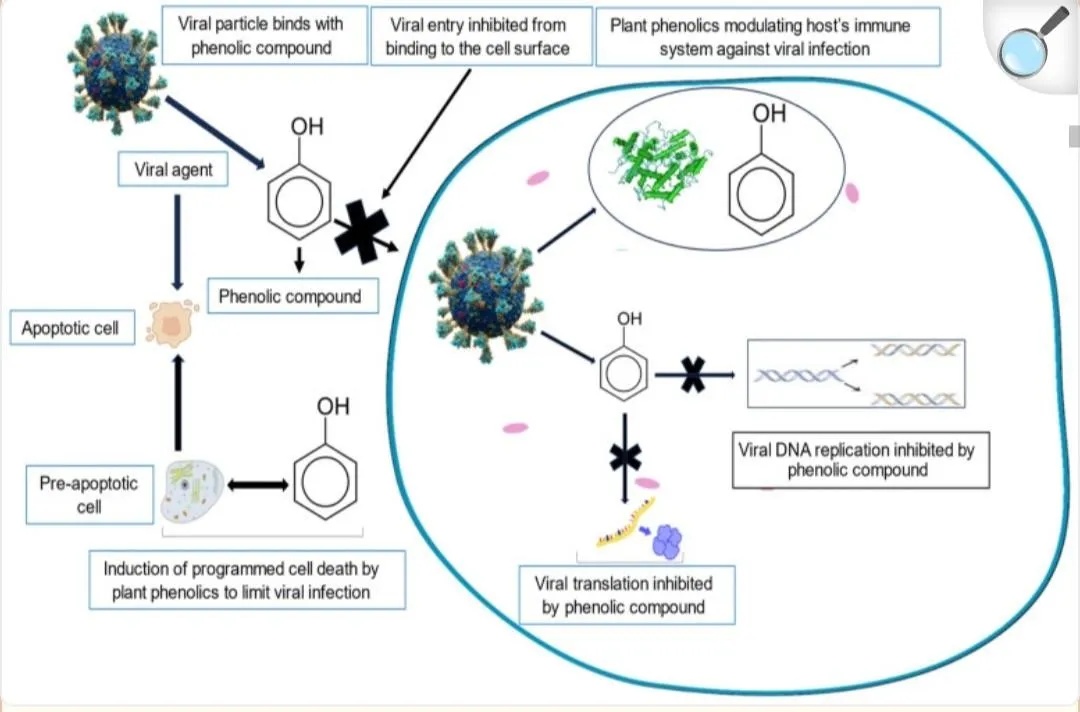
The classification of secondary metabolites in plants is based on a number of factors. and incorporate chemical structure,composition of the components and their solubility in organic solvents or water.The most widely recognized standard But what is their biosynthesis pathway.[24]. These pathways have led to the identification of three classes of secondary metabolites in medicinal plants: phenolic compounds, terpenoids, and alkaloids.[25]. Commonly reported mechanisms of action of plant-derived secondary metabolites against viruses include: (1) virus entry attachment [26,27], (2) inhibition of viral replication [28], (3) protein synthesis inhibition [29,30,31], (4) modulation of the host’s immune system [32], (5) modulation of cellular signaling pathways [33], and (6) direct virucidal activity [34,35].
Phenolic .
A broad class of organic molecules derived from plants that have at least one phenol group structurally are known as phenolic compounds. In plants, they are the most extensively distributed secondary metabolites.[36]. prevents the influenza virus replication through the Toll-like receptor activation (TLR7 and LR9, and subsequently encourages Type-1 interferon production and the translocation of the transcription factor IRF7 into the host nucleus.[37].
Alkaloids
Alkaloids, mostly but not only Found in plants, are a group of naturally Naturally occurring organic compounds with at least At least one atom of nitrogen. They are located in Numerous plant structures and have been documented To have pharmacological effects against a range of viruses and microbial diseases. Particular attention has been paid to alkaloids.For their wide-ranging actions against RNA and DNA viruses.[38].
Cocaine, morphine, and quinine are the most well-known plant alkaloids in nature. alkaloids have been found to be significant inhibitors of the genetic information flow required to maintain the virus's lifecycle (from the DNA/RNA viral particle to protein synthesis). Experimental evidence has demonstrated that alkaloids have antiviral properties that mainly involve the inhibition of: (1) DNA and RNA replication; (2) RNA translation; (3) protein synthesis; (4) DNA intercalation; (5) enzymatic activities; (6) the translocation of the ribonucleoprotein complex; (7) DNA synthesis; and (8) protein synthesis. Alkaloids have been used in numerous studies to treat and prevent viral infections.[39,40,41].Alkaloids can also regulate human immune mechanisms toward viral resistance by mediating the humoral immune response [42].
| Plant family | Plant species | Extract solvent/plant part | Virus, potential inhibition mechanism and molecular target | Reference |
|---|---|---|---|---|
| Acanthaceae | Ruellia tuberosa L. | Hydro alcoholic extract of flowering aerial | H1N1;neuraminidase(NM);viral infection | 43 |
| Acanthace | Ruellia patula L. | Hydro alcoholic extract of flowering aerial | H1N1;neuraminidase(NM);viral infection | 43 |
| Anacardiaceae | Ancitrocladus heyeanu Wall |
Chloroform of the bark | Dengue; viral replication | 44 |
| Anacardiaceae | Ancitrocladus heyeanu Wall |
Chloroform of the bark | Chikungunya; viral replication | 44 |
| Apocynaceae | Plumeria alba L | Chloroform of the bark | Dengue; viral replication | 44 |
| Asteraceae | Campuloclinium macrocephalum (Less.) |
Dichloromethane of the leaves | Dengue; viral replication | 45 |
| Asteraceae | Helenium radiatum (Less.) |
Dichloromethane of leaves | Dengue; viral replication | 45 |
| Bignonaceae | Fridericia formosa (Bureau) LG Lohmann |
Ethanolic of the leaves | Mavaro: viral infectior | 46 |
| Bignoniaceae | Fridericia chica (Bonpl.) |
Ethanolic of the leaves | Zika; viral infection | 47 |
| Bignoniaceae | Fridericia chica (Bonpl.) |
Ethanolic of the leaves | Mavaro: viral infection | 47 |
| Caprifoliace | Lonicera japonica Thumb |
Acid extract of dried bud or flower | HINl and H3N2; NA, viral infection and replication |
48 |
| Celastraceae | Maytenus quadrangulata (Schrad.) Loes |
Ethyl acetate of the leaves | Mayaro; adsorption and internalization | 49 |
| Cistaceae | Cistus ladanifer L. | Ethyl acetate extract of the leaves | SARS-CoV-2; viral replication and entry | 50 |
| Cistaceae | Cistus ladanifer L. | Dichloromethane extract of the leaves | SARS-CoV-2; viral replication and viral entry | 50 |
| Compositae | Gynura bicolor (Roxb. exWilld.)DC |
Ethvl acetate of the leaves | Chikungunya; viral replication | 51 |
| Davalliaceae | Davallia mariesii H.I.Veitch |
Butanolic extract of the whole plant | HINI; NA, viral adsorption, infection, replication, |
52 |
| Euphorbiaceae | Croton dichogamus Pax |
Methanol of the branches | HV: viral infection | 53 |
| Euphorbiaceae | Macaranga hurifolia Beile |
Hydroethanolic extract of Leaves | Chikungunya;viral infection and replications | 54 |
| Lamiaceae | Melissa officinalis L | Methanolic extract of the whole herbs | SARS.CoV-2; spike, viral infection | 55 |
| Lamiaceae | Glechoma hederacea L |
Aqueous extract of the leaves | Aqueous extract of the leaves | 56 |
| Lamiaceae | Ocimun americanum L |
Ethanol of the leaves | Chikungunya, visal infetion and replication | 57 |
| Leguminosae | Caesalpinia mimasoides Lamk |
Aqueous-ethanolic extract | HINI; NA, PB2 subunit of RNA polymerase riral infection | 58 |
| Leguminosae | Glycyrrhiza glabra L | Aqueous of the roots | Dengue; viral adsorption | 59 |
| Malpighiacea | Bvrsonima cocolobifolia Kunth |
Methanolic of the leaves | SARS-CoV-2; viral infectior | 60 |
| Malvaceae | Tilia platyphyllos Scop |
Ethanolic of the flower | HIN1; HA, viral infection | 61 |
| Meliaceae | Azadirachta indica L. |
Methanolic of the leaves | SARS-CoV-2; viral infection | 62 |
| Meliaceae | Melia azedarach L | Methanolic of the leaves | SARS-CoV-2; viral infection | 62 |
| Moringaceae | Moringa oleifera Lam.LC |
Ethanolic of the leaves | (HCоV)-229E. viral infectior | 63 |
| Myrtaceae | Myrtus communis L |
Chloroform of the leaves | HIN1; HA, viral infection | 64 |
| Phyllanthaceae | Phyllanthus brasiliensis (Aubl.) Poir |
Methanolic of Bark | Zika; viral infection and entry | 65 |
| Phyllanthaceae | Phyllanthus brasiliensis (Aubl.) Poir |
Methanolic of the bark | Zika; viral infection and entry | 65 |
| Rosaceae | Spiraea salicifolia L. | Ethanol 70% of the aerial parts | HINI; viral infection and replication | 66 |
| Rosaceae | Spiraea media Schmidt |
Ethanol 70% of the aerial parts | HINI; viral infection and replication | 66 |
| Siparunaceae | Siparuna glycycarpa (Ducke) |
Butanolic of the leaves | HINI; viral infection and replication | 67 |
| Solanacea | Withania somnifera L |
Hydroalcoholic of the roots | HIV; reverse transcriptase (RT), protease, p24 protein, viral replication | 6 |
| Theaceae | Camélia sinensis L. Kuntze |
Chloroform of the leaves | H1N1; HA, viral infection | 64 |
| Verbenaceae | Vitex negundo L | Chloroform extract of leaves | Dengue; viral infection and replication | 44 |
| Zingiberaceae | Kaempferia parviflora L |
Hexane extract of the rhizomes | SARS-CoV.-2; protease 3CLP9, viral replication | 68 |
CONCLUSION
There is a great deal of promise in using medicinal plants to find and create novel antiviral drugs. Finding bioactive substances from medicinal plants and comprehending their antiviral activity mechanisms should be the main goals of future study. The identification and development of plant-derived antiviral drugs may be aided by contemporary methods like phytochemical screening, molecular docking, bioinformatics, and sophisticated drug delivery systems. The safety, toxicity, effective dosage, and pharmacokinetic characteristics of these substances should be assessed in additional research. To guaranty constant quality and efficacy, standardization of plant extracts and quality monitoring are also crucial. Furthermore, to verify their safety and therapeutic advantages in humans,carefully planned clinical trials are necessary. Combining contemporary pharmacological research with traditional medical expertise may open up new avenues for the creation of antiviral drugs. Future antiviral medications may be developed using chemicals originating from plants as lead molecules. However, without enough scientific proof, medicinal herbs shouldn't be used in place of licensed antiviral therapies. All things considered, medicinal plants are a promising field for pharmaceutical research, and further study could lead to the creation of safer, more potent, and more reasonably priced antiviral drugs in the future.
Future Perspectives
1. Identification of Novel Antiviral Compounds: Future studies may find novel bioactive substances having antiviral qualities, such as flavonoids, alkaloids, tannins, and terpenoids.
2. Advanced Research Methods: Molecular docking, computational screening, and biotechnology are examples of contemporary methods that can be used to find plant chemicals that may have antiviral properties. 3. Creation of Novel Antiviral Drugs: Lead molecules for the creation of novel antiviral medications may be active chemicals extracted from medicinal plants. 4. Mechanism of Action Research: More research is required to comprehend how chemicals produced from plants prevent viruses from entering, replicating, and releasing themselves from host cells. 5. Clinical Trials and Safety Evaluation: To establish the safety, dose, and efficacy of plant-based antiviral medicines in humans, appropriate toxicity studies and clinical trials are crucial.
6. Combination Therapy: To see if they enhance treatment results, certain plant-derived substances may be studied in conjunction with traditional antiviral medications in the future. 7. Nanotechnology-Based Drug Delivery: Certain antiviral drugs produced from plants may have better solubility, stability, bioavailability, and targeted delivery thanks to nanotechnology. 8. Standardization and Quality Control: Creating dependable herbal antiviral medications will require standardized extraction techniques, the identification of active ingredients, and quality-control protocols. 9. Sustainable Use of Medicinal Plants: The long-term availability of medicinal plants for research and pharmaceutical development can be ensured by cultivation, conservation, and sustainable harvesting. 10. Preparation for Emerging Viral Infections: Subject to laboratory and clinical validation, medicinal plants may offer helpful starting points for the discovery of antiviral drugs against newly emerging and reemerging viral infections.
REFERENCES


Dipali Jejurkar, Snehal Jadhav, Samiksha Pansare, Samruddhi Korde, Antiviral Potential of Medicinal Plants: A Comprehensive Review, Int. J. of Pharm. Sci., 2026, Vol 4, Issue 10, 3472-3483. https://doi.org/10.5281/zenodo.23633139
 10.5281/zenodo.23633139